Introduction
The heart, often called the body's engine, depends on a complex electrical system to keep its rhythm and function. Electrocardiograms (EKGs) are essential tools for assessing this electrical activity, providing valuable insights into potential heart failure and other cardiovascular issues.
By examining the specific indicators revealed through EKGs, readers can discover how these diagnostic tools not only identify heart dysfunction but also improve treatment strategies. However, despite their common use, many still question the true effectiveness of EKGs in diagnosing heart failure.
What key indicators should be recognized, and how can advancements in technology enhance outcomes?
Define EKG and Its Role in Cardiac Assessment
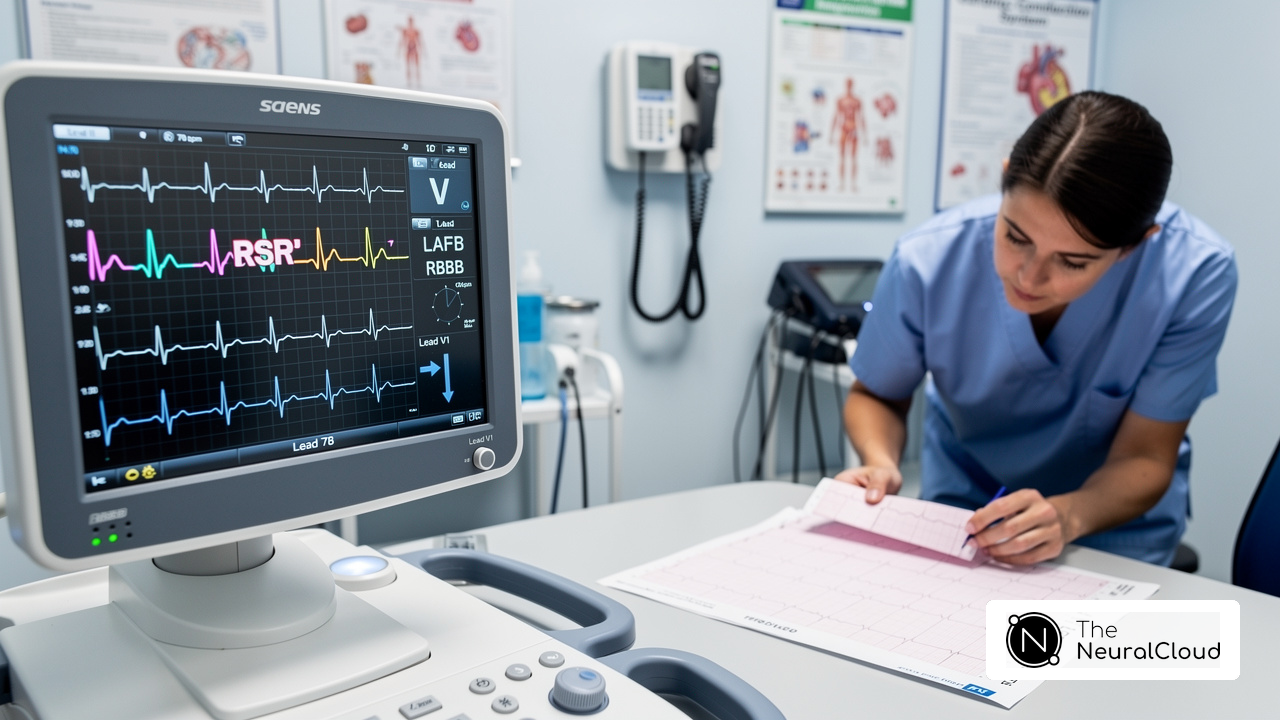
An electrocardiogram (EKG or ECG) is a non-invasive diagnostic tool that captures the heart's electrical activity over time. By placing electrodes on the skin, an EKG records the heart's electrical impulses, generating a detailed graphical representation of its rhythm, rate, and overall electrical function. This test is crucial in cardiac assessment, as it helps to identify various conditions related to the cardiovascular system, including arrhythmias, ischemia, and the question of heart failure. The ability to visualize the heart's electrical activity allows healthcare professionals to make informed decisions about patient care and treatment options.
Recent studies indicate that approximately 70% of healthcare professionals utilize EKGs for detecting heart conditions, underscoring their vital role in clinical practice. Cardiologists note that while EKGs are effective for early detection, they do have limitations; a normal EKG does not exclude heart disease, and in certain cases, it raises the question of whether further diagnostic tests are needed, which may require further testing. For example, Scott Swift's case, who underwent quintuple bypass surgery despite years of normal EKG reports, highlights the necessity for comprehensive evaluations beyond standard EKG assessments.
Technology, such as that provided by Neural Cloud Solutions' technology, shows promise in improving diagnostic accuracy, particularly in detecting ST-elevation myocardial infarction (STEMI). This system employs advanced algorithms and distinct wave recognition algorithms, enabling accurate interpretation of ECG data even amidst noise and artifacts. This capability not only enhances the identification of critical conditions but also streamlines clinical processes, ultimately leading to better patient outcomes.
The EKG evolves with each use, continuously enhancing its accuracy and efficiency, which is essential for healthcare professionals striving for maximum diagnostic yield.
Features of MaxYield™
- Noise Reduction: Reduces interference, ensuring clearer readings.
- Distinct Wave Recognition Algorithms: Improves accuracy in identifying critical conditions.
- Adaptive Learning: Adapts and improves with each use, enhancing diagnostic capabilities.
Advantages for Healthcare Professionals
- Increased Confidence: Increases confidence in ECG interpretations.
- Time Efficiency: Saves time and resources in patient evaluations.
- Enhanced Patient Outcomes: Leads to better treatment decisions and care.
Explore the Importance of EKG in Diagnosing Heart Failure
EKGs play a crucial role in diagnosing heart failure, particularly in answering the question of whether an EKG shows heart failure by detecting various electrical irregularities that suggest underlying circulatory problems. Common results include:
All closely linked with heart health. Research indicates that EKGs are essential in diagnosing approximately 28.5% of cardiac issues, underscoring their vital role in medical practice.
Specific electrical irregularities on an EKG, such as prolonged QT intervals and abnormal QRS complexes, can indicate heart failure. This aids clinicians in distinguishing between systolic and diastolic issues, a differentiation that is crucial for effectively tailoring treatment strategies. Integrating EKG findings with clinical assessments and additional diagnostic tests significantly enhances the accuracy of heart failure diagnoses and raises the question of whether an EKG does show heart failure, facilitating timely interventions.
The 'Neural Cloud Solutions' platform revolutionizes this process by employing advanced algorithms. This technology rapidly isolates and labels critical ECG data, even in recordings with high levels of noise and artifact. By transforming noisy recordings into detailed insights, this system provides beat-by-beat analysis, delivering an evaluation of 200,000 heartbeats in under 5 minutes. This capability not only enhances the efficiency of ECG analysis but also supports confident clinical decision-making by providing clear waveforms and identifying cardiac events. Furthermore, the system can salvage previously obscured sections of recordings, ensuring comprehensive analysis.
Cardiologists emphasize the importance of EKGs. For instance, Dr. Demilade Adedinsewo notes that having a tool like EKG analysis to rapidly identify heart failure among patients with shortness of breath can transform patient care, especially in emergency settings. He also highlights that biomarker levels can be influenced by various factors, enriching the conversation on EKG interpretation and its significance in cardiac diagnosis. This sentiment is echoed throughout the field, as EKGs remain a cornerstone for cardiac issues, particularly in understanding how EKGs show heart failure and highlighting their importance in enhancing patient quality of life. Additionally, the recent FDA emergency use authorization for EKG technology marks a significant advancement in technology, particularly in diagnosing heart conditions in patients with COVID-19.

Identify Key EKG Indicators of Heart Failure
Key EKG indicators of heart failure include prolonged QT interval, often indicating arrhythmias. This feature is critical, as recent studies show that patients with heart failure are associated with a significantly increased risk of excess mortality and new-onset heart conditions, even among patients with normal ejection fractions. Additionally, EKGs can reveal ischemia or strain patterns, complicating the clinical picture further.
The presence of atrial fibrillation or flutter on an EKG is also common in cases of heart failure, which complicates management strategies. Other notable indicators include low voltage QRS complexes, which may suggest pericardial effusion or infiltrative diseases. Understanding these indicators is essential for healthcare professionals, as they enable a more precise evaluation of severity and assist in developing tailored treatment strategies.

Trace the Evolution of EKG Technology in Heart Failure Diagnosis
The evolution of EKG technology has significantly impacted the question of accuracy in the diagnosis process. Initially, EKGs were primarily used for basic rhythm evaluations. However, advancements in digital technology and AI integration, such as those offered by Neural Cloud Solutions, have greatly enhanced their capabilities. The system features advanced algorithms and precise wave recognition, enabling quick labeling of P, QRS, and T wave onsets, offsets, and time-series intervals in CSV format. This streamlined process not only boosts efficiency but also improves diagnostic accuracy by isolating essential data from recordings that may contain high levels of noise and artifacts.
Modern EKG machines now provide real-time analysis, automated interpretation, and remote monitoring, which lead to faster and more accurate diagnoses. For example, recent research has shown a positive predictive value of 88% and a negative predictive value of 99.9% for diagnosing ST-elevation myocardial infarction (STEMI), cutting average treatment waiting times from 52 to 43 minutes. Additionally, the emergence of portable and wearable EKG devices has transformed cardiac care by allowing continuous monitoring of patients outside clinical environments. These innovations, supported by a continuous learning model, not only enhance diagnostic precision but also promote proactive management of heart failure, ultimately improving patient outcomes, and addressing the question of whether an EKG shows heart failure.
As the global PC-Based EKG Machine Market is expected to grow significantly, driven by the rising adoption of advanced healthcare technologies, the integration of AI in EKG systems—especially through solutions like those from leading tech companies—is poised to play a vital role in advancing cardiovascular care.
Key Features of EKG Technology:
- Enhanced data analysis capabilities.
- Improved patient monitoring options.
- Streamlined diagnostic processes.
Advantages for Healthcare Professionals:
- Enhanced accuracy through improved data isolation.
- Reduced waiting times for treatment, leading to better patient outcomes.
- Continuous monitoring capabilities that support proactive care management.

Conclusion
The role of EKGs in diagnosing heart failure is crucial, offering vital insights into the heart's electrical activity and overall function. By capturing and analyzing this data, healthcare professionals can identify abnormalities that indicate potential cardiac dysfunction. This reinforces the significance of EKG assessments in clinical practice.
Key indicators such as:
- Left ventricular hypertrophy
- Atrial enlargement
- Specific electrical irregularities
are essential for identifying heart failure. Moreover, advancements in technology, particularly through AI-enhanced EKG systems like MaxYield™, have transformed the diagnostic process. These innovations improve accuracy and efficiency while enabling rapid analysis of complex data.
The integration of sophisticated EKG technology not only enhances the diagnostic landscape for heart failure but also emphasizes the need for ongoing research and development in this field. As the healthcare landscape evolves, embracing these innovations is crucial for improving patient outcomes and ensuring timely interventions. The future of cardiac care relies on effectively leveraging EKG technology, making it imperative for healthcare professionals to remain informed and adaptable in their diagnostic and treatment approaches.
Frequently Asked Questions
What is an EKG and what does it measure?
An electrocardiogram (EKG or ECG) is a non-invasive diagnostic tool that captures the heart's electrical activity over time by placing electrodes on the skin. It generates a graphical representation of the heart's rhythm, rate, and overall electrical function.
Why is an EKG important in cardiac assessment?
An EKG is crucial in cardiac evaluation as it helps identify various cardiovascular conditions, including arrhythmias and ischemia. It allows healthcare professionals to visualize the heart's electrical activity, aiding in informed decisions about patient care and treatment options.
How prevalent is the use of EKGs among healthcare professionals?
Approximately 70% of healthcare professionals utilize EKGs for detecting cardiovascular issues, highlighting their vital role in clinical practice.
Are there limitations to EKG testing?
Yes, while EKGs are effective for early detection of cardiac issues, they have limitations. A normal EKG does not exclude heart disease, and certain conditions may require further testing to confirm the absence of issues like heart failure.
Can you provide an example of an EKG's limitations?
The case of Scott Swift illustrates this limitation; he underwent quintuple bypass surgery despite having years of normal EKG reports, showing the need for comprehensive evaluations beyond standard EKG assessments.
How is AI being used to enhance EKG analysis?
AI-enhanced EKG analysis, such as that from Neural Cloud Solutions, improves diagnostic accuracy, particularly for conditions like ST-Elevation Myocardial Infarction (STEMI). It uses advanced noise filtering and distinct wave recognition algorithms to interpret ECG data accurately, even in the presence of noise.
What is the MaxYield™ platform and its significance?
The MaxYield™ platform is an evolving technology that enhances the accuracy and efficiency of EKG interpretations with each use. It is essential for healthcare professionals aiming for maximum diagnostic yield.
What features does the MaxYield™ platform offer?
The MaxYield™ platform includes advanced noise filtering to reduce interference, distinct wave recognition algorithms for improved accuracy, and continuous learning that adapts and improves with each use.
What advantages does the MaxYield™ platform provide for healthcare professionals?
The platform offers improved diagnostic accuracy, streamlined clinical processes, and enhanced patient outcomes, leading to better treatment decisions and care.
List of Sources
- Define EKG and Its Role in Cardiac Assessment
- EKG for Heart Problems: Only the First Step (https://orlandohealth.com/content-hub/ekg-for-heart-problems-only-the-first-step)
- AI-Based ECG Analysis Significantly Improves STEMI Detection, Reduces False Activations - American College of Cardiology (https://acc.org/latest-in-cardiology/articles/2025/10/24/16/56/tues-554pm-ai-tct-2025)
- An AI tool detected structural heart disease in adults using a smartwatch (https://newsroom.heart.org/news/an-ai-tool-detected-structural-heart-disease-in-adults-using-a-smartwatch)
- Checking your browser - reCAPTCHA (https://pmc.ncbi.nlm.nih.gov/articles/PMC7522782)
- Can EKGs read by AI save lives? It's possible, researchers say (https://heart.org/en/news/2023/11/06/can-ekgs-read-by-ai-save-lives-its-possible-researchers-say)
- Explore the Importance of EKG in Diagnosing Heart Failure
- Artificial intelligence-enhanced ECGs may speed heart failure diagnosis and treatment (https://newsroom.heart.org/news/artificial-intelligence-enhanced-ecgs-may-speed-heart-failure-diagnosis-and-treatment)
- AI-enhanced EKGs may speed heart failure diagnosis, treatment - Mayo Clinic News Network (https://newsnetwork.mayoclinic.org/discussion/ai-enhanced-ekgs-may-speed-heart-failure-diagnosis-treatment)
- Frontiers | Identifying Heart Failure in ECG Data With Artificial Intelligence—A Meta-Analysis (https://frontiersin.org/journals/digital-health/articles/10.3389/fdgth.2020.584555/full)
- Diagnostic value of electrocardiogram during routine electroencephalogram (https://sciencedirect.com/science/article/pii/S1059131121001333)
- Checking your browser - reCAPTCHA (https://pmc.ncbi.nlm.nih.gov/articles/PMC7522782)
- Identify Key EKG Indicators of Heart Failure
- AI tool detects structural heart disease in adults using a smartwatch (https://medicalxpress.com/news/2025-10-ai-tool-heart-disease-adults.html)
- New Data Show Viz.ai’s AI-Enabled ECG Screening Increases Detection and Accelerates Diagnosis of Hypertrophic Cardiomyopathy (https://businesswire.com/news/home/20251104915763/en/New-Data-Show-Viz.ais-AI-Enabled-ECG-Screening-Increases-Detection-and-Accelerates-Diagnosis-of-Hypertrophic-Cardiomyopathy)
- Prevalence and long-term prognostic implications of prolonged QRS duration in left ventricular hypertrophy: a population-based observational cohort study - PMC (https://pmc.ncbi.nlm.nih.gov/articles/PMC8886432)
- New study suggests ECG-AI can detect cardiovascular disease risks sooner - Mayo Clinic News Network (https://newsnetwork.mayoclinic.org/discussion/new-study-suggests-ecg-ai-can-detect-cardiovascular-disease-risks-sooner)
- Algorithm beats docs at diagnosing heart attacks via EKG (https://futurity.org/algorithm-diagnosing-heart-attacks-ekg-3303752)
- Trace the Evolution of EKG Technology in Heart Failure Diagnosis
- 5 Ways Health Systems Are Turning AI Into Real Impact (https://radai.com/blogs/5-ways-health-systems-are-turning-ai-into-real-impact)
- Pc Based Ekg Machine Market: A Comprehensive Analysis 2035 (https://wiseguyreports.com/reports/pc-based-ekg-machine-market)
- How AI is Revolutionizing Heart Health | Cromos Pharma (https://cromospharma.com/how-ai-is-revolutionizing-heart-health)
- Can EKGs read by AI save lives? It's possible, researchers say (https://heart.org/en/news/2023/11/06/can-ekgs-read-by-ai-save-lives-its-possible-researchers-say)
- cureus.com (https://cureus.com/articles/413673-artificial-intelligence-in-electrocardiography-from-automated-arrhythmia-detection-to-predicting-hidden-cardiovascular-disease)