Introduction
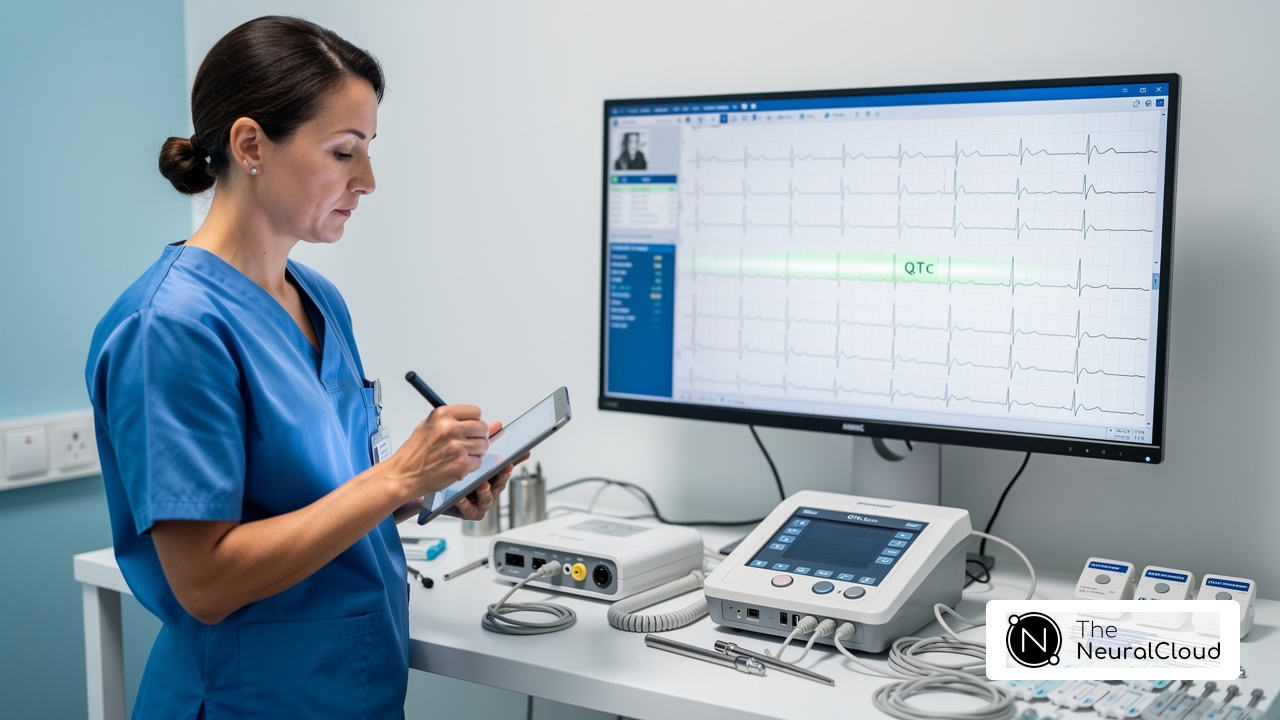
Understanding the nuances of agonal rhythm on an ECG is essential for healthcare professionals and tech developers. This erratic heartbeat, often indicative of severe distress, serves as a critical signal that can necessitate immediate medical intervention. As advanced health technologies continue to evolve, developers face the challenge of ensuring their tools can effectively recognize and respond to this life-threatening condition. By exploring the characteristics and clinical significance of agonal rhythm, as well as innovative analysis techniques, we can enhance diagnostic accuracy and significantly improve patient outcomes.
Define Agonal Rhythm: Characteristics and Clinical Significance
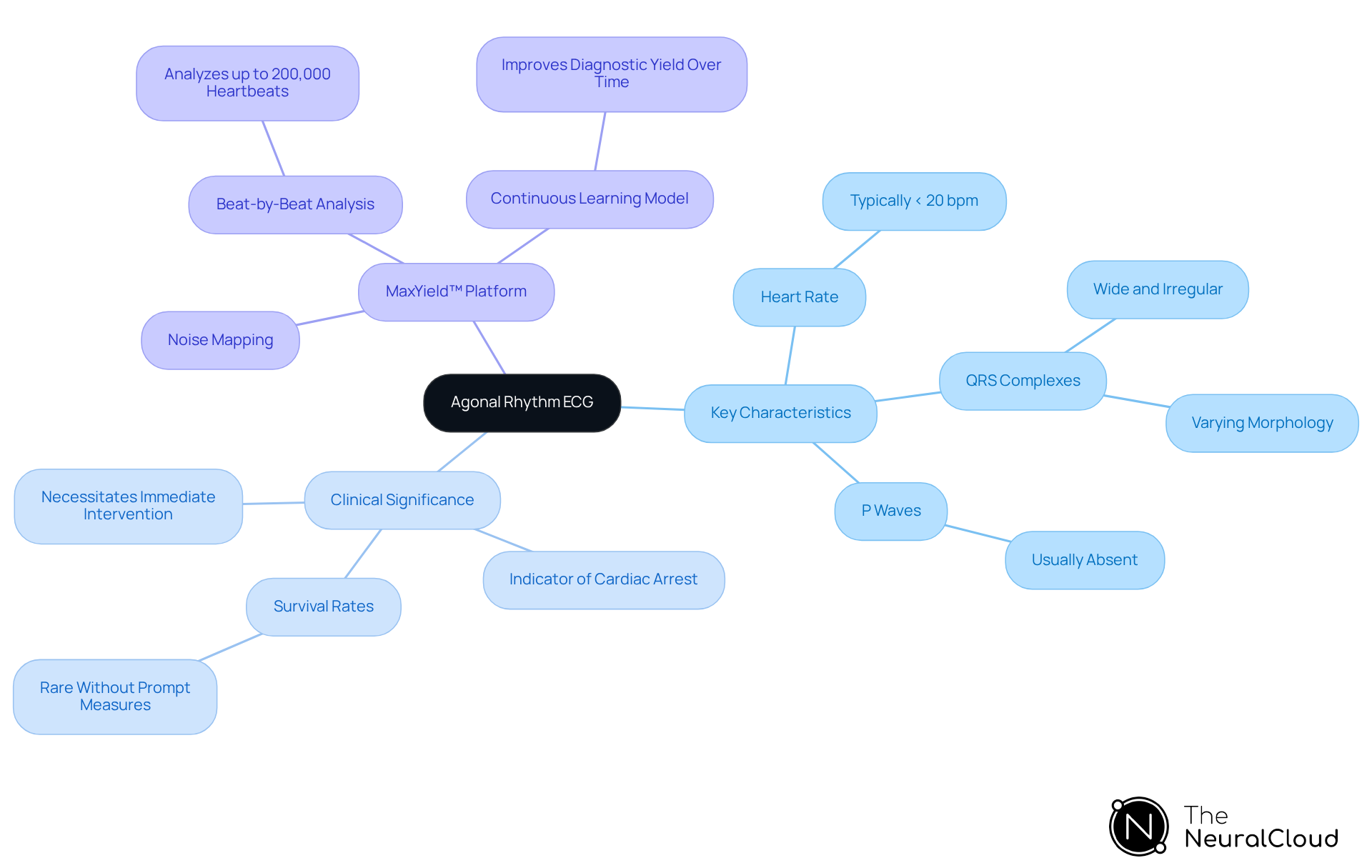
The agonal rhythm is characterized by an abnormally slow and erratic heartbeat, typically originating from the heart's lower chambers (ventricles). This pattern, often observed in dying patients, acts as a precursor to asystole. Clinically, it is identified as an arrhythmia with a heart rate of fewer than 20 beats per minute, accompanied by wide and bizarre QRS complexes and the absence of P waves. The presence of an abnormal heartbeat, particularly an agonal rhythm, indicates serious cardiac distress and is frequently associated with life-threatening conditions such as cardiac arrest, significant trauma, or severe hypoxia. Understanding these characteristics is crucial for health tech developers aiming to create tools that can effectively identify this critical state in patients.
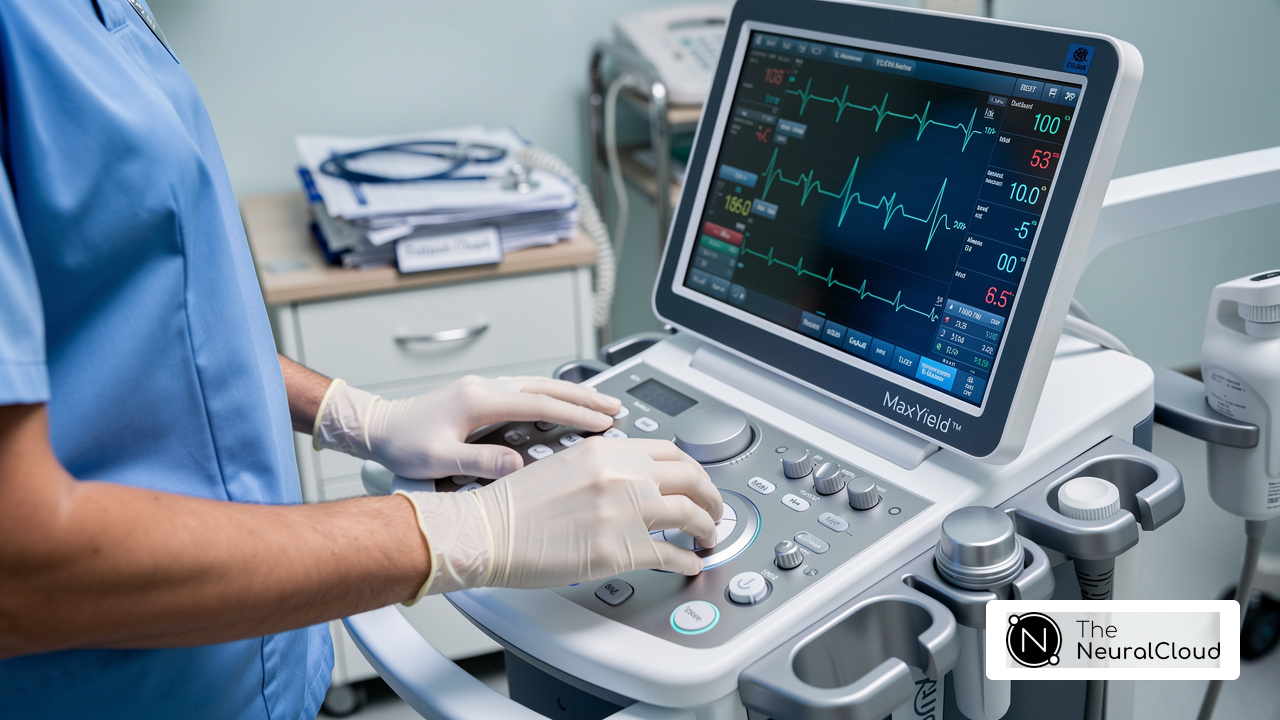
The 'Neural Cloud Solutions' plays a pivotal role in enhancing the evaluation of distressing patterns. By harnessing advanced algorithms, MaxYield™ effectively maps ECG signals through noise, isolating and labeling key features in each heartbeat. This capability transforms noisy recordings into clear data, providing beat-by-beat analysis of up to 200,000 heartbeats in less than 5 minutes. Moreover, the platform's continuous learning model further improves its diagnostic yield over time, ensuring that its accuracy and efficiency enhance with each use. The ability to deliver distinct, filtered ECG signals significantly aids in recognizing and analyzing distress patterns, thereby bolstering confident decision-making.
Key Characteristics:
- Heart Rate: Typically less than 20 bpm.
- QRS Complexes: Wide and irregular, often varying in morphology.
- P Waves: Usually absent, indicating a lack of organized atrial activity.
Clinical Significance:
Agonal rhythm serves as a critical warning and necessitates immediate medical intervention. Timely actions, particularly the use of CPR and defibrillation, can profoundly impact patient outcomes; research indicates that survival from a critical state is rare without prompt measures. Consequently, it is vital for developers to incorporate reliable detection algorithms, such as those provided by MaxYield™, into their platforms to enhance diagnosis and improve patient care.
Analyze Agonal Rhythm on ECG: Interpretation Techniques
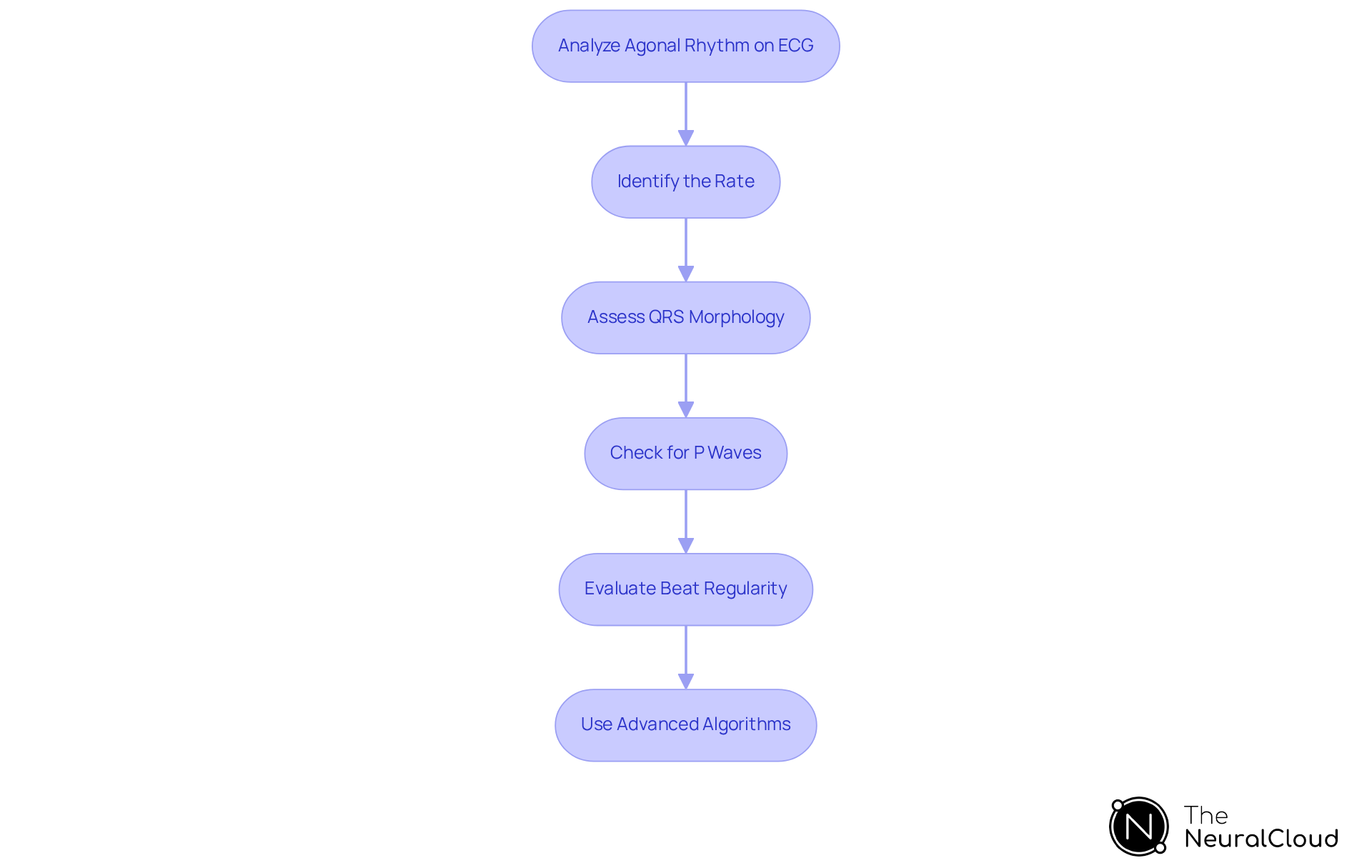
Examining the critical pattern on an ECG requires a methodical approach to analysis. Below are key techniques to effectively identify and analyze this rhythm:
- Identify the Rate: Count the number of beats in a six-second strip and multiply by ten. A rate under 20 bpm signifies a dying pattern.
- Assess QRS Morphology: Look for wide and bizarre complexes. Variability in morphology can indicate deterioration, often seen in dying patients.
- Check for P Waves: The absence of P waves is characteristic of disordered activity, indicating uncoordinated atrial function.
- Analyze Rhythm: An ECG typically exhibits an uneven pattern, featuring extended pauses between beats. This irregularity is crucial for distinguishing it from other arrhythmias.
- Use Technology: Implement AI-driven algorithms that can automatically identify and label rhythms in real-time, enhancing diagnostic accuracy and streamlining clinical workflows.
By employing these techniques, healthcare providers can create systems that not only detect but also provide clinicians with comprehensive insights into the patient's cardiac status. This approach improves the speed of analysis and enhances the decision-making process, allowing healthcare providers to act with confidence.
Implement Management Strategies for Agonal Rhythm: Clinical Protocols
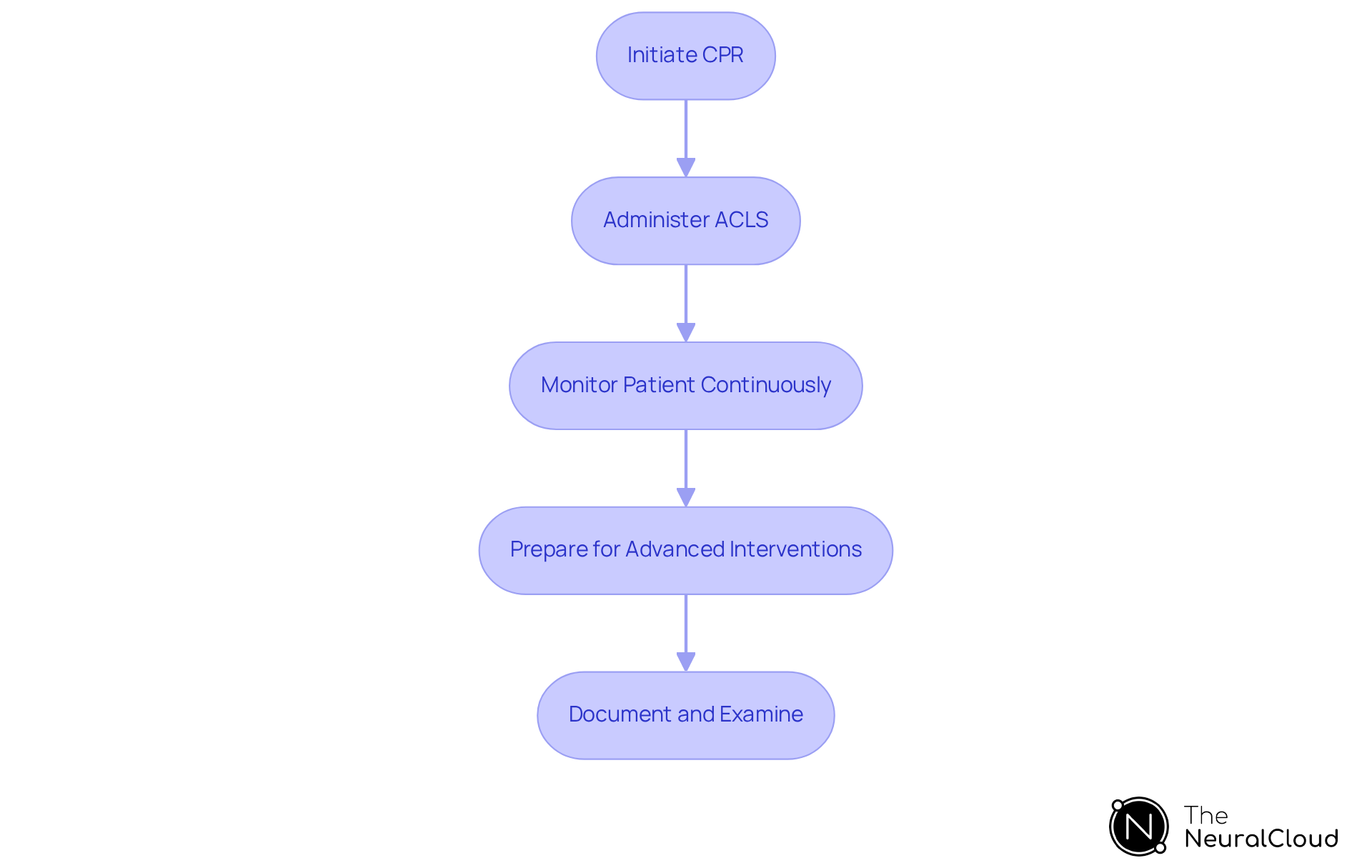
Managing agonal rhythm ECG patterns necessitates prompt and effective clinical intervention. Strategies to implement include the following:
Clinical Protocols:
- Initiate CPR: Begin cardiopulmonary resuscitation (CPR) immediately to sustain circulation and oxygen delivery to vital organs.
- Administer Medications: Adhere to ACLS protocols, which may involve administering epinephrine and atropine, and considering transcutaneous pacing if indicated.
- Monitor Patient Continuously: Ongoing ECG observation is essential to assess the effectiveness of interventions and identify any changes in heart pattern. Utilizing technology such as MaxYield™ improves this monitoring by swiftly marking P, QRS, and T wave onsets, offsets, and time-series intervals, even in loud environments.
- Prepare for Advanced Interventions: Be ready to implement advanced interventions such as defibrillation if the rhythm shifts to a shockable one.
- Document and Examine: Ensure all interventions and patient responses are recorded for subsequent review and quality enhancement. MaxYield™ supports this by providing analytics, enabling thorough examination.
Integration into Health Tech Solutions:
Health tech developers should ensure their systems can detect agonal rhythms and integrate management protocols to assist healthcare professionals in real-time decision-making. This capability is vital for enhancing patient outcomes during critical situations. Incorporating insights from studies, such as the SOS-KANTO 2017 study, highlights the significance of early intervention, as agonal breathing at hospital arrival is associated with better neurological outcomes and increased survival. Furthermore, the integration of technology can significantly improve the effectiveness of clinical responses.
Conclusion
Understanding the agonal rhythm ECG is vital for health tech developers and healthcare professionals alike. This critical cardiac pattern, often indicative of severe distress, requires immediate recognition and intervention to improve patient outcomes. The MaxYield™ platform enhances the detection and analysis of agonal rhythms, facilitating timely and effective clinical responses.
The article outlines the characteristics of agonal rhythm, including its distinct ECG features and clinical significance. Key insights emphasize the importance of:
- Real-time analysis
- The implementation of advanced algorithms
- The necessity for prompt management strategies
These aspects underscore the urgency of addressing this life-threatening condition. Techniques for interpretation and established clinical protocols further equip healthcare providers with the tools needed to navigate these critical scenarios.
Mastering agonal rhythm ECG has implications that extend beyond individual patient care; they resonate throughout the healthcare system. As health tech developers innovate and refine their solutions, the integration of reliable detection algorithms and management protocols becomes paramount. This commitment to advancing ECG analysis not only enhances clinical decision-making but also ultimately saves lives. Engaging with the latest research and best practices in agonal rhythm care is essential for fostering a more responsive and effective healthcare landscape.
Frequently Asked Questions
What is agonal rhythm and how is it characterized?
Agonal rhythm is characterized by an abnormally slow and erratic heartbeat, typically originating from the heart's lower chambers (ventricles). It is identified on an ECG with a heart rate of fewer than 20 beats per minute, wide and bizarre QRS complexes, and the absence of P waves.
What does the presence of an agonal rhythm indicate?
The presence of an agonal rhythm indicates serious cardiac distress and is frequently associated with life-threatening conditions such as cardiac arrest, significant trauma, or severe hypoxia.
Why is understanding agonal rhythm important for health tech developers?
Understanding agonal rhythm is crucial for health tech developers aiming to create accurate diagnostic tools that can effectively identify this critical state in patients.
How does the MaxYield™ platform enhance the evaluation of agonal rhythm?
The MaxYield™ platform enhances evaluation by using advanced AI-driven automation to map ECG signals through noise, isolating and labeling key features in each heartbeat. It can analyze up to 200,000 heartbeats in less than 5 minutes and continuously improves its diagnostic yield over time.
What are the key characteristics of an agonal rhythm ECG?
The key characteristics include a heart rate typically less than 20 beats per minute, wide and irregular QRS complexes that often vary in morphology, and usually absent P waves, indicating a lack of organized atrial activity.
What is the clinical significance of recognizing agonal rhythm?
Recognizing agonal rhythm is critical as it serves as an indicator of impending cardiac arrest and necessitates immediate medical intervention. Survival from a critical state is rare without prompt measures such as CPR and defibrillation.
What role do detection algorithms play in ECG analysis?
Reliable detection algorithms, such as those provided by MaxYield™, are vital for enhancing clinical decision-making and improving patient care by accurately identifying distress patterns like agonal rhythm in ECG analysis.
List of Sources
- Define Agonal Rhythm: Characteristics and Clinical Significance
- carecard.com (https://carecard.com/blog/agonal-rhythm-causes-symptoms-and-what-it-means)
- sunfox.in (https://sunfox.in/blogs/understanding-agonal-rhythm?srsltid=AfmBOor6hPcRqCTwLuH8C8jb2ngLQ91pcFsTDxnYqToO-G_C6Fnp6APZ)
- pubmed.ncbi.nlm.nih.gov (https://pubmed.ncbi.nlm.nih.gov/1443844)
- my.clevelandclinic.org (https://my.clevelandclinic.org/health/articles/22937-agonal-rhythm)
- Analyze Agonal Rhythm on ECG: Interpretation Techniques
- my.clevelandclinic.org (https://my.clevelandclinic.org/health/articles/22937-agonal-rhythm)
- lms.resus.org.uk (https://lms.resus.org.uk/modules/m55-v2-bradycardia/10346/m55/t05/content/m55_t05_015sr.htm)
- Accuracy of Physicians’ Electrocardiogram Interpretation (https://jamanetwork.com/journals/jamainternalmedicine/fullarticle/2771093)
- cardiofellows.com (https://cardiofellows.com/newsletter-nov-2020.html)
- Implement Management Strategies for Agonal Rhythm: Clinical Protocols
- thecardiologyadvisor.com (https://thecardiologyadvisor.com/news/aha-issues-updated-guidance-adult-advanced-cardiovascular-life-support)
- innovationsincrm.com (https://innovationsincrm.com/latest-news)
- pmc.ncbi.nlm.nih.gov (https://pmc.ncbi.nlm.nih.gov/articles/PMC11109003)
- heart.org (https://heart.org/en/news/2019/04/08/guidelines-call-for-stronger-more-coordinated-cardiac-arrest-response)
- heart.org (https://heart.org/en/news/2023/02/01/11-things-to-know-to-save-a-life-with-cpr)