Introduction
Understanding the intricacies of electrocardiography (ECG) is essential for healthcare professionals seeking to enhance their diagnostic capabilities. The challenges in ECG analysis often stem from the limitations of standard electrode placements, which can overlook subtle abnormalities. Contiguous leads, providing a continuous view of the heart's electrical activity, are critical for addressing these challenges.
How can clinicians maximize the potential of these leads to improve patient outcomes and make timely decisions? This article explores the setup and interpretation of contiguous leads in ECG analysis. It reveals how advanced technologies, such as Neural Cloud Solutions' MaxYield™ platform, can transform cardiac diagnostics, ultimately enhancing the accuracy and efficiency of ECG interpretation.
Define ECG and Contiguous Leads: Key Concepts for Healthcare Professionals
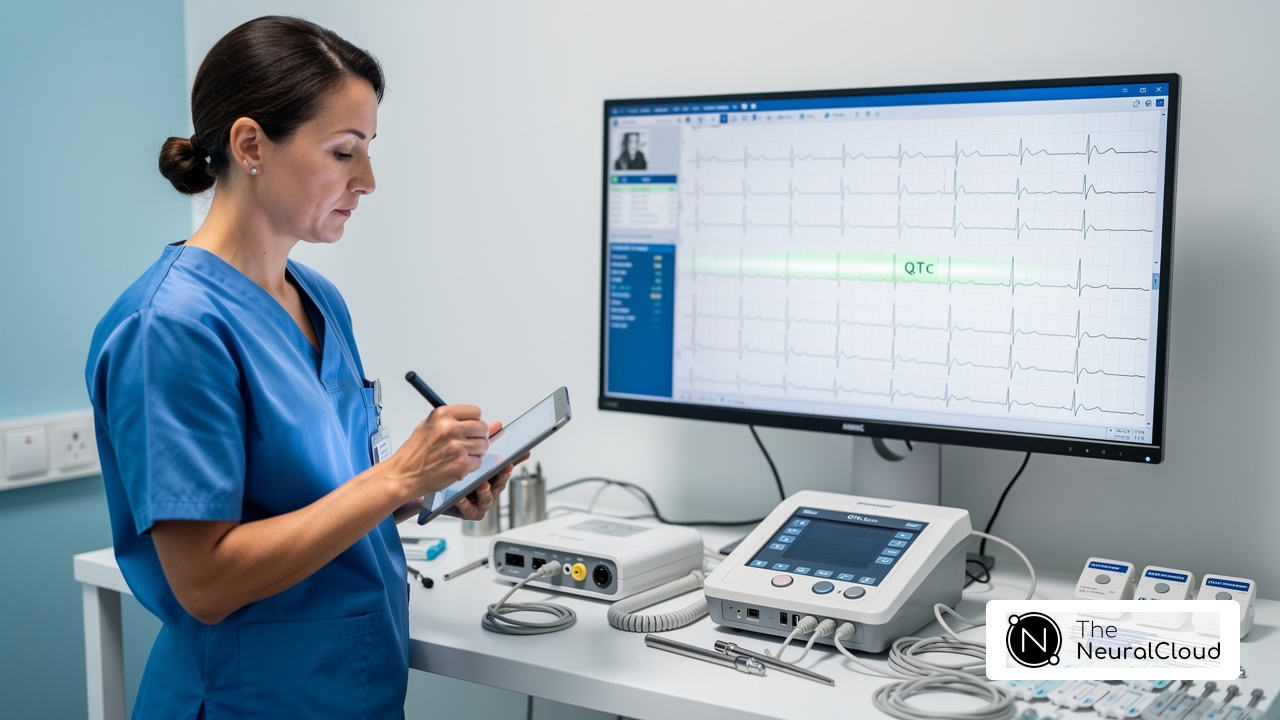
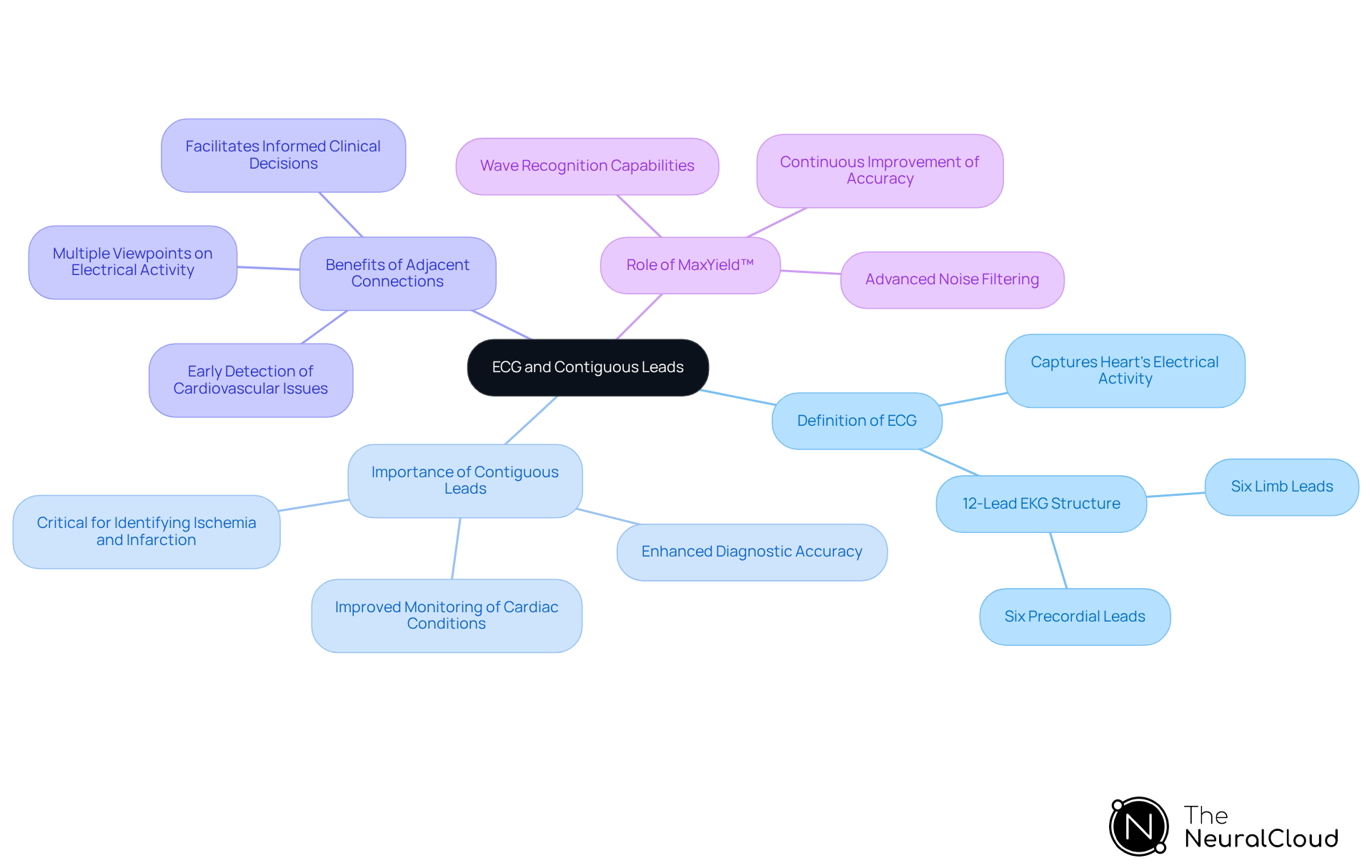
Electrocardiography (ECG) is a crucial diagnostic tool that captures the heart's electrical activity over time, playing a vital role in cardiac assessment. Contiguous leads are strategically arranged ECG connections that facilitate continuous monitoring of the heart's electrical activity across adjacent regions of the heart muscle. This setup is essential for identifying abnormalities that may remain concealed when using isolated electrodes. For example, to recognize ischemia and infarction by providing multiple viewpoints on the heart's electrical activity, enabling healthcare professionals to make more informed clinical decisions.
Recent studies highlight the efficacy of adjacent connections in ECG evaluation, demonstrating their capacity to improve diagnostic accuracy. By examining data from over 1.2 million ECG-echocardiogram pairs, research has shown that the 12-lead EKG, which utilizes contiguous leads, allows for early identification of various cardiovascular issues, such as arrhythmias and indications of myocardial infarction. This comprehensive approach enables clinicians to monitor electrocardiographic patterns over time, leading to better patient outcomes.
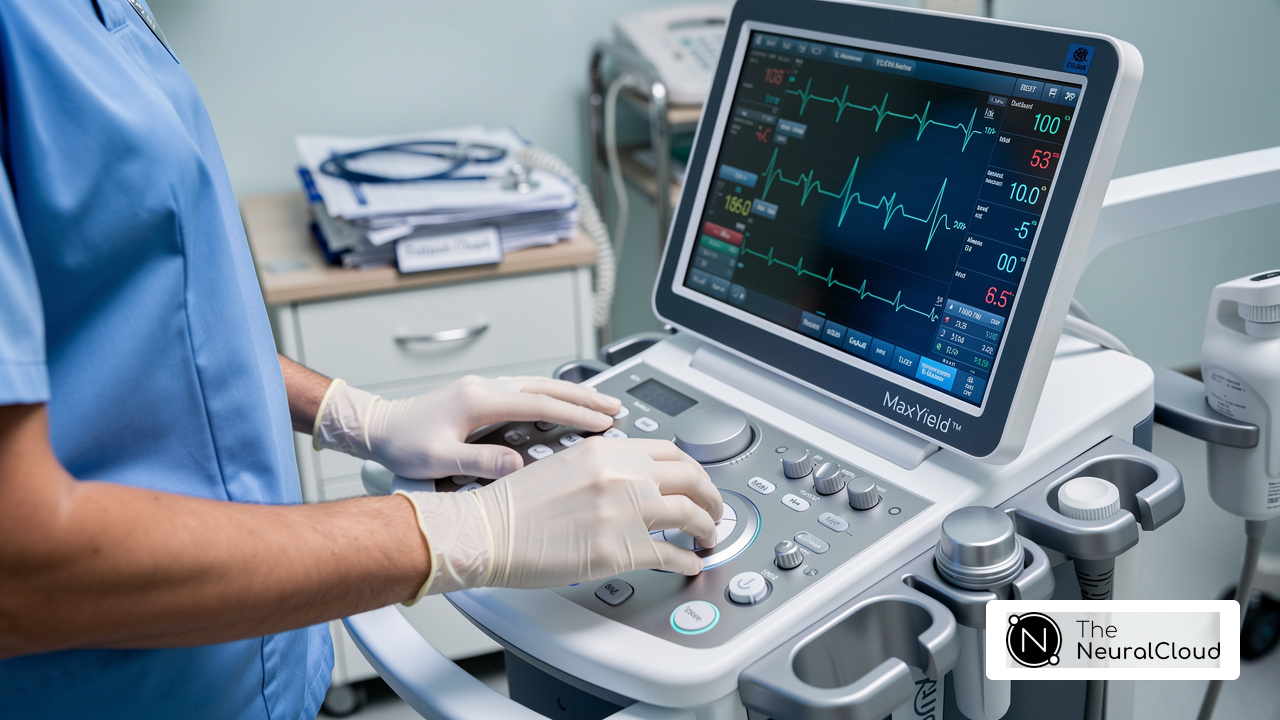
Neural Cloud Solutions' technology significantly enhances this process by employing advanced algorithms. MaxYield™ identifies and labels critical data even in recordings with high levels of noise and artifact, rapidly isolating ECG waves from recordings affected by baseline wander, movement, and muscle artifact. This ensures that the examination of adjacent sources is not only precise but also effective, transforming unclear recordings into comprehensive insights. With the ability to recover previously obscured sections of lengthy Holter, 1-Lead, and patch monitor recordings, MaxYield™ aids healthcare professionals in making decisions based on clear and reliable data. Furthermore, the algorithm evolves with each use, continuously improving its accuracy and efficiency over time.
Cardiologists emphasize the importance of using contiguous leads in their practice. They note that this approach is crucial for making informed patient care decisions. For instance, in cases of anterolateral ST-segment elevation myocardial infarction, the ECG displayed ST elevation in V1-V3, I, and aVL, with reciprocal ST depression in inferior electrodes. This underscores the significance of contiguous leads in diagnosing critical conditions.
In summary, understanding adjacent signals is essential for healthcare professionals, as it enhances their ability to interpret ECG readings accurately and make timely clinical decisions. The integration of MaxYield™ into their workflow not only aids in diagnosing cardiac abnormalities but also supports the development of effective treatment plans tailored to individual patient needs.
Explain the Role of Contiguous Leads in Cardiac Diagnosis
Adjacent signals play a pivotal role in cardiac diagnosis, offering a comprehensive perspective on the heart's electrical activity. By collecting data from surrounding areas, these signals help identify subtle variations in rhythm and morphology, which may indicate conditions such as ischemia or arrhythmias. This capability is especially critical in emergency situations, where timely interventions can significantly impact patient outcomes. For instance, in cases of myocardial infarction, the ST segment must be elevated by at least 1 mm in two adjacent leads to confirm the diagnosis, underscoring their diagnostic importance.
The integration of technology, such as those utilized by Neural Cloud Solutions, enhances the analysis of connected opportunities. Their system employs a continuous learning model that adapts with each use, markedly improving the accuracy and efficiency of ECG interpretation. AI algorithms can process extensive amounts of ECG data with exceptional precision, achieving results in real-time. Furthermore, the platform features advanced tools, which enhance signal clarity and minimize artifacts, thus improving diagnostic accuracy and assisting in the identification of cardiac events that may be missed in traditional analyses.
Current perspectives among cardiologists emphasize the benefits of utilizing contiguous leads, particularly in improving diagnostic accuracy and guiding treatment decisions. By examining signals from adjacent leads alongside standard 12-lead perspectives, healthcare professionals can gain insights into cardiac activity that may not be apparent from individual signal assessments. This holistic approach is essential for timely interventions and optimizing patient care. Additionally, adjacent signals aid in distinguishing between different types of arrhythmias for precise diagnoses, which is crucial for effective treatment planning.
As the integration of AI in healthcare continues to advance, the importance of continuous connections in delivering accurate and actionable insights remains vital. Understanding interconnected factors is essential for prompt interventions and improved patient outcomes. Expert testimonials highlight that the capabilities of the technology, including its noise filtering and automation features, are transforming ECG analysis and enhancing clinical workflows.

Guide to Setting Up and Interpreting Contiguous Leads in ECG
Setting up involves several critical steps to ensure accurate ECG readings:
- Choose the Suitable Electrode: Select electrodes that provide optimal coverage of the heart's electrical activity. Common contiguous electrode setups include V1-V6 for assessing the anterior wall.
- Prepare the Skin: Clean the skin at the sites to ensure good contact and minimize noise. Alcohol wipes effectively remove oils and dirt.
- Apply Electrodes: Position the electrodes according to the chosen connection arrangement, ensuring they are securely attached to prevent movement artifacts during recording.
- Connect to the ECG Machine: Attach the lead wires to the ECG machine, verifying that each lead is connected to the correct channel.
- Start the Recording: Initiate the process and monitor the display for immediate issues, such as poor signal quality or electrode displacement.
- Interpret the Results: After recording, analyze for key features like P-waves, QRS complexes, and T-waves. Look for abnormalities that may indicate cardiac issues, such as ST-segment elevation or depression.
- Utilize AI Tools: Leverage advanced tools like AI software to automate evaluation and enhance interpretation accuracy. This technology streamlines workflow with its analysis and wave recognition capabilities, allowing for the processing of more data in less time. It can help identify critical features and provide insights that may be overlooked during manual analysis.
- Ensure Proper Placement: Correct placement is essential, as incorrect placement can result in misdiagnosis and impact patient safety. Following established guidelines ensures that healthcare workers meet regulatory standards and provide reliable ECG results.
By adhering to these steps, healthcare professionals can effectively set up and interpret ECG with precision, leading to improved diagnosis and enhanced patient care.

Conclusion
Understanding the intricacies of Electrocardiography (ECG) and the role of contiguous leads is essential for healthcare professionals aiming to enhance their diagnostic capabilities. The strategic use of contiguous leads allows for a more comprehensive view of the heart's electrical activity, enabling early detection of critical cardiac conditions. This holistic approach not only aids in diagnosing issues like ischemia and arrhythmias but also equips clinicians with the insights needed to make informed treatment decisions.
The article highlights several key points:
- The significance of adjacent signals in cardiac diagnosis.
- The integration of advanced technologies like Neural Cloud Solutions' MaxYield™ platform.
- The importance of proper setup and interpretation of contiguous leads.
By leveraging AI and noise-filtering capabilities, healthcare professionals can improve the accuracy of their ECG analyses, ultimately leading to better patient outcomes. Moreover, the emphasis on standard patterns and variations in contiguous leads underscores their diagnostic importance, particularly in urgent scenarios.
In conclusion, mastering the setup and interpretation of contiguous leads in ECG is not just a technical skill; it is a vital component of effective cardiac care. As the field continues to evolve with technological advancements, embracing these techniques will be crucial for healthcare professionals committed to delivering high-quality patient care. A proactive approach to utilizing contiguous leads and AI tools can significantly enhance diagnostic precision, empowering clinicians to make timely and effective clinical decisions that ultimately improve patient health.
Frequently Asked Questions
What is ECG and why is it important?
Electrocardiography (ECG) is a diagnostic tool that captures the heart's electrical activity over time, which is vital for identifying various cardiac conditions.
What are contiguous leads in ECG?
Contiguous leads are strategically arranged ECG connections that facilitate continuous monitoring of the heart's electrical activity across adjacent regions of the heart muscle, helping to identify abnormalities that might not be visible with separate electrodes.
How do contiguous leads enhance ECG evaluation?
Contiguous leads provide multiple viewpoints on the heart's electrical activity, which improves the ability to recognize conditions like ischemia and infarction, allowing healthcare professionals to make more informed clinical decisions.
What recent studies indicate about the use of contiguous leads?
Studies involving over 1.2 million ECG-echocardiogram pairs show that the 12-lead EKG, which uses contiguous leads, allows for early identification of cardiovascular issues such as arrhythmias and myocardial infarction.
How does the MaxYield™ platform improve ECG analysis?
MaxYield™ enhances ECG analysis by employing advanced noise filtering and wave recognition, allowing it to identify and label critical data in recordings with high noise levels, thereby transforming unclear recordings into comprehensive insights.
What is the significance of analyzing contiguous leads for cardiologists?
Cardiologists emphasize that recognizing standard patterns and variations in contiguous leads is crucial for making informed patient care decisions, especially in critical conditions like anterolateral ST-segment elevation myocardial infarction.
How does MaxYield™ contribute to clinical decision-making?
MaxYield™ aids healthcare professionals by recovering previously obscured sections of ECG recordings, allowing for confident clinical decisions based on clear and reliable data, and continuously improving its accuracy and efficiency over time.
Why is understanding adjacent signals important for healthcare professionals?
Understanding adjacent signals enhances healthcare professionals' ability to interpret ECG readings accurately and make timely clinical decisions, which is essential for effective patient care.
List of Sources
- Define ECG and Contiguous Leads: Key Concepts for Healthcare Professionals
- cme4life.com (https://cme4life.com/contiguous-leads-understanding-ekg-patterns)
- reuters.com (https://reuters.com/business/healthcare-pharmaceuticals/health-rounds-ai-expands-usefulness-common-heart-test-2025-07-18)
- ahajournals.org (https://ahajournals.org/doi/10.1161/CIRCULATIONAHA.125.076045)
- nyp.org (https://nyp.org/advances/article/cardiology/study-shows-ai-screening-tool-developed-at-newyork-presbyterian-and-columbia-can-detect-structural-heart-disease-using-electrocardiogram-data)
- cardiovascularbusiness.com (https://cardiovascularbusiness.com/topics/cardiac-imaging/ep-lab/ai-powered-cardiac-mapping-system-gains-important-approval)
- Explain the Role of Contiguous Leads in Cardiac Diagnosis
- cme4life.com (https://cme4life.com/contiguous-leads-understanding-ekg-patterns)
- mayoclinic.org (https://mayoclinic.org/medical-professionals/pediatrics/news/revolutionizing-pediatric-cardiac-care-through-ai-enabled-ecgs/mac-20586669)
- STEMI: ST-segment Elevation Myocardial Infarction - The Cardiology Advisor (https://thecardiologyadvisor.com/ddi/stemi-st-elevation-myocardial-infarction)
- Investigating the Efficacy of AI-Powered Innovations in ECG Analysis and Continuous Heart Monitoring: A Comprehensive Narrative Review - PMC (https://pmc.ncbi.nlm.nih.gov/articles/PMC12419789)
- researchgate.net (https://researchgate.net/publication/327004300_Criteria_for_ECG_detection_of_acute_myocardial_ischemia_Sensitivity_versus_specificity)
- Guide to Setting Up and Interpreting Contiguous Leads in ECG
- Electrocardiogram - StatPearls - NCBI Bookshelf (https://ncbi.nlm.nih.gov/books/NBK549803)
- ECG Lead Placement Guide for 12 Lead ECG (https://numed.co.uk/news/12-lead-ecg-lead-placement-guide)
- Contiguous Leads on ECG: A Comprehensive Guide (https://cme4life.com/contiguous-leads-on-ecg-a-comprehensive-guide)
- ECG Electrode Placement: Risks, Tech, and Growing Demand in 2025- (https://intcomedical.com/news/info/What-You-Need-to-Know-About-ECG-Electrode-Placement-in-2025.html)
- 12-Lead ECGs: Room for Improvement (https://jems.com/patient-care/12-lead-ecgs-room-for-improvement)