Introduction
Navigating the challenges of ECG analysis is essential for health technology developers who want to improve cardiac diagnostics. Understanding the basics, like grid structure and recording speed, is key to ensuring devices provide accurate and reliable results. However, a significant question arises: how can developers effectively tackle the complexities of measurement techniques and new technologies to avoid common pitfalls in ECG analysis? This article explores best practices and innovative solutions that aim to enhance the quality of ECG assessments, ultimately benefiting patient care.
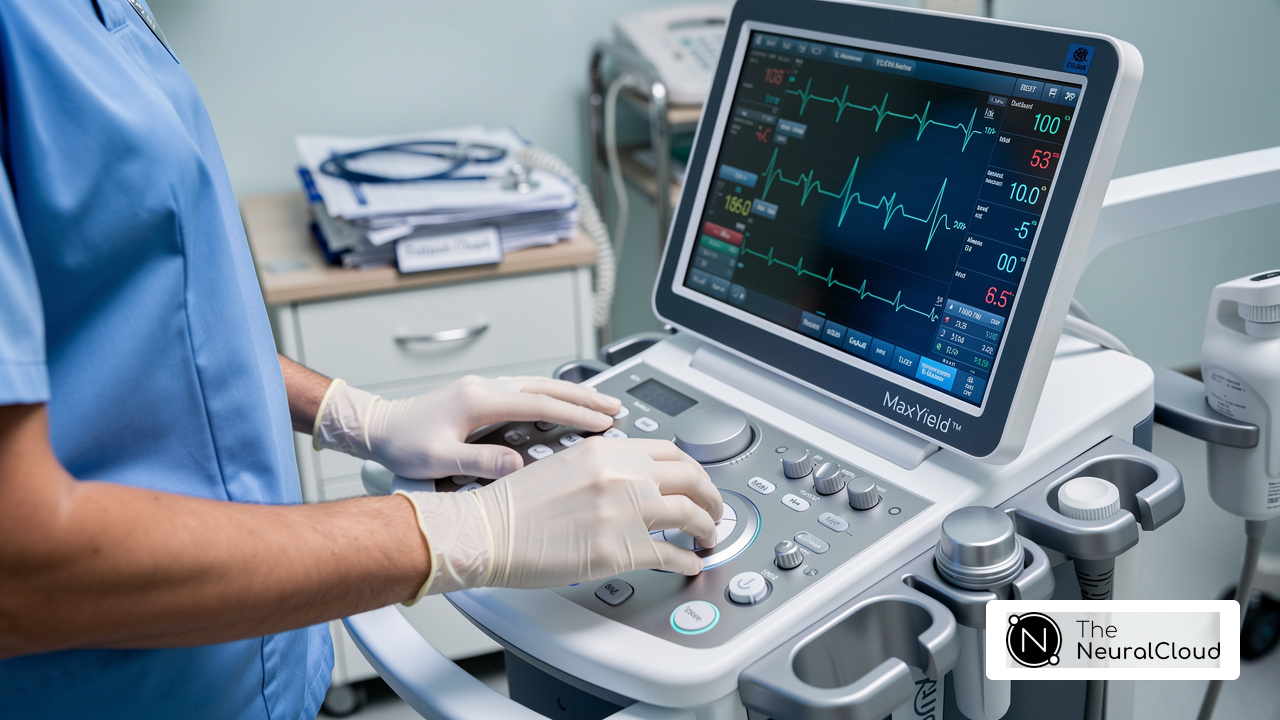
The MaxYield™ platform addresses these challenges head-on. It offers features designed to streamline ECG analysis, such as advanced algorithms for precise measurements and user-friendly interfaces that simplify data interpretation. By leveraging these features, healthcare professionals can enhance their diagnostic capabilities, leading to more accurate patient assessments.
The advantages of the MaxYield™ platform extend beyond just improved accuracy. With its intuitive design, healthcare providers can save time and reduce the likelihood of errors during ECG analysis. This not only boosts efficiency but also enhances the overall quality of patient care, making it a valuable tool in any clinical setting.
Understand ECG Paper Fundamentals
A solid understanding of ECG paper is essential for health technology creators, as it serves as a vital medium for documenting the heart's electrical activity. Key aspects include:
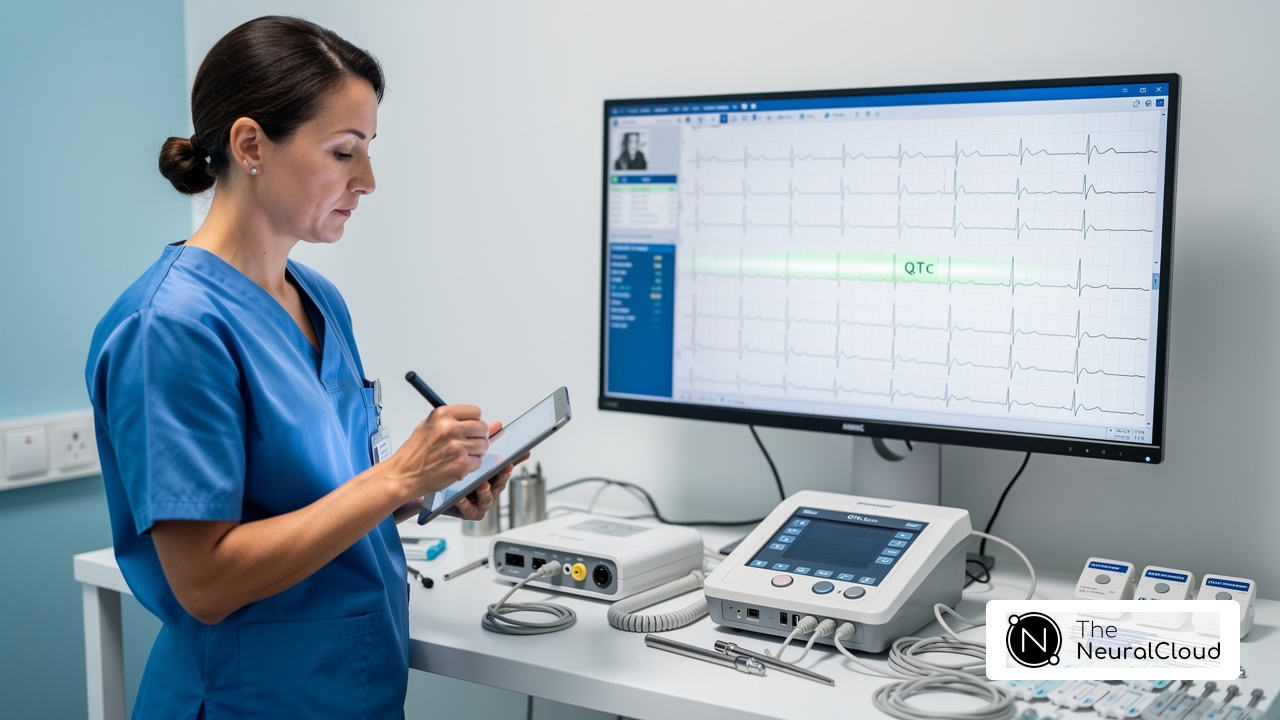
- ECG paper features a grid divided into small squares (1 mm x 1 mm) and larger squares (5 mm x 5 mm). Each small square represents 0.04 seconds. This is crucial for accurate timing, enabling precise measurements.
- Standard ECG machines operate at a speed of 25 mm/sec. This speed is critical for time-based analysis of cardiac events. Ensuring device compatibility with this standard is essential to avoid discrepancies in readings and maintain reliability.
- Various ECG paper types exist, including thermal and grid-based options. Each type has its benefits and drawbacks. Understanding these can assist creators in choosing the most suitable type for their applications, ensuring optimal performance.
By mastering these fundamentals, programmers can develop ECG solutions that significantly enhance diagnostic accuracy and improve patient outcomes.

Implement Accurate Measurement Techniques
To ensure accuracy, developers should adopt several key techniques:
- Regular calibration of ECG machines is essential for maintaining accuracy. Approximately 30% of medical device errors in healthcare settings stem from calibration issues. This highlights the need for developers to implement protocols for routine checks against recognized standards. Such practices not only enhance device reliability but also build trust among healthcare professionals.
- Proper placement is crucial for achieving dependable measurements. Research indicates that misplacement can lead to significant inaccuracies in ECG assessments. A 2019 study revealed a 15% increase in false-positive diagnoses of myocardial infarction due to calibration errors. Developers should provide guidance on optimal electrode positioning, emphasizing anatomical landmarks to minimize artifacts and improve signal quality.
- Utilizing advanced filtering techniques can help eliminate noise and artifacts from ECG signals. Developers should integrate algorithms capable of dynamically adjusting filtering based on detected signal quality. This ensures that only relevant data is analyzed, greatly improving the clarity of ECG results and allowing for more precise interpretations.
- Implementing quality control measures can help identify and flag potential errors in ECG readings. This proactive approach allows for immediate corrective actions, enhancing the overall reliability of ECG analysis. Regular calibration of ECG machines ensures accurate measurements, which has been shown to significantly reduce errors, leading to improved diagnostic accuracy and better patient outcomes.
By concentrating on these techniques, developers can significantly enhance the precision of their ECG solutions, ultimately leading to better clinical outcomes.
Leverage Advanced Technology for Enhanced Accuracy
To enhance the accuracy of ECG analysis, developers should consider several advanced technologies that address existing challenges in the field:
- Advanced Algorithms: These algorithms analyze patterns and detect anomalies that traditional methods might overlook, leading to earlier and more accurate diagnoses. For example, AI models have achieved arrhythmia detection accuracies exceeding 99% in controlled datasets, showcasing their potential to revolutionize cardiac care.
- Machine Learning Models: By utilizing data-driven techniques, developers can enhance the precision of ECG readings over time. Recent advancements indicate that AI algorithms can classify 12 heart rhythms with an accuracy of 90%, outperforming traditional clinicians. Developers should focus on building models that continuously improve as they analyze more data, which will increase efficiency and lower operational costs.
- Wearable Devices: Incorporating ECG analysis features into wearable devices allows for continuous monitoring and real-time information analysis. This proactive approach facilitates timely interventions and better management of cardiac health. Studies have shown that monitoring is associated with reduced left ventricular ejection fraction, emphasizing the importance of early detection.
- Cloud Technology: Utilizing cloud technology for information storage and processing enhances the scalability and accessibility of tools for analysis. Cloud solutions enable seamless information sharing among healthcare providers, improving collaboration and patient care. The integration of AI with cloud-based systems can further streamline workflows, allowing clinicians to focus on high-level decision-making rather than manual data processing.
By embracing these advanced technologies, developers can create ECG solutions that are not only more accurate but also more efficient, ultimately benefiting healthcare professionals and patients alike.

Address Challenges in ECG Measurement
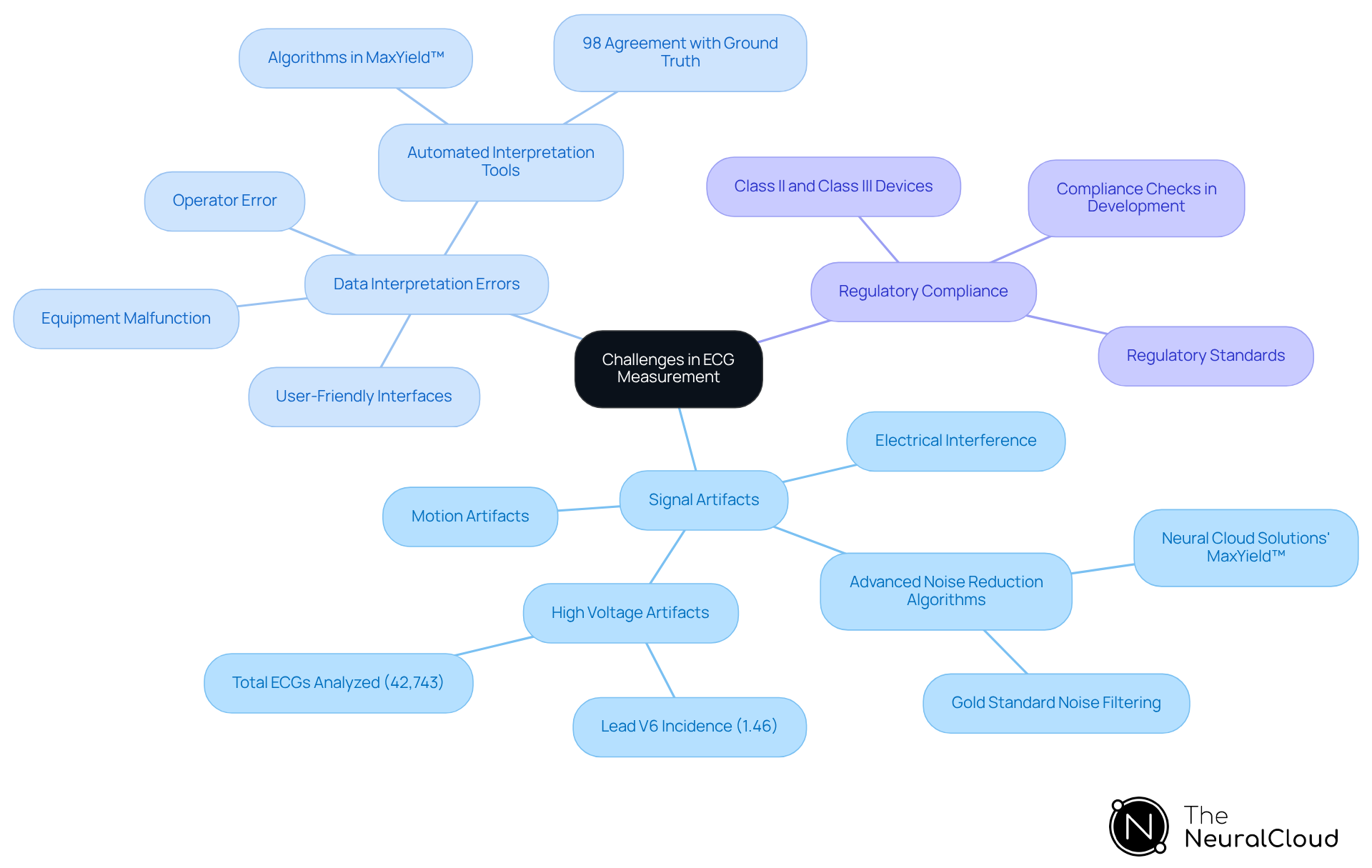
Developers face several key challenges in ECG measurement that must be addressed to ensure accuracy.
- Signal Artifacts: Motion artifacts and electrical interference can significantly compromise ECG readings. Advanced noise reduction algorithms, such as those offered by Neural Cloud Solutions' MaxYield™, are essential. This technology emphasizes P, QRS, and T Wave components, streamlining workflows and allowing for the examination of more data in less time. This capability is crucial, especially considering studies showing that lead V6 exhibits a notable 1.46% incidence out of a total of 42,743 ECGs analyzed. Such robust signal processing techniques enhance the integrity of data related to heart rhythms.
The effectiveness of electrode placement relies on proper contact. Poor contact can lead to inaccuracies, as evidenced by findings indicating a high level of variation in electrode placement among paramedics. Developers should prioritize creating high-quality electrodes that ensure reliable contact and consider providing comprehensive training on proper application techniques. Research indicates that correct placement of electrodes, particularly V1, significantly increases the likelihood of accurate readings across other leads, highlighting the importance of training and standardization.
- Data Interpretation Errors: Misinterpretation of ECG data can arise from operator error and equipment malfunction. To mitigate this, creators should integrate user-friendly interfaces and decision support tools that assist healthcare professionals in making precise assessments using ECG data. The implementation of algorithms, such as those in MaxYield™, that automatically identify non-physiological artifacts can enhance the reliability of readings. Studies have shown that these algorithms achieve over 98% agreement with ground truth in detecting artifacts, showcasing their effectiveness.
- Regulatory Compliance: Ensuring that ECG devices meet industry standards is crucial for market acceptance. Developers must stay informed about the latest regulations, such as those governing Class II and Class III devices, and incorporate compliance checks into their product development processes. This proactive approach not only facilitates smoother market entry but also enhances the safety and efficacy of ECG solutions.
By addressing these challenges with MaxYield™, including the development of innovative solutions, developers can significantly enhance the reliability and effectiveness of their ECG solutions, ultimately improving patient care through precise diagnostics.
Conclusion
Mastering ECG paper measurements is essential for health tech developers who want to improve cardiac diagnostics. A solid grasp of key aspects like grid structure, recording speed, and the various types of ECG paper available forms the foundation for creating reliable and accurate ECG solutions. These elements not only ensure precise measurements but also play a significant role in enhancing patient outcomes.
The article outlines several best practices for achieving accurate ECG measurements:
- Regular calibration of equipment
- Proper electrode placement
- Advanced signal filtering techniques
- Automated data validation
By adopting these methods, developers can reduce errors and boost the reliability of ECG analysis. Furthermore, utilizing advanced technologies such as artificial intelligence, machine learning, and cloud-based solutions can enhance the accuracy and efficiency of ECG measurements, effectively addressing existing challenges in the field.
In summary, the significance of mastering ECG paper measurements is profound. By embracing best practices and innovative technologies, developers can transform cardiac care, ultimately benefiting healthcare professionals and patients alike. The commitment to accuracy and reliability in ECG solutions is not merely a technical necessity; it is a critical step toward improving patient safety and health outcomes in an increasingly complex healthcare environment.
Frequently Asked Questions
What is the importance of understanding ECG paper measurements?
Understanding ECG paper measurements is essential for health technology creators as it serves as a vital medium for documenting the heart's electrical activity, enabling accurate diagnostics.
What is the grid structure of ECG paper?
ECG paper features a grid divided into small squares (1 mm x 1 mm) and larger squares (5 mm x 5 mm). Each small square represents 0.04 seconds, which is crucial for precise measurements of heart rate and rhythm.
What is the standard speed of recording for ECG machines?
Standard ECG machines operate at a speed of 25 mm/sec, which is critical for time-based analysis of cardiac events and maintaining diagnostic integrity.
What are the different types of ECG paper available?
There are various types of ECG paper, including thermal and grid-based options. Each type has its benefits and drawbacks, which can influence the choice of paper based on ECG measurements for specific applications.
How can mastering ECG paper fundamentals benefit health technology developers?
Mastering ECG paper fundamentals allows programmers to develop ECG solutions that enhance diagnostic accuracy and improve patient outcomes.
List of Sources
- Understand ECG Paper Fundamentals
- pandapaperroll.com (https://pandapaperroll.com/ecg-paper-101)
- ECG Rate Interpretation (https://litfl.com/ecg-rate-interpretation)
- jotamachinery.com (https://jotamachinery.com/academy/what-is-the-purpose-of-the-ecg-paper-roll)
- Implement Accurate Measurement Techniques
- linkedin.com (https://linkedin.com/pulse/why-your-doctor-trusts-calibrated-devices-nordic-metrology-science-kmazc)
- Accuracy of ECG chest electrode placements by paramedics: an observational study - PMC (https://pmc.ncbi.nlm.nih.gov/articles/PMC8312365)
- academia.edu (https://academia.edu/17002437/In_house_development_of_test_equipment_for_quality_control_and_training_Case_study_a_prototype_ECG_simulator_tester)
- 12-Lead ECG Electrode Placement: Best Practices- (https://intcomedical.com/news/info/12-lead-ecg-electrode-placement-best-practices-for-clinical-accuracy-in-healthcare.html)
- Leverage Advanced Technology for Enhanced Accuracy
- Checking your browser - reCAPTCHA (https://pmc.ncbi.nlm.nih.gov/articles/PMC10145690)
- Year in Review: Evidence Around AI in Cardiology Grows (https://tctmd.com/news/year-review-evidence-around-ai-cardiology-grows)
- AI-powered ECG model outperforms doctors in detecting hidden heart disease (https://news-medical.net/news/20250721/AI-powered-ECG-model-outperforms-doctors-in-detecting-hidden-heart-disease.aspx)
- newsroom.heart.org (https://newsroom.heart.org/news/an-ai-tool-detected-structural-heart-disease-in-adults-using-a-smartwatch)
- The Use of Artificial Intelligence in ECG Interpretation in the Outpatient Setting: A Scoping Review (https://cureus.com/articles/405923-the-use-of-artificial-intelligence-in-ecg-interpretation-in-the-outpatient-setting-a-scoping-review)
- Address Challenges in ECG Measurement
- analog.com (https://analog.com/en/resources/technical-articles/mitigation-strategies-for-ecg-design-challenges.html)
- Accuracy of ECG chest electrode placements by paramedics: an observational study - PMC (https://pmc.ncbi.nlm.nih.gov/articles/PMC8312365)
- pmc.ncbi.nlm.nih.gov (https://pmc.ncbi.nlm.nih.gov/articles/PMC12330957)