Introduction
Mastering ECG interpretation is essential for healthcare professionals, as precise readings can greatly affect patient outcomes. This article explores the challenges in ECG analysis and introduces best practices that enhance the process. Among these, advanced technologies like Neural Cloud Solutions' MaxYield™ platform stand out for their significant benefits. As cardiac rhythms grow more complex, one must ask: can traditional methods keep up with the evolving landscape of ECG analysis? Addressing this question not only highlights the challenges faced but also uncovers innovative solutions that improve clarity and accuracy in heart rhythm assessments.
Understand the Basics of ECG Interpretation
To effectively interpret ECGs, a solid grasp of the fundamentals is essential. The key elements include:
- P wave: This wave represents atrial depolarization, signaling the contraction of the atria. Its morphology can provide insights into atrial health, with abnormal characteristics potentially indicating conditions such as atrial enlargement.
- QRS complex: Reflecting ventricular depolarization, the QRS complex is crucial for the heart's pumping action. A normal duration of this complex is typically between 80 to 100 milliseconds, and deviations can suggest various cardiac pathologies.
- T wave: This signal indicates ventricular repolarization, marking the recovery phase of the ventricles. The duration of the T component is generally around 160 milliseconds, and its morphology can be influenced by physiological and pathological factors.
A systematic method for ECG interpretation helps in understanding heart rhythms by evaluating the rate, rhythm, and morphology of these signals. For instance, measuring the heart rate can be done by tallying the number of QRS waves within a specific time period, with a normal heart rate ranging from 60 to 99 beats per minute. Mastery of these basics is vital for accurately identifying arrhythmias, as well as other cardiac conditions.
However, traditional analysis can be challenging due to noise and variability in recordings. This is where Neural Cloud Solutions' technology comes into play.
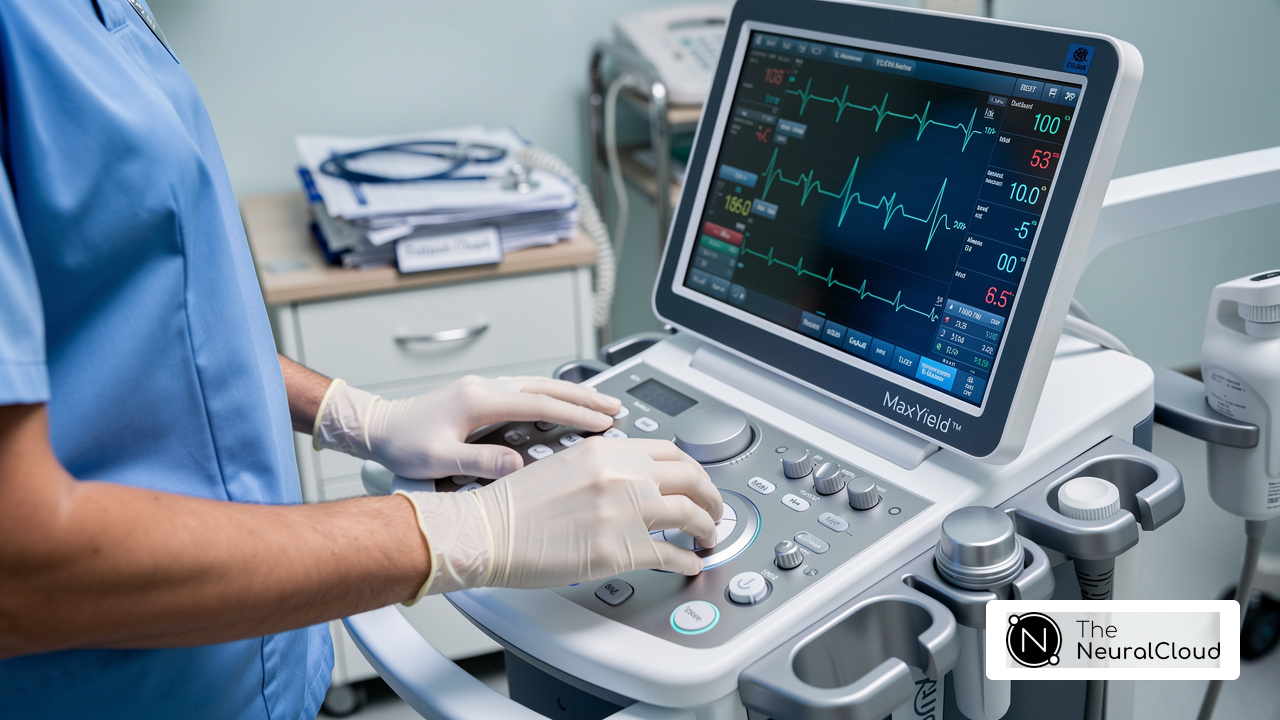
Features of MaxYield™:
- Distinct recognition
- Beat-by-beat analysis of up to 200,000 heartbeats in less than 5 minutes
Advantages for clinicians:
- Transforms noisy recordings into clear insights
- Aids in accurately identifying abnormalities
- Supports confident clinical decision-making
- Enhances patient care and outcomes
With these features, MaxYield™ significantly improves ECG analysis, allowing healthcare professionals to make informed decisions quickly and effectively.

Implement a Step-by-Step ECG Analysis Method
A systematic approach to ECG analysis presents several challenges, but the capabilities of Neural Cloud Solutions' technology can significantly enhance this process. Here’s how:
- Determine the heart rate: Count the number of R waves in a 6-second strip and multiply by 10 to estimate beats per minute. For irregular rhythms, count the number of R waves in 30 large squares and multiply by 10 to obtain the rate.
- Measure the intervals: Measure the intervals between R peaks to determine if the rhythm is consistent or inconsistent. A widening of the QRS formation beyond 2.5 small squares may suggest a total or partial bundle branch block.
- Confirm atrial activity: Confirm atrial activity by checking for the presence of P waves before each QRS interval. The P-wave duration should be between 2-3 small squares (0.08-0.11 seconds).
- Analyze the QRS complex: Examine the width and morphology of the QRS complex to identify any conduction abnormalities. The QRS complex duration should be 1.5-2.5 small squares (0.06-0.11 seconds).
- Evaluate the T wave: Look for abnormalities in the T wave, such as inversion or flattening, which may indicate ischemia or other issues. Pathological Q-waves should be at least 25% as deep as the corresponding R-wave is tall and present in at least two contiguous leads.
By leveraging MaxYield™'s advanced analytics, clinicians can effectively address physiological variability. This ensures a thorough and accurate assessment, leading to improved clarity and efficiency in diagnosing arrhythmias. Ultimately, these enhancements contribute to better patient outcomes.

Leverage Advanced Technology for Enhanced ECG Clarity
Integrating advanced technologies like artificial intelligence and machine learning into ECG analysis addresses significant challenges in clarity and accuracy. The platform offers innovative solutions that enhance ECG interpretation, making it a valuable asset for healthcare providers.
- Automated Signal Processing: The system automates ECG signal analysis, significantly reducing interpretation time and minimizing human error. This leads to rapid and reliable assessments, with algorithms achieving success in detecting arrhythmias. Such precision showcases the platform's potential in clinical settings, ensuring that healthcare providers can trust their diagnostic tools.
- Noise Reduction Techniques: By implementing advanced algorithms, the technology effectively eliminates noise that can obscure true ECG signals. Recent advancements in noise reduction have proven essential in enhancing the quality of ECG data. This is particularly important, as AI has outperformed traditional methods in classifying heart rhythms, achieving sensitivity rates of up to 98.8%. Clinicians can thus work with the most accurate information available, leading to better patient care.
- Continuous Learning Models: The platform utilizes machine learning techniques that refine algorithms over time, adapting to new data as it becomes available. This adaptability is crucial for improving diagnostic accuracy, as AI evolves with ongoing input. The system is an indispensable tool for clinicians because it enhances ECG interpretation, making heart rhythms made easy.
By embracing the technology and its advanced features, healthcare providers can significantly improve the quality of ECG analysis. This leads to more confident clinical decisions and ultimately better patient outcomes.

Embrace Continuous Learning and Adaptation in ECG Practices
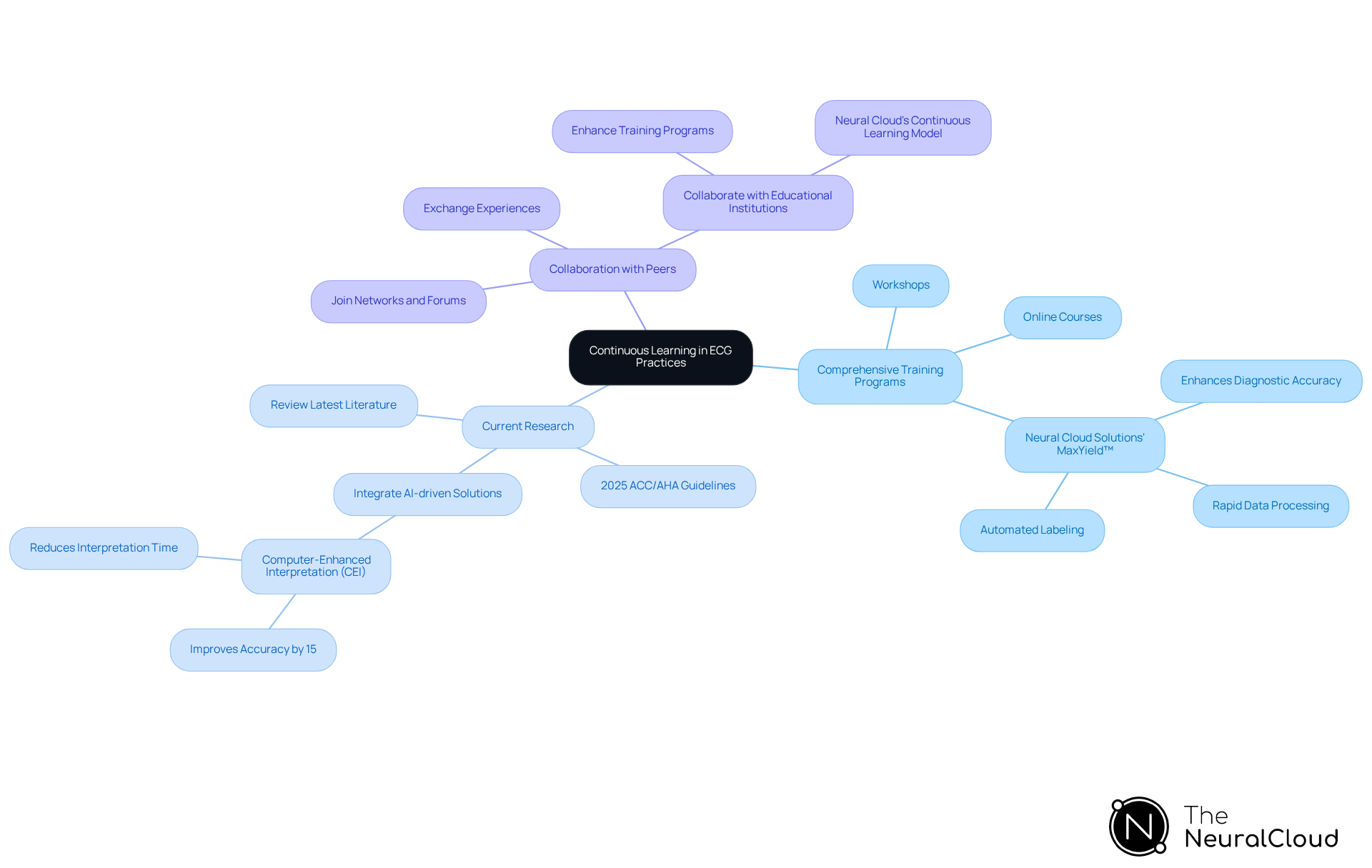
To excel in ECG analysis, healthcare professionals face the challenge of keeping up with ongoing education and adaptability. Here are effective strategies to cultivate this essential mindset:
- Engage in education: Actively participate in workshops and online courses dedicated to ECG interpretation and emerging technologies. These programs not only refresh existing knowledge but also introduce innovative techniques, such as artificial intelligence, which enhances diagnostic accuracy through rapid data processing and automated labeling. Given that 71.8% of clinicians have received five hours or less of ECG training, comprehensive training is crucial for improving competency in ECG analysis.
- Stay Informed with Current Research: Regularly review the latest literature and guidelines, including the American Heart Association guidelines, to remain updated on best practices and evolving trends in ECG analysis. This knowledge is vital, as studies indicate that continuous education can improve accuracy by 15% and significantly reduce interpretation time. This underscores the importance of integrating advancements like machine learning into training programs.
- Network with Peers: Join networks and forums to exchange experiences and insights with colleagues. Collaborative learning fosters a deeper understanding and introduces diverse perspectives, which are invaluable in clinical settings. Furthermore, collaboration between health systems and educational institutions can enhance training programs, ensuring healthcare professionals are well-equipped to utilize the latest technologies effectively. For instance, Neural Cloud's platform evolves with each use to maximize diagnostic yield.
By committing to continuous education, healthcare professionals can refine their skills, enhance patient outcomes, and effectively navigate the dynamic landscape of cardiology.
Conclusion
Mastering ECG interpretation is essential for healthcare professionals who want to improve patient care and outcomes. Understanding the fundamental components of the ECG waveform, along with utilizing advanced technologies like Neural Cloud Solutions' MaxYield™ platform, allows clinicians to enhance their diagnostic accuracy and efficiency. This combination of knowledge and technology enables healthcare providers to navigate the complexities of heart rhythms with increased confidence.
The article emphasizes key practices for effective ECG analysis, such as:
- A systematic approach to interpreting heart rhythms
- The necessity of continuous education
- The benefits of using state-of-the-art tools
Notable insights include the role of AI in automating signal processing and improving clarity through noise reduction. These advancements are transforming the field of cardiac diagnostics, making it more efficient and reliable.
Ultimately, embracing continuous learning and adapting to new technologies is crucial for healthcare professionals involved in ECG analysis. Staying updated on the latest trends, engaging in training programs, and collaborating with peers allows clinicians to refine their skills and ensure they provide the highest standard of care. This commitment to ongoing education not only enhances individual competency but also contributes to the overall progress of modern medicine, significantly impacting patient health and well-being.
Frequently Asked Questions
What are the key components of an ECG waveform?
The key components of an ECG waveform include the P Wave, QRS Waveform, and T Wave. The P Wave represents atrial depolarization, the QRS Waveform reflects ventricular depolarization, and the T Wave indicates ventricular repolarization.
What does the P Wave indicate in an ECG?
The P Wave represents atrial depolarization, signaling the contraction of the atria. Its morphology can provide insights into atrial health, with abnormal characteristics potentially indicating conditions such as atrial enlargement.
What is the significance of the QRS Waveform?
The QRS Waveform reflects ventricular depolarization and is crucial for the heart's pumping action. A normal duration of this complex is typically between 80 to 100 milliseconds, and deviations can suggest various cardiac pathologies.
What does the T Wave represent?
The T Wave indicates ventricular repolarization, marking the recovery phase of the ventricles. Its duration is generally around 160 milliseconds, and its morphology can be influenced by physiological and pathological factors.
How can heart rate be measured using an ECG?
Heart rate can be measured by tallying the number of QRS waves within a specific time period. A normal heart rate ranges from 60 to 99 beats per minute.
What challenges are associated with traditional ECG analysis?
Traditional ECG analysis can be challenging due to noise and variability in recordings, which can complicate the interpretation of heart rhythms.
What is the MaxYield™ platform?
MaxYield™ is a platform developed by Neural Cloud Solutions that features advanced noise filtering, distinct wave recognition, and beat-by-beat analysis of up to 200,000 heartbeats in less than 5 minutes.
What advantages does MaxYield™ provide for healthcare professionals?
MaxYield™ transforms noisy recordings into clear insights, aids in accurately identifying arrhythmias and other cardiac conditions, supports confident clinical decision-making, and enhances patient care and outcomes.
List of Sources
- Understand the Basics of ECG Interpretation
- Artificial Intelligence–Assisted ECG Interpretation versus Conventional Reporting in Predicting Arrhythmias in Acute Coronary Syndrome: A Diagnostic Accuracy Study (https://healthcare-bulletin.co.uk/article/artificial-intelligence-assisted-ecg-interpretation-versus-conventional-reporting-in-predicting-arrhythmias-in-acute-coronary-syndrome-a-diagnostic-accuracy-study-4252)
- Normal Electrocardiography (ECG) Intervals: Normal Electrocardiography Intervals (https://emedicine.medscape.com/article/2172196-overview)
- Electrocardiogram - StatPearls - NCBI Bookshelf (https://ncbi.nlm.nih.gov/books/NBK549803)
- Checking your browser - reCAPTCHA (https://pmc.ncbi.nlm.nih.gov/articles/PMC12338287)
- Implement a Step-by-Step ECG Analysis Method
- New study finds AI model improves heart attack detection (https://health.ucdavis.edu/news/headlines/new-study-finds-ai-model-improves-heart-attack-detection/2025/11)
- My top 10 tips for ECG interpretation - The British Journal of Cardiology (https://bjcardio.co.uk/2014/03/my-top-10-tips-for-ecg-interpretation)
- azquotes.com (https://azquotes.com/quotes/topics/heart-rate.html)
- AI-Powered ECG Analysis Offers Promising Path for Early Detection of Chronic Obstructive Pulmonary Disease, Say Mount Sinai Researchers (https://mountsinai.org/about/newsroom/2026/ai-powered-ecg-analysis-offers-promising-path-for-early-detection-of-chronic-obstructive-pulmonary-disease-say-mount-sinai-researchers)
- quotefancy.com (https://quotefancy.com/quote/1771400/Debra-Evans-Life-is-like-an-EKG-Without-the-ups-and-downs-you-re-not-living)
- Leverage Advanced Technology for Enhanced ECG Clarity
- The Use of Artificial Intelligence in ECG Interpretation in the Outpatient Setting: A Scoping Review (https://cureus.com/articles/405923-the-use-of-artificial-intelligence-in-ecg-interpretation-in-the-outpatient-setting-a-scoping-review)
- pmc.ncbi.nlm.nih.gov (https://pmc.ncbi.nlm.nih.gov/articles/PMC10145690)
- Year in Review: Evidence Around AI in Cardiology Grows (https://tctmd.com/news/year-review-evidence-around-ai-cardiology-grows)
- finance.yahoo.com (https://finance.yahoo.com/news/aiml-subsidiary-neuralcloud-signs-non-120000632.html)
- medicaleconomics.com (https://medicaleconomics.com/view/accurkardia-wins-best-new-tech-solution-for-ecg-at-medtech-breakthrough-awards)
- Embrace Continuous Learning and Adaptation in ECG Practices
- mdpi.com (https://mdpi.com/2227-9032/10/12/2576)
- gehealthcare.com (https://gehealthcare.com/middle-east/insights/article/the-future-of-algorithms-for-ecg-interpretation-what-new-research-shows?srsltid=AfmBOooHkrzwBcl_GWaLfrqUF43mxMT9HrVnZJ2FzqjtNfOVWwEbvZM9)
- Accuracy of Physicians’ Electrocardiogram Interpretation (https://jamanetwork.com/journals/jamainternalmedicine/fullarticle/2771093)
- ryanjenkins.com (https://ryanjenkins.com/blog/18-quotes-to-inspire-you-to-embrace-the-powerful-pursuit-of-continuous-learning)