Introduction
Understanding the complexities of cardiac health is increasingly important, particularly with the growing incidence of arrhythmias such as premature junctional complexes (PJCs). These ectopic heartbeats, though typically benign, may indicate underlying issues that require careful consideration. This article explores the causes, diagnostic techniques, and management strategies for PJCs, providing insights that can significantly improve patient care.
How can healthcare professionals effectively distinguish between benign and concerning cases of PJCs? Furthermore, what innovative approaches are available to facilitate diagnosis and treatment?
Define Premature Junctional Complex: Key Characteristics and Clinical Significance
A Premature Junctional Complex (PJC) refers to an ectopic heartbeat that originates from the atrioventricular (AV) junction and occurs earlier than the next expected heartbeat. Key characteristics include:
- QRS Complex: Typically narrow, indicating that the impulse is conducted through the normal conduction pathway.
- P-Wave: Often absent or inverted, as the impulse originates from the junction rather than the sinoatrial (SA) node.
- Contractions: While contractions can be benign, their frequency may indicate underlying cardiac problems, especially in individuals with heart disease or those receiving digitalis treatment. Comprehending causes is essential for precise and knowledgeable management choices, particularly regarding wider cardiovascular issues like ischemia and coronary ailments.
Integrating with Neural Cloud Solutions' platform addresses the challenges in data management. The platform automates the labeling and data extraction processes, enabling quick recognition of project job codes amidst noise and artifacts. This advanced AI-driven approach improves the efficiency of data processing, streamlining workflows. Consequently, health tech developers can focus on innovation. By leveraging MaxYield™, the challenges of physiological variability and signal artifacts are effectively managed, leading to more accurate diagnoses and improved patient outcomes.

Identify Causes and Risk Factors: Understanding the Underlying Mechanisms
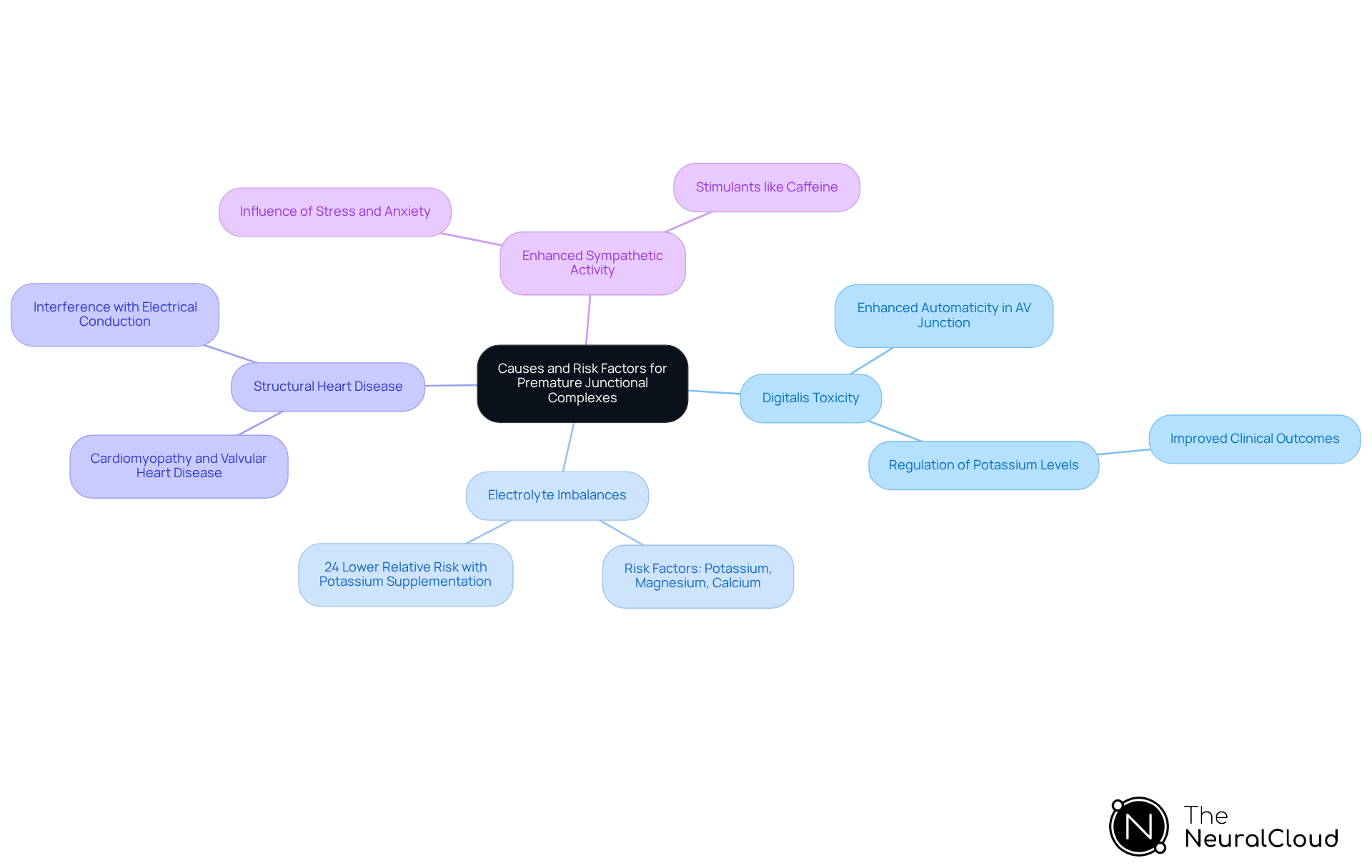
Several factors contribute to the occurrence of premature junctional complexes, each playing a critical role in arrhythmogenesis.
- Digitalis Toxicity: Elevated levels of digitalis can enhance automaticity in the atrioventricular (AV) junction, leading to arrhythmias. This toxicity is particularly concerning, as it can lead to complications in susceptible individuals. Recent discoveries suggest that monitoring is essential; elevating digitalis levels improves outcomes among individuals with cardiovascular conditions and a high risk for ventricular irregularities.
- Electrolyte Imbalances: Low potassium, magnesium, or calcium are significant risk factors for irregular heartbeats. Recent studies indicate that individuals with adequate potassium levels have a 24% lower relative risk of adverse outcomes when potassium is supplemented. This highlights the importance of maintaining electrolyte balance in managing cardiovascular health.
- Structural Heart Conditions: Conditions like cardiomyopathy or valvular heart disease may predispose patients to paroxysmal junctional contractions. Structural abnormalities frequently interfere with normal electrical conduction pathways, resulting in irregular heartbeats.
- Enhanced Sympathetic Activity: Factors such as stress, anxiety, or stimulants like caffeine can initiate premature junctional contractions by boosting sympathetic function. This influence on heart rhythm can result in irregular heartbeats.
Older adults may experience a higher incidence of premature junctional complexes due to age-related changes in cardiac conduction, making it essential to monitor this demographic closely.
Understanding these factors is crucial for effective management, particularly in light of the growing prevalence of arrhythmias among patients with cardiovascular issues.
Diagnose Premature Junctional Complex: ECG Interpretation and Diagnostic Tools
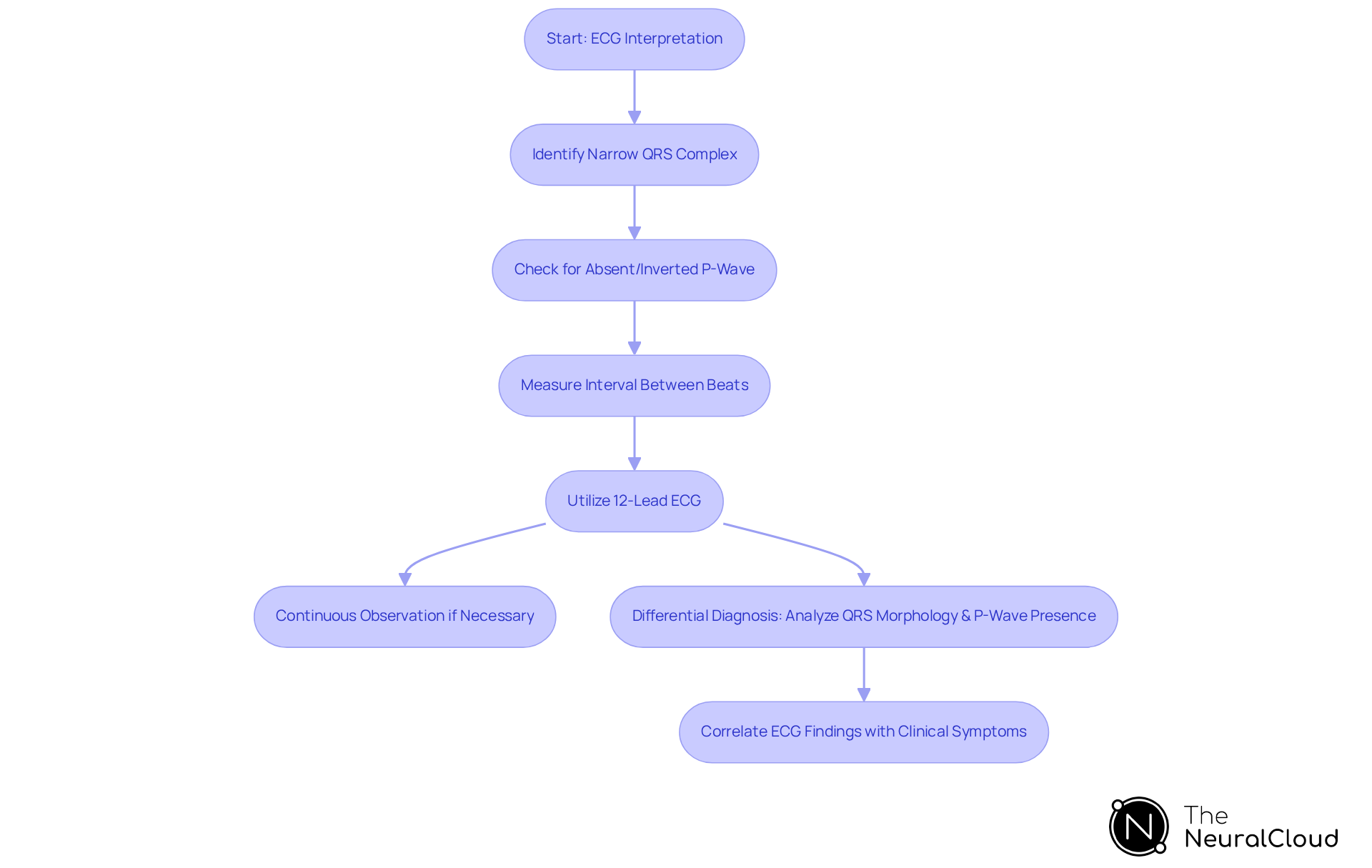
Diagnosing premature junctional complexes requires meticulous ECG interpretation, significantly enhanced by the capabilities of diagnostic software.
ECG Features: Clinicians should identify a narrow QRS complex accompanied by an absent or inverted P-wave preceding the QRS. Notably, the interval between the junctional complex and the subsequent normal beat is typically shorter than the normal RR interval. Advanced technology aids in isolating these features, delivering clear, actionable insights.
Diagnostic Tools: The utilization of a 12-lead ECG is essential for accurate diagnosis. Continuous observation may be necessary for patients experiencing occasional junctional premature beats. This technology facilitates the monitoring process, enabling rapid assessment of 200,000 heartbeats in under 5 minutes.
Differential Diagnosis: It is crucial to distinguish the premature junctional complex (PJC) from other arrhythmias, such as premature atrial contractions (PACs) and premature ventricular contractions (PVCs), by analyzing the morphology of the QRS complex and the presence of P-waves. The advanced noise filtering and wave recognition capabilities of diagnostic tools streamline this differentiation process, ensuring precise identification.
Clinical Correlation: Always correlate ECG findings with clinical symptoms and medical history to guarantee accurate diagnosis. The insights provided by clinical data bolster confident clinical decisions, thus enhancing the overall diagnostic process.
Manage Premature Junctional Complex: Treatment Options and Clinical Guidelines
Management of premature junctional complex typically focuses on addressing underlying causes and optimizing patient outcomes.
For asymptomatic patients with infrequent PJCs, treatment may not be necessary, allowing for a watchful waiting approach. In cases where paroxysmal junctional contractions are linked to digitalis toxicity, adjusting the medication dosage or transitioning to alternative medications is crucial for patient safety. Additionally, recognizing and rectifying electrolyte imbalances can significantly decrease the occurrence of premature junctional contractions, thereby improving overall cardiac function.
Encouraging individuals to adopt healthier habits—such as regular exercise, managing stress, and avoiding stimulants—has been shown to effectively reduce the frequency of premature junctional contractions. Research indicates that lifestyle modifications can lead to a substantial reduction in arrhythmia incidents, underscoring the importance of educating individuals about heart health. As the saying goes, "an ounce of prevention is worth a pound of cure," which highlights the necessity for proactive health measures.
For patients experiencing symptomatic or frequent contractions, further evaluation may be warranted. This could potentially lead to catheter ablation or other procedures tailored to the individual's cardiac health.
Adhering to established treatment guidelines and protocols is vital for delivering optimal patient care, ensuring that each individual receives a comprehensive assessment of their condition. It is noteworthy that heart disease accounts for 1 in 5 deaths in the U.S., emphasizing the critical importance of effectively managing conditions like PJCs. Regular visits to healthcare providers can assist individuals in managing their condition and enhancing their overall well-being.

Conclusion
Understanding premature junctional complexes (PJCs) is vital for accurate ECG interpretation and effective management of cardiac health. These ectopic beats, originating from the atrioventricular junction, can signal underlying issues, especially in patients with structural heart disease or those on digitalis therapy. Recognizing the characteristics of PJCs—such as the narrow QRS complex and absent or inverted P-waves—enables healthcare professionals to make informed decisions regarding patient care.
The article delves into the various causes and risk factors associated with PJCs, including:
- Digitalis toxicity
- Electrolyte imbalances
- Structural heart conditions
It emphasizes the importance of maintaining electrolyte balance and managing lifestyle factors to mitigate the occurrence of these arrhythmias. Furthermore, the diagnostic process, enhanced by advanced technology like MaxYield™, allows for precise identification and differentiation of PJCs from other arrhythmias, ensuring accurate clinical correlation and treatment strategies.
Ultimately, proactive management of PJCs, including lifestyle modifications and adherence to clinical guidelines, is crucial for improving patient outcomes. As heart disease remains a leading cause of mortality, recognizing and addressing premature junctional complexes can significantly impact cardiovascular health. By prioritizing education on heart health and fostering regular healthcare engagement, individuals can take meaningful steps towards better heart management and overall wellness.
Frequently Asked Questions
What is a premature junctional complex (PJC)?
A premature junctional complex (PJC) is an ectopic heartbeat that originates from the atrioventricular (AV) junction and occurs earlier than the next expected heartbeat.
What are the key characteristics of a PJC?
Key characteristics of a PJC include a typically narrow QRS complex, indicating normal conduction through the conduction pathway, and an absent or inverted P-wave, as the impulse originates from the junction rather than the sinoatrial (SA) node.
What is the clinical significance of premature junctional complexes?
While PJCs can be benign, their frequency may indicate underlying cardiac problems, particularly in individuals with structural heart disease or those receiving digitalis treatment. Understanding PJCs is important for accurate ECG analysis and informed management decisions related to cardiovascular issues.
How does wearable technology enhance ECG analysis?
Wearable technology, when integrated with Neural Cloud Solutions' MaxYield™ platform, automates the labeling and data extraction processes in ECG analysis. This allows for quicker recognition of project job codes amidst noise and artifacts, improving the clarity of ECG signals and streamlining workflows.
What benefits does the MaxYield™ platform provide for health tech developers?
The MaxYield™ platform helps manage challenges related to physiological variability and signal artifacts, leading to more accurate interpretations of ECG signals and improved patient outcomes, allowing health tech developers to focus on critical clinical insights.
List of Sources
- Define Premature Junctional Complex: Key Characteristics and Clinical Significance
- en.wikipedia.org (https://en.wikipedia.org/wiki/Premature_junctional_contraction)
- Identify Causes and Risk Factors: Understanding the Underlying Mechanisms
- Boosting Potassium Helps Patients at High Risk for Ventricular Arrhythmias (https://tctmd.com/news/boosting-potassium-helps-patients-high-risk-ventricular-arrhythmias)
- Manage Premature Junctional Complex: Treatment Options and Clinical Guidelines
- Junctional Rhythm: Causes, Symptoms and Treatment (https://my.clevelandclinic.org/health/diseases/23206-junctional-rhythm)
- crestline.com (https://crestline.com/c/slogans-for-american-heart-month)
- Junctional Rhythm Treatment & Management: Approach Considerations, Medical Care, Surgical Care (https://emedicine.medscape.com/article/155146-treatment)
- parade.com (https://parade.com/1187612/michelle-parkerton/quotes-about-heart-disease)