Introduction
Atrial Fibrillation with Rapid Ventricular Response (RVR) presents a significant health challenge. This condition is characterized by disorganized electrical signals, leading to an irregular and often dangerously fast heartbeat. Affecting millions, it is crucial for both patients and healthcare providers to understand its symptoms, diagnosis, and potential complications.
Effective management strategies for this arrhythmia can significantly alter patient outcomes, underscoring the importance of timely intervention. Exploring these strategies highlights the urgency and complexity of addressing Atrial Fibrillation with RVR in today's medical landscape.
Define Atrial Fibrillation with Rapid Ventricular Response (RVR)
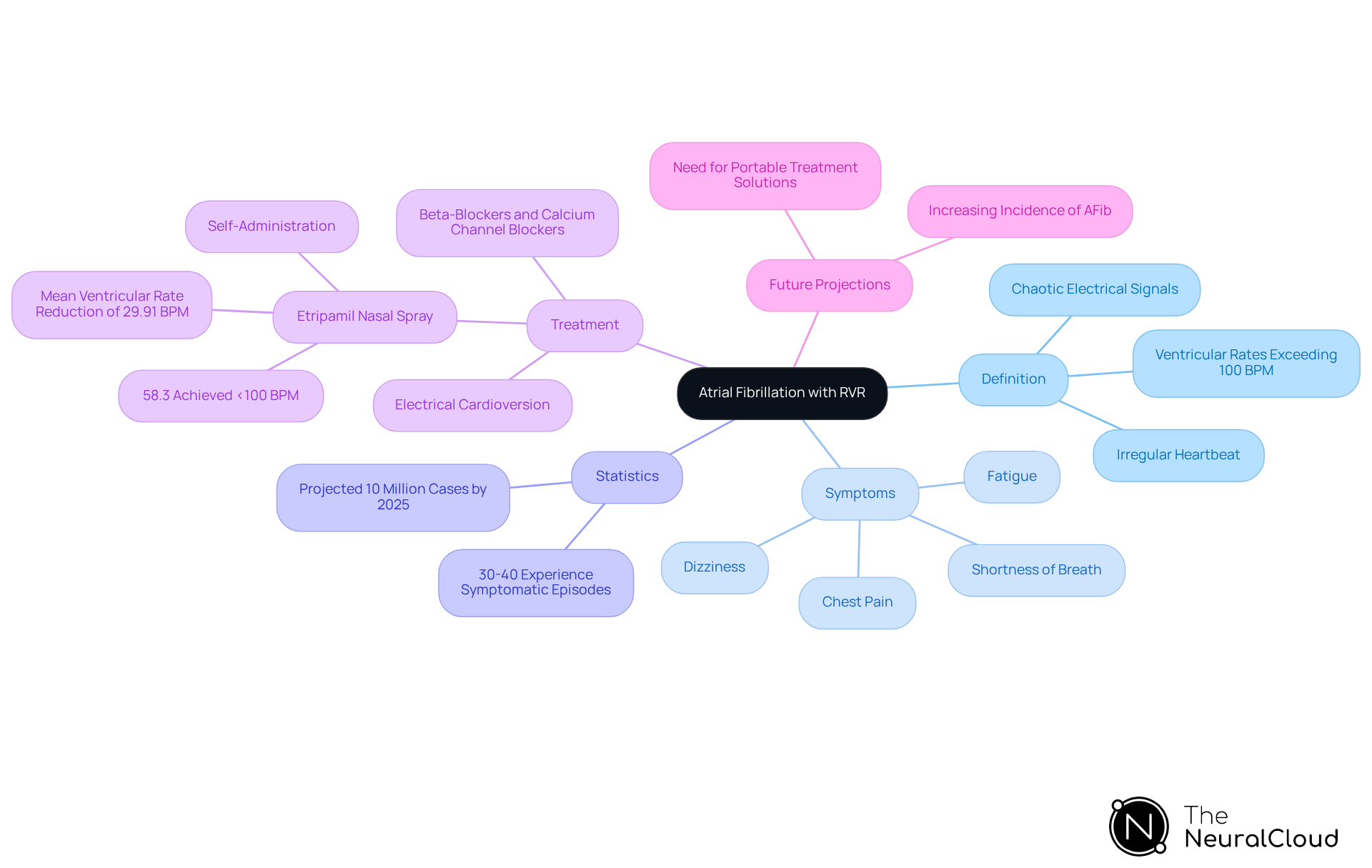
(AFib) with Rapid Ventricular Response (RVR), commonly referred to as atrial fibrillation, is an arrhythmia marked by chaotic electrical signals in the atria, resulting in an irregular and often accelerated heartbeat. In this condition, the atria quiver rather than contract effectively, leading to a heart rate typically exceeding 100 beats per minute. This rapid ventricular response can significantly compromise cardiac function, reducing blood flow to vital organs and increasing the risk of severe complications such as stroke and cardiac arrest.
Current statistics show that approximately 30-40% of patients with AFib experience RVR, which requires prompt medical intervention. The impact of RVR on patient health is considerable; when the heart beats too quickly due to this condition, it may produce weak contractions that fail to pump blood adequately, resulting in symptoms like extreme fatigue, dizziness, and shortness of breath.
Real-world examples underscore the urgency of diagnosing and managing AFib with RVR. Individuals exhibiting a heart rate of 110 beats per minute or higher often require immediate intervention to stabilize their heart rate. Recent studies, including the latest clinical trials, have demonstrated that treatments such as beta-blockers can lead to rapid and sustained reductions in heart rate, with 58.3% of patients achieving a rate of less than 100 bpm compared to only 4% on placebo. This highlights the critical need for effective, portable treatment solutions that can be self-administered during acute episodes.
The latest studies emphasize the importance of early intervention in managing AFib with RVR. With the number of patients diagnosed with AFib in the U.S. projected to increase by 2025, healthcare professionals must be equipped with the knowledge and resources to address this growing concern. Understanding the intricacies of AFib with RVR is crucial for optimizing patient outcomes and preventing long-term complications.
Identify Symptoms and Clinical Implications of AFib with RVR
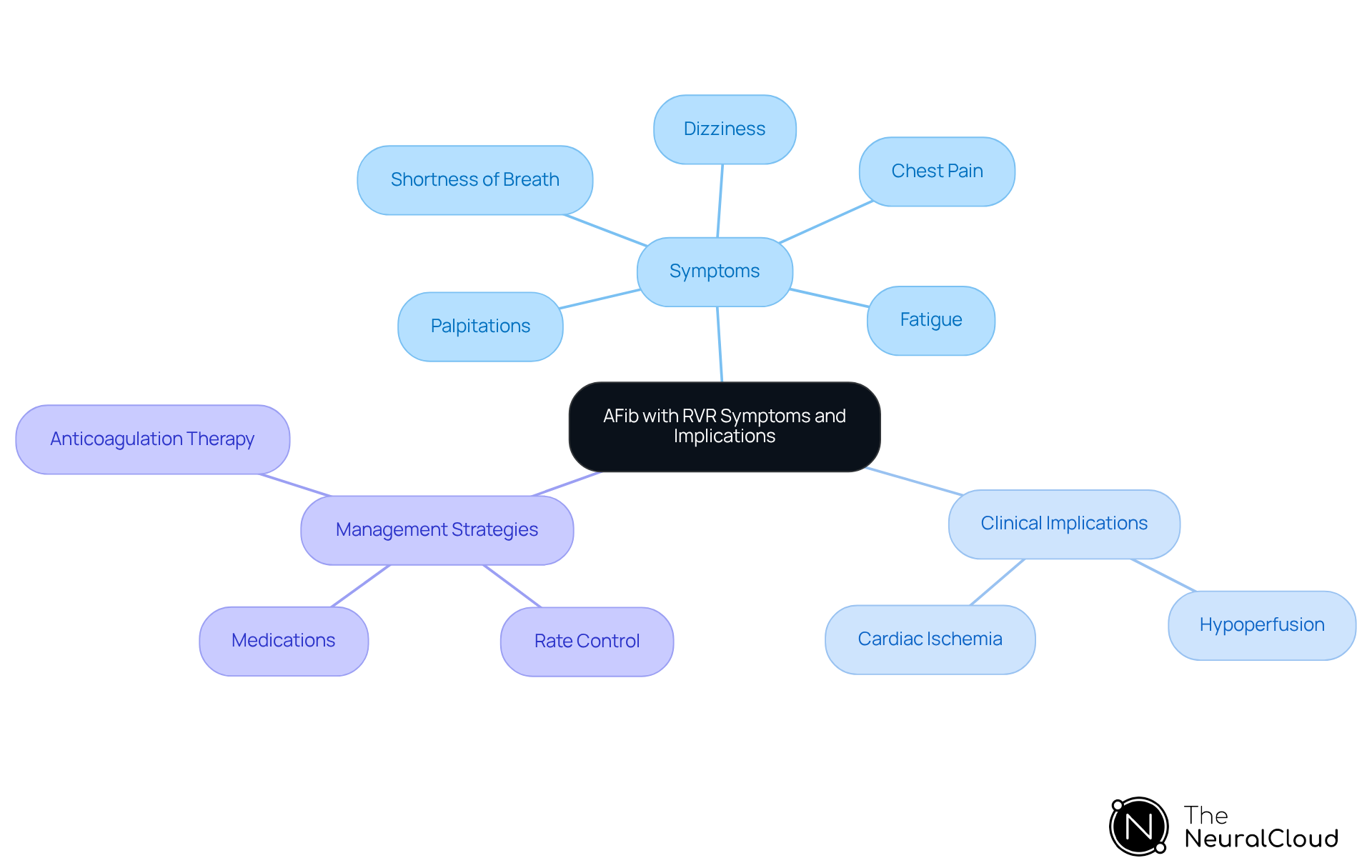
Symptoms of RVR can vary significantly among individuals, but they commonly include:
- Palpitations: A sensation of a rapid or irregular heartbeat.
- Shortness of breath: Difficulty breathing, particularly during physical exertion.
- Dizziness or Lightheadedness: Feelings of faintness or unsteadiness.
- Chest Pain: Discomfort or pain in the chest area.
- Fatigue: Unusual tiredness or lack of energy.
Clinically, atrial fibrillation with RVR presents significant dangers. These include hypoperfusion, where essential organs do not receive adequate blood flow, and myocardial ischemia, which can result in damage to the heart tissue. The condition affects over 2.7 million people in the United States. Individuals with atrial fibrillation have a 4-6 times greater risk of stroke on average, underscoring the importance of early intervention.
Management strategies, such as rate control using medications like beta-blockers and calcium channel blockers, along with anticoagulation therapy, are essential. These strategies help mitigate the risk of complications like stroke, which can occur due to blood pooling in the atria. Angela Ryan Lee, MD, FACC, points out that while atrial fibrillation with RVR is manageable, it is regarded as a long-term condition. This highlights the necessity for continuous care. Understanding these symptoms and their implications is crucial for healthcare providers to implement effective treatment plans.
Diagnose AFib with RVR: Methods and Best Practices
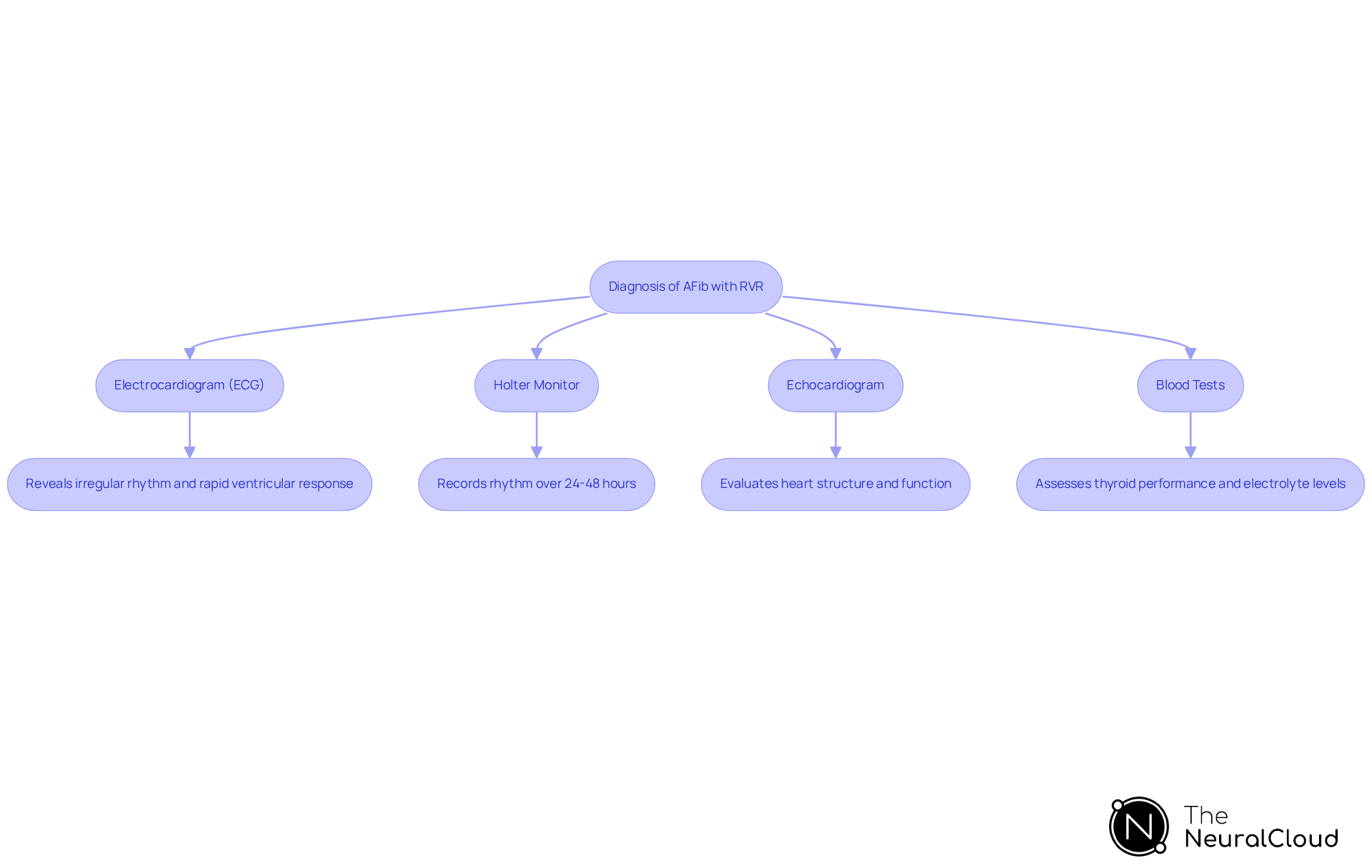
typically involves several key methods. The primary diagnostic tool is the ECG, which reveals the characteristic irregular rhythm of AFib and the rapid ventricular response. A Holter monitor is favored for thorough evaluation, as it provides detailed information about the heart's electrical activity.
Another important method is the event monitor, a portable device that records the rhythm of the cardiovascular system over 24 to 48 hours. This allows for the detection of arrhythmias and their correlation with symptoms. Research indicates that event monitors effectively detect AFib in approximately 30% of patients who may not exhibit symptoms during a standard ECG.
The Echocardiogram is an important test for heart structure and function, aiding in the identification of underlying heart issues that may lead to AFib. It is particularly useful for assessing left atrial size, which is a significant risk factor for AFib.
Blood Tests are also essential, as they help to identify possible triggers for AFib. Irregular thyroid levels, for instance, are known to significantly elevate the risk of developing AFib.
The optimal methods for diagnosis include a thorough history, physical examination, and prompt application of these diagnostic tools. It is crucial for healthcare professionals to remain vigilant for signs of instability in individuals presenting with AFib, as swift action may be necessary to prevent complications such as stroke or heart failure. Regular monitoring and reassessment of patients with AFib are vital to optimizing treatment strategies and improving outcomes.
Conclusion
Atrial Fibrillation with Rapid Ventricular Response (RVR) is a significant and complex cardiac condition that requires immediate attention and understanding. This arrhythmia is marked by chaotic electrical signals, resulting in an accelerated heartbeat, which can severely affect cardiac output and elevate the risk of life-threatening complications. Recognizing the urgency of this condition is essential for both patients and healthcare providers.
The article provides key insights into the symptoms, clinical implications, and diagnostic methods related to Atrial Fibrillation with RVR. Symptoms such as:
- palpitations
- shortness of breath
- fatigue
underscore the necessity for prompt medical intervention. Effective management strategies, including medication and anticoagulation therapy, are crucial given the increased risk of stroke and other complications. Additionally, diagnostic tools like:
- ECGs
- Holter monitors
- echocardiograms
are vital for the identification and management of this condition.
As the prevalence of atrial fibrillation is expected to rise significantly in the coming years, it is imperative for healthcare professionals to remain informed and proactive in their diagnostic and treatment approaches. By comprehending the complexities of Atrial Fibrillation with RVR, individuals can advocate for their health and collaborate with providers to implement timely and effective care strategies. This knowledge not only enhances patient outcomes but also contributes to the broader effort of addressing this growing public health challenge.
Frequently Asked Questions
What is Atrial Fibrillation with Rapid Ventricular Response (RVR)?
Atrial Fibrillation with Rapid Ventricular Response (RVR) is an arrhythmia characterized by chaotic electrical signals in the atria, leading to an irregular and often accelerated heartbeat, typically exceeding 100 beats per minute.
What are the symptoms of Atrial Fibrillation with RVR?
Symptoms of Atrial Fibrillation with RVR can include extreme fatigue, dizziness, and shortness of breath due to compromised cardiac output.
How common is Atrial Fibrillation with RVR among patients with atrial fibrillation?
Approximately 30-40% of patients with atrial fibrillation experience symptomatic episodes of Atrial Fibrillation with RVR that require prompt medical intervention.
Why is Atrial Fibrillation with RVR considered a serious condition?
Atrial Fibrillation with RVR can significantly compromise cardiac output, reducing blood flow to vital organs and increasing the risk of severe complications such as stroke and cardiac arrest.
What is the significance of a ventricular rate of 110 beats per minute or higher?
Individuals exhibiting a ventricular rate of 110 beats per minute or higher often require immediate medical intervention to stabilize their heart rate.
What treatments are available for Atrial Fibrillation with RVR?
Treatments such as etripamil nasal spray have been shown to lead to rapid and sustained reductions in ventricular rate, with significant improvement compared to placebo.
What is the projected prevalence of atrial fibrillation in the U.S. by 2025?
The number of atrial fibrillation cases in the U.S. is projected to reach around 10 million by 2025.
Why is timely intervention important in managing Atrial Fibrillation with RVR?
Timely intervention is crucial for optimizing patient outcomes and preventing long-term complications associated with Atrial Fibrillation with RVR.
List of Sources
- Define Atrial Fibrillation with Rapid Ventricular Response (RVR)
- health.stonybrookmedicine.edu (https://health.stonybrookmedicine.edu/atrial-fibrillation-afib-signs-symptoms-and-treatment)
- investors.milestonepharma.com (https://investors.milestonepharma.com/news-releases/news-release-details/milestone-pharmaceuticals-presents-positive-results-revera-phase)
- Heart Rhythm 2025 Features Advances in AI that Enhance Safety of Atrial Fibrillation Treatment - HRS (https://hrsonline.org/news/hr2025-features-advanced-ai-safety-afib-treatment)
- tctmd.com (https://tctmd.com/news/etripamil-nasal-spray-shows-promise-af-patients-rapid-ventricular-rate)
- AFib With Rapid Ventricular Response (https://webmd.com/heart-disease/atrial-fibrillation/afib-rapid-response)
- Identify Symptoms and Clinical Implications of AFib with RVR
- study.com (https://study.com/academy/lesson/what-is-afib-with-rvr-rapid-ventricular-rate.html)
- resources.healthgrades.com (https://resources.healthgrades.com/right-care/atrial-fibrillation/atrial-fibrillation-with-rvr)
- merckmanuals.com (https://merckmanuals.com/professional/cardiovascular-disorders/specific-cardiac-arrhythmias/atrial-fibrillation)
- A-fib with RVR: Symptoms, diagnosis, and treatments (https://medicalnewstoday.com/articles/316488)
- AFib With Rapid Ventricular Response (https://webmd.com/heart-disease/atrial-fibrillation/afib-rapid-response)
- Diagnose AFib with RVR: Methods and Best Practices
- A-fib with RVR: Symptoms, diagnosis, and treatments (https://medicalnewstoday.com/articles/316488)
- wikem.org (https://wikem.org/wiki/Atrial_fibrillation_with_RVR)
- ahajournals.org (https://ahajournals.org/doi/abs/10.1161/CIR.0000000000001193)
- merckmanuals.com (https://merckmanuals.com/professional/cardiovascular-disorders/specific-cardiac-arrhythmias/atrial-fibrillation)
- ncbi.nlm.nih.gov (https://ncbi.nlm.nih.gov/books/NBK571337)