Introduction
Hyperdynamic left ventricular systolic function, characterized by an elevated ejection fraction, involves a complex interplay between physiological responses and potential pathologies. This condition is frequently observed in critically ill patients and can indicate both increased cardiac output and underlying health risks. Therefore, it is crucial for clinicians to fully understand its implications.
How can healthcare professionals effectively address the challenges posed by hyperdynamic states to improve patient outcomes and develop tailored management strategies?
Define Hyperdynamic Left Ventricular Systolic Function
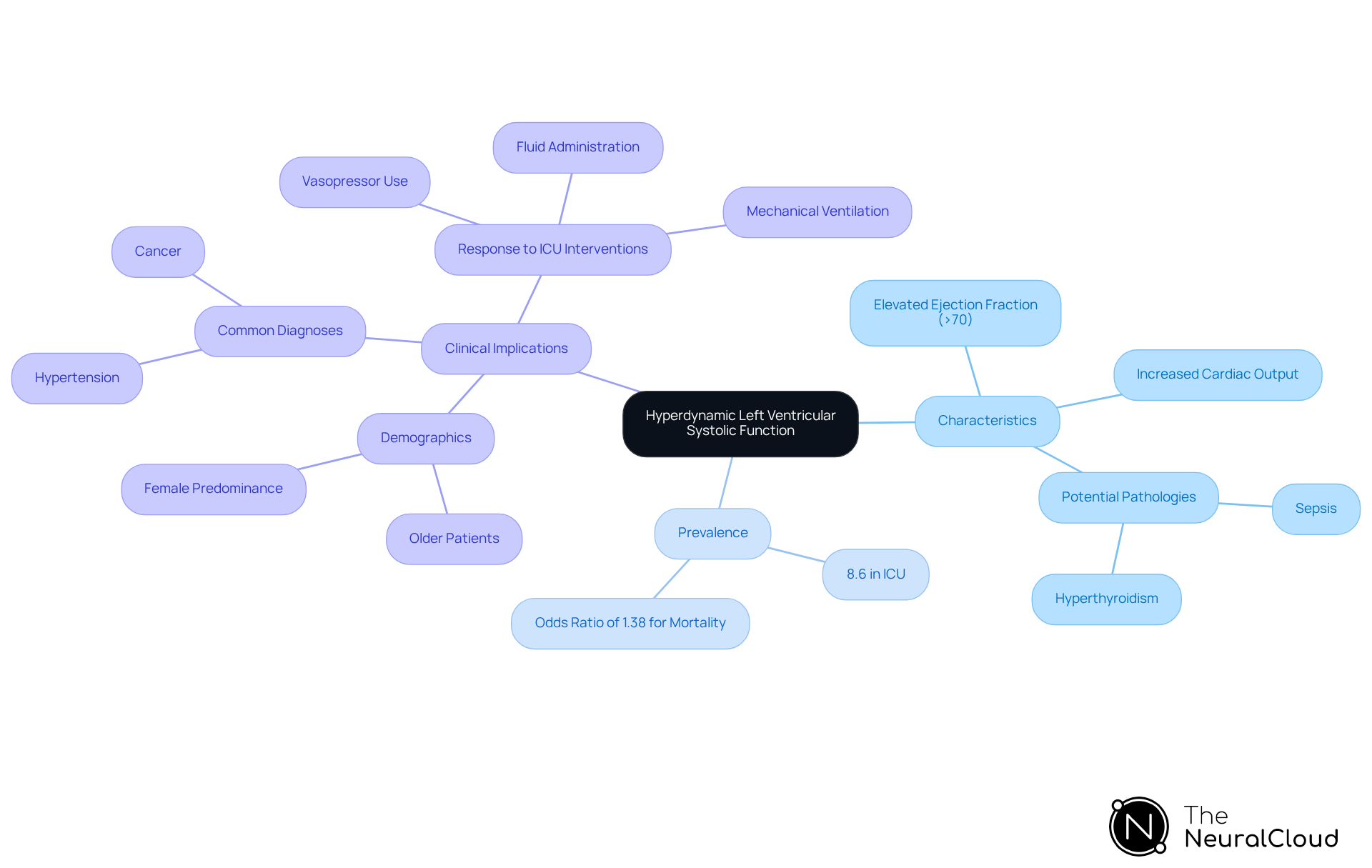
is characterized by an ejection fraction (EF), typically exceeding 70%. This condition indicates that there is increased contractility, as the left ventricle is contracting more forcefully than normal, which can arise as a physiological response to increased demand or as a pathological state. It is essential to recognize that while a highly active state may suggest increased cardiac output, it does not necessarily equate to optimal cardiac health. For instance, conditions such as sepsis or hyperthyroidism can lead to increased systolic function, which may not be sustainable or healthy over time.
Recent studies have shown that the prevalence of hyperdynamic left ventricular systolic function is approximately 8.6%, with a significant correlation to elevated mortality rates. Specifically, individuals with hyperdynamic left ventricular systolic function have an increased risk of death when compared to those with a normal ejection fraction. Understanding these nuances of hyperdynamic left ventricular systolic function is crucial for clinicians, as they influence decision-making in patient management. Furthermore, patients with HDLVEF are often older and more likely to be female, with comorbidities, emphasizing the need for targeted research and tailored interventions.
Explore Clinical Implications and Significance
presents complex phenomena. It can act as a compensatory response to increased metabolic demands, such as during physical exertion or in shock states. However, persistent elevated function often indicates underlying pathologies, including heart failure and with preserved ejection fraction (HFpEF), as well as cardiomyopathy. A study involving 16,994 individuals revealed that 20% of persons with overactive hearts were diagnosed with heart failure, highlighting the necessity for thorough assessment in these situations.
Clinicians must remain vigilant, as hyperdynamic function can significantly elevate risks, potentially leading to cardiac decompensation. Research indicates that individuals with hyperdynamic function exhibited a higher incidence of adverse events, with a hazard ratio of 1.56 compared to those with normal ejection fractions. This underscores the critical nature of monitoring. Furthermore, the presence of hyperdynamic function has been linked to heightened acute disease severity, as demonstrated by increased mortality in those affected, with 78% of individuals exhibiting complications.
In clinical environments, comprehending the consequences of increased physiological activity is crucial for formulating management plans. The negative outcomes associated with increased blood flow conditions necessitate a proactive strategy for monitoring and treatment. This ensures that healthcare professionals can reduce risks and improve patient outcomes.

Detail Diagnostic Approaches and Technologies
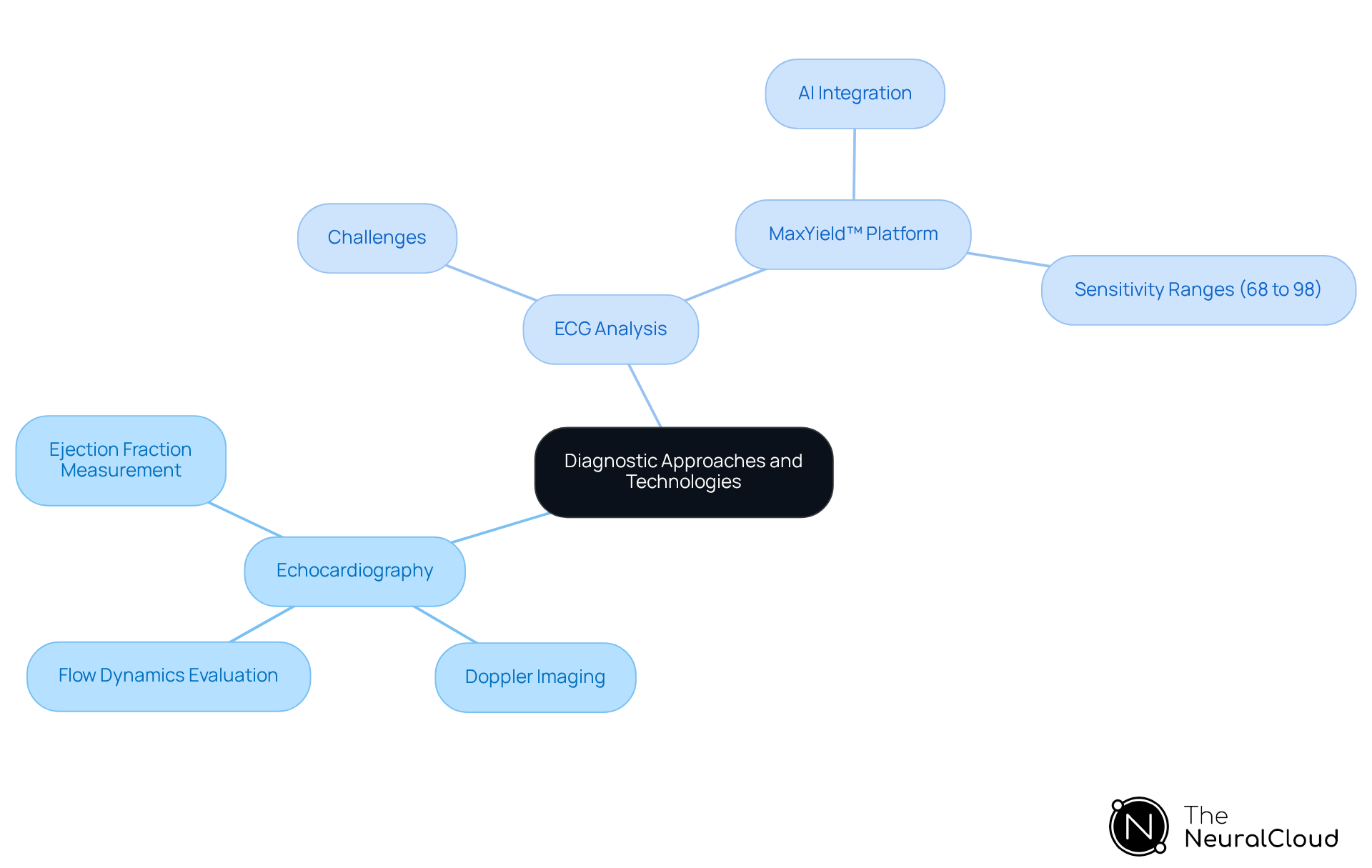
Echocardiography, a critical tool for measuring ejection fraction and visualizing heart structures, is primarily relied upon for diagnosis. Advanced techniques, such as Doppler imaging, facilitate the evaluation of flow dynamics and blood circulation, offering valuable insights into heart health. However, echocardiography presents challenges that can hinder accurate diagnosis.
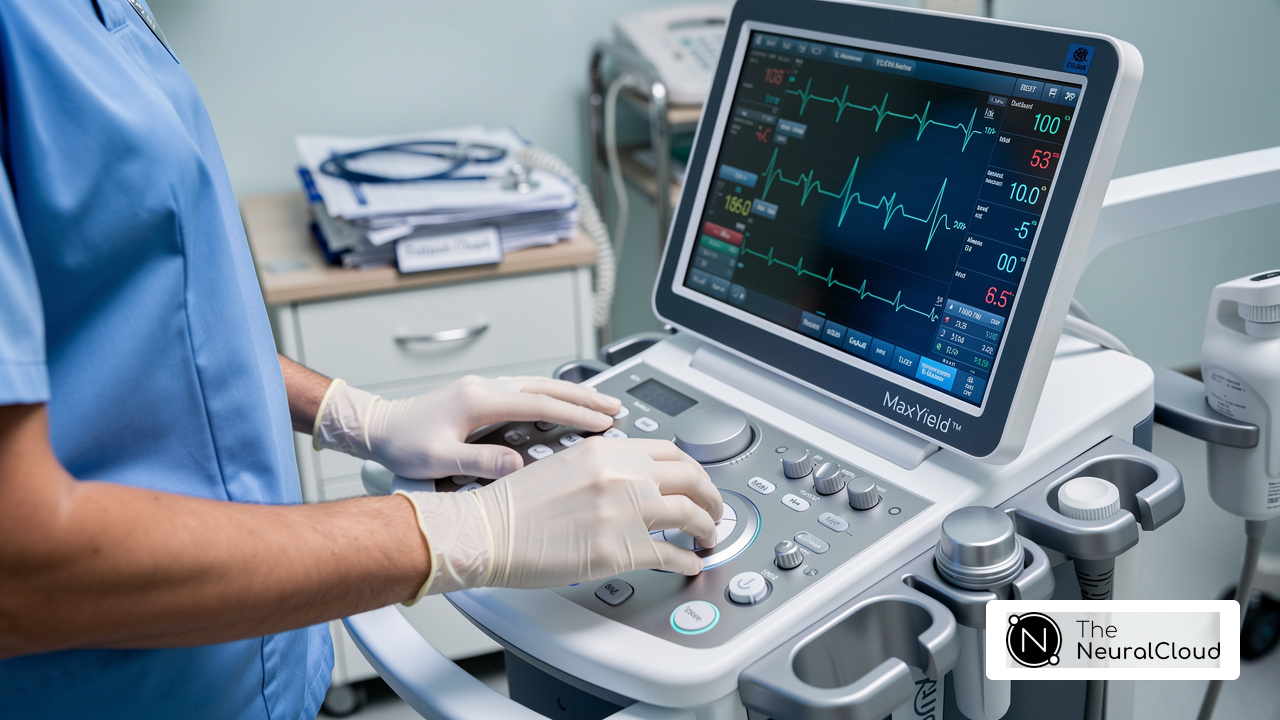
The platform, developed by Neural Cloud Solutions, addresses these challenges by integrating advanced AI technologies into the diagnostic process. This platform enhances the accuracy of echocardiography through streamlined workflows and improved data analysis, significantly improving the reliability of findings. With this technology, healthcare professionals can achieve sensitivities ranging from 68% to 98% in acute coronary syndrome (ACS), thereby supporting clinicians in making informed decisions based on precise data.
As echocardiography continues to advance, the integration of conventional imaging methods with innovative AI technologies like MaxYield™ is set to transform the diagnosis and management of heart conditions. By leveraging these advancements, healthcare professionals can improve diagnostic accuracy, ultimately leading to better heart health management.
Discuss Management Strategies and Treatment Options
Management of elevated left ventricular systolic function focuses on addressing the underlying causes while ensuring patient stability. Pharmacological interventions may involve beta-blockers, which help reduce heart rate and myocardial oxygen demand, especially in cases where hyperdynamic function is associated with stress or sepsis. Moreover, effective fluid management and optimization of preload are crucial for critically ill patients. In certain instances, it may also be necessary to address comorbid conditions such as hypertension or hyperthyroidism. Continuous monitoring through advanced technologies, like those offered by Neural Cloud Solutions, supports the adjustment of treatment plans based on patient response.
Conclusion
Hyperdynamic left ventricular systolic function is a critical condition marked by an elevated ejection fraction, indicating that the heart is working harder than usual. This state can arise from various physiological or pathological triggers, such as sepsis or hyperthyroidism, highlighting that increased cardiac output does not always signify optimal heart health. Understanding this condition is vital for healthcare professionals, particularly in critical care, as it directly impacts patient management and outcomes.
The article emphasizes several key points, including:
- The prevalence of hyperdynamic left ventricular systolic function among ICU patients.
- Its correlation with increased mortality rates.
- The significant clinical implications it entails.
Clinicians must recognize that while hyperdynamic function can serve as a compensatory mechanism, persistent elevation often signals underlying heart issues, necessitating vigilant monitoring and timely interventions. Advanced diagnostic tools, such as echocardiography and AI-driven platforms, are crucial for accurately diagnosing and managing this condition.
Ultimately, addressing hyperdynamic left ventricular systolic function requires a multifaceted approach that combines effective diagnostic strategies with targeted treatment plans. Healthcare professionals must remain proactive in monitoring patients and adjusting management strategies to mitigate risks and enhance patient care. By prioritizing the understanding and management of this condition, clinicians can significantly improve outcomes for patients facing the challenges associated with hyperdynamic left ventricular systolic function.
Frequently Asked Questions
What is hyperdynamic left ventricular systolic function?
Hyperdynamic left ventricular systolic function is characterized by an elevated ejection fraction (EF), typically exceeding 70%, indicating that the left ventricle is contracting more forcefully than normal.
What can cause hyperdynamic left ventricular systolic function?
It can arise as a physiological response to increased demand or as a pathological state, such as in conditions like sepsis or hyperthyroidism.
Does a high ejection fraction always indicate good cardiac health?
No, while a high ejection fraction may suggest increased cardiac output, it does not necessarily equate to optimal cardiac health, as some conditions leading to hyperdynamic function may not be sustainable or healthy over time.
What is the prevalence of hyperdynamic left ventricular systolic function among ICU patients?
The prevalence among ICU patients is approximately 8.6%.
How does hyperdynamic left ventricular systolic function relate to mortality rates?
There is a significant correlation, with individuals having an odds ratio of 1.38 for increased 28-day mortality compared to those with a normal left ventricular ejection fraction.
What demographic factors are associated with hyperdynamic left ventricular systolic function?
Patients with this condition are often older and more likely to be female, with common diagnoses including hypertension and cancer.
Why is understanding hyperdynamic left ventricular systolic function important for clinicians?
Understanding this condition is crucial as it influences diagnostic and management strategies in critical care settings.
List of Sources
- Define Hyperdynamic Left Ventricular Systolic Function
- ccforum.biomedcentral.com (https://ccforum.biomedcentral.com/articles/10.1186/s13054-015-1012-8)
- Explore Clinical Implications and Significance
- Checking your browser - reCAPTCHA (https://pubmed.ncbi.nlm.nih.gov/36459734)
- ccforum.biomedcentral.com (https://ccforum.biomedcentral.com/articles/10.1186/s13054-015-1012-8)
- pmc.ncbi.nlm.nih.gov (https://pmc.ncbi.nlm.nih.gov/articles/PMC8678271)
- Hyperdynamic Heart EF >70% Increases Mortality Risk 56% | www.PhysiciansWeekly.com (https://physiciansweekly.com/post/clinical-outcomes-and-echocardiographic-features-of-the-hyperdynamic-heart)
- Detail Diagnostic Approaches and Technologies
- ecg-od.com (https://ecg-od.com/case_studies/bradford-district-care-foundation-use-of-ecg-on-demands-ai-assisted-12-lead-ecg-interpretation-service)
- ahajournals.org (https://ahajournals.org/doi/10.1161/CIR.0000000000001201)
- The Accuracy of Artificial Intelligence-Based Models Applied to 12-Lead Electrocardiograms for the Diagnosis of Acute Coronary Syndrome: A Systematic Review - PMC (https://pmc.ncbi.nlm.nih.gov/articles/PMC12529686)
- Left Ventricular Systolic Dysfunction: AI-ECG (https://powerfulmedical.com/blog/left-ventricular-systolic-dysfunction-lvsd)
- pubmed.ncbi.nlm.nih.gov (https://pubmed.ncbi.nlm.nih.gov/37489538)