Introduction
Non-ST segment elevation myocardial infarction (NSTEMI) is a critical yet often overlooked type of heart attack. It affects a significant portion of the population and presents unique challenges in diagnosis and treatment. With its rising incidence, particularly among younger adults, understanding NSTEMI is essential for healthcare professionals. This knowledge can lead to improved patient outcomes through timely intervention and management strategies.
However, the subtlety of its symptoms and the complexities surrounding its diagnosis raise an important question: how can medical practitioners effectively identify and address this condition? Addressing NSTEMI is crucial to mitigate its serious long-term implications.
Define Non-ST Segment Elevation Myocardial Infarction (NSTEMI)
(NSTEMI) is a significant type of heart attack characterized by a partial blockage of a coronary artery, which results in reduced blood flow to the heart muscle. Unlike ST Segment Elevation Myocardial Infarction (STEMI), (NSTEMI) does not show notable ST segment elevation on an electrocardiogram (ECG). Diagnosis is primarily based on elevated biomarkers, particularly troponin, which indicate myocardial injury. As a crucial component of acute coronary syndrome, it accounts for a significant number of heart attacks in the United States, with an estimated 780,000 cases occurring annually as of 2026.
Recent trends reveal a concerning increase in incidence among younger adults, particularly those aged 18-44, where cases have surged from 15.5% to 28.0%. This trend underscores the importance of early detection, as prompt diagnosis can improve outcomes. Awareness is vital for healthcare professionals, as it facilitates better management and treatment strategies for affected individuals.

Explore the Context and Significance of NSTEMI
(NSTEMI) represents a significant health concern, characterized by its high occurrence and potential for serious complications. Often linked to underlying coronary artery disease (CAD), NSTEMI can result in myocardial damage. The findings emphasize the importance of early diagnosis and intervention to mitigate risks such as heart failure, arrhythmias, and sudden cardiac arrest.
NSTEMI may present with atypical symptoms, particularly in women and older adults, which can delay diagnosis and hinder timely treatment. This highlights the necessity for healthcare professionals to be well-versed in the characteristics of NSTEMI to enhance patient care and improve outcomes. Recent data shows that NSTEMI is associated with a higher risk of complications; however, it remains a significant contributor to heart failure rates, necessitating vigilant monitoring and management strategies.
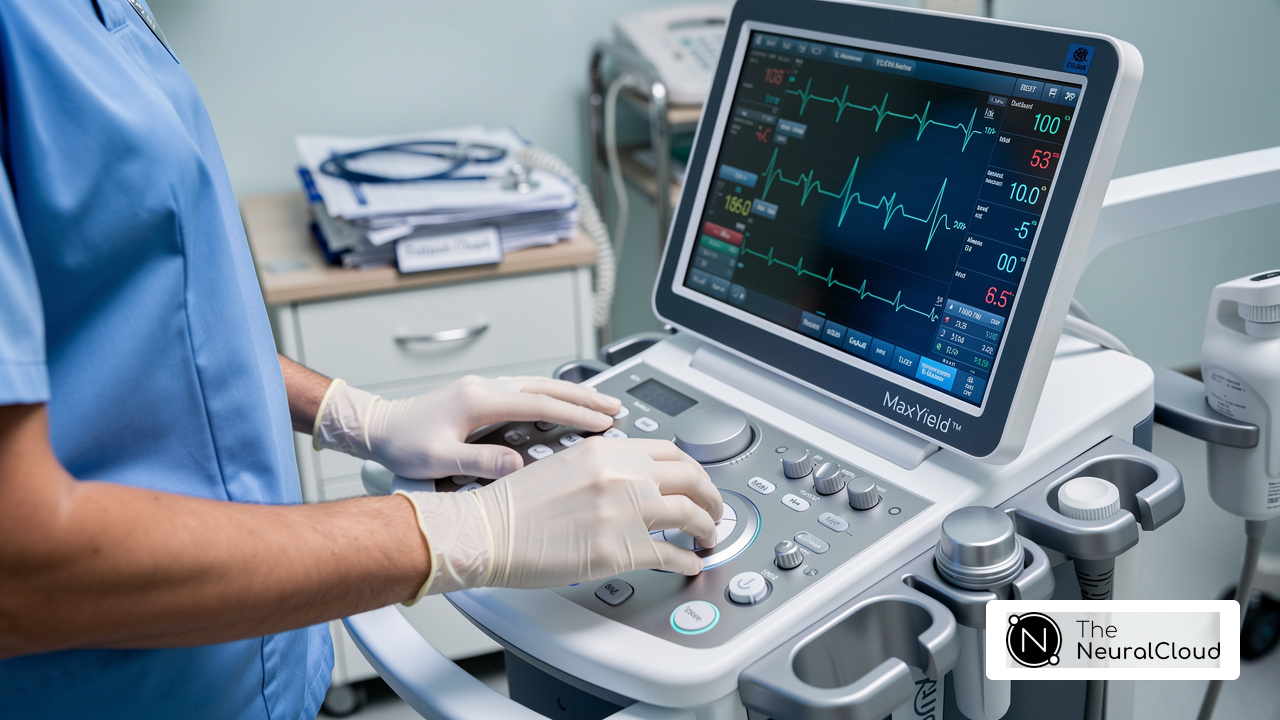
As cardiovascular treatment evolves, understanding NSTEMI is crucial for improving patient outcomes and ensuring effective healthcare delivery. In this context, innovative solutions like Neural Cloud Solutions' technology are pivotal. MaxYield™ rapidly labels P, QRS, and T Wave onsets, offsets, and time-series intervals, providing beat-by-beat tabulation in CSV format for seamless integration into existing workflows. This capability allows healthcare professionals to analyze more data in less time, working with clear data sets and clean signals.
Features of MaxYield™:
- Beat-by-beat tabulation in CSV format
- Seamless integration into existing workflows
Advantages for Healthcare Professionals:
- Enhanced data analysis efficiency
- Improved clarity of ECG signals
- Support for timely decision-making
Additionally, the neural network models developed by Neural Cloud Solutions can extract essential features from diverse signals, aiding in the discovery of new digital biomarkers that enhance the understanding and management of NSTEMI. As the landscape of cardiovascular care continues to evolve, leveraging such advanced technologies is essential for optimizing patient outcomes and ensuring effective healthcare delivery.

Identify Key Characteristics and Symptoms of NSTEMI
Key characteristics of NSTEMI include chest pain, often described as pressure or tightness, which may radiate to the arms, neck, jaw, or back. Patients frequently report associated symptoms such as shortness of breath, nausea, sweating, and fatigue. Unlike STEMI, where signs are typically more pronounced and sudden, NSTEMI can be subtle, occurring at rest or with minimal exertion. These symptoms often last longer than 10 minutes and may be mistaken for indigestion or anxiety. Research indicates that NSTEMI has an odds ratio of 9.4 for adverse outcomes, highlighting the need for a thorough evaluation of symptoms.
Prompt identification of these symptoms is crucial; delays in diagnosis can significantly increase morbidity and mortality rates. For instance, a retrospective study highlighted cases where individuals experienced delayed treatment, leading to adverse outcomes. Cardiologists emphasize that timely intervention is vital for effective management, as it can prevent complications. Additionally, it is important to note that NSTEMI can occur even without visible blockages in coronary arteries, complicating diagnosis and treatment. Engaging with a cardiologist for timely diagnosis and treatment is essential for enhancing heart failure prognosis.
The MaxYield™ system, developed by Neural Cloud Solutions, addresses the challenges in ECG analysis by transforming lengthy and noisy ECG recordings into clean, clear signals. This advancement enhances the clarity and speed of ambulatory ECG waveform analysis, which is critical for accurately assessing cardiac events. The features of MaxYield™ include:
- Signal filtering: Filters out irrelevant signals for clearer readings.
- Rapid analysis: Allows for quicker decision-making.
- Accuracy: Improves diagnostic precision, reducing the risk of misinterpretation.
These features translate into significant advantages for healthcare professionals. By leveraging MaxYield™, clinicians can enhance their diagnostic accuracy and efficiency, ultimately leading to better patient outcomes. Testimonials from healthcare professionals highlight the positive impact of MaxYield™ on their practice, reinforcing the importance of integrating advanced technology in clinical settings.

Discuss Implications and Complications of NSTEMI
(NSTEMI) poses significant risks, such as heart failure, arrhythmias, and sudden cardiac arrest. Individuals experiencing NSTEMI face a notably higher risk of recurrent heart attacks compared to those without a history of coronary artery disease. Long-term effects often lead to chronic health issues, which can severely impact quality of life.
To effectively manage these challenges, implementing robust treatment strategies is essential. Key interventions for NSTEMI include:
- Beta-blockers
- Lifestyle modifications
All of which play a vital role in mitigating risks associated with this condition. The 2025 ACC/AHA guidelines stress the necessity of early intervention and continuous monitoring to enhance outcomes and minimize complications linked to NSTEMI.
Moreover, research indicates that patients who fail to address their coronary disease risk factors tend to experience worse outcomes. This underscores the critical need for comprehensive patient education and strict adherence to treatment plans, ensuring that individuals are well-informed and engaged in their care.

Conclusion
Non-ST segment elevation myocardial infarction (NSTEMI) is a significant health concern that requires urgent attention due to its increasing prevalence and serious implications for patient health. Understanding NSTEMI allows healthcare professionals to refine their diagnostic and management strategies, ultimately leading to improved patient outcomes. Distinguishing between NSTEMI and STEMI is crucial, as it informs clinical decision-making and highlights the necessity for timely interventions.
This article outlines the defining characteristics of NSTEMI, including its symptoms, diagnostic criteria, and the growing incidence among younger populations. Emphasizing the importance of early recognition and the use of advanced technologies like MaxYield™, it becomes evident that effective management relies on both accurate diagnosis and appropriate treatment strategies. The implications of NSTEMI extend beyond immediate medical care, influencing long-term health and quality of life for patients.
Given these insights, it is essential for healthcare providers and patients alike to prioritize awareness and education regarding NSTEMI. By fostering a deeper understanding of this condition and advocating for timely intervention, the healthcare community can significantly reduce the risks associated with NSTEMI, ultimately leading to better health outcomes and an enhanced quality of life for those affected.
Frequently Asked Questions
What is Non-ST Segment Elevation Myocardial Infarction (NSTEMI)?
NSTEMI is a type of heart attack caused by a partial blockage of a coronary artery, leading to reduced blood flow to the heart muscle. It is characterized by the absence of notable ST segment elevation on an electrocardiogram (ECG).
How is NSTEMI diagnosed?
NSTEMI is primarily diagnosed through elevated cardiac biomarkers, especially troponin, which indicate myocardial injury.
What percentage of myocardial infarction cases does NSTEMI account for in the United States?
NSTEMI accounts for about 70% of all myocardial infarction cases in the United States.
How many NSTEMI cases are estimated to occur annually in the United States?
As of 2026, it is estimated that there are 780,000 cases of NSTEMI occurring annually in the United States.
What recent trend has been observed regarding NSTEMI incidence among younger adults?
There has been an increase in NSTEMI incidence among younger adults aged 18-44, with cases rising from 15.5% to 28.0%.
Why is early identification and intervention important for NSTEMI?
Early identification and intervention are crucial because prompt diagnosis can significantly influence patient outcomes.
Why is it important for healthcare professionals to understand NSTEMI?
Understanding NSTEMI is vital for healthcare professionals as it facilitates better management and treatment strategies for individuals affected by this condition.
List of Sources
- Define Non-ST Segment Elevation Myocardial Infarction (NSTEMI)
- healio.com (https://healio.com/news/cardiology/20260112/acc-report-highlights-progress-regression-of-cvd-risk-factors-in-us)
- Checking your browser - reCAPTCHA (https://ncbi.nlm.nih.gov/books/NBK513228)
- NSTEMI: Non-ST-Segment Elevation Myocardial Infarction - The Cardiology Advisor (https://thecardiologyadvisor.com/ddi/nstemi)
- pmc.ncbi.nlm.nih.gov (https://pmc.ncbi.nlm.nih.gov/articles/PMC10945973)
- Explore the Context and Significance of NSTEMI
- acc.org (https://acc.org/Latest-in-Cardiology/Journal-Scans/2025/02/27/17/01/ACC-AHA-Issue-New-Acute-Coronary-Syndromes-Guideline)
- NSTEMI: Non-ST-Segment Elevation Myocardial Infarction - The Cardiology Advisor (https://thecardiologyadvisor.com/ddi/nstemi)
- studocu.com (https://studocu.com/en-us/document/laramie-county-community-college/nursing/myocardial-infarction-case-study/52897056)
- Checking your browser - reCAPTCHA (https://ncbi.nlm.nih.gov/books/NBK513228)
- scribd.com (https://scribd.com/document/354945199/Case-Study-nstemi)
- Identify Key Characteristics and Symptoms of NSTEMI
- pmc.ncbi.nlm.nih.gov (https://pmc.ncbi.nlm.nih.gov/articles/PMC9109031)
- NSTEMI: Non-ST-Segment Elevation Myocardial Infarction - The Cardiology Advisor (https://thecardiologyadvisor.com/ddi/nstemi)
- Memorable Cardiology Quotes | TheKnowHow Blog (https://theknowhow.ae/memorable-cardiology-quotes-heart)
- Checking your browser - reCAPTCHA (https://ncbi.nlm.nih.gov/books/NBK513228)
- Discuss Implications and Complications of NSTEMI
- thecardiologyadvisor.com (https://thecardiologyadvisor.com/news/pci-underutilization-patients-90-years-older-nstemi)
- Clinical trial offers first-of-its-kind heart failure treatment (https://health.ucdavis.edu/news/headlines/clinical-trial-offers-first-of-its-kind-heart-failure-treatment/2026/02)
- Checking your browser - reCAPTCHA (https://ncbi.nlm.nih.gov/books/NBK513228)
- news-medical.net (https://news-medical.net/news/20250626/America-slashes-heart-attack-deaths-but-faces-surge-in-deadly-heart-failure-and-arrhythmias.aspx)
- ro.scribd.com (https://ro.scribd.com/doc/11711079/Case-1)