Introduction
Patients with valve disorders often face a daunting reality: limited treatment options that can significantly affect their quality of life. The Cardio Band offers a promising, minimally invasive option for treating conditions like mitral and tricuspid regurgitation, which can greatly affect patients' quality of life. As healthcare professionals look for new ways to improve patient outcomes, it’s essential to explore how the Cardio Band enhances heart function and sets new care standards in Canada.
Define the Cardio Band: An Overview of Its Purpose and Functionality
Patients with valve disorders often face limited treatment options, especially if they are not candidates for traditional surgery. The cardio band provides a promising solution for conditions such as mitral and tricuspid regurgitation. It works by reducing the size of the valve annulus, which helps the valve close better and prevents blood from flowing backward. This technology is delivered through a catheter, making it minimally invasive. It significantly improves outcomes for individuals who might not be suitable candidates for traditional open-heart surgery. By mimicking traditional surgical methods, the cardio band provides a less invasive option. It aims to restore normal cardiac function and enhance the quality of life for those with valve disorders. As the demand for effective heart valve treatments grows, innovations such as the cardio band are crucial in shaping the future of cardiac care in Canada.

Contextualize the Cardio Band: Importance for Heart Health and Patient Outcomes
For individuals grappling with functional mitral and tricuspid regurgitation, the Cardiac Device represents a pivotal advancement in heart care. These conditions can lead to significant morbidity and mortality if left untreated. Dr. Gideon Cohen highlights that patients often struggle with daily tasks due to the debilitating effects of their conditions, underscoring the pressing demand for innovative treatment solutions that improve patient outcomes. By providing a less invasive option for valve repair, the Cardiac Device reduces the risks associated with traditional surgery, such as prolonged recovery times and potential complications.
Research indicates that patients using the Cardiac Device enjoy enhanced cardiovascular function, experience fewer symptoms, and report an improved quality of life. This technology addresses immediate health challenges while also providing significant long-term benefits for patients. Moreover, with cardiovascular disease being the second leading cause of death in Canada, incorporating the Cardiac Device into treatment protocols aligns with the growing emphasis on innovative, patient-centered approaches in cardiovascular care. Ultimately, integrating the Cardiac Device into treatment protocols not only enhances patient care but also addresses a critical gap in cardiovascular health management.

Examine the Technology: Key Features and Mechanisms of the Cardio Band
The innovative design and functionality of the Cardio Band address significant challenges in valve repair. Central to its design is a polyester band, anchored to the heart tissue using a series of spiral-shaped anchors. This mechanism provides a secure fit and enables precise adjustments during the procedure, which is essential for achieving the best results. The device is deployed via a catheter, which reduces the need for invasive surgery and shortens recovery times for patients.
A significant feature of the device is its real-time confirmation system, which verifies the proper positioning of the apparatus during deployment. This feature is critical for ensuring the success of the procedure. Furthermore, the device's design closely resembles conventional surgical annuloplasty methods, effectively decreasing the annulus size and enhancing valve closure. This new approach not only makes the procedure safer but also boosts the effectiveness of heart valve repair.
Clinical studies, including the ongoing cardio band clinical trial registered under NCT01841554, have shown the effectiveness of the cardio band device, with a 100% feasibility rate for implantation in high-risk individuals. At the six-month follow-up, 82% of individuals improved to NYHA Class I-II, highlighting the device's potential to significantly enhance patient quality of life. Such outcomes underscore the device's role as a transformative solution in the management of mitral valve regurgitation, especially for individuals who are not suitable for open-heart surgery. Moreover, the transcatheter heart valve replacement market is expected to expand at a CAGR of 13.75% from 2023 to 2028, fueled by the rising incidence of valvular diseases and aortic stenosis, emphasizing the significance of the Cardiac Device in the present healthcare environment.

Illustrate Applications: Real-World Uses of the Cardio Band in Cardiac Care
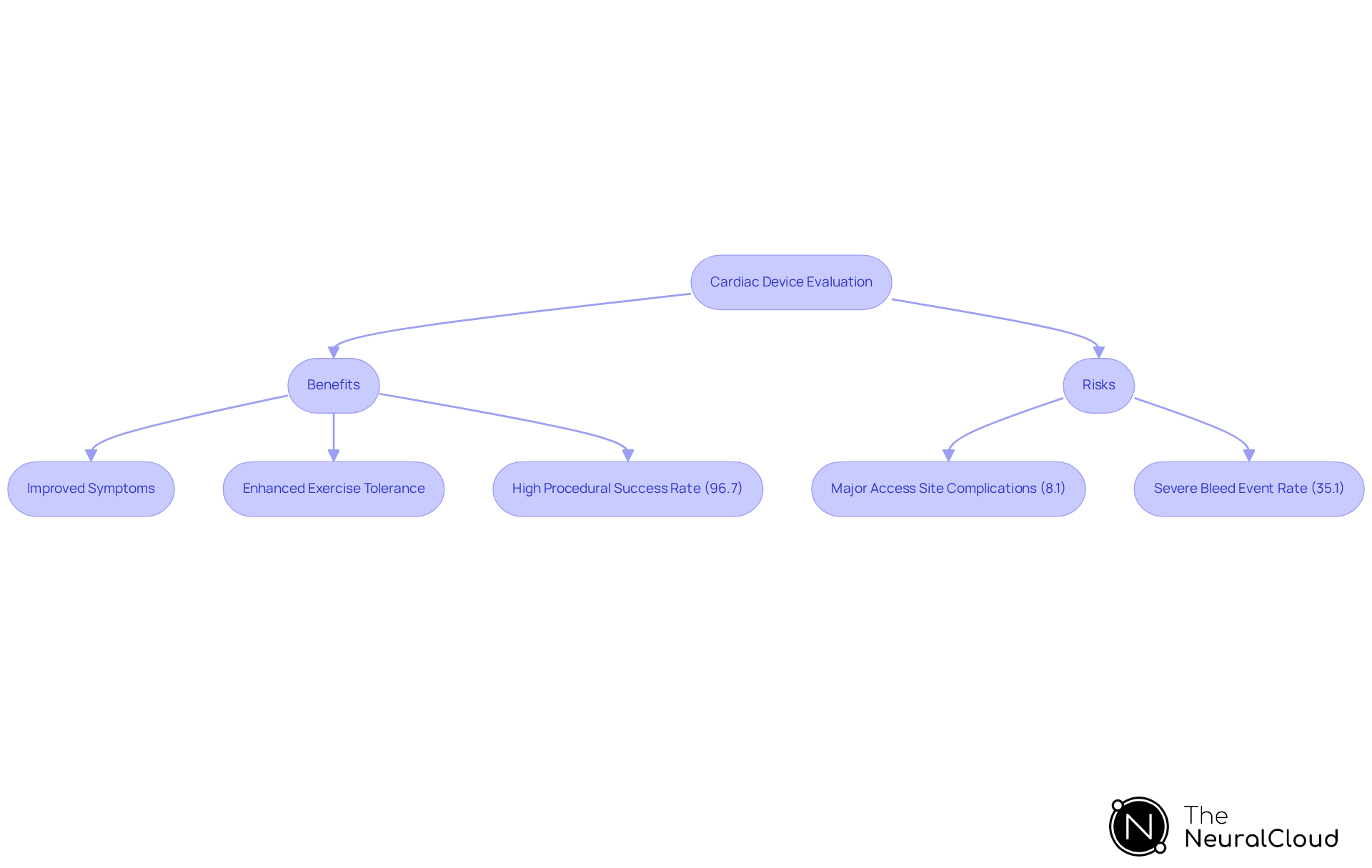
In clinical practice, managing severe mitral and tricuspid regurgitation presents significant challenges, but innovative solutions like the Cardiac Device are changing the landscape of treatment. A recent study revealed that patients who received a cardiac device experienced notable improvements in symptoms, such as reduced shortness of breath and fatigue, leading to enhanced exercise tolerance and overall quality of life.
The Cardiac Strap is becoming a vital option for high-risk patients who might not qualify for traditional surgeries, offering a minimally invasive alternative with quicker recovery times. The positive clinical results associated with the Cardiac Device are leading to its growing acceptance in heart centers around the globe, showcasing its vital role in improving cardiac care and patient outcomes.
Furthermore, the procedural success rate of the cardiac device stands at an impressive 96.7%, with significant reductions in tricuspid annulus diameter observed. However, it is essential to recognize that the procedure carries risks that must be carefully weighed against its advantages, including:
- An 8.1% rate of major access site complications
- A severe bleed event rate of 35.1%
As healthcare professionals evaluate treatment options, understanding both the benefits and risks of the Cardiac Device is crucial for informed decision-making.
Conclusion
The Cardio Band addresses a pressing need in cardiac care for patients with valve disorders. It represents a significant advancement, particularly for those suffering from mitral and tricuspid regurgitation. By offering a minimally invasive solution that mimics traditional surgical methods, the Cardio Band enhances the quality of life for individuals who may not be candidates for conventional surgery. This innovative device addresses immediate health challenges. It also plays a crucial role in the evolving landscape of heart health management in Canada.
Throughout the article, we've explored key insights into the functionality and benefits of the Cardio Band. Its unique design includes a polyester band and a real-time confirmation system, ensuring precise deployment and effective valve closure. Clinical studies highlight the device's impressive success rates and its potential to significantly improve patient outcomes, making it a vital option for high-risk individuals. The growing acceptance of the Cardio Band in clinical practice underscores its importance in addressing critical gaps in cardiovascular health management.
As the prevalence of cardiovascular diseases continues to rise, integrating innovative solutions like the Cardio Band into treatment protocols is essential. Healthcare professionals should weigh the benefits of this technology against its risks. By prioritizing patient-centered approaches and embracing advancements in cardiac care, the healthcare community can significantly enhance patient outcomes and contribute to a healthier future for individuals facing heart health challenges.
Frequently Asked Questions
What is the purpose of the cardio band?
The cardio band is designed to provide a solution for patients with valve disorders, such as mitral and tricuspid regurgitation, by reducing the size of the valve annulus to improve valve closure and prevent backward blood flow.
How does the cardio band work?
The cardio band works by being delivered through a catheter, which allows it to reduce the size of the valve annulus, thereby enhancing the valve's ability to close properly.
What are the advantages of using the cardio band over traditional surgery?
The cardio band offers a minimally invasive alternative to traditional open-heart surgery, significantly improving outcomes for patients who may not be suitable candidates for such procedures.
Who can benefit from the cardio band?
Patients with valve disorders, particularly those who are not candidates for traditional surgery, can benefit from the cardio band as it aims to restore normal cardiac function and enhance their quality of life.
Why is the cardio band important in the context of cardiac care in Canada?
As the demand for effective heart valve treatments increases, innovations like the cardio band are essential for shaping the future of cardiac care in Canada, providing new options for patients with limited treatment choices.
List of Sources
- Define the Cardio Band: An Overview of Its Purpose and Functionality
- Heart Valve Technology (https://dicardiology.com/channel/heart-valve-technology)
- Forgotten No More: What to Know About Advances in Transcatheter Valve Treatments (https://columbiacardiology.org/news/forgotten-no-more-what-know-about-advances-transcatheter-valve-treatments)
- New Trials Take Valve Disease Treatment Forward (https://nyulangone.org/news/new-trials-take-valve-disease-treatment-forward)
- Contextualize the Cardio Band: Importance for Heart Health and Patient Outcomes
- A New Treatment for Leaky Tricuspid Valves | Minneapolis Heart Institute Foundation (https://mplsheart.org/news/new-treatment-leaky-tricuspid-valves-FDA-approval)
- Transcatheter Edge-To-Edge Valve Repair for Tricuspid Regurgitation (https://cda-amc.ca/transcatheter-edge-edge-valve-repair-tricuspid-regurgitation)
- Forgotten No More: What to Know About Advances in Transcatheter Valve Treatments (https://columbiacardiology.org/news/forgotten-no-more-what-know-about-advances-transcatheter-valve-treatments)
- Health Canada Approves Abbott's MitraClip Device (https://dicardiology.com/content/health-canada-approves-abbotts-mitraclip-device)
- Heart Disease in Canada - Canada.ca (https://canada.ca/en/public-health/services/publications/diseases-conditions/heart-disease-canada.html)
- Examine the Technology: Key Features and Mechanisms of the Cardio Band
- Transcatheter Heart Valve Replacement Devices Market Size (https://delveinsight.com/report-store/transcatheter-heart-valve-replacement-devices-market)
- Heart Valve Technology (https://dicardiology.com/channel/heart-valve-technology)
- The Cardioband transcatheter direct mitral valve annuloplasty system (https://eurointervention.pcronline.com/article/the-cardioband-transcatheter-direct-mitral-valve-annuloplasty-system)
- High-Tech Heart Procedures Expand Options for Mitral Valve Repair (https://yalemedicine.org/news/high-tech-heart-procedures-expand-options-for-mitral-valve-repair)
- Transcatheter Valve Repair System Market Report 2026 (https://researchandmarkets.com/reports/5879553/transcatheter-valve-repair-system-market-report?srsltid=AfmBOoqhFAJ0GHhQ3IznZekIT3PcR29oAcJxF0T6SeQZffpOtlxX_os1)
- Illustrate Applications: Real-World Uses of the Cardio Band in Cardiac Care
- Thirty-day outcomes of the Cardioband tricuspid system for patients with symptomatic functional tricuspid regurgitation: The TriBAND study (https://eurointervention.pcronline.com/article/thirty-day-outcomes-of-the-cardioband-tricuspid-system-for-patients-with-symptomatic-functional-tricuspid-regurgitation-the-triband-study)
- 1-Year Outcomes of Cardioband Tricuspid Valve Reconstruction System Early Feasibility Study (https://sciencedirect.com/science/article/pii/S1936879822013437)
- The Cardioband System for Treatment of Secondary MR - Cardiac Interventions Today (https://citoday.com/articles/2016-july-aug/the-cardioband-system-for-treatment-of-secondary-mr)