Introduction
As digital ECG technologies emerge, healthcare professionals face a critical decision: embrace innovation or remain anchored to traditional methods? The landscape of cardiac diagnostics is shifting, with digital ECGs offering advanced algorithms for real-time analysis and enhanced visualization. These technologies promise improved efficiency and greater accuracy in diagnosing heart conditions.
However, as healthcare professionals in Canada evaluate the benefits of digital ECG technology, they must consider whether its advantages - such as real-time analysis and improved visualization - can truly surpass the reliability of traditional methods, or if the challenges of transitioning are too great to overcome.
Ultimately, the choice between digital and traditional ECG methods could redefine the future of cardiac diagnostics in Canada.
Compare Digital and Traditional ECG Technologies
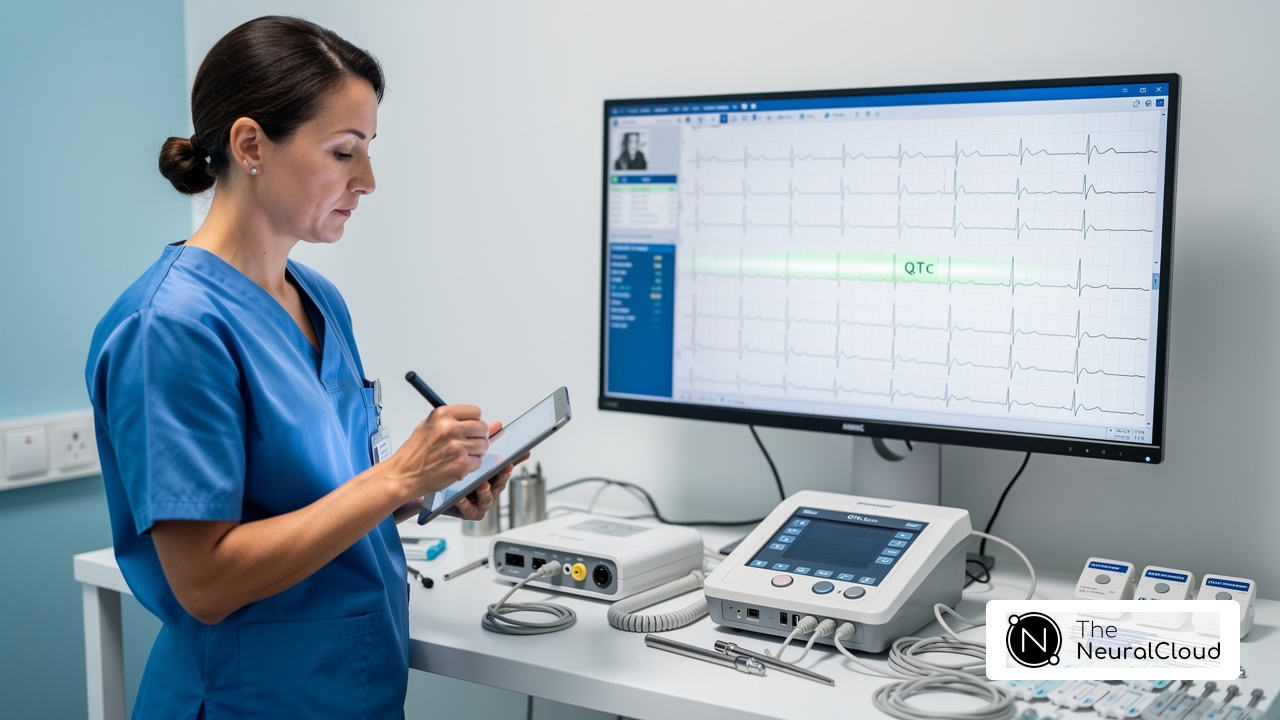
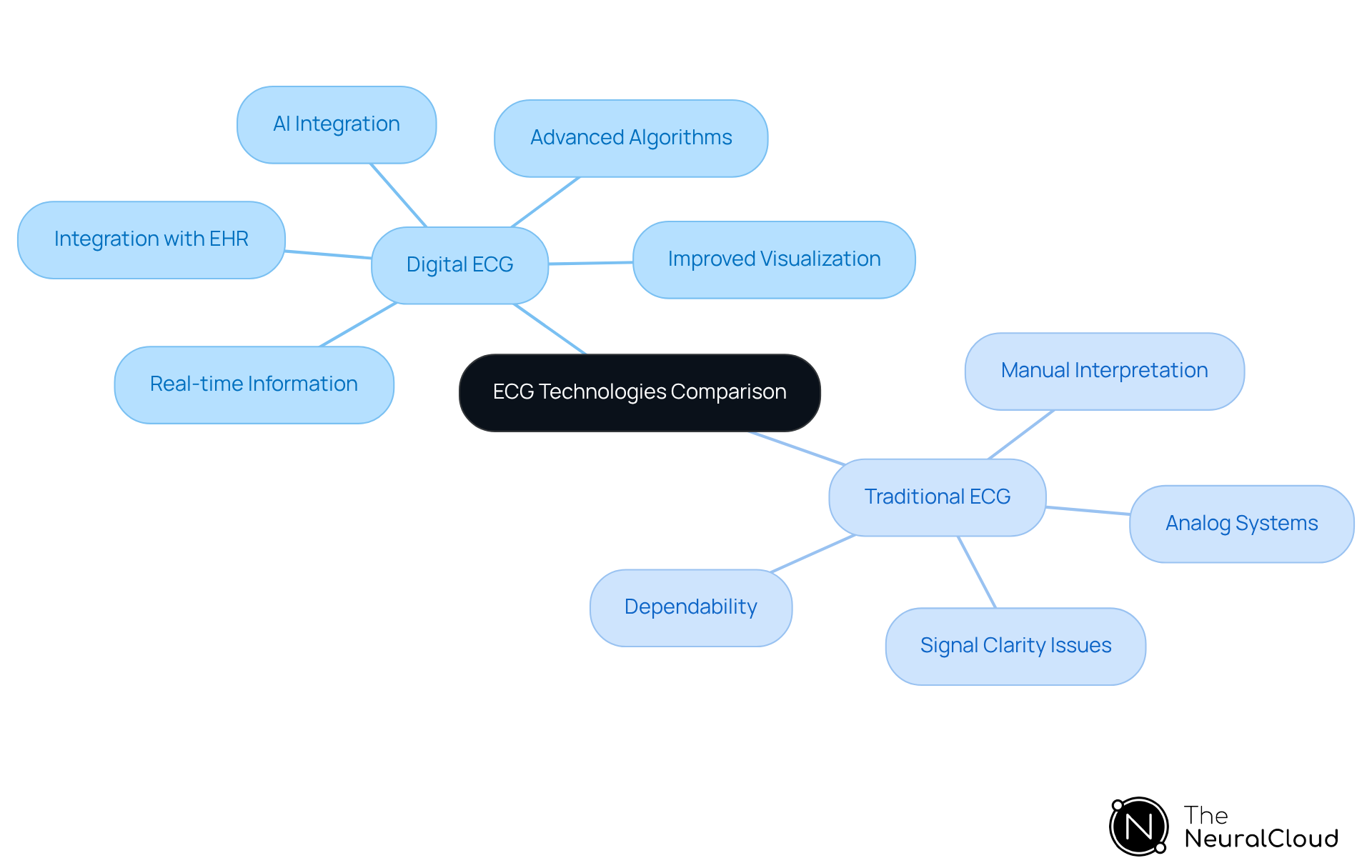
The evolution of ECG technology presents significant challenges and opportunities in cardiac diagnostics. Digital ECG technologies utilize advanced algorithms and software to capture and analyze heart signals, providing real-time information and improved visualization. In contrast, traditional ECG methods rely on analog systems that capture electrical activity on paper. This often leads to restrictions in interpretation and analysis. For instance, devices like those from Neural Cloud Solutions feature noise reduction and automated signal processing. These enhancements significantly improve data quality. Traditional ECGs, while dependable, often struggle with signal clarity and require manual interpretation, increasing the risk of human error.
The integration of AI in electronic ECGs further amplifies their ability to detect arrhythmias and other cardiac conditions with greater precision. Traditional methods may overlook subtle abnormalities due to their reliance on manual analysis. Recent advancements in electronic ECG systems in Canada have demonstrated improved diagnostic capabilities. Studies indicate these systems can reduce analysis time and enhance result precision.
Furthermore, specialist views highlight the increasing inclination towards electronic ECG solutions, especially considering their capacity to integrate smoothly with electronic health record systems. This integration enhances information sharing and patient management. With the rising adoption of digital ECG technology in Canada, these advancements are establishing a new standard for cardiac diagnostics. This shift is poised to enhance patient outcomes significantly.
Evaluate Efficiency in ECG Data Processing
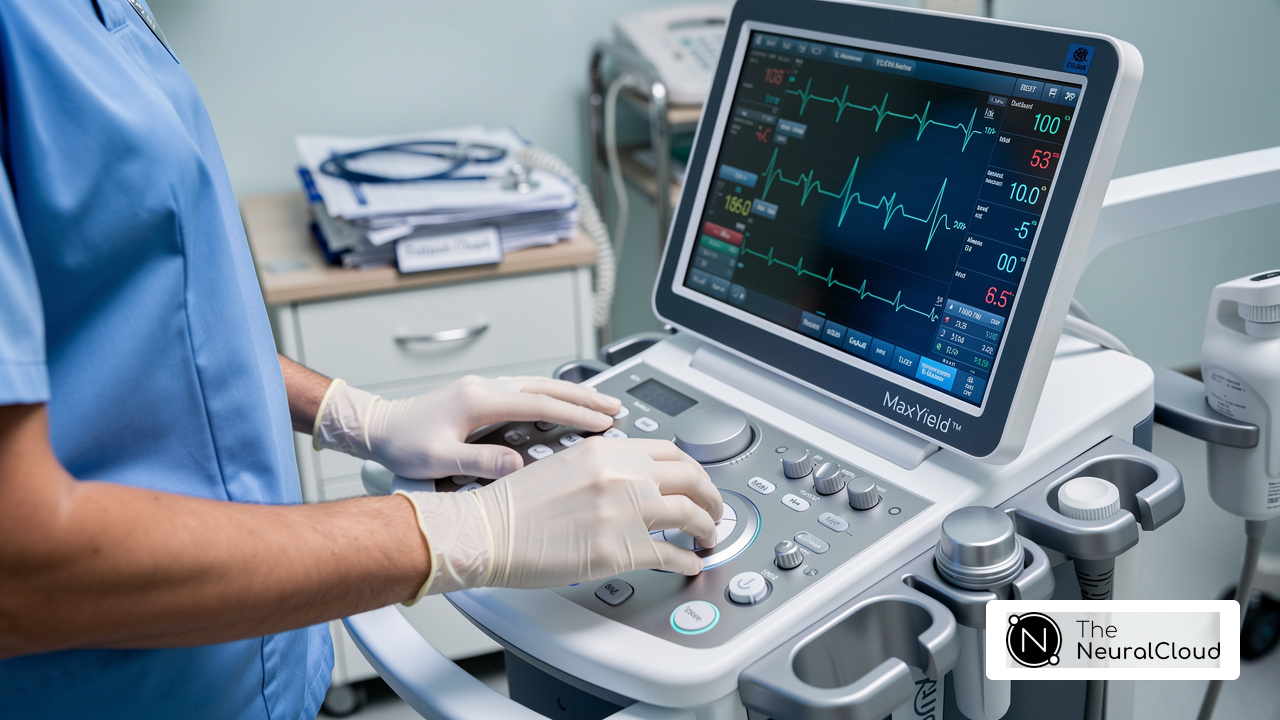
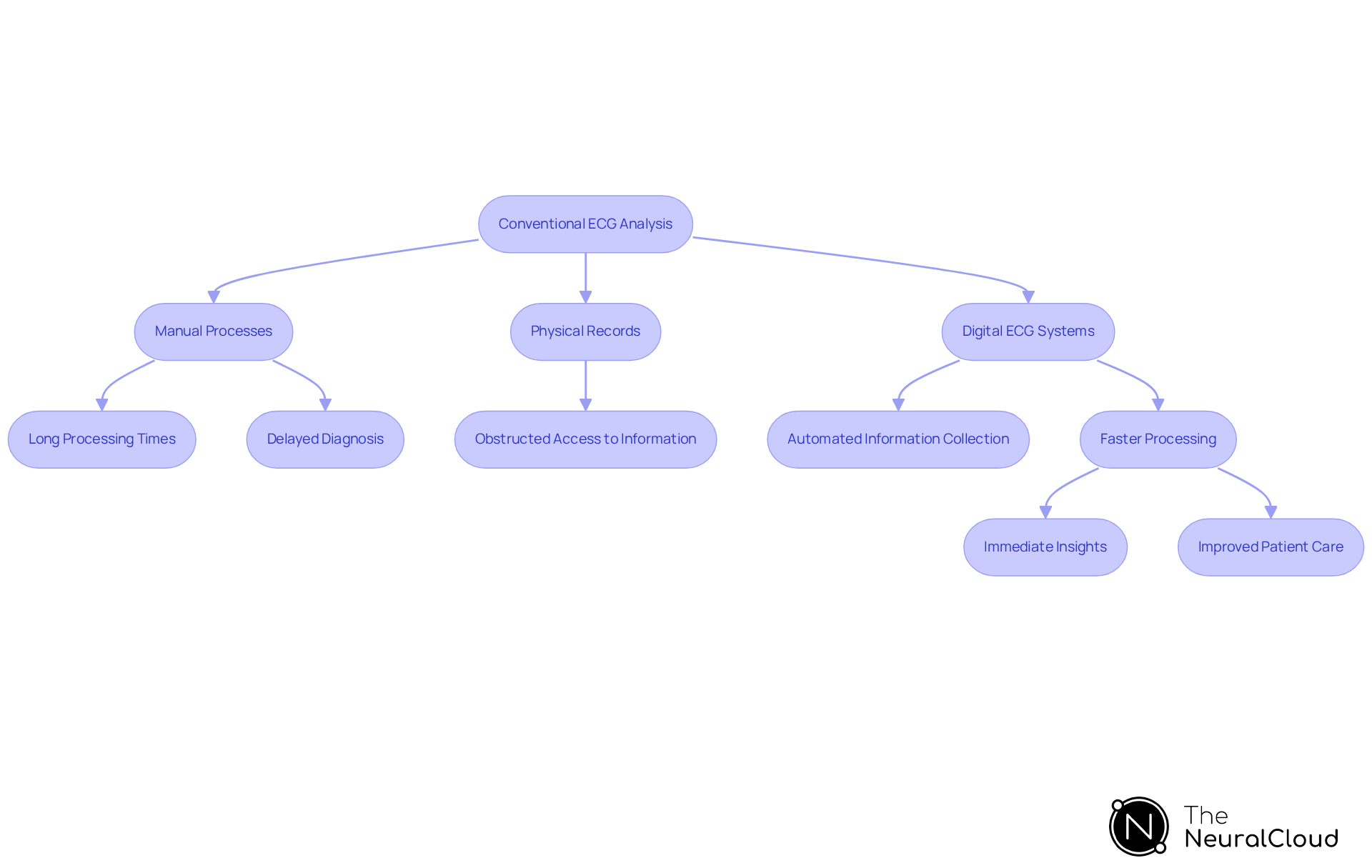
Conventional ECG analysis often faces significant delays due to manual processes and reliance on physical records, whereas digital ECG systems automate information collection and analysis, resulting in faster processing. For instance, Neural Cloud Solutions Inc.'s MaxYield technology operates natively on devices and can analyze 200,000 heartbeats in under two minutes, delivering immediate insights to clinicians. Its low memory footprint allows for easy integration into existing workflows, ensuring that healthcare professionals can adopt it without disrupting their current systems.
Conventional ECG techniques often require longer processing times due to manual input and interpretation. This can delay diagnosis significantly. Furthermore, the dependence on physical storage for paper records in conventional systems can obstruct rapid access to patient information. Digital systems, however, facilitate swift retrieval and sharing of information through cloud-based platforms, streamlining workflows in clinical settings. By streamlining operations, this efficiency also improves patient care, enabling quicker diagnoses and treatments.
As Dr. Brett Heilbron, a cardiologist, noted, "Neural Cloud Solutions Inc.'s superior artifact filtering drastically reduces noise, producing clinically acceptable tracings that enhance the speed and accuracy of Holter analysis." Additionally, Dr. Alan Rabinowitz stressed that "the Neural Cloud and their AI innovations are transforming how Holter Monitor information is captured and handled," underscoring the substantial advantages across all workflows.
Moreover, case studies show that the incorporation of digital ECG solutions in Canadian healthcare has resulted in enhanced outcomes, illustrating the essential role of technology in contemporary cardiovascular diagnostics and emphasizing the significance of reliable methodologies in cardiovascular care. Notably, MaxYield employs Gold Standard Methodologies and is currently pending FDA Class II SaMD clearance, ensuring compliance and reliability. Additionally, Insight360 boosts MaxYield's value by converting clean ECG data into interactive dashboards and ready-to-use clinical reports, making it easier for healthcare professionals to interpret results.
Assess Accuracy in Cardiac Diagnostics
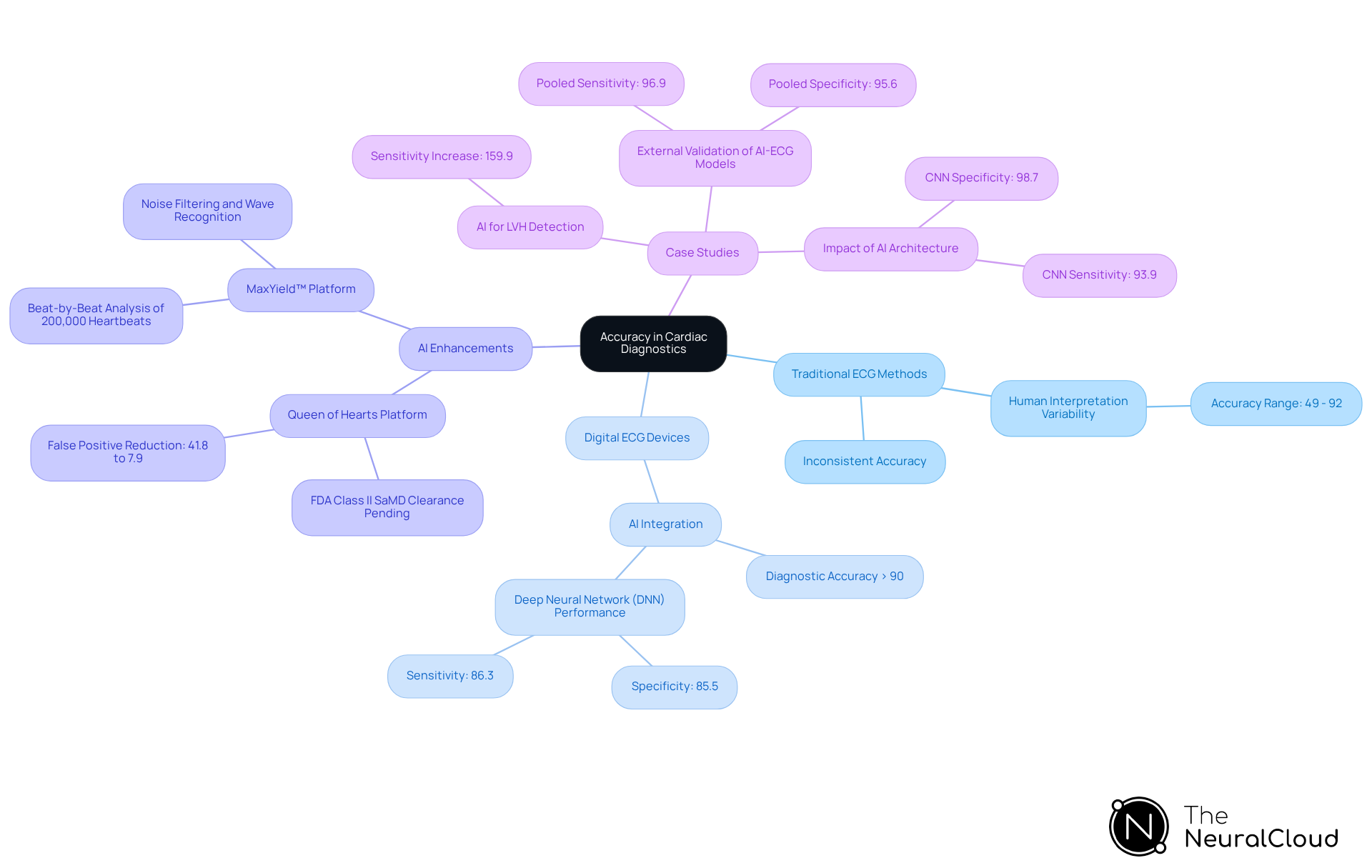
Inconsistent accuracy in traditional ECG methods can lead to critical misdiagnoses, highlighting the need for advanced solutions. Digital ECG devices accurately diagnose cardiac conditions, especially when integrated with AI algorithms that enhance the interpretation of signals. Recent studies indicate that digital ECGs enhanced by AI can achieve diagnostic accuracy rates exceeding 90%, significantly surpassing traditional methods that often rely on human interpretation, which can vary widely in accuracy, ranging from 49% to 92% based on clinician experience.
For instance, a deep neural network (DNN) trained on extensive ECG datasets demonstrated a sensitivity of 86.3% and specificity of 85.5% in diagnosing left ventricular systolic dysfunction (LVSD), showcasing the potential of AI to improve diagnostic precision. Furthermore, the Queen of Hearts platform, utilizing advanced AI techniques, has been shown to reduce false-positive STEMI activations from 41.8% to 7.9%, indicating a significant enhancement in diagnostic accuracy and efficiency in emergency settings.
These advancements are crucial for timely interventions in critical cardiac conditions, ultimately leading to improved patient outcomes. Neural Cloud Solutions Inc.'s MaxYield™ platform exemplifies this innovation, offering advanced noise filtering and wave recognition capabilities that enhance ECG analysis. By automating the identification and labeling of key features in every heartbeat, MaxYield™ transforms noisy recordings into detailed insights, delivering beat-by-beat analysis of 200,000 heartbeats in less than 5 minutes.
According to experts like Dr. Alan Rabinowitz and Dr. Brett Heilbron, MaxYield™ matches human interpretation in precision, making it an invaluable tool for clinicians. The continuous learning model of MaxYield™ ensures that its accuracy and efficiency improve over time, addressing the challenges posed by signal artifacts and enhancing workflow efficiency. Additionally, MaxYield™ is pending FDA Class II SaMD clearance, ensuring compliance with regulatory standards.
Insight360, the customizable visualization tool, transforms MaxYield™'s clean ECG information into interactive dashboards and clinical-ready reports, further supporting confident clinical decision-making and ultimately leading to better patient outcomes. With MaxYield™, clinicians can trust that they are equipped with a tool that not only enhances accuracy but also transforms patient care.
Summarize Advantages and Disadvantages of ECG Methods
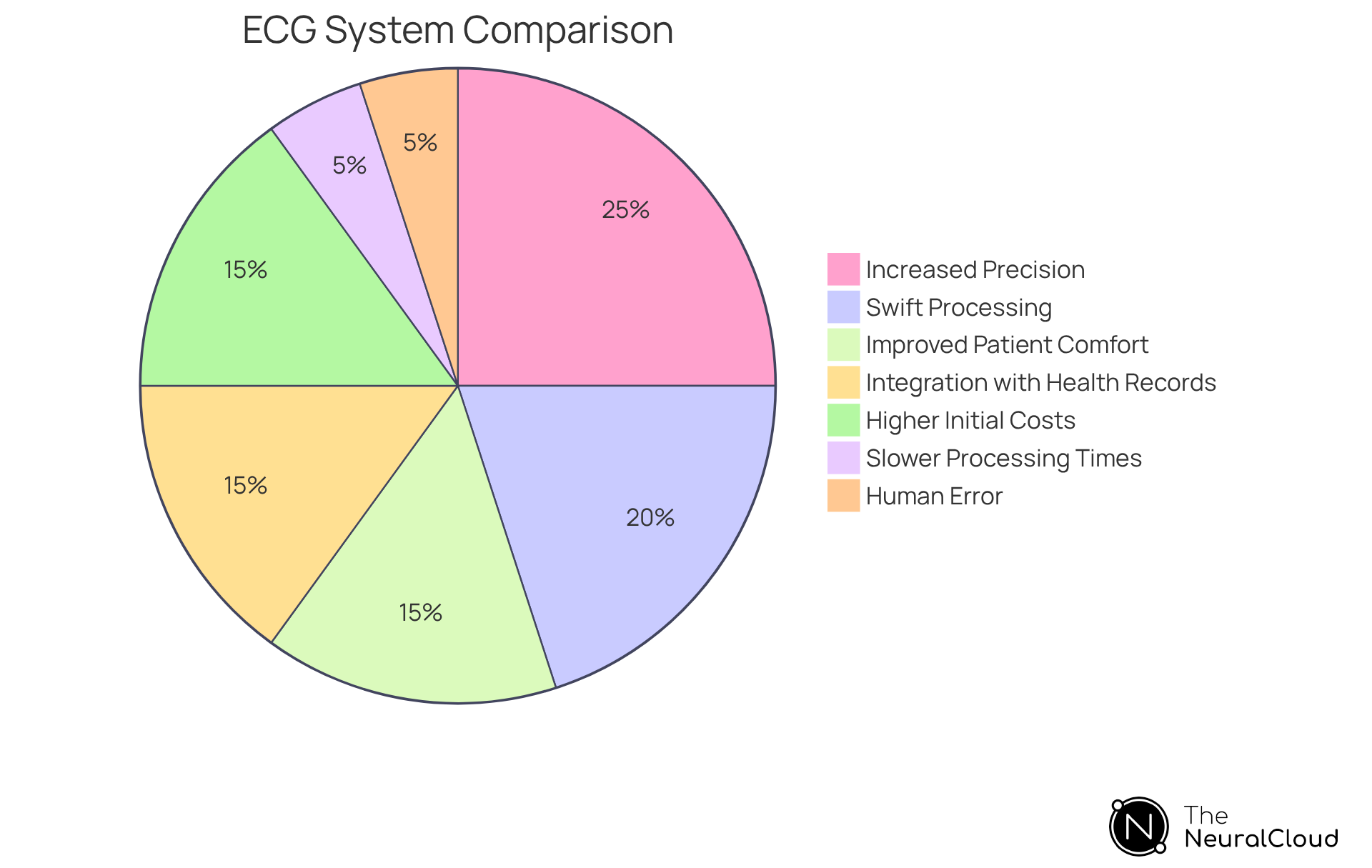
While digital ECG systems promise enhanced precision and efficiency, the transition to digital ECG from traditional methods presents challenges for healthcare facilities. Digital ECG systems offer considerable benefits, such as increased precision, swift information processing, and improved patient comfort through their remote monitoring features. With Neural Cloud Solutions Inc.'s Continuous Learning Model, these technologies improve with every use, enhancing diagnostic yield and boosting accuracy and efficiency. This model not only enhances the precision of ECG analysis but also reduces noise, making it comparable to human interpretation. Moreover, these systems enable smooth integration with electronic health records, encouraging effective information sharing among healthcare providers. For example, research has demonstrated that electronic ECG devices can automatically assess information, swiftly detecting irregularities and forecasting issues such as heart failure, which is essential for prompt interventions.
However, the higher initial costs of digital systems can deter some healthcare facilities from switching. Traditional ECG methods, while more familiar to healthcare professionals and requiring less training, are often hampered by slower processing times and a higher likelihood of human error in interpretation. Additionally, they rely on paper-based recordings, complicating data management and retrieval. This reliance on traditional methods can lead to delays in diagnosis and treatment, impacting patient care.
Furthermore, it is crucial to highlight that Neural Cloud Solutions Inc. is presently seeking FDA Class II SaMD clearance-pending status, ensuring that their innovations meet regulatory compliance standards. Expert endorsements from Dr. Alan Rabinowitz, Dr. Brett Heilbron, and Dr. Marc W. Deyell further support the effectiveness of MaxYield, emphasizing its precision and noise reduction benefits.
Ultimately, choosing between electronic and traditional ECG methods involves considering budget constraints, clinical needs, and the vital role of diagnostic accuracy in patient care. As healthcare continues to evolve, embracing digital ECG technology is essential for improving patient outcomes in cardiovascular care.
Conclusion
The evolution of cardiac diagnostics reveals a critical need for more efficient and accurate ECG analysis. Digital ECG systems, like those from Neural Cloud Solutions Inc., enhance efficiency and accuracy. They transform how clinicians interpret heart signals. In contrast, traditional ECG methods, while reliable, often lead to delays in diagnosis and treatment, highlighting the need for a transition towards more advanced solutions.
Key insights reveal that digital ECGs significantly reduce analysis time and improve diagnostic accuracy, thanks to their integration with AI and advanced algorithms. The ability to process vast amounts of data quickly and accurately not only streamlines workflows but also enhances patient care by facilitating timely interventions. Furthermore, the seamless integration of digital systems with electronic health records fosters better information sharing among healthcare providers, ultimately leading to improved patient outcomes.
As the landscape of cardiac diagnostics evolves, embracing digital ECG technology is not merely an option but a necessity for healthcare facilities aiming to enhance their diagnostic capabilities. Digital systems offer key advantages:
- Precision
- Efficiency
- The ability to adapt through continuous learning
These features make them essential tools in modern cardiovascular care. The future of cardiac diagnostics lies in leveraging these advancements to ensure that patients receive the best possible care, making the case for a shift towards digital ECG solutions more compelling than ever. As healthcare facilities adopt digital ECG solutions, they position themselves at the forefront of patient care, ensuring timely and accurate diagnoses.
Frequently Asked Questions
What are the main differences between digital and traditional ECG technologies?
Digital ECG technologies use advanced algorithms and software for real-time analysis and improved visualization of heart signals, while traditional ECG methods rely on analog systems that capture electrical activity on paper, leading to limitations in interpretation and analysis.
How do digital ECG technologies improve data quality?
Digital ECG technologies, such as those from Neural Cloud Solutions Inc., feature noise reduction and automated signal processing, which significantly enhance the clarity and quality of the data captured.
What are the limitations of traditional ECG methods?
Traditional ECGs often struggle with signal clarity and require manual interpretation, which increases the risk of human error and may overlook subtle abnormalities.
How does the integration of AI impact electronic ECGs?
The integration of AI in electronic ECGs enhances their ability to detect arrhythmias and other cardiac conditions with greater precision, reducing the chances of missing subtle abnormalities that traditional methods might overlook.
What advancements have been made in electronic ECG systems in Canada?
Recent advancements in electronic ECG systems in Canada have shown improved diagnostic capabilities, including reduced analysis time and enhanced result precision.
Why is there a growing preference for electronic ECG solutions?
There is an increasing inclination towards electronic ECG solutions due to their ability to integrate smoothly with electronic health record systems, which enhances information sharing and patient management.
What is the potential impact of adopting digital ECG technology on patient outcomes?
The rising adoption of digital ECG technology in Canada is establishing a new standard for cardiac diagnostics, which is poised to significantly enhance patient outcomes.
List of Sources
- Compare Digital and Traditional ECG Technologies
- Evolution of ECG Technology: From Analog to Digital - Norav Medical (https://noravmedical.com/evolution-of-ecg-technology-from-analog-to-digital)
- Why Digital ECG Device Outperforms Traditional Machines (https://tricog.com/why-choose-a-digital-ecg-device-over-a-traditional-ecg-machine?srsltid=AfmBOorv_5tvYK1-ac8RYMDw_qSy5ny6Zf4qzLGj-fQq75xY6tnvPTkd)
- Advancements in ECG Technology and Signal Processing (https://medicalsearch.com.au/buying-guide/advancements-in-ecg-technology-and-signal-processing/f/24927)
- HeartBeam Receives FDA Clearance for First-Ever, Cable-Free Synthesized 12-Lead ECG for At-Home Arrhythmia Assessment (https://ir.heartbeam.com/news-events/press-releases/detail/107/heartbeam-receives-fda-clearance-for-first-ever-cable-free)
- Evaluate Efficiency in ECG Data Processing
- Neural Cloud Solutions Inc. | LinkedIn (https://ca.linkedin.com/company/the-neural-cloud-inc)
- Neural Cloud Enters Distribution Agreement with Intelimed to Expand into Latin America (https://nasdaq.com/press-release/neural-cloud-enters-distribution-agreement-intelimed-expand-latin-america-2026-02-24)
- MaxYield-ECG (https://theneuralcloud.com/maxyield-ecg)
- AI/ML Innovations Inc. (CVE:AIML) | (https://webdisclosure.com/article/aiml-innovations-inc-cve-aiml-neural-cloud-partners-with-european-digital-cardiac-platform-zbaBa97okBk)
- Assess Accuracy in Cardiac Diagnostics
- The diagnostic accuracy of artificial intelligence enhanced electrocardiography for the detection of cardiac dysfunction (https://explorationpub.com/Journals/ec/Article/101293)
- Diagnostic Accuracy of Artificial Intelligence for Arrhythmia Detection Using the 12-Lead Electrocardiogram: A Systematic Review and Meta-Analysis (https://medrxiv.org/content/10.64898/2026.02.06.26345251v1.full-text)
- AI and ECG Interpretation: Insights and Trends for Cardiologists (https://gehealthcare.com/en/insights/article/ai-and-ecg-interpretation-insights-and-trends-for-todays-cardiologists?srsltid=AfmBOooHMBxQup5eB3NsLAi94DbXgUjIEYImpdVaGgXDPECUrC0Z9PIf)
- AI-ECG Finds STEMI Faster, Cuts False-Positive Cath Lab Activations (https://tctmd.com/news/ai-ecg-finds-stemi-faster-cuts-false-positive-cath-lab-activations)
- Summarize Advantages and Disadvantages of ECG Methods
- Wearable ECG Devices: Types, Pros, Cons and Tips [+ FAQs] (https://apacmed.org/wearable-ecg-device)
- cardio.jmir.org (https://cardio.jmir.org/2025/1/e62719)
- Why Digital ECG Device Outperforms Traditional Machines (https://tricog.com/why-choose-a-digital-ecg-device-over-a-traditional-ecg-machine?srsltid=AfmBOoqli0YDnMb30hOShcYkr_ySR-UFgQ0V19wduWndZnrKRqzEqfCh)
- Why Digital ECG Device Outperforms Traditional Machines (https://tricog.com/why-choose-a-digital-ecg-device-over-a-traditional-ecg-machine?srsltid=AfmBOopBcl2iFdXy0kZuaobKgTpl2eygixX2zTIlTmpgDNWAYhitYd6G)