Introduction
Understanding the electrical activity of the heart is crucial for maintaining cardiovascular health. The electrocardiogram (ECG) serves as a vital tool in this assessment. This guide provides readers with the opportunity to explore the essential characteristics of a normal ECG report, equipping them with the knowledge to interpret their results confidently. However, with numerous potential irregularities and the advanced technologies now available, one may wonder how to ensure that their ECG report is truly normal.
Understand the Basics of ECG: Definition and Importance
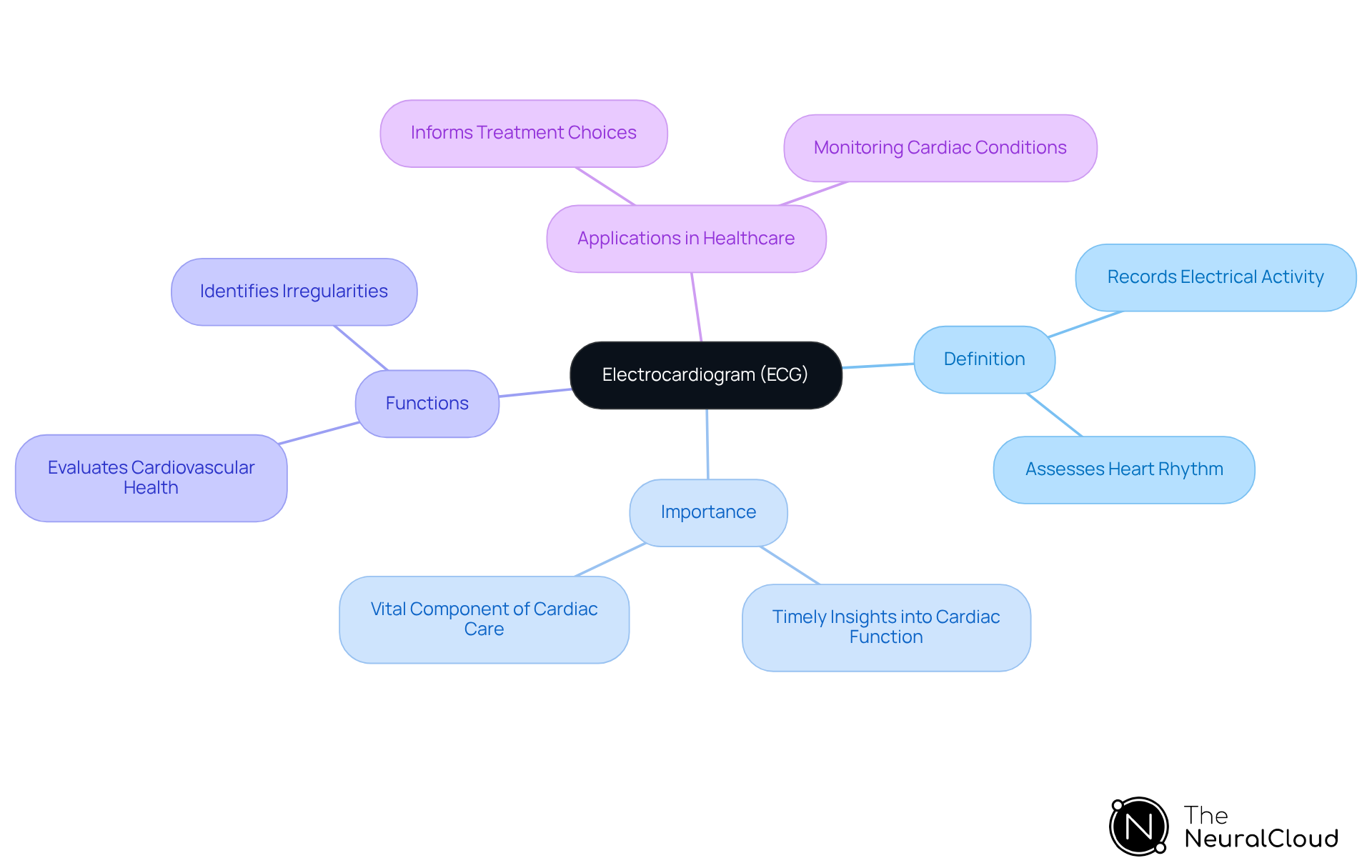
An electrocardiogram (ECG) is a test that records the electrical activity of the heart over time. This essential tool is utilized by healthcare professionals to monitor heart health, identify irregularities, and inform treatment choices. Understanding ECG involves recognizing the electrical signals that originate from the heart, which can indicate various cardiac conditions. The significance of ECG lies in its ability to provide critical information about heart function, making it a vital component of cardiac care. By familiarizing yourself with the terminology and purpose of an ECG, you will be better equipped to understand your heart health.
Identify Normal ECG Characteristics: Key Waveform Patterns
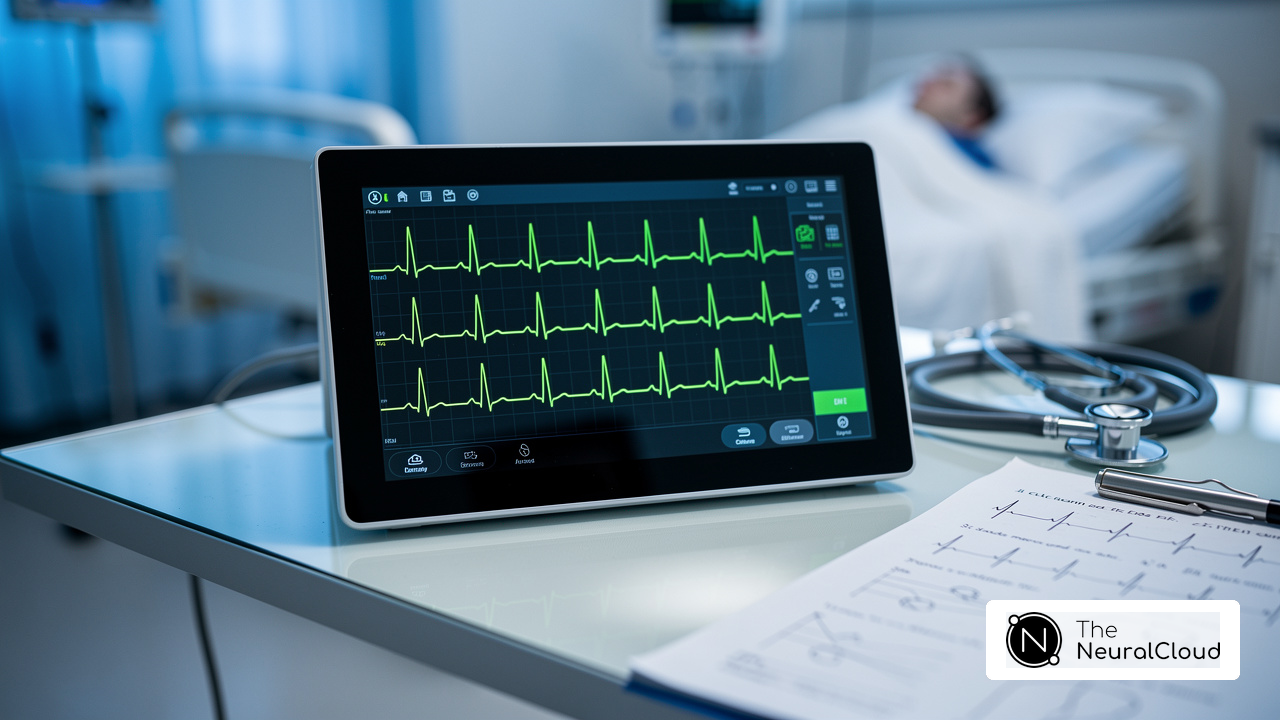
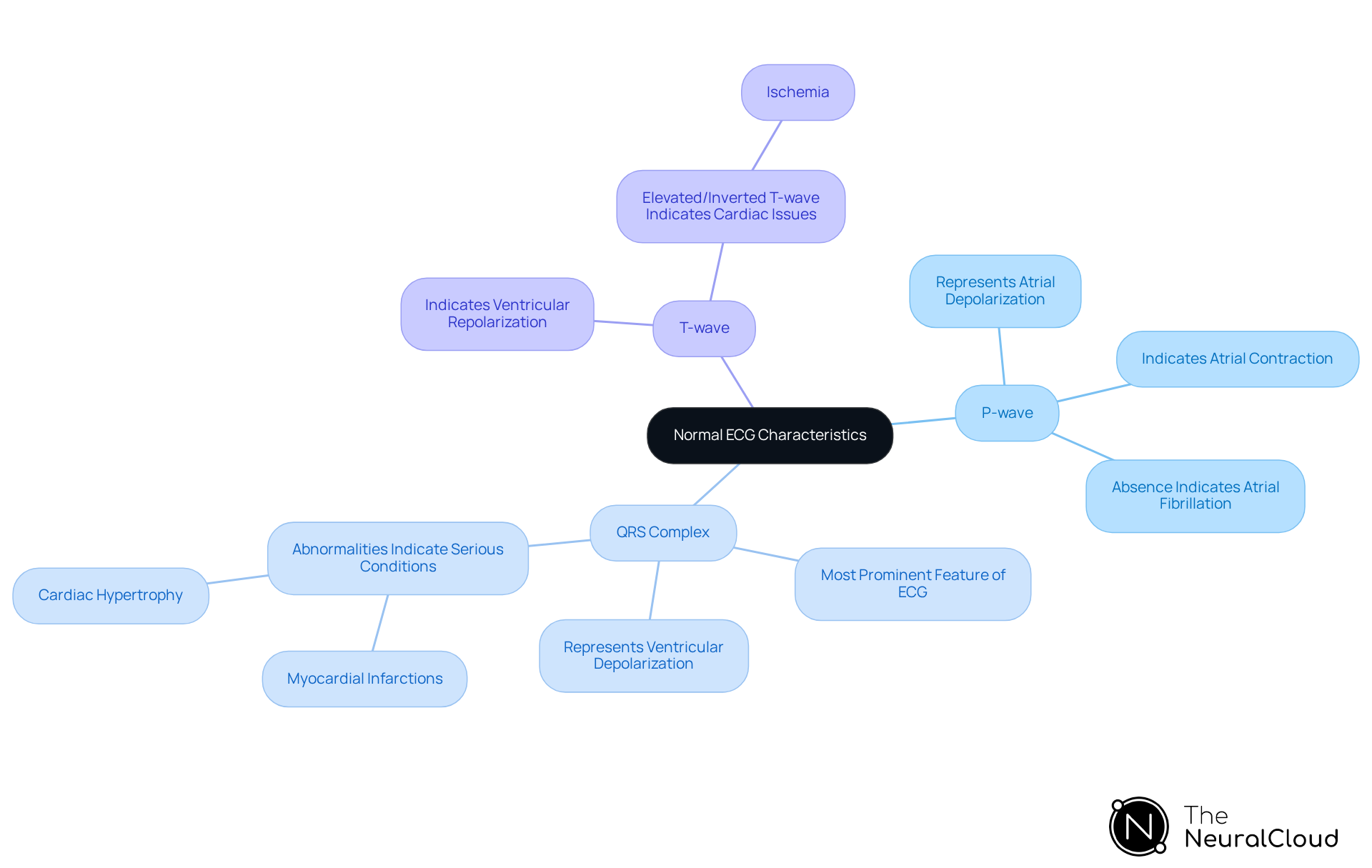
exhibit distinct waveform patterns, which are crucial for understanding and indicating healthy heart function. The key components include:
- P wave: This wave represents atrial depolarization, signaling the contraction of the atria. In a typical ECG, the presence of a P wave is crucial; its absence may suggest issues like atrial fibrillation, which interferes with effective ventricular filling. This tool enhances analysis by transforming noisy recordings into detailed insights, ensuring accurate identification of the P wave.
- QRS complex: Reflecting ventricular depolarization, the QRS complex shows the contraction of the ventricles and is the most prominent feature of the ECG. It consists of three waves: Q, R, and S, with the R wave being the most significant. Abnormalities in this complex can signal serious conditions, including arrhythmias. The system delivers beat-by-beat analysis, outputting an assessment of 200,000 heartbeats in under 5 minutes, which assists in the quick identification of abnormalities.
- T wave: This wave indicates ventricular repolarization, marking the recovery phase of the ventricles after contraction. An elevated or inverted T wave can indicate underlying cardiac issues, such as ischemia. The system supports confident clinical decisions by displaying smooth waveforms and aiding in the identification of these critical features.
In a normal ECG, these waves appear in a consistent sequence and shape, typically following the order of P wave, QRS complex, and T wave. Understanding these patterns is essential for identifying abnormalities, as it serves as a benchmark for further analysis. Familiarizing yourself with these characteristics will enhance your ability to interpret ECG results accurately. With the incorporation of this technology, health tech developers can improve diagnostics, surpassing conventional limitations and improving clarity and automation in cardiac diagnostics.
Analyze Your ECG Report: Step-by-Step Evaluation Process
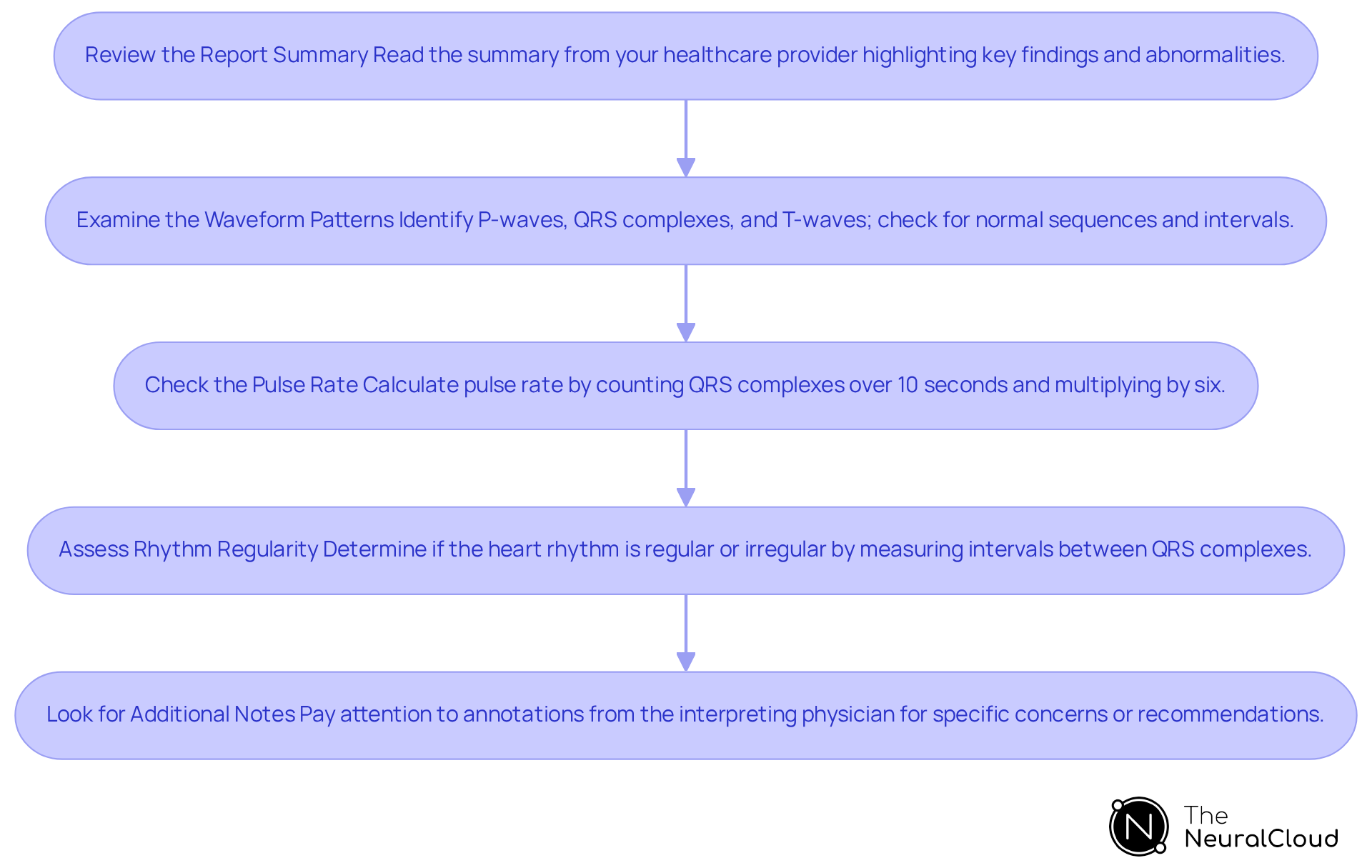
To analyze your ECG report effectively, particularly with the integration of advanced technologies like AI, follow these steps:
- Review the Report Summary: Begin by reading the summary provided by your healthcare provider, which highlights key findings. The system enhances accuracy through advanced algorithms, significantly reducing oversight risks.
- Examine the Waveform Patterns: Identify key waveforms, ensuring they follow the normal sequence; deviations may indicate underlying issues. A normal PR interval ranges from 0.12 to 0.20 seconds, while the QRS segment lasts between 0.04 and 0.10 seconds. Research indicates that outdated algorithms misinterpret 75% of pacemaker rhythms, underscoring the necessity for manual review alongside insights from experienced professionals.
- Check the Pulse Rate: Count the beats over 10 seconds and multiply by six. Normal sinus rhythm ranges from 60 to 100 beats per minute. The system automates this calculation, providing real-time feedback.
- Assess Rhythm Regularity: Determine if the heart rhythm is regular or irregular by measuring intervals between QRS complexes. The system adapts its analysis based on individual patient data.
- Look for Additional Notes: Pay close attention to annotations from the interpreting physician, as they may indicate specific concerns or recommendations. Misinterpretation of ECGs can lead to inappropriate care, with median accuracy found to be only 54% on pretraining assessments. The platform aims to enhance this accuracy through AI-driven insights, emphasizing the importance of thorough analysis.
By adhering to these steps and utilizing advanced tools, you can understand your ECG report and its significance for cardiovascular health. With nearly 200 million ECGs recorded annually worldwide, accurate interpretation is essential for effective patient care.
Recognize Abnormalities: Common ECG Irregularities to Watch For
When reviewing your ECG report, it is crucial to be vigilant for common irregularities, particularly as Neural Cloud Solutions' technology enhances the accuracy and efficiency of ECG analysis.
Atrial Fibrillation: This condition is characterized by an irregular and often rapid heart rate, significantly increasing the risk of stroke and other complications. Studies indicate that untreated AF can lead to a fivefold increase in stroke risk and a 30% increase in dementia risk, underscoring the importance of timely detection. The integration of AI-driven automation within the healthcare system allows for more precise detection of AF, reducing the chances of missed diagnoses.
Ventricular Tachycardia: Originating from the ventricles, VT presents as a rapid pulse that can be life-threatening if not addressed promptly. The identification of VT is vital, as it may suggest underlying cardiovascular issues or other severe ailments. Utilizing advanced technologies, such as those provided by the medical industry, can help identify VT more effectively, addressing challenges posed by physiological variability and signal artifacts.
ST Segment Elevation: This abnormality may indicate a myocardial infarction or other serious cardiac issues. Recognizing this change is essential, as it often requires immediate medical intervention. The technology employed by Neural Cloud Solutions ensures that the algorithms evolve with each use, enhancing the diagnostic yield for such critical conditions.
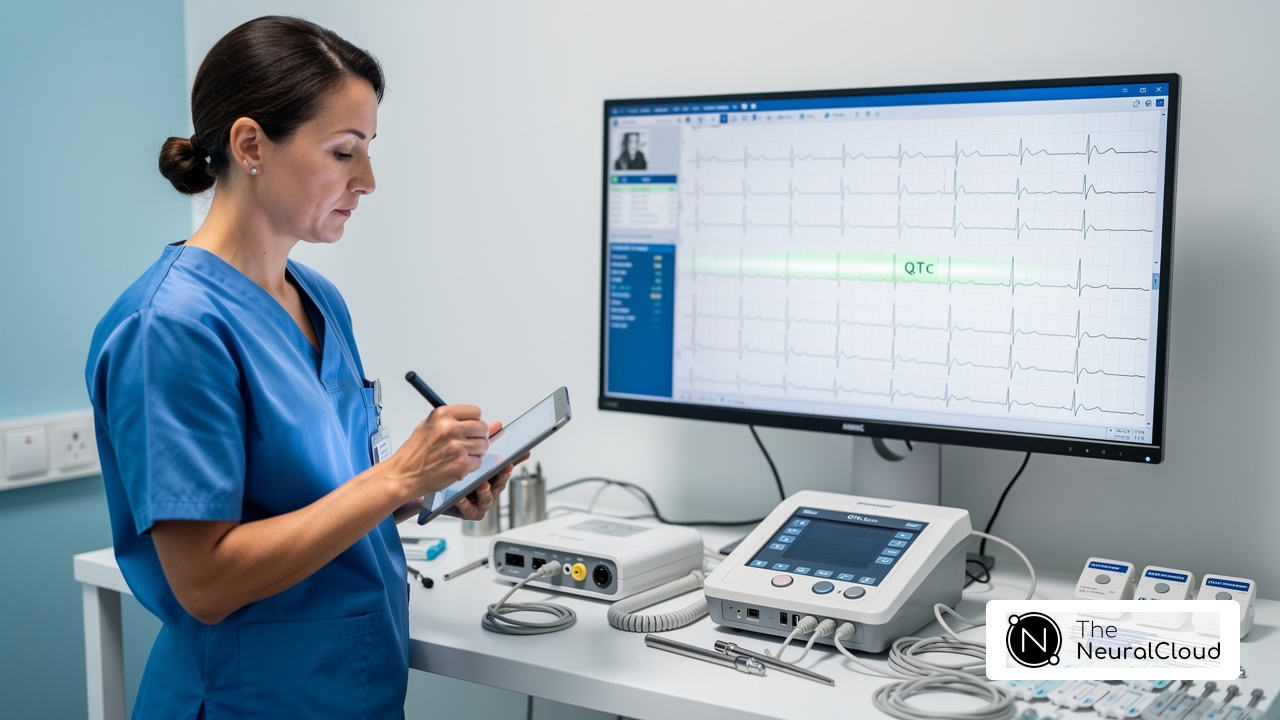
QT Interval Prolongation: A prolonged QT interval can increase the risk of arrhythmias, necessitating further evaluation. Monitoring this interval is essential for assessing the electrical stability of the heart. Advanced tools, such as those offered by Neural Cloud Solutions, provide clearer insights into these intervals, improving patient outcomes.
Recognizing these abnormalities is essential for understanding how to check if an ECG report is normal and for determining when to seek further medical evaluation. For instance, a meta-analysis found that active screening for AF is effective starting from age 40, highlighting the need for proactive monitoring in at-risk populations. Additionally, cardiologists emphasize the importance of continuous monitoring and advanced diagnostic tools to improve outcomes for patients with these conditions. Furthermore, studies have shown that the incidence rate of AF is 27.1 per 100 person-years, and 58% of incident AF cases were detected solely by an ECG, illustrating the effectiveness of early detection.

Conclusion
Understanding how to check if an ECG report is normal is essential for maintaining cardiovascular health. This guide has provided the necessary tools and insights to empower individuals to interpret their ECG results effectively, ensuring that potential issues are identified promptly.
Key points discussed include the fundamental characteristics of a normal ECG, such as the P-wave, QRS complex, and T-wave, which serve as benchmarks for evaluation. The step-by-step analysis process emphasizes the importance of:
- Reviewing waveform patterns
- Calculating pulse rates
- Recognizing abnormalities that may indicate serious health conditions
Moreover, the integration of advanced technologies like MaxYield™ enhances accuracy and efficiency in ECG interpretation, making it easier to detect irregularities.
Ultimately, being proactive about understanding ECG reports can lead to better health outcomes. Individuals are encouraged to familiarize themselves with normal ECG characteristics and remain vigilant for any irregularities. By doing so, they can take charge of their cardiovascular health and seek timely medical advice when necessary, reinforcing the significance of regular heart monitoring and informed health choices.
Frequently Asked Questions
What is an electrocardiogram (ECG)?
An electrocardiogram (ECG) is a test that records the electrical activity of the heart over time.
Why is an ECG important?
An ECG is important because it helps healthcare professionals evaluate cardiovascular health, identify irregularities, and inform treatment choices.
What does an ECG assess?
An ECG assesses the rhythm and electrical impulses of the heart, which can indicate various cardiac conditions.
How does an ECG contribute to cardiac care?
An ECG provides timely insights into cardiac function, making it a vital component of cardiac care.
What should I know to understand an ECG report?
Familiarizing yourself with the terminology and purpose of an ECG will help you understand how to check if an ECG report is normal.
List of Sources
- Identify Normal ECG Characteristics: Key Waveform Patterns
- med.libretexts.org (https://med.libretexts.org/Bookshelves/Anatomy_and_Physiology/Anatomy_and_Physiology_(Boundless)/17:_Cardiovascular_System:_The_Heart/17.4:_Physiology_of_the_Heart/17.4B:_Electrocardiogram_and_Correlation_of_ECG_Waves_with_Systole)
- Electrocardiography - Wikipedia (https://en.wikipedia.org/wiki/Electrocardiography)
- Analyze Your ECG Report: Step-by-Step Evaluation Process
- Mastering EKG interpretation: 10 steps for accurate rhythm identification (https://ems1.com/ems-products/medical-monitoring/articles/ecg-interpretation-10-steps-for-rhythm-identification-HlbOvohuSltPKAL2)
- mdpi.com (https://mdpi.com/2673-3846/2/4/505)
- Checking your browser - reCAPTCHA (https://pmc.ncbi.nlm.nih.gov/articles/PMC7522782)
- bmcmededuc.biomedcentral.com (https://bmcmededuc.biomedcentral.com/articles/10.1186/s12909-023-04670-x)
- Accuracy of Physicians’ Electrocardiogram Interpretation (https://jamanetwork.com/journals/jamainternalmedicine/fullarticle/2771093)
- Recognize Abnormalities: Common ECG Irregularities to Watch For
- mhealth.amegroups.org (https://mhealth.amegroups.org/article/view/42472/html)
- mdpi.com (https://mdpi.com/2077-0383/12/11/3682)