Introduction
Developers face significant challenges in interpreting electrocardiograms (ECGs), which are crucial for advancing cardiac diagnostics. Advanced technologies and AI present a significant opportunity to enhance the accuracy and reliability of ECG analysis, which ultimately benefits patient care. However, developers often struggle to balance innovation with the complexities of ECG interpretation.
Let’s explore best practices that can help developers master ECG machine interpretation, ensuring they are equipped to navigate the complexities of this vital aspect of healthcare. By mastering these practices, developers can significantly enhance patient outcomes and diagnostic accuracy.
Understand ECG Components and Their Clinical Significance
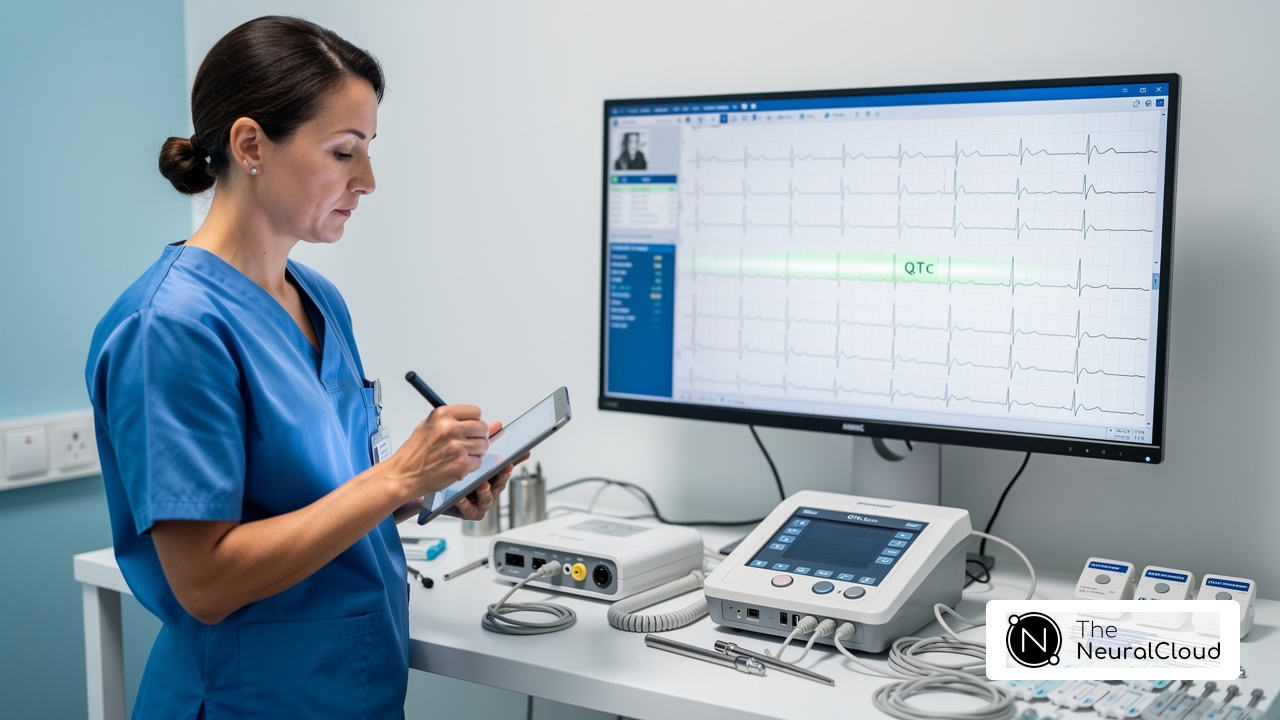
Understanding the critical components of an electrocardiogram (ECG machine interpretation) is essential for accurate cardiac assessment. An ECG comprises several key elements: the P wave, QRS complex, and T wave, each representing distinct phases of the heart's electrical activity. The P wave signifies atrial depolarization, the QRS complex indicates ventricular depolarization, and the T wave reflects ventricular repolarization. Each component's morphology provides insights into cardiac conditions like atrial enlargement and ventricular hypertrophy. For instance, normal P wave duration is approximately 80 milliseconds, while the QRS complex typically lasts between 80 to 100 milliseconds.
To enhance diagnostic capabilities, developers need algorithms that support accurate ECG machine interpretation and analysis of these components. A recent study highlighted that ECG-FM, an AI model trained on data from 1.5 million ECG tests, outperformed previous models in interpreting common ECG findings. This demonstrates the importance of precise component analysis for ECG machine interpretation in diagnosing arrhythmias and other cardiac abnormalities. Furthermore, Neural Cloud Solutions Inc.'s platform revolutionizes ECG analysis by automating the identification and labeling of these critical components, even in recordings with high levels of noise and artifact.
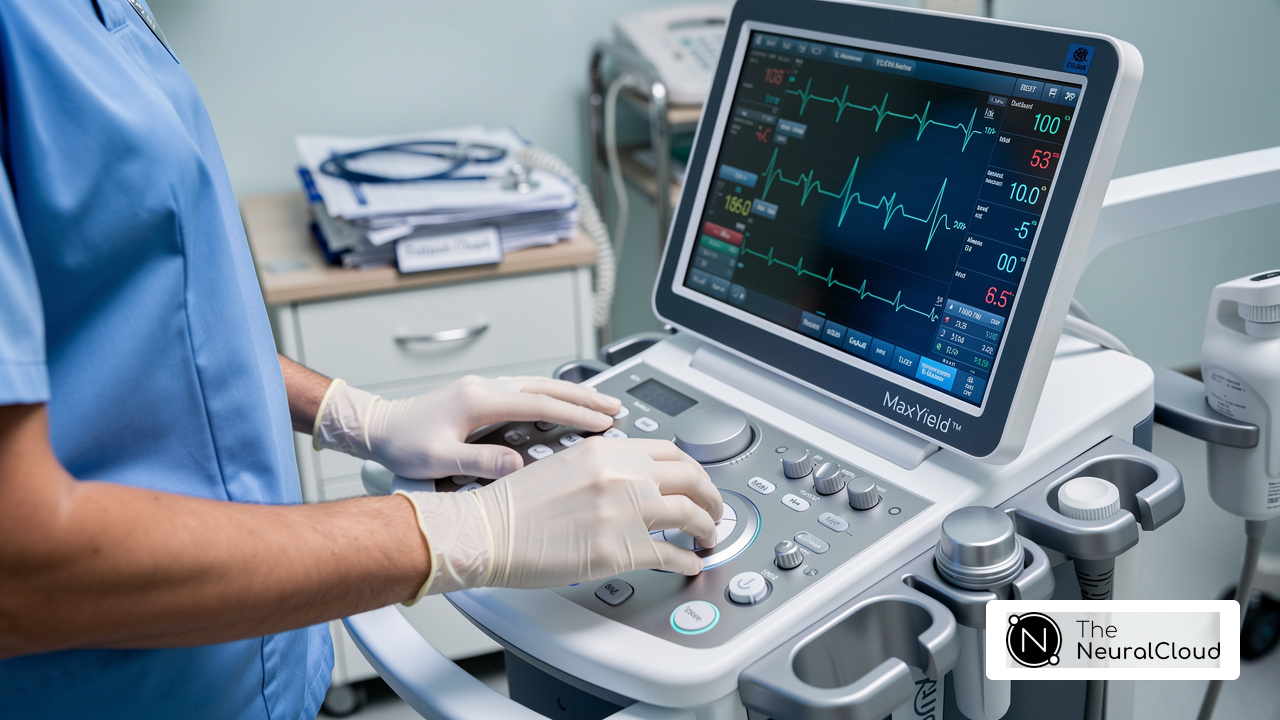
With its advanced noise filtering features, the system can recover previously hidden parts of extensive Holter, 1-Lead, and patch monitor recordings. This ensures that developers can deliver precise analyses. Professional endorsements from Dr. Alan Rabinowitz, Dr. Brett Heilbron, and Dr. Marc W. Deyell emphasize the accuracy of this product, competing with human analysis and demonstrating its noise reduction advantages. Additionally, it is important to note that MaxYield™ is currently pending FDA Class II SaMD clearance, ensuring compliance with regulatory standards.
Incorporating this knowledge into ECG machine interpretation tools allows developers to significantly enhance the accuracy and reliability of their applications, ultimately benefiting patient outcomes in cardiology. This advancement not only streamlines ECG analysis but also holds the potential to transform patient care in cardiology.

Implement Practical Tips for Accurate ECG Interpretation
Accurate ECG machine interpretation is often hindered by common challenges that developers must address to enhance patient care. To improve the accuracy of ECG interpretation, developers should consider the following practical tips:
- Ensure Proper Electrode Placement: Accurate electrode placement is critical, as studies indicate that misplacement occurs in over 50% of ECG cases, particularly affecting leads V1 and V2. Developers should integrate visual guides or reminders within their applications to assist users in achieving correct placements, especially in female patients where anatomical differences can complicate positioning.
- Preprocess ECG Data: Raw ECG data often contains noise and artifacts that can lead to misdiagnoses. Implementing preprocessing algorithms, such as normalization and filtering techniques, can significantly improve the quality of the data analyzed for ECG machine interpretation. For instance, while Min-Max normalization may have a slight negative effect on performance, ensuring minimally acceptable image quality is essential for precise AI-ECG analysis. MaxYield™ effectively identifies and labels critical data in noisy recordings. This capability ensures that important sections of lengthy Holter, 1-Lead, and patch monitor recordings are salvaged.
- Utilize Standardized Protocols: Following established guidelines, such as those from the Society for Cardiological Science and Technology, can help ensure consistency and reliability in ECG analysis. These guidelines recommend specific placements for ECG leads to accommodate anatomical differences in women, which can enhance the accuracy of ECG machine interpretation. Additionally, developers should ensure compliance with regulatory standards, including FDA Class II SaMD clearance-pending status, to enhance credibility.
- Incorporate User Feedback: Allowing users to provide feedback on analysis results can help refine algorithms and enhance accuracy over time. Studies show that when users provide feedback, diagnostic tools can improve over time, leading to better patient outcomes. Expert endorsements from Dr. Alan Rabinowitz, Dr. Brett Heilbron, and Dr. Marc W. Deyell highlight that MaxYield's accuracy competes with human analysis, rendering it a valuable resource for developers.
- Leverage Insight360: Consider integrating Insight360, a customizable visualization and reporting tool that transforms MaxYield™'s clean ECG data into interactive dashboards and clinical-ready reports. This can enhance the user experience and provide valuable insights for healthcare professionals.
By implementing these strategies, developers can significantly improve the interpretation of ECG machine data, ultimately leading to better patient outcomes and more reliable healthcare solutions.

Leverage AI and Advanced Technologies for Enhanced ECG Analysis
The integration of AI and machine learning into ECG machine interpretation presents significant challenges and opportunities for healthcare developers. Here are some strategies for developers to consider:
- Utilizing machine learning algorithms can enhance ECG machine interpretation by recognizing patterns in ECG data that may not be apparent to human interpreters. For instance, deep learning models have demonstrated high accuracy in identifying arrhythmias, with studies showing sensitivity rates of up to 97.19% in Canadian populations. This emphasizes the importance of localized data in improving diagnostic outcomes.
- Use Predictive Analytics: AI can analyze historical ECG data to predict potential cardiac events, allowing for proactive patient management. This capability is crucial, especially considering that ECG machine interpretation can play a vital role in preventing sudden cardiac arrest, which claims a significant number of lives in Canada each year. Early intervention and tailored approaches to patient care are essential.
- Enhance Data Visualization: Tools like Insight360 can really help clinicians make sense of ECG data more easily. Incorporating customizable dashboards and graphical representations can improve user engagement and understanding, facilitating better clinical decision-making. Canadian case studies have shown that effective visualization can lead to improved diagnostic accuracy and clinician satisfaction.
- Continuous Learning Systems: Creating systems that learn from new data can improve the precision of analyses over time. Neural Cloud Solutions Inc.'s product exemplifies this approach, as it evolves with each use, improving diagnostic yield and reducing false positives. Recent studies have shown that AI-enhanced ECG analysis can address the challenge that nearly 85% of hypertrophic cardiomyopathy (HCM) patients remain undiagnosed or misdiagnosed in Canada, underscoring the need for innovative solutions.
By leveraging these advanced technologies, developers can create more effective tools for ECG machine interpretation. This will ultimately enhance patient outcomes in cardiovascular care. Expert endorsements from Dr. Alan Rabinowitz, Dr. Brett Heilbron, and Dr. Marc W. Deyell highlight the precision of MaxYield's technology, which competes with human analysis and offers advantages in noise reduction, further confirming its contribution to improving clinical workflows. Additionally, with FDA Class II SaMD clearance-pending status and audit-ready documentation supporting GxP inspections, MaxYield™ stands as a robust solution for health tech developers.

Prioritize Continuous Education and Training in ECG Interpretation
To ensure high standards in ECG analysis, continuous education and training are essential for developers and users alike. Here are key recommendations:
- Offer Training Modules: Using Neural Cloud Solutions Inc.'s MaxYield platform, which features a Continuous Learning Model, enhances training by offering real-time feedback and algorithms that improve diagnostic accuracy. Developers should incorporate training resources within their applications, including tutorials and interactive modules that cover both basic and advanced ECG analysis techniques. This platform is also pending FDA Class II SaMD clearance, ensuring compliance with regulatory standards.
- Encourage Participation in Workshops: Attending workshops and conferences is vital for users to stay informed about the latest advancements in ECG technology and analysis methods. For instance, the ECGU-911 Workshop provides a virtual, interactive learning experience focused on critical cardiac emergencies, enhancing participants' skills in recognizing life-threatening patterns and implementing effective treatment strategies.
- Utilize Online Learning Platforms: Online courses offer flexible learning opportunities for healthcare professionals. Platforms like Medmastery and ECG Academy provide extensive training on ECG analysis, which has been shown to significantly enhance accuracy. A study involving over 10,000 healthcare professionals revealed a 15.3% improvement in ECG analysis accuracy after completing training modules. Integrating insights from Neural Cloud Solutions Inc.'s MaxYield platform can further enhance these learning experiences by demonstrating how AI-driven automation addresses common challenges in ECG analysis. Expert endorsements from Dr. Alan Rabinowitz, Dr. Brett Heilbron, and Dr. Marc W. Deyell highlight MaxYield’s precision comparable to human analysis and its noise reduction advantages.
- Foster a Community of Practice: Creating forums or communities for users to share their experiences and insights can really boost learning and collaboration. This method aligns with findings from the International Journal of Cardiology, which emphasizes the importance of continuous education in enhancing ECG analysis abilities among healthcare providers. Additionally, addressing common issues such as lead misplacement can further improve the quality of ECG results.
By prioritizing education and training, developers can ensure that their tools are utilized effectively, enabling users to maintain competence in ECG machine interpretation and ultimately improve patient outcomes. Integrating ongoing education into practice not only enhances accuracy but also plays a crucial role in improving patient care.

Conclusion
Mastering ECG machine interpretation presents significant challenges for developers aiming to enhance cardiac care. Focusing on essential ECG components, applying practical interpretation tips, utilizing advanced technologies, and committing to continuous education allows developers to enhance diagnostic accuracy and improve patient outcomes in cardiology.
Key insights from the article emphasize the importance of proper electrode placement, data preprocessing, and adherence to standardized protocols. The integration of AI and machine learning can revolutionize ECG analysis, enabling more precise interpretations and predictive analytics. Continuous education and training are vital for maintaining high standards in ECG interpretation, ensuring that healthcare professionals are equipped with the latest knowledge and skills.
Advancements in ECG interpretation streamline workflows and have the potential to transform patient care. Developers are encouraged to embrace these best practices and innovations, as they play a pivotal role in improving cardiovascular diagnostics and enhancing the overall quality of healthcare in Canada. By prioritizing excellence in ECG interpretation, the healthcare community can significantly elevate patient care and outcomes.
Frequently Asked Questions
What are the main components of an electrocardiogram (ECG)?
The main components of an ECG are the P wave, QRS complex, and T wave. The P wave signifies atrial depolarization, the QRS complex indicates ventricular depolarization, and the T wave reflects ventricular repolarization.
Why is understanding ECG components important for cardiac assessment?
Understanding ECG components is essential for accurate cardiac assessment as each component's morphology provides insights into various cardiac conditions, such as atrial enlargement and ventricular hypertrophy.
What is the normal duration of the P wave and QRS complex in an ECG?
The normal duration of the P wave is approximately 80 milliseconds, while the QRS complex typically lasts between 80 to 100 milliseconds.
How can algorithms enhance ECG machine interpretation?
Algorithms can enhance ECG machine interpretation by supporting accurate analysis of the ECG components, which is crucial for diagnosing arrhythmias and other cardiac abnormalities.
What is ECG-FM and how does it improve ECG interpretation?
ECG-FM is an AI model trained on data from 1.5 million ECG tests that has been shown to outperform previous models in interpreting common ECG findings, highlighting the importance of precise component analysis.
How does Neural Cloud Solutions Inc. contribute to ECG analysis?
Neural Cloud Solutions Inc. revolutionizes ECG analysis by automating the identification and labeling of critical components, even in recordings with high levels of noise and artifact, enhancing diagnostic capabilities.
What features does Neural Cloud Solutions Inc.'s platform offer for ECG recordings?
The platform offers advanced noise filtering features that can recover previously hidden parts of extensive Holter, 1-Lead, and patch monitor recordings, ensuring precise analyses.
Who endorses the accuracy of Neural Cloud Solutions Inc.'s ECG analysis product?
The accuracy of the product is endorsed by professionals such as Dr. Alan Rabinowitz, Dr. Brett Heilbron, and Dr. Marc W. Deyell, who emphasize its competitive performance against human analysis and its noise reduction advantages.
What is the regulatory status of MaxYield™?
MaxYield™ is currently pending FDA Class II SaMD clearance, ensuring compliance with regulatory standards.
How does incorporating knowledge of ECG components benefit patient outcomes in cardiology?
Incorporating this knowledge into ECG machine interpretation tools enhances the accuracy and reliability of applications, ultimately benefiting patient outcomes in cardiology by streamlining ECG analysis and transforming patient care.
List of Sources
- Understand ECG Components and Their Clinical Significance
- Research study makes heart screening faster, more accessible using AI (https://hospitalnews.com/research-study-makes-heart-screening-faster-more-accessible-using-ai)
- Normal Electrocardiography (ECG) Intervals: Normal Electrocardiography Intervals (https://emedicine.medscape.com/article/2172196-overview)
- ECGs Ordered After One in Five Annual Health Exams (https://tctmd.com/news/ecgs-ordered-after-one-five-annual-health-exams)
- Diagnostic and Prognostic Electrocardiogram-Based Models for Rapid Clinical Applications (https://onlinecjc.ca/article/S0828-282X(24)00523-3/abstract)
- Implement Practical Tips for Accurate ECG Interpretation
- How ECG Image Quality Affects AI Accuracy (https://powerfulmedical.com/research/the-crucial-role-of-image-quality-in-ai-enabled-ecg-digitization-and-interpretation-of-occlusion-myocardial-infarction)
- Exploring Best Practices for ECG Pre-Processing in Machine Learning (https://arxiv.org/html/2311.04229v2)
- Best Practices for ECG Lead Placement on Women (https://gehealthcare.com/en-us/insights/article/best-practices-for-ecg-lead-placement-on-women?srsltid=AU7gw4XLUVeaUbklphmVbt75jcbiivzXh5ZCQ6i60DuoJphIb4gHIoxl)
- Leverage AI and Advanced Technologies for Enhanced ECG Analysis
- With AI, researchers discover new way to detect sudden cardiac death risk - Berkeley News (https://news.berkeley.edu/2026/06/24/with-ai-researchers-discover-new-way-to-detect-sudden-cardiac-death-risk)
- Three New Studies Show Viz.ai’s Cardio Suite Speeds Detection of Cardiac Disease and Improves Patient Follow-Up (https://viz.ai/news/three-new-studies-show-viz-ais-cardio-suite-speeds-detection-of-cardiac-disease-and-improves-patient-follow-up)
- Platform Advances AI-Driven ECG Analysis (https://healthmanagement.org/c/digital-transformation/News/platform-advances-ai-driven-ecg-analysis)
- Investigating the Efficacy of AI-Powered Innovations in ECG Analysis and Continuous Heart Monitoring: A Comprehensive Narrative Review - PMC (https://pmc.ncbi.nlm.nih.gov/articles/PMC12419789)
- Prioritize Continuous Education and Training in ECG Interpretation
- Performance of the BMJ learning training modules for ECG interpretation in athletes (https://heart.bmj.com/content/104/24/2051.abstract)
- ECGU Workshop | CAEP (https://caep.ca/cpd-courses/ecgu-workshop)
- How can we fix the ECG training gap for medical students and trainees? (https://gehealthcare.com/en-ca/insights/article/the-ecg--how-can-we-fix-the-training-gap-for-medical-students-and-trainees?srsltid=AU7gw4UnRzfU5R7Oi3scCWz-y-esfVYSk4PaMQTeminA8tk-DemmspTz)