Introduction
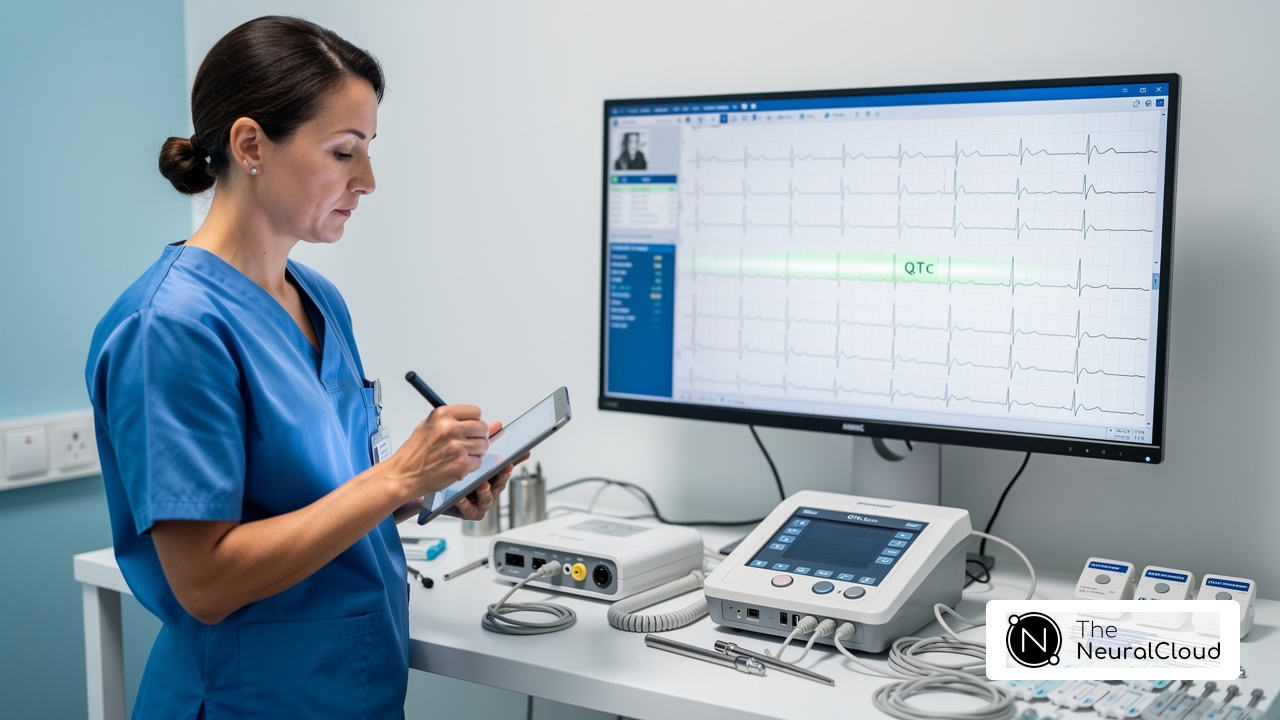
The challenge of accurately placing precordial electrodes in electrocardiography (ECG) can lead to significant implications for patient care. Mastering this skill is essential, as it not only enhances the accuracy of cardiac monitoring but also significantly impacts patient outcomes. Fortunately, advanced technologies like Neural Cloud Solutions Inc.'s MaxYield platform help clinicians navigate the complexities of electrode placement and data interpretation more effectively.
What practical strategies can clinicians use to avoid common pitfalls in electrode positioning and adhere to best practices in ECG monitoring?
Clarify the Role of Precordial Electrodes in ECG Monitoring
The accuracy of ECG analysis hinges on the proper placement of precordial electrodes, a challenge many healthcare professionals face. Precordial electrodes are vital elements in electrocardiography (ECG), providing a direct perspective of the heart's electrical activity in the horizontal plane. Typically placed on the chest, these sensors capture the electrical signals produced by the heart, allowing the detection of various cardiac conditions. Each precordial electrode, from V1 to V6, provides a distinct perspective, enabling clinicians to identify abnormalities such as arrhythmias, ischemia, and other cardiac pathologies. For instance, accurate positioning of precordial electrodes V1 and V2 is crucial; incorrect placement of these precordial electrodes can lead to inadequate R-wave progression, potentially mimicking ventricular hypertrophy. This highlights the importance of precise lead positioning, particularly with precordial electrodes, for accurate ECG interpretation and effective patient management.
Current statistics indicate that improper device positioning remains a significant issue. Many healthcare providers face challenges in correctly positioning precordial electrodes, which can lead to potential misdiagnoses. In a U.S. study, only 21.5% of participants positioned at least five of six chest sensors correctly, underscoring the need for enhanced training and adherence to established guidelines. Moreover, the American Heart Association (AHA) has released guidelines emphasizing the critical importance of correct lead positioning in obtaining accurate ECG results.
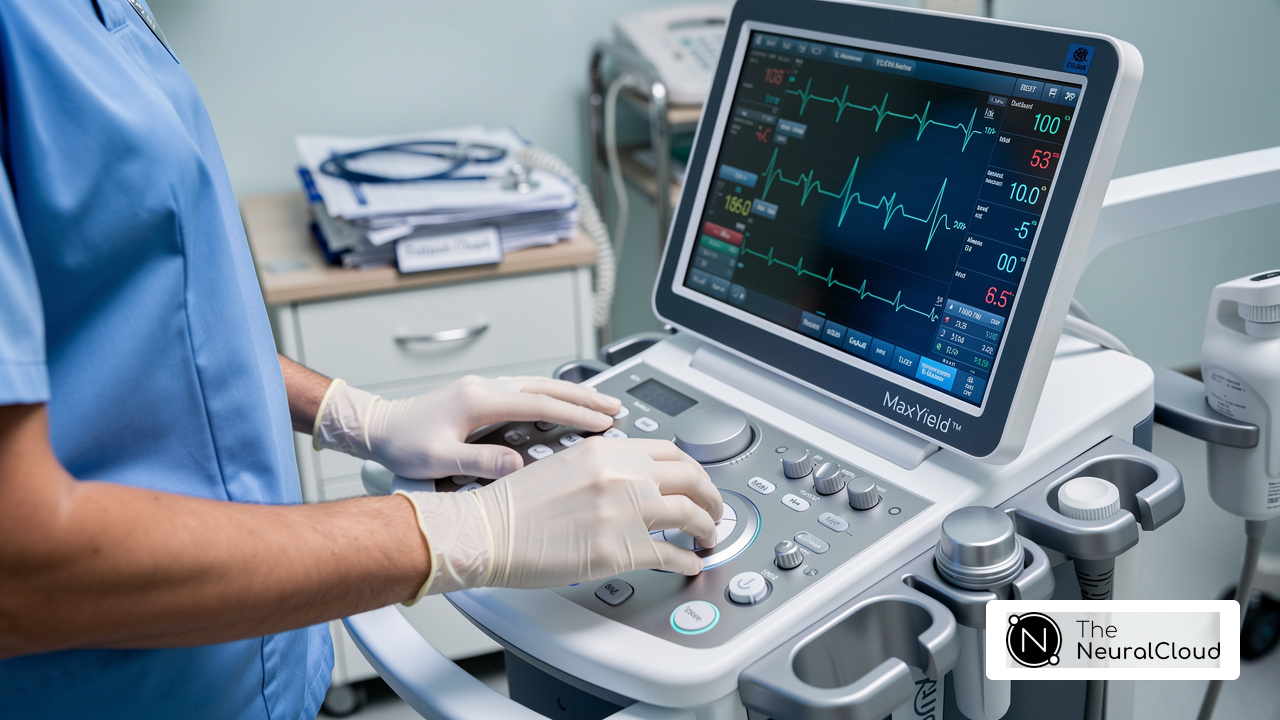
Using Neural Cloud Solutions Inc.'s MaxYield platform can boost the accuracy of ECG readings to hospital-grade levels, even with consumer-grade devices. MaxYield's advanced noise reduction and artifact handling capabilities ensure that the data captured is reliable, addressing traditional limitations in ECG analysis. Case studies from Canada illustrate the practical effects of precordial electrodes positioning. For example, a recent program in a Toronto hospital aimed at improving training for emergency medical services (EMS) staff led to better precision in the positioning of precordial electrodes and subsequent ECG readings. This initiative not only enhanced diagnostic capabilities but also contributed to improved patient outcomes in emergency settings.
Expert endorsements from Dr. Alan Rabinowitz, Dr. Brett Heilbron, and Dr. Marc W. Deyell emphasize that MaxYield’s precision rivals human interpretation, significantly benefiting noise reduction. Additionally, regulatory compliance details, including FDA Class II SaMD clearance-pending status, further enhance the credibility of the MaxYield platform.
Ultimately, mastering the use of precordial electrodes with advanced tools like MaxYield can transform patient care in critical situations.

Implement Effective Placement Techniques for Precordial Electrodes
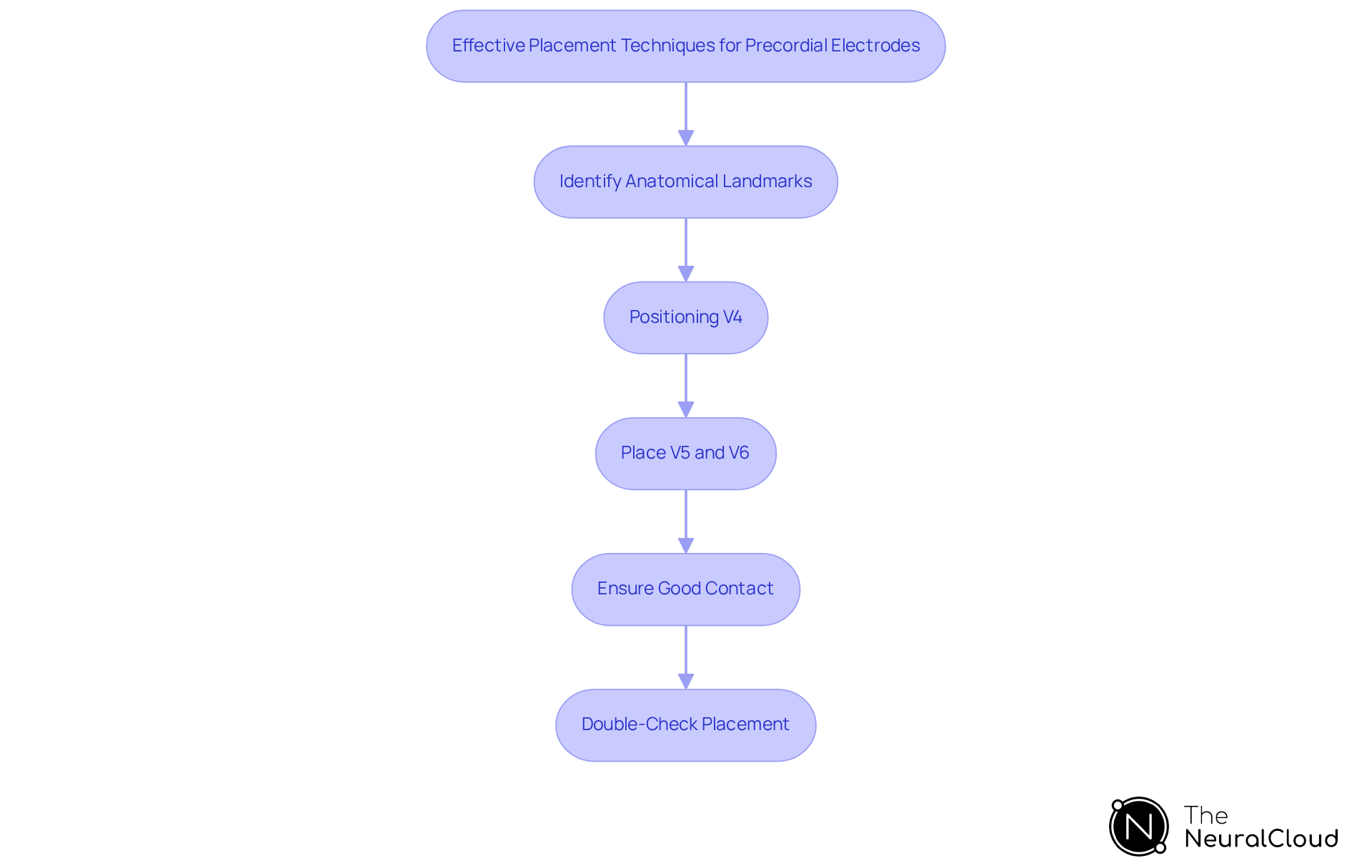
To achieve accurate ECG readings, follow these effective placement techniques for precordial electrodes while leveraging the advanced capabilities of Neural Cloud Solutions Inc.'s MaxYield™ platform:
- Identify Anatomical Landmarks: Locate the fourth intercostal space at the right sternal border for V1 and the left sternal border for V2. For V3, place it midway between V2 and V4. Proper identification of these landmarks is crucial, as misplacement can lead to misdiagnosis, impacting patient care. Common misplacements include V1 and V2 sensors being positioned too high, which can mimic ventricular hypertrophy. MaxYield™ improves reading accuracy by filtering out noise and artifacts that obscure true signals.
- Positioning V4: V4 should be placed at the fifth intercostal space in the midclavicular line. This position is essential for accurately assessing the heart's electrical activity and ensuring reliable readings. With MaxYield™, clinicians can trust that even in challenging conditions, the information will be clear and actionable.
- Place V5 and V6: V5 is positioned at the same horizontal level as V4, in the anterior axillary line, while V6 is placed in the midaxillary line at the same level. Proper positioning of precordial electrodes is essential for achieving a thorough understanding of cardiac function. MaxYield™'s advanced noise filtering capabilities ensure that these placements yield the best possible data.
- Ensure Good Contact: To get the best signal quality, it’s crucial to prepare the skin properly and reduce artifacts, as the epidermis is a poor conductor of electricity. Studies have shown that inadequate skin preparation can significantly affect the quality of ECG signals. MaxYield™ addresses these challenges by providing automated labeling and crisp signals, supporting workflow efficiency and accuracy in ECG interpretation.
- Double-Check Placement: After positioning the sensors, verify their locations against standard guidelines to minimize misplacement errors. Research shows that only 5.8% of participants were able to correctly position all chest sensors, emphasizing the need for training and compliance with positioning techniques. Frequent training and practice are essential to enhance placement accuracy, as operator error, including multitasking and lack of training, can contribute to incorrect electrode placement. With MaxYield™, the clarity of the ECG information enables improved decision-making and lowers the risk of misdiagnosis.
By adhering to these techniques and utilizing Neural Cloud Solutions Inc.'s MaxYield™ platform, clinicians can enhance the accuracy of ECG readings, ultimately improving patient outcomes and reducing the risk of misdiagnosis. By mastering these techniques and leveraging MaxYield™, clinicians can significantly reduce the risk of misdiagnosis. For additional insights, consider the customizable visualization and reporting tool, Insight360, which transforms MaxYield™’s clean ECG information into interactive dashboards and clinical-ready reports.
Integrate Advanced Technologies for Enhanced ECG Analysis
The challenges in ECG analysis often stem from human error and the complexity of data interpretation. Incorporating advanced technologies can significantly enhance diagnostic capabilities. Here are key technologies to consider:
- AI and Machine Learning: AI algorithms analyze ECG data to spot patterns and anomalies that human eyes might miss. These systems provide real-time alerts for critical conditions, improving response times and patient outcomes. Neural Cloud Solutions Inc.'s MaxYield™ platform exemplifies this, employing an adaptive algorithm that evolves with each use to maximize diagnostic yield and enhance distinct wave recognition.
- Wearable ECG Devices: The introduction of wearable technology enables ongoing observation of heart activity, promoting long-term information collection and analysis. This method helps catch arrhythmias and other heart issues early, improving patient care. MaxYield™ boosts this capability by isolating ECG waves from noisy recordings, ensuring accurate data collection.
- Cloud-Based Solutions: Utilizing cloud platforms for storing and analyzing ECG information enables easy access and collaboration among healthcare professionals. This streamlines workflows and improves patient management, making it easier to share insights across teams. MaxYield™ integrates seamlessly with cloud solutions, providing a device-agnostic ECG intelligence layer that improves information accessibility.
- Visualization Tools: Advanced visualization tools convert raw ECG information into intuitive graphs and dashboards, simplifying the interpretation of results for clinicians. Insight360, for example, utilizes MaxYield’s clean ECG information to create interactive dashboards, assisting in making informed decisions swiftly and efficiently.
- Integration with EHR Systems: Ensuring compatibility of ECG analysis tools with electronic health records (EHR) systems facilitates seamless data sharing, enhancing overall patient care and operational efficiency. MaxYield™ supports this integration, allowing for enhanced collaboration among healthcare teams.
By embracing these technologies, healthcare professionals can significantly elevate patient care and operational efficiency. As Dr. Alan Rabinowitz notes, "MaxYield™ offers precision that rivals human interpretation, particularly in noise reduction and distinct wave recognition, making it an invaluable tool for clinicians." Additionally, with FDA Class II SaMD clearance-pending status, Neural Cloud Solutions Inc. ensures compliance and readiness for GxP inspections, further solidifying its commitment to quality and innovation. For those interested, Neural Cloud Solutions Inc. invites you to contact them for free trials or personalized walkthroughs of MaxYield™ and Insight360.

Address Compliance and User Adoption Challenges in ECG Implementation
Healthcare professionals face significant challenges in effectively implementing ECG technologies, particularly regarding compliance and user adoption. To ensure successful implementation, addressing these challenges is essential:
-
Training and Education: Comprehensive training programs are crucial for healthcare professionals to enhance their understanding of ECG technologies and proper electrode placement techniques. Research shows that organizations with strong training programs often see fewer compliance issues, highlighting the importance of continuous professional development.
-
Standardized Protocols: Standardized protocols for ECG acquisition and interpretation can help reduce variability and boost compliance. Here’s how:
- Minimized variability in practices
- Improved adherence to guidelines
- Enhanced consistency in patient monitoring
This approach aligns with recent FDA guidance emphasizing the need for consistency in cardiac monitoring practices.
-
User-Friendly Interfaces: User-friendly software and hardware make the ECG process simpler, helping clinicians embrace new technologies more easily. The integration of intuitive interfaces can significantly enhance user engagement and reduce training time.
-
Feedback Mechanisms: Feedback mechanisms help healthcare providers understand user challenges, leading to better ECG practices. Here’s why they matter:
- Continuous improvement in technology
- Enhanced usability for clinicians
- Fostering a culture of innovation
-
Incentives for Compliance: Incentive programs that reward healthcare professionals for following best practices in ECG monitoring can boost compliance and engagement. Such initiatives have been shown to enhance adherence to protocols, ultimately improving patient outcomes.
Addressing these challenges not only enhances compliance but also leads to better patient care and outcomes in cardiac monitoring.

Conclusion
Improper placement of precordial electrodes can lead to significant misdiagnoses in ECG monitoring. Proper placement is crucial for accurate ECG monitoring, providing critical insights into cardiac health while significantly reducing the risk of misdiagnosis. Using advanced technologies like Neural Cloud Solutions Inc.'s MaxYield platform, healthcare professionals can achieve hospital-grade results from consumer-grade devices. This advancement transforms patient care.
Throughout the article, we discussed key techniques for effective electrode placement, emphasizing the importance of anatomical landmarks and thorough training. The integration of AI and machine learning, along with user-friendly interfaces and standardized protocols, streamlines ECG processes and improves compliance. These advancements enhance diagnostic capabilities and foster a culture of continuous improvement in cardiac monitoring practices.
Clinicians, researchers, and diagnostic facilities across Canada must embrace these best practices and technologies. By prioritizing accurate precordial electrode placement and utilizing innovative solutions like MaxYield, the healthcare community can significantly improve patient outcomes. The pursuit of excellence in ECG monitoring directly impacts the quality of heart health for every patient.
Frequently Asked Questions
What are precordial electrodes and their role in ECG monitoring?
Precordial electrodes are vital components in electrocardiography (ECG) that provide a direct view of the heart's electrical activity in the horizontal plane. They are typically placed on the chest to capture electrical signals produced by the heart, allowing for the detection of various cardiac conditions.
Why is the correct placement of precordial electrodes important?
Correct placement of precordial electrodes is crucial for accurate ECG interpretation. Improper positioning can lead to inadequate R-wave progression, potentially mimicking conditions like ventricular hypertrophy, which can result in misdiagnoses.
What challenges do healthcare professionals face regarding precordial electrode placement?
Many healthcare providers struggle with the correct positioning of precordial electrodes. A study indicated that only 21.5% of participants positioned at least five of six chest sensors correctly, highlighting the need for improved training and adherence to guidelines.
What guidelines exist for the proper positioning of precordial electrodes?
The American Heart Association (AHA) has released guidelines that emphasize the critical importance of correct lead positioning to obtain accurate ECG results.
How can Neural Cloud Solutions Inc.'s MaxYield platform improve ECG accuracy?
MaxYield can enhance the accuracy of ECG readings to hospital-grade levels, even with consumer-grade devices, through advanced noise reduction and artifact handling capabilities, ensuring reliable data capture.
Can you provide an example of how precordial electrode positioning has been improved in Canada?
A recent program in a Toronto hospital aimed at improving training for emergency medical services (EMS) staff led to better precision in the positioning of precordial electrodes, resulting in enhanced diagnostic capabilities and improved patient outcomes in emergency settings.
What expert endorsements support the effectiveness of MaxYield?
Experts such as Dr. Alan Rabinowitz, Dr. Brett Heilbron, and Dr. Marc W. Deyell endorse MaxYield, noting that its precision rivals human interpretation and significantly benefits noise reduction.
What is the regulatory status of the MaxYield platform?
The MaxYield platform has FDA Class II SaMD clearance-pending status, which enhances its credibility in the medical field.
List of Sources
- Clarify the Role of Precordial Electrodes in ECG Monitoring
- The Essential Role of Electrodes in Accurate ECG Monitoring | Danlee Medical (https://danleemedical.com/blog/understanding-the-importance-of-electrodes-in-ecg-monitoring)
- The Power of Correct Placement for ECG Leadwires (https://gehealthcare.com/en-us/insights/article/the-power-of-correct-placement-for-ecg-leadwires?srsltid=AfmBOorWgQpdmdi-OrAdAWMS42sGQwuv3Bg__2nP8nQCWQkFA4Bsu099)
- 12-Lead ECGs: Room for Improvement (https://jems.com/patient-care/12-lead-ecgs-room-for-improvement)
- Electrocardiographic Monitoring (https://aneskey.com/electrocardiographic-monitoring-3)
- Implement Effective Placement Techniques for Precordial Electrodes
- Assessing the Accuracy of ECG Chest Electrode Placement by EMS and Clinical Personnel Using Two Evaluation Methods | International Journal of Paramedicine (https://internationaljournalofparamedicine.com/index.php/ijop/article/view/2897)
- The Power of Correct Placement for ECG Leadwires (https://gehealthcare.com/en-us/insights/article/the-power-of-correct-placement-for-ecg-leadwires?srsltid=AfmBOooK2QSpaq2cxswrWZIuZ278f0vg3qOegZdT7RInEdjMYhoVOKcw)
- Accuracy of ECG chest electrode placements by paramedics: an observational study - PMC (https://pmc.ncbi.nlm.nih.gov/articles/PMC8312365)
- 12-Lead ECGs: Room for Improvement (https://jems.com/patient-care/12-lead-ecgs-room-for-improvement)
- 12-Lead ECG Electrode Placement: Best Practices for Clinical Accuracy in Healthcare - INTCO Medical (https://intcomedical.com/news/12-lead-ecg-electrode-placement-best-practices-for-clinical-accuracy-in-healthcare)
- Integrate Advanced Technologies for Enhanced ECG Analysis
- ‘Superhuman’ AI tool spots heart disease in less than 2 seconds (https://theguardian.com/technology/2026/aug/31/superhuman-ai-tool-spots-heart-disease)
- Three New Studies Show Viz.ai’s Cardio Suite Speeds Detection of Cardiac Disease and Improves Patient Follow-Up (https://viz.ai/news/three-new-studies-show-viz-ais-cardio-suite-speeds-detection-of-cardiac-disease-and-improves-patient-follow-up)
- New AI algorithm could improve detection and prediction of heart diseases - Scripps Research (https://scripps.edu/news-events/news/new-ai-algorithm-could-improve-detection-and-prediction-of-heart-diseases)
- ECG Interpretation AI Market Research Report 2034 (https://dataintelo.com/report/ecg-interpretation-ai-market)
- Advances in Cardiac ECG Monitoring Technologies (https://dicardiology.com/channel/advances-cardiac-ecg-monitoring-technologies)
- Address Compliance and User Adoption Challenges in ECG Implementation
- Advances in Cardiac ECG Monitoring Technologies (https://dicardiology.com/channel/advances-cardiac-ecg-monitoring-technologies)
- Cardiac Monitoring Reinvented: AI, Safety, and the Data Impact | Applied Clinical Trials Online (https://appliedclinicaltrialsonline.com/view/cardiac-monitoring-reinvented-ai-safety-and-the-data-impact)
- Compliance Challenges in Healthcare: Balancing Innovation and Regulation (https://news-medical.net/health/Compliance-Challenges-in-Healthcare-Balancing-Innovation-and-Regulation.aspx)
- Top Healthcare Regulatory Compliance Challenges | HCI (https://hci.care/top-healthcare-regulatory-compliance-challenges)