Introduction
Hyperkalemia presents a significant challenge in clinical settings, particularly for patients with chronic kidney disease. Grasping how hyperkalemia is classified - from mild to severe - plays a vital role in managing patient care effectively. Yet, the complexities of its causes and patient care implications lead to a pressing question: How can healthcare providers effectively diagnose and manage hyperkalemia to avoid serious complications?
Exploring the nuances of hyperkalemia classification and its underlying causes offers valuable insights for clinicians and researchers alike. Understanding these complexities is essential for improving patient outcomes and enhancing clinical practices.
Define Hyperkalemia: A Comprehensive Overview
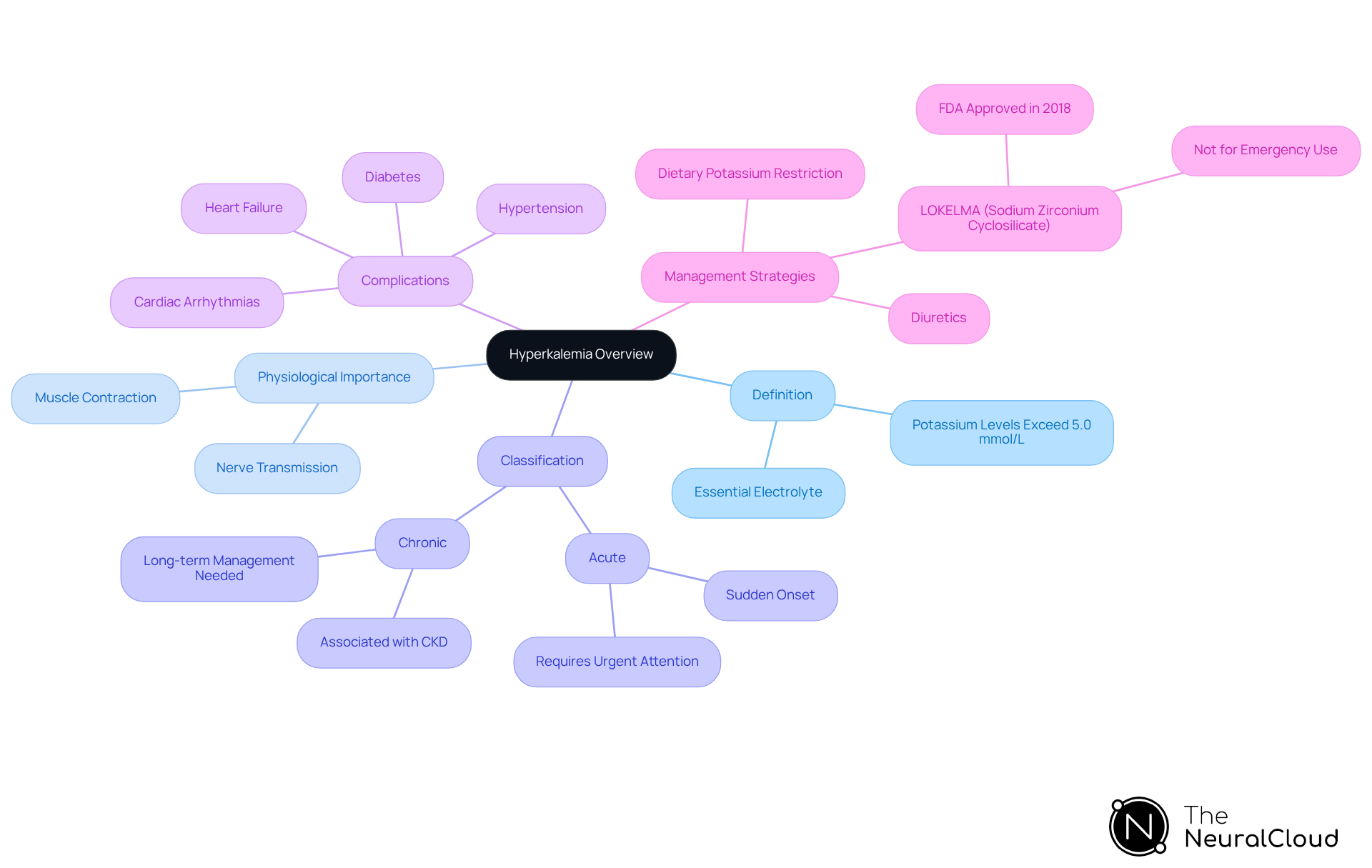
Hyperkalemia occurs when potassium levels in the blood exceed 5.0 mmol/L. Potassium is an essential electrolyte crucial for various physiological functions, including muscle contraction and nerve transmission. Mild cases might not show symptoms, but severe potassium imbalance can result in serious complications, including cardiac arrhythmias. Acknowledging the typical potassium range of 3.5 to 5.0 mmol/L is essential for detecting elevated potassium levels and understanding its related health risks.
The condition can be categorized according to hyperkalemia classification into acute and chronic types. Acute potassium elevation is an example of hyperkalemia classification, occurring suddenly and often requiring urgent medical attention. Recent studies suggest that the occurrence of elevated potassium levels is significantly greater in individuals with chronic kidney disease (CKD), with rates reaching 40% to 50% in advanced stages. This is mainly because CKD patients struggle to eliminate certain electrolytes, emphasizing the need for effective management strategies in clinical settings.
Untreated high potassium levels can worsen and are associated with serious conditions such as heart failure, diabetes, and hypertension. Conventional management strategies for non-life-threatening elevated potassium levels include dietary potassium restriction and diuretics. Additionally, LOKELMA (sodium zirconium cyclosilicate) was approved by the FDA in 2018 to treat elevated potassium levels in adults, marking significant progress in treatment options for CKD patients. Effective management of potassium levels is essential to prevent serious health complications, particularly in vulnerable populations like those with chronic kidney disease.
Contextualize Hyperkalemia: Importance in Clinical Practice
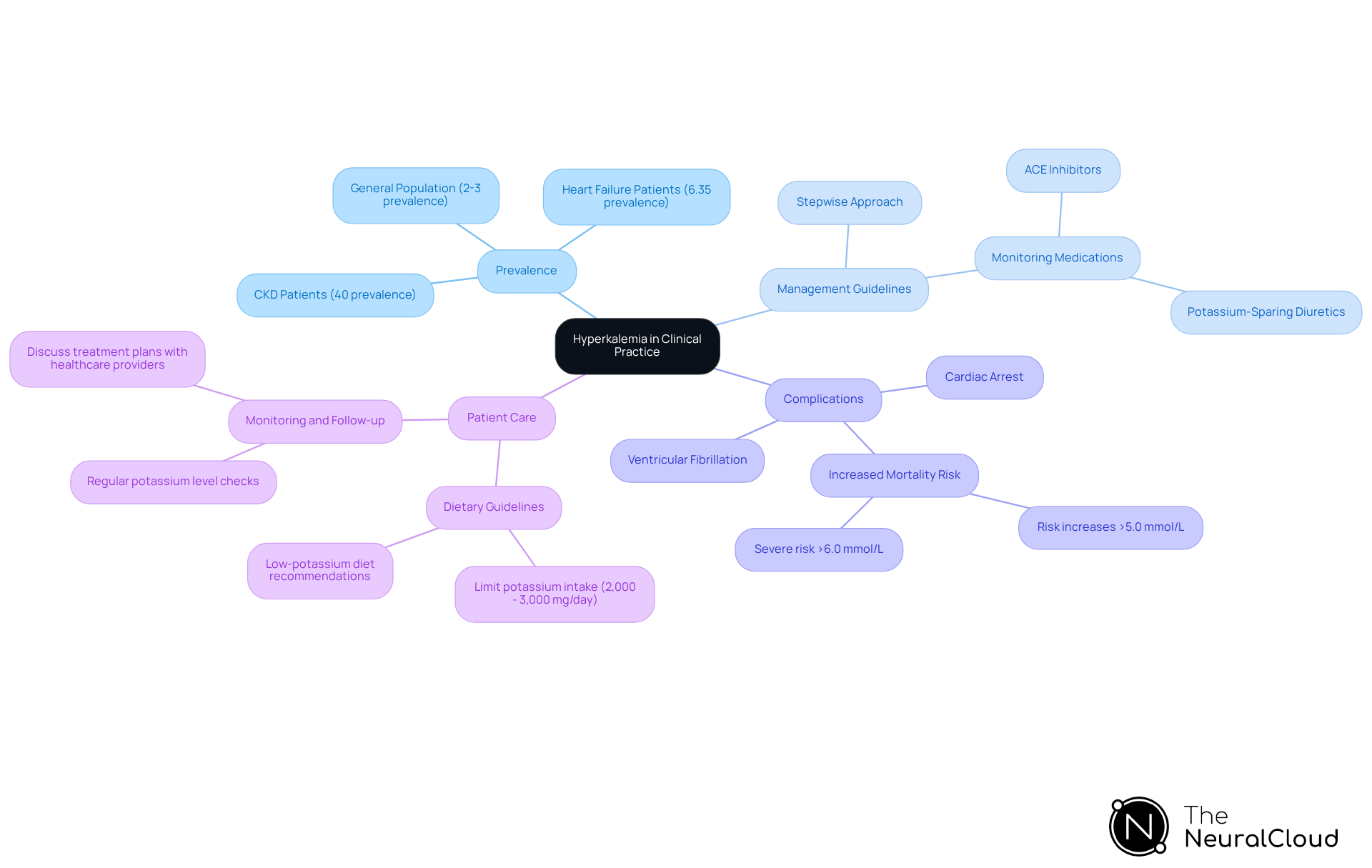
Hyperkalemia poses significant clinical challenges, particularly for patients with chronic kidney disease or heart failure, due to its potential to cause severe complications such as ventricular fibrillation and cardiac arrest. The prevalence of elevated potassium levels in CKD patients can reach as high as 40%, especially in those with a mean estimated glomerular filtration rate (eGFR) of 14.6 mL/min/1.73m². This underscores the importance of prompt diagnosis and management. In clinical practice, monitoring potassium levels is crucial, especially for patients taking medications like ACE inhibitors or potassium-sparing diuretics that can raise potassium levels.
Recent guidelines from July 11, 2024, emphasize a stepwise approach to managing elevated potassium levels, focusing on severity and ECG changes. This highlights the need for healthcare providers to implement appropriate interventions. Case studies indicate that effectively managing elevated potassium levels can greatly improve outcomes, particularly for CKD patients who face a higher risk of adverse health events. Moreover, elevated potassium levels complicate at least 3.5% of hospital admissions, and the mortality risk increases when these levels exceed 5.0 mmol/L.
Therefore, understanding the context of elevated potassium levels and their implications, including dietary guidelines, is vital for enhancing patient care and outcomes.
Classify Hyperkalemia: Types and Characteristics
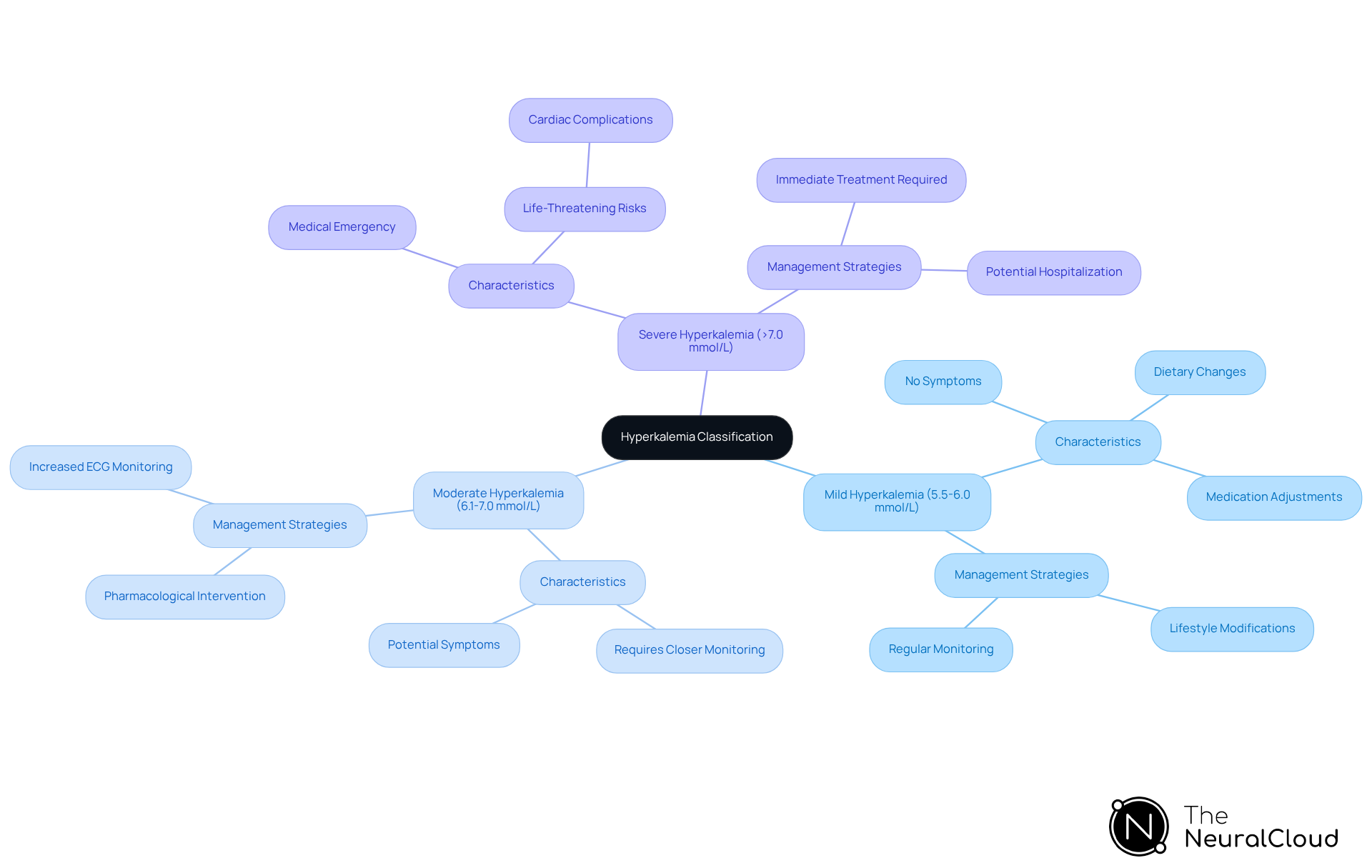
The classification of hyperkalemia presents significant challenges in clinical management, particularly when categorized by serum potassium levels. The hyperkalemia classification can be divided into three categories: mild (5.5-6.0 mmol/L), moderate (6.1-7.0 mmol/L), and severe (>7.0 mmol/L). Each classification has distinct clinical implications:
- Mild: Often shows no symptoms and can typically be managed through dietary changes or medication adjustments.
- Moderate: Requires closer monitoring and may necessitate pharmacological intervention.
- Severe: Represents a medical emergency that demands immediate treatment to prevent life-threatening cardiac complications.
Understanding hyperkalemia classification is vital for optimizing patient outcomes and ensuring timely interventions. Recent studies indicate that 10.6% of individuals with severe potassium elevation died during their ED visit, compared to 3.7% with moderate and 1.1% with mild potassium elevation. This underscores the critical nature of timely intervention. Furthermore, case studies analyzing electronic medical records have shown varying management approaches for individuals across these severity levels. For example, patients with mild potassium elevation may benefit from lifestyle changes, while those with severe cases require urgent medical attention and possibly hospitalization. This hyperkalemia classification method helps healthcare providers deliver timely care and enhances the management of elevated potassium levels in clinical settings.
Explore Causes of Hyperkalemia: Origins and Risk Factors
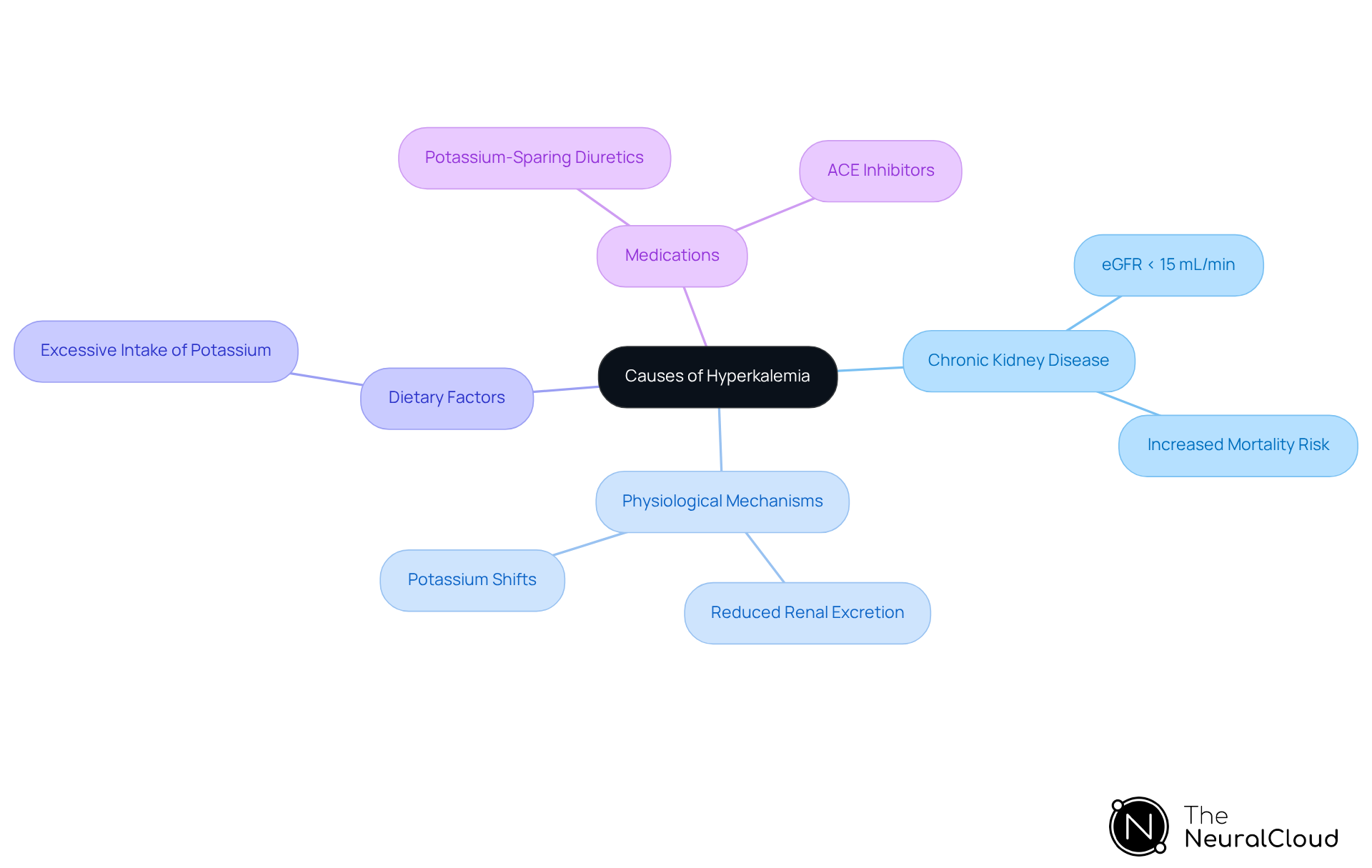
Hyperkalemia presents significant challenges for healthcare professionals, particularly in patients with chronic kidney disease (CKD). This condition can arise from various factors, including reduced renal excretion, excessive intake of potassium, and shifts of potassium from intracellular to extracellular spaces. In 2026, chronic kidney disease (CKD) is expected to be a common cause of hyperkalemia, particularly when the estimated glomerular filtration rate (eGFR) drops below 15 mL/min. Medications such as potassium-sparing diuretics and ACE inhibitors can further complicate the situation by disturbing electrolyte balance. Additionally, conditions like adrenal insufficiency, diabetes, and heart failure significantly increase the risk of elevated potassium levels.
Elevated potassium levels occur physiologically when renal excretion is limited. This can happen due to a decreased glomerular filtration rate or impaired renal function. For instance, in individuals with CKD, a reduction in eGFR of 15 mL/min roughly doubles the likelihood of developing elevated potassium levels, as recent studies have shown. Dietary potassium loads can also trigger rapid physiological responses that shift potassium into cells and urine. However, when these mechanisms fail, elevated potassium levels can result.
Case studies highlight the serious consequences of hyperkalemia, particularly in individuals with CKD. This condition is associated with increased mortality risk and cardiac arrhythmias. Observational studies have demonstrated a U-shaped relationship between serum potassium levels and mortality, indicating that both low and high levels can be detrimental.
Experts emphasize the necessity for diligent monitoring of electrolyte levels, especially in individuals with recognized risk factors. As one expert noted, "In CKD, hyperkalemia is typically encountered after the estimated glomerular filtration rate (eGFR) drops below 15 mL/min." Understanding the causes of hyperkalemia and the physiological mechanisms involved, including the pivotal role of aldosterone in potassium regulation, is essential for healthcare providers. This knowledge enables them to implement effective monitoring and treatment strategies, ultimately improving patient care and outcomes in at-risk populations.
Conclusion
Hyperkalemia poses significant challenges in patient care, especially for those with chronic kidney disease and other risk factors. This condition occurs when potassium levels rise in the blood, leading to serious complications if not managed effectively. Classifying hyperkalemia into mild, moderate, and severe categories enables healthcare providers to tailor interventions based on severity, ensuring timely and appropriate care.
Recognizing the causes of hyperkalemia is essential for effective management. These causes can range from reduced renal excretion to dietary factors and medication effects. Vigilant monitoring is particularly important for patients with underlying health issues like chronic kidney disease, heart failure, or those on specific medications. By understanding the clinical implications of hyperkalemia and its classification, healthcare professionals can significantly improve patient outcomes and reduce the risk of life-threatening complications.
Given the complexities surrounding hyperkalemia, it is vital for clinicians and healthcare providers to stay informed about the latest guidelines and management strategies. Proactive monitoring and intervention can make a substantial difference in patient care, particularly for those at heightened risk. Clinicians who prioritize education on hyperkalemia can significantly enhance patient safety and health outcomes in at-risk populations.
Frequently Asked Questions
What is hyperkalemia?
Hyperkalemia is a condition that occurs when potassium levels in the blood exceed 5.0 mmol/L. Potassium is an essential electrolyte important for muscle contraction and nerve transmission.
What are the symptoms of hyperkalemia?
Mild cases of hyperkalemia may not show symptoms, but severe potassium imbalance can lead to serious complications, including cardiac arrhythmias.
What is the typical potassium range in the blood?
The typical potassium range in the blood is between 3.5 to 5.0 mmol/L.
How is hyperkalemia classified?
Hyperkalemia can be classified into acute and chronic types. Acute hyperkalemia occurs suddenly and often requires urgent medical attention.
Who is at higher risk for hyperkalemia?
Individuals with chronic kidney disease (CKD) are at a significantly higher risk for hyperkalemia, with rates reaching 40% to 50% in advanced stages due to their difficulty in eliminating certain electrolytes.
What are the potential complications of untreated hyperkalemia?
Untreated hyperkalemia can worsen and is associated with serious conditions such as heart failure, diabetes, and hypertension.
What are the conventional management strategies for hyperkalemia?
Conventional management strategies for non-life-threatening elevated potassium levels include dietary potassium restriction and the use of diuretics.
What recent advancements have been made in the treatment of hyperkalemia?
LOKELMA (sodium zirconium cyclosilicate) was approved by the FDA in 2018 to treat elevated potassium levels in adults, representing significant progress in treatment options for CKD patients.
Why is effective management of potassium levels important?
Effective management of potassium levels is crucial to prevent serious health complications, particularly in vulnerable populations such as those with chronic kidney disease.
List of Sources
- Define Hyperkalemia: A Comprehensive Overview
- De Novo Hyperkalemia Increases Risks for Death, Hospitalizations (https://renalandurologynews.com/news/hyperkalemia-ups-risk-mortality-cardiovascular-events-hospitalizations-icu)
- New Survey of People with Chronic Kidney Disease Finds High Potassium is Among Top Health Concerns (https://prnewswire.com/news-releases/new-survey-of-people-with-chronic-kidney-disease-finds-high-potassium-is-among-top-health-concerns-300525826.html)
- Challenges and Recommendations for Treating Hyperkalemia in Adults | Docwire News (https://docwirenews.com/post/treating-hyperkalemia-adults)
- The Burden of Hyperkalemia in Patients With Cardiovascular and Renal Disease | AJMC (https://ajmc.com/view/a577_nov15_hyperkalemia)
- Contextualize Hyperkalemia: Importance in Clinical Practice
- New Hyperkalemia Guidelines Help Patients with CKD Manage, Treat High Potassium | HCPLive (https://hcplive.com/view/hyperkalemia-guidelines-ckd-manage-treat-high-potassium)
- Hyperkalemia in Chronic Kidney Disease: Links, Risks and Management - PMC (https://pmc.ncbi.nlm.nih.gov/articles/PMC9356601)
- Investigators: Monitor Potassium Levels After Acute Hyperkalemia Episodes (https://renalandurologynews.com/news/serum-potassium-trajectory-after-acute-hyperkalemia-predict-death)
- Hyperkalemia and Heart Failure Insights | AJMC (https://ajmc.com/view/hyperkalemia-and-heart-failure-insights)
- Hyperkalemia Linked With Kidney Function Decline, Adverse Outcomes in CKD (https://renalandurologynews.com/news/elevated-potassium-ckd-progression-cardiovascular-events-mortality)
- Classify Hyperkalemia: Types and Characteristics
- Real-World Management of Hyperkalemia in the Emergency Department: An Electronic Medical Record Analysis - Advances in Therapy (https://link.springer.com/article/10.1007/s12325-021-02017-w)
- Investigators: Monitor Potassium Levels After Acute Hyperkalemia Episodes (https://renalandurologynews.com/news/serum-potassium-trajectory-after-acute-hyperkalemia-predict-death)
- Prevalence of Hyperkalemia in Patients With CKD | Docwire News (https://docwirenews.com/post/prevalence-of-hyperkalemia-in-patients-with-ckd)
- Hyperkalemia: Background, Pathophysiology, Etiology (https://emedicine.medscape.com/article/240903-overview)
- Explore Causes of Hyperkalemia: Origins and Risk Factors
- Hyperkalemia: What Your Patients Need to Know (https://renalandurologynews.com/news/hyperkalemia-what-your-patients-need-to-know)
- Hyperkalemia (High Potassium) (https://stroke.org/en/health-topics/heart-failure/treatment-options-for-heart-failure/hyperkalemia-high-potassium)
- Hyperkalemia: pathophysiology, risk factors and consequences (https://academic.oup.com/ndt/article/34/Supplement_3/iii2/5652181)
- Hyperkalemia Tied With Decline in Residual Kidney Function in Dialysis (https://renalandurologynews.com/news/high-potassium-linked-with-decrease-in-residual-renal-function-in-hemodialysis-patients)