Introduction
In cardiac care, accurately interpreting ECG results is crucial, especially when distinguishing between ST-Elevation Myocardial Infarction (STEMI) and Non-ST-Elevation Myocardial Infarction (NSTEMI). Understanding the nuances of these two conditions not only enhances diagnostic precision but also significantly impacts treatment outcomes.
However, differentiating between STEMI and NSTEMI on an ECG presents significant challenges for healthcare professionals. Misinterpretation of ECG results can result in delayed treatment, which may jeopardize patient health.
Advanced ECG analysis tools can play a pivotal role in ensuring timely and accurate diagnoses, ultimately improving patient outcomes in Canada.
Define STEMI and NSTEMI: Key Concepts in Cardiac Health
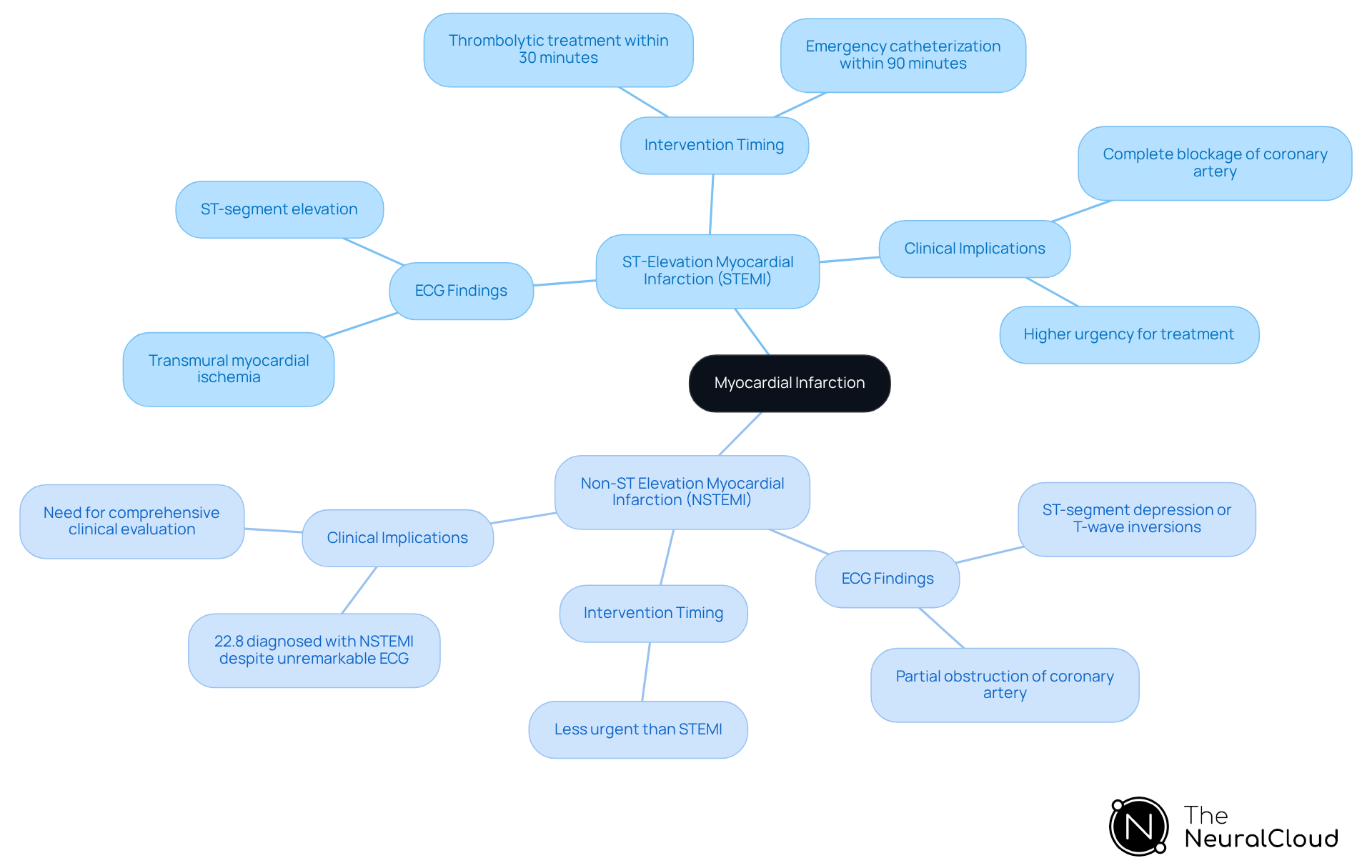
Accurate diagnosis of myocardial infarction remains a significant challenge in clinical practice, particularly when interpreting ECG results. ST-Elevation Myocardial Infarction (STEMI) and Non-ST-Elevation Myocardial Infarction (NSTEMI) are critical categories of myocardial infarction that can be distinguished by examining stemi vs nstemi on ecg, which reflects the disruption of blood flow to the cardiac muscle.
- ST-Elevation Myocardial Infarction: This type of heart attack is identified by significant ST-segment elevation on an ECG, which is essential for distinguishing stemi vs nstemi on ecg, indicating a complete blockage of a coronary artery. This elevation is typically observed in two or more contiguous leads, signifying transmural myocardial ischemia. Prompt intervention is essential, as patients with STEMI should receive thrombolytic treatment within thirty minutes and emergency catheterization within ninety minutes of diagnosis.
- Non-ST Elevation Myocardial Infarction: In contrast, NSTEMI does not exhibit ST-segment elevation, which is a key difference when considering STEMI vs NSTEMI on ECG, as NSTEMI may show ST-segment depression or T-wave inversions. This suggests a partial obstruction of a coronary artery, leading to less severe harm to the heart muscle compared to a full-blown heart attack. Notably, studies show that 22.8% of patients with initially unremarkable ECGs were subsequently diagnosed with NSTEMI, underscoring the importance of combining ECG results with other clinical signs for precise diagnosis.
Grasping these definitions is crucial for developers working on ECG analysis tools, as it informs the algorithms that differentiate between stemi vs nstemi on ecg based on ECG readings. Neural Cloud Solutions' MaxYield™ platform enhances this process by automating ECG analysis, delivering beat-by-beat insights, and effectively filtering noise to provide clear, actionable data. Additionally, Insight360 serves as a customizable visualization tool that transforms MaxYield’s clean ECG data into interactive dashboards and clinical-ready reports.
The global prevalence of myocardial infarction is 3.8% in individuals under 60 and 9.5% in those over 60. This highlights the urgent need for precise and efficient ECG interpretation. By leveraging MaxYield™, developers can address challenges such as physiological variability and signal artifacts, ultimately improving diagnostic accuracy and clinical decision-making. Furthermore, it is essential to ensure compliance with regulatory standards, including FDA Class II SaMD clearance-pending status and audit-ready documentation supporting GxP inspections.
Differentiate STEMI and NSTEMI: ECG Characteristics and Patterns
Accurate ECG analysis is crucial, yet challenges persist in distinguishing STEMI vs NSTEMI on ECG.
-
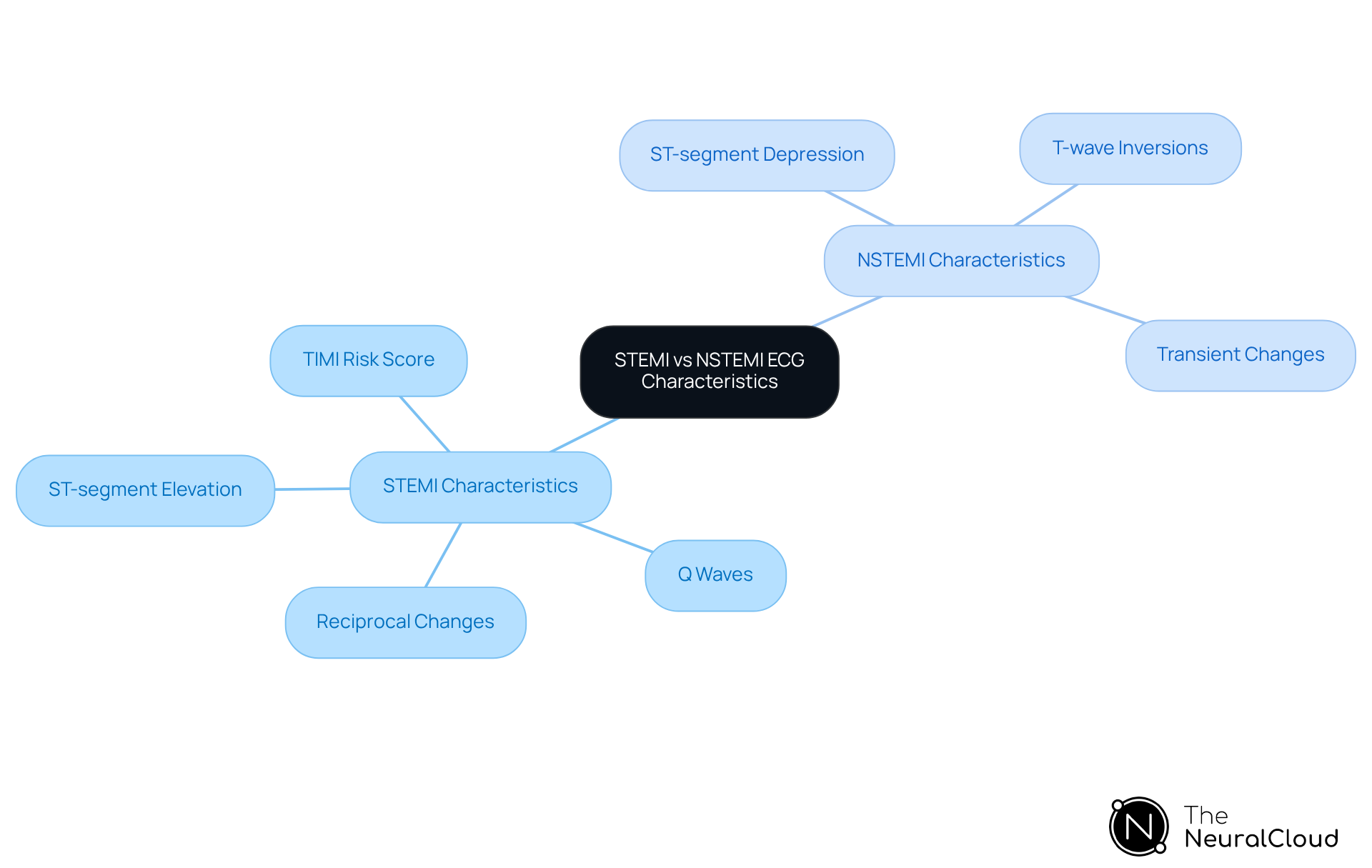
STEMI Characteristics:
- ST-segment Elevation: Typically, there is an elevation of the ST segment by at least 1 mm in two or more contiguous leads, which is a hallmark of STEMI.
- Q Waves: Over time, pathological Q waves may develop, indicating necrosis of the heart muscle.
- Reciprocal Changes: These changes may be observed in opposite leads, further supporting the diagnosis.
- TIMI Risk Score: The TIMI risk score, which predicts the risk of death following ST elevation myocardial infarction based on eight risk factors, is essential for understanding the clinical implications of ECG findings.
NSTEMI Characteristics:
- ST-segment Depression: Often seen in the leads corresponding to the affected area of the heart, indicating reduced blood flow.
- T-wave Inversions: These may also be present, suggesting ischemia.
- Transient Changes: Unlike a specific type of heart attack, the changes in NSTEMI may be less pronounced and can vary over time, necessitating careful monitoring. In fact, 15.7% of patients experience dynamic ECG changes during transport, highlighting the importance of serial ECG monitoring.
When it comes to diagnosing heart attacks, distinguishing between STEMI vs NSTEMI on ECG is crucial. It's vital for developers to ensure that tools like MaxYield™ can spot these patterns, helping clinicians make quick and informed decisions. MaxYield™ automates the analysis of ECG signals, delivering beat-by-beat insights and effectively addressing physiological variability and signal artifacts. Additionally, Insight360 serves as a customizable visualization tool that transforms MaxYield’s clean ECG data into interactive dashboards and clinical-ready reports, further enhancing the diagnostic process. Identifying common heart attack imitators is essential for precise diagnosis, as misinterpretation can lead to severe consequences for patient care. By integrating MaxYield™, clinicians can make more confident and timely decisions, ultimately improving patient outcomes.
Diagnose STEMI and NSTEMI: ECG Interpretation and Biomarker Insights
Accurate identification of STEMI vs NSTEMI on ECG presents significant challenges in the analysis of ECG and evaluation of biomarkers.
-
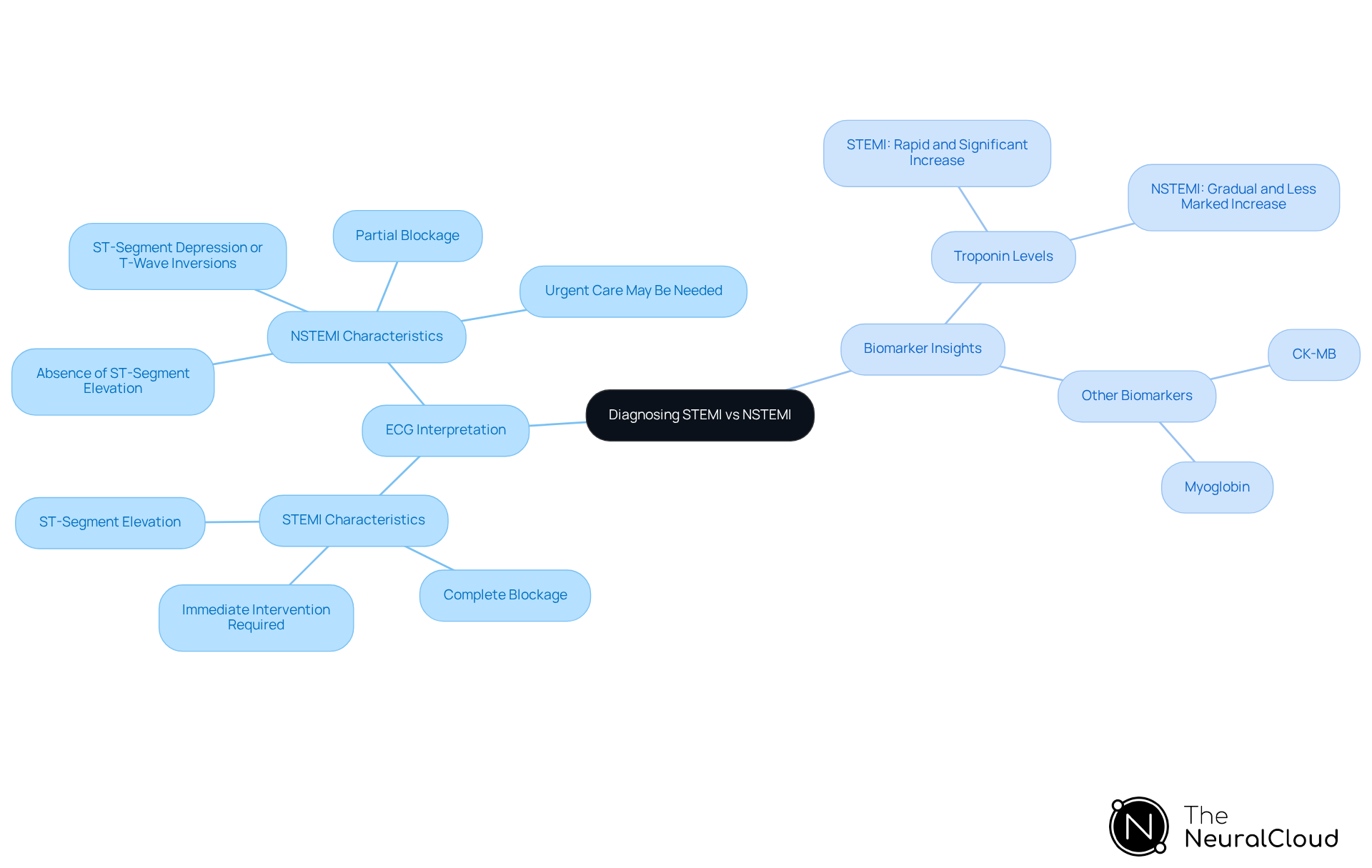
ECG Interpretation:
- In STEMI, the presence of ST-segment elevation in specific leads indicates a complete blockage of the coronary artery, necessitating immediate intervention.
- Conversely, when discussing STEMI vs NSTEMI on ECG, non-ST elevation myocardial infarction is characterized by the absence of ST-segment elevation, often accompanied by ST-segment depression or T-wave inversions, suggesting a partial blockage that may still require urgent care.
Biomarker Insights:
- Troponin Levels: Elevated troponin levels are a hallmark of myocardial injury and play a critical role in diagnosing both STEMI and NSTEMI. In ST elevation myocardial infarction, troponin levels usually increase quickly and considerably, whereas in non-ST elevation myocardial infarction, the rise is observed but typically less marked.
- Other Biomarkers: Additional markers, such as CK-MB and myoglobin, can provide supplementary evidence to support the diagnosis.
It's essential for developers to create algorithms that analyze both ECG data and biomarker levels to improve diagnostic accuracy. This comprehensive approach not only enhances diagnostic precision but also empowers healthcare professionals to deliver superior patient care.
Treat STEMI and NSTEMI: Clinical Approaches Based on ECG Findings
The treatment approaches for STEMI vs NSTEMI on ECG present unique challenges that require tailored strategies.
-
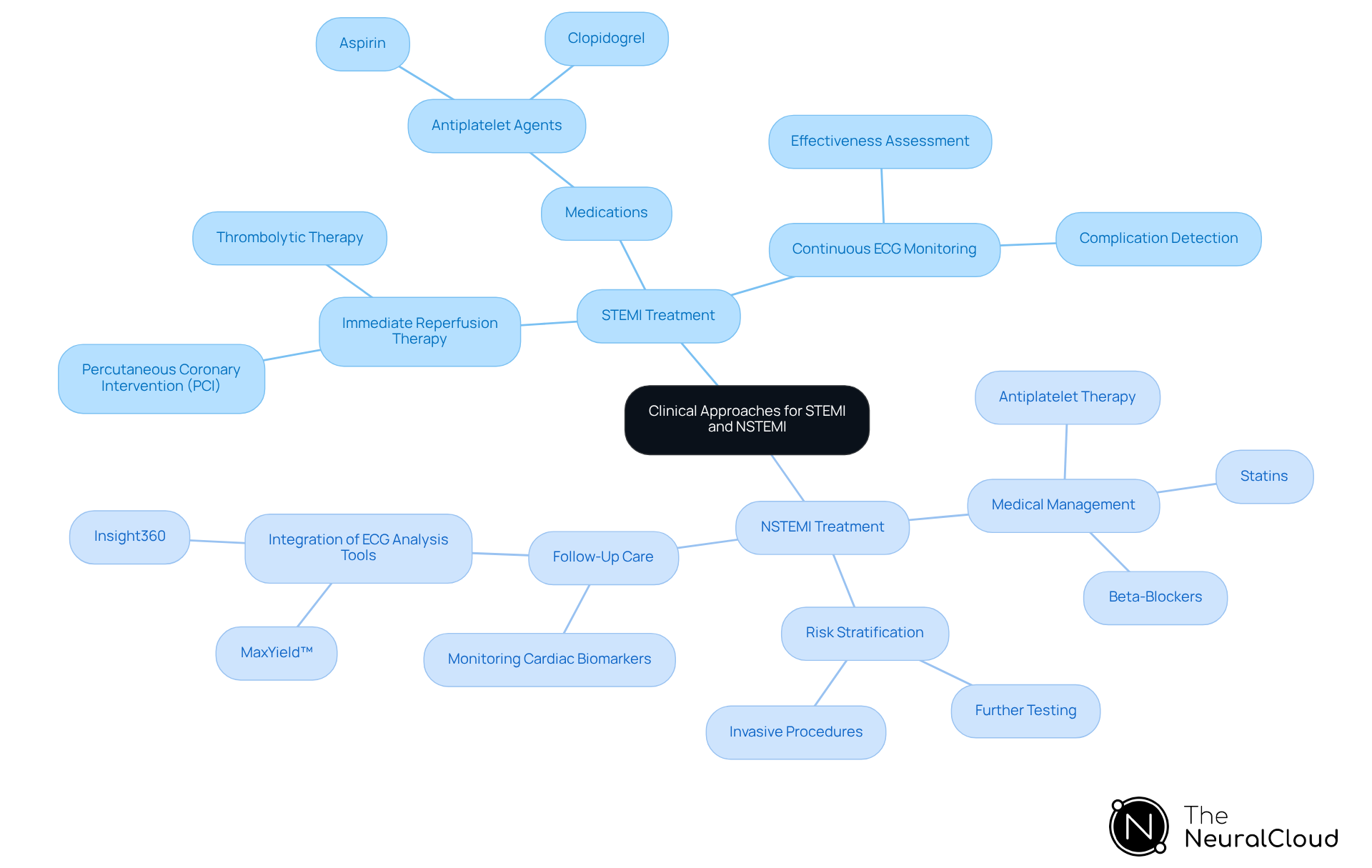
STEMI Treatment:
- Immediate Reperfusion Therapy: This is critical and can be achieved through percutaneous coronary intervention (PCI) or thrombolytic therapy.
- Medications: Antiplatelet agents (e.g., aspirin, clopidogrel) are administered to prevent further clotting.
Continuous ECG monitoring is essential to assess the effectiveness of treatment and detect any complications, particularly in the context of STEMI vs NSTEMI on ECG. With MaxYield™, clinicians can enhance monitoring through clear signals and detailed, real-time data, ensuring they have the most accurate information at their fingertips.
NSTEMI Treatment:
- Medical Management: Initial treatment often includes antiplatelet therapy, beta-blockers, and statins.
- Risk Stratification: Patients may undergo further testing to determine the need for invasive procedures based on their risk profile. MaxYield™ helps by offering clear insights through effective noise filtering and wave recognition, which can help identify individuals at higher risk more effectively.
- Follow-Up Care: Regular follow-up and monitoring of cardiac biomarkers are essential for managing individuals with non-ST elevation myocardial infarction, particularly in the context of STEMI vs NSTEMI on ECG. The integration of MaxYield™ and Insight360 into ECG analysis tools can streamline this process, allowing for more efficient data handling and clearer insights.
Developers should ensure that their ECG analysis tools can provide actionable insights that align with these treatment protocols, facilitating timely and effective care for individuals. A study examining results in individuals with non-ST elevation myocardial infarction suggested that those treated at specialized cardiac facilities experienced notably improved short- and long-term results compared to those at urban non-cardiac or rural hospitals. Specifically, individuals at urban non-cardiac hospitals faced higher all-cause mortality and cardiovascular mortality rates, emphasizing the critical need for timely interventions. This underscores the necessity for advanced ECG analysis tools like MaxYield™ to ensure timely and effective patient care.
Conclusion
Differentiating between ST-Elevation Myocardial Infarction (STEMI) and Non-ST Elevation Myocardial Infarction (NSTEMI) is crucial for effective ECG interpretation and patient management. The ability to distinguish these two types of myocardial infarction enhances diagnostic precision and informs critical treatment decisions that can significantly impact patient outcomes.
Throughout this article, we explored key characteristics of STEMI and NSTEMI, emphasizing the importance of ST-segment elevation in STEMI and its absence in NSTEMI. We discussed how ECG analysis tools like Neural Cloud Solutions' MaxYield™ and Insight360 automate ECG interpretation, providing clinicians with actionable insights and ensuring compliance with clinical guidelines. Additionally, we underscored the significance of biomarkers in diagnosing these conditions, reinforcing the need for a comprehensive approach to patient assessment.
Given the complexities surrounding myocardial infarction diagnosis, it is imperative for developers and healthcare professionals to prioritize integrating advanced ECG analysis technologies. By using tools that boost diagnostic accuracy and simplify treatment protocols, the healthcare community can significantly enhance patient care and outcomes. Embracing these innovations is essential for addressing the challenges of ECG interpretation and supporting timely interventions crucial for individuals experiencing heart attacks.
Frequently Asked Questions
What are STEMI and NSTEMI?
STEMI (ST-Elevation Myocardial Infarction) and NSTEMI (Non-ST-Elevation Myocardial Infarction) are two critical categories of myocardial infarction that indicate different levels of blockage in coronary arteries, which can be identified through ECG results.
How is STEMI identified on an ECG?
STEMI is identified by significant ST-segment elevation on an ECG, indicating a complete blockage of a coronary artery. This elevation is typically observed in two or more contiguous leads, signifying transmural myocardial ischemia.
What is the importance of timely intervention for STEMI patients?
Prompt intervention is crucial for STEMI patients, as they should receive thrombolytic treatment within thirty minutes and emergency catheterization within ninety minutes of diagnosis to minimize heart damage.
How does NSTEMI differ from STEMI on an ECG?
NSTEMI does not exhibit ST-segment elevation; instead, it may show ST-segment depression or T-wave inversions, indicating a partial obstruction of a coronary artery and resulting in less severe damage to the heart muscle compared to STEMI.
What percentage of patients with initially unremarkable ECGs are diagnosed with NSTEMI?
Studies indicate that 22.8% of patients with initially unremarkable ECGs were subsequently diagnosed with NSTEMI, highlighting the need to combine ECG results with other clinical signs for accurate diagnosis.
Why is understanding STEMI and NSTEMI important for developers of ECG analysis tools?
Understanding these definitions is crucial for developers as it informs the algorithms that differentiate between STEMI and NSTEMI based on ECG readings, ultimately improving diagnostic accuracy.
How does Neural Cloud Solutions' MaxYield™ platform assist in ECG analysis?
The MaxYield™ platform automates ECG analysis, delivering beat-by-beat insights and effectively filtering noise to provide clear, actionable data for clinicians.
What role does Insight360 play in ECG data visualization?
Insight360 serves as a customizable visualization tool that transforms clean ECG data from MaxYield™ into interactive dashboards and clinical-ready reports, enhancing the usability of the data.
What is the global prevalence of myocardial infarction in different age groups?
The global prevalence of myocardial infarction is 3.8% in individuals under 60 and 9.5% in those over 60, emphasizing the need for precise ECG interpretation.
What regulatory standards must ECG analysis tools comply with?
ECG analysis tools must ensure compliance with regulatory standards, including FDA Class II SaMD clearance-pending status and audit-ready documentation supporting GxP inspections.
List of Sources
- Define STEMI and NSTEMI: Key Concepts in Cardiac Health
- pmc.ncbi.nlm.nih.gov (https://pmc.ncbi.nlm.nih.gov/articles/PMC10122825)
- Avoiding STEMI and NSTEMI Misdiagnoses with Fast, Accurate ECG Interpretation (https://gehealthcare.com/en/insights/article/avoiding-stemi-and-nstemi-misdiagnoses-with-fast-accurate-ecg-interpretation?srsltid=AfmBOooVEiOCdgFWnUiacOf6DxuoL9sETxay6EFLg2cE_HYV0bMcqls3)
- Premature Acute Myocardial Infarction Treated With Invasive Revascularization: Comparing STEMI With NSTEMI in a Population-Based Study of Young Patients (https://onlinecjc.ca/article/S0828-282X(24)00521-X/fulltext)
- Differentiate STEMI and NSTEMI: ECG Characteristics and Patterns
- STEMI: ST-segment Elevation Myocardial Infarction - The Cardiology Advisor (https://thecardiologyadvisor.com/ddi/stemi-st-elevation-myocardial-infarction)
- Heart Attack (https://ottawaheart.ca/heart-condition/heart-attack)
- Understanding STEMI vs NSTEMI: ECG Interpretation Guide (https://tricog.com/understanding-stemi-vs-nstemi-in-ecg-interpretation?srsltid=AfmBOoqAvj0uoDX5FM4kaOc5IInkpXasOTe-OOEZ8EmpE1Jqn9lQ4e8I)
- Frontiers | ECG data analysis to determine ST-segment elevation myocardial infarction and infarction territory type: an integrative approach of artificial intelligence and clinical guidelines (https://frontiersin.org/journals/physiology/articles/10.3389/fphys.2024.1462847/full)
- Diagnose STEMI and NSTEMI: ECG Interpretation and Biomarker Insights
- Troponins: Reference Range, Interpretation, Collection and Panels (https://emedicine.medscape.com/article/2073935-overview)
- NSTEMI: Non-ST-Segment Elevation Myocardial Infarction - The Cardiology Advisor (https://thecardiologyadvisor.com/ddi/nstemi)
- Elevated Troponins and Diagnosis of Non-ST-Elevation Myocardial Infarction in the Emergency Department - PMC (https://pmc.ncbi.nlm.nih.gov/articles/PMC11161129)
- Understanding STEMI vs NSTEMI: ECG Interpretation Guide (https://tricog.com/understanding-stemi-vs-nstemi-in-ecg-interpretation?srsltid=AfmBOoqa1u92kAF2rJId0WVnNvEdGJWsXaMsEA04ow55A3fKicSlzUyi)
- AI-ECG Finds STEMI Faster, Cuts False-Positive Cath Lab Activations (https://tctmd.com/news/ai-ecg-finds-stemi-faster-cuts-false-positive-cath-lab-activations)
- Treat STEMI and NSTEMI: Clinical Approaches Based on ECG Findings
- Outcomes of Non-ST Elevation Myocardial Infarction Patients by Presentation Site: Rural, Urban Community, or Specialized Cardiac Hospital - PMC (https://pmc.ncbi.nlm.nih.gov/articles/PMC12713178)
- ESC ACS Guidelines Update: OMI Paradigm (https://powerfulmedical.com/blog/acs-guidelines-update-2023-esc-omi)
- New Guideline on Acute Coronary Syndromes: Key Takeaways (https://consultqd.clevelandclinic.org/new-guideline-on-acute-coronary-syndromes-key-takeaways-for-cardiologists)