Introduction
The subtle visual characteristics of junctional tachycardia on an ECG can lead to misdiagnosis, complicating patient management for clinicians and healthcare professionals. Characterized by a heart rate exceeding 100 beats per minute and originating from the atrioventricular junction, this arrhythmia presents significant challenges in diagnosis and management. The complexity of junctional tachycardia's mechanisms can complicate patient care, particularly in vulnerable populations like children. How can healthcare providers ensure accurate diagnosis and timely treatment in the face of such intricacies?
Define Junctional Tachycardia: Key Characteristics and Mechanisms
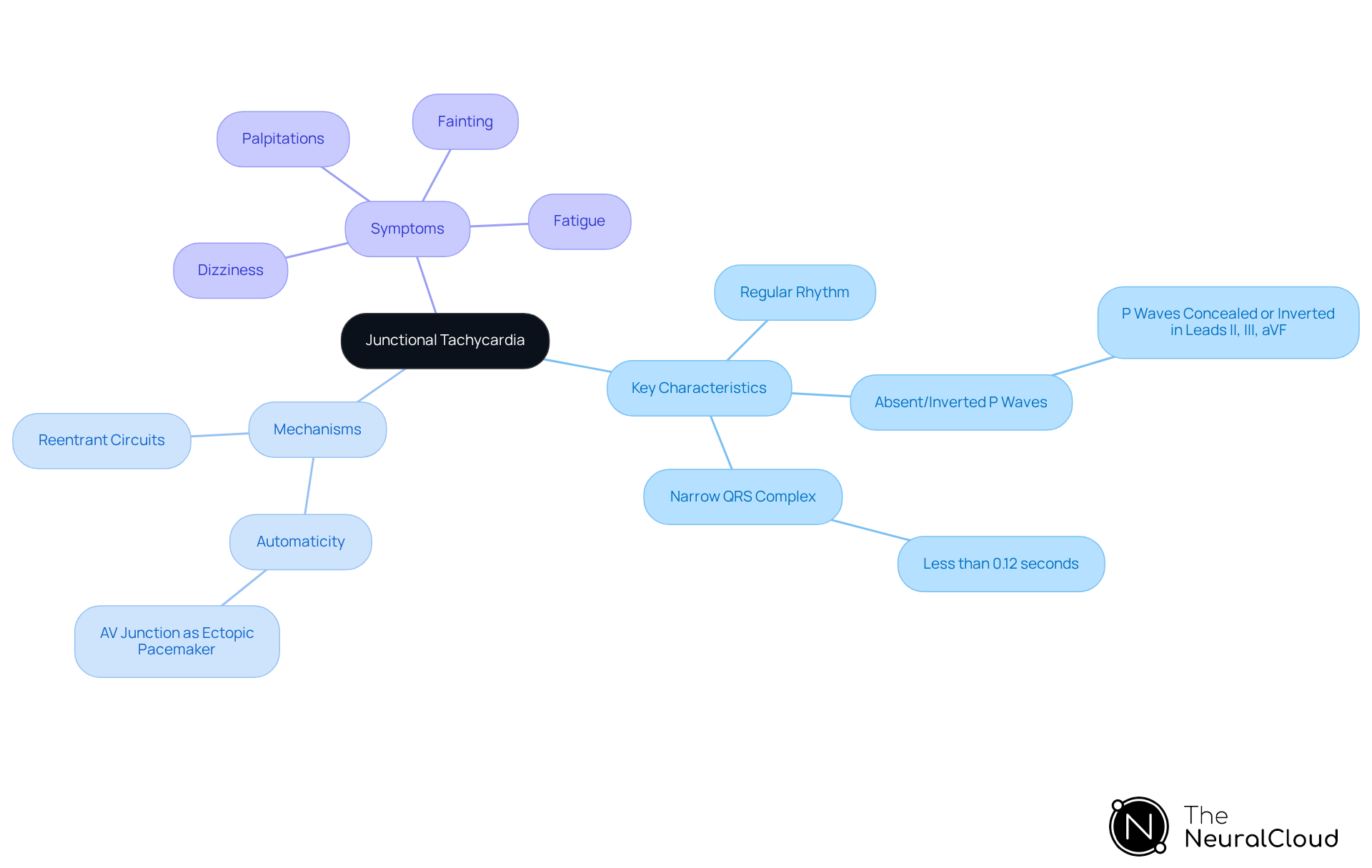
In ECG analysis, understanding what does junctional tachycardia look like presents unique challenges, demanding precise interpretation for effective management. To understand what does junctional tachycardia look like, it is classified as a type of supraventricular rapid heart rate (SVT) characterized by a heart rate exceeding 100 beats per minute (bpm) that originates from the atrioventricular (AV) junction. This condition arises when impulses from the AV junction override those from the sinoatrial (SA) node, resulting in a rapid heart rhythm. Key characteristics include:
- A regular rhythm
- Absent or inverted P waves on an ECG
- Narrow QRS complexes measuring less than 0.12 seconds
The mechanisms behind this type of rapid heart rate can involve automaticity, where the AV junction acts as an ectopic pacemaker, or reentrant circuits that may develop under specific conditions. In pediatric groups, rapid heart rate is more common, especially after congenital heart surgeries, with occurrence rates varying from 5% to 11%. In adults, it is less common but can be triggered by factors such as myocardial infarction, digoxin toxicity, or myocarditis.
Symptoms of rapid heartbeat may include palpitations, dizziness, fainting, and fatigue. Recognizing these symptoms is crucial for timely intervention and effective management. Grasping these traits is essential for understanding what does junctional tachycardia look like compared to other arrhythmias, such as atrial rapid heart rate or atrioventricular nodal reentrant rapid heart rate (AVNRT). To understand what does junctional tachycardia look like, the ECG findings typically reveal a ventricular rate greater than 100 bpm, a regular narrow QRS complex, and P waves that may be concealed or appear before or after the QRS complex, often inverted in leads II, III, and aVF.
With the integration of Neural Cloud Solutions' MaxYield, healthcare professionals can leverage advanced AI-driven ECG analysis to enhance the accuracy and efficiency of interpreting junctional rapid heart rate. MaxYield's ability to deliver beat-by-beat analysis and detailed insights from clean, hospital-grade ECG data ensures that clinicians can make confident decisions based on reliable insights. This capability is especially crucial in the context of remote individual monitoring, where precise ECG interpretation is necessary for effective diagnosis and treatment planning. Ultimately, leveraging MaxYield can significantly enhance diagnostic accuracy, leading to better patient outcomes.
Contextualize Junctional Tachycardia: Clinical Importance and Implications
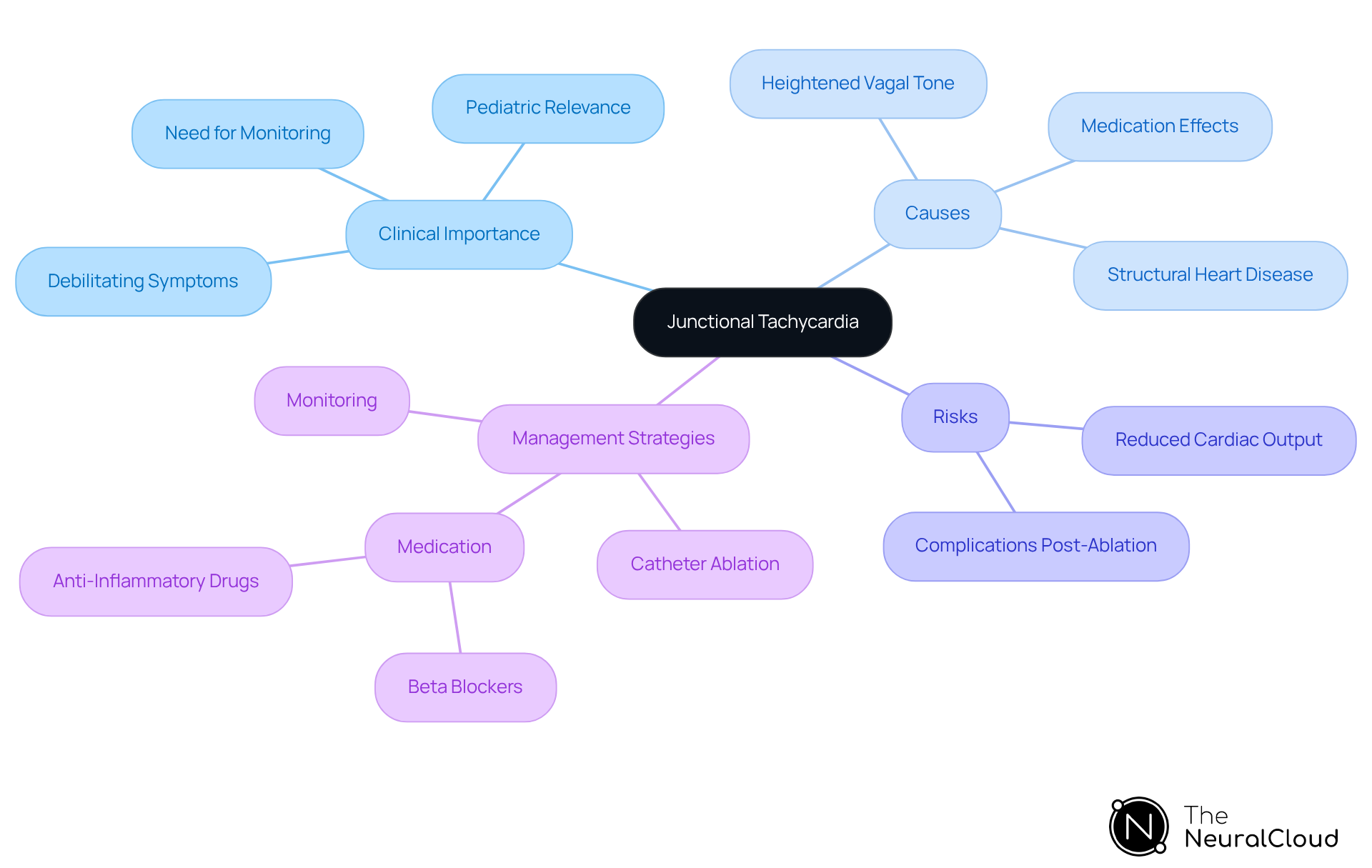
Junctional rapid heart rate presents significant challenges in clinical settings, particularly due to its potential to cause debilitating symptoms. This arrhythmia is especially relevant in pediatric populations, where it may occur after cardiac surgery or as a congenital condition. Managing rapid heart rhythm requires a thorough understanding of its underlying causes, which can include:
Without prompt identification, patients risk serious complications, including reduced cardiac output. For instance, the post-ablation occurrence of symptomatic ectopic rapid heart rate (JET) is notably low, reported at 0.008%, yet it underscores the need for careful monitoring in young individuals. While ectopic rapid heartbeats can sometimes resolve independently, persistent cases may require medication or catheter ablation. This understanding leads to better treatment strategies and improved patient outcomes for individuals experiencing this arrhythmia.
Neural Cloud Solutions Inc.'s MaxYield platform revolutionizes the analysis of junctional arrhythmia by transforming lengthy and noisy ECG recordings into clean, crisp signals. With this advanced AI technology, ECG analysis becomes more efficient, helping healthcare providers implement treatment strategies effectively while cutting operational costs through automation. Expert endorsements from Dr. Alan Rabinowitz, Dr. Brett Heilbron, and Dr. Marc W. Deyell emphasize that MaxYield’s precision rivals human interpretation, significantly reducing noise and improving diagnostic accuracy. Furthermore, with FDA Class II SaMD clearance-pending status, MaxYield ensures compliance with regulatory standards, providing audit-ready documentation supporting GxP inspections. By leveraging MaxYield, clinicians can allocate their time and expertise towards more complex decision-making, ultimately enhancing patient care.
Explore the Origins and Classifications of Junctional Tachycardia
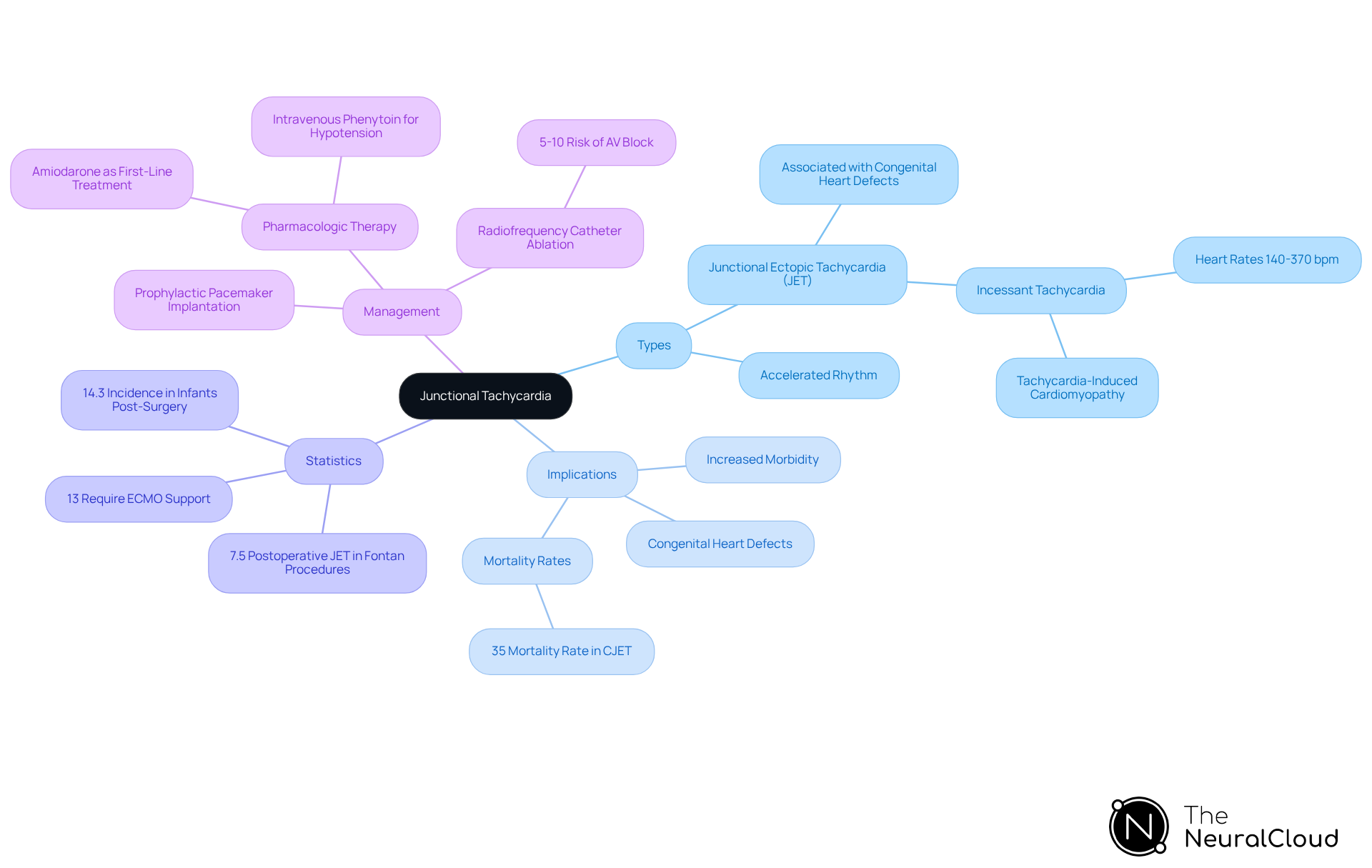
In clinical practice, understanding what junctional tachycardia looks like presents a complex challenge, as there are various types that have unique implications for patient care. These can be classified based on their origin and mechanism, including ectopic rapid heart rate (JET) and accelerated rhythm. JET is frequently observed in infants and is often associated with congenital heart defects. It is particularly significant, occurring in 14.3% of infants undergoing open cardiac surgery, with postoperative JET recognized in 7.5% of young individuals undergoing Fontan procedures. This prevalence highlights the need for careful attention in this vulnerable group.
JET may arise from ectopic foci in the AV junction or reentrant circuits within the AV node. It's vital for clinicians to understand what junctional tachycardia looks like, as this knowledge guides how to diagnose and treat patients effectively. For instance, managing JET may require different interventions compared to other types of rapid heart rate, especially in young individuals where the risk of hemodynamic compromise is heightened. In fact, over 40% of JET cases are incessant, with heart rates ranging from 140 to 370 bpm, which can lead to tachycardia-induced cardiomyopathy, particularly in the youngest infants who face the highest mortality rates.
Case studies indicate that spontaneous resolution of congenital ectopic heart rhythm occurs in about one third of individuals by age one. However, those who continue to experience JET may face significant risks, including heart failure, with mortality rates reaching as high as 35%. Furthermore, surgical procedures involving the AV node, such as complete repair of tetralogy of Fallot, have been linked to an increased risk of developing JET, with an adjusted odds ratio of 2.0. This underscores the importance of careful monitoring and tailored management for patients at risk of heart rhythm disorders.
If pharmacologic therapy fails, intravenous phenytoin administration may be necessary due to the risk of hypotension, further emphasizing the need for comprehensive treatment approaches.
Identify Symptoms and Diagnostic Criteria for Junctional Tachycardia
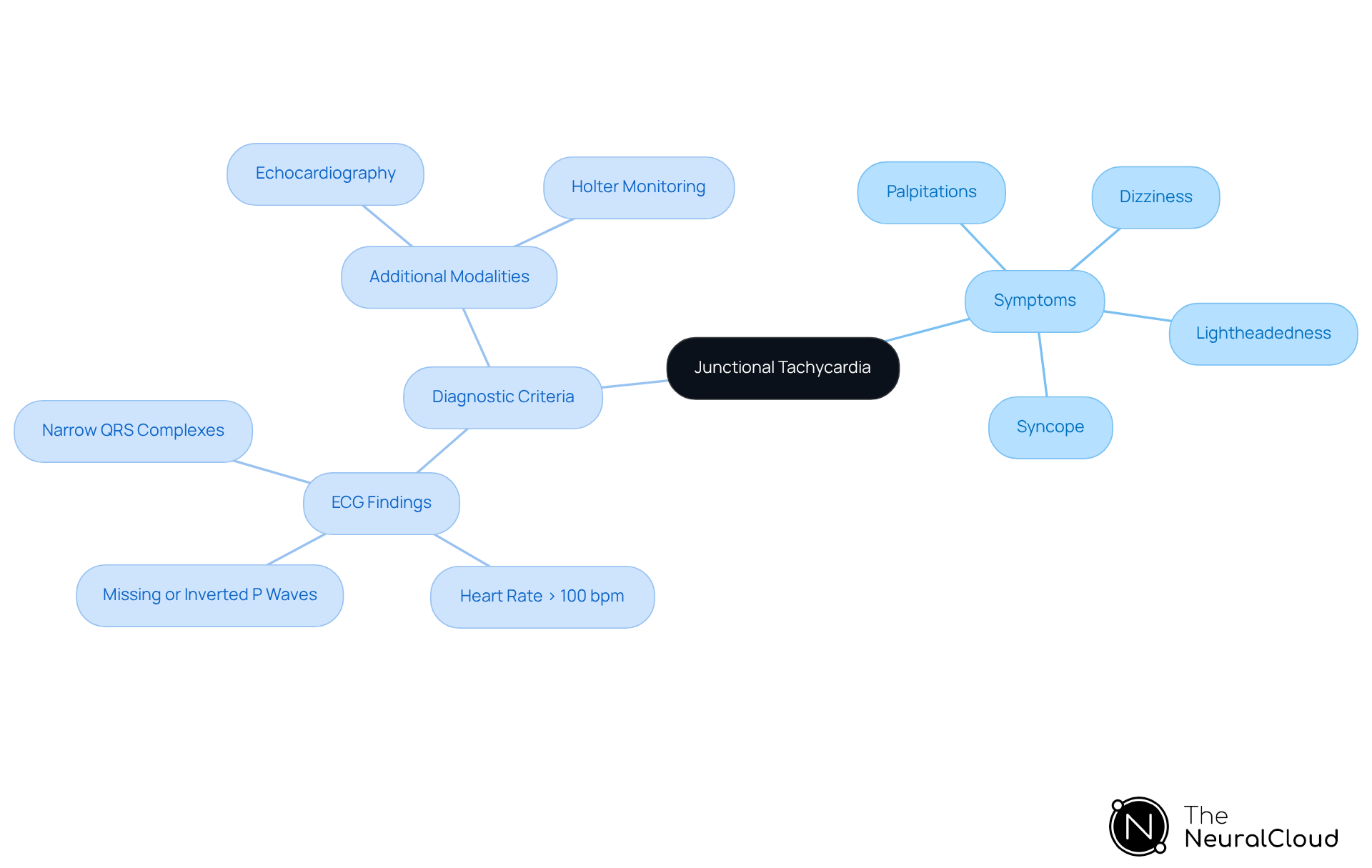
Rapid heart rate symptoms can range from mild to severe, highlighting the need for effective diagnostic tools. Commonly reported symptoms include:
- Palpitations
- Dizziness
- Lightheadedness
- In more serious cases, syncope
To diagnose this type of arrhythmia, healthcare professionals primarily rely on an electrocardiogram (ECG), which typically shows:
- A heart rate exceeding 100 beats per minute
- Missing or inverted P waves
- Narrow QRS complexes
Additional diagnostic modalities, such as echocardiography and Holter monitoring, are also utilized to evaluate the frequency and duration of episodes. Recognizing these symptoms and understanding the diagnostic criteria are vital for timely intervention and effective management of arrhythmia. Studies indicate that early identification and adherence to treatment plans significantly influence long-term outcomes, underscoring the critical role of healthcare professionals in monitoring and managing this condition.
Given the challenges in diagnosing arrhythmias, incorporating Neural Cloud Solutions' MaxYield platform can significantly enhance the efficiency of ECG analysis. With its automated ECG labeling and data extraction capabilities, MaxYield streamlines the diagnostic process and reduces operational costs associated with manual data handling. The platform's AI-powered algorithms ensure high accuracy and reliability, allowing healthcare professionals to focus on critical decision-making tasks. Furthermore, MaxYield integrates seamlessly with wearable technology, providing real-time data that improves monitoring of individuals. Expert endorsements from Dr. Alan Rabinowitz, Dr. Brett Heilbron, and Dr. Marc W. Deyell highlight MaxYield’s precision, rivaling human interpretation while effectively reducing noise in ECG readings. Additionally, the platform supports regulatory compliance with FDA Class II SaMD clearance-pending status and offers audit-ready documentation for GxP inspections. This integration of advanced technology into clinical practice is essential for improving patient outcomes and for recognizing what junctional tachycardia looks like effectively. By leveraging advanced technology like MaxYield, healthcare professionals can significantly improve patient care and outcomes in arrhythmia management.
Conclusion
Junctional tachycardia presents unique challenges in clinical management, particularly due to its specific ECG characteristics. This condition is characterized by a heart rate exceeding 100 bpm, regular rhythm, and distinctive ECG findings, including absent or inverted P waves. Recognizing these features is essential for differentiating junctional tachycardia from other arrhythmias, which can delay appropriate treatment and ensure timely intervention.
The article highlights the clinical significance of junctional tachycardia, particularly in pediatric populations, where it can arise post-surgery or as a congenital condition. It's important to understand the mechanisms behind this arrhythmia, its symptoms, and how accurate ECG analysis plays a crucial role in diagnosis. The integration of advanced technologies, such as Neural Cloud Solutions Inc.'s MaxYield, enhances the diagnostic process, allowing healthcare professionals to make informed decisions based on reliable data.
In conclusion, the implications of junctional tachycardia go beyond identification; they require comprehensive management strategies to mitigate risks and improve patient outcomes. By utilizing innovative tools like MaxYield, clinicians can enhance their diagnostic capabilities, ultimately leading to better care for individuals affected by this condition. A deeper understanding of junctional tachycardia can transform clinical approaches and significantly enhance patient care.
Frequently Asked Questions
What is junctional tachycardia?
Junctional tachycardia is a type of supraventricular rapid heart rate (SVT) characterized by a heart rate exceeding 100 beats per minute (bpm) that originates from the atrioventricular (AV) junction.
What are the key characteristics of junctional tachycardia?
Key characteristics include a regular rhythm, absent or inverted P waves on an ECG, and narrow QRS complexes measuring less than 0.12 seconds.
What mechanisms can lead to junctional tachycardia?
The mechanisms can involve automaticity, where the AV junction acts as an ectopic pacemaker, or reentrant circuits that may develop under specific conditions.
How common is junctional tachycardia in different age groups?
In pediatric groups, junctional tachycardia is more common, especially after congenital heart surgeries, with occurrence rates varying from 5% to 11%. In adults, it is less common but can be triggered by factors such as myocardial infarction, digoxin toxicity, or myocarditis.
What symptoms are associated with junctional tachycardia?
Symptoms may include palpitations, dizziness, fainting, and fatigue.
How can junctional tachycardia be distinguished from other arrhythmias?
Junctional tachycardia can be distinguished by its ECG findings, which typically reveal a ventricular rate greater than 100 bpm, a regular narrow QRS complex, and P waves that may be concealed or appear before or after the QRS complex, often inverted in leads II, III, and aVF.
How does MaxYield enhance the interpretation of junctional tachycardia?
MaxYield, developed by Neural Cloud Solutions Inc., leverages advanced AI-driven ECG analysis to enhance the accuracy and efficiency of interpreting junctional rapid heart rate, providing beat-by-beat analysis and detailed insights from clean, hospital-grade ECG data.
Why is accurate ECG interpretation important in the context of junctional tachycardia?
Accurate ECG interpretation is crucial for effective diagnosis and treatment planning, especially in remote individual monitoring, where precise insights can lead to better patient outcomes.
List of Sources
- Define Junctional Tachycardia: Key Characteristics and Mechanisms
- Junctional Tachycardia Rhythm ECG Review (https://registerednursern.com/junctional-tachycardia)
- Junctional tachycardia - WikEM (https://wikem.org/wiki/Junctional_tachycardia)
- Junctional Tachycardia: Causes, Symptoms and Treatment (https://my.clevelandclinic.org/health/diseases/23216-junctional-tachycardia)
- Atrioventricular Junctional Rhythms - Junctional Tachycardia (https://aclscertification.org/courses/arrhythmia-interpretation-certification/lessons/chapter-5-atrioventricular-junctional-rhythms-and-heart-block/topic/atrioventricular-junctional-rhythms-junctional-tachycardia)
- Contextualize Junctional Tachycardia: Clinical Importance and Implications
- Junctional Rhythm: Background, Etiology, Pathophysiology (https://emedicine.medscape.com/article/155146-overview)
- Junctional ectopic tachycardia as an AVNRT catheter ablation complication in children | Biomedical Research and Therapy (https://bmrat.biomedpress.org/index.php/BMRAT/article/view/793)
- Junctional Tachycardia: Causes, Symptoms and Treatment (https://my.clevelandclinic.org/health/diseases/23216-junctional-tachycardia)
- Explore the Origins and Classifications of Junctional Tachycardia
- Junctional ectopic tachycardia after infant heart surgery: incidence and outcomes - PubMed (https://pubmed.ncbi.nlm.nih.gov/22585344)
- Junctional Rhythm - StatPearls - NCBI Bookshelf (https://ncbi.nlm.nih.gov/books/NBK507715)
- Junctional Ectopic Tachycardia: Background, Pathophysiology, Etiology (https://emedicine.medscape.com/article/898989-overview)
- Incidence and Related Risk Factors of Junctional Ectopic Tachycardia in Infants after Cardiac Surgery for Congenital Heart Disease (https://techscience.com/chd/v17n5/49569/html)
- Identify Symptoms and Diagnostic Criteria for Junctional Tachycardia
- Arrhythmia (https://heartandstroke.ca/heart-disease/conditions/arrhythmia)
- Junctional Rhythm - StatPearls - NCBI Bookshelf (https://ncbi.nlm.nih.gov/books/NBK507715)
- Junctional Tachycardia (https://webmd.com/heart-disease/junctional-tachycardia)
- Junctional Tachycardia - Causes, Symptoms, Diagnosis, and Treatment (https://apollohospitals.com/diseases-and-conditions/junctional-tachycardia)
- Accelerated Junctional Rhythm (AJR) (https://litfl.com/accelerated-junctional-rhythm-ajr)