Introduction
In the fast-paced world of cardiology, the appearance of ST elevation on an ECG poses a significant challenge for healthcare professionals. This critical indicator often signals a blockage in coronary arteries, which can lead to severe complications if not addressed promptly. Understanding the visual characteristics and clinical implications of ST elevation is vital, especially in Canadian cities like Toronto and Calgary, where timely diagnosis can significantly impact patient outcomes. Clinicians often struggle to differentiate ST elevation from other ECG anomalies, risking delayed treatment. Advanced tools are essential for ensuring that clinicians can make swift, accurate diagnoses that ultimately save lives.
Define ST Elevation in ECGs
ST elevation on an ECG poses significant challenges in timely diagnosis and intervention for cardiac emergencies. What does ST elevation look like is characterized by an unusual upward shift of the ST segment, assessed from the baseline at the J point. Typically, what does ST elevation look like is characterized by a rise greater than 0.1 mV above the baseline in at least two adjacent leads. This rise is a key indicator of myocardial ischemia, particularly in acute coronary syndromes, prompting the question of what does ST elevation look like in ST-Elevation Myocardial Infarction. It signifies a disruption in the heart's electrical activity, often due to a blockage in one or more coronary arteries, which can lead to damage in the heart muscle.
Recent studies indicate that in Canada, especially in cities such as Toronto and Calgary, the occurrence of STEMI cases remains considerable. This emphasizes the necessity for healthcare professionals to swiftly identify ST changes. Delays in recognizing ST elevation can lead to severe complications for patients. Understanding what does ST elevation look like is vital for timely diagnosis and intervention in cardiac emergencies, as early identification can significantly enhance patient recovery and reduce long-term complications.
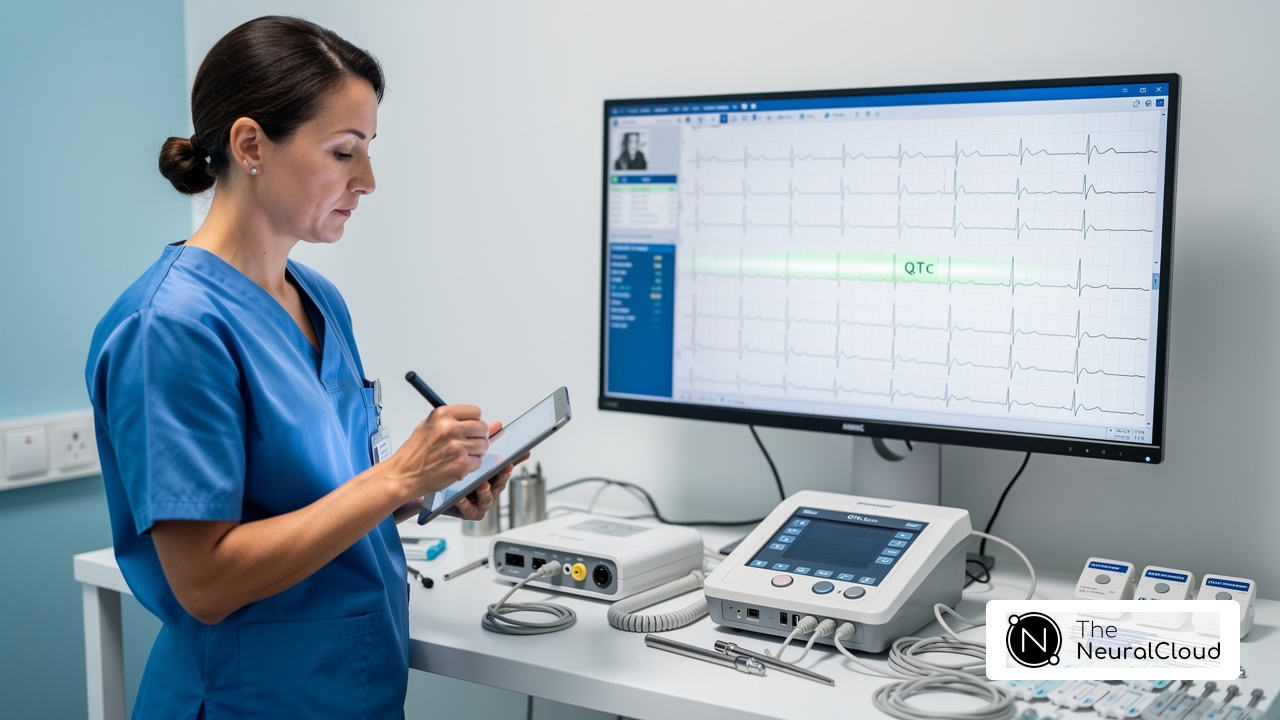
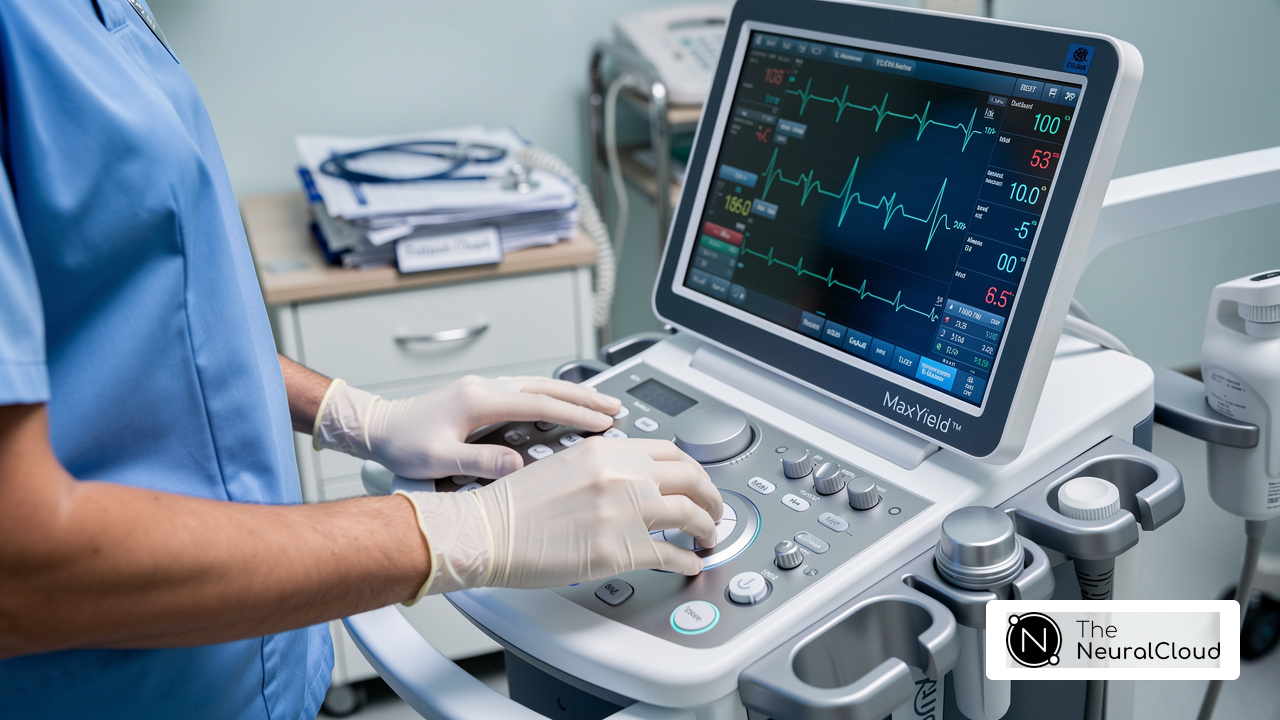
Case studies have demonstrated that early identification of ST rise can lead to improved outcomes for individuals, underscoring the importance of precise ECG analysis in clinical practice. With the integration of MaxYield, Neural Cloud Solutions Inc. offers a device-agnostic ECG intelligence layer that enhances the accuracy of ECG readings, providing hospital-grade precision from consumer-grade devices. MaxYield's advanced noise filtering and distinct wave recognition capabilities ensure that critical data is identified even in recordings with high levels of noise and artifact.
Furthermore, the Insight360 tool transforms MaxYield’s clean ECG data into interactive dashboards and clinical-ready reports, facilitating actionable insights for healthcare providers. As Dr. Alan Rabinowitz notes, 'MaxYield’s accuracy is comparable to that of human interpretation, significantly reducing noise and enhancing clinical decision-making.' This highlights the significance of employing advanced technology such as MaxYield in the analysis of ST changes, ultimately enhancing patient care. Additionally, it is important to note that MaxYield is currently pending FDA Class II SaMD clearance, ensuring compliance with regulatory standards.

Explain the Clinical Significance of ST Elevation
Recognizing what does ST elevation look like on an ECG is critical for diagnosing acute myocardial infarction, particularly in cases of STEMI. ST rise indicates a possible blockage of a coronary artery, leading to ischemia and the risk of myocardial necrosis. Prompt identification of ST rise is essential, as it triggers urgent medical actions, such as reperfusion therapy, to restore blood flow and reduce heart damage. Without timely recognition of ST rise, patients risk facing life-threatening complications, including heart failure or sudden cardiac death.
Guidelines in Canada emphasize the importance of timely recognition of what does ST elevation look like in emergency care. Research shows that recognizing ST rise quickly can greatly enhance outcomes for individuals, lowering mortality rates linked to heart attacks. For instance, the North American COVID-19 Myocardial Infarction (NACMI) registry highlights that individuals with COVID-19 and STEMI face a one-year mortality rate of 45%, underscoring the need for rapid intervention.
Canadian cardiology specialists emphasize that understanding what does ST elevation look like is crucial for healthcare providers, as it directly affects management strategies for individuals. Case studies show that effective ST segment recognition can lead to better clinical outcomes, particularly in high-risk populations. For instance, older individuals and those with comorbidities require customized strategies to manage their unique risks during STEMI treatment.
Advanced ECG analysis technologies like Neural Cloud Solutions Inc.'s MaxYield™ significantly enhance diagnostic capabilities. MaxYield™ utilizes gold standard noise filtering and automation to transform lengthy and noisy ECG recordings into clean, crisp signals, facilitating seamless integration with existing workflows. This not only improves the clarity of the data but also enhances the speed of analysis, allowing healthcare professionals to make timely decisions that can save lives. Additionally, Insight360 serves as a customizable visualization tool that transforms MaxYield™'s clean ECG data into interactive dashboards and clinical-ready reports. Expert endorsements from Dr. Alan Rabinowitz, Dr. Brett Heilbron, and Dr. Marc W. Deyell emphasize that MaxYield™ rivals human interpretation in precision and offers substantial noise reduction benefits. Furthermore, it is important to note that MaxYield™ is currently pending FDA Class II SaMD clearance, ensuring compliance with regulatory standards.
By adopting advanced technologies like MaxYield™, healthcare professionals can significantly improve patient outcomes in cardiology.

Describe Visual Characteristics of ST Elevation in ECGs
The complexity of ECG analysis presents significant challenges for healthcare professionals, particularly in identifying ST segment changes. What does ST elevation look like? It manifests in various forms on an ECG, typically characterized by a convex or straight appearance, often referred to as 'tombstoning' in STEMI cases. This rise occurs at the J point and can vary in amplitude. Significant increases often exceed 1 mm in precordial leads (V1-V6) or limb leads (I, II, III, aVL, aVF).
Understanding what does ST elevation look like is crucial, as the morphology of the ST segment provides critical diagnostic insights; for example, a concave upward ST segment may indicate early repolarization, while a convex shape is more suggestive of ischemia. It's crucial for healthcare professionals to understand what does ST elevation look like among these visual characteristics to distinguish normal variations from pathological conditions, thereby facilitating timely and accurate diagnoses in acute cardiac care.
Moreover, the incorporation of AI technologies, like MaxYield from Neural Cloud Solutions Inc., can greatly improve the precision of ECG interpretation, minimizing human error and enhancing the identification of ST changes. MaxYield's automated, distinct, and scalable analysis allows for the rapid processing of 200,000 heartbeats in less than 5 minutes, ensuring that clinicians can assess ST-segment elevation at the J-point accurately. This capability is essential for diagnosing acute coronary syndromes, particularly considering the urgency of intervention windows for ST elevation myocardial infarction.
Recent statistics highlight the importance of prompt ECG interpretation. Many patients do not receive timely ECGs, which can delay necessary interventions and negatively impact outcomes. As Dr. Alan Rabinowitz notes, 'MaxYield's precision is on par with human interpretation, making it a vital tool in acute care settings.' Additionally, MaxYield is pending FDA Class II SaMD clearance, ensuring compliance with regulatory standards, and is complemented by Insight360, a visualization tool that transforms clean ECG data into interactive dashboards and clinical-ready reports.

Identify Common Causes of ST Elevation
ST changes on an ECG present significant diagnostic challenges, particularly in distinguishing between acute myocardial infarction and pericarditis. In ST segment myocardial infarction, an ST rise indicates a total blockage of a coronary artery, which leads to transmural ischemia. Conversely, pericarditis, characterized by inflammation of the pericardial sac, can also present with widespread ST rise, often accompanied by PR segment depression. Other notable causes include left ventricular hypertrophy (LVH), Brugada syndrome, and coronary vasospasm.
Differentiating between these conditions can be challenging for healthcare professionals, as management strategies differ significantly. For instance, STEMI necessitates immediate reperfusion therapy to restore blood flow, while pericarditis may be effectively treated with anti-inflammatory medications. Canadian research emphasizes the prevalence of pericarditis and its connection to ST changes, underscoring the need for clinicians to be skilled at recognizing these distinctions.
Neural Cloud Solutions Inc.'s MaxYield™ platform enhances ECG analysis efficiency by integrating wearable technology for automated labeling and data extraction. This innovation streamlines processes, reduces operational costs, and addresses challenges such as physiological variability and signal artifacts. With AI-powered algorithms, MaxYield™ ensures accurate analysis of different ECG recordings, including Holter, Patch, and 1-Lead ECG Monitor data. Furthermore, it is designed to comply with FDA Class II SaMD clearance-pending status, ensuring regulatory adherence and audit-ready documentation for GxP inspections.
Expert endorsements from Dr. Alan Rabinowitz, Dr. Brett Heilbron, and Dr. Marc W. Deyell emphasize MaxYield’s precision, rivaling human interpretation and significantly reducing noise in ECG readings. Misdiagnosis can result in ineffective treatment, underscoring the importance of accurate ECG analysis for effective treatment planning, ultimately improving patient outcomes in cardiovascular care.

Conclusion
The ability to accurately interpret ST elevation in ECGs is essential for effective cardiac care, yet many face challenges in this area. ST elevation is a crucial sign of myocardial ischemia, especially in conditions like STEMI. However, many healthcare professionals struggle to identify these critical changes in ECG readings, which can delay necessary interventions. Recognizing the distinct upward shift of the ST segment can lead to timely interventions that significantly improve patient outcomes, emphasizing the need for healthcare professionals to be adept at identifying these changes.
We’ve explored key insights, like the importance of quickly recognizing ST elevation, the various conditions that can cause these changes, and how advanced technologies like MaxYield from Neural Cloud Solutions Inc. can enhance ECG analysis. The integration of AI-driven tools not only improves diagnostic accuracy but also streamlines workflows, allowing clinicians to make informed decisions quickly. The evidence presented underscores the critical nature of timely intervention in reducing mortality rates associated with cardiac events. This delay can result in missed opportunities for life-saving treatments.
Given these findings, healthcare providers must prioritize education and training to effectively recognize ST elevation. By leveraging advanced technologies and adhering to best practices in ECG interpretation, clinicians can enhance their diagnostic capabilities and ultimately improve patient care in cardiology. Understanding ST elevation is crucial, as it directly affects management strategies in acute cardiac situations, making it a cornerstone of effective cardiovascular healthcare. Ultimately, mastering the nuances of ST elevation can be the difference between life and death in acute cardiac care.
Frequently Asked Questions
What is ST elevation in ECGs?
ST elevation is characterized by an unusual upward shift of the ST segment on an ECG, assessed from the baseline at the J point. It typically indicates a rise greater than 0.1 mV above the baseline in at least two adjacent leads.
Why is ST elevation significant in cardiac emergencies?
ST elevation is a key indicator of myocardial ischemia, particularly in acute coronary syndromes. It signifies a disruption in the heart's electrical activity, often due to a blockage in one or more coronary arteries, which can lead to damage in the heart muscle.
How prevalent are STEMI cases in Canada?
Recent studies indicate that the occurrence of STEMI (ST-Elevation Myocardial Infarction) cases remains considerable in Canada, especially in cities like Toronto and Calgary.
What are the consequences of delays in recognizing ST elevation?
Delays in recognizing ST elevation can lead to severe complications for patients, making timely diagnosis and intervention crucial for improving patient recovery and reducing long-term complications.
How can early identification of ST elevation improve patient outcomes?
Case studies have shown that early identification of ST elevation can lead to improved outcomes for individuals, underscoring the importance of precise ECG analysis in clinical practice.
What technology does MaxYield offer to enhance ECG analysis?
MaxYield, offered by Neural Cloud Solutions Inc., provides a device-agnostic ECG intelligence layer that enhances the accuracy of ECG readings, ensuring hospital-grade precision from consumer-grade devices.
What features does MaxYield include to improve ECG readings?
MaxYield includes advanced noise filtering and distinct wave recognition capabilities, which help identify critical data even in recordings with high levels of noise and artifact.
How does Insight360 contribute to ECG data analysis?
Insight360 transforms MaxYield’s clean ECG data into interactive dashboards and clinical-ready reports, facilitating actionable insights for healthcare providers.
What is the regulatory status of MaxYield?
MaxYield is currently pending FDA Class II SaMD clearance, ensuring compliance with regulatory standards.
List of Sources
- Define ST Elevation in ECGs
- AI-ECG Finds STEMI Faster, Cuts False-Positive Cath Lab Activations (https://tctmd.com/news/ai-ecg-finds-stemi-faster-cuts-false-positive-cath-lab-activations)
- What Is a STEMI? (https://my.clevelandclinic.org/health/diseases/22068-stemi-heart-attack)
- STEMI: ST-segment Elevation Myocardial Infarction - The Cardiology Advisor (https://thecardiologyadvisor.com/ddi/stemi-st-elevation-myocardial-infarction)
- ST-segment Elevation Myocardial Infarction: Challenges in Diagnosis (https://uscjournal.com/articles/st-segment-elevation-myocardial-infarction-challenges-diagnosis?language_content_entity=en)
- Prevalence of ECGs Exceeding Thresholds for ST‐Segment–Elevation Myocardial Infarction in Apparently Healthy Individuals: The Role of Ethnicity - PMC (https://pmc.ncbi.nlm.nih.gov/articles/PMC7670498)
- Explain the Clinical Significance of ST Elevation
- North American COVID-19 ST-Elevation Myocardial Infarction (STEMI) Research Reveals Impact on Minority Populations, High Mortality and Atypical Symptoms | Minneapolis Heart Institute Foundation (https://mplsheart.org/news/north-american-covid-19-st-elevation-myocardial-infarction-stemi-research-reveals-impact)
- COVID-19 patients with STEMI show higher one-year mortality rates (https://news-medical.net/news/20260424/COVID-19-patients-with-STEMI-show-higher-one-year-mortality-rates.aspx)
- COVID-19 and Severe Heart Attack Increase Mortality by 25% After One Year, More than Double Pre-Pandemic Rates | SCAI (https://scai.org/media-center/news-and-articles/covid-19-and-severe-heart-attack-increase-mortality-25-after-one)
- 30-Day Acute Myocardial Infarction In-Hospital Mortality | CIHI (https://cihi.ca/en/indicators/30-day-acute-myocardial-infarction-in-hospital-mortality)
- New ST-elevation myocardial infarction protocol trial data provide deeper insight into patient outcomes (https://medicalxpress.com/news/2026-04-st-elevation-myocardial-infarction-protocol.html)
- Describe Visual Characteristics of ST Elevation in ECGs
- STEMI ECG Criteria: ST-Elevation Thresholds (https://powerfulmedical.com/blog/stemi-ecg-criteria)
- ST Segment - StatPearls - NCBI Bookshelf (https://ncbi.nlm.nih.gov/books/NBK459364)
- Avoiding STEMI and NSTEMI Misdiagnoses with Fast, Accurate ECG Interpretation (https://gehealthcare.com/en-my/insights/article/avoiding-stemi-and-nstemi-misdiagnoses-with-fast,-accurate-ecg-interpretation?srsltid=AfmBOorR-qHJTIpJCZdTtcJrqf3RkZdX1A6PH26bAHNQru-cbg2_Quc9)
- Identify Common Causes of ST Elevation
- STEMI: ST-segment Elevation Myocardial Infarction - The Cardiology Advisor (https://thecardiologyadvisor.com/ddi/stemi-st-elevation-myocardial-infarction)
- What Is a STEMI? (https://my.clevelandclinic.org/health/diseases/22068-stemi-heart-attack)
- Know the Differential for ST Segment Elevation: It's More Than Just ACS - Manual of Medicine (https://manualofmedicine.com/topics/cardiology/know-the-differential-for-st-segment-elevation-its-more-than-just-acs)
- ST-segment Elevation Myocardial Infarction: Challenges in Diagnosis (https://uscjournal.com/articles/st-segment-elevation-myocardial-infarction-challenges-diagnosis?language_content_entity=en)