Introduction
Selecting the right electrode gel is a critical factor in achieving accurate diagnostics and ensuring patient comfort in healthcare settings. This specialized conductive gel acts as a vital link between medical sensors and the skin, enabling precise readings in procedures like electrocardiograms (ECG) and electromyography (EMG).
Healthcare professionals often face uncertainty in selecting the appropriate electrode gel, which can impact diagnostic accuracy and patient comfort. Exploring the composition, applications, and best practices for electrode gel use reveals its significance in medical procedures.
Navigating these challenges is essential for achieving optimal patient outcomes and enhancing the effectiveness of diagnostic procedures.
Define Electrode Gel: Composition and Purpose
Conductive gel plays a crucial role in medical applications, enhancing the electrical connection between sensors and skin. Conductive gel is typically made from water, thickening agents like polyvinyl alcohol or carboxymethyl cellulose, and electrolytes such as sodium chloride. This combination effectively reduces electrical resistance, ensuring optimal signal transmission. The main function of conductive gel, which leads to the question of what is electrode gel used for, is to enable precise readings in procedures such as electrocardiograms (ECG), electromyography (EMG), and electroencephalograms (EEG). By offering a stable interface, conductive gel minimizes noise and enhances the clarity of captured signals, which is essential for the effective diagnosis and monitoring of cardiac and neurological conditions.
Recent advancements in gel technology have concentrated on enhancing its composition for improved performance. For instance, innovative hydrogel sensors developed at UT Austin have demonstrated superior stability and signal quality compared to traditional gels. These alginate hydrogel sensors adapt well to living tissues and hold their shape during use, attaining a superior signal-to-noise ratio compared to commercial EEG gel sensors. In real-world applications, these viscoelastic devices have shown effectiveness in dynamic biological environments, such as on a mouse heart and during overnight EEG monitoring, where they remained intact for over eight hours.
Researchers are actively exploring how different gel compositions can enhance ECG applications. Studies indicate that newer formulations can achieve minimal on-skin impedance and high adhesiveness, addressing common issues associated with traditional gels, such as skin irritation and degradation over time. These advancements not only enhance ECG precision but also pave the way for innovative long-term monitoring solutions, potentially revolutionizing care for individuals in both clinical and home environments.
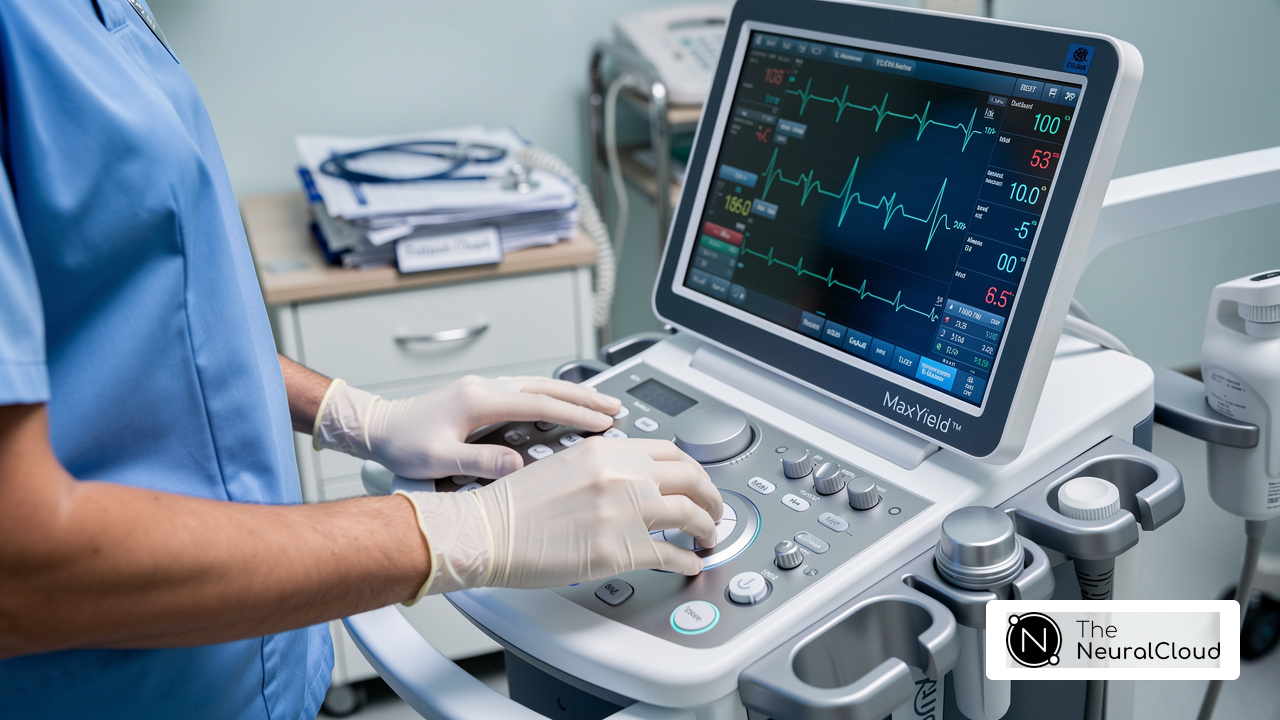
Neural Cloud Solutions Inc. leverages its MaxYield platform to address the challenges of motion noise and physiological variability in ECG analysis. By ensuring clean PPG data and hospital-grade precision, MaxYield improves the reliability of readings obtained through gel. Expert endorsements from Dr. Alan Rabinowitz, Dr. Brett Heilbron, and Dr. Marc W. Deyell emphasize MaxYield’s precision, rivaling human interpretation and significantly reducing noise. Furthermore, with FDA Class II SaMD clearance-pending status and audit-ready documentation supporting GxP inspections, MaxYield stands at the forefront of transforming remote patient monitoring, ensuring that healthcare providers can rely on accurate data for effective patient management.

Explore Applications of Electrode Gel in Healthcare
In healthcare, particularly for ECG, EEG, and EMG procedures, understanding what electrode gel is used for is essential, as it significantly impacts signal transmission and monitoring accuracy. In ECG applications, the gel facilitates the efficient transmission of electrical signals from the heart to the sensors, ensuring precise monitoring of heart rhythms. For EEG, it provides a conductive pathway between the scalp and sensors, which is crucial for capturing brain activity. In muscle stimulation therapies like TENS (Transcutaneous Electrical Nerve Stimulation), conductive gel enhances the transmission of electrical impulses. This improvement assists in effective pain relief.
The versatility of conductive gel extends to ultrasound imaging, where it acts as a coupling agent that enhances image quality. Recent advancements in conductor technology, such as flexible, printed dry sensors made from a mixture of polydimethylsiloxane (PDMS) and carbon nanotubes, are currently in the proof of concept and early prototype stage. These innovations show promise in enhancing signal quality without the need for extensive skin preparation, making them patient-friendly and cost-effective. This is especially pertinent in Canada, where ongoing research and development are focused on improving the use of gel in various medical applications.
Expert insights from Dr. Alan Rabinowitz, Dr. Brett Heilbron, and Dr. Marc W. Deyell emphasize that the bacteriostatic properties of modern electrode gels inhibit bacterial growth, promoting hygiene during procedures and reducing infection risks. Moreover, the gel is safe, non-flammable, and odorless, eliminating the need for tape and preventing tape-related skin irritation, ensuring a comfortable experience for individuals. However, it's crucial to remember that this gel shouldn't be used for defibrillation, as it can disrupt electrical current flow and compromise safety.
Incorporating Neural Cloud Solutions' MaxYield™ platform boosts ECG workflow efficiency with top-tier noise filtering and automation. It effectively tackles challenges like physiological variability and signal artifacts. This integration allows for processing more data in less time, ultimately improving the accuracy and efficiency of ECG analysis. The platform is currently pending FDA Class II SaMD clearance, ensuring compliance with regulatory standards. Overall, understanding what is electrode gel used for is vital in both diagnostic and therapeutic contexts, underscoring its significance in contemporary medicine.

Identify Types of Electrode Gels and Their Characteristics
In healthcare, particularly in ECG and EEG applications, it is vital to understand what is electrode gel used for, especially since patient sensitivities vary significantly. In numerous healthcare applications, it is important to understand what is electrode gel used for, as each variety of electrode substances is customized to particular requirements and sensitivities. Saline-based substances are frequently employed in ECG and EEG procedures, leading to the inquiry of what is electrode gel used for, due to their excellent conductivity and low irritation potential. These substances provide a reliable electrical connection, which raises the question of what is electrode gel used for in short-term monitoring. In contrast, non-saline substances, which lack salt, cater to individuals with sensitive skin, significantly reducing the risk of allergic reactions, which raises the question of what is electrode gel used for. Furthermore, specialized substances are created for long-term monitoring, ensuring sustained conductivity over extended durations without drying out, which is essential for ongoing individual assessment, particularly in understanding what is electrode gel used for.
Each gel type possesses distinct characteristics, including viscosity, conductivity, and compatibility with skin types, which leads to the question of what is electrode gel used for. For instance, SignaGel, a multipurpose saline electrolyte gel, is recognized for its high conductivity and suitability for ECG, EMG, and biofeedback applications, highlighting what is electrode gel used for. In comparison, substances like Spectra 360 are favored for TENS applications because of their specific formulation. Healthcare providers must understand what electrode gel is used for in order to choose the right gel for each clinical procedure, thereby improving both performance and comfort during diagnostic and therapeutic interventions.
Integrating MaxYield™ technology with these electrode gels can significantly enhance ECG analysis. MaxYield™ employs advanced noise filtering and distinct wave recognition capabilities, allowing healthcare professionals to salvage previously obscured sections of lengthy Holter, 1-Lead, and patch monitor recordings. This integration leads to more accurate ECG interpretations and better patient outcomes, tackling challenges such as physiological variability and signal artifacts. It's important to follow proper hygiene practices, like avoiding contact between the tube tip and patients, and ensuring that the gel is stored correctly to maintain its efficacy. Healthcare providers should also be aware of the pricing and subscription options available for products like SignaGel, which can facilitate procurement decisions. Additionally, compliance with regulatory standards, including FDA Class II SaMD clearance-pending status, is crucial for ensuring the safety and effectiveness of these gels in clinical settings. Understanding these nuances not only enhances clinical decision-making but also directly impacts patient care and comfort during procedures.

Understand Best Practices and Safety for Using Electrode Gel
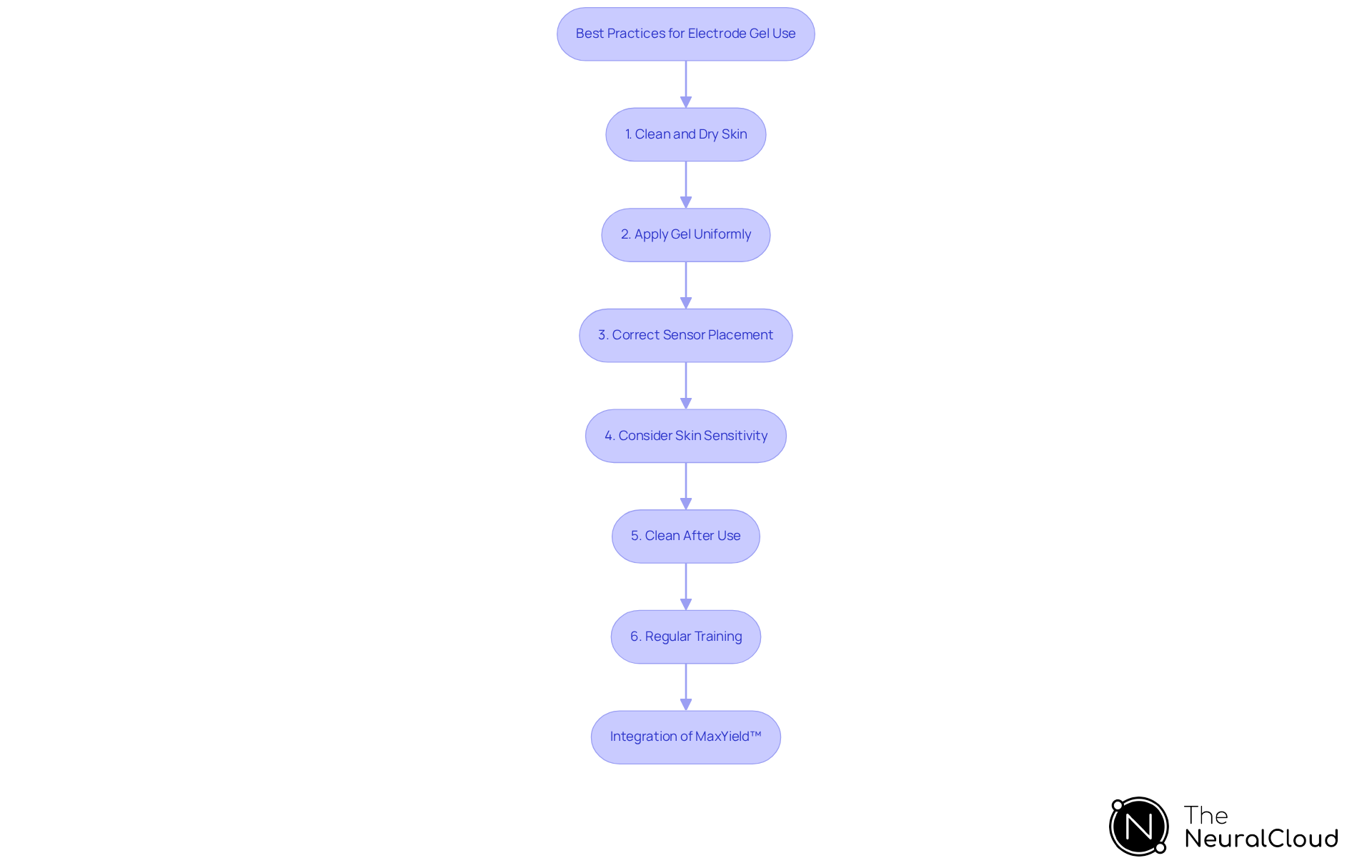
To maximize the effectiveness of conductive gel in ECG analysis, healthcare professionals should know what electrode gel is used for and follow essential best practices. First, the skin must be clean, dry, and free from oils or lotions before applying the gel. This preparation enhances adhesion and conductivity. Applying the gel uniformly is crucial to prevent air pockets that may disrupt signal transmission. Incorrect sensor placement can lead to significant errors in ECG readings, affecting patient diagnosis. Practitioners must consider the patient's skin sensitivity. Selecting gels that minimize irritation is crucial, as improper use can cause discomfort or allergic reactions.
After use, thorough cleaning of the skin and devices is essential to prevent residue buildup, which can affect future applications and signal quality. It's essential for healthcare providers to receive regular training. Surprisingly, only 37% of nurses report having prior training in ECGs, despite over 96% recognizing the importance of these skills. Training should include recognizing signs of allergic reactions or skin irritation related to gel use, ensuring that clinicians can respond promptly to any issues.
Additionally, with new compliance requirements for ECG sensor placement set to be implemented by 2025, including FDA Class II SaMD clearance-pending status, it is crucial for healthcare professionals to stay informed and adhere to best practices. Failure to follow these guidelines can compromise patient safety and diagnostic accuracy. By adhering to these guidelines, clinicians can enhance the effectiveness of gel applications, particularly in understanding what electrode gel is used for, while ensuring safety and comfort for individuals. This ultimately improves ECG diagnostic precision and outcomes.
Furthermore, integrating MaxYield™ into the workflow can significantly enhance the quality of ECG analysis. MaxYield™ offers advanced noise filtering and wave recognition, ensuring that the signals obtained are clean and reliable, which complements the effective use of electrode gel. This synergy not only streamlines the workflow but also enhances the overall diagnostic capabilities, leading to better patient care. Expert endorsements from Dr. Alan Rabinowitz, Dr. Brett Heilbron, and Dr. Marc W. Deyell emphasize MaxYield’s precision rivaling human interpretation and noise reduction benefits, further supporting its integration into clinical practice. Additionally, Insight360 serves as a customizable visualization and reporting tool that transforms MaxYield’s clean ECG data into interactive dashboards and clinical-ready reports.
Conclusion
The role of electrode gel in healthcare is crucial for achieving accurate diagnostics and enhancing patient care. This conductive gel serves as a vital interface between sensors and the skin, facilitating optimal signal transmission in various medical procedures, including ECG, EEG, and EMG. Electrode gel minimizes electrical resistance and noise. This ensures healthcare professionals obtain precise readings for effective monitoring and diagnosis.
The article highlights several key applications of electrode gel, emphasizing its importance in procedures such as cardiac monitoring and muscle stimulation therapies. Innovations in gel technology, including the development of advanced hydrogel sensors, are paving the way for improved performance and patient comfort. Furthermore, the integration of Neural Cloud Solutions Inc.'s MaxYield platform enhances the efficacy of ECG analysis by addressing challenges like motion noise and physiological variability. These advancements not only enhance diagnostic accuracy but also significantly improve patient comfort during procedures.
In conclusion, it's clear that electrode gel plays a significant role in healthcare. Staying updated on electrode gel innovations will empower clinicians to provide the highest standard of care in an evolving medical landscape. By prioritizing proper application techniques and leveraging innovative technologies like MaxYield, clinicians can enhance diagnostic precision and improve patient experiences. Embracing these developments will elevate the standard of care and contribute to the ongoing evolution of medical practices in Canada and beyond.
Frequently Asked Questions
What is electrode gel and what is its composition?
Electrode gel, also known as conductive gel, is made from water, thickening agents like polyvinyl alcohol or carboxymethyl cellulose, and electrolytes such as sodium chloride. This combination reduces electrical resistance and enhances the electrical connection between sensors and skin.
What is the purpose of electrode gel?
The main purpose of electrode gel is to enable precise readings in medical procedures such as electrocardiograms (ECG), electromyography (EMG), and electroencephalograms (EEG). It provides a stable interface that minimizes noise and enhances the clarity of captured signals, which is essential for diagnosing and monitoring cardiac and neurological conditions.
How have advancements in gel technology improved electrode gel performance?
Recent advancements, such as innovative hydrogel sensors developed at UT Austin, have shown superior stability and signal quality compared to traditional gels. These alginate hydrogel sensors adapt well to living tissues and maintain their shape during use, achieving a better signal-to-noise ratio in dynamic biological environments.
What challenges do traditional electrode gels face, and how are newer formulations addressing these issues?
Traditional electrode gels often face issues such as skin irritation and degradation over time. Newer formulations aim to achieve minimal on-skin impedance and high adhesiveness, which enhance ECG precision and pave the way for innovative long-term monitoring solutions.
How does Neural Cloud Solutions Inc. utilize its MaxYield platform in relation to electrode gel?
Neural Cloud Solutions Inc. leverages its MaxYield platform to address challenges like motion noise and physiological variability in ECG analysis. MaxYield ensures clean PPG data and hospital-grade precision, improving the reliability of readings obtained through gel.
What endorsements support the effectiveness of the MaxYield platform?
Expert endorsements from Dr. Alan Rabinowitz, Dr. Brett Heilbron, and Dr. Marc W. Deyell emphasize MaxYield’s precision, which rivals human interpretation and significantly reduces noise in ECG readings.
What is the regulatory status of the MaxYield platform?
The MaxYield platform is currently pending FDA Class II SaMD clearance and has audit-ready documentation supporting GxP inspections, positioning it at the forefront of transforming remote patient monitoring.
List of Sources
- Define Electrode Gel: Composition and Purpose
- New metal-free hydrogel electrodes flex to fit the body’s many shapes (https://news.harvard.edu/gazette/story/2021/06/new-metal-free-hydrogel-electrodes-flex-to-fit-the-bodys-many-shapes)
- Hydrogel-Based EEG Shows Promise for Sleep Monitoring (https://bme.utexas.edu/news/hydrogel-based-eeg-shows-promise-for-sleep-monitoring)
- Skin-conforming electrodes improve comfort in long-term heart monitoring (https://news-medical.net/news/20260420/Skin-conforming-electrodes-improve-comfort-in-long-term-heart-monitoring.aspx)
- Explore Applications of Electrode Gel in Healthcare
- Printed Dry Electrode Medical Sensors (EXG) | Research and Innovation | Western Michigan University (https://wmich.edu/research/printed-dry-electrode-sensors)
- Electrical muscle stimulation: Uses, benefits, and risks (https://medicalnewstoday.com/articles/electrical-muscle-stimulation)
- Tensive Conductive Adhesive Gel | EEG, EMG, TENS (https://parkerlabs.com/product/tensive-conductive-gel)
- Identify Types of Electrode Gels and Their Characteristics
- Signagel Electrode Gel — Buy Online in Canada | FinalMedic (https://finalmedic.ca/product/signagel-electrode-gel)
- SignaGel vs. Electrode Gel: What Is the Difference and Which Should You Use? | Balego (https://balego.com/blogs/which-conductive-contact-media-to-use/signa-gel-vs-electrode-gel)
- Gel electrodes show biomedical promise (https://chemistryworld.com/news/gel-electrodes-show-biomedical-promise/3001765.article)
- Understand Best Practices and Safety for Using Electrode Gel
- ECG Electrodes: Types, Features & Best Practices Guide (https://intcoecg.com/news/ecg-electrodes-types-features-best-practices-guide)
- What You Need to Know About ECG Electrode Placement in 2025 - INTCO Medical (https://intcomedical.com/news/what-you-need-to-know-about-ecg-electrode-placement-in-2025)
- ECG Electrodes: Types, Features & Best Practices Guide - INTCO Medical (https://intcomedical.com/news/ecg-electrodes-types-features-best-practices-guide)
- ECG Electrode Application Guide (https://numed.co.uk/news/ecg-electrode-application-guide)