Introduction
The heart's electrical activity serves as a vital indicator of its health, with electrocardiograms (ECGs) being essential for diagnosing conditions like heart attacks. However, ECG analysis presents challenges, particularly in high-pressure situations where timely and accurate diagnosis is crucial. Enter the MaxYield™ platform, which leverages advanced technologies, including AI-driven analysis tools, to enhance the accuracy and efficiency of ECG readings.
MaxYield™ offers several key features that significantly improve ECG analysis. These include:
- Real-time data processing
- Automated anomaly detection
- User-friendly interfaces that streamline the interpretation process
By integrating these features, healthcare professionals can gain invaluable insights into cardiac health, ultimately leading to better patient outcomes.
The advantages of utilizing MaxYield™ are clear. Clinicians can harness these innovations to ensure timely diagnoses, reduce the risk of errors, and enhance overall patient care. As technology continues to evolve, the impact of platforms like MaxYield™ on cardiac care becomes increasingly transformative, paving the way for a future where accurate ECG interpretation is the norm, not the exception.
Understand ECG Fundamentals and Their Importance in Cardiac Assessment
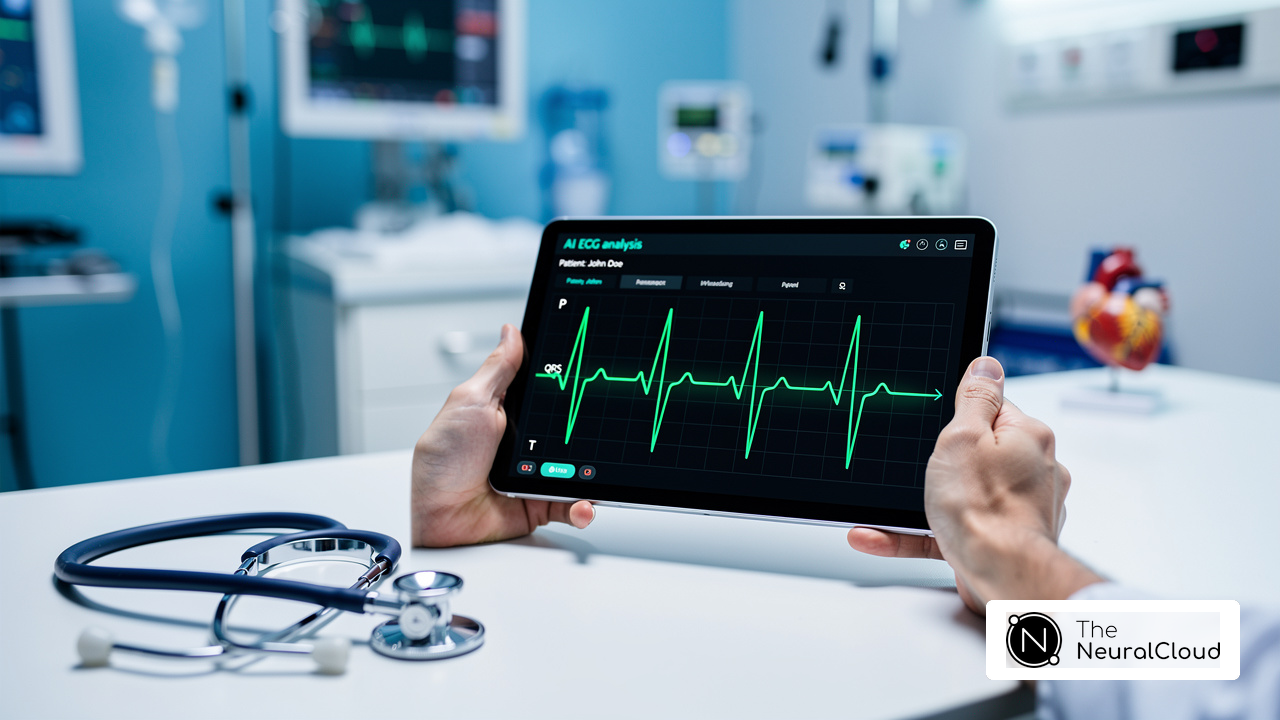
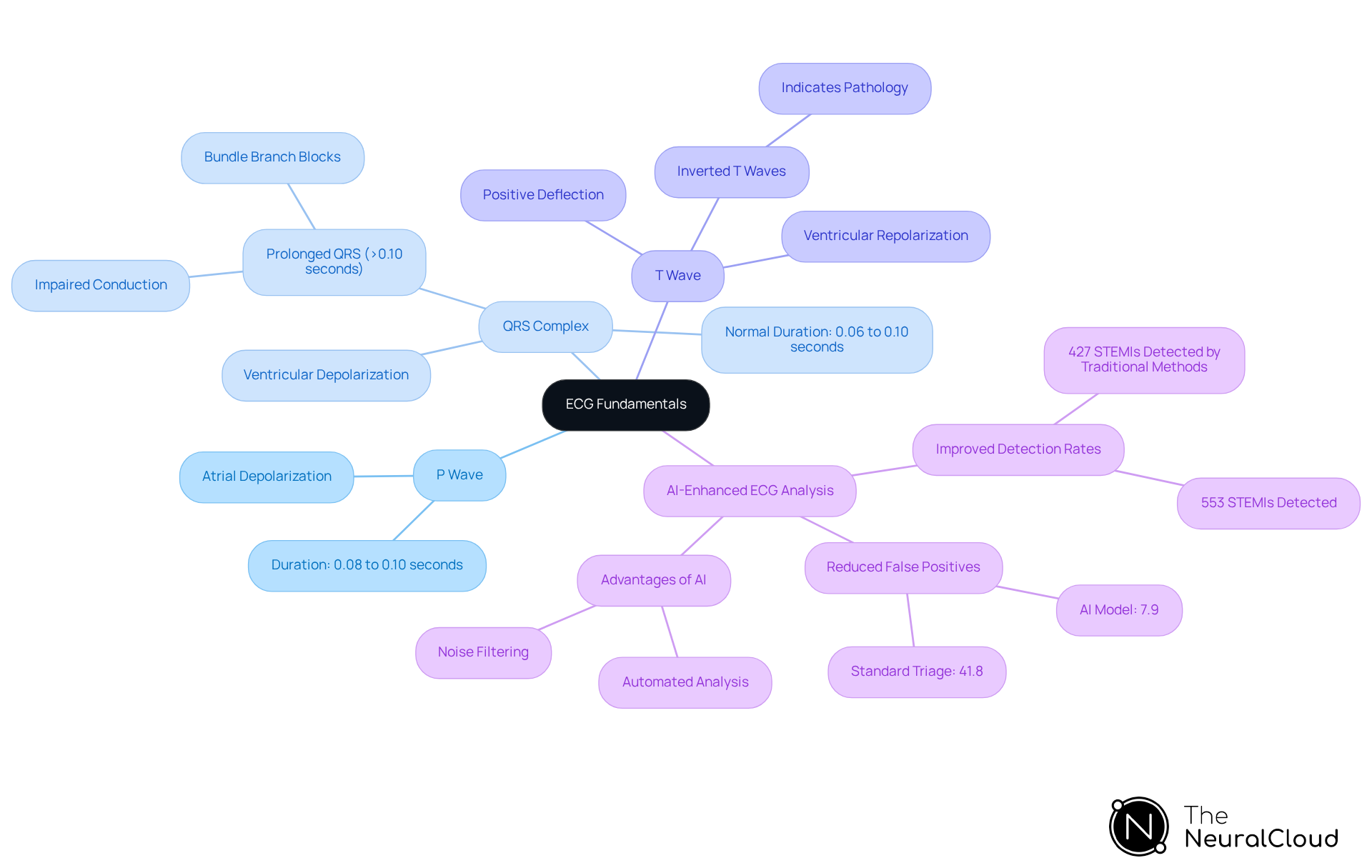
Electrocardiograms (ECGs) serve as vital diagnostic tools, such as the heart monitor, that capture the heart's electrical activity and offer critical insights. Understanding the components - the P wave, QRS complex, and T wave - is fundamental for accurate analysis. The P wave signifies atrial depolarization, the QRS complex indicates ventricular depolarization, and the T wave represents ventricular repolarization. Recognizing normal patterns is crucial for spotting abnormalities; for instance, a prolonged QT interval can increase the risk of arrhythmias, while changes in the ST segment may suggest ischemia or myocardial infarction, as indicated by a significant elevation.
Recent studies highlight the importance of these elements, demonstrating that advanced technologies, such as that provided by Neural Cloud Solutions' technology, significantly improves the detection of severe heart attacks. This advanced system identified 553 confirmed STEMIs compared to 427 through traditional methods. Its strengths lie in enhanced accuracy and efficiency, addressing challenges like physiological variability and signal artifacts commonly encountered in standard ECG assessments.
This knowledge empowers healthcare professionals to make informed decisions based on ECG data, ultimately improving patient outcomes. As Timothy D. Henry, MD, notes, advanced ECG interpretation can potentially reduce treatment time and minimize false activations. By leveraging these advancements, healthcare providers can enhance their diagnostic capabilities and deliver better care.
Identify Key ECG Indicators of Heart Attacks vs. Normal Readings
Key indicators of a heart attack ECG reading include:
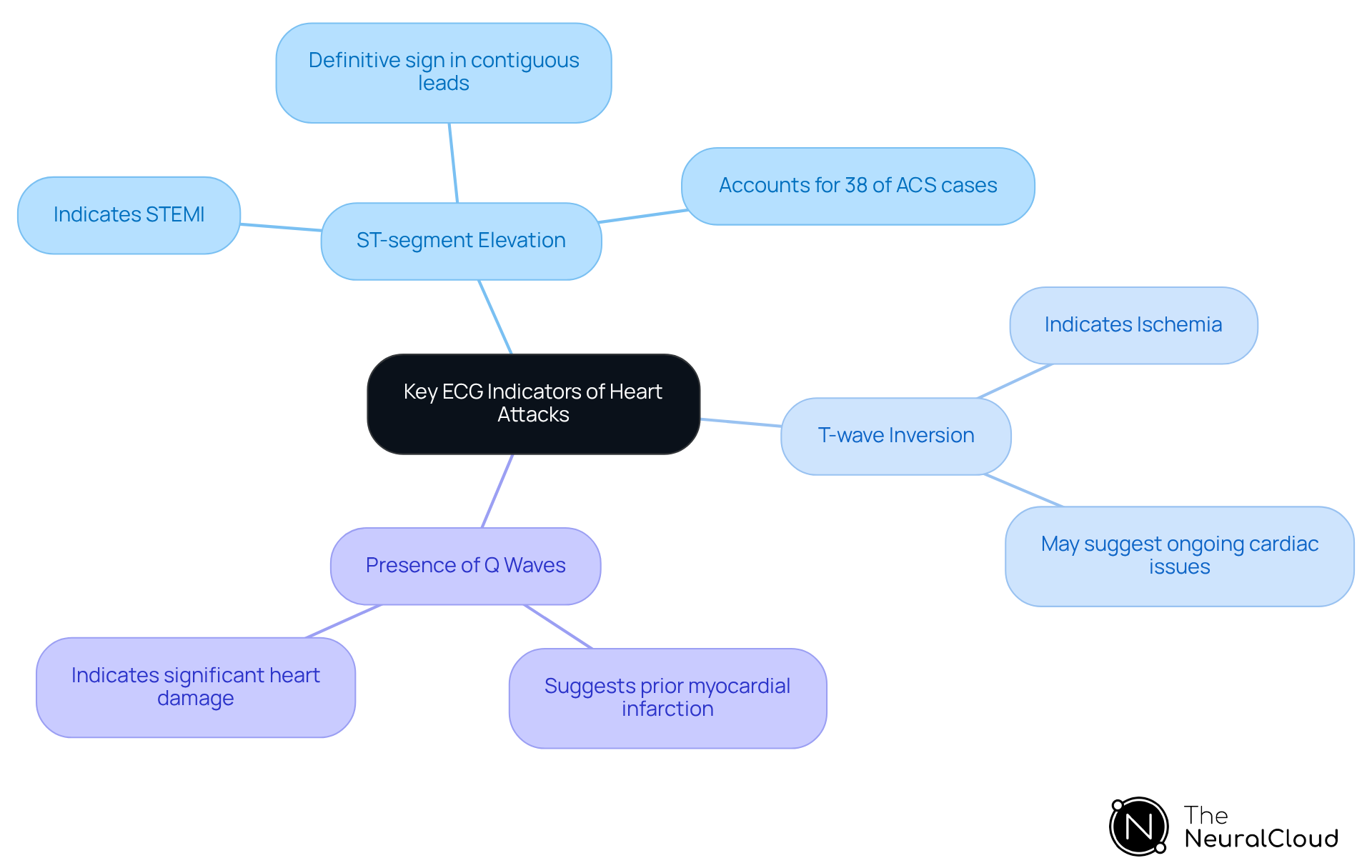
- ST-segment elevation
- The presence of elevated troponin levels is a definitive sign of STEMI, which accounts for approximately 38% of acute coronary syndrome cases. In contrast, ST-segment depression may indicate ischemia, while significant Q waves often suggest a prior myocardial infarction. Understanding these indicators, including T-wave inversions, is crucial for clinicians to distinguish between normal and pathological readings, enabling timely interventions that can significantly improve patient outcomes.
Recent guidelines from the American Heart Association emphasize the importance of early recognition, particularly in emergency settings where every minute counts. For instance, timely treatment can reduce mortality rates from STEMI by nearly 30%. However, the analysis of ECGs can be challenging due to varying patient presentations, which can lead to misinterpretation.
This is where the MaxYield™ technology comes into play. MaxYield™ automates the labeling of critical ECG features, even in noisy recordings, allowing for rapid analysis of 200,000 heartbeats in under five minutes. This feature enhances detection accuracy and reduces false positives, providing healthcare professionals with reliable data for decision-making.
The advantages of using MaxYield™ are significant. By leveraging AI technology, such as Neural Cloud Solutions' innovative offerings, healthcare professionals can enhance their diagnostic capabilities. This not only improves the overall management of heart attack patients but also streamlines the workflow in emergency departments, ultimately leading to better patient outcomes.
Implement Best Practices for Accurate ECG Interpretation in Clinical Environments
Clinicians face several challenges in achieving precise analysis of ECGs. These include verifying patient information, ensuring proper electrode placement, and adhering to protocols. Distractions during interpretation can also hinder accuracy, making it essential to consider the context of each patient. Regular training and workshops are vital for enhancing skills and boosting confidence in ECG interpretation.
The MaxYield™ system offers advanced solutions to streamline the ECG analysis process. Its features include:
- Waveform detection: This technology quickly detects P, QRS, and T wave onsets and offsets.
- Noise reduction: The system lessens the impact of noise and artifacts on readings, improving accuracy.
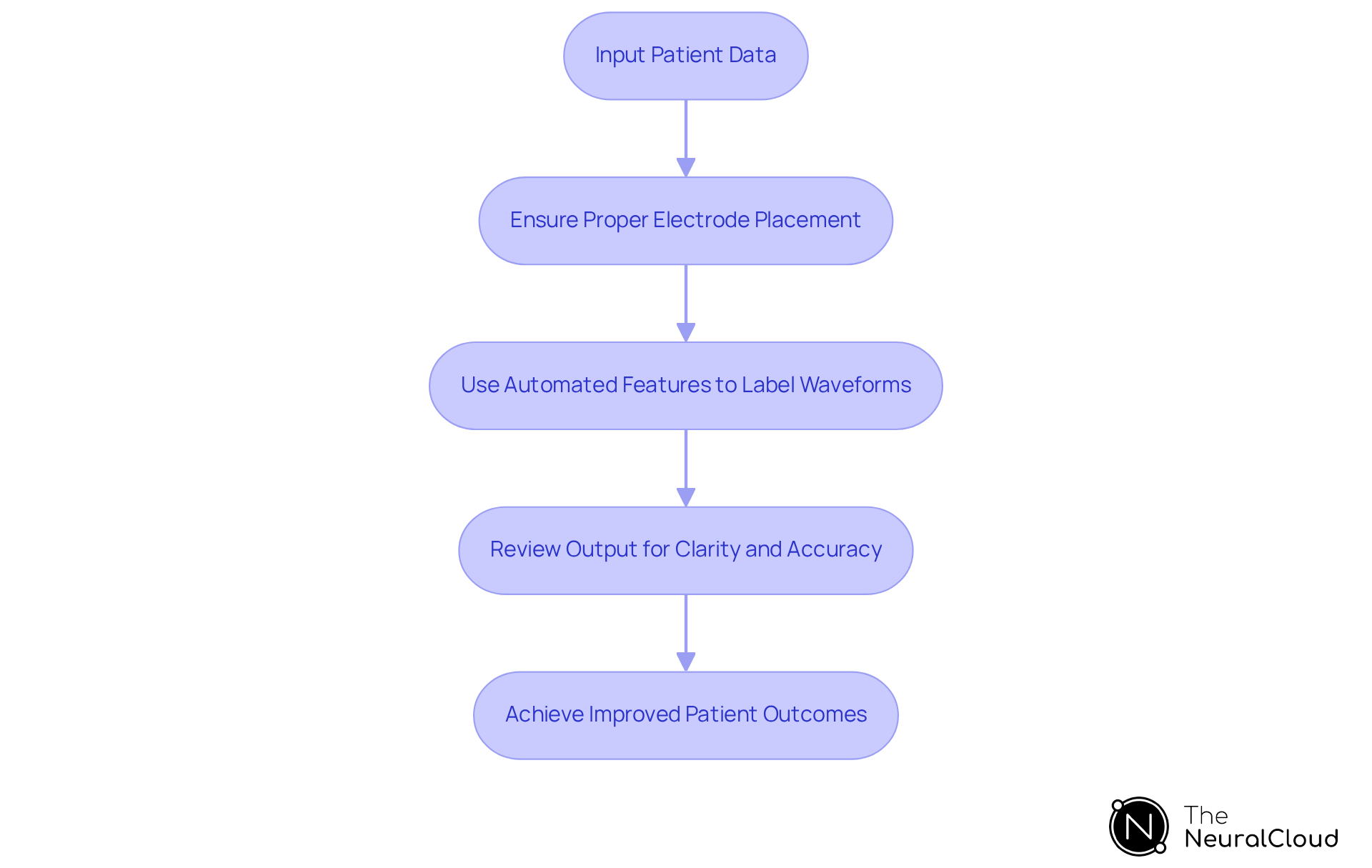
By utilizing the MaxYield™ system, clinicians can follow these straightforward steps:
- Input patient data into the system.
- Ensure proper calibration as directed by the system.
- Use the automated features to label waveforms.
- Review the output for clarity and accuracy.
The benefits of the MaxYield™ system are significant. Not only does it enhance efficiency, but it also supports the discovery of new digital biomarkers. This makes it an invaluable tool, ultimately leading to improved patient outcomes.
Leverage Advanced Technologies for Enhanced ECG Analysis and Workflow Efficiency
The interpretation of electrocardiograms (ECGs) presents several challenges, particularly in terms of accuracy and efficiency. Advanced technologies, especially artificial intelligence, are set to transform this landscape. One notable example is the MaxYield™ system from Neural Cloud Solutions, which employs sophisticated algorithms to analyze and automate the labeling of key ECG features, such as P-wave, QRS complex, and T-wave onsets.
Features of MaxYield™:
- Device-Agnostic: The system can analyze ECG data from various devices.
- Rapid Processing: It processes up to 200,000 heartbeats in under five minutes.
- Pattern Recognition: Identifies patterns indicative of a heart attack.
- Real-Time Feedback: Provides alerts for abnormal rhythms to clinicians.
These features significantly improve the accuracy of ECG readings. By quickly analyzing large volumes of data, the system enables healthcare providers to enhance patient care and reduce interpretation times. This efficiency ultimately leads to better patient outcomes, as clinicians can respond more swiftly to critical situations.
Advantages for Healthcare Professionals:
- Clarity: Enhanced clarity and reduce the risk of human error.
- Time Efficiency: Faster analysis means clinicians can focus on patient care rather than data interpretation.
- Continuous Learning: The platform's advanced noise filtering capabilities manage physiological variability and signal artifacts effectively, while continuous learning models enable the algorithms to evolve, increasing their effectiveness over time.
Integrating such technologies into clinical workflows not only streamlines the analysis process but also empowers healthcare professionals to deliver better care.

Conclusion
Understanding the complexities of electrocardiograms (ECGs) is crucial for accurate heart attack diagnosis and effective patient care. This article highlights the importance of mastering ECG fundamentals, identifying key indicators of heart attacks, and implementing best practices in clinical environments. By utilizing advanced technologies like the MaxYield™ platform, healthcare professionals can improve their diagnostic capabilities and streamline the ECG analysis process, ultimately leading to better patient outcomes.
Key insights include recognizing specific ECG indicators such as:
- ST-segment elevation
- T-wave inversion
- Q waves
These indicators are vital for distinguishing between normal and pathological readings. The integration of AI-driven analysis tools enhances diagnostic accuracy and reduces the risk of human error, enabling clinicians to respond more swiftly in critical situations. Additionally, adhering to standardized protocols and continuous training is essential for ensuring precision in ECG interpretation.
In a context where timely and accurate diagnosis can save lives, adopting advanced technologies in ECG analysis is not just beneficial but essential. By embracing best practices and utilizing innovative platforms like MaxYield™, healthcare professionals can significantly enhance their ability to detect heart attacks quickly and accurately. This proactive approach not only improves individual patient outcomes but also contributes to the overall efficiency and effectiveness of cardiac care in clinical settings.
Frequently Asked Questions
What is the purpose of an electrocardiogram (ECG)?
An electrocardiogram (ECG) captures the heart's electrical activity and provides essential insights into cardiac health, serving as a vital diagnostic tool.
What are the key components of an ECG and their significance?
The key components of an ECG are the P wave, QRS complex, and T wave. The P wave signifies atrial depolarization, the QRS complex indicates ventricular depolarization, and the T wave represents ventricular repolarization.
Why is recognizing normal ECG patterns important?
Recognizing normal patterns is crucial for spotting abnormalities. For example, a prolonged QT interval exceeding 0.40 seconds can increase the risk of arrhythmias, while changes in the ST segment may suggest ischemia or myocardial infarction.
How does AI enhance ECG analysis?
AI-enhanced ECG analysis improves the detection of severe heart attacks by effectively filtering noise and automating analysis, addressing challenges like physiological variability and signal artifacts that are common in standard ECG assessments.
What were the findings of recent studies on AI-enhanced ECG analysis?
Recent studies found that AI-enhanced ECG analysis, such as that provided by Neural Cloud Solutions, identified 553 confirmed STEMIs compared to 427 through traditional methods, demonstrating its effectiveness in diagnosing severe heart attacks.
How does improved ECG analysis impact patient care?
Improved ECG analysis empowers healthcare professionals to make informed decisions based on ECG data, ultimately enhancing patient outcomes in cardiac care and potentially reducing treatment time and false activations.
List of Sources
- Understand ECG Fundamentals and Their Importance in Cardiac Assessment
- CV Physiology | Electrocardiogram (EKG, ECG) (https://cvphysiology.com/arrhythmias/a009)
- Conditions (https://myhealth.alberta.ca/Health/pages/conditions.aspx?hwid=zm2308)
- AI-driven ECG improves detection of severe heart attacks (https://news-medical.net/news/20251029/AI-driven-ECG-improves-detection-of-severe-heart-attacks.aspx)
- cpduk.co.uk (https://cpduk.co.uk/news/the-significance-of-ecg-in-healthcare-screening)
- tricog.com (https://tricog.com/common-ecg-patterns?srsltid=AfmBOop3-LUo410SjcnDqeh_6Yx8Lhec-DguE_CO3H-EXxmGVLd31OGn)
- Identify Key ECG Indicators of Heart Attacks vs. Normal Readings
- AI-driven ECG improves detection of severe heart attacks (https://news-medical.net/news/20251029/AI-driven-ECG-improves-detection-of-severe-heart-attacks.aspx)
- Acute Myocardial Infarction - StatPearls - NCBI Bookshelf (https://ncbi.nlm.nih.gov/books/NBK459269)
- Acute ST-Segment Elevation Myocardial Infarction (STEMI) - StatPearls - NCBI Bookshelf (https://ncbi.nlm.nih.gov/books/NBK532281)
- New study finds AI model improves heart attack detection (https://health.ucdavis.edu/news/headlines/new-study-finds-ai-model-improves-heart-attack-detection/2025/11)
- Trends and Outcomes of ST‐Segment–Elevation Myocardial Infarction Among Young Women in the United States | Journal of the American Heart Association (https://ahajournals.org/doi/10.1161/JAHA.122.026811)
- Implement Best Practices for Accurate ECG Interpretation in Clinical Environments
- My top 10 tips for ECG interpretation - The British Journal of Cardiology (https://bjcardio.co.uk/2014/03/my-top-10-tips-for-ecg-interpretation)
- Assessing the Accuracy of ECG Chest Electrode Placement by EMS and Clinical Personnel Using Two Evaluation Methods | International Journal of Paramedicine (https://internationaljournalofparamedicine.com/index.php/ijop/article/view/2897)
- Leverage Advanced Technologies for Enhanced ECG Analysis and Workflow Efficiency
- New AI approach set to revolutionize ECG data interpretation in heart disease diagnosis (https://news-medical.net/news/20250219/New-AI-approach-set-to-revolutionize-ECG-data-interpretation-in-heart-disease-diagnosis.aspx)
- AI-Based ECG Analysis Significantly Improves STEMI Detection, Reduces False Activations - American College of Cardiology (https://acc.org/latest-in-cardiology/articles/2025/10/24/16/56/tues-554pm-ai-tct-2025)
- Philips Launches ECG AI Marketplace to Enhance Early Cardiac Diagnosis (https://usa.philips.com/a-w/about/news/archive/standard/news/press/2025/philips-launches-ecg-ai-marketplace-to-enhance-early-cardiac-diagnosis.html)
- AI-driven ECG improves detection of severe heart attacks (https://news-medical.net/news/20251029/AI-driven-ECG-improves-detection-of-severe-heart-attacks.aspx)
- New study finds AI model improves heart attack detection (https://health.ucdavis.edu/news/headlines/new-study-finds-ai-model-improves-heart-attack-detection/2025/11)