Introduction
Managing ST-segment elevation myocardial infarction (STEMI) is a critical concern in healthcare, where timely intervention can significantly impact patient outcomes. Advanced ECG technologies, such as Neural Cloud Solutions' MaxYield™, offer innovative tools that enhance diagnostic accuracy and streamline treatment processes. However, despite these advancements, challenges persist in achieving rapid response times and ensuring adherence to standardized protocols.
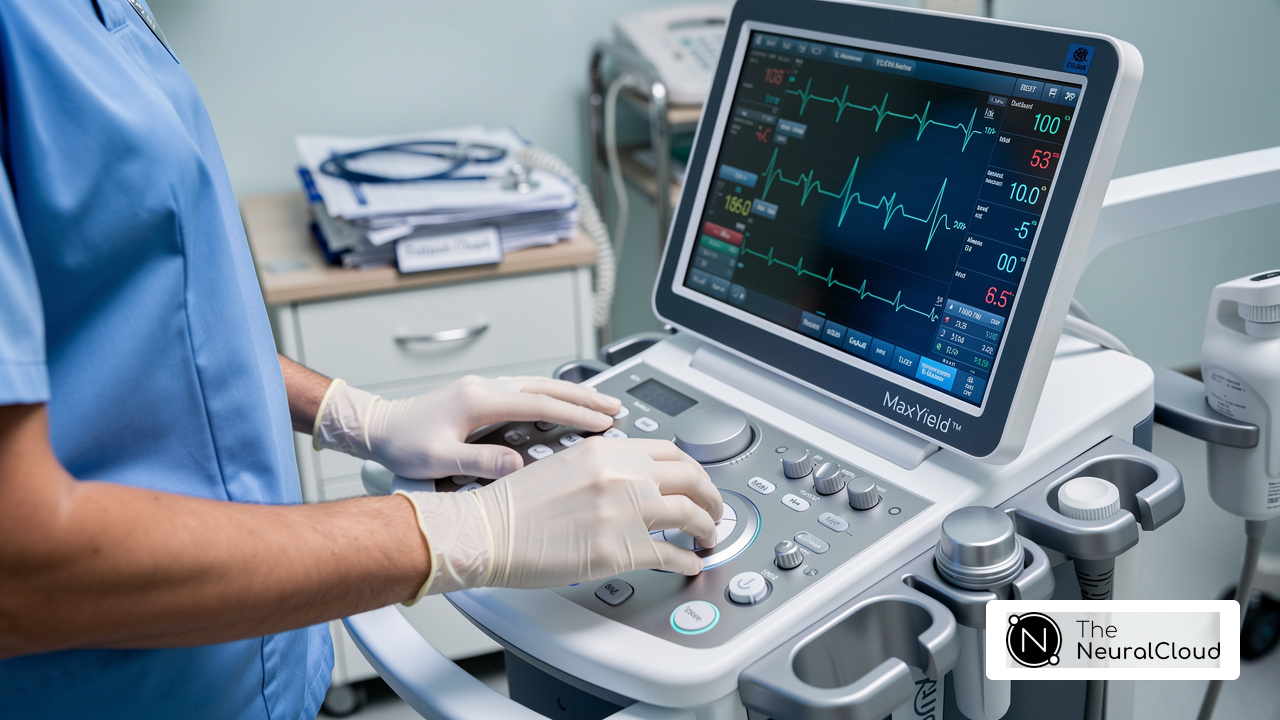
MaxYield™ addresses these challenges by providing features that improve ECG analysis. Its advanced algorithms enhance the detection of ST-segment changes, allowing healthcare providers to make quicker, more informed decisions. This capability not only improves diagnostic accuracy but also supports healthcare professionals in delivering timely interventions.
The advantages of utilizing MaxYield™ are clear. By leveraging this platform, healthcare professionals can optimize STEMI management, ultimately leading to better patient outcomes. The integration of such technology into clinical practice represents a significant step forward in the fight against myocardial infarction, ensuring that patients receive the care they need when they need it most.
Understand the Urgency of STEMI Management
ST-segment elevation myocardial infarction is a life-threatening condition that requires urgent intervention. The American College of Cardiology (ACC) emphasizes that timely reperfusion therapy is critical, with guidelines suggesting a door-to-balloon time of 90 minutes or less. Delays in treatment can lead to increased mortality, with studies indicating that each minute of delay can result in a higher risk of adverse outcomes. Understanding the urgency equips healthcare providers to act quickly and highlights the significance of rapid response.
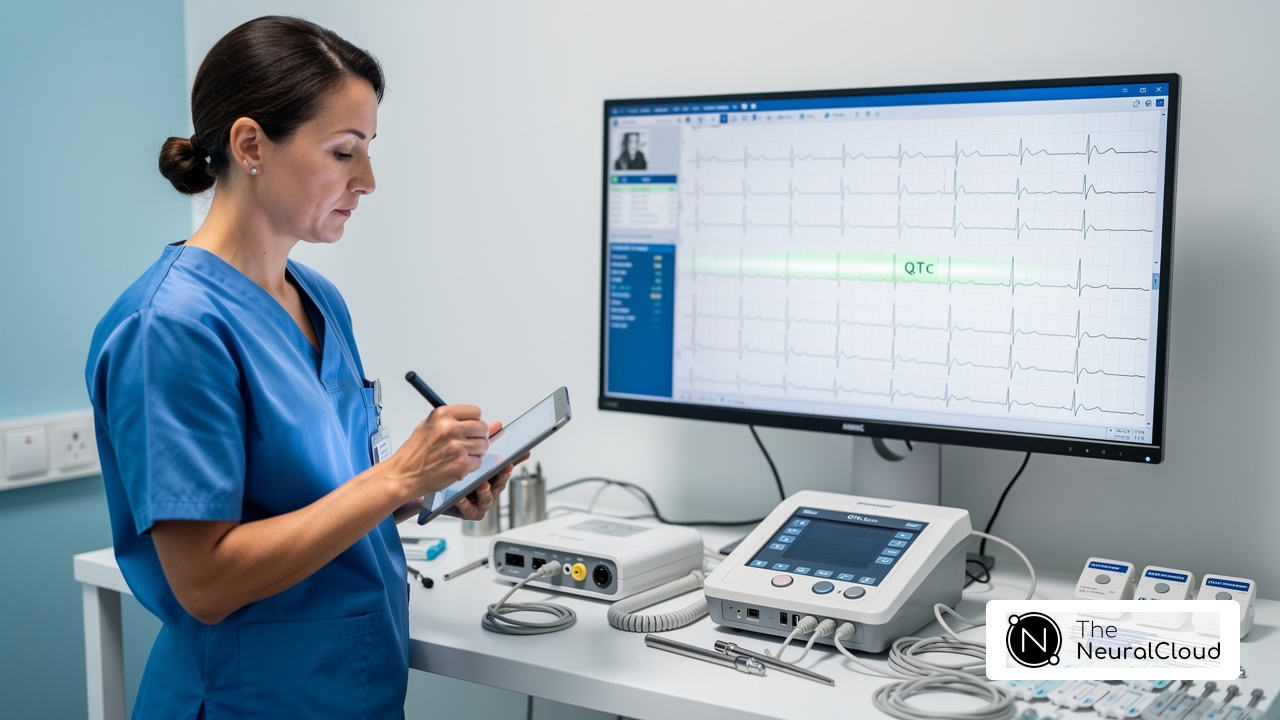
One such technology is Neural Cloud Solutions' ECG analysis tool. This innovative tool swiftly labels P, QRS, and T Wave onsets and offsets, allowing for a more efficient analysis of ECG data. The benefits include:
- Rapid labeling of ECG waveforms
- Clear data sets and clean signals in CSV format
These features translate into significant advantages for healthcare professionals. By enabling users to analyze more data in less time, the tool facilitates improved decision-making. Additionally, the neural network models developed by Neural Cloud can extract key features from signals, supporting the discovery of new digital biomarkers that enhance patient care. This not only improves the accuracy of diagnoses but also contributes to better patient outcomes.

Leverage Advanced Technology for ECG Analysis
Advanced ECG technology, particularly like Neural Cloud Solutions' platform, has transformed the detection and management of STEMI. Traditional methods often struggle with sensitivity, but recent studies show that technology can achieve improvements in identifying STEMI cases. For instance, the Queen of Hearts AI model successfully detected 92% of true heart attacks on the first ECG, while standard triage methods only identified 71%. This heightened sensitivity is vital, considering that someone in the US suffers from a life-threatening cardiac condition every 40 seconds.
The technology effectively maps through noise, isolating and labeling key features in each heartbeat. It provides a detailed analysis of P-wave, QRS complex, and T-wave onsets and offsets, facilitating accurate diagnosis. This capability enables immediate triage and intervention, allowing healthcare providers to concentrate on patient care rather than the labor-intensive task of manual data interpretation. By automating the detection of abnormalities, the technology enhances diagnostic accuracy and streamlines clinical workflows, leading to more efficient resource use and improved patient outcomes. For example, individuals in AI-assisted groups received treatment up to five hours faster, highlighting the potential of these technologies to enhance emergency cardiovascular care.
The DIFOCCULT-3 clinical trial, which enrolled 6,000 patients, further confirmed the effectiveness of AI in clinical settings. It demonstrated a significant reduction in false positives, dropping from 42% to just 8%. As Timothy D. Henry, MD, FACC, noted, "These results suggest that AI-enhanced heart attack diagnosis at the first medical contact has the potential to shorten time to treatment and reduce false activations." This underscores the importance of integrating advanced technologies like AI into clinical practice to improve outcomes, ultimately benefiting both healthcare professionals and patients.
Implement Standardized Protocols and Training
To improve patient outcomes, medical organizations must adopt protocols that outline the steps for swift identification and treatment. These protocols should include standardized procedures, individual triage, and timely interventions.
Challenges in Implementation
Protocols can be complex, often leading to confusion. This is where the standardized approach comes into play.
Features of MaxYield™
Utilizing the advanced technology, medical professionals benefit from automated, scalable, and AI-driven solutions that improve efficiency. Key features include:
- Error Reduction: Reduces human error and speeds up the analysis process.
- Scalability: Adapts to various healthcare settings, ensuring consistent performance.
- AI-Driven Insights: Provides precise data to support clinical decisions in critical situations.
Advantages for Healthcare Professionals
By implementing these features, healthcare professionals can ensure precision and flexibility in their responses. Regular training sessions are vital to ensure that all staff members are well-versed in these protocols and can implement them proficiently. For instance, simulation-based training has proven effective in preparing emergency responders and hospital staff, enabling them to practice real-life scenarios and improve response times.
By fostering a culture of compliance with established protocols, medical facilities can significantly enhance patient care, ultimately resulting in improved outcomes for individuals.

Ensure Continuous Monitoring and Data Analysis
Continuous monitoring of individuals experiencing STEMI presents significant challenges in ensuring timely intervention. Advanced telemetry systems and protocols address these challenges by providing real-time data. This empowers healthcare providers to respond swiftly to any signs of deterioration. These devices facilitate continuous heart function monitoring, capturing critical health metrics over extended periods without disrupting individuals' daily routines.
Integrating analytics into these monitoring systems further enhances the ability to identify trends and patterns that may signal potential complications. For example, alerts can notify clinicians of important changes in heart rate or rhythm, enabling timely interventions that can greatly improve outcomes. Neural Cloud Solutions leverages cutting-edge AI technology through its platform, evolving with each use to maximize diagnostic yield and improve accuracy while automating tasks to reduce workload over time.
By prioritizing continuous monitoring and utilizing data analytics alongside Neural Cloud Solutions' innovative algorithms, healthcare teams can significantly enhance their response capabilities. This ultimately leads to improved patient outcomes, ensuring that individuals receive the timely attention they need.
Conclusion
Managing ST-segment elevation myocardial infarction (STEMI) presents significant challenges in healthcare, highlighting the urgent need for swift and effective intervention. Advanced ECG technology, particularly Neural Cloud Solutions' MaxYield™, plays a crucial role in addressing these challenges. By integrating standardized protocols with cutting-edge technology, healthcare providers can enhance diagnostic accuracy and expedite treatment, ultimately improving patient outcomes.
The MaxYield™ platform offers several key features that revolutionize ECG analysis. It provides rapid labeling of ECG signals, automated interpretation, and continuous monitoring capabilities. These features streamline workflows for healthcare professionals, significantly reducing the time to treatment. Clinical trials have demonstrated the effectiveness of these technologies, showing their potential to lower false alarms and improve sensitivity in identifying STEMI cases.
As the field of STEMI management continues to evolve, the integration of advanced ECG technology and ongoing training becomes essential. Embracing innovations like MaxYield™ not only enhances patient care but also cultivates a culture of excellence within healthcare teams. The benefits are clear: by prioritizing the adoption of these advanced solutions, healthcare providers can ensure that every patient receives timely and effective care, ultimately saving lives and improving health outcomes.
Frequently Asked Questions
What is STEMI and why is its management urgent?
ST-segment elevation myocardial infarction (STEMI) is a life-threatening condition that requires urgent management due to the critical need for timely reperfusion therapy. Delays in treatment can significantly increase mortality rates.
What is the recommended door-to-balloon time for STEMI treatment?
The American College of Cardiology (ACC) recommends a door-to-balloon time of 90 minutes or less for STEMI treatment to minimize adverse outcomes.
How does delay in STEMI treatment affect patient outcomes?
Each minute of delay in STEMI treatment can lead to a higher risk of adverse outcomes, highlighting the importance of timely intervention.
What technology is mentioned as beneficial for STEMI management?
Neural Cloud Solutions' MaxYield™ is mentioned as an innovative ECG signal analysis tool that aids in the efficient analysis of ECG data for STEMI management.
What are the key features of MaxYield™?
Key features of MaxYield™ include rapid labeling of ECG waveforms, enhanced data analysis capabilities, and the ability to produce clear data sets and clean signals in CSV format.
How does MaxYield™ improve the work of healthcare professionals?
MaxYield™ allows healthcare professionals to analyze more data in less time, facilitating rapid diagnosis and treatment, which ultimately improves patient outcomes.
What additional benefits does the neural network model provide in STEMI management?
The neural network models developed by Neural Cloud can extract key features from ECG signals, supporting the discovery of new digital biomarkers that enhance patient care and improve diagnostic accuracy.
List of Sources
- Understand the Urgency of STEMI Management
- healthcare-bulletin.co.uk (https://healthcare-bulletin.co.uk/article/a-prospective-study-of-door-to-balloon-time-in-stemi-patients-presenting-to-a-tertiary-emergency-department-in-north-kerala-3765)
- Improving STEMI Management Internationally: Initial Report of the American College of Cardiology-Global Heart Attack Treatment Initiative (https://jacc.org/doi/10.1016/j.jacadv.2024.101438)
- ahajournals.org (https://ahajournals.org/doi/10.1161/CIRCINTERVENTIONS.120.009179)
- researchgate.net (https://researchgate.net/publication/393306268_Impact_of_Door-to-Balloon_Time_on_Outcomes_in_STEMI_Patients_Undergoing_Primary_PCI)
- Leverage Advanced Technology for ECG Analysis
- businesswire.com (https://businesswire.com/news/home/20251028082568/en/AI-Powered-Electrocardiogram-Improves-Heart-Attack-Detection-and-Could-Help-Save-Lives-Faster-Studies-Find)
- AI-Based ECG Analysis Significantly Improves STEMI Detection, Reduces False Activations - American College of Cardiology (https://acc.org/latest-in-cardiology/articles/2025/10/24/16/56/tues-554pm-ai-tct-2025)
- AI dramatically improves the detection of severe heart attacks (https://cardiovascularbusiness.com/topics/artificial-intelligence/ai-dramatically-improves-detection-severe-heart-attacks)
- AI-driven ECG improves detection of severe heart attacks (https://news-medical.net/news/20251029/AI-driven-ECG-improves-detection-of-severe-heart-attacks.aspx)
- Queen of Hearts AI Hits 92% STEMI Accuracy (https://powerfulmedical.com/blog/pmcardio-reports-positive-rct-results-and-late-breaking-clinical-science-for-stemi-detection)
- Implement Standardized Protocols and Training
- Contributing to Advancing STEMI Heart Attack Care | Minneapolis Heart Institute Foundation (https://mplsheart.org/news/contributing-advancing-stemi-heart-attack-care)
- pmc.ncbi.nlm.nih.gov (https://pmc.ncbi.nlm.nih.gov/articles/PMC10828835)
- Improving STEMI Management Internationally: Initial Report of the American College of Cardiology-Global Heart Attack Treatment Initiative (https://jacc.org/doi/10.1016/j.jacadv.2024.101438)
- researchgate.net (https://researchgate.net/publication/389787134_Continuous_quality_improvement_for_prehospital_STEMI_improved_triage_rates_and_achievement_of_gold_standard_90-min_EMS-to-balloon_time)
- Ensure Continuous Monitoring and Data Analysis
- irhythmtech.com (https://irhythmtech.com/us/en/who-we-are/news-events)
- Good news and bad news for RPM in 2026 (https://healthcareitnews.com/news/good-news-and-bad-news-rpm-2026)
- The Future of Cardiac Safety: How Wearable ECGs Enhance Patient Monitoring in Drug Trials | Applied Clinical Trials Online (https://appliedclinicaltrialsonline.com/view/future-cardiac-safety-wearable-ecg-enhance-patient-monitoring)
- Evaluation of a Clinical Decision Support Tool to Guide Adoption of the American Heart Association Telemetry Monitoring Practice Standards | Journal of the American Heart Association (https://ahajournals.org/doi/10.1161/JAHA.123.031523)