Introduction
Understanding the nuances of anterior infarction is crucial for healthcare professionals, as it poses a significant challenge in cardiac care. This condition, identifiable by specific ECG changes, necessitates critical interventions that can dramatically influence patient outcomes.
What are the key ECG features that signal anterior infarction?
How can accurate interpretation guide effective treatment strategies?
Addressing these questions not only enhances diagnostic skills but also emphasizes the importance of timely and informed clinical decisions in managing heart health.
Define Anterior Infarction and Its ECG Significance
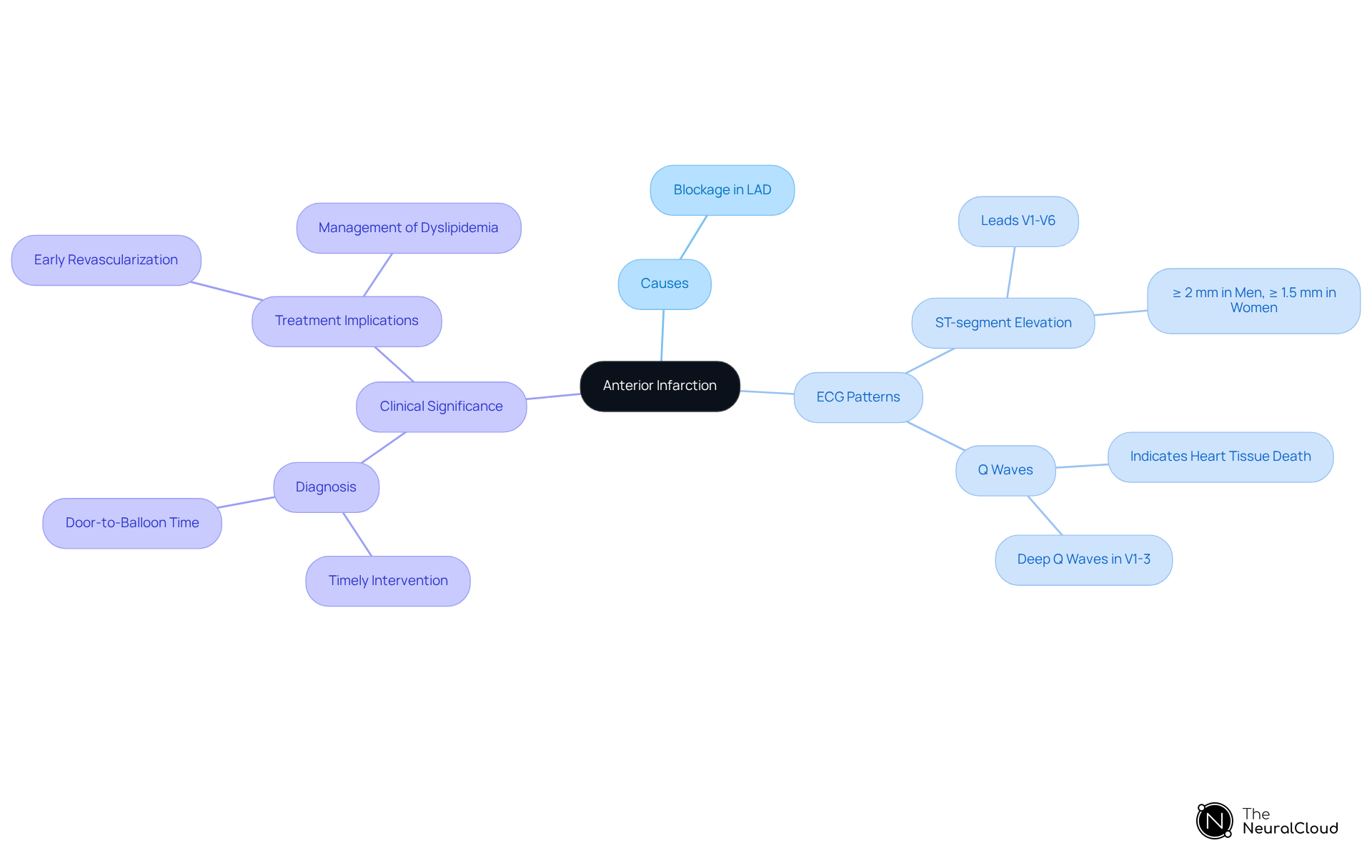
Damage or death of heart muscle tissue in the front wall of the left ventricle typically results from a blockage in the left descending artery (LAD). This condition is significant in cardiology, especially regarding diagnosis, as it presents distinct patterns identifiable through specific changes in the ECG waveform.
Clinicians must recognize these patterns to accurately diagnose anterior infarction, as patient outcomes depend on timely intervention. The alterations in the ECG associated with anterior infarction often exhibit in the precordial channels (V1-V6) and may also show ST-segment elevation, indicating heart tissue death.
Understanding these patterns enables healthcare professionals to make informed decisions regarding treatment and management.
Identify Key ECG Features of Anterior Infarction
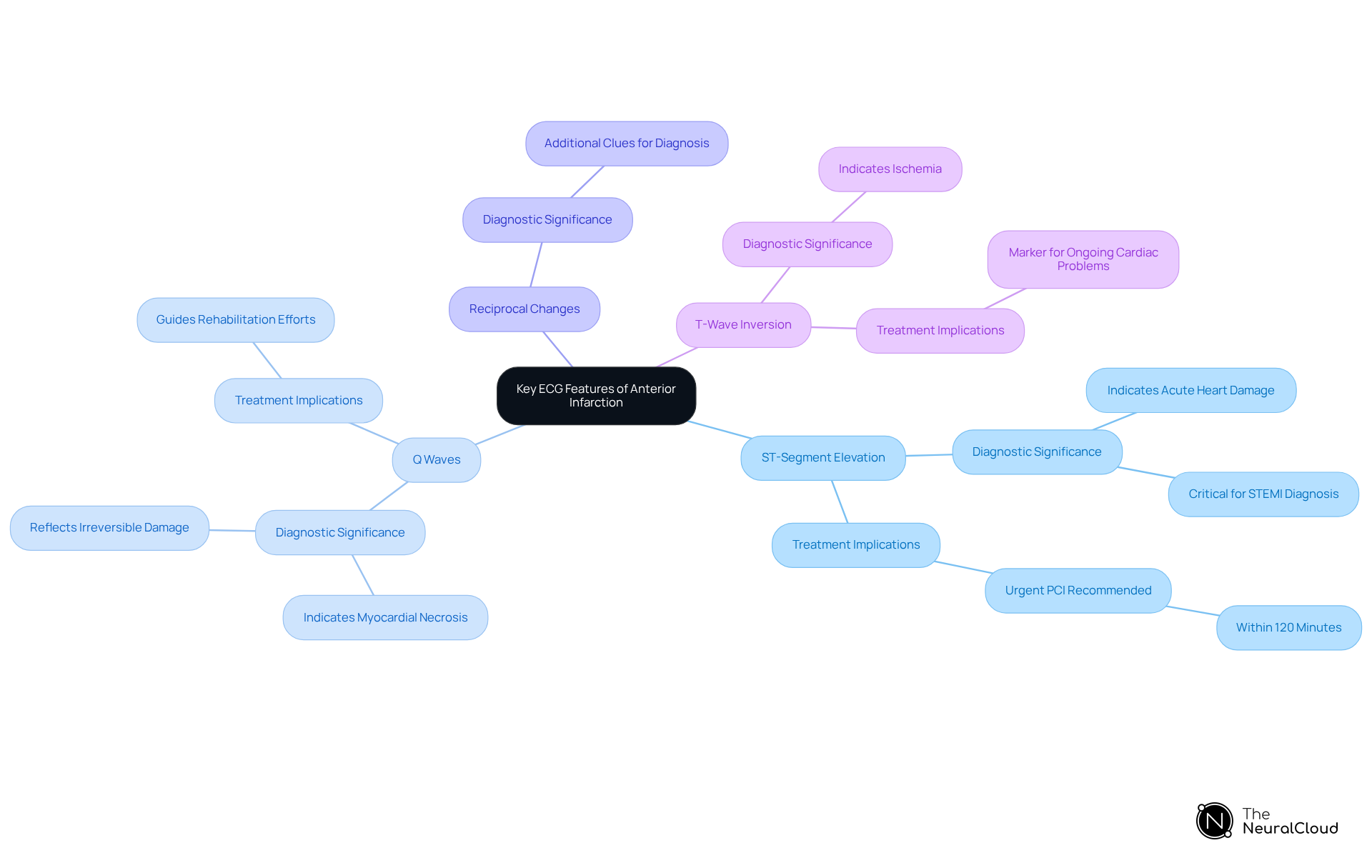
Key ECG features of anterior infarction include:
- ST Segment Elevation: This is the most critical indicator, typically observed in leads V1 to V6. An increase of at least 1 mm in two adjacent recordings indicates myocardial injury, which is crucial for diagnosing ST-Elevation Heart Attack (STEMI). Approximately 33% of heart attacks are categorized as front STEMI, which underscores the significance of identifying myocardial injury.
- Q Waves: The appearance of Q waves in the front leads (V1-V3) indicates necrosis and signifies a completed heart attack. This finding is crucial as it reflects irreversible damage to the heart muscle.
- T Wave Inversions: These alterations may be observed in lower electrodes (II, III, aVF) and can provide additional diagnostic clues, assisting in confirming the presence of ischemia.
- Pathological Q Waves: After the acute phase, pathological Q waves may appear in the impacted areas, indicating ischemia and acting as a marker for ongoing cardiac problems.
Recognizing these features is vital for healthcare professionals, as they guide and influence treatment strategies. For instance, early recognition can lead to urgent interventions such as percutaneous coronary intervention (PCI), which is recommended within the first 120 minutes following ischemic insult. Furthermore, understanding the significance of Q waves can assist in evaluating the degree of heart tissue damage and customizing rehabilitation efforts after an infarction. Additionally, the function of troponin as a key biomarker for diagnosing heart attack should not be overlooked, as it enhances the ECG results in assessing cardiac health.
Discuss Clinical Management and Implications of Anterior Infarction
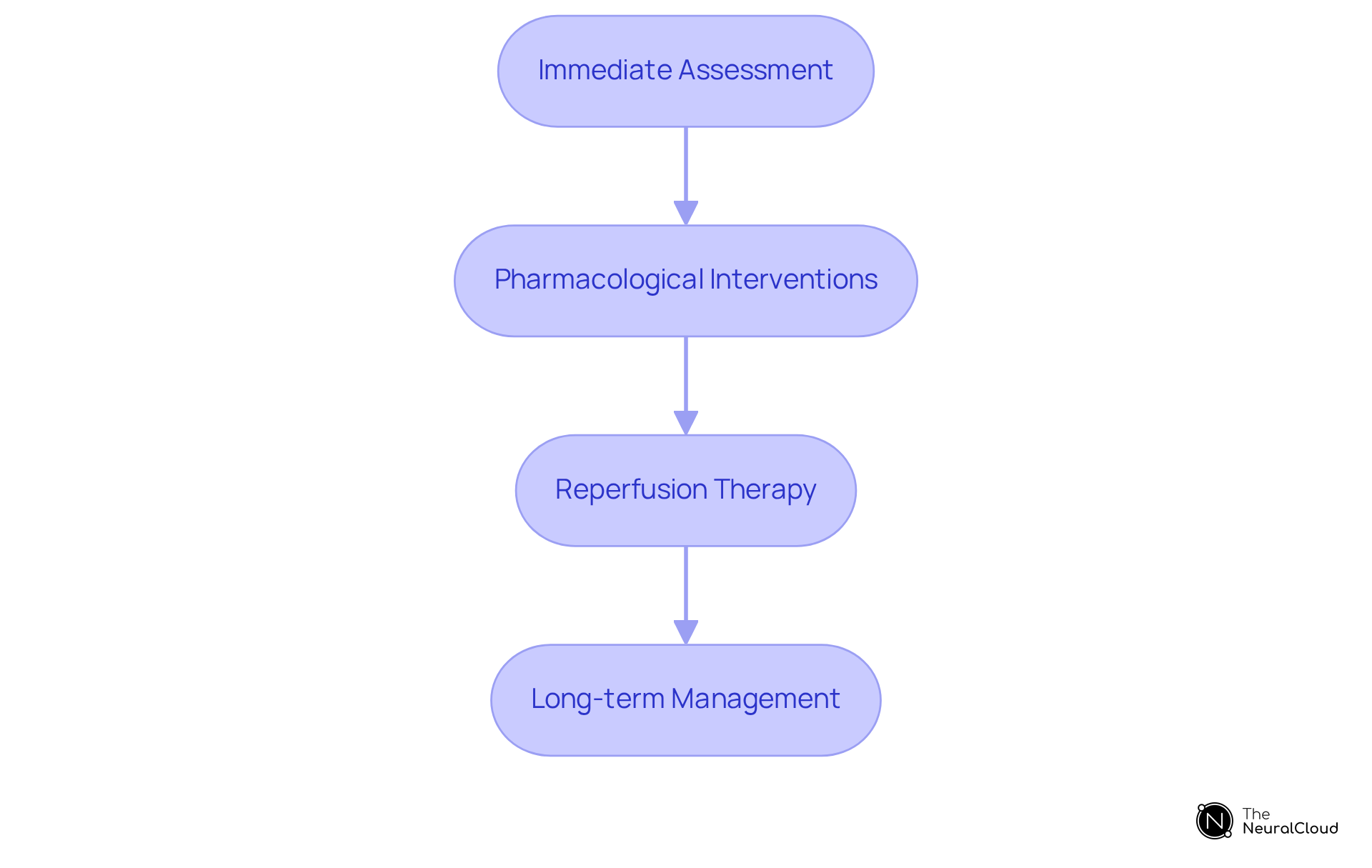
Clinical management of anterior infarction typically involves a multi-faceted approach:
- Immediate Assessment: Upon identifying ECG changes indicative of anterior infarction, immediate assessment and monitoring are essential. This includes obtaining a detailed patient history and performing a physical examination.
- Medications: Medications such as antiplatelet agents, thrombolytics, and anticoagulants are often administered to restore blood flow and reduce heart tissue damage.
- Intervention: Percutaneous coronary intervention (PCI) is the preferred method for restoring blood flow in patients with ST-segment elevation myocardial infarction (STEMI).
- Long-term Management: Post-infarction care includes lifestyle modifications, cardiac rehabilitation, and ongoing monitoring for potential complications.
The implications of anterior infarction cannot be overstated, as they directly impact patient outcomes and the effectiveness of treatment strategies. By leveraging technologies like Neural Cloud Solutions' platform, healthcare professionals can improve diagnostic accuracy and patient care.
Challenges in management present various challenges, including the need for rapid interpretation and the potential for misdiagnosis. These challenges can hinder effective patient management and outcomes.
Features: The platform offers advanced algorithms that streamline ECG interpretation, reducing analysis time and improving accuracy. It provides real-time feedback and integrates seamlessly with existing clinical workflows.
Advantages for Healthcare Professionals: By utilizing this platform, healthcare professionals can enhance their diagnostic confidence, leading to timely interventions and improved patient outcomes. The platform supports better decision-making, ultimately benefiting both practitioners and patients alike.
Conclusion
Recognizing the significance of anterior infarction in ECG analysis is crucial for healthcare professionals. This condition, characterized by damage to the heart's front wall due to arterial blockage, demands a keen understanding of its distinctive ECG patterns. Accurate interpretation of these patterns can lead to timely and effective interventions, ultimately improving patient outcomes.
The article highlights key ECG features associated with anterior infarction, such as ST-segment elevation, Q waves, reciprocal changes, and T-wave inversions. Each of these markers plays a vital role in diagnosing acute heart conditions and guiding clinical decision-making. Furthermore, the discussion on clinical management emphasizes the importance of immediate assessment, pharmacological interventions, and long-term care strategies, all of which are essential for optimizing recovery and preventing further complications.
In conclusion, mastering anterior infarction ECG analysis is not just about understanding the technical aspects; it is about enhancing patient care through informed decision-making and timely interventions. As healthcare professionals continue to embrace advanced diagnostic tools like Neural Cloud Solutions' MaxYield™, the potential for improved accuracy and efficiency in ECG interpretation will significantly benefit patient management.
Key Features of MaxYield™:
- Enhanced ECG pattern recognition for anterior infarction.
- Streamlined interpretation process for quicker decision-making.
- Integration with existing healthcare systems for seamless use.
Advantages for Healthcare Professionals:
- Improved diagnostic accuracy leading to better patient outcomes.
- Increased efficiency in ECG analysis, allowing for more time with patients.
- Comprehensive training resources to ensure proficiency in using the platform.
Prioritizing education and training in ECG analysis is essential to ensure that every patient receives the best possible care in the face of cardiovascular emergencies.
Frequently Asked Questions
What is anterior infarction?
Anterior infarction refers to the damage or death of heart muscle tissue in the front wall of the left ventricle, typically caused by a blockage in the left descending artery (LAD).
Why is anterior infarction significant in ECG analysis?
Anterior infarction is significant in ECG analysis because it presents distinct patterns that can be identified through specific changes in the ECG waveform, which are crucial for accurate diagnosis.
What ECG changes are associated with anterior infarction?
The ECG changes associated with anterior infarction often include ST-segment elevation in the precordial channels (V1-V6) and may also show Q waves in these channels, indicating heart tissue death.
How does recognizing these ECG patterns affect patient outcomes?
Recognizing the ECG patterns associated with anterior infarction allows healthcare professionals to accurately diagnose front heart tissue damage, enabling timely intervention which can greatly influence patient outcomes.
What should healthcare professionals understand about anterior infarction ECG?
Healthcare professionals must understand the features of anterior infarction ECG to make informed decisions regarding treatment and management of patients with this condition.
List of Sources
- Define Anterior Infarction and Its ECG Significance
- What Is a STEMI? (https://my.clevelandclinic.org/health/diseases/22068-stemi-heart-attack)
- healio.com (https://healio.com/cardiology/learn-the-heart/ecg-review/ecg-topic-reviews-and-criteria/anterior-wall-st-elevation-mi-review)
- ncbi.nlm.nih.gov (https://ncbi.nlm.nih.gov/books/NBK562234)
- Anterior Myocardial Infarction (https://litfl.com/anterior-myocardial-infarction-ecg-library)
- Identify Key ECG Features of Anterior Infarction
- mdsearchlight.com (https://mdsearchlight.com/heart-health/anterior-myocardial-infarction-heart-attack)
- STEMI: ST-segment Elevation Myocardial Infarction - The Cardiology Advisor (https://thecardiologyadvisor.com/ddi/stemi-st-elevation-myocardial-infarction)
- ncbi.nlm.nih.gov (https://ncbi.nlm.nih.gov/books/NBK562234)
- Discuss Clinical Management and Implications of Anterior Infarction
- 2025 ACC/AHA/ACEP/NAEMSP/SCAI Guideline for the Management of Patients With Acute Coronary Syndromes: A Report of the American College of Cardiology/American Heart Association Joint Committee on Clinical Practice Guidelines | Circulation (https://ahajournals.org/doi/10.1161/CIR.0000000000001309)
- Acute Myocardial Infarction - StatPearls - NCBI Bookshelf (https://ncbi.nlm.nih.gov/books/NBK459269)
- cjcopen.ca (https://cjcopen.ca/article/S2589-790X(23)00329-3/fulltext)
- Artificial intelligence may speed heart attack diagnosis and treatment (https://newsroom.heart.org/news/artificial-intelligence-may-speed-heart-attack-diagnosis-and-treatment)