Introduction
Understanding left ventricular systolic volume is essential for evaluating cardiac function, but many healthcare professionals struggle with its complexities. This article will explore how innovative techniques and AI technologies can boost the accuracy and efficiency of LV systolic volume assessments.
Despite its importance, many healthcare professionals find LV systolic volume assessments challenging due to their complexity. How can developers use these advancements to improve diagnostic tools and enhance patient care in cardiology?
These advancements promise to enhance diagnostic accuracy and ultimately improve patient outcomes in cardiology. By embracing these innovations, the future of cardiology could see significant improvements in patient care and outcomes.
Define Left Ventricular Systolic Volume and Its Importance in Cardiac Function
Understanding lv systolic volume is vital for assessing heart function and improving patient outcomes. This measurement is crucial for evaluating heart function. It directly influences both lv systolic volume and cardiac output. For developers designing diagnostic tools for cardiovascular conditions, a comprehensive understanding of left ventricular stroke volume is essential, as it provides insights into the organ's pumping efficiency and overall well-being. Precise evaluation of left ventricular stroke volume is especially important in recognizing conditions like cardiac failure, where the heart's ability to circulate blood efficiently is compromised.
Recent studies highlight how critical left ventricular stroke volume is to cardiac health. For instance, individuals with asymptomatic lv systolic volume dysfunction face a significantly heightened risk of developing congestive cardiac failure, with a hazard ratio of 4.7 compared to those with normal circulatory function. Furthermore, these individuals experience a rate of congestive cardiac failure development at 5.8 per 100 person-years, underscoring the urgent need for accurate measurement of lv systolic volume in clinical settings.
Practical applications of this data in heart diagnostics illustrate its impact on individual outcomes. By integrating this measurement into diagnostic algorithms, developers can enhance assessment precision, leading to improved identification of cardiovascular conditions. This precision not only aids in monitoring heart health but also ensures timely interventions, ultimately contributing to better patient management and outcomes.
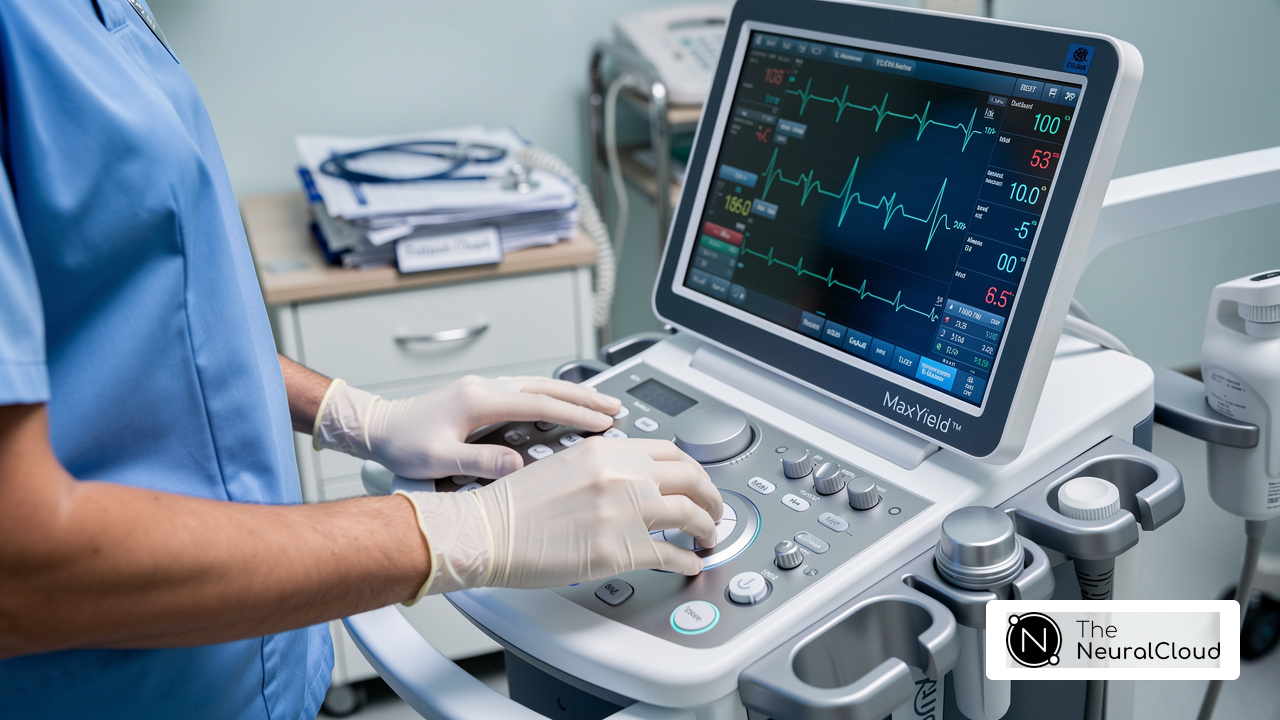
Additionally, using advanced tools like MaxYield™ enhances diagnostic yield by mapping ECG signals through noise and providing beat-by-beat analysis. MaxYield™ assists in evaluating lv systolic volume by offering detailed insights into each heartbeat, enabling more precise assessments of heart function. Effectively comprehending and applying left ventricular stroke volume, along with innovative solutions like MaxYield™, empowers developers to create advanced tools that enhance cardiac care.

Explore Measurement Techniques for LV Systolic Volume in Clinical Settings
Measuring lv systolic volume presents unique challenges that require a variety of techniques to ensure accuracy and reliability. Several methods are employed in clinical practice, each offering distinct advantages:
- Echocardiography: This non-invasive technique uses ultrasound waves to visualize the heart's structure and function. The biplane method of disks summation, commonly known as the modified Simpson's rule, is frequently used to calculate lv systolic volume by measuring end-diastolic and end-systolic dimensions. Its accessibility and real-time imaging capabilities make it a preferred choice in many clinical settings. Recent advancements, such as the Vivid E95 system, have improved imaging quality and workflow, enhancing the accuracy of echocardiographic assessments.
- Cardiac Magnetic Resonance Imaging (CMR) is regarded as the gold standard for assessing lv systolic volume due to its exceptional spatial resolution and accuracy. It provides detailed images of the heart's anatomy and function, enabling precise calculations of lv systolic volume. The integration of AI in CMR technology has further enhanced its utility in clinical practice, making it indispensable for comprehensive cardiac assessments.
- Computed Tomography (CT): CT scans are also utilized for LV volume assessment, particularly in patients with complex anatomical variations. This method offers rapid acquisition times and can be integrated with other imaging modalities, providing a versatile option for clinicians.
- Nuclear Imaging techniques, such as radionuclide ventriculography, measure lv systolic volume by tracking the distribution of radioactive tracers within the heart. Although less commonly used, this method can yield valuable functional information, particularly in specific clinical scenarios.
- Invasive measurements can be utilized to obtain direct measurement of lv systolic volume through catheterization techniques in certain cases. While this approach is typically reserved for specific clinical situations, it remains a critical option for accurate assessment when non-invasive methods are insufficient.
Recognizing the strengths and limitations of each technique is vital for developers aiming to innovate in cardiac diagnostics. Additionally, incorporating the new LVFP algorithm from the 2025 ASE Diastolic Function Guidelines and recognizing the importance of integrating echocardiographic data with biomarkers like BNP can provide a more comprehensive overview of the diagnostic landscape. Furthermore, acknowledging challenges such as technical limitations and inter-observer variability is crucial for developers to consider when designing effective solutions.

Integrate Advanced AI Technologies for Enhanced LV Systolic Volume Analysis
The challenges in accurately assessing LV systolic volume can hinder effective cardiac care. The integration of advanced AI technologies into the analysis of LV systolic volume significantly enhances diagnostic capabilities. Here are key approaches developers can consider:
- Automated Image Analysis: AI algorithms can segment and analyze echocardiographic images automatically. This drastically reduces the time required for manual measurements, leading to more consistent and accurate assessments of LV systolic volume while minimizing human error.
- Machine Learning Models: Utilizing machine learning techniques allows developers to create predictive models that analyze historical data of individuals. These models identify patterns associated with abnormal LV function, aiding clinicians in making informed choices based on real-time data and enhancing outcomes for individuals.
- Deep learning algorithms enhance the accuracy of measurements for LV systolic volume by learning from extensive datasets of echocardiographic images. This technology excels in distinguishing between normal and pathological conditions, providing high precision in diagnostics.
- Integration with Wearable Devices: AI can be embedded in wearable technology to continuously monitor heart function. This proactive strategy enables individuals receiving care and healthcare providers to make timely interventions, enhancing overall care.
- Data Fusion Techniques: Combining data from multiple imaging modalities, such as echocardiography, cardiac magnetic resonance (CMR), and computed tomography (CT), using AI provides a comprehensive view of LV systolic volume and function. This improves diagnostic precision and guides treatment planning, ensuring a comprehensive approach to care.
This shift towards AI-driven analysis not only improves accuracy but also streamlines the diagnostic process for healthcare professionals. As AI technologies evolve, they promise to redefine the standards of care in cardiology, making diagnostics more efficient and reliable.

Utilize LV Systolic Volume Insights to Improve Patient Outcomes and Healthcare Delivery
Healthcare providers face significant challenges in accurately assessing cardiac function, particularly when relying solely on traditional metrics like LVEF. Utilizing insights from LV systolic volume measurements can significantly improve outcomes for individuals and healthcare delivery. Developers can implement several strategies to maximize the impact of LVSV data:
- Risk Stratification: Analyzing left ventricular stroke volume data allows healthcare providers to categorize individuals according to their risk of developing heart failure or other cardiovascular conditions. This targeted approach enables timely interventions and closer monitoring of at-risk individuals. It's important to note that LVEF, a common measure of how well the left ventricle works, has its limitations due to factors like preload and afterload. Understanding these limitations highlights the importance of LV systolic volume insights in offering a more precise evaluation of cardiac function.
- Customized Treatment Approaches: Insights derived from LVSV measurements can inform tailored treatment strategies, allowing clinicians to personalize therapies according to individual profiles and their responses to prior treatments. The case study on Global Longitudinal Strain (GLS) emphasizes that GLS is a more reliable metric of LV function than LVEF, which can improve risk assessment and diagnosis of heart failure, providing insights that LVSV can augment.
- Monitoring disease progression requires regular evaluation of LV systolic volume, which is crucial for tracking disease advancement in individuals with existing cardiac conditions. This ongoing monitoring facilitates timely adjustments to treatment plans, ultimately improving patient management and outcomes.
- Enhanced Communication: Incorporating LV systolic volume insights into electronic health records (EHRs) promotes better communication among healthcare teams. Ensuring that all providers have access to critical cardiac data supports informed decision-making and coordinated care.
- Individual Education: Providing individuals with clear and comprehensible data empowers them to take an active role in their health management. Informed individuals are more likely to follow treatment plans and engage in lifestyle changes that enhance heart health.
By focusing on these strategies, developers can build solutions that not only improve LV systolic volume analysis but also lead to better care and outcomes for patients. Incorporating educational resources and innovations in cardiovascular care can further support these efforts, ensuring that healthcare professionals are equipped with the latest knowledge and tools to optimize patient outcomes. Ultimately, embracing insights related to LV systolic volume can transform patient care, leading to more effective interventions and improved health outcomes.

Conclusion
Without a clear grasp of left ventricular systolic volume (LVSV), healthcare providers may struggle to identify critical cardiovascular issues in their patients. Understanding LVSV is essential for enhancing cardiac function assessments and improving patient outcomes. This measurement serves as a critical indicator of heart health, influencing both the efficiency of blood circulation and the identification of potential cardiovascular issues. For developers in the healthcare field, mastering the techniques and technologies surrounding LVSV is pivotal in creating innovative diagnostic tools that can lead to better patient management.
The article highlights the significance of various measurement techniques:
- Echocardiography
- Cardiac magnetic resonance imaging
- Integration of advanced AI technologies
Each method offers unique advantages that contribute to the accurate assessment of LV systolic volume, ultimately aiding in the early detection of heart failure and other cardiac conditions. Moreover, the incorporation of AI-driven approaches, such as automated image analysis and machine learning models, enhances diagnostic precision and allows for personalized treatment strategies based on individual patient data.
By prioritizing LV systolic volume analysis, healthcare professionals can unlock new pathways to effective interventions and improved cardiovascular health outcomes. Embracing the insights provided by LV systolic volume measurements can revolutionize cardiac care. By focusing on risk stratification, customized treatment approaches, and continuous monitoring, healthcare providers can significantly improve patient outcomes. Developers are encouraged to leverage these insights and integrate advanced technologies into their solutions, ensuring that healthcare professionals are equipped with the tools necessary for optimal patient management. Ultimately, the commitment to enhancing LV systolic volume analysis will lead to more effective interventions and a brighter future for cardiovascular health.
Frequently Asked Questions
What is left ventricular systolic volume (LVSV)?
Left ventricular systolic volume (LVSV) is a measurement that indicates the volume of blood pumped out of the left ventricle of the heart during each contraction. It is crucial for assessing heart function and overall cardiac output.
Why is LV systolic volume important in cardiac function?
LV systolic volume is essential for evaluating heart function as it directly influences cardiac output. It provides insights into the heart's pumping efficiency and is vital for identifying conditions such as cardiac failure.
How does LV systolic volume relate to congestive cardiac failure?
Individuals with asymptomatic LV systolic volume dysfunction have a significantly increased risk of developing congestive cardiac failure, with a hazard ratio of 4.7 compared to those with normal function. They also experience a rate of 5.8 cases of congestive cardiac failure per 100 person-years, highlighting the importance of accurate LV systolic volume measurement.
What are the practical applications of measuring LV systolic volume in heart diagnostics?
Measuring LV systolic volume can enhance diagnostic algorithms, leading to more precise assessments of cardiovascular conditions. This precision aids in monitoring heart health and ensures timely interventions, contributing to better patient management and outcomes.
How does MaxYield™ improve the evaluation of LV systolic volume?
MaxYield™ enhances diagnostic yield by mapping ECG signals through noise and providing beat-by-beat analysis. It offers detailed insights into each heartbeat, enabling more precise assessments of heart function and LV systolic volume.
What role do developers play in the context of LV systolic volume measurement?
Developers designing diagnostic tools for cardiovascular conditions need a comprehensive understanding of LV systolic volume to create advanced tools that improve cardiac care and enhance patient outcomes.
List of Sources
- Define Left Ventricular Systolic Volume and Its Importance in Cardiac Function
- How New Tools Are Transforming the Evaluation of Left Ventricular Systolic Function | Xyla Services (https://xylaservices.com/professionals/news/how-new-tools-are-transforming-the-evaluation-of-left-ventricular-systolic-function)
- acc.org (https://acc.org/latest-in-cardiology/ten-points-to-remember/2020/10/13/19/09/assessing-left-ventricular-systolic-function)
- Cardiovascular News | Circulation (https://ahajournals.org/doi/10.1161/01.CIR.0000093160.98631.5D)
- New Study Offers Strong Evidence of Elevated Heart Failure Risk in Adults with Prediabetes, Hypertension and Subclinical Heart Injury or Stress (https://hopkinsmedicine.org/news/newsroom/news-releases/2026/03/new-study-offers-strong-evidence-of-elevated-heart-failure-risk-in-adults-with-prediabetes-hypertension-and-subclinical-heart-injury-or-stress)
- Explore Measurement Techniques for LV Systolic Volume in Clinical Settings
- How New Tools Are Transforming the Evaluation of Left Ventricular Systolic Function | Xyla Services (https://xylaservices.com/professionals/news/how-new-tools-are-transforming-the-evaluation-of-left-ventricular-systolic-function)
- Houston Methodist-Led Study Validates Improved Echocardiographic Algorithm for Estimating LV Filling Pressure (https://houstonmethodist.org/leading-medicine-blog/articles/2026/feb/houston-methodist-led-study-validates-improved-echocardiographic-algorithm-for-estimating-lv-filling)
- Recent Advances in Echocardiography Technology (https://dicardiology.com/article/recent-advances-echocardiography-technology)
- acc.org (https://acc.org/latest-in-cardiology/ten-points-to-remember/2020/10/13/19/09/assessing-left-ventricular-systolic-function)
- Integrate Advanced AI Technologies for Enhanced LV Systolic Volume Analysis
- Three New Studies Show Viz.ai’s Cardio Suite Speeds Detection of Cardiac Disease and Improves Patient Follow-Up (https://viz.ai/news/three-new-studies-show-viz-ais-cardio-suite-speeds-detection-of-cardiac-disease-and-improves-patient-follow-up)
- Utilize LV Systolic Volume Insights to Improve Patient Outcomes and Healthcare Delivery
- acc.org (https://acc.org/latest-in-cardiology/ten-points-to-remember/2020/10/13/19/09/assessing-left-ventricular-systolic-function)