Introduction
A profound understanding of myocardial infarction ST elevation (STEMI) is crucial in cardiovascular health, as this condition poses a significant health risk due to critical blockages in coronary arteries. This article explores the diagnostic and treatment protocols essential for recognizing and managing this life-threatening event. Timely intervention and advanced technology play a vital role in improving patient outcomes. With the rising incidence of heart attacks, particularly among younger populations, healthcare professionals face a pressing challenge:
- How can they ensure swift and accurate diagnosis and treatment to save lives in critical moments?
Define Myocardial Infarction ST Elevation
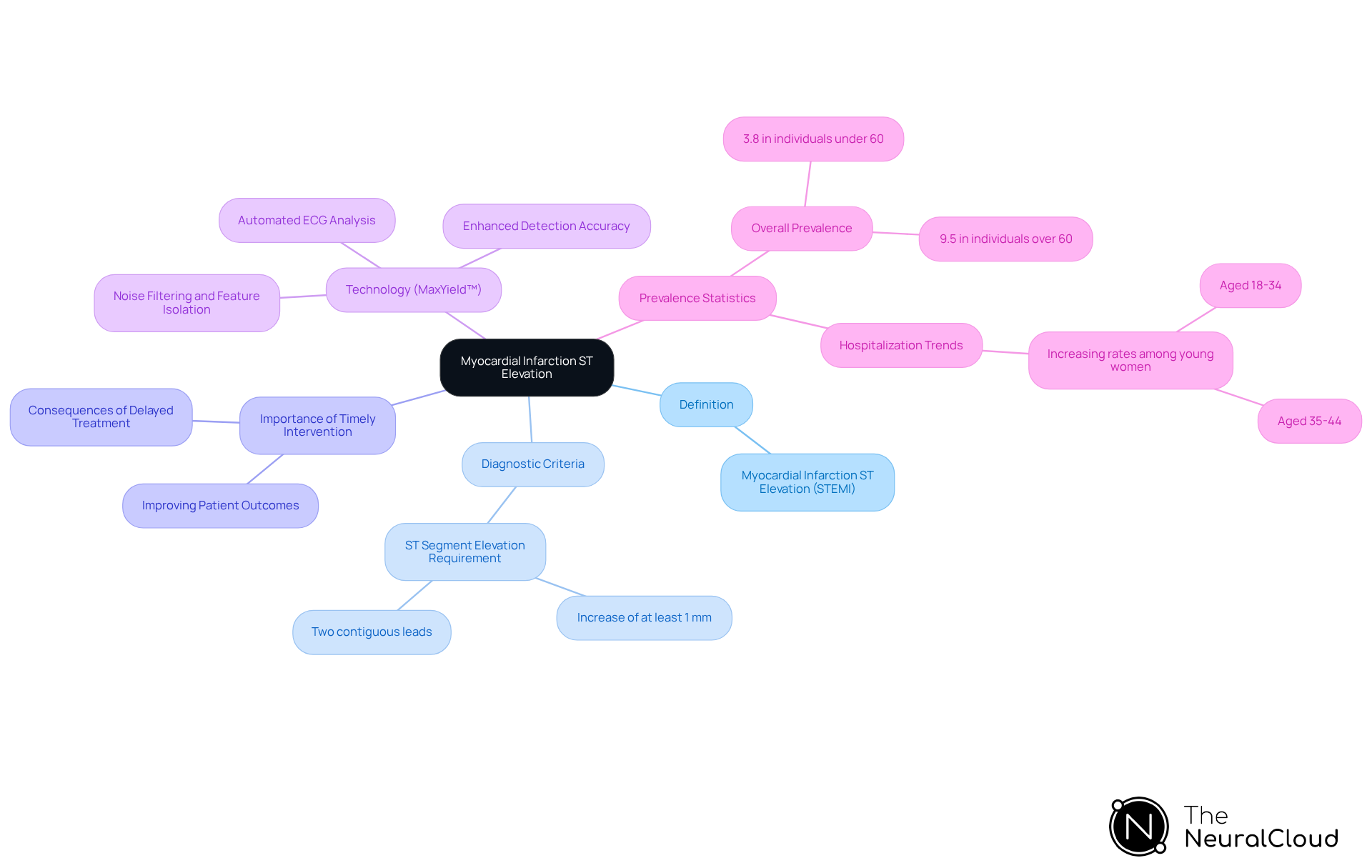
A critical type of heart attack, known as STEMI, is characterized by a significant elevation of the ST segment on a 12-lead electrocardiogram (ECG). This elevation indicates a complete blockage of a coronary artery, leading to insufficient blood flow to the heart muscle, which can cause irreversible damage if not treated promptly. The standard definition of ST segment elevation, indicating myocardial infarction, requires an increase of at least 1 mm in two contiguous leads, signaling myocardial ischemia due to the blockage. Recent studies highlight the importance of recognizing this definition, as it is critical for timely intervention.
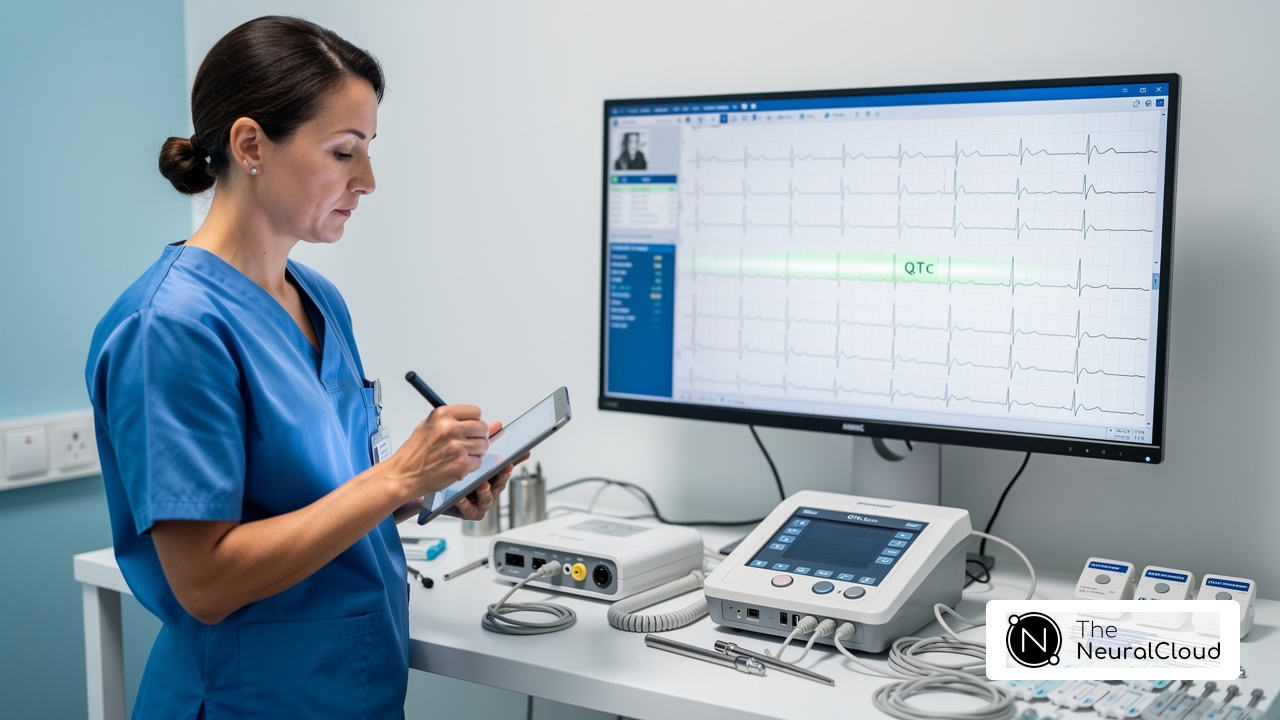
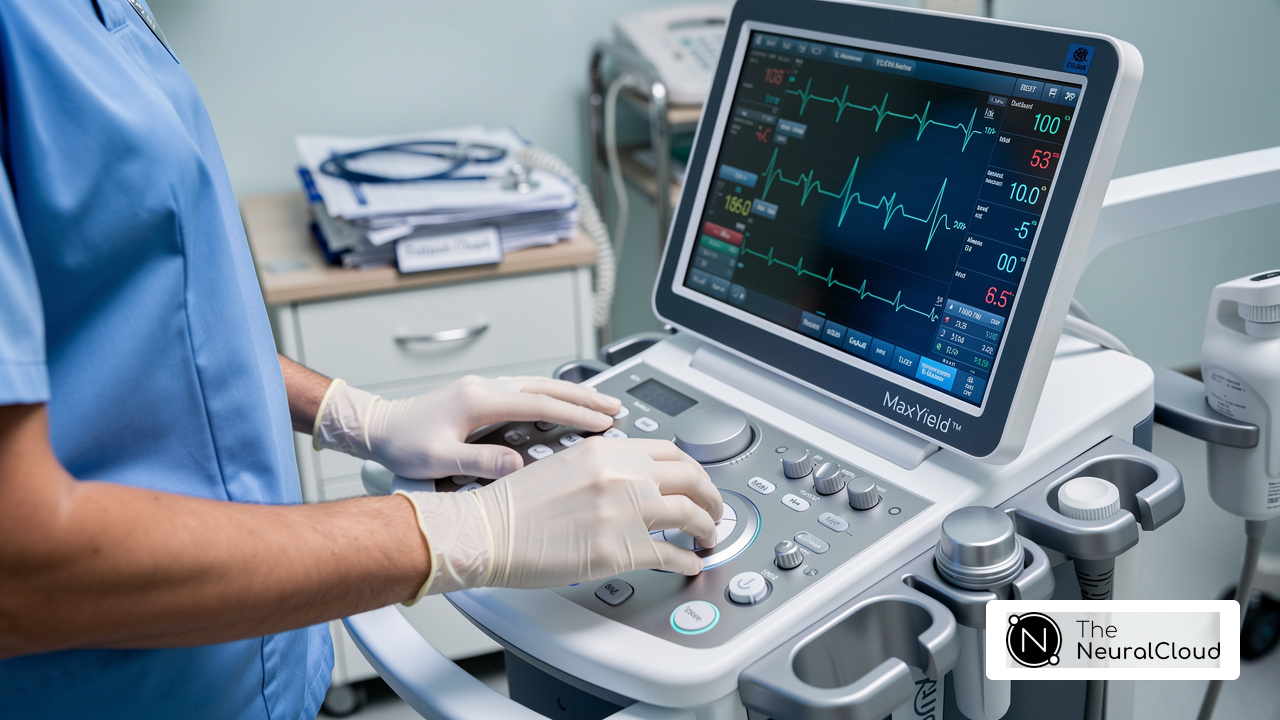
Current guidelines stress that healthcare professionals must be skilled in interpreting these ECG changes to initiate appropriate treatments quickly. Real-world examples illustrate the consequences of delayed diagnosis, underscoring the need for advanced solutions like Neural Cloud Solutions' MaxYield™ platform. MaxYield™ enhances diagnosis by filtering out noise, isolating, and labeling key features in every heartbeat, transforming unclear recordings into detailed insights. This capability improves accuracy and reduces false activations, ultimately saving lives.
The prevalence of STEMI, reported at 3.8% in individuals under 60 years and 9.5% in those over 60 years, indicates a significant health issue across various age groups. Furthermore, younger populations, particularly those aged 18-34 and 35-44, are increasingly affected, highlighting the urgent need for targeted interventions. As Timothy D. Henry, MD, FACC, noted, AI-enhanced heart attack diagnosis through platforms like MaxYield™ can shorten treatment times and minimize false activations, reinforcing the role of technology in enhancing patient care.
Diagnose ST Elevation Myocardial Infarction
Diagnosing ST elevation (STEMI) requires a systematic approach that includes several essential steps:
- Clinical Assessment: Start with a thorough patient history and physical examination. Key symptoms to observe include chest pain, shortness of breath, and diaphoresis. These indicators are critical for identifying potential myocardial infarction.
- ECG Acquisition: Obtain a 12-lead ECG promptly. The primary diagnostic criterion for STEMI is the presence of ST segment elevation. This finding is fundamental, serving as the cornerstone for diagnosing a heart attack.
- Cardiac Biomarker Testing: After the ECG, measure cardiac troponin levels. An elevated troponin level, particularly when paired with ST elevation, confirms myocardial injury, reinforcing the diagnosis of STEMI.
- Risk Stratification: Assess the patient's clinical status. This evaluation is crucial for determining the urgency of intervention and guiding care decisions.
- Imaging: In some cases, additional imaging techniques like echocardiography may be necessary to evaluate and identify complications from the infarction.
By adhering to these steps, healthcare professionals can ensure accurate and timely diagnosis of heart attacks, facilitating the initiation of life-saving procedures without delay. This structured approach not only aligns with current guidelines but also reflects best practices, ultimately improving patient outcomes.

Treat ST Elevation Myocardial Infarction Effectively
The management of myocardial infarction emphasizes the urgency to restore blood flow to the heart. Key strategies include:
-
Reperfusion Therapy: This is the cornerstone of STEMI treatment, achievable through two main methods:
- Percutaneous Coronary Intervention: This preferred approach should ideally be performed within 90 minutes of hospital arrival. It involves catheterization to open the blocked artery.
- Fibrinolysis: If PCI cannot be performed within the recommended timeframe, fibrinolytics (clot-dissolving medications) may be administered to dissolve the thrombus.
Medications: Initiate dual antiplatelet therapy with aspirin and a P2Y12 inhibitor (such as clopidogrel or ticagrelor) to reduce the risk of further clot formation. Additionally, beta-blockers, ACE inhibitors, and statins should be prescribed to improve cardiac function.
Monitoring: Continuous observation of vital signs and ECG is essential during care. Be prepared to address potential complications, including arrhythmias and heart failure.
Post-Acute Care: After initial treatment, patients should participate in a cardiac rehabilitation program to support recovery and reduce the likelihood of subsequent events.
By adhering to these treatment protocols, healthcare providers can significantly improve outcomes for patients experiencing myocardial infarction.

Conclusion
Myocardial infarction ST elevation (STEMI) is a critical medical emergency that requires swift and accurate diagnosis and treatment to prevent irreversible heart damage. Understanding the nuances of this condition - from its definition to the structured approach needed for diagnosis and management - is essential for healthcare professionals dedicated to improving patient outcomes.
Key insights from this article emphasize the importance of recognizing ST segment elevation on ECGs, the necessity of timely clinical assessments, and the role of advanced technologies like Neural Cloud Solutions' MaxYield™ in enhancing diagnostic accuracy. The MaxYield™ platform offers features that streamline ECG analysis, allowing for quicker identification of critical conditions. This improvement in diagnostic capability directly benefits healthcare professionals by enabling more effective patient management.
The treatment protocols for STEMI highlight:
- Rapid reperfusion therapy
- Appropriate medication management
- Continuous patient monitoring
as vital components in the care of patients experiencing this condition. By leveraging the MaxYield™ platform, healthcare providers can enhance their diagnostic processes, ensuring that they are equipped to respond promptly and effectively to emergencies.
Ultimately, the urgency of addressing myocardial infarction ST elevation cannot be overstated. By adhering to current guidelines and utilizing technological advancements like MaxYield™, healthcare providers can significantly improve the quality of care delivered to patients facing this life-threatening condition. A proactive approach not only saves lives but also fosters a culture of excellence in cardiovascular care, underscoring the critical nature of swift action in medical emergencies.
Frequently Asked Questions
What is myocardial infarction ST elevation (STEMI)?
Myocardial infarction ST elevation (STEMI) is a critical type of heart attack characterized by a significant elevation of the ST segment on a 12-lead electrocardiogram (ECG), indicating a complete blockage of a coronary artery and insufficient blood flow to the heart muscle.
How is ST segment elevation defined in the context of myocardial infarction?
The standard definition of ST segment elevation for myocardial infarction requires an increase of at least 1 mm in two contiguous leads on an ECG, signaling myocardial ischemia due to the blockage.
Why is timely intervention important in cases of myocardial infarction ST elevation?
Timely intervention is crucial because it can significantly improve patient outcomes and prevent irreversible damage to the heart muscle.
What role do healthcare professionals play in diagnosing myocardial infarction ST elevation?
Healthcare professionals must be skilled in interpreting ECG changes to quickly initiate appropriate treatments for myocardial infarction ST elevation.
What is the MaxYield™ platform and how does it assist in diagnosing heart attacks?
The MaxYield™ platform is an advanced ECG analysis tool that automates ECG analysis by filtering out noise, isolating, and labeling key features in heartbeats, which enhances detection accuracy and reduces false activations.
What is the prevalence of myocardial infarction among different age groups?
The prevalence of myocardial infarction is reported at 3.8% in individuals under 60 years and 9.5% in those over 60 years, indicating a significant health issue across various age groups.
Are there specific demographics that show increasing hospitalization rates for heart attacks?
Yes, hospitalization rates for heart attacks are increasing among young women, particularly those aged 18-34 and 35-44, highlighting the need for targeted interventions.
How can AI-enhanced heart attack diagnosis impact treatment times?
AI-enhanced heart attack diagnosis, such as that provided by platforms like MaxYield™, can shorten treatment times and minimize false activations, thereby enhancing patient care.
List of Sources
- Define Myocardial Infarction ST Elevation
- Trends and Outcomes of ST‐Segment–Elevation Myocardial Infarction Among Young Women in the United States | Journal of the American Heart Association (https://ahajournals.org/doi/10.1161/JAHA.122.026811)
- bmccardiovascdisord.biomedcentral.com (https://bmccardiovascdisord.biomedcentral.com/articles/10.1186/s12872-023-03231-w)
- medicalxpress.com (https://medicalxpress.com/news/2025-11-zalunfiban-early-benefits-st-elevation.html)
- AI-Based ECG Analysis Significantly Improves STEMI Detection, Reduces False Activations - American College of Cardiology (https://acc.org/latest-in-cardiology/articles/2025/10/24/16/56/tues-554pm-ai-tct-2025)
- Improving STEMI Management Internationally: Initial Report of the American College of Cardiology-Global Heart Attack Treatment Initiative (https://jacc.org/doi/10.1016/j.jacadv.2024.101438)
- Diagnose ST Elevation Myocardial Infarction
- Queen of Hearts AI Hits 92% STEMI Accuracy (https://powerfulmedical.com/blog/pmcardio-reports-positive-rct-results-and-late-breaking-clinical-science-for-stemi-detection)
- AI-driven ECG improves detection of severe heart attacks (https://news-medical.net/news/20251029/AI-driven-ECG-improves-detection-of-severe-heart-attacks.aspx)
- Artificial intelligence may speed heart attack diagnosis and treatment (https://newsroom.heart.org/news/artificial-intelligence-may-speed-heart-attack-diagnosis-and-treatment)
- Physician Accuracy in Interpreting Potential ST‐Segment Elevation Myocardial Infarction Electrocardiograms | Journal of the American Heart Association (https://ahajournals.org/doi/10.1161/JAHA.113.000268)
- Acute ST-Segment Elevation Myocardial Infarction (STEMI) - StatPearls - NCBI Bookshelf (https://ncbi.nlm.nih.gov/books/NBK532281)
- Treat ST Elevation Myocardial Infarction Effectively
- sciencedirect.com (https://sciencedirect.com/science/article/pii/S1470211824026873)
- pubmed.ncbi.nlm.nih.gov (https://pubmed.ncbi.nlm.nih.gov/26946949)
- medicalxpress.com (https://medicalxpress.com/news/2025-11-zalunfiban-early-benefits-st-elevation.html)
- uscjournal.com (https://uscjournal.com/articles/immediate-pharmacology-current-era-reperfusion-therapy?language_content_entity=en)