Introduction
Detecting irregular heartbeats presents significant challenges, particularly when relying on brief ECG observations. The Holter monitor emerges as a vital tool, offering continuous recording of the heart's electrical activity over 24 to 48 hours. This continuous monitoring provides invaluable insights into conditions that standard tests might overlook. However, many patients remain unaware of the essential steps required for effective monitoring and accurate results. Understanding the necessary steps for effective monitoring can significantly enhance the accuracy of heart health assessments.
Understand the Purpose of a Holter Monitor
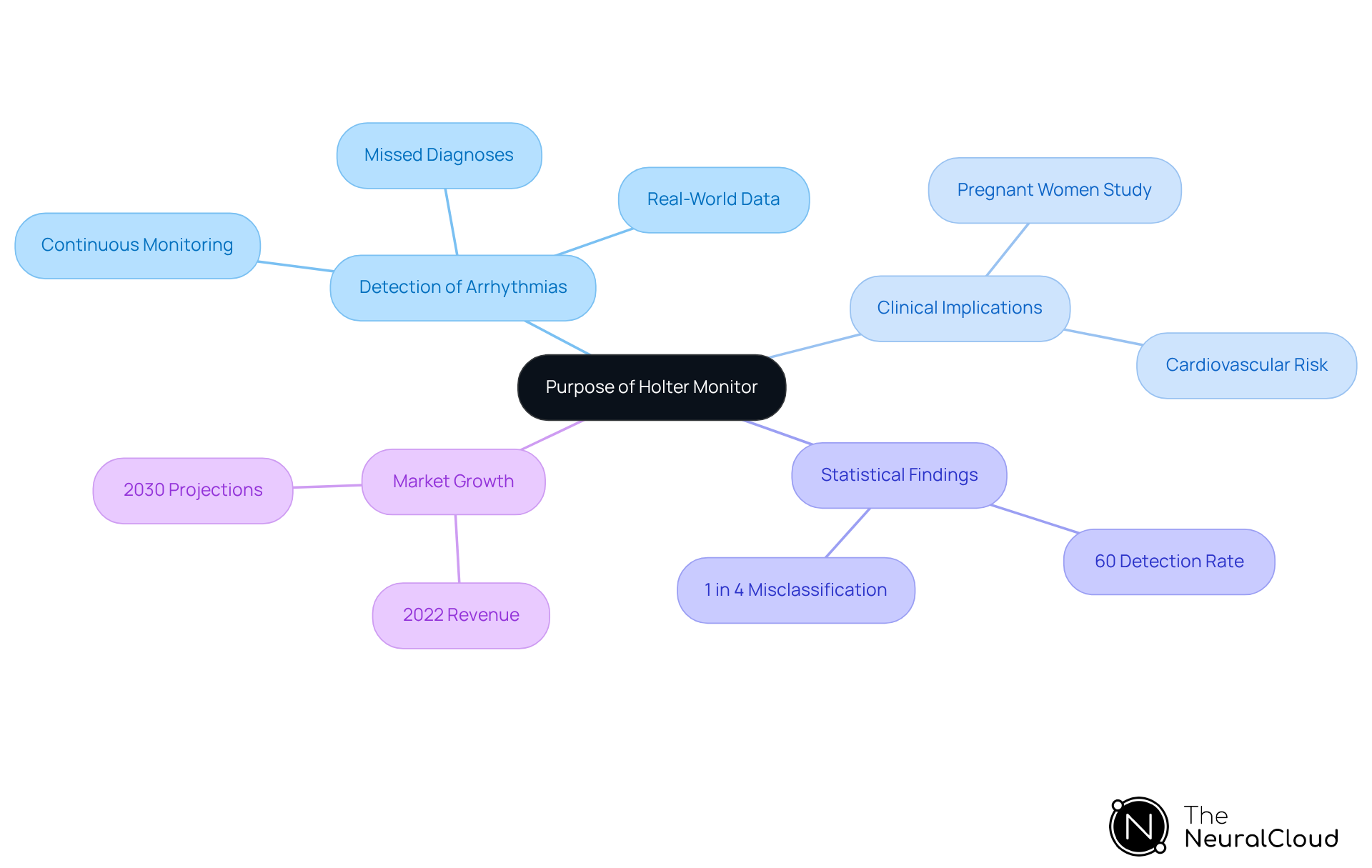
Detecting irregular heartbeats can be challenging, especially when relying on brief ECG observations. A Holter device is a portable apparatus that continuously records the electrical activity of the heart over an extended period, typically 24 to 48 hours. Its main role is to identify irregular heartbeats, known as arrhythmias, that standard ECGs might miss. By wearing the monitor during daily activities, healthcare providers can collect valuable data on the heart's rhythm in real-world conditions, which is crucial for diagnosing conditions such as palpitations, unexplained dizziness, or fainting spells.
Recent studies highlight the importance of prolonged observation. For example, 60% of arrhythmias in expectant patients were identified after 48 hours, emphasizing the constraints of brief-duration observation. In fact, up to 1 in 4 patients with true atrial fibrillation (AF) recurrence could be misclassified as false negatives with observation durations of 24 hours or less. Short observation periods often lead to missed diagnoses, leaving patients at risk. This oversight can lead to serious complications, underscoring the need for extended monitoring to enhance detection rates and patient outcomes.
The clinical implications of missed arrhythmias are profound, particularly in populations at increased cardiovascular risk. For example, a study involving 132 pregnant women revealed that 48.5% experienced complex heart rhythm disorders, with perinatal outcomes significantly worse for those with arrhythmias. This shows how vital Holter devices are for spotting arrhythmias that might result in serious health issues.
In Canada, the ECG patch and Holter device market generated USD 30.4 million in 2022. Projections show growth to USD 193.1 million by 2030, highlighting the rising reliance on these technologies. As the market changes, understanding the capabilities of Holter devices is essential for improving diagnostic accuracy and patient outcomes.
Prepare for Holter Monitoring: Essential Steps
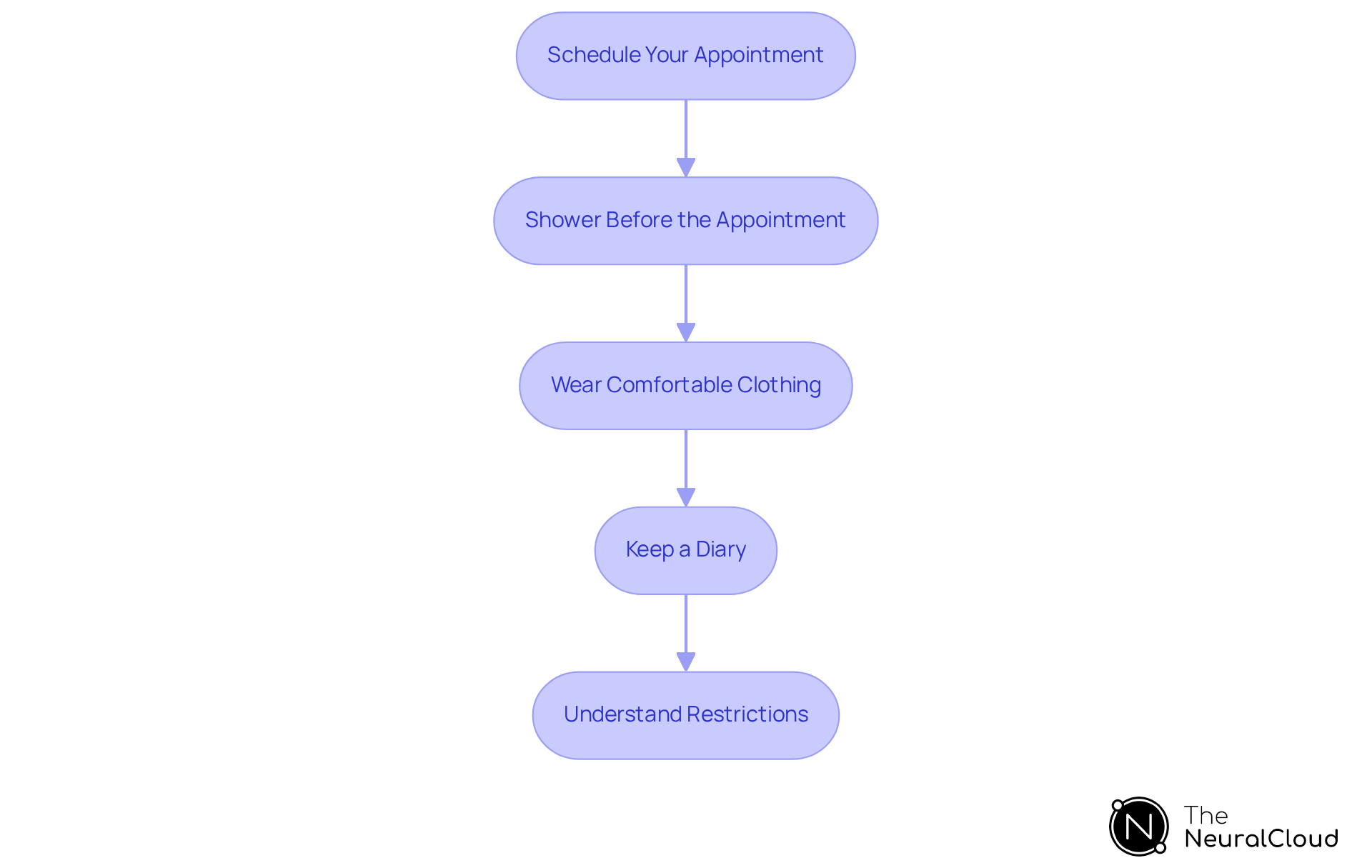
Proper preparation is essential for accurate results from a Holter monitor 7 days, yet many patients overlook crucial steps. Here’s how to ensure you’re ready for your appointment:
- Schedule Your Appointment: Contact your healthcare provider to arrange a suitable time for the Holter device application. Make sure to set aside enough time for the procedure; it’s key for effective monitoring.
- Shower Before the Appointment: Since the display is not water-resistant, it’s advisable to shower or bathe prior to your appointment. Avoid applying lotions, oils, or powders on your chest, as these can hinder the adhesion of the electrodes.
- Wear Comfortable Clothing: Opt for loose-fitting clothing that allows easy access to your chest. Tight garments may restrict movement and interfere with the monitor's functionality, so comfort is key.
- Keep a Diary: Prepare to maintain a diary of your daily activities and any symptoms experienced during the monitoring period. This information will be invaluable for your healthcare provider when examining the gathered information.
- Understand Restrictions: Familiarize yourself with activities to avoid while wearing the monitor, such as swimming, showering, or using electrical devices that may disrupt the monitor's operation. This knowledge is vital for collecting and analyzing accurate data.
Effective patient preparation enhances the accuracy of results from the Holter monitor 7 days. Statistics show this clearly. In Canada, medical professionals stress the significance of these preparatory steps to guarantee optimal outcomes during the observation period. Understanding these preparatory steps can make a significant difference in your health outcomes.
Wear and Operate the Holter Monitor Correctly
Understanding the process of ECG monitoring is essential for effective heart health management.
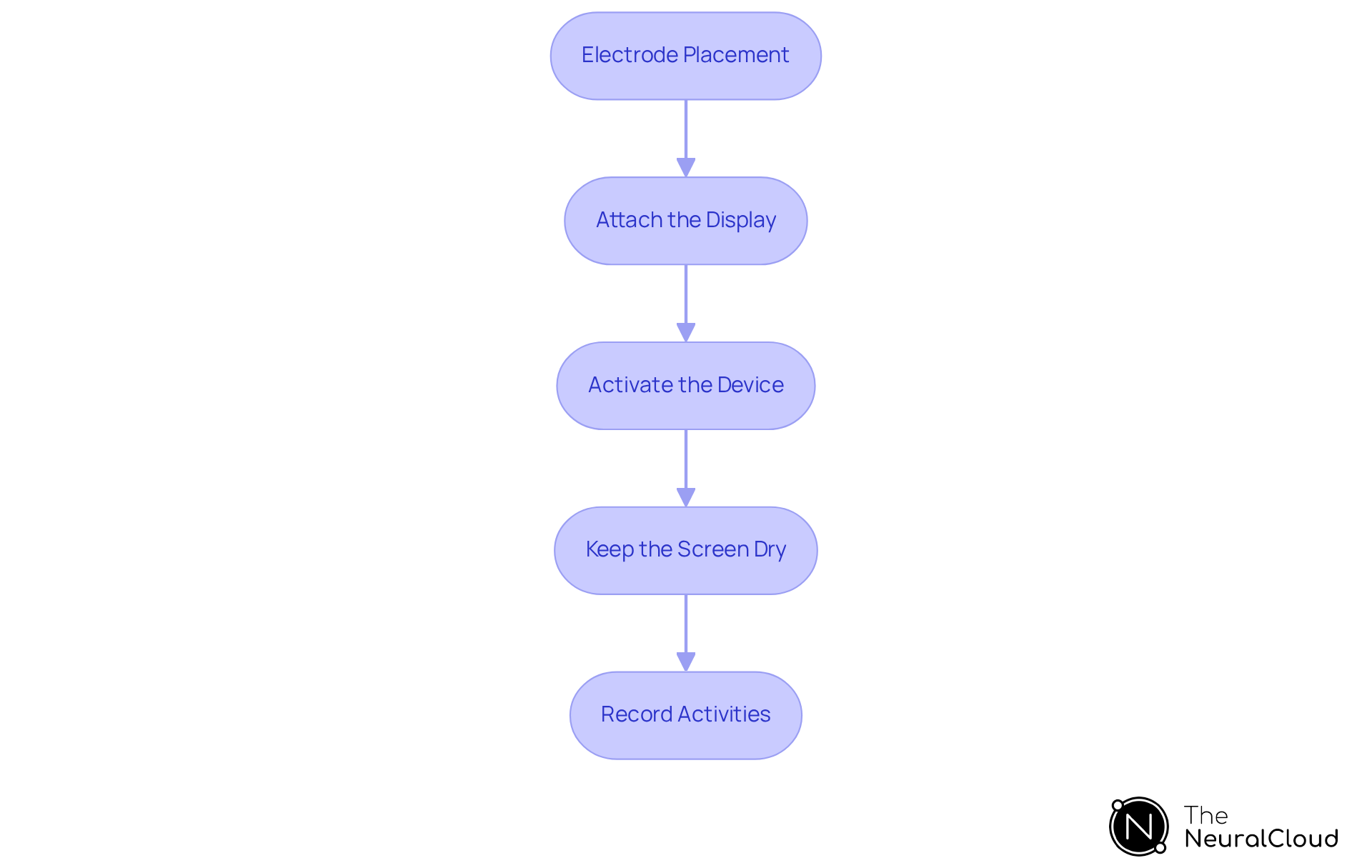
- Electrode Placement: Upon arrival at your appointment, a healthcare professional will place small adhesive electrodes on your chest. Proper placement is crucial; ensure they are securely attached to avoid disconnections, as improper placement can lead to inaccurate readings. Patients are advised to avoid using lotions or moisturizers on the chest to ensure optimal electrode adhesion. While surface electrodes are usually safe, they might irritate the skin sometimes, so keep an eye out for any discomfort.
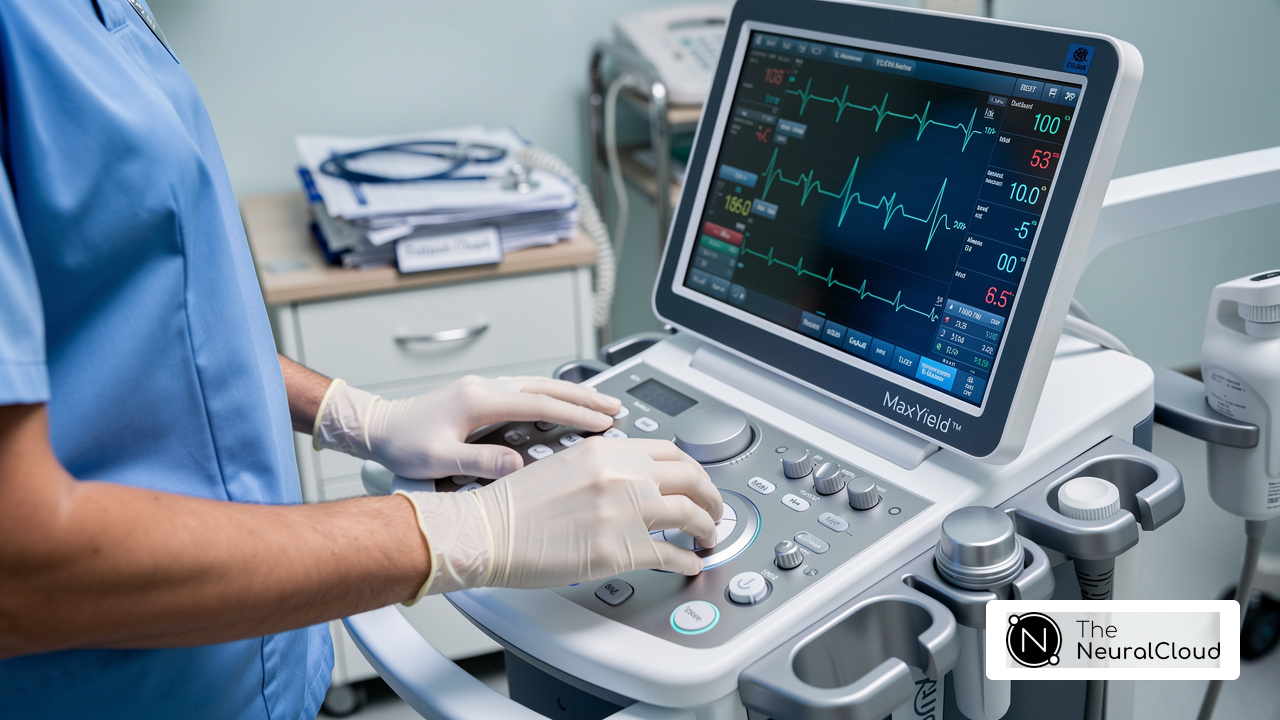
- Attach the Display: The display connects to the electrodes via wires and can be clipped onto your waistband or worn in a pouch. Ensure it is comfortably secured to prevent movement during daily activities, as this can influence accuracy. Modern Holter monitors, including those designed for 7 days of continuous monitoring, have evolved significantly from their initial design, which was about the size of a briefcase, to compact devices often the size of a small cell phone, making them easy to wear. With Neural Cloud Solutions' MaxYield™, you can anticipate improved information integrity, as the platform's advanced noise filtering capabilities assist in isolating ECG waves even in challenging conditions. Additionally, the integration of Insight360 enables the transformation of clean ECG information into interactive dashboards and clinical-ready reports, further assisting in analysis.
- Activate the Device: Follow the instructions provided by your healthcare provider to power on the display. Confirm that it is functioning properly before leaving the clinic. Recent advancements have led to the development of wireless, water-resistant Holter devices. These devices, such as the holter monitor 7 days, can now record continuously for up to 14 days, enhancing patient comfort and information collection. The MaxYield™ platform further optimizes this process by evolving its algorithms with each use, ensuring maximum diagnostic yield. It is important to note that these devices are compliant with FDA Class II SaMD clearance-pending status, ensuring regulatory adherence.
- Keep the Screen Dry: Avoid exposing the screen to moisture. Patients should avoid showering, swimming, or participating in activities that may wet the device, as moisture can disrupt its function and information integrity. Furthermore, it is essential to keep the monitor away from other electrical devices to ensure precise information transmission.
- Record Activities: Use the diary you prepared to note any symptoms or activities, especially if you experience palpitations or other unusual sensations. This practice is essential for correlating symptoms with the recorded information, as evidenced by studies showing that maintaining a symptom diary significantly enhances the diagnostic process. For example, a study on Holter observation emphasized the significance of connecting patient-reported symptoms with EKG information to enhance diagnosis and treatment results. With the integration of MaxYield™, the clean ECG information can be transformed into interactive dashboards and clinical-ready reports using Insight360, further aiding in the analysis and interpretation of your heart health. By actively engaging in this process, patients can significantly enhance the accuracy of their heart health assessments.
Analyze Results and Follow Up After Monitoring
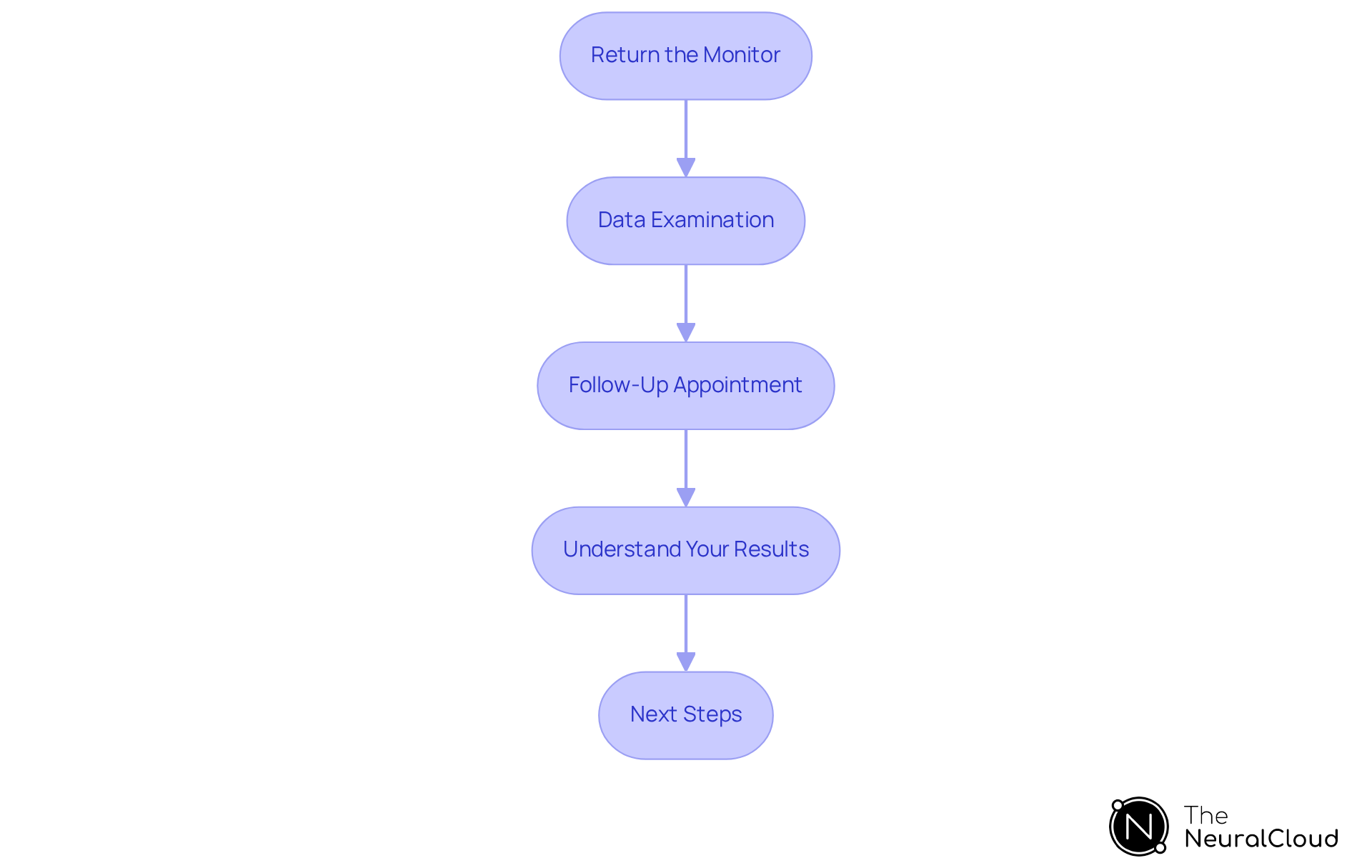
- Return the Monitor: Returning the Holter monitor after the designated monitoring period, typically lasting 24 to 48 hours, is a critical step in ensuring accurate heart health assessment. Your medical provider will carefully remove the electrodes and prepare the recorded information for analysis.
- Data Examination: Your medical provider will assess the recorded information to identify any irregularities in your heart rhythm. This analysis may take several days, depending on the clinic's workload and the complexity of the data.
- Follow-Up Appointment: Schedule a follow-up appointment to discuss the results. During this meeting, your healthcare provider will explain any findings and recommend further tests or treatments if necessary. Studies show that longer monitoring can improve the detection of heart rhythm issues, highlighting the importance of careful analysis.
- Understand Your Results: It’s a good idea to think about questions you might have regarding your results. Knowing what your results mean for your heart health is key to making informed care decisions. Experts agree that clear communication at this stage can lead to better patient outcomes.
- Next Steps: Depending on the findings, your healthcare provider may suggest lifestyle changes, medications, or additional monitoring to ensure effective management of your heart health. Recent findings from 2026 underscore the necessity of personalized follow-up strategies to address any identified issues, particularly in populations at risk of arrhythmias.
Conclusion
Many patients overlook the significance of Holter monitoring, which can lead to missed diagnoses. This guide has outlined the critical steps involved in understanding, preparing for, operating, and analyzing the results of Holter monitoring. This understanding is crucial for ensuring accurate data collection, which is vital for diagnosing potential heart issues that may otherwise go unnoticed.
Key insights include the importance of proper preparation, such as:
- Scheduling appointments
- Maintaining a symptom diary
- Understanding device operation
The article also emphasizes the significance of thorough data analysis and follow-up consultations with healthcare providers to interpret results and determine appropriate next steps. These steps help patients feel more in control of their heart health and enhance diagnostic accuracy.
The Holter monitor is a vital tool for spotting arrhythmias and other heart issues. By embracing the outlined steps and engaging with healthcare professionals, individuals can significantly improve their chances of early detection and effective management of heart-related issues. By taking these proactive measures, individuals can significantly enhance their cardiovascular health and improve their overall well-being.
Frequently Asked Questions
What is the purpose of a Holter monitor?
A Holter monitor is a portable device that continuously records the electrical activity of the heart over 24 to 48 hours to detect irregular heartbeats, known as arrhythmias, that may not be identified during standard ECGs.
How does a Holter monitor help in diagnosing heart conditions?
By wearing the Holter monitor during daily activities, healthcare providers can gather valuable data on the heart's rhythm in real-world conditions, which is crucial for diagnosing conditions such as palpitations, unexplained dizziness, or fainting spells.
Why is prolonged observation important when using a Holter monitor?
Prolonged observation is important because studies show that many arrhythmias are identified only after 48 hours of monitoring. Short observation periods can lead to missed diagnoses, putting patients at risk for serious complications.
What are the consequences of missed arrhythmias?
Missed arrhythmias can have profound clinical implications, particularly for populations at increased cardiovascular risk. For instance, a study found that nearly half of pregnant women with arrhythmias experienced worse perinatal outcomes, highlighting the importance of detecting these conditions.
What is the current market trend for Holter devices in Canada?
The ECG patch and Holter device market in Canada generated USD 30.4 million in 2022, with projections indicating growth to USD 193.1 million by 2030, reflecting an increasing reliance on these technologies for heart monitoring.
List of Sources
- Understand the Purpose of a Holter Monitor
- grandviewresearch.com (https://grandviewresearch.com/horizon/outlook/ecg-patch-and-holter-monitor-market/canada)
- New Data Presented at HRS 2026 Show Short-Term Holter Monitoring Misses a Large Proportion of AF Recurrence Post-Ablation and Clinically Significant Arrhythmias in Pregnancy (https://irhythm2024rd.q4web.com/news/news-details/2026/New-Data-Presented-at-HRS-2026-Show-Short-Term-Holter-Monitoring-Misses-a-Large-Proportion-of-AF-Recurrence-Post-Ablation-and-Clinically-Significant-Arrhythmias-in-Pregnancy/default.aspx)
- (PDF) Frequency of Cardiac Arrhythmias Detection on 24 Hours Holter Monitoring (https://researchgate.net/publication/371962036_Frequency_of_Cardiac_Arrhythmias_Detection_on_24_Hours_Holter_Monitoring)
- New Data Presented at HRS 2026 Show Short-Term Holter Monitoring Misses a Large Proportion of AF Recurrence Post-Ablation and Clinically Significant Arrhythmias in Pregnancy (https://globenewswire.com/news-release/2026/4/27/3281593/0/en/new-data-presented-at-hrs-2026-show-short-term-holter-monitoring-misses-a-large-proportion-of-af-recurrence-post-ablation-and-clinically-significant-arrhythmias-in-pregnancy.html)
- Prepare for Holter Monitoring: Essential Steps
- Cardiac Monitoring Device Marketing (2026) | Buzzbox Media (https://buzzboxmedia.com/blog/cardiac-monitoring-device-marketing)
- United States Holter Analysis System & Software Market 2026 | Growth Drivers, Trends & Market Forecast, Competitive Landscape & Investment Opportunities (https://openpr.com/news/4397373/united-states-holter-analysis-system-software-market-2026)
- New Data Presented at HRS 2026 Show Short-Term Holter Monitoring Misses a Large Proportion of AF Recurrence Post-Ablation and Clinically Significant Arrhythmias in Pregnancy (https://irhythm2024rd.q4web.com/news/news-details/2026/New-Data-Presented-at-HRS-2026-Show-Short-Term-Holter-Monitoring-Misses-a-Large-Proportion-of-AF-Recurrence-Post-Ablation-and-Clinically-Significant-Arrhythmias-in-Pregnancy/default.aspx)
- Goodbye to Wires, Hello Better Heart Monitoring (https://willamettevalleymedical.com/in-the-news/2026/01/27/goodbye-to-wires--hello-better-heart-monitoring)
- Wear and Operate the Holter Monitor Correctly
- Goodbye to Wires, Hello Better Heart Monitoring (https://willamettevalleymedical.com/in-the-news/2026/01/27/goodbye-to-wires--hello-better-heart-monitoring)
- Holter Monitor - StatPearls - NCBI Bookshelf (https://ncbi.nlm.nih.gov/books/NBK538203)
- iRhythm data backs long-term ECG in post-ablation, pregnant populations (https://massdevice.com/irhythm-hrs-2026-ecg-ablation-pregnancy)
- New Data Presented at HRS 2026 Show Short-Term Holter Monitoring Misses a Large Proportion of AF Recurrence Post-Ablation and Clinically Significant Arrhythmias in Pregnancy (https://irhythm2024rd.q4web.com/news/news-details/2026/New-Data-Presented-at-HRS-2026-Show-Short-Term-Holter-Monitoring-Misses-a-Large-Proportion-of-AF-Recurrence-Post-Ablation-and-Clinically-Significant-Arrhythmias-in-Pregnancy/default.aspx)
- Dos and Don’ts While Wearing Your Holter Monitor (https://theheartclinics.com/post/dos-and-donts-while-wearing-your-holter-monitor)
- Analyze Results and Follow Up After Monitoring
- Data shared at HRS 2026 highlight pitfalls of short-term Holter monitoring in arrhythmia detection (https://cardiacrhythmnews.com/data-shared-at-hrs-2026-highlight-pitfalls-of-short-term-holter-monitoring-in-arrhythmia-detection)
- New Data Presented at HRS 2026 Show Short-Term Holter Monitoring Misses a Large Proportion of AF Recurrence Post-Ablation and Clinically Significant Arrhythmias in Pregnancy (https://finance.yahoo.com/sectors/healthcare/articles/data-presented-hrs-2026-show-120500727.html)
- Checking your browser - reCAPTCHA (https://pmc.ncbi.nlm.nih.gov/articles/PMC7220965)
- Short Cardiac Monitoring Misses 60% of Arrhythmias (https://mddionline.com/cardiovascular/irhythm-s-wake-up-call-most-arrhythmias-happen-after-doctors-stop-looking)
- New Data Presented at HRS 2026 Show Short-Term Holter Monitoring Misses a Large Proportion of AF Recurrence Post-Ablation and Clinically Significant Arrhythmias in Pregnancy (https://irhythm2024rd.q4web.com/news/news-details/2026/New-Data-Presented-at-HRS-2026-Show-Short-Term-Holter-Monitoring-Misses-a-Large-Proportion-of-AF-Recurrence-Post-Ablation-and-Clinically-Significant-Arrhythmias-in-Pregnancy/default.aspx)