Introduction
Understanding the intricacies of electrocardiograms (ECGs) is essential for health tech developers who seek to improve cardiac diagnostics. As a fundamental tool in assessing heart health, ECGs provide critical insights into electrical activity and potential abnormalities. However, interpreting these signals can be complex, presenting significant challenges.
Innovative platforms like MaxYield™ utilize advanced algorithms and automation to transform ECG analysis, enhancing both accuracy and efficiency. This raises an important question: how can these technologies bridge the gap between traditional practices and the future of cardiac care?
Define Electrocardiograms and Their Importance in Cardiac Health
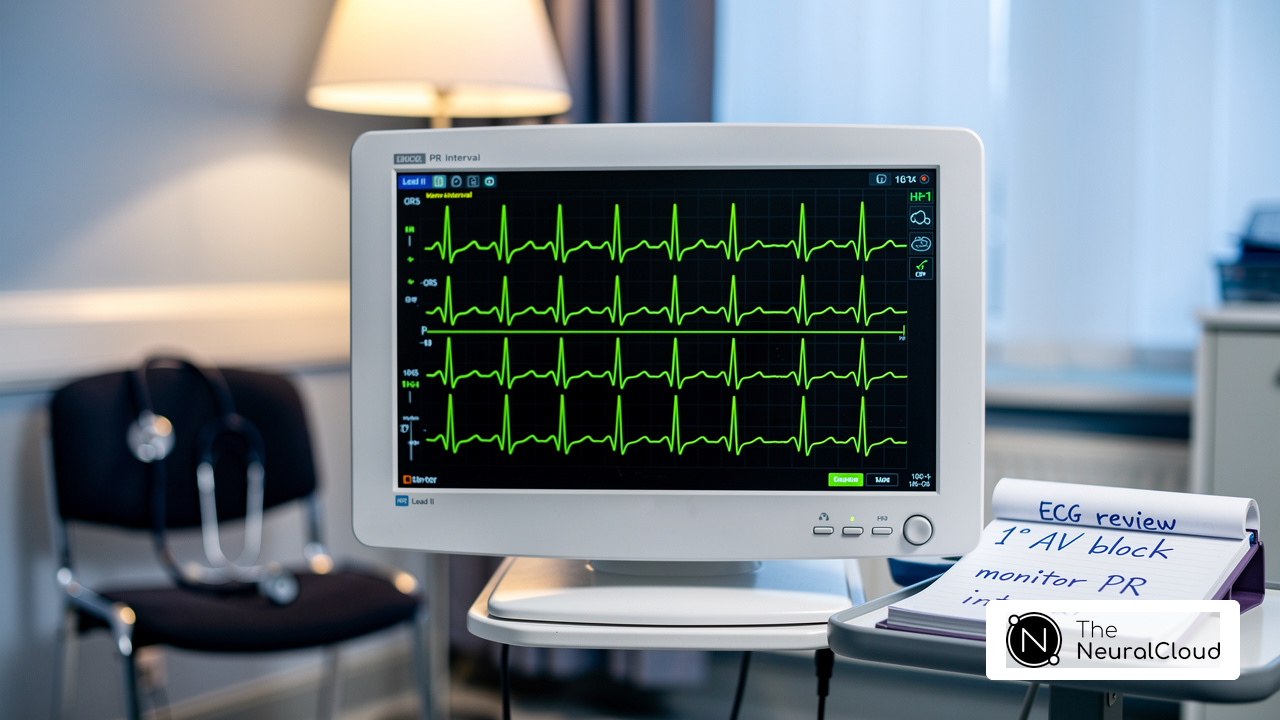
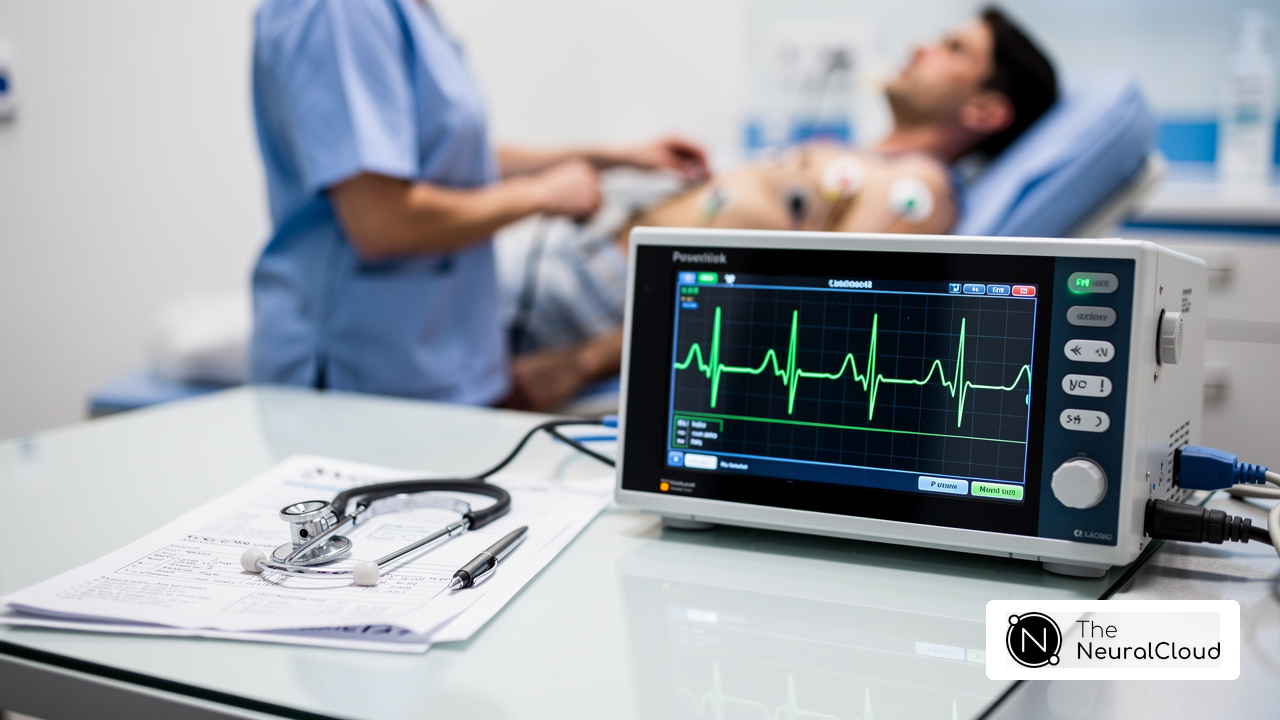
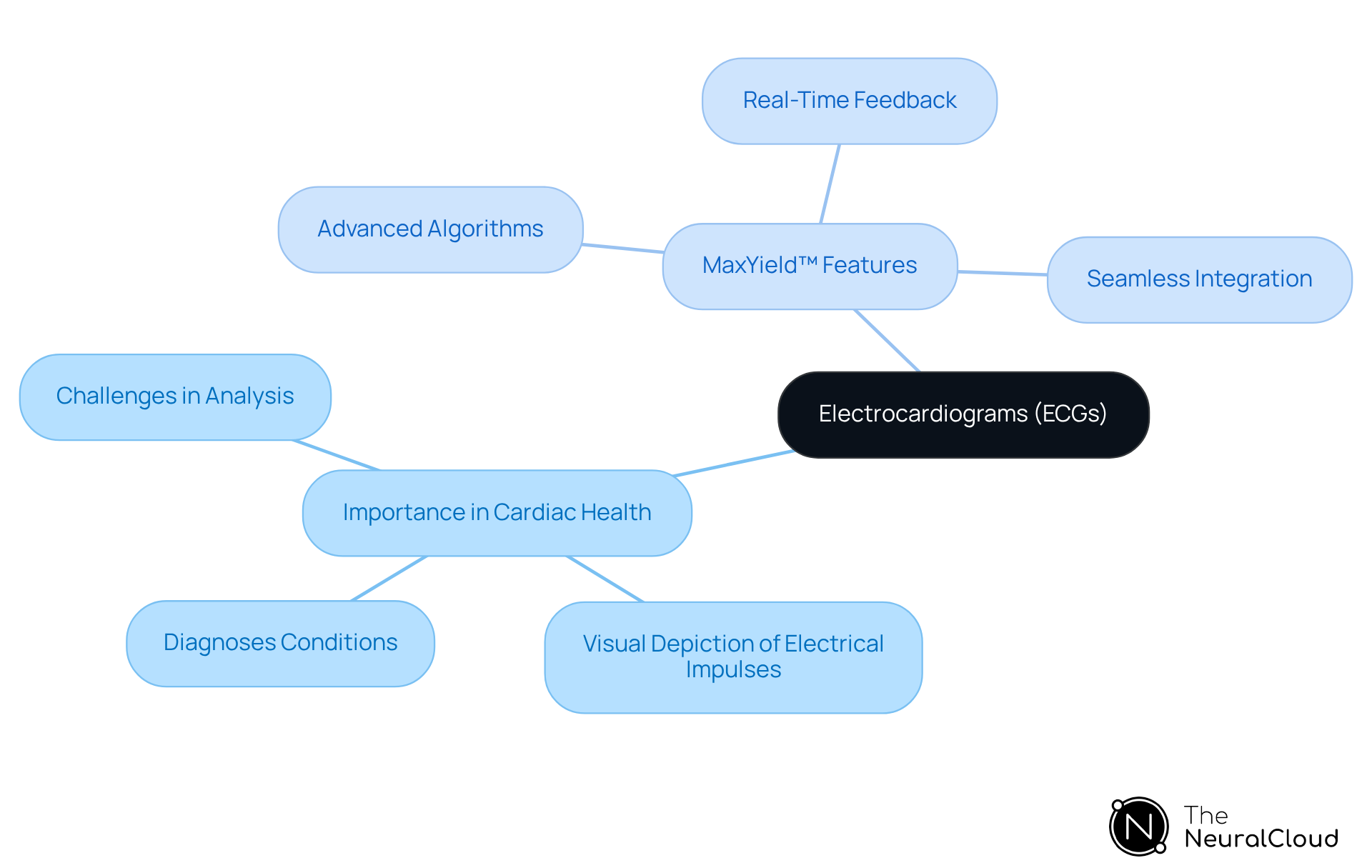
An electrocardiogram (ECG) is a non-invasive test that records the heart's electrical activity over time, playing a crucial role in diagnosing various conditions such as arrhythmias and myocardial infarctions. It provides a visual depiction of electrical impulses, allowing healthcare professionals to assess pulse rate, rhythm, and heart function. However, challenges in interpretation can hinder diagnostic accuracy and efficiency. Recent advancements in ECG technology, particularly through artificial intelligence, have significantly addressed these challenges.
MaxYield™ offers several key features that enhance ECG analysis:
- It incorporates algorithms with high precision.
- It provides real-time data analysis.
- The platform is designed to integrate seamlessly with existing healthcare systems, ensuring a smooth workflow.
These features not only improve diagnostic capabilities but also streamline the overall process of patient care.
The advantages of utilizing MaxYield™ in clinical settings are substantial. By leveraging advanced technology, healthcare professionals can better identify conditions earlier, leading to improved patient outcomes. Additionally, the efficiency gained through real-time analysis allows for more patients to be evaluated in a shorter period, ultimately enhancing patient outcomes. For health tech developers, innovation in patient care is essential for creating effective ECG evaluation tools that meet clinical requirements.
Interpret Normal ECG Results: Key Components and Their Significance
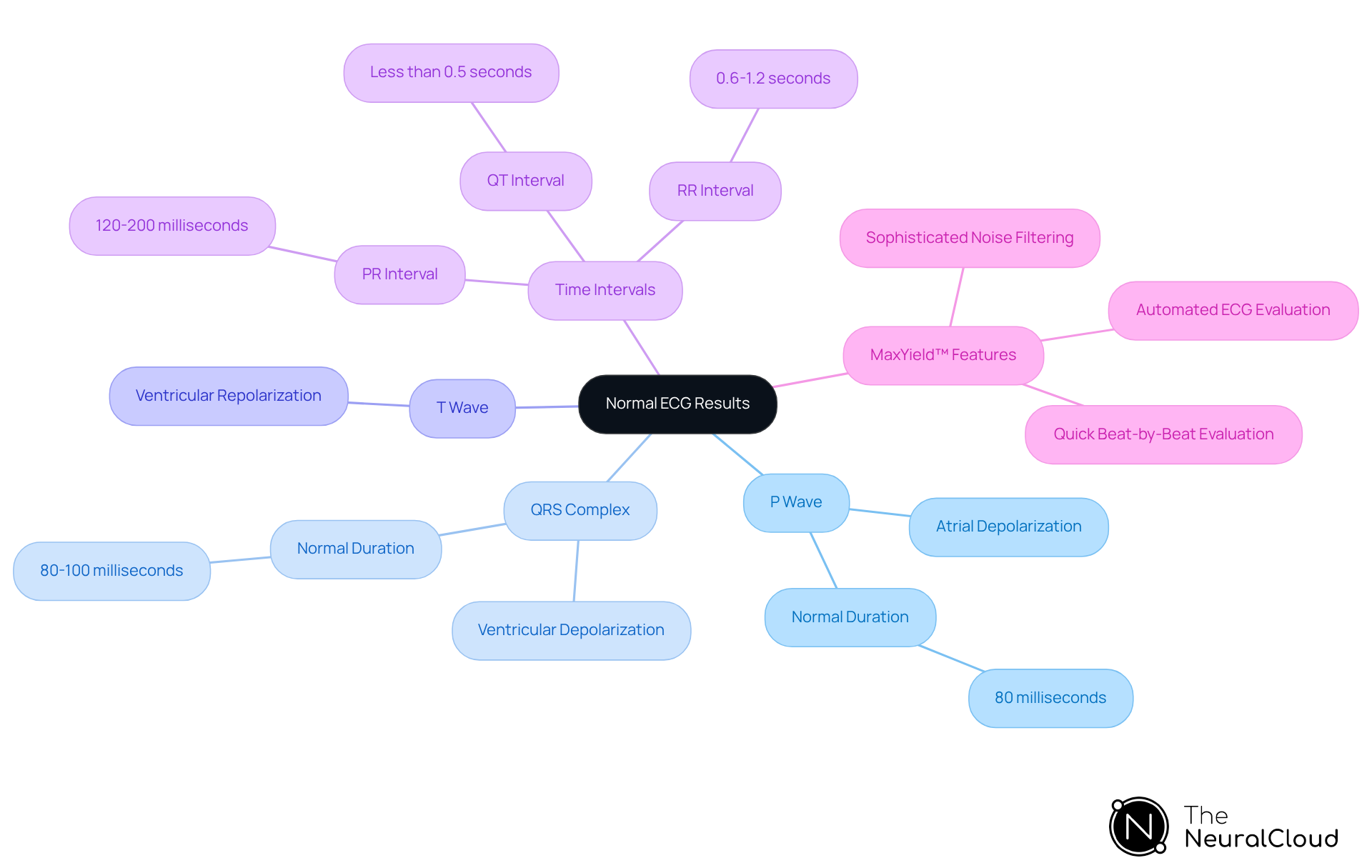
The key components of an electrocardiogram normal result include the P wave, Q wave, and T wave. The P wave represents atrial depolarization, indicating the electrical impulse that triggers the atria to contract. Following this, the Q wave signifies ventricular depolarization, which is crucial for the heart's pumping action. The T wave reflects ventricular repolarization, marking the recovery phase of the ventricles. Each of these components has specific values that are considered to be electrocardiogram normal. For instance, a normal PR interval ranges from 120 to 200 milliseconds, while the QRS duration should be between 80 and 100 milliseconds. Understanding these elements and their significance is essential for developers of health technology. This knowledge enables them to devise algorithms that accurately detect deviations from typical patterns, thereby improving diagnostic accuracy.
MaxYield™ is an advanced platform that automates ECG evaluation and utilizes artificial intelligence methods. This technology ensures that healthcare professionals obtain accurate and actionable heart data. Key features of MaxYield™ include:
- Automation: Streamlines the analysis process.
- Signal enhancement: Enhances the clarity of ECG signals.
- Quick beat-by-beat evaluation: Facilitates the detection of arrhythmias, even in recordings with significant noise and artifacts.
These features collectively improve the efficiency of ECG analysis, allowing for timely and accurate cardiac diagnostics.
Moreover, the PR and ST segments represent isoelectric intervals between atrial and ventricular depolarization and repolarization, which are crucial for accurate interpretation. Managing risk factors such as diet, exercise, and stress is also vital for long-term cardiovascular health, as emphasized by specialists in the field. By leveraging technologies like MaxYield™, developers can significantly enhance the efficiency and accuracy of cardiac diagnostics, ultimately benefiting healthcare providers and their patients.
Explore Factors Affecting ECG Readings: Variations and Anomalies
can be influenced by a variety of factors, leading to significant variations and potential anomalies. Factors such as age, body mass index (BMI), and conditions including electrolyte imbalances and structural cardiac disease play a crucial role in shaping ECG results. For instance, studies indicate that individuals with higher BMI or hypertension tend to exhibit more horizontally oriented cardiac structures, which can affect the interpretation of ECG signals. Additionally, age is significantly associated with changes in ECG parameters, with older patients often showing distinct variations in their readings.
Technical factors also critically impact ECG accuracy. Proper electrode placement, meticulous skin preparation, and the quality of the ECG machine are essential for obtaining accurate results. Misplaced leads can produce misleading waveforms, while external noise can obscure true cardiac signals. For example, a study involving over 39,000 participants highlighted that ECG readings, influenced by factors like BMI and sex, can significantly affect diagnostic outcomes.
Developers must consider these physiological and technical factors when creating algorithms. Ensuring that algorithms can effectively differentiate between genuine cardiac events and artifacts caused by external influences is vital for creating reliable and accurate ECG interpretations. This understanding not only enhances diagnostic capabilities but also supports healthcare professionals in making informed clinical decisions.

Utilize Advanced Technologies for Enhanced ECG Analysis: The Role of AI and Automation
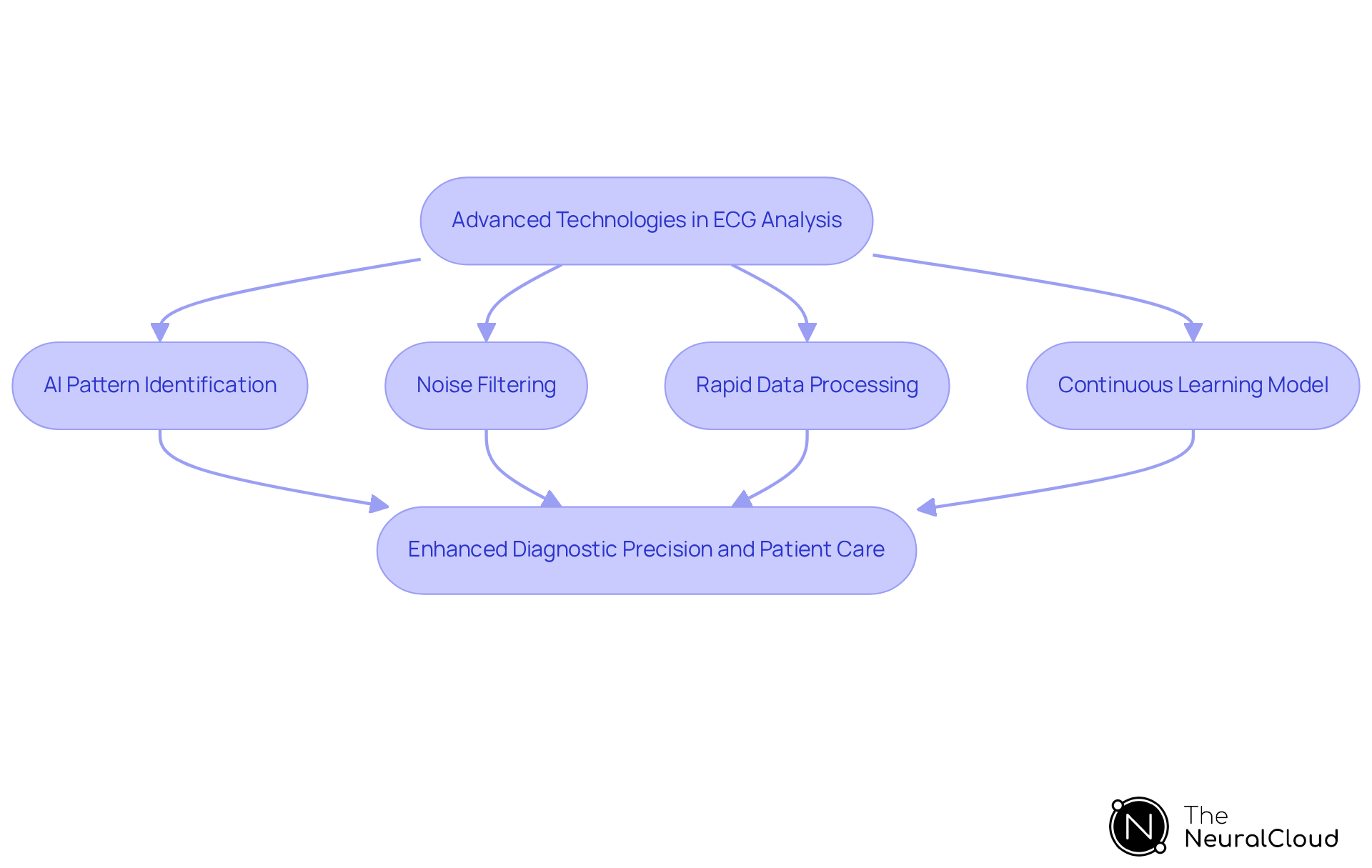
The incorporation of technology, particularly artificial intelligence (AI) and automation, is revolutionizing ECG evaluation. A prime example is Neural Cloud Solutions' platform, which rapidly and accurately analyzes ECG data. This platform identifies patterns that human interpreters might miss, significantly enhancing diagnostic accuracy. Its advanced noise filtering capabilities improve the quality of ECG signals, providing clearer insights into cardiac events.
MaxYield™ is device-agnostic, capable of seamlessly capturing ECG recordings from any 1-lead or 3-lead device. For instance, it can process 200,000 heartbeats in under 5 minutes, offering detailed beat-by-beat evaluations. This automation simplifies the interpretation process, reducing the time required for interpretation and enabling healthcare professionals to focus on patient care rather than manual data examination.
Additionally, MaxYield™ employs a continuous learning model, allowing the system to improve over time as it learns from new data. For healthcare providers, leveraging such innovative technologies is crucial for creating solutions that address the evolving needs of healthcare providers and ultimately enhance patient outcomes. The integration of these advanced features ensures that healthcare professionals can provide timely interventions, ultimately benefiting patient care.
Conclusion
Understanding the intricacies of electrocardiograms (ECGs) is vital for health tech developers aiming to enhance cardiac health diagnostics. This article has explored the essential role of ECGs in identifying heart conditions, emphasizing advancements in technology that make these evaluations more accurate and efficient. By leveraging platforms like MaxYield™, developers can ensure that healthcare professionals are equipped with the tools necessary for timely and precise diagnostics.
The discussion highlighted key components of normal ECG results, such as:
- The P wave
- The QRS complex
- The T wave
These components are crucial for interpreting cardiac function. Additionally, the article addressed factors affecting ECG readings, including:
- Physiological variations
- Technical considerations
This underscores the importance of context in analysis. By integrating advanced technologies like AI and automation, developers can significantly improve the diagnostic process, ultimately enhancing patient care.
In conclusion, the integration of advanced ECG analysis tools is not just a technological advancement; it represents a crucial step towards improved healthcare outcomes. Health tech developers are encouraged to embrace these innovations, ensuring that their solutions not only meet clinical requirements but also contribute to the broader goal of preventive healthcare. By prioritizing the accuracy and efficiency of ECG diagnostics, the potential to save lives and enhance the quality of care is within reach.
Frequently Asked Questions
What is an electrocardiogram (ECG)?
An electrocardiogram (ECG) is a non-invasive test that records the electrical activity of the heart over time, helping to diagnose conditions such as arrhythmias and myocardial infarctions.
Why are ECGs important for cardiac health?
ECGs are crucial for assessing pulse rate, rhythm, and overall cardiac function, which aids in the diagnosis of various heart conditions.
What challenges are associated with ECG analysis?
Challenges in ECG analysis can hinder diagnostic accuracy and efficiency, making it difficult for healthcare professionals to interpret results effectively.
How does MaxYield™ improve ECG analysis?
MaxYield™ enhances ECG analysis through advanced algorithms for precise data analysis, real-time feedback for quick decision-making, and seamless integration with existing healthcare systems.
What are the benefits of using MaxYield™ in clinical settings?
Using MaxYield™ improves diagnostic accuracy, allows for earlier identification of conditions, facilitates timely interventions, and enhances patient outcomes by enabling more efficient evaluations.
What should health tech developers consider when creating ECG evaluation tools?
Health tech developers should understand the vital role of ECGs in patient care to create effective evaluation tools that meet clinical requirements.
List of Sources
- Define Electrocardiograms and Their Importance in Cardiac Health
- pmc.ncbi.nlm.nih.gov (https://pmc.ncbi.nlm.nih.gov/articles/PMC11217891)
- reuters.com (https://reuters.com/business/healthcare-pharmaceuticals/health-rounds-ai-expands-usefulness-common-heart-test-2025-07-18)
- AI Turns ECGs into Powerful Heart Disease Screening Tool (https://insideprecisionmedicine.com/topics/informatics/ai-turns-ecgs-into-powerful-heart-disease-screening-tool)
- AI-powered ECG model outperforms doctors in detecting hidden heart disease (https://news-medical.net/news/20250721/AI-powered-ECG-model-outperforms-doctors-in-detecting-hidden-heart-disease.aspx)
- heart.org (https://heart.org/en/news/2025/02/03/ai-model-could-use-heart-rhythm-data-to-detect-premature-aging)
- Interpret Normal ECG Results: Key Components and Their Significance
- newsroom.heart.org (https://newsroom.heart.org/news/ecg-tests-may-someday-be-used-by-ai-model-to-detect-premature-aging-and-cognitive-decline)
- Normal Electrocardiography (ECG) Intervals: Normal Electrocardiography Intervals (https://emedicine.medscape.com/article/2172196-overview)
- avicennacardiology.com (https://avicennacardiology.com/blog/understanding-a-normal-ecg)
- nature.com (https://nature.com/articles/s41598-025-89013-0)
- Explore Factors Affecting ECG Readings: Variations and Anomalies
- pmc.ncbi.nlm.nih.gov (https://pmc.ncbi.nlm.nih.gov/articles/PMC8650512)
- Researchers unlock hidden geometry of the heart to revolutionise ECG interpretation | King's College London (https://kcl.ac.uk/news/researchers-unlock-hidden-geometry-of-the-heart-to-revolutionise-ecg-interpretation)
- Abnormal EKG: Results, causes, and next steps (https://medicalnewstoday.com/articles/324922)
- pmc.ncbi.nlm.nih.gov (https://pmc.ncbi.nlm.nih.gov/articles/PMC12050362)
- Utilize Advanced Technologies for Enhanced ECG Analysis: The Role of AI and Automation
- AI-powered ECG model outperforms doctors in detecting hidden heart disease (https://news-medical.net/news/20250721/AI-powered-ECG-model-outperforms-doctors-in-detecting-hidden-heart-disease.aspx)
- reuters.com (https://reuters.com/business/healthcare-pharmaceuticals/health-rounds-ai-expands-usefulness-common-heart-test-2025-07-18)
- acc.org (https://acc.org/About-ACC/Press-Releases/2025/03/29/17/21/AI-Model-Shows-High-Accuracy)
- Philips Launches ECG AI Marketplace to Enhance Early Cardiac Diagnosis (https://usa.philips.com/a-w/about/news/archive/standard/news/press/2025/philips-launches-ecg-ai-marketplace-to-enhance-early-cardiac-diagnosis.html)
- medicaleconomics.com (https://medicaleconomics.com/view/cms-sets-medicare-payment-for-ai-enabled-ecg-analysis-boosting-viz-ai-s-hcm-detection-tool)