Introduction
Navigating the complexities of cardiac care requires a deep understanding of Non-ST Elevation Myocardial Infarction (NSTEMI), a condition that presents unique diagnostic challenges. NSTEMI occurs when there is partial obstruction of the artery, and it does not show significant ST-segment elevation on an ECG, making diagnosis particularly challenging and potentially affecting patient outcomes. Given that NSTEMI represents a significant portion of heart attack cases, clinicians must ask: how can they effectively distinguish it from other cardiac events to provide timely and appropriate treatment?
Define NSTEMI: Understanding Non-ST Elevation Myocardial Infarction
Non-ST Elevation Myocardial Infarction presents unique challenges in diagnosis and treatment, making awareness essential for healthcare professionals. This serious form of heart attack occurs due to partial obstruction of a heart artery, leading to reduced blood flow to the heart muscle. Unlike ST-Elevation Myocardial Infarction (STEMI), non-ST elevation myocardial infarction is marked by the absence of significant ST-segment elevation on an electrocardiogram (ECG).
To diagnose this condition, healthcare professionals look for symptoms of acute heart syndrome (ACS) and check for elevated cardiac biomarkers, particularly troponins, which signal heart injury. The absence of ST-segment elevation in non-ST elevation myocardial infarction makes it harder to detect than STEMI. However, timely identification and treatment are essential to minimize further cardiac damage. Recognizing the nuances of non-ST elevation myocardial infarction can ultimately save lives by ensuring timely and effective care.

Contextualize NSTEMI: Clinical Importance and Differentiation from Other Conditions
Non-ST-segment elevation infarction presents significant challenges in acute coronary syndrome management, making the criteria for NSTEMI essential for precise differentiation from other cardiac conditions. It's crucial to differentiate non-ST elevation myocardial infarction from unstable angina and ST-segment elevation heart attack (STEMI) because the criteria for NSTEMI require different management strategies and have unique prognoses. Unlike unstable angina, which does not result in muscle tissue death, a non-ST elevation heart attack indicates actual damage to the cardiac muscle. Understanding this distinction is essential for implementing effective treatment strategies that meet the criteria for NSTEMI.
Non-ST elevation myocardial infarction is clinically significant and meets the criteria for NSTEMI, accounting for about 70% of all myocardial infarction cases, according to recent Canadian studies. This statistic underscores the need for healthcare providers to prioritize early identification and intervention according to the criteria for NSTEMI, as prompt treatment can greatly reduce morbidity and mortality linked to heart disease. In Canada, the prompt use of high-sensitivity troponin tests, which meet the criteria for NSTEMI diagnosis due to their sensitivity and specificity, has enhanced diagnostic accuracy. These assays enable rapid rule-out algorithms that improve patient management and reduce adverse cardiovascular events.
Moreover, case studies from Canadian healthcare environments demonstrate the effect of efficient management according to the criteria for NSTEMI. For example, the application of standardized protocols for early intervention has been associated with enhanced patient outcomes, highlighting the importance of prompt action in response to the criteria for NSTEMI symptoms. With cardiovascular disease being a leading cause of mortality worldwide, understanding the criteria for NSTEMI and addressing its complexities is essential for improving cardiac care and patient outcomes. Additionally, it is important to recognize the racial and sex-based disparities in the management of acute coronary syndromes, which can affect treatment accessibility and outcomes. Addressing these disparities is crucial for ensuring that all patients receive the timely and effective care they need.

Outline Diagnostic Criteria for NSTEMI: Clinical, ECG, and Biomarker Indicators
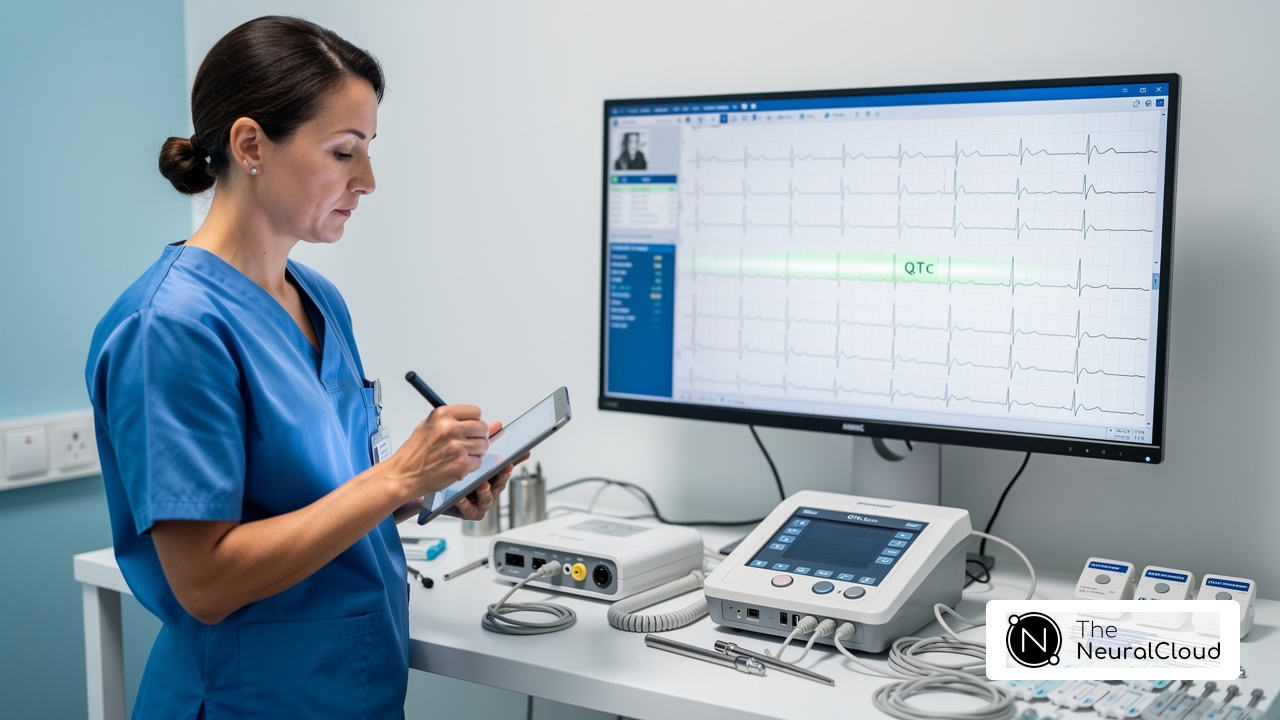
Diagnosing non-ST elevation myocardial infarction presents significant challenges due to the complexity of clinical presentations and ECG findings. Patients often report chest pain or discomfort that may radiate to the arms, neck, or jaw, frequently accompanied by symptoms like shortness of breath or sweating. ECG findings suggestive of non-ST elevation myocardial infarction may include ST-segment depression or T-wave inversions, both indicating myocardial ischemia. A definitive diagnosis relies on elevated levels of cardiac biomarkers, especially troponin I or T. These biomarkers are released into the bloodstream when heart muscle cells are damaged. In Canada, studies indicate that the prevalence of MINOCA among non-ST elevation myocardial infarction patients ranges from 5% to 14%, underscoring the need for accurate diagnosis and tailored management strategies.
Moreover, advancements in cardiac imaging, such as LGE-CMR, have shown the ability to detect the infarct-related artery (IRA) in 60% of cases where it was not apparent through coronary angiography. This highlights the evolving landscape of non-ST elevation myocardial infarction diagnostics. The incorporation of these clinical indicators and new diagnostic tools, including regulatory compliance information regarding FDA Class II SaMD clearance-pending status, is essential for verifying non-ST elevation myocardial infarction and directing effective treatment pathways.
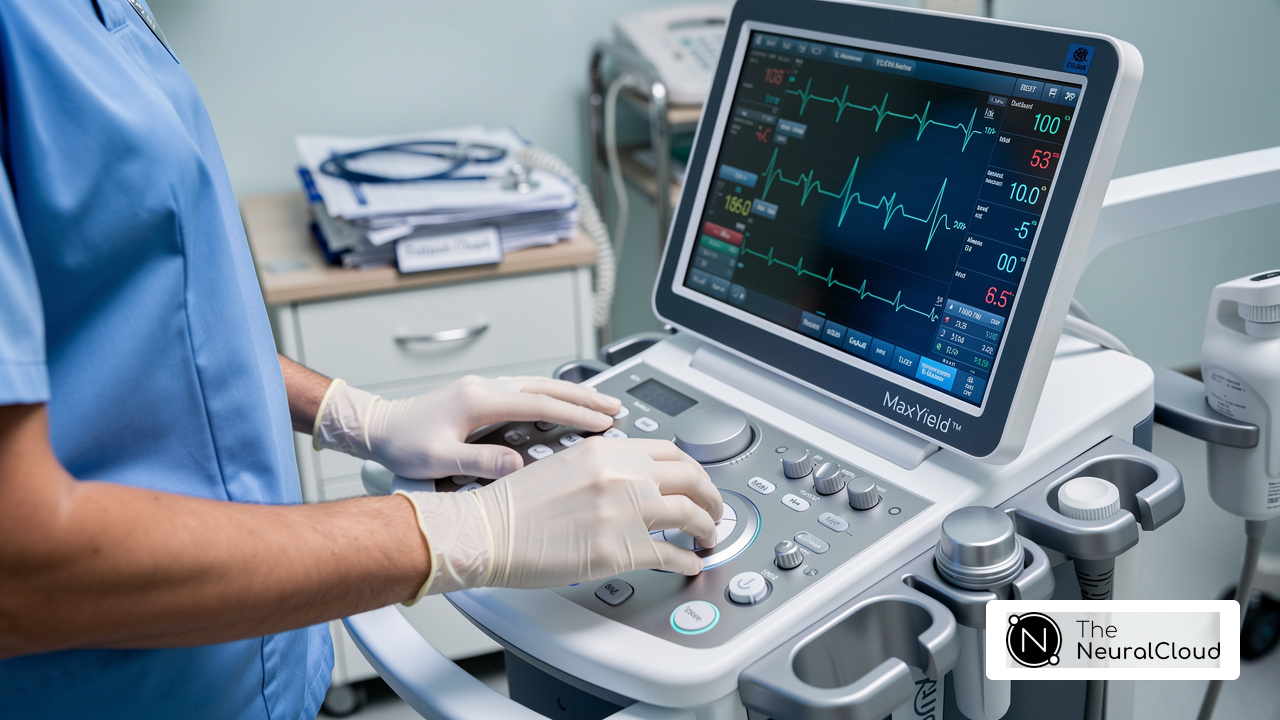
With the integration of MaxYield™, healthcare professionals can leverage advanced noise filtering and distinct wave recognition capabilities to enhance the accuracy of ECG interpretations, even in challenging conditions with high levels of noise and artifact. This innovative technology allows for the rapid isolation of critical ECG waves from recordings affected by baseline wander, movement, and muscle artifact, salvaging previously obscured sections of lengthy Holter, 1-Lead, and patch monitor recordings. These indicators, combined with clinical symptoms and the enhanced diagnostic capabilities of MaxYield™, confirm the diagnosis of non-ST elevation myocardial infarction. This confirmation guides subsequent management strategies.
Experts such as Dr. Alan Rabinowitz, Dr. Brett Heilbron, and Dr. Marc W. Deyell point out that MaxYield™ matches human interpretation in precision while greatly reducing noise, making it a vital tool for diagnostics. Additionally, Insight360 serves as a customizable visualization and reporting tool that transforms MaxYield’s clean ECG data into interactive dashboards and clinical-ready reports.

Examine Epidemiology and Risk Factors: Who is Affected by NSTEMI?
Older individuals, particularly those over 65, are significantly affected by this condition, especially if they have a history of heart artery disease, hypertension, diabetes, smoking, or high cholesterol. Women, especially those over 75 and those with diabetes, may experience atypical symptoms that meet the criteria for NSTEMI during a non-ST elevation myocardial infarction, such as stabbing chest pain, abdominal pain, and indigestion. While men generally face a higher risk, particularly at younger ages, the risk for women increases after menopause.
Studies show that non-ST elevation myocardial infarction accounts for a significant portion of heart attacks, with approximately 546,000 cases reported annually in the U.S. alone. In total, over 800,000 individuals experience heart attacks each year, the majority being non-ST elevation myocardial infarctions. Similar trends are observed in Canada, underscoring the importance of understanding these demographics and risk factors.
Regular physical exercise after a heart attack can reduce mortality by 20%, which underscores the criteria for NSTEMI in managing risk factors through lifestyle changes. Moreover, 30% of respondents reported a family history of heart issues, which highlights the psychosocial factors that are part of the criteria for NSTEMI risk. This knowledge is crucial for healthcare providers aiming to implement effective prevention strategies and enhance patient outcomes.

Conclusion
Healthcare professionals face significant challenges in diagnosing and treating Non-ST Elevation Myocardial Infarction (NSTEMI). This article has explored key insights, including:
- Definition and clinical significance of NSTEMI
- Diagnostic criteria and the role of cardiac biomarkers
- Importance of timely intervention for better patient outcomes.
By recognizing the nuances of NSTEMI, healthcare providers can ensure that patients receive the appropriate care necessary to mitigate the risks associated with this serious condition. The differentiation of NSTEMI from other cardiac conditions, such as unstable angina and STEMI, is vital, as each requires distinct management strategies. Elevated cardiac biomarkers, particularly troponins, and ECG findings play a significant role in diagnosing NSTEMI. Furthermore, advancements in diagnostic tools, such as MaxYield™, enhance the accuracy of ECG interpretations, ultimately guiding effective treatment pathways. The epidemiology and risk factors associated with NSTEMI underscore the need for targeted prevention strategies, especially among vulnerable populations.
In conclusion, a deeper understanding of NSTEMI can lead to more effective patient care and improved outcomes in the fight against cardiovascular disease.
Frequently Asked Questions
What is NSTEMI?
NSTEMI, or Non-ST Elevation Myocardial Infarction, is a serious form of heart attack caused by partial obstruction of a heart artery, leading to reduced blood flow to the heart muscle. It is characterized by the absence of significant ST-segment elevation on an electrocardiogram (ECG).
How does NSTEMI differ from STEMI?
The primary difference between NSTEMI and STEMI (ST-Elevation Myocardial Infarction) is that NSTEMI does not show significant ST-segment elevation on an ECG, making it more challenging to detect compared to STEMI.
What are the symptoms of NSTEMI?
Symptoms of NSTEMI are similar to those of acute coronary syndrome (ACS) and may include chest pain, shortness of breath, and other signs of heart distress.
How is NSTEMI diagnosed?
NSTEMI is diagnosed by healthcare professionals through the assessment of symptoms related to acute coronary syndrome and by checking for elevated cardiac biomarkers, particularly troponins, which indicate heart injury.
Why is timely identification and treatment of NSTEMI important?
Timely identification and treatment of NSTEMI are crucial to minimize further cardiac damage and improve patient outcomes, as prompt care can ultimately save lives.
List of Sources
- Define NSTEMI: Understanding Non-ST Elevation Myocardial Infarction
- New global definition of myocardial infarction aims to improve diagnosis, treatment and patient understanding (https://escardio.org/news/press/press-releases/new-global-definition-of-myocardial-infarction-aims-to-improve-diagnosis-treatment-and-patient-understanding)
- New Myocardial Infarction Definition Simplifies Diagnosis: ESC 2026 (https://emjreviews.com/cardiology/news/new-myocardial-infarction-definition-simplifies-diagnosis-esc-2026)
- Fifth Universal Definition of MI Unveiled at ESC 2026 (https://tctmd.com/news/fifth-universal-definition-mi-unveiled-esc-2026)
- Fifth Universal Definition of Myocardial Infarction (https://solaci.org/en/2026/09/02/esc-2026-fifth-universal-definition-of-myocardial-infarction-new-classification-and-diagnostic-changes)
- Fifth Universal Definition of Myocardial Infarction (2026) (https://professional.heart.org/en/science-news/fifth-universal-definition-of-myocardial-infarction-2026)
- Contextualize NSTEMI: Clinical Importance and Differentiation from Other Conditions
- Acute coronary syndromes - PMC (https://pmc.ncbi.nlm.nih.gov/articles/PMC8970581)
- New recognition of heart attacks mainly affecting women (https://bhf.org.uk/what-we-do/news-from-the-bhf/news-archive/2026/september/new-recognition-of-heart-attacks-mainly-affecting-women)
- What Is an NSTEMI? (https://my.clevelandclinic.org/health/diseases/22233-nstemi-heart-attack)
- The incidence and outcomes of acute coronary syndromes in a central European country: Results of the CZECH-2 registry (https://sciencedirect.com/science/article/pii/S0167527314003660)
- Coverage of SCAI Scientific Sessions 2026 | SCAI (https://scai.org/media-center/news-and-articles/coverage-scai-scientific-sessions-2026)
- Outline Diagnostic Criteria for NSTEMI: Clinical, ECG, and Biomarker Indicators
- New global definition of myocardial infarction aims to improve diagnosis, treatment and patient understanding (https://escardio.org/news/press/press-releases/new-global-definition-of-myocardial-infarction-aims-to-improve-diagnosis-treatment-and-patient-understanding)
- New Guideline on Acute Coronary Syndromes: Key Takeaways (https://consultqd.clevelandclinic.org/new-guideline-on-acute-coronary-syndromes-key-takeaways-for-cardiologists)
- Diagnosis, risk stratification, and early management of non-ST-segment elevation acute coronary syndrome (https://eurointervention.pcronline.com/article/diagnosis-risk-stratification-and-early-management-of-non-st-segment-elevation-acute-coronary-syndrome)
- UA/NSTEMI – Management : Emergency Care BC (https://emergencycarebc.ca/clinical_resource/clinical-summary/ua-nstemi-management)
- Examine Epidemiology and Risk Factors: Who is Affected by NSTEMI?
- Studies Find Underrepresented Groups Remain at Highest Risk of Heart Attack Despite 50% National Incidence Decline - Cardiac Interventions Today (https://citoday.com/news/studies-find-underrepresented-groups-remain-at-highest-risk-of-heart-attack-despite-50-national-incidence-decline)
- Risk Factors in Patients with Non-ST Segment Elevation Myocardial Infarction - PMC (https://pmc.ncbi.nlm.nih.gov/articles/PMC7780762)
- Heart attack deaths rose between 2011 and 2022 among adults younger than age 55 (https://newsroom.heart.org/news/releases-20260219)
- Non-ST-Elevation Myocardial Infarction (NSTEMI) | Baylor Scott & White Health (https://bswhealth.com/conditions/non-st-elevation-myocardial-infarction-nstemi)
- A 66-Year-Old Woman with Intermittent Chest Pain and Dyspnea Who Underwent Continued ST-Segment Monitoring to Identify Occult ST-Segment Elevation that Expedited Coronary Angiography and Revascularization (https://amjcaserep.com/abstract/full/idArt/929736)