Introduction
Differentiating between ST-Elevation Myocardial Infarction (STEMI) and a normal ECG is a critical skill that can save lives in emergency medicine. As healthcare technology evolves, especially with artificial intelligence, the ability to interpret these readings has significantly improved, leading to better patient outcomes. Yet, how can clinicians tell the difference between the critical signs of a STEMI and the reassuring patterns of a normal ECG? Misdiagnosis can have serious consequences.
We’ll explore the key differences, diagnostic criteria, and how AI is transforming ECG analysis, a topic that’s crucial for both medical professionals and patients.
Define STEMI and Normal ECG: Key Characteristics
ST-Elevation Myocardial Infarction (STEMI) presents unique challenges in ECG analysis, especially when assessing STEMI vs normal ECG, that demand immediate attention. It is characterized by a significant rise in the ST segment of the ECG, indicating a total obstruction of a coronary artery and leading to myocardial ischemia. Immediate recognition of symptoms like chest pain, shortness of breath, and diaphoresis is vital to prevent further complications. In contrast, a Normal ECG shows the heart's electrical activity without abnormalities, and when analyzing STEMI vs normal ECG, it exhibits a regular rhythm and well-defined waveforms (P, QRS, T) that indicate proper cardiac function. Key characteristics of a Normal ECG include:
- Heart rate between 60-100 beats per minute.
- Consistent rhythm originating from the sinoatrial node.
- Normal PR interval ranging from 0.12 to 0.20 seconds.
- QRS duration between 0.06 to 0.10 seconds.
- Absence of ST segment elevation or depression.
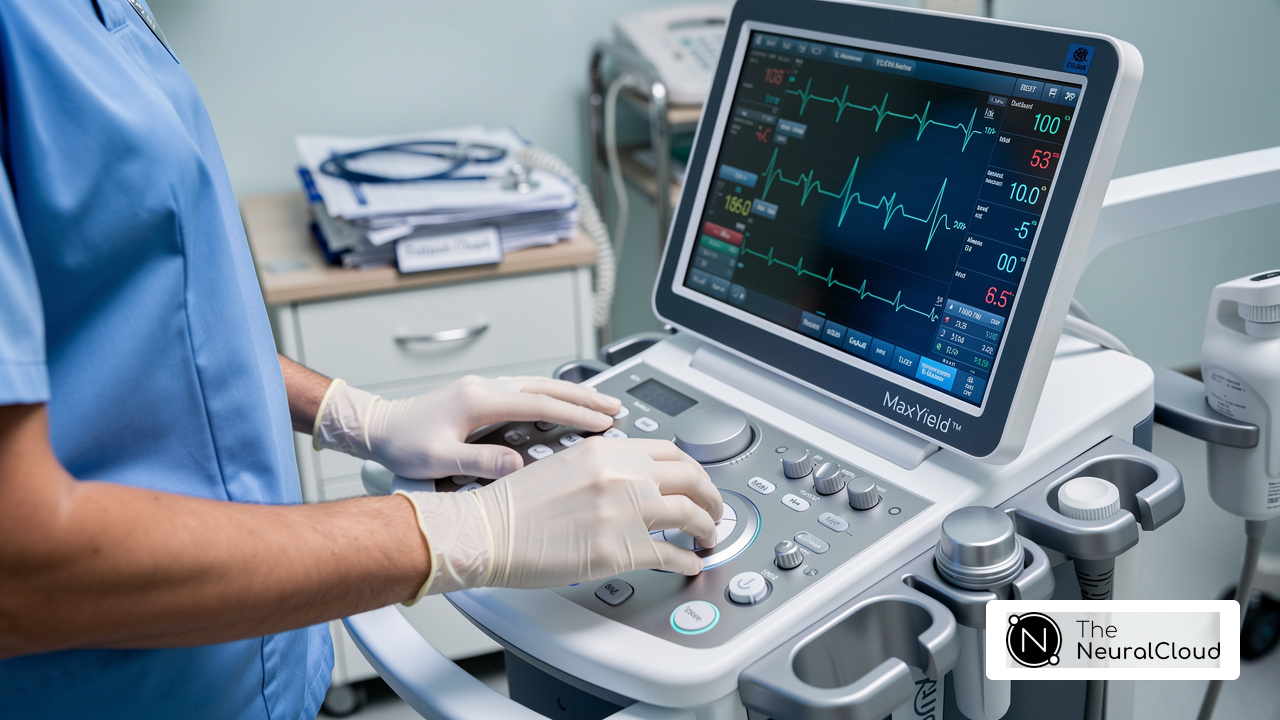
Recognizing the differences in STEMI vs normal ECG is essential for making accurate diagnoses and planning effective treatments. For instance, in a case study involving a 62-year-old man with ST elevation in leads II, III, and aVF, the diagnosis was confirmed as STEMI, highlighting the need for urgent intervention. Conversely, a Normal ECG would show no such elevations, which reinforces the importance of understanding STEMI vs normal ECG in clinical settings. Recent advancements in digital health, particularly with Neural Cloud Solutions' offering, emphasize the importance of achieving hospital-grade ECG accuracy from consumer-grade devices. MaxYield™ ensures clean PPG data and enhances the reliability of ECG readings, which is critical for timely diagnosis of STEMIs. Timely diagnosis is proven to enhance patient outcomes, highlighting the essential role of ECG interpretation in emergency medicine. Dr. Navdeep Sekhon points out that acting quickly during a myocardial infarction can significantly lower the risks of complications.

Compare Diagnostic Criteria: STEMI vs Normal ECG Patterns
Accurate ECG interpretation is crucial, particularly in understanding STEMI vs normal ECG, yet many clinicians struggle with the complexities of ST-Elevation Myocardial Infarction diagnosis. When comparing STEMI vs normal ECG, the diagnostic criteria for ST-Elevation Myocardial Infarction (STEMI) include ST-segment elevation of at least 1 mm in two adjacent leads on a 12-lead ECG, along with clinical symptoms suggesting myocardial infarction. In the comparison of STEMI vs normal ECG, a normal ECG shows no elevations or depressions, keeping all waveforms within standard limits. For instance, in myocardial infarction cases, the QRS complex may show notable changes, including abnormal Q waves, while a normal ECG retains stable morphology across all leads. In the comparison of STEMI vs normal ECG, the T wave in an ST elevation myocardial infarction may become inverted or flattened, indicating ischemia, while in a normal ECG, the T wave is typically upright and follows the QRS complex. Clinicians need to understand the distinction of STEMI vs normal ECG to tell the difference between a serious cardiac event and normal heart function. Recent studies emphasize the importance of maintaining a high index of suspicion for STEMI, as symptoms can vary widely among individuals, particularly in groups such as the elderly, diabetic, and female patients who may present with atypical symptoms. Misinterpretation can delay critical treatment, potentially worsening patient outcomes. Notably, STEMIs have the highest mortality and morbidity rates among acute coronary syndromes, underscoring the urgency of accurate diagnosis. As emphasized by cardiologists, 'The quicker an individual undergoes revascularization, the better outcome they will have.' Clinicians should also be aware of specific patterns such as De Winter's sign, characterized by upsloping ST depression greater than 1 mm in the precordial leads, indicating an occlusion of the left anterior descending artery. Furthermore, guidelines recommend that patients presenting with chest pain receive an electrocardiogram (ECG) within 10 minutes of arrival to facilitate rapid recognition and treatment. Integrating advanced solutions like Neural Cloud Solutions' platform offers several key benefits:
- Automated ECG analysis
- Beat-by-beat insights
- Detailed analysis of P-wave, QRS complex, and T-wave onsets
- Enhanced diagnostic precision
- Improved workflow efficiency
This capability enables clinicians to concentrate on the most pertinent aspects of the ECG, ultimately enhancing diagnostic precision and workflow efficiency in the context of heart attack assessment.

Analyze Clinical Implications: Consequences of Misdiagnosis
The misdiagnosis of heart attacks poses significant risks, including delayed treatment and increased mortality rates. A recent study found that among 28,470 individuals diagnosed with acute myocardial infarction, 1.4% were misdiagnosed as having STEMI, emphasizing the critical need for accurate interpretation of STEMI vs normal ECG. For patients with culprit lesions in the left anterior descending artery, the adjusted one-year mortality risk for misdiagnosis was 1.84, highlighting the serious implications of delayed diagnosis. Additionally, those misdiagnosed faced a median door-to-angiography time of 220 minutes, five times longer than the promptly diagnosed group, significantly affecting outcomes.
Misdiagnosing a normal ECG when considering STEMI vs normal ECG as a heart attack can lead to unnecessary interventions, increased healthcare costs, and elevated anxiety for patients. Furthermore, 19% of STEMI patients did not present with chest pain, complicating the diagnostic process. Getting timely reperfusion therapy is crucial for reducing myocardial damage, making it essential to enhance ECG interpretation skills among healthcare providers.
Neural Cloud Solutions' premier platform utilizes advanced AI technology to convert extensive and noisy ECG recordings into clear, precise signals, greatly improving the accuracy and effectiveness of ECG analysis. By automating manual tasks and addressing challenges such as physiological variability and signal artifacts, MaxYield™ plays a vital role in improving diagnostic precision.
Factors such as previous heart failure, atypical chest pain, anemia, or symptom-to-door time of four hours or more have been shown to significantly increase the odds of misdiagnosis, further emphasizing the urgent need for improved training and standardization in ECG interpretation.

Evaluate Technological Innovations: Enhancing ECG Analysis with AI
Despite advancements in technology, ECG analysis still faces significant challenges, particularly in accurately identifying the differences in STEMI vs normal ECG. Recent advancements in artificial intelligence have dramatically enhanced this process. AI algorithms can swiftly analyze extensive ECG data, pinpointing subtle changes that human interpreters might overlook. Studies indicate that AI-powered systems can lower false positives in STEMI detection from nearly 42% to around 8%. This improvement significantly boosts diagnostic accuracy and allows for timely interventions.
Technologies like Neural Cloud Solutions utilize a patented signal mapping algorithm that isolates and cleans noisy signals, delivering high-fidelity cardiac data essential for precise interpretation. Additionally, the system incorporates a continuous learning model that adapts to new data, further enhancing its real-time analysis capabilities. This capability enables clinicians to make swift, informed decisions based on reliable insights.
As these technologies evolve, they promise to revolutionize cardiology, improving diagnostic accuracy and patient outcomes. The Queen of Hearts algorithm, for example, demonstrated a sensitivity of 92% and specificity of 81% in detecting STEMI, showcasing the potential of AI to optimize patient care and resource allocation in emergency settings while reinforcing the capabilities of the MaxYield™ platform.

Conclusion
Recognizing the differences between ST-Elevation Myocardial Infarction (STEMI) and a Normal ECG is essential for effective diagnosis and prompt treatment. The significant differences in ST segment elevation and other key characteristics highlight the necessity for clinicians to swiftly recognize these patterns. Differentiating between a life-threatening condition like STEMI and normal heart function is vital. It can significantly impact patient outcomes and lower the risks of delayed treatment.
Key insights discussed include the diagnostic criteria that define STEMI, such as:
- ST-segment elevation in adjacent leads
- The presence of clinical symptoms
The article also outlines the serious implications of misdiagnosis, including:
- Increased mortality rates
- Unnecessary interventions
Furthermore, the role of advanced technologies, particularly AI innovations in ECG analysis, is underscored as a vital tool in enhancing diagnostic accuracy and efficiency, allowing healthcare providers to make informed decisions quickly.
Given these findings, healthcare professionals must focus on improving their ECG interpretation skills and adopting new technologies. Integrating AI in ECG analysis improves diagnostic precision and helps ensure patients get timely interventions, which can save lives. As the field of cardiology continues to evolve, staying informed about the latest advancements and understanding the critical differences between STEMI and normal ECG will be essential for improving patient care and outcomes.
Frequently Asked Questions
What is STEMI?
ST-Elevation Myocardial Infarction (STEMI) is a serious condition characterized by a significant rise in the ST segment of the ECG, indicating a total obstruction of a coronary artery and leading to myocardial ischemia.
What are the key symptoms of STEMI that require immediate attention?
Key symptoms of STEMI include chest pain, shortness of breath, and diaphoresis (excessive sweating).
How does a Normal ECG differ from a STEMI ECG?
A Normal ECG shows the heart's electrical activity without abnormalities, exhibiting a regular rhythm and well-defined waveforms (P, QRS, T). In contrast, a STEMI ECG shows ST segment elevation.
What are the key characteristics of a Normal ECG?
Key characteristics of a Normal ECG include:
- Heart rate between 60-100 beats per minute
- Consistent rhythm originating from the sinoatrial node
- Normal PR interval ranging from 0.12 to 0.20 seconds
- QRS duration between 0.06 to 0.10 seconds
- Absence of ST segment elevation or depression
Why is it important to recognize the differences between STEMI and Normal ECG?
Recognizing the differences is essential for making accurate diagnoses and planning effective treatments, which can significantly impact patient outcomes.
Can you provide an example of a STEMI diagnosis?
An example includes a case study of a 62-year-old man who exhibited ST elevation in leads II, III, and aVF, leading to a confirmed diagnosis of STEMI that required urgent intervention.
How do recent advancements in digital health improve ECG accuracy?
Recent advancements, such as Neural Cloud Solutions' MaxYield™, enhance the reliability of ECG readings by ensuring clean PPG data, which is critical for timely diagnosis of STEMIs.
What is the significance of timely diagnosis in cases of myocardial infarction?
Timely diagnosis is proven to enhance patient outcomes and can significantly lower the risks of complications during a myocardial infarction, highlighting the essential role of ECG interpretation in emergency medicine.
List of Sources
- Define STEMI and Normal ECG: Key Characteristics
- ECG Learning Center - An introduction to clinical electrocardiography (https://ecg.utah.edu/lesson/3)
- National Incidence of Heart Attacks Decline 50% Since 2004, Yet Underrepresented Groups Remain at Highest Risk | SCAI (https://scai.org/media-center/news-and-articles/national-incidence-heart-attacks-decline-50-2004-yet)
- ECG Case Studies | Interpretation & Answers | Geeky Medics (https://geekymedics.com/ecg-case-studies)
- STEMI - Electrocardiogram - M3 Curriculum | SAEM (https://saem.org/about-saem/academies-interest-groups-affiliates2/cdem/for-students/online-education/m3-curriculum/group-electrocardiogram-(ecg)-rhythm-recognition/stemi)
- Compare Diagnostic Criteria: STEMI vs Normal ECG Patterns
- sciencedirect.com (https://sciencedirect.com/science/article/pii/S0196064424012502)
- STEMI - Electrocardiogram - M3 Curriculum | SAEM (https://saem.org/about-saem/academies-interest-groups-affiliates2/cdem/for-students/online-education/m3-curriculum/group-electrocardiogram-(ecg)-rhythm-recognition/stemi)
- STEMI ECG Criteria: ST-Elevation Thresholds (https://powerfulmedical.com/blog/stemi-ecg-criteria)
- Analyze Clinical Implications: Consequences of Misdiagnosis
- pmc.ncbi.nlm.nih.gov (https://pmc.ncbi.nlm.nih.gov/articles/PMC10356100)
- Evaluate Technological Innovations: Enhancing ECG Analysis with AI
- New study finds AI model improves heart attack detection (https://health.ucdavis.edu/news/headlines/new-study-finds-ai-model-improves-heart-attack-detection/2025/11)
- AI-Based ECG Analysis Significantly Improves STEMI Detection, Reduces False Activations - American College of Cardiology (https://acc.org/latest-in-cardiology/articles/2025/10/24/16/56/tues-554pm-ai-tct-2025)
- ECG market keeps evolving thanks to AI, home monitoring and Epic integration (https://signifyresearch.net/2026/02/13/ecg-market-keeps-evolving-thanks-to-ai-home-monitoring-and-epic-integration)