Introduction
Understanding heart rhythms is essential for healthcare professionals, as misdiagnosis can lead to serious patient outcomes. Normal Sinus Rhythm (NSR) indicates a well-functioning electrical conduction system. In contrast, First Degree AV Block presents diagnostic challenges that may be easily overlooked.
We will explore the key criteria for identifying these conditions and their implications for patient care. Additionally, we will discuss innovative technologies, including AI-driven tools, that enhance ECG analysis. Advanced solutions can significantly change how healthcare providers monitor and manage cardiac rhythms, leading to timely interventions and better patient outcomes.
Define Normal Sinus Rhythm and First Degree AV Block
Interpreting ECGs can be challenging, especially when faced with noise and artifacts that obscure critical data. Normal Sinus Rhythm (NSR) is characterized by a regular heartbeat originating from the sinoatrial (SA) node, with a rate typically between 60 to 100 beats per minute. It reflects a healthy electrical conduction system in the heart, where impulses are transmitted efficiently from the atria to the ventricles. In contrast, Primary AV Block involves a delay in the transmission of electrical impulses through the atrioventricular (AV) node, leading to an extended PR interval exceeding 200 milliseconds on an ECG. Often, people don’t even realize they have this condition until it’s spotted during a routine ECG check.
Recent studies suggest that Primary AV Block is common in roughly 1-2% of the general population, with increased rates noted in older adults. As individuals age, the likelihood of developing associated rhythm disturbances, such as atrial fibrillation or higher-degree AV blocks, increases. For example, the Framingham Study indicated that individuals with extended PR intervals or Initial AV Block have double the risk of developing atrial fibrillation. Let’s look at how real-world ECG interpretations bring these concepts to life. An ECG displaying a PR interval of 0.32 seconds verifies a diagnosis of Primary AV Block, while a normal sinus rhythm is represented by a steady rate and regular P waves succeeded by QRS complexes. Cardiologists highlight the significance of identifying these patterns, as they offer essential insights into an individual's cardiac health.
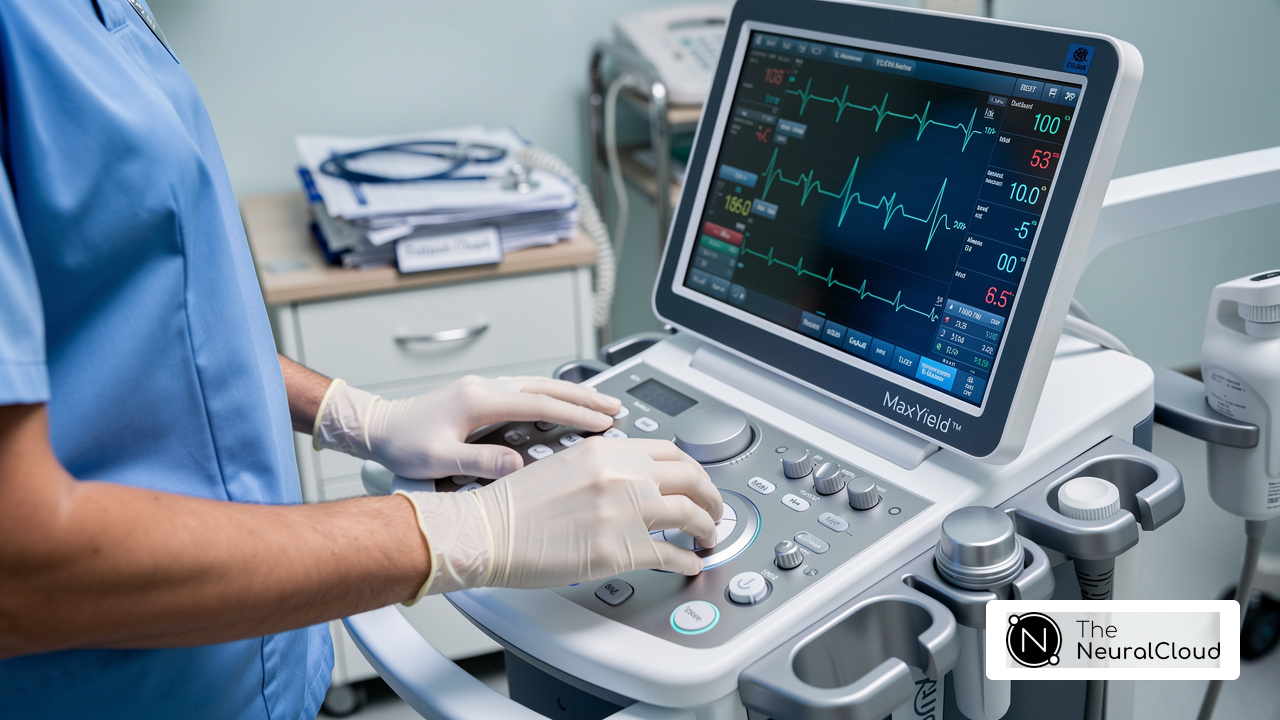
The MaxYield™ platform from Neural Cloud Solutions takes ECG analysis to the next level by pinpointing and labeling crucial data, even when recordings are muddled with noise and artifacts. By rapidly isolating ECG waves from recordings affected by baseline wander, movement, and muscle artifact, MaxYield™ salvages previously obscured sections of lengthy Holter, 1-Lead, and patch monitor recordings. This advanced noise filtering and wave recognition technology not only improves the accuracy of ECG interpretations but also addresses the challenges posed by physiological variability and signal artifacts, making it an invaluable tool for healthcare professionals. Understanding the nuances of NSR with first degree AV block is essential for accurate ECG analysis, and the MaxYield™ platform empowers healthcare professionals to achieve this with confidence.

Identify Diagnostic Criteria for First Degree AV Block
Understanding the diagnostic criteria for nsr with first degree av block is crucial for effective ECG analysis. The diagnostic criteria for Primary AV Block include:
- Prolonged PR Interval: The PR interval on the ECG is consistently greater than 200 milliseconds, indicating delayed conduction through the AV node. In some cases, the PR interval can extend to 0.32 seconds. Individuals with nsr with first degree av block are three times more likely to require a pacemaker.
- Consistent Conduction: Every P wave is followed by a QRS complex, confirming that all atrial impulses are conducted to the ventricles, albeit with a delay.
- Asymptomatic Presentation: Approximately 70% of individuals with nsr with first degree av block do not exhibit symptoms, making it often an incidental finding during routine ECG evaluations.
- Clinical Context: It is essential to consider the individual's clinical history and any underlying conditions, such as coronary artery disease or heart failure, that may contribute to the block. Additionally, routine follow-up monitoring is recommended for patients with nsr with first degree av block, especially as they age or develop other conditions that may increase the risk of progression.
Understanding these criteria helps developers refine their ECG analysis tools, such as Neural Cloud Solutions' MaxYield™, to precisely identify Initial Stage AV Block and offer actionable insights. MaxYield™ enhances this process by automating ECG analysis, reducing noise, and delivering detailed insights that support confident clinical decision-making. By leveraging MaxYield™, healthcare professionals can enhance their diagnostic accuracy and improve patient outcomes.

Explore Treatment and Management Strategies for First Degree AV Block
Managing a patient with NSR with first-degree AV block requires a multifaceted approach to ensure optimal outcomes. Regular follow-up ECGs are essential to track the PR interval and ensure it does not progress to a higher degree of AV block. Patients with first-degree AV block are often asymptomatic, making routine monitoring crucial for early detection of any changes. Leveraging Neural Cloud Solutions' Continuous Learning Model enhances this process, as the algorithm evolves with each use, improving diagnostic yield and accuracy over time. If patients don’t monitor their condition regularly, they could overlook important changes.
Continuous evaluation for symptoms such as fatigue, palpitations, or dizziness is important. It's important to recognize these symptoms because they might indicate complications, including an increased risk of atrial fibrillation and the potential need for pacemaker placement. AI-driven automation in ECG analysis can help healthcare professionals identify these symptoms more effectively. By adopting these advanced solutions, healthcare professionals can significantly enhance patient care and outcomes.
Encouraging heart-healthy lifestyle changes can significantly impact overall heart health. Studies show that modifications, including a balanced diet and regular exercise, can improve cardiovascular outcomes. Patients who make these changes often manage their condition better and experience fewer complications. According to the American Heart Association/American College of Cardiology, there is no indication for antiarrhythmic medication for individuals with NSR with first-degree AV block, and in the absence of symptoms, they do not require treatment beyond surveillance.
A thorough assessment of medications is crucial, as certain drugs can exacerbate AV block. Identifying and adjusting these medications can help mitigate risks associated with the condition. In most cases, specific treatment is not necessary unless the individual exhibits symptoms or has other cardiac issues. Comprehending these management strategies is essential for developers seeking to design tools that improve patient monitoring and care, ultimately enhancing health outcomes for individuals with NSR with first-degree AV block. Ultimately, leveraging innovative solutions can lead to more effective management of first-degree AV block, benefiting both patients and healthcare providers.

Integrate Advanced Technologies for Enhanced ECG Analysis
Healthcare professionals often struggle with the limitations of traditional ECG analysis methods, which can lead to missed diagnoses and delayed treatments. Advanced technologies are vital in improving ECG analysis, particularly for issues such as Type One AV Block. Key integrations include:
- AI-Powered Algorithms: Machine learning algorithms, like those in Neural Cloud Solutions' MaxYield™, greatly enhance the precision of identifying AV Block Type I by recognizing patterns that conventional methods might miss. MaxYield™ evolves its algorithms with each use, enhancing diagnostic yield over time and enabling the analysis of 200,000 heartbeats in less than 5 minutes.
- Real-Time Monitoring: Wearable ECG devices enable continuous monitoring, allowing for immediate detection of heart rhythm changes. This capability facilitates timely interventions, which are essential for managing individuals with nsr with first degree av block effectively.
- Data Visualization Tools: Advanced visualization software converts raw ECG data into user-friendly dashboards, facilitating healthcare providers in interpreting results and monitoring individual progress, thereby improving clinical decision-making.
- Automated Reporting: Implementing automated reporting features, as seen in MaxYield™, streamlines the documentation process, ensuring that critical information is readily available for clinical decisions. This efficiency is vital in fast-paced healthcare environments.
Ultimately, these advancements not only enhance diagnostic capabilities but also pave the way for better patient care and outcomes.

Conclusion
Accurate ECG interpretation is essential for effective cardiac health management, especially when dealing with conditions like Normal Sinus Rhythm (NSR) and First Degree AV Block. Recognizing these conditions is vital for effective cardiac health management. This article emphasizes the importance of accurate ECG interpretation and the role of advanced technologies in enhancing diagnostic capabilities. When healthcare professionals grasp the characteristics of NSR and the diagnostic criteria for First Degree AV Block, they can make informed decisions that enhance patient outcomes.
Key insights discussed include:
- The prevalence of First Degree AV Block
- Its often asymptomatic nature
- The necessity for routine monitoring
The article also highlighted how innovative tools like Neural Cloud Solutions' MaxYield™ platform can streamline ECG analysis, improve the accuracy of diagnoses, and support healthcare providers in their clinical decision-making processes. Moreover, regular follow-ups and lifestyle modifications play a significant role in managing patients with this condition.
In conclusion, embracing advanced technologies and maintaining vigilant monitoring practices are paramount in effectively managing First Degree AV Block. By integrating advanced technologies into their practices, healthcare professionals can transform cardiac care and significantly enhance patient outcomes. As the healthcare landscape evolves, leveraging AI-driven solutions not only enhances diagnostic accuracy but also fosters proactive patient care.
Frequently Asked Questions
What is Normal Sinus Rhythm (NSR)?
Normal Sinus Rhythm (NSR) is characterized by a regular heartbeat originating from the sinoatrial (SA) node, with a heart rate typically between 60 to 100 beats per minute, indicating a healthy electrical conduction system in the heart.
What is First Degree AV Block?
First Degree AV Block is a condition involving a delay in the transmission of electrical impulses through the atrioventricular (AV) node, resulting in an extended PR interval exceeding 200 milliseconds on an ECG.
How common is First Degree AV Block?
First Degree AV Block is common in roughly 1-2% of the general population, with increased rates noted in older adults.
What are the risks associated with extended PR intervals?
Individuals with extended PR intervals or Initial AV Block have double the risk of developing atrial fibrillation, according to findings from the Framingham Study.
How can ECG readings indicate Normal Sinus Rhythm or First Degree AV Block?
A normal sinus rhythm is represented by a steady heart rate and regular P waves followed by QRS complexes, while a PR interval of 0.32 seconds on an ECG verifies a diagnosis of First Degree AV Block.
What technology does the MaxYield™ platform use for ECG analysis?
The MaxYield™ platform uses advanced noise filtering and wave recognition technology to isolate and label crucial ECG data, even in recordings affected by noise and artifacts, improving the accuracy of ECG interpretations.
Why is it important to understand NSR and First Degree AV Block for ECG analysis?
Understanding the nuances of Normal Sinus Rhythm and First Degree AV Block is essential for accurate ECG analysis, as these patterns provide critical insights into an individual's cardiac health.
List of Sources
- Define Normal Sinus Rhythm and First Degree AV Block
- First-Degree Heart Block - StatPearls - NCBI Bookshelf (https://ncbi.nlm.nih.gov/books/NBK448164)
- ECG Case Studies | Interpretation & Answers | Geeky Medics (https://geekymedics.com/ecg-case-studies)
- Atrioventricular (AV) Block - The Cardiology Advisor (https://thecardiologyadvisor.com/ddi/av-block-first-second-third-degree)
- Identify Diagnostic Criteria for First Degree AV Block
- First-Degree Heart Block - StatPearls - NCBI Bookshelf (https://ncbi.nlm.nih.gov/books/NBK448164)
- Atrioventricular (AV) Block - The Cardiology Advisor (https://thecardiologyadvisor.com/ddi/av-block-first-second-third-degree)
- Explore Treatment and Management Strategies for First Degree AV Block
- First-Degree Heart Block - StatPearls - NCBI Bookshelf (https://ncbi.nlm.nih.gov/books/NBK448164)
- Atrioventricular (AV) Block - The Cardiology Advisor (https://thecardiologyadvisor.com/ddi/av-block-first-second-third-degree)
- Integrate Advanced Technologies for Enhanced ECG Analysis
- MedTech Breakthrough Names AI-powered Hyperkalemia Detection Software 'Best New ECG Technology Solution' (https://dicardiology.com/content/medtech-breakthrough-names-ai-powered-hyperkalemia-detection-software-best-new-ecg)
- pmc.ncbi.nlm.nih.gov (https://pmc.ncbi.nlm.nih.gov/articles/PMC10145690)
- AI-ECG Momentum and Rising Competition Reshape Diagnostic Cardiology in 2026 (https://signifyresearch.net/insights/diagnostic-cardiology-market-bouncing-into-2026)
- natlawreview.com (https://natlawreview.com/press-releases/artificial-intelligence-ai-electrocardiogram-ecg-analysis-market-2026)