Introduction
The de Winters configuration is a crucial yet frequently overlooked ECG pattern that signals a high risk for ST-elevation myocardial infarction (STEMI). This unique pattern, marked by specific ST-segment changes and T wave morphology, requires swift recognition and intervention, especially in emergency settings.
But how can clinicians accurately spot this rare yet vital ECG finding among the usual recordings? By exploring the definition, historical context, and key features of the de Winters phenomenon, we can uncover its clinical importance and the technologies that improve diagnostic accuracy and save lives.
Define the De Winters: An Overview
The de Winters configuration presents unique challenges in ECG analysis that can significantly impact patient care. It is a high-risk indicator of ST-elevation myocardial infarction (STEMI), often signaling a blockage in the left anterior descending artery (LAD). Unlike typical STEMI presentations, the de Winters phenomenon lacks clear ST-segment elevation, emphasizing the need for quick recognition and action.
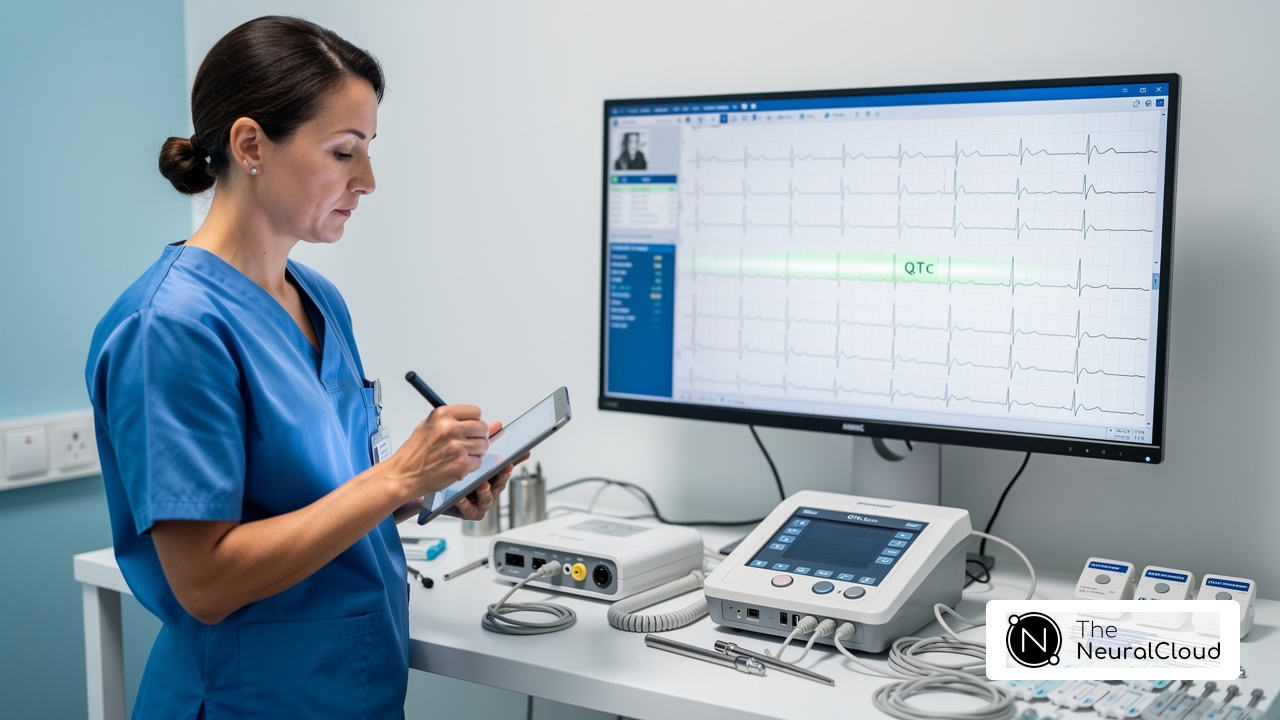
Neural Cloud Solutions Inc.'s platform enhances the detection of such critical trends by utilizing advanced noise filtering and wave recognition capabilities. The system maps ECG signals through noise, isolating and labeling key features in every heartbeat, which is essential for accurately identifying the de winters pattern amidst potential signal artifacts. Dr. Alan Rabinowitz notes, 'This system matches human interpretation in precision, especially in tough recordings where noise can hide critical information.'
Moreover, the system's ability to provide beat-by-beat analysis and its continuous learning algorithm ensures that its accuracy enhances over time, making it an invaluable tool for clinicians. In Canada, where every second counts, timely and accurate ECG interpretation can dramatically improve patient outcomes. As Dr. Brett Heilbron emphasizes, 'The incorporation of the product into clinical workflows not only enhances diagnostic capabilities but also supports confident clinical decision-making.'
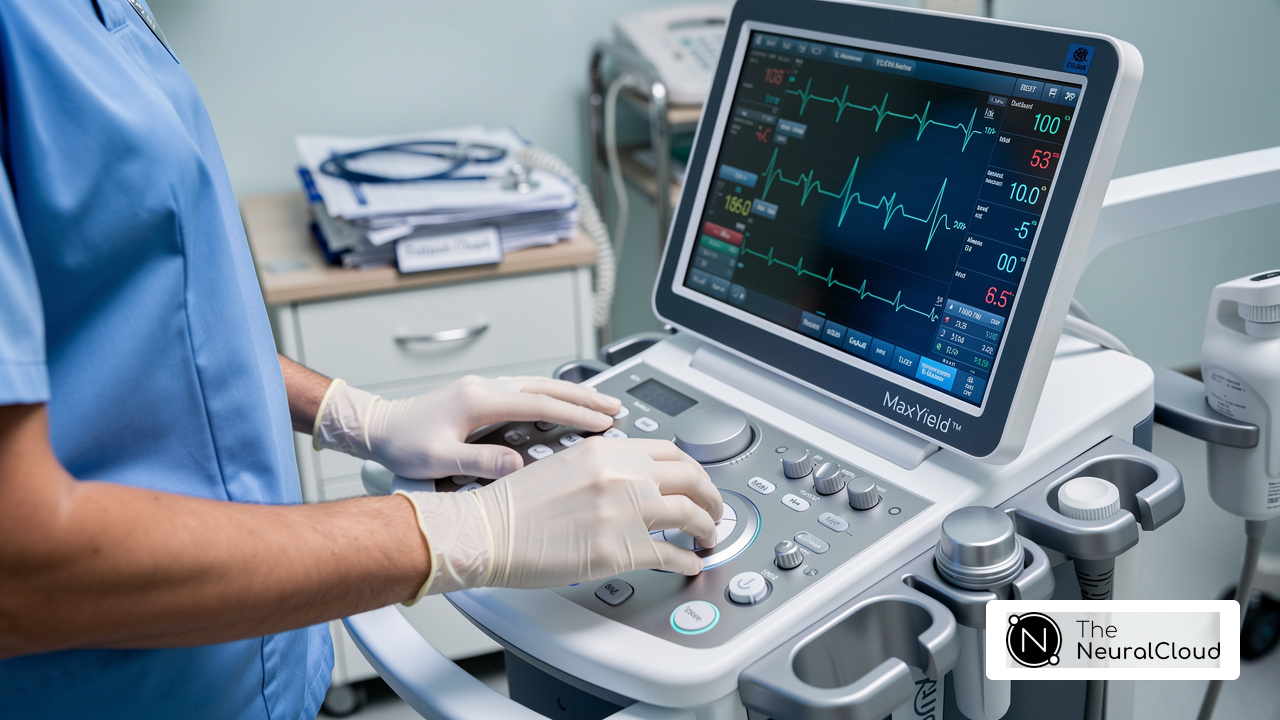
Additionally, with the FDA Class II SaMD clearance-pending status and the integration of Insight360, a customizable visualization and reporting tool that transforms MaxYield’s clean ECG data into interactive dashboards, clinicians can further enhance their diagnostic processes.
In summary, the identification of the de Winters configuration is essential in emergency situations. By leveraging advanced technologies like MaxYield™, healthcare professionals can ensure that critical ECG findings are not overlooked, ultimately enhancing patient safety.

Explore the Historical Context of the De Winters
The configuration known as de Winters, first identified by Dr. Robbert de Winter in 2008, presents unique challenges in ECG analysis that can significantly impact patient care. His findings revealed that this rare ECG configuration is a crucial indicator of significant coronary artery disease, especially when traditional signs of ST-segment elevation myocardial infarction (STEMI) are missing.
Over the years, healthcare professionals have gained a better understanding of the de Winters concept. This knowledge is vital for prompt intervention in acute coronary syndromes. Notably, the de Winters arrangement occurs in fewer than 2% of individuals with acute left anterior descending (LAD) artery blockages, underscoring its significance in emergency cardiology.
Historical case studies have shown that misclassification can delay treatment and worsen patient outcomes. In Canada, particularly in cities like Toronto and Calgary, the occurrence of the de Winters variant in emergency cardiology has prompted enhanced training and awareness programs. These initiatives ensure that clinicians effectively utilize this essential diagnostic tool in acute care settings.
In this context, the incorporation of Neural Cloud Solutions Inc.'s platform can significantly improve the examination of ECG recordings that may display the de Winter configuration. The system employs advanced noise filtering and distinct wave recognition capabilities, allowing for the rapid isolation of critical ECG waves even in recordings plagued by baseline wander and muscle artifacts. This technology not only improves the clarity of ECG signals but also aids in the timely identification of patterns like de Winters, which can be crucial for patient outcomes.
Notably, experts such as Dr. Alan Rabinowitz and Dr. Brett Heilbron have praised this product for its accuracy and efficiency in reducing noise, which optimizes clinicians' workflows. Additionally, with FDA Class II SaMD clearance-pending status and audit-ready documentation supporting GxP inspections, MaxYield™ stands as a reliable solution in the field.
As the understanding of the de Winters framework evolves, leveraging innovative solutions like MaxYield™ will be essential for improving diagnostic accuracy in acute care settings.

Identify Key Characteristics and Contributions of the De Winters
Key characteristics of the de Winter pattern include:
- Upsloping ST-segment depression at the J-point, typically measuring 1-3 mm in leads V1 to V6. This distinctive feature is crucial for recognizing the arrangement, as it sets it apart from other ECG abnormalities.
- Tall, peaked, symmetric T waves that follow the ST-segment depression, prominently observed in the precordial leads. These T waves are a hallmark of the de winters arrangement and play a significant role in its identification.
These characteristics help distinguish the de Winters variant from other ECG irregularities, including hyperacute T waves and typical STEMI presentations. Identifying this trend is crucial as it signals an impending myocardial infarction, requiring urgent intervention to restore blood flow to the heart.
Clinical studies have emphasized the commonality of the de winters arrangement in different patient groups, with reports suggesting its presence in about 1.9% of individuals receiving percutaneous coronary intervention (PCI) of the left anterior descending artery (LAD). This statistic underscores its significance in diagnosing proximal LAD occlusion, which is critical for timely intervention. Case studies further demonstrate the crucial nature of this phenomenon; for example, a 50-year-old male presented with chest pain and was found to have de winters configuration on ECG, leading to urgent coronary angiography that revealed complete blockage of the proximal LAD artery. Following intervention, the patient's ECG normalized, underscoring the necessity for timely recognition and treatment of this significant ECG finding.
In Canadian clinical practice, heightened awareness of the de winters phenomenon is essential, as it can progress into STEMI, highlighting the necessity for swift recognition and intervention to enhance patient outcomes. Additionally, risk factors such as young males with hypercholesterolemia have been associated with this pattern, highlighting the demographics that healthcare professionals should be aware of when evaluating patients.
To enhance the efficiency of ECG analysis, Neural Cloud Solutions Inc.'s platform offers advanced noise filtering and distinct wave recognition capabilities. By rapidly isolating ECG waves from recordings affected by baseline wander, movement, and muscle artifact, the system ensures that critical data is accurately identified and labeled, even in challenging conditions. This device-agnostic ECG intelligence layer integrates seamlessly with existing systems via API, SDK, or CDK, providing clinicians with the tools necessary to improve diagnostic yield and patient outcomes. Furthermore, the customizable visualization tool, Insight360, transforms MaxYield’s clean ECG data into interactive dashboards and clinical-ready reports, enhancing the overall analysis process. According to experts like Dr. Alan Rabinowitz and Dr. Brett Heilbron, this technology is as precise as human interpretation, making it an invaluable asset in the clinical setting.
As understanding of the de Winters model increases, utilizing technologies such as advanced yield systems can greatly improve the diagnostic process, guaranteeing prompt and efficient patient care. Additionally, it is important to note that MaxYield™ is currently pending FDA Class II SaMD clearance, ensuring compliance with regulatory standards and audit-ready documentation supporting GxP inspections.

Provide Examples and Variations of the De Winters
The de Winters pattern presents unique challenges in ECG analysis, particularly in younger patients without typical coronary artery disease risk factors. For instance, a notable case involved a 52-year-old man who experienced chest pain, and his ECG revealed the de winters configuration. This finding led to immediate catheterization and successful revascularization.
Variations of the de winters configuration may include less pronounced ST-segment depression or subtle differences in T wave morphology. Clinicians must recognize these variations, as they can greatly affect the urgency and type of intervention needed. Additionally, the de Winters arrangement can sometimes be confused with other conditions, such as Wellens syndrome, highlighting the importance of careful analysis and clinical judgment in diagnosis.
Interventional cardiologist Bahram Shahri emphasizes treating a de winters T wave ECG with the same urgency as STEMI, highlighting the critical need for prompt intervention. Advanced technologies from Neural Cloud Solutions Inc. enhance ECG analysis efficiency by filtering noise and accurately recognizing waveforms, aiding clinicians in identifying critical patterns such as the de winters T waves.
Dr. Alan Rabinowitz notes that this technology rivals human interpretation in precision, making it invaluable in urgent clinical settings. Furthermore, it is important to note that MaxYield™ is currently pending FDA Class II SaMD clearance, ensuring compliance with regulatory standards, which is crucial for its application in clinical practice. As technology advances, the integration of tools like MaxYield™ could redefine how clinicians approach ECG interpretation, ultimately enhancing patient outcomes.

Conclusion
The de Winters configuration is pivotal in ECG analysis, especially for identifying high-risk indicators of ST-elevation myocardial infarction (STEMI). Clinicians must understand this unique pattern because it significantly influences patient care and outcomes. By leveraging advanced technologies like those offered by Neural Cloud Solutions Inc., healthcare professionals can enhance their diagnostic capabilities, ensuring that vital ECG findings are recognized and acted upon swiftly.
Throughout the article, key insights into the de Winters phenomenon have been explored, including its historical context, defining characteristics, and the importance of timely recognition in emergency situations. The discussion highlighted how misclassification of the de Winters pattern can result in critical delays in treatment. The integration of advanced ECG analysis tools, such as MaxYield™, has been emphasized as a means to improve diagnostic accuracy and support clinicians in making informed decisions.
In light of the complexities surrounding the de Winters configuration, it is imperative for healthcare professionals to remain vigilant and informed. Staying updated through continuous education and adopting innovative technologies can greatly improve the identification of this critical ECG pattern, ultimately enhancing patient safety and outcomes. As the understanding of the de Winters phenomenon evolves, embracing these advancements is essential for enhancing patient care in acute settings across Canada.
Frequently Asked Questions
What is the de Winters configuration in ECG analysis?
The de Winters configuration is a high-risk indicator of ST-elevation myocardial infarction (STEMI) that often signals a blockage in the left anterior descending artery (LAD). It presents unique challenges in ECG analysis as it lacks clear ST-segment elevation.
Why is the de Winters phenomenon significant in patient care?
The de Winters phenomenon is significant because it requires quick recognition and action due to its association with serious cardiac events. Timely identification can dramatically improve patient outcomes.
How does Neural Cloud Solutions Inc.'s platform assist in detecting the de Winters configuration?
Neural Cloud Solutions Inc.'s platform enhances detection by utilizing advanced noise filtering and wave recognition capabilities, allowing it to map ECG signals through noise and isolate key features in every heartbeat.
What advantages does the system provide for clinicians?
The system offers beat-by-beat analysis and a continuous learning algorithm that improves accuracy over time, making it an invaluable tool for clinicians in identifying critical ECG patterns like the de Winters configuration.
What is the importance of timely and accurate ECG interpretation in Canada?
In Canada, where every second counts, timely and accurate ECG interpretation can significantly improve patient outcomes, especially in emergency situations.
What is the status of Neural Cloud Solutions Inc.'s product regarding regulatory approval?
The product has FDA Class II SaMD clearance-pending status, indicating it is undergoing the regulatory approval process.
How does Insight360 enhance the diagnostic process for clinicians?
Insight360 is a customizable visualization and reporting tool that transforms MaxYield’s clean ECG data into interactive dashboards, further enhancing clinicians' diagnostic capabilities.
What is the overall benefit of using advanced technologies like MaxYield™ in clinical workflows?
The incorporation of advanced technologies like MaxYield™ into clinical workflows enhances diagnostic capabilities and supports confident clinical decision-making, ultimately improving patient safety.
List of Sources
- Define the De Winters: An Overview
- The rare presentation of the de Winter's pattern: Case report and literature review - PMC (https://pmc.ncbi.nlm.nih.gov/articles/PMC10978127)
- De Winter T Wave (https://litfl.com/de-winter-t-wave)
- The Critical Importance of Recognizing De Winter's T-wave Pattern: A Case of Acute Proximal LAD Occlusion by In-Stent Restenosis (https://cureus.com/articles/458034-the-critical-importance-of-recognizing-de-winters-t-wave-pattern-a-case-of-acute-proximal-lad-occlusion-by-in-stent-restenosis)
- Clinical and Angiographic Correlates of De Winter Sign and N Terminal Wave in Acute Coronary Syndrome: An Observational Study from a Tertiary Care Centre in South India (https://healthcare-bulletin.co.uk/article/clinical-and-angiographic-correlates-of-de-winter-sign-and-n-terminal-wave-in-acute-coronary-syndrome-an-observational-study-from-a-tertiary-care-centre-in-south-india-4182)
- Explore the Historical Context of the De Winters
- De Winter's ECG: Not your usual STEMI (https://sciencedirect.com/science/article/pii/S0022073624001742)
- Frontiers | The dynamic evolution of the de Winter ECG pattern that is easily overlooked and life-threatening: a case report and literature review (https://frontiersin.org/journals/cardiovascular-medicine/articles/10.3389/fcvm.2025.1574829/full)
- The rare presentation of the de Winter's pattern: Case report and literature review - PMC (https://pmc.ncbi.nlm.nih.gov/articles/PMC10978127)
- Identify Key Characteristics and Contributions of the De Winters
- De Winter's ECG: Not your usual STEMI (https://sciencedirect.com/science/article/pii/S0022073624001742)
- The rare presentation of the de Winter's pattern: Case report and literature review - PMC (https://pmc.ncbi.nlm.nih.gov/articles/PMC10978127)
- Provide Examples and Variations of the De Winters
- De Winter Pattern Caught Before STEMI (https://powerfulmedical.com/pmcardio-stemi/de-winter-pattern-identified-before-stemi-criteria)
- De Winter Is Coming: A Rare ST-Segment Elevation Myocardial Infarction (STEMI) Equivalent in an Ironman Competitor (https://cureus.com/articles/496249-de-winter-is-coming-a-rare-st-segment-elevation-myocardial-infarction-stemi-equivalent-in-an-ironman-competitor)
- De Winter presentations and considerations: a case series - Journal of Medical Case Reports (https://link.springer.com/article/10.1186/s13256-022-03604-3)
- The rare presentation of the de Winter's pattern: Case report and literature review - PMC (https://pmc.ncbi.nlm.nih.gov/articles/PMC10978127)