Introduction
Understanding the complexities of ECG analysis is essential in today's healthcare landscape, where precise diagnostics can significantly impact patient outcomes. As developers work to create EKG reader apps that cater to the evolving needs of medical professionals, integrating key features becomes vital.
What innovative functionalities can genuinely improve the clarity, reliability, and usability of these applications? This article explores ten essential features that not only streamline workflows but also enhance patient care, ushering in a new era of automated ECG analysis.
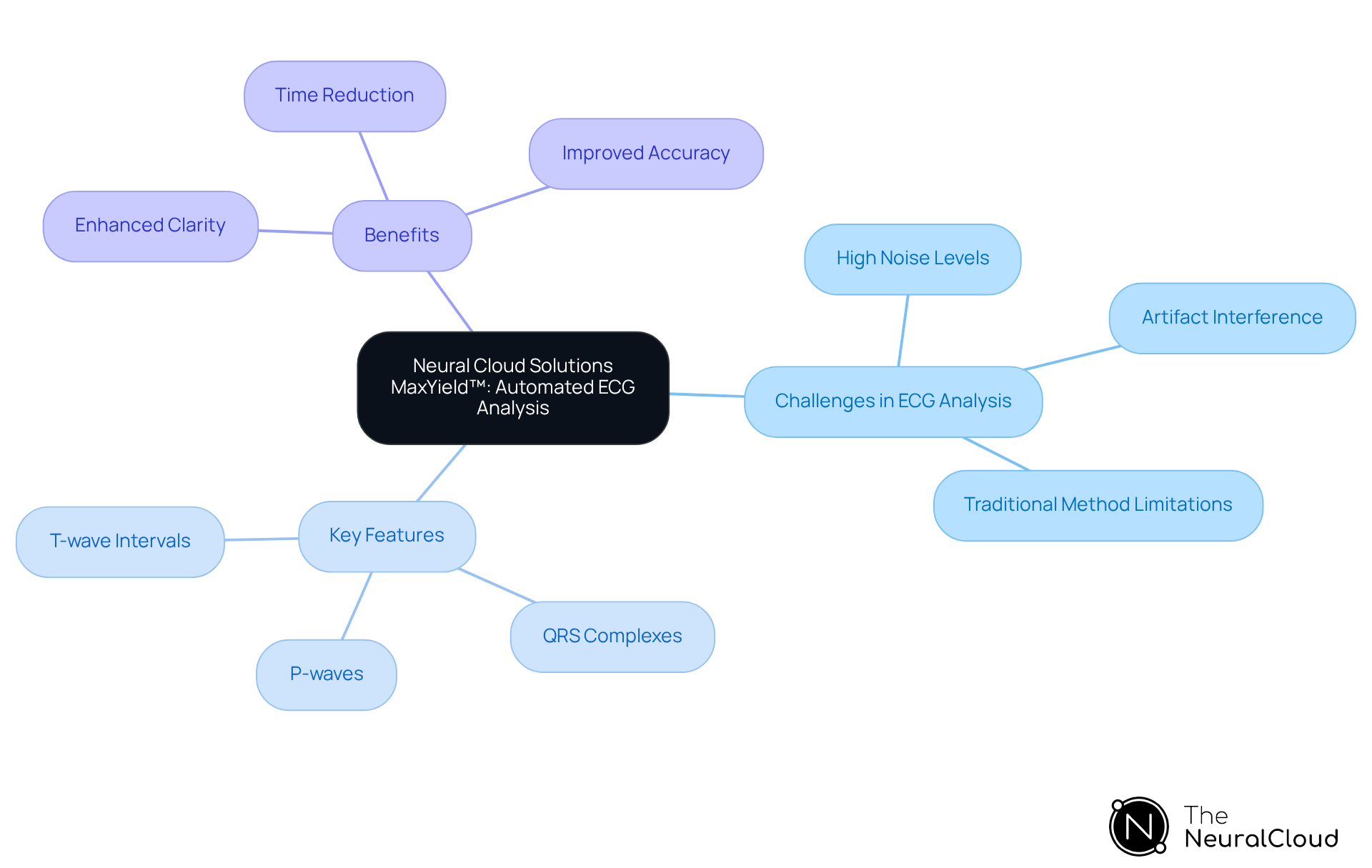
Neural Cloud Solutions MaxYield™: Automated ECG Analysis for Enhanced Clarity
ECG analysis presents several challenges, particularly in environments with high levels of noise. Traditional methods often struggle to provide clear and accurate readings, which can hinder patient care. Neural Cloud Solutions' platform addresses these issues through advanced algorithms, transforming the way ECGs are analyzed.
The platform effectively isolates and labels critical features such as:
- P-waves
- T-wave intervals
This capability significantly enhances the quality of readings, even in recordings that are otherwise compromised. With the ability to process over 200,000 heartbeats in under five minutes, healthcare professionals gain access to timely insights.
One of the key advantages of this automation is the reduction in time spent on manual analysis. By streamlining the process, clinicians can focus on patient outcomes, ultimately boosting diagnostic confidence. As cardiologists emphasize, the clarity of results is crucial for effective treatment, and this solution consistently delivers standardized results that meet this need.
Moreover, the platform's innovative AI algorithms can analyze data with an impressive accuracy of about 93%. This underscores the effectiveness of the platform in overcoming traditional limitations in ECG interpretation. The integration of AI not only transforms clinical workflows but also enhances patient care.
Noise Reduction Algorithms: Essential for Accurate ECG Signal Interpretation
Effective algorithms play a vital role in the accurate interpretation of ECG signals. They filter out artifacts and interference that can obscure true cardiac signals, presenting a significant challenge in clinical settings. The 'Neural Cloud Solutions' platform exemplifies advanced capabilities in this area, identifying and labeling critical data even in noisy environments.
Techniques such as adaptive filtering and wavelet transforms are widely utilized to enhance signal quality. For instance, the algorithm dynamically adjusts to varying noise conditions, significantly enhancing signal clarity. This adaptability ensures that clinicians receive the most accurate readings possible, even in challenging environments.
Additionally, MaxYield™ can salvage previously obscured sections of lengthy Holter, 1-Lead, and patch monitor recordings. This capability allows developers to create EKG reader apps that deliver high-quality data. By implementing noise reduction techniques, developers can contribute to better patient outcomes, as medical professionals recognize that superior signal quality directly correlates with diagnostic precision.
In summary, the MaxYield™ platform not only addresses the challenges of noise in ECG interpretation but also provides significant advantages for healthcare providers. By ensuring clearer signals and more reliable data, it enhances the overall quality of patient care.

Integration Capabilities: Streamlining Workflow in Healthcare Applications
Integration capabilities are crucial for the success of the EKG reader app. They ensure compatibility with other medical systems, which helps streamline patient data management. This integration allows for faster data exchange, enabling healthcare professionals to make informed decisions quickly.
For instance, research shows that incorporating ECGs into EHRs can reduce the time from acquisition to visualization by up to 375 hours, significantly improving care efficiency. Applications that support seamless integration not only boost operational efficiency but also elevate the overall quality of patient care.
With Neural Cloud Solutions' advanced offerings, developers can utilize robust APIs to ensure that ECG data remains clean and reliable, further enhancing the integration process. The app tracks onsets and offsets, providing beat-by-beat tabulation in CSV format for easy incorporation into existing workflows.
As Dr. Payal Kohli notes, the need for an EKG reader app that integrates with EHR systems is increasingly vital, as it supports data sharing across various clinical scenarios. By balancing ECG and EHR data effectively, developers can create solutions that not only meet clinical needs but also improve patient outcomes.

Real-Time Data Processing: Enabling Immediate Clinical Decision-Making
Real-time data processing capabilities are crucial for the EKG reader app, enabling medical providers to make decisions based on the latest information. This is especially vital in emergency situations, where timely interventions can save lives.
- Advanced Algorithms: The platform utilizes sophisticated algorithms to process ECG signals in real-time.
- Noise Reduction: It effectively manages noise and artifacts, ensuring clarity in data interpretation.
- Feature Isolation: MaxYield™ isolates and labels key features in each heartbeat, providing clear insights.
By leveraging these features, developers can create an EKG reader app that alerts clinicians to critical changes in a patient's cardiac status. This capability not only enhances the workflow but also supports healthcare professionals in making informed decisions quickly.
Advantages for Healthcare Professionals:
- Immediate Insights: Clinicians gain access to real-time data, facilitating prompt and effective treatment.
- Improved Decision-Making: The clarity of data allows for better clinical decisions, ultimately improving patient outcomes.
In summary, the EKG reader app addresses the challenges in ECG analysis by utilizing the EKG reader app, which provides accurate, effective, and clear feature isolation, all of which contribute to better patient care.

User-Friendly Interface: Enhancing Adoption and Training for Healthcare Professionals
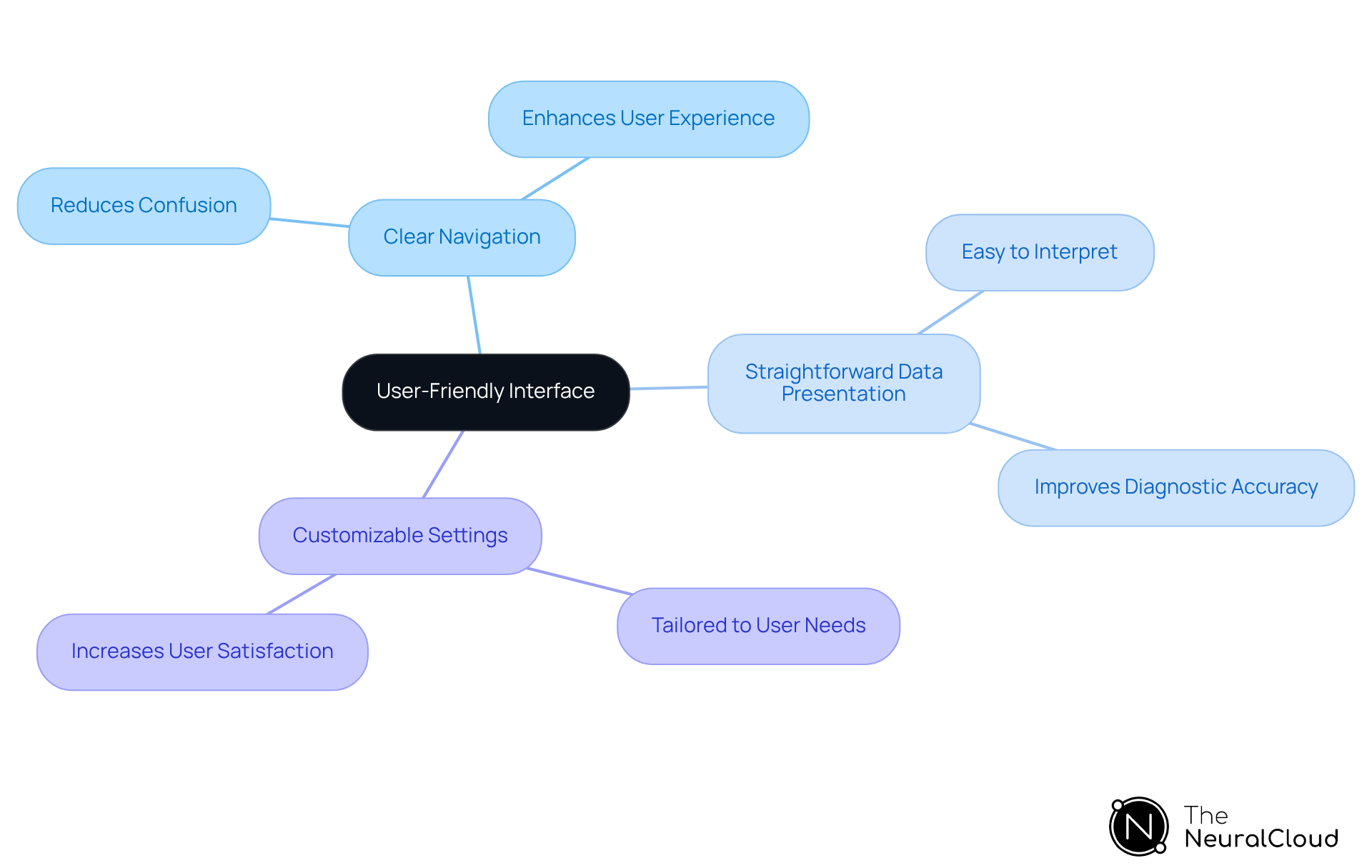
A user-friendly interface is crucial for the adoption of the EKG reader app among medical professionals. The challenges in ECG analysis often stem from complex interfaces that can hinder usability. Features such as clear navigation, intuitive design, and customizable settings significantly minimize the learning curve for users. By prioritizing usability, developers allow clinicians to spend less time on app training and more time on patient care, ultimately enhancing productivity and operational efficiency.
The MaxYield™ app exemplifies these principles. It simplifies the training process and assists in recognizing critical data, which not only boosts user satisfaction but also fosters a more efficient clinical environment. Key features of MaxYield™ include:
- Clear pathways: Easy-to-follow pathways that reduce confusion.
- Intuitive display: Information is displayed in a manner that is easy to interpret.
- Customization options: Users can tailor the app to fit their specific needs.
These features translate into significant advantages for healthcare professionals. As usability becomes increasingly important in the healthcare sector, the integration of intuitive interfaces like MaxYield™ is pivotal for the success of the EKG reader app. This focus on user experience enables faster and more precise evaluations of cardiac health, ultimately leading to improved patient outcomes.
Beat-by-Beat Analysis: Delivering Detailed Cardiac Insights for Clinicians
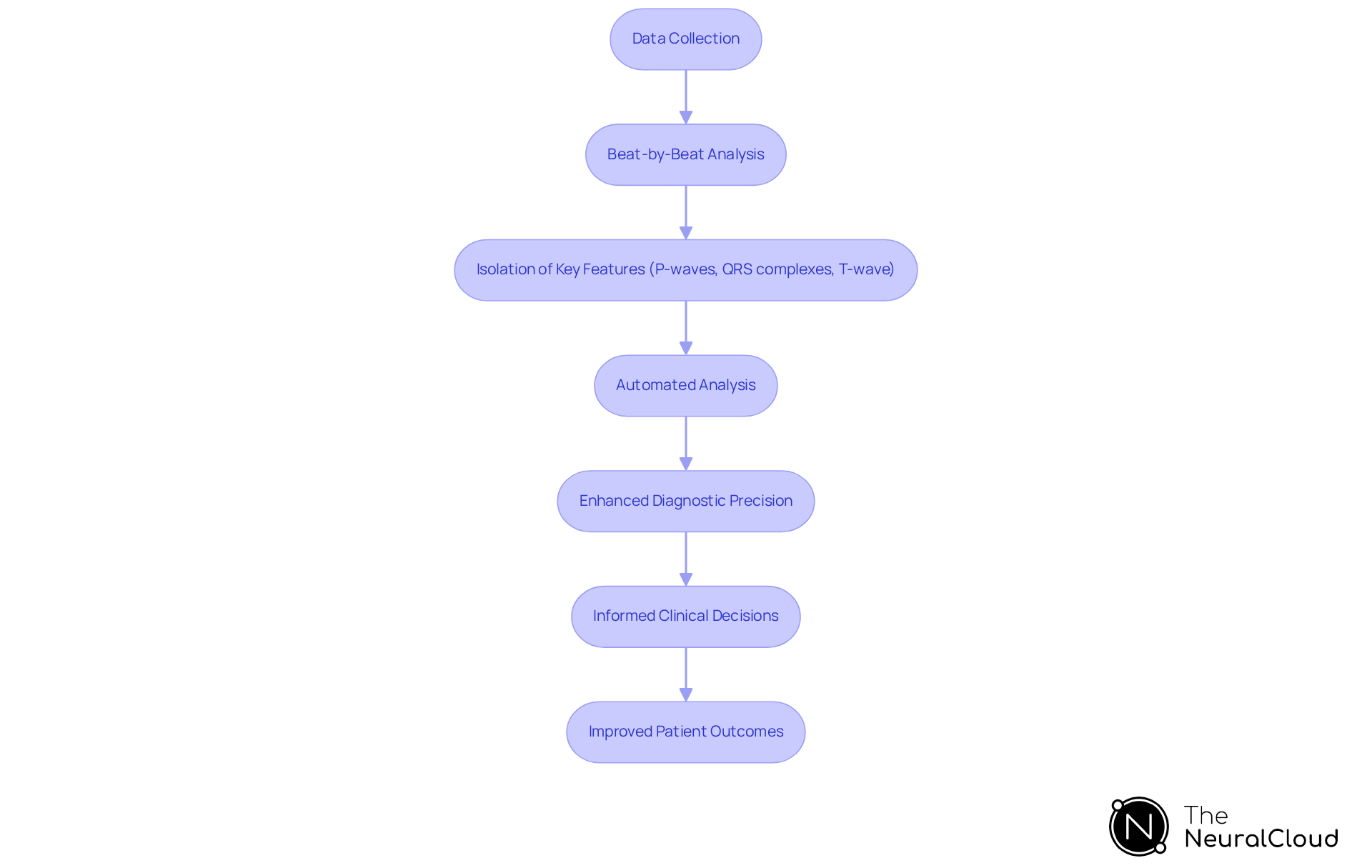
ECG analysis presents several challenges for clinicians, particularly in diagnosing conditions that could indicate serious health issues. Advanced technologies, such as the beat-by-beat analysis feature, address these challenges by providing meticulous scrutiny of each heartbeat. This detailed examination is crucial for identifying conditions such as arrhythmias, which can lead to severe complications if not detected early.
The app stands out by processing over 200,000 heartbeats in under five minutes. It isolates and labels key features, including P-waves, QRS complexes, and T-wave onsets and offsets. This automated analysis enhances efficiency and streamlines clinical workflows, enabling healthcare professionals to make informed decisions regarding patient care. With advanced machine learning and adaptive algorithms, MaxYield™ transforms noisy recordings into clear, actionable insights that support timely interventions.
The benefits of utilizing the app, including the detailed cardiac insights, are significant for healthcare providers. By delivering comprehensive insights into heart rhythms and patterns, it significantly enhances patient monitoring. This not only aids in the diagnosis but also helps prevent complications such as stroke and heart failure. As the market for ECG technology is projected to reach $5.3 billion by 2030, integrating such advanced cardiac insights into healthcare applications will be essential for improving patient outcomes.
Scalability: Adapting ECG Solutions for Diverse Clinical Environments
Scalability is essential for developers of applications, considering the diverse sizes and complexities of medical environments. Applications need to be designed to operate effectively across a range of clinical settings, from small clinics to large hospitals. By focusing on scalability, developers can meet the evolving needs of healthcare providers, enabling smooth integration into various workflows and maximizing the application's overall effectiveness.
The market is projected to grow from $360 billion in 2024 to over $730 billion by 2029, highlighting the demand for adaptable technologies. Health tech leaders point out that scalability is crucial, with organizations keen to harness its potential while managing the challenges of implementation. This underscores the need for an application that can adapt, ensuring it remains relevant and effective in diverse environments.
Successful case studies illustrate how customized solutions can improve patient outcomes, ultimately leading to better care coordination and fewer medical errors. By prioritizing scalability, developers can play a vital role in creating a more efficient healthcare system that includes the use of an EKG reader app.

Continuous Learning Models: Enhancing ECG Analysis Accuracy Over Time
ECG analysis faces several challenges, including the need for accuracy amidst varying data quality and the complexity of interpreting signals. Continuous learning models play a crucial role in addressing these issues, significantly enhancing ECG analysis accuracy over time.
This platform leverages advanced machine learning algorithms that adapt based on new data, allowing it to identify and label critical information even in noisy environments. This platform not only improves with each use but also evolves by learning from previous interpretations and user feedback.
The benefits of continuous learning models are substantial for healthcare applications. By ensuring continuous improvement in both analysis accuracy and signal interpretation, it enhances the reliability of ECG solutions. Developers should prioritize implementing such continuous learning mechanisms to keep their solutions relevant and effective in the fast-paced medical landscape.

Regulatory Compliance: Ensuring ECG Solutions Meet Healthcare Standards
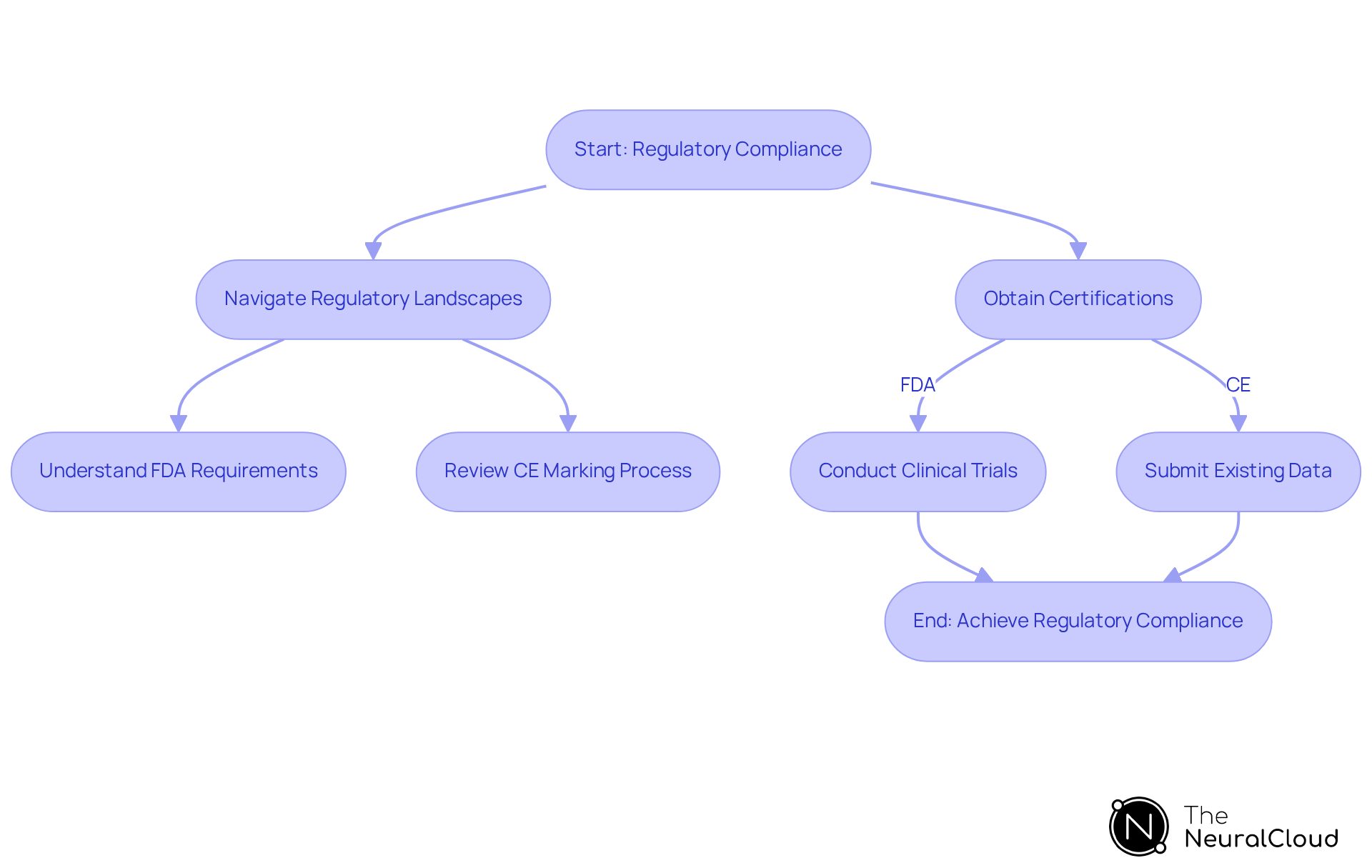
Regulatory compliance is crucial for the EKG reader app, as it ensures adherence to established medical standards for safety and efficacy. Developers encounter the challenge of navigating complex regulations, which include obtaining certifications and securing approvals - both essential for market entry. The FDA's stringent approval process often necessitates extensive documentation, while the system offers a more streamlined evaluation based on existing data. This difference can significantly influence the speed at which new technologies enter the market.
By prioritizing compliance, developers not only foster trust with medical providers but also enhance their reputation in clinical settings. The significance of these certifications is highlighted by the anticipated growth in the ECG market. This growth reflects the rising demand for reliable and effective ECG solutions. Healthcare compliance experts stress that effectively navigating these regulatory pathways is vital for ensuring EKG reader apps can provide safe and impactful cardiac monitoring solutions.
Cardiologist Testimonials: Validating the Effectiveness of ECG Solutions
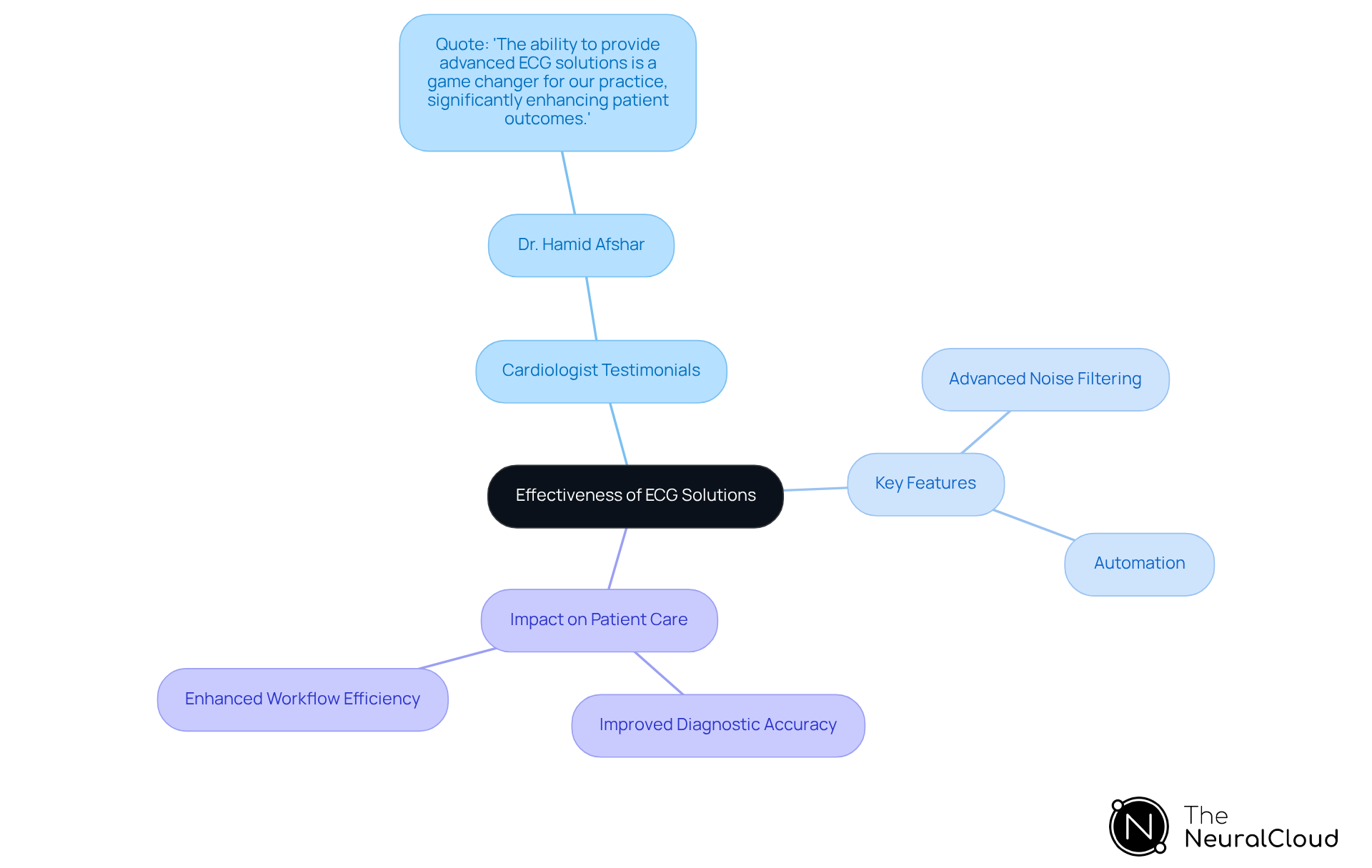
serve as invaluable endorsements for the EKG reader app, affirming its effectiveness and reliability in clinical settings. Feedback from seasoned clinicians highlights specific features that enhance patient care and improve workflow. For instance, Dr. Hamid Afshar, a Cardiac Interventional Electrophysiologist at Houston VA, remarked, "The ability to provide real-time data is a game changer for our practice, significantly enhancing patient outcomes."
MaxYield™ employs advanced algorithms, including advanced noise filtering and automation, to transform raw data into clean, crisp signals. These features not only improve signal quality but also ensure that clinicians can rely on accurate data for better decision-making.
By showcasing positive testimonials, developers can build trust in their products, encouraging greater acceptance among medical professionals. This trust leads to increased adoption, as clinicians are more inclined to adopt solutions verified by their colleagues. The impact of cardiologist feedback is profound, driving the evolution of the EKG reader app to better meet the needs of both healthcare providers and patients.
Conclusion
The integration of advanced technology into EKG reader apps is revolutionizing cardiac care, especially through platforms like Neural Cloud Solutions' MaxYield™. This article has underscored key features that developers should prioritize, including:
- Automated ECG analysis
- Noise reduction algorithms
- Seamless integration with electronic health records
By emphasizing these functionalities, developers can create applications that enhance the clarity of ECG signals, streamline clinical workflows, and ultimately improve patient outcomes.
Key insights discussed include:
- The critical role of real-time data processing for immediate clinical decision-making
- The necessity of user-friendly interfaces to encourage adoption by healthcare professionals
- The value of beat-by-beat analysis for in-depth cardiac insights
Furthermore, the importance of scalability and regulatory compliance is paramount, as these factors ensure that EKG reader apps can adapt to various clinical environments and meet healthcare standards.
As the demand for reliable and effective ECG solutions continues to rise, developers are encouraged to embrace these essential features. By doing so, they can contribute to a more efficient healthcare system that prioritizes patient safety and enhances diagnostic accuracy. The evolution of EKG reader apps transcends mere technology; it is fundamentally about improving lives through better cardiac care.
Frequently Asked Questions
What is Neural Cloud Solutions MaxYield™?
Neural Cloud Solutions MaxYield™ is an automated ECG analysis platform that enhances clarity by employing advanced automation and sophisticated noise filtering to analyze ECG signals, even in noisy environments.
What challenges does ECG analysis face?
ECG analysis often struggles with high levels of noise and artifacts, which can obscure true cardiac signals and hinder accurate diagnosis.
How does MaxYield™ improve ECG signal clarity?
MaxYield™ effectively isolates and labels critical features such as P-waves, QRS complexes, and T-wave intervals, significantly enhancing the clarity of cardiac signals in compromised recordings.
How quickly can MaxYield™ process ECG data?
The platform can process over 200,000 heartbeats in under five minutes, providing healthcare professionals with accurate and reliable cardiac insights rapidly.
What are the benefits of automation in ECG analysis?
Automation reduces the time spent on manual analysis, allowing clinicians to focus on high-level decision-making and boosting diagnostic confidence.
What is the accuracy of MaxYield™ in detecting QRS complexes?
The platform's AI algorithms can detect QRS complexes and discriminate high-quality ECG excerpts with an impressive accuracy of about 93%.
What role do noise reduction algorithms play in ECG analysis?
Noise reduction algorithms filter out artifacts and interference that can obscure true cardiac signals, which is essential for accurate ECG interpretation.
What techniques does MaxYield™ use for noise reduction?
MaxYield™ employs techniques such as adaptive filtering and wavelet transforms to improve the quality of ECG data and enhance signal clarity in varying noise conditions.
How does MaxYield™ handle previously obscured ECG data?
The platform can salvage previously obscured sections of lengthy Holter, 1-Lead, and patch monitor recordings, leading to clearer and more reliable readings.
Why are integration capabilities important for ECG reader apps?
Integration capabilities ensure compatibility with electronic health records (EHRs) and other medical systems, streamlining workflows and enhancing data accessibility for healthcare professionals.
How does MaxYield™ facilitate integration with EHRs?
MaxYield™ rapidly labels P, QRS, and T Wave onsets and offsets, providing beat-by-beat tabulation in CSV format for easy incorporation into existing workflows.
What impact does incorporating ECGs into EHRs have on care efficiency?
Incorporating ECGs into EHRs can reduce the time from acquisition to visualization by up to 375 hours, significantly improving care efficiency.
How does effective ECG analysis contribute to patient outcomes?
Superior signal quality directly correlates with diagnostic precision, which enhances overall patient care and outcomes by providing timely and accurate information.
List of Sources
- Neural Cloud Solutions MaxYield™: Automated ECG Analysis for Enhanced Clarity
- Can EKGs read by AI save lives? It's possible, researchers say (https://heart.org/en/news/2023/11/06/can-ekgs-read-by-ai-save-lives-its-possible-researchers-say)
- New AI approach set to revolutionize ECG data interpretation in heart disease diagnosis (https://news-medical.net/news/20250219/New-AI-approach-set-to-revolutionize-ECG-data-interpretation-in-heart-disease-diagnosis.aspx)
- visive.ai (https://visive.ai/news/ai-transforms-ecg-interpretation-in-outpatient-care)
- Philips Launches ECG AI Marketplace to Enhance Early Cardiac Diagnosis (https://usa.philips.com/a-w/about/news/archive/standard/news/press/2025/philips-launches-ecg-ai-marketplace-to-enhance-early-cardiac-diagnosis.html)
- pmc.ncbi.nlm.nih.gov (https://pmc.ncbi.nlm.nih.gov/articles/PMC10145690)
- Noise Reduction Algorithms: Essential for Accurate ECG Signal Interpretation
- diagnosticimaging.com (https://diagnosticimaging.com/view/fda-new-electrocardiogram-suite-algorithms-and-analytics)
- pmc.ncbi.nlm.nih.gov (https://pmc.ncbi.nlm.nih.gov/articles/PMC11914083)
- nature.com (https://nature.com/articles/s41598-025-22986-0)
- pmc.ncbi.nlm.nih.gov (https://pmc.ncbi.nlm.nih.gov/articles/PMC11458829)
- mdpi.com (https://mdpi.com/2306-5354/7/2/53)
- Integration Capabilities: Streamlining Workflow in Healthcare Applications
- stocktitan.net (https://stocktitan.net/news/EKGGF/cardio-comm-solutions-integrates-ecg-technology-into-sony-s-m-safety-f2u3wvymjb02.html)
- gehealthcare.com (https://gehealthcare.com/insights/article/why-ecg-integration-in-the-emr-is-a-critical-healthcare-technology-solution?srsltid=AfmBOopnAVPQCYJWujxUsPVCD7aD2ImtBIWgaFWH2wthV0nMj_ELQES6)
- pmc.ncbi.nlm.nih.gov (https://pmc.ncbi.nlm.nih.gov/articles/PMC12467541)
- usa.philips.com (https://usa.philips.com/a-w/about/news/archive/standard/news/press/2025/philips-announces-collaboration-with-epic-to-enhance-ambulatory-cardiac-monitoring.html)
- pmc.ncbi.nlm.nih.gov (https://pmc.ncbi.nlm.nih.gov/articles/PMC8796093)
- User-Friendly Interface: Enhancing Adoption and Training for Healthcare Professionals
- medcitynews.com (https://medcitynews.com/2024/08/beyond-engineering-integrating-ux-for-safer-and-more-efficient-medical-products)
- techfinitive.com (https://techfinitive.com/opinions/the-importance-of-intuitive-systems-to-deliver-positive-patient-outcomes)
- Philips Launches ECG AI Marketplace to Enhance Early Cardiac Diagnosis (https://usa.philips.com/a-w/about/news/archive/standard/news/press/2025/philips-launches-ecg-ai-marketplace-to-enhance-early-cardiac-diagnosis.html)
- newsnetwork.mayoclinic.org (https://newsnetwork.mayoclinic.org/discussion/mayo-researchers-use-ai-to-detect-weak-heart-pump-via-patients-apple-watch-ecgs)
- 30+ US Electronic Health Records (EHR) Adoption Statistics for 2026 (https://aptarro.com/insights/us-ehr-adoption-statistics)
- Beat-by-Beat Analysis: Delivering Detailed Cardiac Insights for Clinicians
- Memorable Cardiology Quotes | TheKnowHow Blog (https://theknowhow.ae/memorable-cardiology-quotes-heart)
- sciencedirect.com (https://sciencedirect.com/science/article/abs/pii/S1746809425005427)
- pmc.ncbi.nlm.nih.gov (https://pmc.ncbi.nlm.nih.gov/articles/PMC4611171)
- pmc.ncbi.nlm.nih.gov (https://pmc.ncbi.nlm.nih.gov/articles/PMC8802771)
- markets.financialcontent.com (https://markets.financialcontent.com/wral/article/tokenring-2025-11-12-heartbeam-hailed-as-global-leader-in-portable-ecg-innovation-reshaping-future-of-remote-cardiac-care)
- Scalability: Adapting ECG Solutions for Diverse Clinical Environments
- Healthcare Technology Statistics & Market Size Analysis (https://tateeda.com/blog/healthcare-technology-statistics-and-market-share)
- kron4.com (https://kron4.com/business/press-releases/ein-presswire/825255572/ecg-management-consultants-launches-tech-enabled-solutions)
- esparkinfo.com (https://esparkinfo.com/healthcare/statistics)
- fox59.com (https://fox59.com/business/press-releases/ein-presswire/845386600/ecg-launches-cipher-collective-an-ai-partner-network-for-health-systems)
- callingworks.com (https://callingworks.com/the-imperative-of-scalability-in-modern-healthcare)
- Regulatory Compliance: Ensuring ECG Solutions Meet Healthcare Standards
- legacymedsearch.com (https://legacymedsearch.com/fitbit-wins-fda-510k-clearance-and-ce-mark-for-ecg-app)
- factmr.com (https://factmr.com/report/cardiac-rhythm-management-devices-market)
- crstodayeurope.com (https://crstodayeurope.com/articles/2015-feb/ce-mark-versus-fda-approval-which-system-has-it-right)
- linkedin.com (https://linkedin.com/pulse/united-states-ecg-biometric-market-latest-news-bxnaf)
- xtalks.com (https://xtalks.com/tempus-scores-fda-clearance-for-ai-ecg-software-to-flag-low-lvef-4329)
- Cardiologist Testimonials: Validating the Effectiveness of ECG Solutions
- Philips Launches ECG AI Marketplace to Enhance Early Cardiac Diagnosis (https://usa.philips.com/a-w/about/news/archive/standard/news/press/2025/philips-launches-ecg-ai-marketplace-to-enhance-early-cardiac-diagnosis.html)
- HeartBeam Teams Up With HeartNexus to Deliver Cardiologist-Level ECG Insights Anytime, Anywhere (https://ir.heartbeam.com/news-events/press-releases/detail/103/heartbeam-teams-up-with-heartnexus-to-deliver)
- news.va.gov (https://news.va.gov/141851/heart-care-technology-improves-quality-life)
- wjhl.com (https://wjhl.com/business/press-releases/ein-presswire/854586721/ecg-and-simpliphy-announce-strategic-partnership-to-transform-provider-compensation)
- morningstar.com (https://morningstar.com/news/business-wire/20251111412173/future-cardia-and-artella-solutions-announce-strategic-collaboration-for-next-generation-implantable-cardiac-monitoring)