Introduction
Interpreting ST elevation on an electrocardiogram (ECG) is crucial for cardiologists, as it indicates potential myocardial ischemia or infarction. As healthcare professionals strive for timely and accurate diagnoses, implementing best practices in ST elevation analysis is essential for improving patient outcomes. Despite the complexities of various ST elevation patterns and the integration of advanced technologies, clinicians must rely on effective strategies to make informed decisions. This article explores strategies to enhance ST elevation analysis, focusing on:
- Clinical significance
- Technological advancements
- Effective protocols in healthcare settings
Understand ST Elevation and Its Clinical Significance
ST rise on an electrocardiogram (ECG) is a critical indicator of myocardial ischemia or infarction, presenting significant challenges in timely diagnosis. This increase is primarily associated with ST-Elevation Myocardial Infarction (STEMI), a condition that requires immediate medical intervention. Identifying ST rise is crucial because it signals potential blockage in a coronary artery, which can compromise blood flow to the heart. The American College of Cardiology (ACC) and the American Heart Association (AHA) emphasize the importance of performing an ECG at the first point of medical contact to enable swift diagnosis and treatment. Timely ECG analysis significantly influences patient outcomes. Early identification of ST elevation V2 enables prompt reperfusion therapy, which minimizes heart damage and improves survival rates.
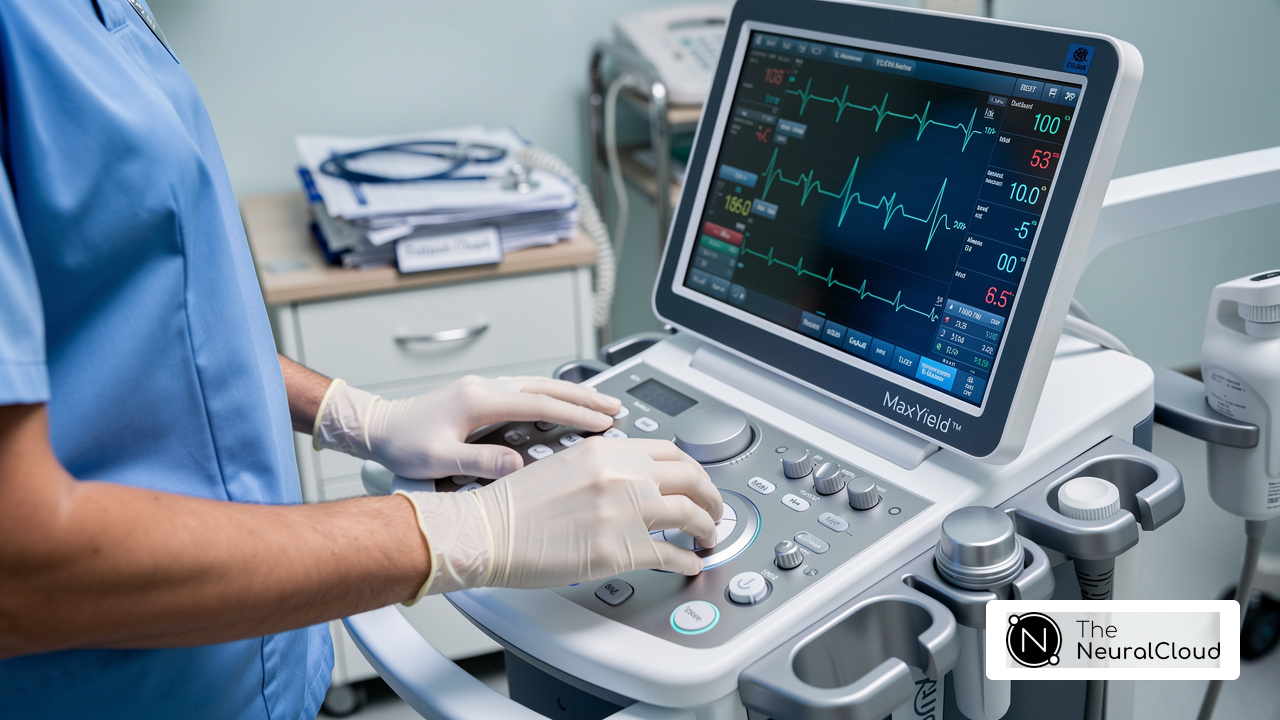
Recent studies show that while the overall incidence of STEMI has decreased, disparities persist, particularly among lower-income populations. This highlights the urgent need for equitable access to timely cardiac care. Neural Cloud Solutions' MaxYield technology allows health tech developers to achieve hospital-grade ECG accuracy using consumer-grade devices. This enhances remote patient monitoring capabilities. MaxYield™ rapidly labels P, QRS, and T wave onsets, offsets, and time-series intervals, facilitating the analysis of more data in less time. This innovative approach not only supports continuous monitoring but also aids in rapid data processing and the discovery of new digital biomarkers. By enhancing ECG analysis, MaxYield™ not only improves patient outcomes but also addresses the urgent need for equitable cardiac care.

Differentiate ST Elevation Patterns and Their Implications
Recognizing the nuances of ST elevation v2 patterns is crucial for accurate ECG interpretation and effective patient management. ST rise can present in various patterns, each carrying distinct clinical implications. A convex ST rise pattern typically indicates ST-segment rise myocardial infarction (STEMI), while a concave pattern may suggest benign early repolarization or pericarditis. It's vital to grasp these differences for accurate diagnosis and effective treatment.
Notably, when ST elevation v2 appears in two or more adjacent leads, it serves as a hallmark of STEMI, according to clinical guidelines. Moreover, recognizing patterns such as ST elevation in lead aVR can point to alternative diagnoses, including left main coronary artery occlusion. Mastering these differentiations allows healthcare professionals to enhance diagnostic accuracy, ultimately improving patient outcomes.
Regular follow-ups and ongoing education about these patterns are crucial, as they can greatly affect treatment choices and long-term health management.

Leverage Advanced Technologies for Enhanced ECG Analysis
The challenges in ECG analysis often stem from noisy signals and slow processing times, hindering timely diagnoses. The integration of advanced technologies, particularly artificial intelligence and machine learning, has significantly transformed ECG analysis in cardiology. Neural Cloud Solutions utilizes patented signal mapping algorithms to enhance ECG data quality by isolating and cleaning noisy signals. This approach improves the quality of cardiac data, allowing healthcare professionals to quickly assess up to 200,000 heartbeats in under five minutes.
With MaxYield™, healthcare professionals receive clear insights, including the onsets and offsets of P-waves, QRS complexes, and T-waves for every heartbeat. AI algorithms analyze ECG data in real-time, achieving arrhythmia detection accuracies above 99% and accurately identifying patterns of ST elevation v2, which expedites the diagnostic process.
Research shows that by using AI for ECG interpretation, the time from ECG acquisition to treatment can be significantly reduced, leading to better outcomes for patients. By adopting these advanced technologies, healthcare providers can enhance their diagnostic capabilities and streamline clinical workflows, ultimately transforming patient care delivery.

Implement Effective ECG Analysis Protocols in Clinical Settings
Achieving precise ECG analysis presents several challenges that healthcare professionals must navigate effectively. To address these challenges, standardized protocols are essential. Here are the key steps involved:
- Initial Assessment: Conduct a thorough patient history and physical examination to provide context for the ECG findings.
- Quality Control: Ensure high-quality ECG recordings through proper lead placement and minimal artifacts, as these factors significantly influence diagnostic accuracy.
- Systematic Interpretation: Implement a systematic approach to ECG interpretation, focusing on rate, rhythm, axis, and wave morphology to enhance clarity and reliability.
- Utilize Technology: This technology is great at picking out and labeling important data, even when recordings are noisy or have artifacts, quickly isolating ECG waves in tough conditions. AI-driven tools have shown to improve accuracy significantly; for instance, AI-based ECG interpretation achieved a sensitivity of 77% and correctly identified obstructive myocardial infarction (MI) in 84% of cases. Healthcare professionals can refer to the user manual for this technology to effectively integrate it into their protocols.
- Continuous Education: Commit to ongoing training and education to stay informed about the latest guidelines and technological advancements in ECG analysis.
By integrating MaxYield™ into their protocols, healthcare providers can transform their ECG analysis, leading to better patient outcomes.

Conclusion
In the fast-paced world of healthcare, timely and accurate ECG analysis is crucial for effective patient management. Understanding the clinical significance of ST elevation and differentiating between its patterns helps healthcare professionals enhance patient care. Leveraging advanced technologies further supports this goal. The integration of innovative tools like Neural Cloud Solutions' MaxYield™ technology streamlines ECG analysis, making it faster and more reliable.
The article highlights several best practices for effective ECG analysis, including:
- The importance of standardized protocols
- Ongoing education
- The use of AI-driven solutions
These practices not only improve diagnostic accuracy but also address disparities in access to cardiac care, ensuring that all patients receive timely and appropriate treatment. The emphasis on continuous learning and the adoption of advanced technologies underscores the evolving landscape of healthcare and the need for professionals to stay updated.
Integrating robust ECG analysis protocols with cutting-edge technology is key to improving patient outcomes. As we embrace these advancements, we pave the way for a future where every patient receives the cardiac care they deserve.
Frequently Asked Questions
What does ST elevation indicate on an electrocardiogram (ECG)?
ST elevation on an ECG is a critical indicator of myocardial ischemia or infarction, primarily associated with ST-Elevation Myocardial Infarction (STEMI), which requires immediate medical intervention.
Why is identifying ST elevation important?
Identifying ST elevation is crucial because it signals potential blockage in a coronary artery, compromising blood flow to the heart, which can lead to serious complications if not addressed quickly.
What do the American College of Cardiology (ACC) and the American Heart Association (AHA) recommend regarding ECGs?
The ACC and AHA emphasize the importance of performing an ECG at the first point of medical contact to enable swift diagnosis and treatment, as timely ECG analysis significantly influences patient outcomes.
How does early identification of ST elevation affect patient care?
Early identification of ST elevation, particularly in lead V2, allows for prompt reperfusion therapy, which minimizes heart damage and improves survival rates.
What trends have been observed in the incidence of STEMI?
Recent studies show that while the overall incidence of STEMI has decreased, disparities persist, especially among lower-income populations, indicating a need for equitable access to timely cardiac care.
What is MaxYield technology and how does it improve ECG analysis?
MaxYield technology by Neural Cloud Solutions allows health tech developers to achieve hospital-grade ECG accuracy using consumer-grade devices, enhancing remote patient monitoring and facilitating rapid data processing.
What benefits does MaxYield™ provide in ECG analysis?
MaxYield™ rapidly labels P, QRS, and T wave onsets, offsets, and time-series intervals, allowing for the analysis of more data in less time, which supports continuous monitoring and aids in the discovery of new digital biomarkers.
How does improving ECG analysis contribute to patient outcomes?
By enhancing ECG analysis, MaxYield™ improves patient outcomes and addresses the urgent need for equitable cardiac care, ensuring better access to timely interventions for all patients.
List of Sources
- Understand ST Elevation and Its Clinical Significance
- North American COVID-19 ST-Elevation Myocardial Infarction (STEMI) Research Reveals Impact on Minority Populations, High Mortality and Atypical Symptoms | Minneapolis Heart Institute Foundation (https://mplsheart.org/news/north-american-covid-19-st-elevation-myocardial-infarction-stemi-research-reveals-impact)
- National Incidence of Heart Attacks Decline 50% Since 2004, Yet Underrepresented Groups Remain at Highest Risk | SCAI (https://scai.org/media-center/news-and-articles/national-incidence-heart-attacks-decline-50-2004-yet)
- STEMI: ST-segment Elevation Myocardial Infarction - The Cardiology Advisor (https://thecardiologyadvisor.com/ddi/stemi-st-elevation-myocardial-infarction)
- sciencedirect.com (https://sciencedirect.com/science/article/abs/pii/S0146280622001682)
- Nationwide Study Finds Significant Decline in Treatment for Heart Attacks During Pandemic | SCAI (https://scai.org/media-center/news-and-articles/nationwide-study-finds-significant-decline-treatment-heart-attacks)
- Differentiate ST Elevation Patterns and Their Implications
- sciencedirect.com (https://sciencedirect.com/science/article/pii/S0196064424012502)
- High-risk ECG patterns in ST elevation myocardial infarction for mortality prediction (https://sciencedirect.com/science/article/pii/S0022073622001662)
- What Is a STEMI? (https://my.clevelandclinic.org/health/diseases/22068-stemi-heart-attack)
- STEMI ECG Criteria: ST-Elevation Thresholds (https://powerfulmedical.com/blog/stemi-ecg-criteria)
- Leverage Advanced Technologies for Enhanced ECG Analysis
- Major AI Health Partnership: MaxYield ECG Tech Powers Next-Gen Smart Ring Through Multi-Year License Deal (https://stocktitan.net/news/AIMLF/aiml-subsidiary-neural-cloud-signs-loi-with-circular-health-to-2oh9lpuw71dy.html)
- pmc.ncbi.nlm.nih.gov (https://pmc.ncbi.nlm.nih.gov/articles/PMC10145690)
- Neural Cloud Enters Distribution Agreement with Intelimed to Expand into Latin America (https://nasdaq.com/press-release/neural-cloud-enters-distribution-agreement-intelimed-expand-latin-america-2026-02-24)
- AIML Hits Key Regulatory Benchmark with 510(k) Filing for MaxYield(TM) Signal Enhancement Platform (https://biospace.com/press-releases/aiml-hits-key-regulatory-benchmark-with-510k-filing-for-maxyieldtm-signal-enhancement-platform)
- Implement Effective ECG Analysis Protocols in Clinical Settings
- New Trends in the ECG Monitoring (https://dicardiology.com/article/new-trends-ecg-monitoring)
- escardio.org (https://escardio.org/communities/working-groups/e-cardiology/news/editorial---april-2026)
- cardiovascularservices.mayoclinic.com (https://cardiovascularservices.mayoclinic.com/2024/01/02/the-importance-of-ecg-interpretation-in-medical-practice)
- AI-based ECG interpretation outperforms standard diagnosis of occlusive myocardial infarction (https://news-medical.net/news/20260323/AI-based-ECG-interpretation-outperforms-standard-diagnosis-of-occlusive-myocardial-infarction.aspx)