Introduction
Clinicians and technology developers face significant challenges in accurately assessing cardiac health, particularly regarding the Left Ventricular Internal Diastolic Dimension (LVIDD). As a critical measurement in assessing heart function, LVIDD offers valuable insights that can significantly influence patient outcomes. This article explores how developers can effectively integrate this vital parameter into their solutions amidst the evolving landscape of health technology. It outlines five key insights on LVIDD, highlighting its importance in cardiology while exploring the challenges and opportunities for health tech developers to enhance diagnostic accuracy and patient care.
Neural Cloud Solutions: Pioneering ECG Data Processing with MaxYield™
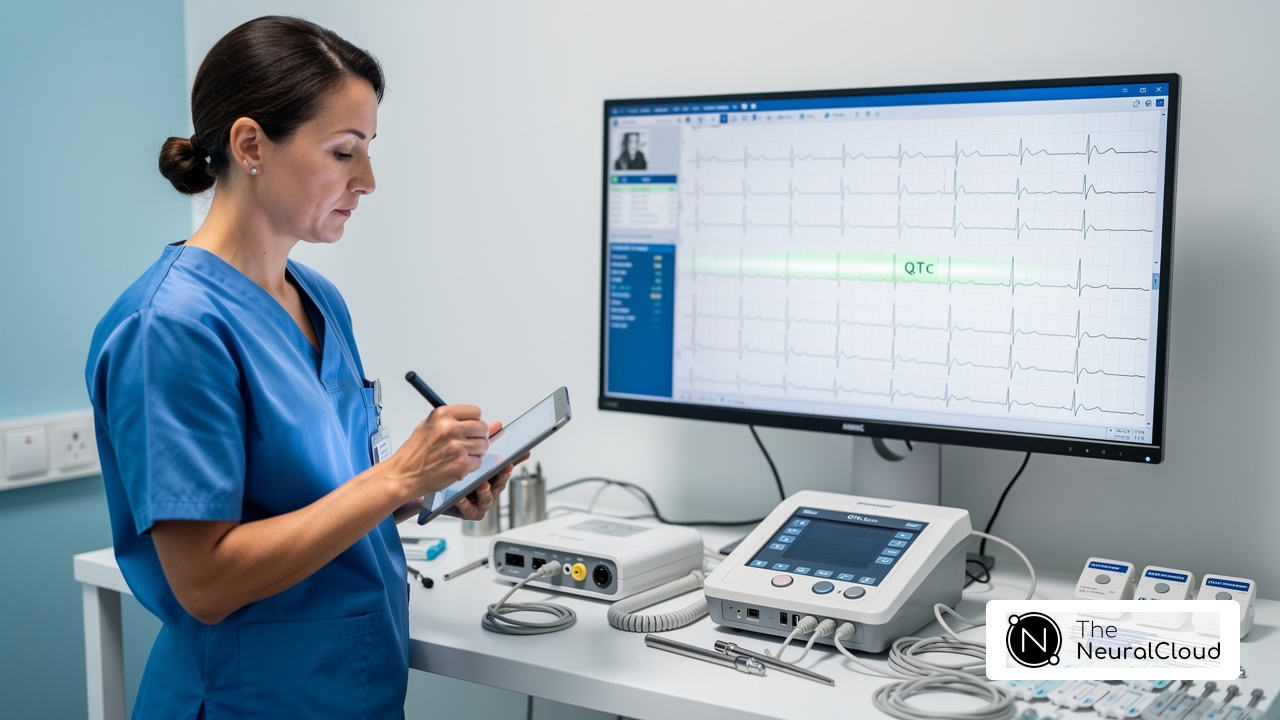
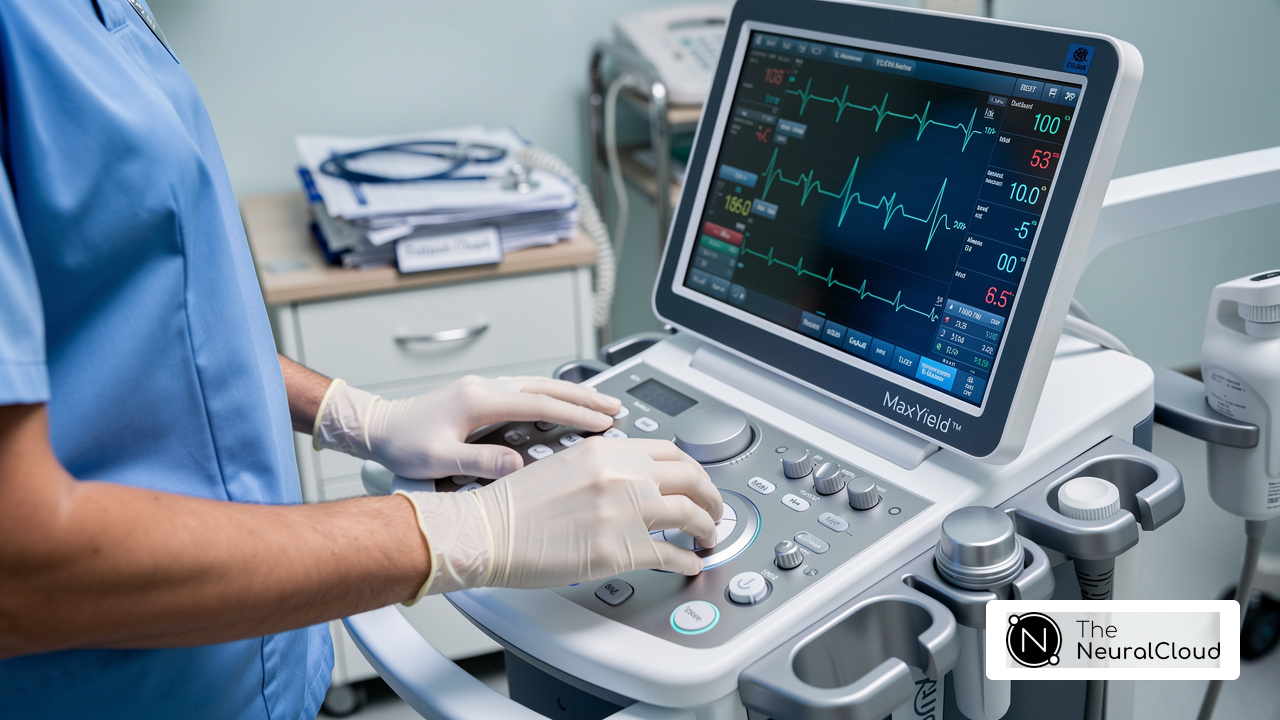
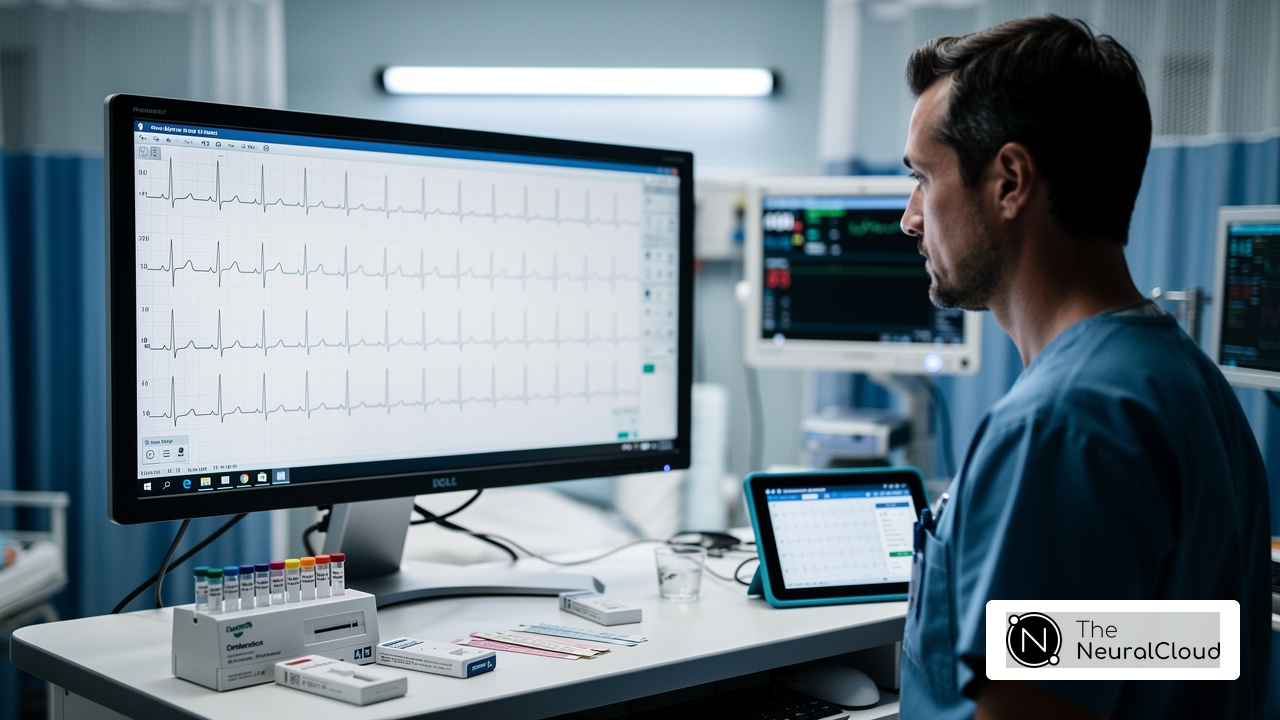
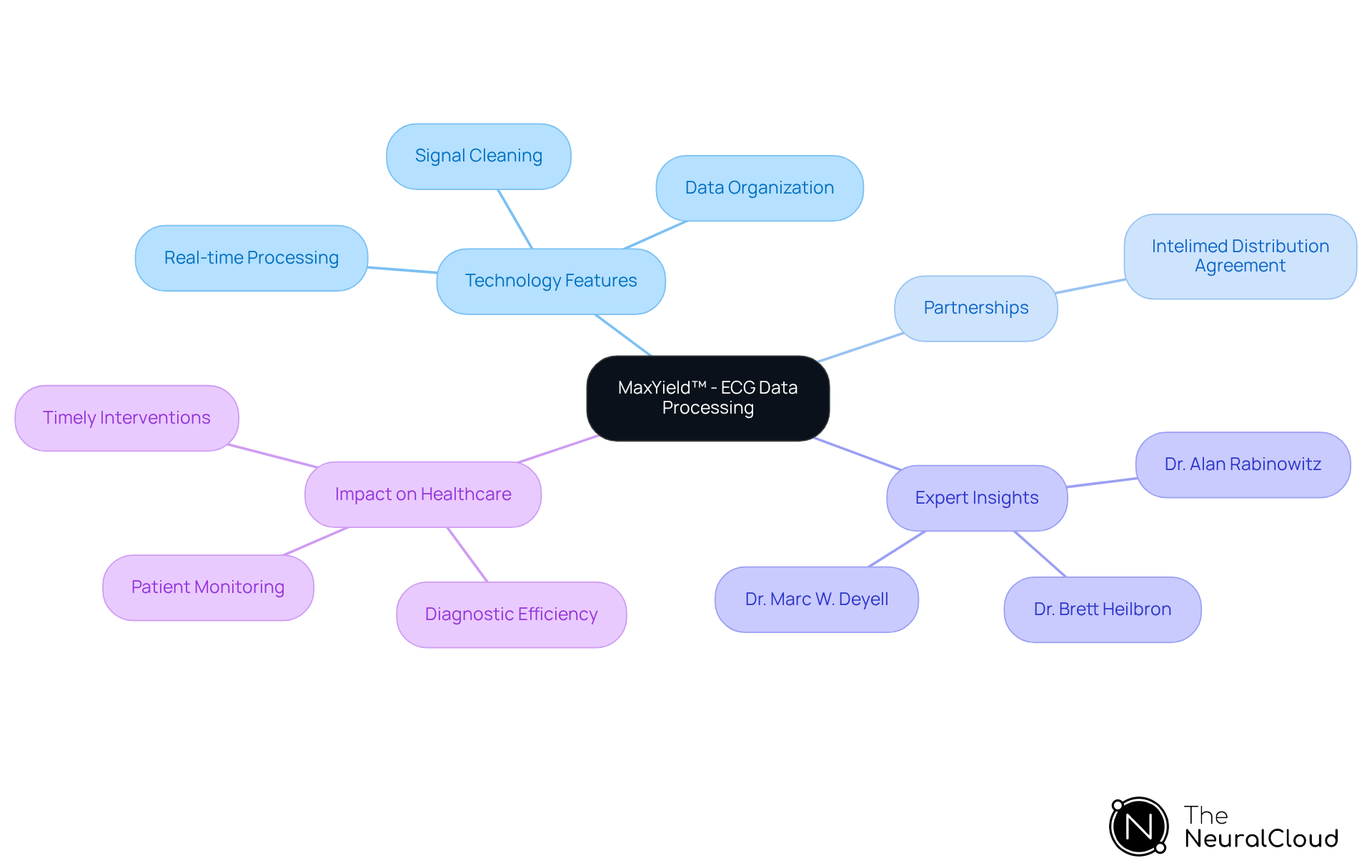
In the realm of ECG analysis, challenges persist that hinder accurate cardiac assessments. Neural Cloud Solutions Inc. is leading the charge in transforming ECG information processing with its flagship product, MaxYield™. This advanced intelligence layer enhances existing ECG workflows by isolating and cleaning noisy signals, leveraging patented signal mapping algorithms. MaxYield™ organizes raw ECG recordings from various devices, making it easier to analyze cardiac signals accurately. This innovation not only improves diagnostic accuracy but also streamlines the workflow for medical professionals, making it an essential tool in the cardiovascular field.
In 2026, updates to MaxYield™ have been significantly influenced by the distribution agreement with Intelimed, established on February 18, 2026. This partnership aims to enhance access to AI-driven cardiac solutions across Latin America, targeting hospitals, clinics, and other healthcare providers. The incorporation of AI-driven analytics facilitates real-time processing and visualization of cardiac information, enabling healthcare providers to make informed decisions swiftly. Expert opinions, including insights from Dr. Alan Rabinowitz, Dr. Brett Heilbron, and Dr. Marc W. Deyell, emphasize that such advancements are pivotal in enhancing the quality of cardiac care, as they provide clinicians with clearer, more dependable information for analysis.
MaxYield™ helps ensure that wearable devices provide clean PPG information with hospital-grade accuracy, addressing the primary pain point of inconsistent data quality from multiple devices. Successful implementations of ECG intelligence layers, such as MaxYield™, have shown significant enhancements in diagnostic efficiency and outcomes for individuals. For instance, the collaboration with a European digital health platform aims to enhance outcomes by providing healthcare providers with cleaner ECG data, enabling better detection of cardiac abnormalities. By leveraging AI technology, healthcare facilities can now achieve a beat-by-beat analysis of heart activity in under two minutes, which is a game-changer for timely interventions. Additionally, MaxYield™ offers premium subscription opportunities that provide unique metrics for enhanced patient monitoring. As healthcare providers embrace these advancements, the potential for improved patient outcomes becomes increasingly evident.
Understanding LVIDD: The Importance of Left Ventricular Internal Diastolic Dimension
The lvidd medical abbreviation represents the Left Ventricular Internal Diastolic Dimension, which is vital for accurately assessing cardiac health. This measurement indicates the size of the left ventricle during diastole. Normal values for this measurement typically range from 3.9 to 5.3 cm for women and 4.2 to 5.8 cm for men, making it a key indicator of cardiac health. The lvidd medical abbreviation is essential for evaluating left ventricular function and can suggest issues like diastolic dysfunction or heart failure.
An updated guideline on evaluating left ventricular diastolic function will be published on July 7, 2025. This guideline emphasizes the importance of accurate assessments in clinical practice. Recent statistics from the WASE Normal Values Study show that measurements in Canadian individuals align with these normal ranges. However, significant inter-country variation exists for left ventricular parameters.
Participants in this study were typically 45 years old, providing valuable context for technology developers in the wellness sector. Understanding the left ventricular internal diastolic dimension helps technology creators develop tools that accurately assess this important parameter, ultimately improving patient outcomes.

Clinical Implications of LVIDD: Assessing Cardiac Function and Health
Evaluating cardiac function requires precise measurements, particularly of the left ventricular internal dimension diameter, which is indicated by the lvidd medical abbreviation. The lvidd medical abbreviation refers to an enlarged left ventricular internal dimension, which indicates potential issues like left ventricular hypertrophy or diastolic dysfunction. These conditions are linked to adverse cardiovascular outcomes.
Research shows that an elevated left ventricular internal diameter (lvidd medical abbreviation) during diastole correlates with a higher risk of adverse events. Studies indicate that individuals with significant changes in this measurement may face increased ASCVD risk estimates, especially in those aged 70 and older, where very high ASCVD risk is defined as 15% or more.
Clinicians use the lvidd medical abbreviation for left ventricular internal diameter measurements to assess risk in heart disease patients, guiding treatment decisions. Experts suggest that future strategies should integrate clinical, genetic, and biometric data for more precise and personalized care.
Medical technology developers can enhance diagnostic abilities by incorporating precise evaluations of the left ventricular internal diastolic dimensions, often referred to by the lvidd medical abbreviation, into their products. The findings from the PROFID analysis emphasize the need for innovative approaches in risk stratification, highlighting that LVEF alone does not provide a sufficient basis for effective risk assessment.
By integrating accurate left ventricular internal diastolic dimension evaluations into their technologies, developers can significantly improve diagnostic capabilities, facilitating timely interventions and better outcomes for individuals.
MaxYield™, a device-agnostic ECG intelligence layer from Neural Cloud Solutions Inc., streamlines this process. MaxYield™ automates ECG analysis, delivering beat-by-beat insights and effectively filtering noise to provide clear, actionable data. This advanced platform not only enhances the accuracy of assessments but also assists technology developers in creating solutions that improve outcomes through timely and informed clinical decisions.

Integrating LVIDD Measurements: Overcoming Challenges in Health Tech Development
Inconsistent measurement methods in echocardiography pose significant challenges for accurate patient assessments. Recent studies have shown considerable inter-observer variability in echocardiographic measurements, underscoring the necessity for consistent methodologies. For example, the use of Simpson’s method for left ventricular ejection fraction saw an improvement from 40% to 67% after implementing standardized approaches, highlighting the positive impact on measurement accuracy. Additionally, the median number of echocardiographic views obtained increased from 13 before the intervention to 17 afterward, further emphasizing the benefits of standardization.
Health tech developers need to create technologies that support different echocardiographic methods while ensuring accuracy and reliability. This includes integrating diverse measurement techniques, such as Transthoracic Echo (TTE) and advanced evaluations like Global Longitudinal Strain (GLS). Moreover, user interface design is crucial; tools must be intuitive and user-friendly to facilitate clinician adoption and effective utilization.
Dr. Cynthia Taub, the Guideline Chair, points out that detail and clarity are crucial in echocardiography lab operations. By addressing these challenges through the development of robust solutions that enhance the accuracy of assessments related to the LVIDD medical abbreviation, health tech developers can significantly contribute to improved patient care outcomes. Standardizing echocardiographic protocols not only enhances the reliability of measurements but also fosters better communication among healthcare providers, ultimately leading to more informed clinical decisions.

Conclusion
The LVIDD measurement is essential for health tech developers seeking to improve cardiac assessments. This measurement is crucial for evaluating heart health and can indicate potential issues such as diastolic dysfunction or heart failure. By prioritizing LVIDD, developers can create tools that enhance accuracy and improve clinical outcomes, benefiting patient care.
Key insights throughout the article reveal the importance of precise LVIDD measurements in assessing cardiac function. The integration of technologies like MaxYield™ demonstrates how advanced analytics can enhance the clarity and reliability of ECG data, addressing challenges in existing measurement methods. Moreover, emphasizing standardization in echocardiography highlights the need for consistent practices to ensure accurate patient assessments across various healthcare settings.
As healthcare continues to change, integrating LVIDD measurements into medical technologies is more important than ever. Health tech developers are encouraged to adopt innovative approaches that prioritize accuracy and reliability. By doing so, they can significantly contribute to improving patient outcomes, facilitating timely interventions, and ultimately advancing the quality of cardiac care. Embracing these advancements not only enhances diagnostic capabilities but also fosters a future where healthcare professionals can make informed decisions with confidence.
Frequently Asked Questions
What is MaxYield™ and how does it enhance ECG analysis?
MaxYield™ is an advanced intelligence layer developed by Neural Cloud Solutions Inc. that improves ECG information processing by isolating and cleaning noisy signals using patented signal mapping algorithms. It organizes raw ECG recordings from various devices, facilitating accurate cardiac signal analysis.
What challenges does MaxYield™ address in ECG data processing?
MaxYield™ addresses challenges related to inaccurate cardiac assessments caused by noisy signals and inconsistent data quality from multiple devices. It ensures that wearable devices provide clean PPG information with hospital-grade accuracy.
How has the partnership with Intelimed influenced MaxYield™?
Established on February 18, 2026, the distribution agreement with Intelimed aims to enhance access to AI-driven cardiac solutions across Latin America, targeting hospitals and clinics. This partnership has influenced updates to MaxYield™, facilitating real-time processing and visualization of cardiac information.
What benefits do healthcare providers gain from using MaxYield™?
Healthcare providers benefit from improved diagnostic accuracy and streamlined workflows. MaxYield™ enables beat-by-beat analysis of heart activity in under two minutes, allowing for timely interventions and better detection of cardiac abnormalities.
What expert opinions support the advancements made by MaxYield™?
Experts such as Dr. Alan Rabinowitz, Dr. Brett Heilbron, and Dr. Marc W. Deyell emphasize that the advancements in AI-driven cardiac solutions, like those provided by MaxYield™, significantly enhance the quality of cardiac care by offering clinicians clearer and more dependable information for analysis.
How does MaxYield™ impact patient monitoring?
MaxYield™ offers premium subscription opportunities that provide unique metrics for enhanced patient monitoring, contributing to improved patient outcomes as healthcare providers adopt these advanced technologies.
Can you provide an example of MaxYield™ implementation?
A successful implementation of MaxYield™ involved collaboration with a European digital health platform, which aimed to enhance outcomes by providing healthcare providers with cleaner ECG data, thus enabling better detection of cardiac abnormalities.
List of Sources
- Neural Cloud Solutions: Pioneering ECG Data Processing with MaxYield™
- New Intelimed deal takes Neural Cloud’s AI heart software into Latin America (https://stocktitan.net/news/AIMLF/neural-cloud-enters-distribution-agreement-with-intelimed-to-expand-rxulcwnbexty.html)
- AI/ML Innovations Inc. (CVE:AIML) | (https://webdisclosure.com/article/aiml-innovations-inc-cve-aiml-neural-cloud-partners-with-european-digital-cardiac-platform-zbaBa97okBk)
- Neural Cloud Enters Distribution Agreement with Intelimed to Expand into Latin America (https://nasdaq.com/press-release/neural-cloud-enters-distribution-agreement-intelimed-expand-latin-america-2026-02-24)
- Understanding LVIDD: The Importance of Left Ventricular Internal Diastolic Dimension
- ASE Publishes Updated LV Diastolic Function by Echo Guideline - ASE (https://asecho.org/news/ase-publishes-updated-lv-diastolic-function-by-echo-guideline)
- dicardiology.com (https://dicardiology.com/content/global-echocardiography-normal-values-study-presented-european-society-cardiology-congress)
- Normal values (Echocardiography) (https://techmed.sk/en/echo/normal-values)
- pmc.ncbi.nlm.nih.gov (https://pmc.ncbi.nlm.nih.gov/articles/PMC8117370)
- Clinical Implications of LVIDD: Assessing Cardiac Function and Health
- ASNC News - ASNC (https://asnc.org/news-publications/press-releases)
- ASE Publishes Updated LV Diastolic Function by Echo Guideline - ASE (https://asecho.org/news/ase-publishes-updated-lv-diastolic-function-by-echo-guideline)
- medizinonline.com (https://medizinonline.com/en/new-perspectives-for-risk-stratification-and-prevention)
- escardio.org (https://escardio.org/communities/councils/cardiology-practice/scientific-documents-and-publications/ejournal/volume-22/new-insights-in-cardiovascular-risk-estimation-and-stratification)
- Integrating LVIDD Measurements: Overcoming Challenges in Health Tech Development
- dicardiology.com (https://dicardiology.com/content/new-guidelines-standardizing-adult-echocardiography-reporting-now-available)
- finance.yahoo.com (https://finance.yahoo.com/news/ase-releases-guidelines-standardize-adult-144400809.html)
- link.springer.com (https://link.springer.com/article/10.1186/s12947-015-0015-6)
- pmc.ncbi.nlm.nih.gov (https://pmc.ncbi.nlm.nih.gov/articles/PMC6717032)
- asecho.org (https://asecho.org/guideline/guidelines-for-the-standardization-of-adult-echocardiography-reporting)