Introduction
For healthcare professionals, mastering electrocardiography (ECG) is essential to improving diagnostic accuracy and patient care. AI technologies like MaxYield and Insight360 are emerging, providing new ways to improve ECG interpretation and make workflows more efficient. However, integrating these advanced solutions can be challenging. Clinicians often face hurdles when adopting AI-driven tools.
In this article, we’ll explore best practices for using AI in ECG diagnosis, helping healthcare providers navigate this changing landscape. By understanding these best practices, healthcare providers can enhance their diagnostic capabilities.
Understand Fundamental ECG Concepts
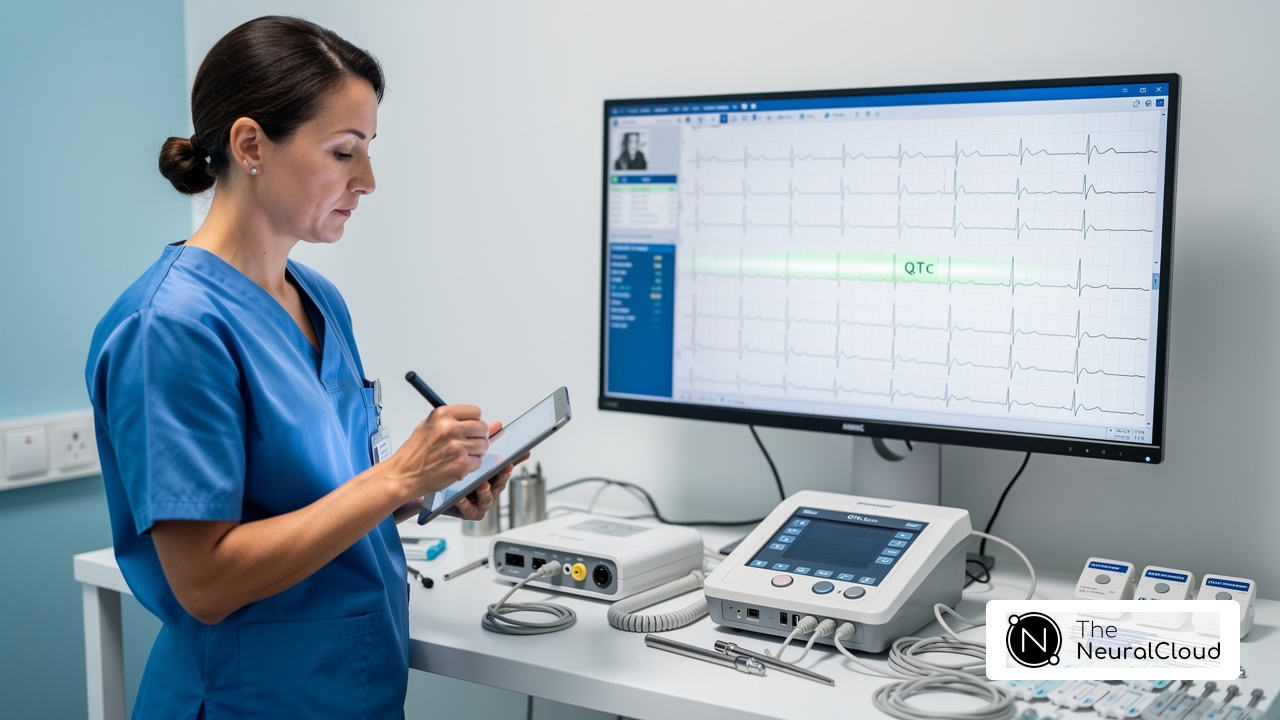
Understanding the fundamental concepts of electrocardiography is essential for effective ECG diagnosis, yet many professionals encounter challenges in this area. This involves understanding key components of an ECG waveform, including the P wave, QRS complex, and T wave, as well as important intervals like PR, QT, and ST segments, which are crucial for accurate interpretation. Each element provides vital insights into the heart's electrical activity and overall health.
The P wave signifies atrial depolarization, while the QRS complex reflects ventricular depolarization. Mastery of these components enables clinicians to detect abnormalities like arrhythmias or ischemic changes. Familiarity with normal heart rate and rhythm ranges is also essential for precise analysis. For instance, recognizing ST-segment elevation in acute myocardial infarction (AMI) underscores the importance of these concepts. A recent study in Canada highlighted that healthcare professionals with a strong understanding of ECG waveform components demonstrated significantly enhanced ECG diagnosis accuracy, achieving an average assessment score of 62% compared to 47% among those with less familiarity. By establishing a robust foundation in ECG analysis, healthcare professionals can effectively leverage AI technologies like MaxYield to enhance diagnostic precision and improve patient care outcomes.
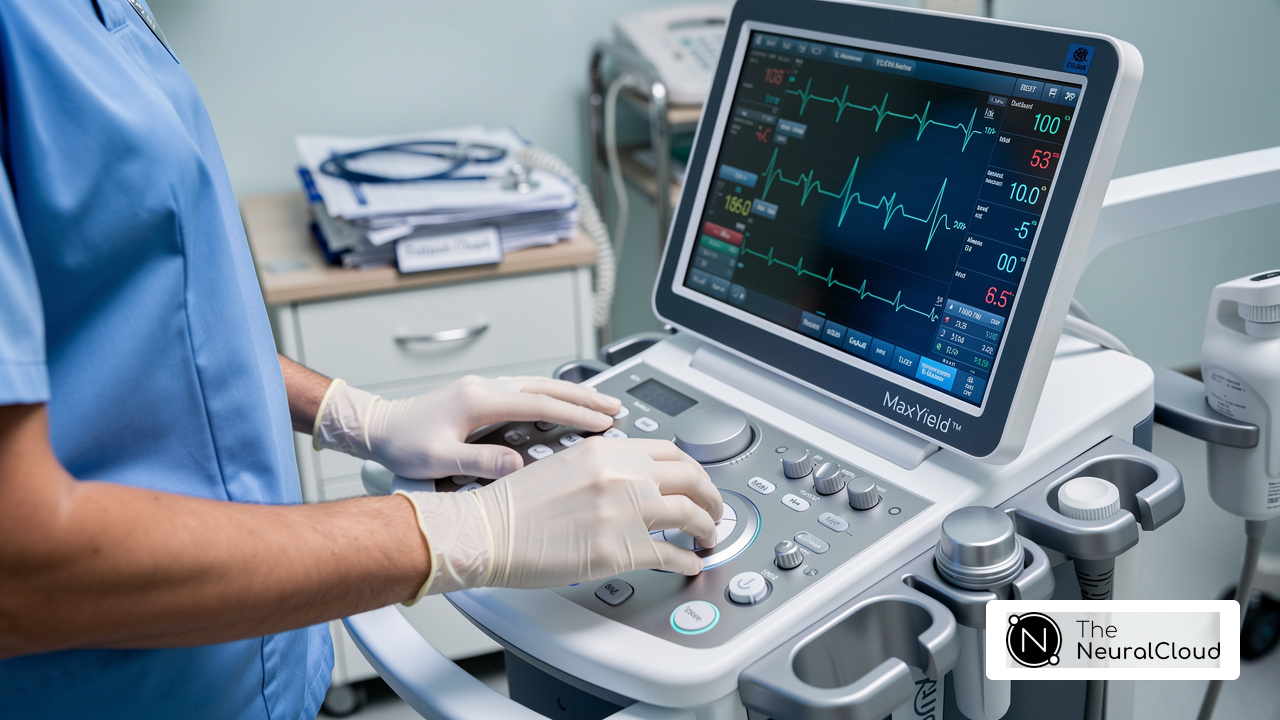
Recent advancements in ECG analysis, particularly through AI integration, have further refined the examination of these waveform components. With MaxYield's advanced noise filtering and unique wave recognition features, clinicians can easily identify and label critical data, even when faced with noisy recordings. Additionally, Insight360 transforms MaxYield’s clean ECG data into interactive dashboards and clinical-ready reports, enhancing the presentation of this information. This evolution highlights the significance of ongoing education and training in ECG diagnosis for healthcare professionals in Canada. As Dr. Alan Rabinowitz observes, 'MaxYield's accuracy competes with human analysis, making it an invaluable tool for clinicians.' Furthermore, it is important to note that MaxYield is currently pending FDA Class II SaMD clearance, ensuring compliance with regulatory standards. As AI technologies like MaxYield continue to evolve, the potential for improved diagnostic accuracy and patient outcomes becomes increasingly attainable for healthcare professionals.

Integrate AI-Driven Solutions for Enhanced Analysis
The integration of AI-driven solutions into ECG diagnosis addresses significant challenges in both diagnostic accuracy and efficiency. AI algorithms, especially those using deep learning, analyze large ECG datasets quickly and accurately, spotting patterns that might be missed by humans. For instance, Neural Cloud Solutions Inc.'s MaxYield rapidly labels P, QRS, and T wave onsets and offsets, automating the identification of critical features and streamlining ECG workflows. The platform provides a beat-by-beat tabulation in CSV format, making it easy to integrate into existing workflows, enabling users to analyze more data in less time with clear data sets and clean signals. Additionally, MaxYield's advanced noise filtering capabilities ensure that the data is not only accurate but also reliable, further enhancing diagnostic precision.
The need for improved ECG diagnosis is critical, as highlighted by the American Heart Association's advisory that heart disease and stroke could affect at least 60% of adults in the U.S. by 2050, emphasizing the necessity for effective solutions in Canada as well. Healthcare providers need to ensure their staff is well-trained in using these tools and understanding their clinical applications. This training should encompass the interpretation of AI-generated insights and their integration into clinical decision-making processes.
Case studies from institutions that have successfully adopted AI solutions, such as the AI-driven right heart health assessment and the deep learning ECG model development, serve as valuable references for best practices in implementation. These examples demonstrate the concrete advantages of AI in enhancing ECG diagnosis and improving health outcomes, emphasizing the significance of incorporating AI innovations in the evolving landscape of Canadian healthcare. Failing to adopt these advancements could hinder healthcare providers' ability to deliver the best possible patient care.

Implement Effective Strategies for Technology Adoption
Integrating AI-driven ECG solutions presents unique challenges that require a strategic approach for successful implementation in clinical settings. Here are several effective strategies:
- Engage Stakeholders Early: Involve key stakeholders, including clinicians, IT staff, and administrative personnel, in the planning process. Their insights can help identify potential barriers and facilitate smoother adoption.
- Provide Comprehensive Training: Offer training sessions that encompass both the technical aspects of the AI tools and their clinical applications. This enables staff to use the tools effectively and confidently.
- Establish Clear Communication: Clearly communicate the benefits of AI integration to all staff members. Highlight how these tools can enhance diagnostic accuracy and improve outcomes for individuals, fostering a culture of acceptance and enthusiasm.
- Pilot Programs: Implement pilot programs to test AI solutions in a controlled environment. This allows for the identification of challenges and necessary adjustments before a full-scale rollout.
- Monitor and Evaluate: Continuously monitor the performance of AI tools and gather feedback from users. Regular assessments can assist in improving processes and ensuring that the tools meet clinical needs.
Ultimately, these strategies not only streamline the adoption process but also pave the way for improved patient outcomes through enhanced ECG diagnosis.

Utilize Continuous Monitoring for Real-Time Insights
Continuous ECG monitoring plays a crucial role in ECG diagnosis by addressing significant challenges in cardiac care and offering real-time insights that enable timely interventions. This approach helps in the ECG diagnosis of transient arrhythmias and other cardiac events that standard ECG recordings might overlook.
Wearable ECG monitors continuously track an individual's heart rhythm, enabling an ECG diagnosis by alerting healthcare providers to abnormalities as they occur. This capability is especially beneficial for patients with a history of arrhythmias or those at high risk for cardiac events. For instance, the HiCardi wearable ECG monitoring system allows for continuous tracking of vital signs, including heart rate and body temperature, while providing ECG diagnosis and detecting up to 17 types of heart arrhythmias without user intervention.
Using continuous monitoring alongside AI analysis makes understanding the data much easier. Advanced algorithms, such as those found in MaxYield™, can analyze the continuous stream of ECG data to facilitate an ECG diagnosis by identifying patterns and anomalies that require immediate attention. MaxYield™ maps ECG signals through noise, isolating and labeling key features in every heartbeat, which not only improves ECG diagnosis accuracy but also enables proactive management of cardiac conditions. Studies have shown that long-term ECG diagnosis can increase detection rates of significant arrhythmias by 209% compared to traditional methods.
Experts like Dr. Alan Rabinowitz and Dr. Brett Heilbron emphasize that MaxYield™'s precision rivals human interpretation, particularly in its effectiveness for ECG diagnosis and noise reduction. Furthermore, MaxYield™ is currently pending FDA Class II SaMD clearance, ensuring compliance with regulatory standards. However, implementing wireless ECG monitoring technologies comes with challenges, like data security and EHR interoperability. Healthcare providers should consider these factors when adopting continuous monitoring solutions as a standard practice, particularly for individuals at high risk. This proactive approach can lead to better patient outcomes and enhanced safety. Embracing these technologies can transform cardiac care, particularly in areas where timely interventions are critical for patient health.

Conclusion
In the rapidly evolving landscape of healthcare, effective ECG diagnosis using AI solutions is essential for enhancing patient care. By leveraging advanced technologies like MaxYield, healthcare professionals can significantly improve diagnostic accuracy and streamline workflows, ultimately leading to better patient outcomes. AI helps clinicians interpret complex ECG data and make informed decisions quickly.
Key insights from the article highlight the importance of:
- Mastering fundamental ECG concepts
- Integrating AI-driven solutions
- Adopting effective strategies for technology implementation
Continuous monitoring emerges as a vital component, as it provides real-time insights that can lead to timely interventions for patients at risk of cardiac events. The case studies and strategies discussed serve as a roadmap for healthcare providers looking to navigate the challenges of AI adoption in ECG diagnosis.
As the healthcare sector continues to evolve, embracing AI technologies like MaxYield is essential for improving diagnostic capabilities. By prioritizing education, stakeholder engagement, and continuous monitoring, clinicians can harness the full potential of AI in ECG analysis. This proactive approach will not only enhance diagnostic precision but also transform cardiac care, ensuring that patients receive timely and effective treatment.
Frequently Asked Questions
Why is understanding fundamental ECG concepts important for healthcare professionals?
Understanding fundamental ECG concepts is essential for effective ECG diagnosis, as it helps clinicians interpret key components of an ECG waveform, such as the P wave, QRS complex, and T wave, as well as important intervals like PR, QT, and ST segments.
What do the P wave and QRS complex represent in an ECG?
The P wave signifies atrial depolarization, while the QRS complex reflects ventricular depolarization. Mastery of these components enables clinicians to detect abnormalities like arrhythmias or ischemic changes.
How does familiarity with heart rate and rhythm ranges contribute to ECG analysis?
Familiarity with normal heart rate and rhythm ranges is essential for precise analysis, allowing clinicians to recognize conditions such as ST-segment elevation in acute myocardial infarction (AMI).
What did a recent study in Canada reveal about healthcare professionals' understanding of ECG waveform components?
The study highlighted that healthcare professionals with a strong understanding of ECG waveform components demonstrated significantly enhanced ECG diagnosis accuracy, achieving an average assessment score of 62% compared to 47% among those with less familiarity.
How can AI technologies like MaxYield enhance ECG diagnosis?
AI technologies like MaxYield enhance ECG diagnosis by providing advanced noise filtering and unique wave recognition features, allowing clinicians to easily identify and label critical data even in noisy recordings.
What role does Insight360 play in ECG data presentation?
Insight360 transforms MaxYield’s clean ECG data into interactive dashboards and clinical-ready reports, enhancing the presentation of this information for better analysis.
What is the significance of ongoing education and training in ECG diagnosis for healthcare professionals?
Ongoing education and training in ECG diagnosis are crucial for healthcare professionals to stay updated with advancements in technology and improve diagnostic accuracy and patient care outcomes.
What is the current regulatory status of MaxYield?
MaxYield is currently pending FDA Class II SaMD clearance, ensuring compliance with regulatory standards for medical devices.
How does Dr. Alan Rabinowitz view the accuracy of MaxYield?
Dr. Alan Rabinowitz observes that MaxYield's accuracy competes with human analysis, making it an invaluable tool for clinicians in ECG diagnosis.
List of Sources
- Understand Fundamental ECG Concepts
- AI and ECG Interpretation: The next era of cardiology starts here (https://clinicalview.gehealthcare.com/article/ai-and-ecg-interpretation-next-era-cardiology-starts-here)
- pmc.ncbi.nlm.nih.gov (https://pmc.ncbi.nlm.nih.gov/articles/PMC10145690)
- Artificial intelligence in ECG diagnostics - where are we now? (https://escardio.org/communities/councils/cardiology-practice/education/cardiopractice/artificial-intelligence-in-ecg-diagnostics-where-are-we-now)
- (PDF) ECG Interpretation Proficiency of Healthcare Professionals (https://researchgate.net/publication/372029142_ECG_Interpretation_Proficiency_of_Healthcare_Professionals)
- Integrate AI-Driven Solutions for Enhanced Analysis
- medicalgorithmics.com (https://medicalgorithmics.com/medicalgorithmics-receives-approval-for-commercialization-in-canada-for-the-latest-generation-of-deeprhythmai-artificial-intelligence-algorithms)
- AI-driven study redefines right heart health assessment with novel predictive model (https://medicalxpress.com/news/2024-01-ai-driven-redefines-heart-health.html)
- New Study Shows Cardiologs' Deep Learning AI Outperforms the Apple Watch ECG Algorithm in Detecting Atrial Arrhythmias (https://dicardiology.com/content/new-study-shows-cardiologs-deep-learning-ai-outperforms-apple-watch-ecg-algorithm-detecting)
- AI-ECG Finds STEMI Faster, Cuts False-Positive Cath Lab Activations (https://tctmd.com/news/ai-ecg-finds-stemi-faster-cuts-false-positive-cath-lab-activations)
- Revolutionising Acute Cardiac Care With Artificial Intelligence: Opportunities and Challenges (https://onlinecjc.ca/article/S0828-282X(24)00443-4/fulltext)
- Implement Effective Strategies for Technology Adoption
- Stakeholder Engagement Effectiveness Statistics (https://zoetalentsolutions.com/stakeholder-engagement-effectiveness)
- Healthcare AI 2025 - Canada | Global Practice Guides | Chambers and Partners (https://practiceguides.chambers.com/practice-guides/healthcare-ai-2025/canada/trends-and-developments)
- Future Skills Centre • Centre des Compétences futures (https://fsc-ccf.ca/projects/ai-health-care)
- CMPA - Considerations for adopting and implementing artificial intelligence (AI) in healthcare (https://cmpa-acpm.ca/en/education-events/good-practices/the-healthcare-system/considerations-for-adopting-and-implementing-artificial-intelligence-ai-in-healthcare)
- Utilize Continuous Monitoring for Real-Time Insights
- Wireless ECG Monitoring - Norav Medical (https://noravmedical.com/wireless-ecg-monitoring)
- Wearable ECG monitor enables remote care of cardiac patients (https://nordicsemi.com/Nordic-news/2020/11/Wearable-ECG-monitor-enables-remote-care-of-cardiac-patients)
- FDA clears new ‘smart shirt’ for real-time cardiopulmonary monitoring (https://cardiovascularbusiness.com/topics/cardiac-imaging/electrocardiography-ecg/fda-clears-new-smart-shirt-real-time-cardiopulmonary-monitoring)
- The Future of Cardiac Safety: How Wearable ECGs Enhance Patient Monitoring in Drug Trials | Applied Clinical Trials Online (https://appliedclinicaltrialsonline.com/view/future-cardiac-safety-wearable-ecg-enhance-patient-monitoring)
- New Clinical Trial Finds Human Oversight ECG Monitors Outperform AI-Dependent Monitoring - HRS (https://hrsonline.org/news/human-oversight-ecg-monitors-outperform-ai-dependent-monitoring)