Introduction
The landscape of cardiac health assessment is changing, thanks to innovative technologies that bring distinct advantages and applications. At the forefront of this transformation are photoplethysmography (PPG) and electrocardiography (ECG), each offering unique insights into heart function through different methodologies. PPG stands out for its non-invasive monitoring and accessibility, making it a valuable tool for continuous health tracking. On the other hand, ECG remains the gold standard for accurately diagnosing heart conditions, providing detailed electrical activity of the heart.
As technology advances and AI platforms become integrated into these systems, a crucial question emerges: can we leverage the complementary strengths of PPG and ECG to improve patient outcomes and redefine cardiac care? By combining the ease of use of PPG with the diagnostic precision of ECG, healthcare professionals may enhance their ability to monitor and treat patients effectively. This synergy could lead to more personalized care, ultimately benefiting patients and healthcare providers alike.
Understand PPG and ECG Technologies
Photoplethysmography (PPG) and electrocardiography (ECG) are vital technologies in heart assessment, each characterized by its distinct methods and uses.
Photoplethysmography (PPG) is an optical technique that measures blood volume changes in microvascular tissues. By emitting infrared light into the skin and detecting the reflected light, PPG captures variations in blood flow, enabling the calculation of heart rate and other cardiovascular metrics. Its non-invasive characteristics and simplicity of integration make PPG a favored option for wearable devices, improving accessibility to heart health assessment.
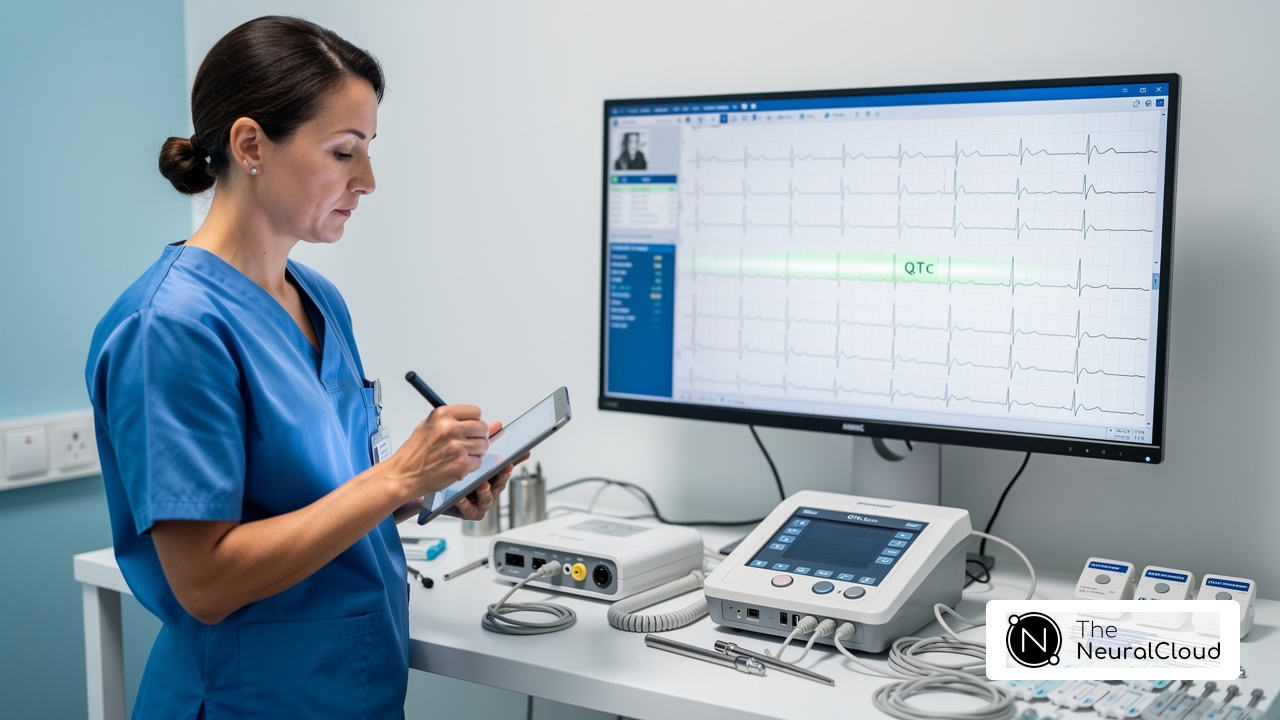
In contrast, Electrocardiography (ECG) records the heart's electrical activity through electrodes placed on the skin. This method offers a thorough perspective on the heart's rhythm and electrical conduction, establishing ECG as the gold standard for diagnosing various heart conditions. Typically performed in clinical settings, ECG requires precise electrode placement to ensure accurate readings.
In the discussion of heart health assessment, the differences between PPG vs ECG are evident, as PPG concentrates on blood flow dynamics while ECG highlights electrical activity. Recent advancements in both fields continue to enhance their clinical applications, with ongoing research exploring their integration into routine healthcare practices.
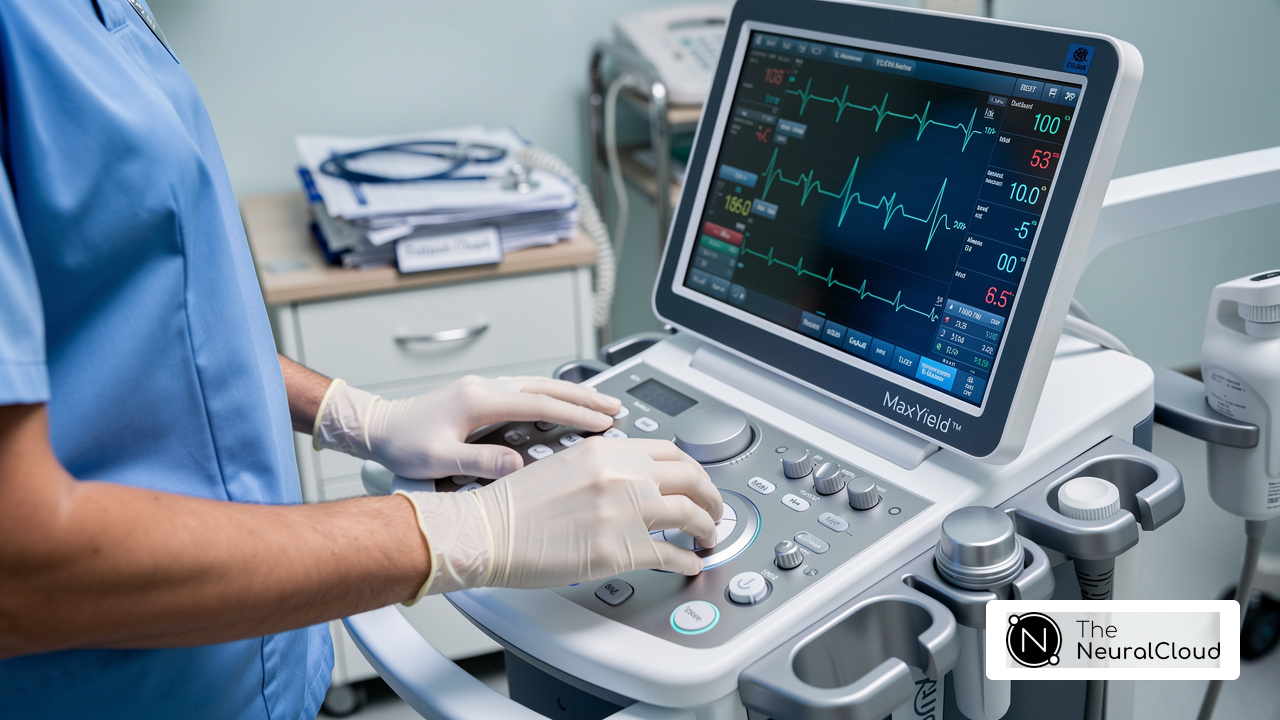
The MaxYield™ platform from Neural Cloud Solutions addresses the challenges associated with ECG analysis. It utilizes advanced AI algorithms for automated ECG signal labeling and analysis. This technology enhances clarity and efficiency while significantly reducing operational costs by minimizing the time spent on noise filtering and annotating. By leveraging advanced neural networks, MaxYield™ adapts to the physiological variability present in ECG waveforms, ensuring reliable interpretation across diverse patient recordings.
Both technologies play essential roles in heart health observation, yet they function based on fundamentally different principles. Recent advancements in both fields, particularly in 2026, have led to improved integration of these technologies into routine healthcare practices. Current studies are investigating the possibility of merging data from PPG vs ECG to improve diagnostic precision and patient observation.
As noted by cardiologist Dr. Mohamed Elgendi, the comparison of PPG vs ECG technologies can provide a more holistic view of cardiac health, allowing for better patient outcomes. Furthermore, a systematic review of 38 studies from 2015 to 2025 highlights the potential of wearable ECG and PPG for anxiety detection, although it notes challenges in translating these findings into clinical practice. This underscores the importance of continued research and development in these areas to maximize their clinical utility.

Evaluate Advantages and Limitations of PPG and ECG
When comparing PPG and ECG technologies, distinct advantages and limitations arise for each method:
Advantages of PPG:
- Non-invasive and Comfortable: PPG sensors can be seamlessly integrated into various wearable devices, enhancing user comfort and enabling continuous monitoring without the need for invasive procedures.
- Cost-effective: Generally, PPG devices are more affordable than ECG machines, making them accessible to a wider population, particularly in non-clinical settings.
- Ease of Use: The simplicity of PPG technology enables application in various environments, including home observation, with minimal setup requirements. Furthermore, PPG technology shows great potential for early identification of cardiovascular diseases, improving its applicability in both clinical and daily health assessment applications.
Limitations of PPG:
- Lower Accuracy: While effective for heart rate monitoring, PPG lacks the diagnostic precision of ECG, particularly in identifying arrhythmias and other significant cardiac conditions.
- Sensitivity to Motion Artifacts: PPG readings can be influenced by physical movement, which may lead to inaccuracies during activities, impacting reliability.
Advantages of ECG:
- High Diagnostic Accuracy: ECG is recognized as the gold standard for diagnosing heart conditions, offering detailed insights into heart rhythm and electrical activity, crucial for clinical assessments. With the integration of Neural Cloud Solutions' MaxYield™, ECG analysis is further enhanced, transforming lengthy and noisy recordings into clean, crisp signals through advanced AI technology.
- Comprehensive Data: ECG can identify a broad spectrum of heart abnormalities, making it an essential tool in clinical practice. MaxYield™ significantly boosts throughput by reducing the time spent on noise filtering and annotating, allowing healthcare professionals to allocate their time and expertise more effectively. Furthermore, the automation of ECG labeling contributes to operational cost reductions, enhancing overall efficiency.
Limitations of ECG:
- Invasiveness and Complexity: The requirement for electrode placement can be cumbersome and uncomfortable for patients, limiting its appeal for routine monitoring. ECG has traditionally been used for cardiac assessment but has limitations in flexibility and portability.
- Cost and Accessibility: ECG machines are typically more expensive and may not be readily available in all healthcare settings, posing challenges for widespread use.
In summary, while PPG provides a user-friendly and cost-effective alternative for continuous assessment, the discussion of PPG vs ECG highlights that ECG remains the preferred choice for high-stakes diagnostic accuracy in clinical environments, especially with the advancements brought by Neural Cloud Solutions' MaxYield™ platform.

Explore Clinical Applications and Guidelines for PPG and ECG
Both PPG and ECG serve unique clinical applications tailored to diverse patient needs and monitoring scenarios:
Clinical Applications of PPG:
- Heart Rate Monitoring: PPG technology is prevalent in fitness trackers and smartwatches, enabling continuous heart rate monitoring that appeals to both consumers and healthcare providers.
- Screening for Atrial Fibrillation (AF): Recent studies indicate that when comparing PPG vs ECG, PPG can effectively screen for AF, although confirmation through ECG is often necessary to ensure accuracy.
- Blood Oxygen Saturation Measurement: PPG is widely utilized in pulse oximeters to assess blood oxygen levels, particularly in respiratory care settings.
Clinical Applications of ECG:
- Diagnosis of Cardiac Conditions: ECG is crucial for diagnosing arrhythmias, myocardial infarctions, and other cardiac abnormalities, making it an indispensable tool in emergency medicine. The integration of Neural Cloud Solutions' MaxYield™ enhances ECG analysis through advanced noise filtering and distinct wave recognition, improving diagnostic accuracy even in challenging conditions.
- Preoperative Assessment: ECG is routinely performed prior to surgeries to evaluate cardiac risk in patients, ensuring safe surgical procedures.
- Monitoring During Treatment: ECG is employed to monitor patients receiving treatment for heart conditions, allowing for timely intervention in response to any changes in heart rhythm. MaxYield™ enables swift labeling of wave onsets and offsets, streamlining data processing and improving efficiency.
Guidelines for Use:
- PPG Guidelines: The American Heart Association recommends PPG for initial AF screening in patients with risk factors, highlighting the importance of follow-up with ECG for confirmation.
- ECG Guidelines: The American College of Cardiology outlines guidelines for ECG use across various clinical scenarios, including routine screenings, diagnostic evaluations, and treatment monitoring. The MaxYield™ platform supports these guidelines by providing enhanced data clarity and actionable insights, ultimately improving patient outcomes.

Compare Performance Metrics of PPG and ECG
Performance metrics are crucial for evaluating the effectiveness of PPG vs ECG in clinical settings. Key metrics include accuracy, sensitivity, specificity, and usability:
Accuracy:
- ECG: As the gold standard, ECG offers a high accuracy rate for diagnosing cardiac conditions, with sensitivity rates reaching up to 96.1% and specificity rates of 97.5% in recent studies. This reliability makes ECG a trusted tool for detecting various heart abnormalities, including atrial fibrillation (AF) and myocardial infarctions. The integration of Neural Cloud Solutions' MaxYield™ platform enhances ECG analysis through automated labeling and data extraction, significantly improving accuracy and minimizing the impact of signal artifacts.
- PPG: While effective for heart rate tracking, PPG's accuracy in diagnosing arrhythmias is comparatively lower. Recent studies indicate sensitivity rates around 70-80% for PPG smartwatches, but these can vary significantly based on the device and algorithm used, with some studies reporting lower performance in detecting specific arrhythmias.
Sensitivity and Specificity:
- ECG: High sensitivity and specificity make ECG a reliable choice for identifying a range of cardiac issues. For instance, FibriCheck demonstrated a sensitivity of 89.0% and specificity of 100.0%, showcasing its effectiveness in clinical settings. The MaxYield™ platform supports this reliability by utilizing AI-powered algorithms that ensure smooth signal analysis, thereby enhancing the detection of abnormalities.
- PPG: Sensitivity can fluctuate based on the device and algorithm, with some PPG applications achieving sensitivity rates of 86.4% and specificity of 99.0%. However, PPG may miss certain arrhythmias that ECG can detect, particularly in patients with a history of AF, which is an independent predictor of technical failure in recordings.
Usability:
- ECG: Although ECG provides comprehensive data, its usability can be limited by the need for trained personnel to apply electrodes and interpret results, which may restrict its accessibility in some settings. However, with MaxYield™, the automation of labor-intensive tasks allows healthcare professionals to focus on critical decision-making, improving overall usability in clinical environments.
- PPG: PPG devices are typically user-friendly and suitable for various settings, including home observation. This accessibility makes them a practical option for continuous tracking and initial screening, particularly in consumer health applications.
Conclusion of Performance Comparison:
In summary, while ECG remains the superior choice for diagnostic accuracy, especially with the advancements brought by MaxYield™, PPG serves as a viable alternative for continuous monitoring and initial screening, particularly in non-clinical settings. The integration of both technologies can enhance patient engagement and improve overall cardiac care.

Conclusion
The exploration of PPG and ECG technologies highlights their unique roles in assessing heart health, each offering distinct advantages tailored to specific clinical needs. PPG excels in providing non-invasive, continuous monitoring, making it suitable for consumer health applications. In contrast, ECG stands as the gold standard for comprehensive cardiac diagnostics, delivering high accuracy and detailed insights into heart activity.
Key insights emphasize the non-invasive nature and cost-effectiveness of PPG, making it an appealing option for routine monitoring and early detection of cardiovascular issues. On the other hand, ECG's high diagnostic accuracy, particularly with the integration of advanced AI technologies like Neural Cloud Solutions' MaxYield™, enhances its reliability in clinical settings for diagnosing serious heart conditions. Ongoing research into integrating both technologies suggests a promising future for more precise and holistic cardiac assessments.
As the healthcare landscape evolves, leveraging the strengths of both PPG and ECG can significantly enhance patient outcomes. Embracing these technologies supports continuous monitoring and early detection while facilitating timely interventions in clinical practice. Continued research and development in these areas are crucial to fully harness their potential, ultimately leading to improved cardiac care and greater patient engagement in heart health management.
Frequently Asked Questions
What are PPG and ECG technologies?
Photoplethysmography (PPG) is an optical technique that measures blood volume changes in microvascular tissues, while electrocardiography (ECG) records the heart's electrical activity through electrodes placed on the skin.
How does PPG work?
PPG works by emitting infrared light into the skin and detecting the reflected light to capture variations in blood flow, allowing for the calculation of heart rate and other cardiovascular metrics.
What are the advantages of PPG?
PPG is non-invasive, easy to integrate into wearable devices, and improves accessibility to heart health assessment.
What is the primary function of ECG?
ECG provides a thorough perspective on the heart's rhythm and electrical conduction, making it the gold standard for diagnosing various heart conditions.
Where is ECG typically performed?
ECG is usually performed in clinical settings and requires precise electrode placement for accurate readings.
What are the main differences between PPG and ECG?
PPG focuses on blood flow dynamics, while ECG highlights electrical activity of the heart.
What advancements have been made in PPG and ECG technologies?
Recent advancements, particularly in 2026, have improved the integration of these technologies into routine healthcare practices, with ongoing research exploring their combined use for enhanced diagnostic precision.
What is the MaxYield™ platform?
The MaxYield™ platform from Neural Cloud Solutions uses advanced AI algorithms for automated ECG signal labeling and analysis, improving clarity and efficiency while reducing operational costs.
How does MaxYield™ enhance ECG interpretation?
MaxYield™ adapts to physiological variability in ECG waveforms, ensuring reliable interpretation across diverse patient recordings.
What potential does wearable ECG and PPG technology have according to recent studies?
Wearable ECG and PPG technology shows potential for anxiety detection, although there are challenges in translating these findings into clinical practice.
Why is continued research important in PPG and ECG technologies?
Continued research is crucial to maximize the clinical utility of these technologies and improve patient outcomes, as highlighted by cardiologist Dr. Mohamed Elgendi.
List of Sources
- Understand PPG and ECG Technologies
- empr.com (https://empr.com/news/cardiotag-a-wearable-cardiac-monitoring-device-gets-fda-clearance)
- nature.com (https://nature.com/articles/s41746-026-02620-7)
- 1st synthesized 12-lead ECG to launch in 2026 (https://beckershospitalreview.com/supply-chain/1st-synthesized-12-lead-ecg-to-launch-in-2026)
- massdevice.com (https://massdevice.com/cardiosense-fda-clearance-wearable-ecg-sensor)
- Evaluate Advantages and Limitations of PPG and ECG
- link.springer.com (https://link.springer.com/article/10.1186/s12872-025-04582-2)
- news-medical.net (https://news-medical.net/news/20220808/Wrist-wearable-devices-more-cost-effective-than-electrocardiograms-and-pulse-palpation-for-atrial-fibrillation-screening.aspx)
- electronicsweekly.com (https://electronicsweekly.com/news/products/sensors-products/ppg-vs-ecg-heart-rate-sensors-2023-12)
- mdpi.com (https://mdpi.com/1424-8220/25/18/5745)
- pmc.ncbi.nlm.nih.gov (https://pmc.ncbi.nlm.nih.gov/articles/PMC6426305)
- Explore Clinical Applications and Guidelines for PPG and ECG
- Smartwatches Help Detect Hidden Dangerous Heart Rhythm Problems, Clinical Trial Finds (https://usnews.com/news/health-news/articles/2026-01-23/smartwatches-help-detect-hidden-dangerous-heart-rhythm-problems-clinical-trial-finds)
- academic.oup.com (https://academic.oup.com/ehjdh/article/7/2/ztag009/8431598)
- Smartwatch use enhances detection of heart arrhythmias, increasing quality of care (https://medicalxpress.com/news/2026-01-smartwatch-heart-arrhythmias-quality.html)
- datainsightsmarket.com (https://datainsightsmarket.com/reports/photoplethysmogram-ppg-biosensor-1000520)
- drugs.com (https://drugs.com/news/smartwatch-based-screening-improves-detection-new-onset-fib-128440.html)
- Compare Performance Metrics of PPG and ECG
- academic.oup.com (https://academic.oup.com/ehjdh/article/7/2/ztag009/8431598)
- eurekalert.org (https://eurekalert.org/news-releases/1116323)
- pmc.ncbi.nlm.nih.gov (https://pmc.ncbi.nlm.nih.gov/articles/PMC11853970)
- jacc.org (https://jacc.org/doi/10.1016/j.jacadv.2025.102133)
- AI-ECG Momentum and Rising Competition Reshape Diagnostic Cardiology in 2026 (https://signifyresearch.net/insights/diagnostic-cardiology-market-bouncing-into-2026)