Introduction
Atrial fibrillation (AFib) is a common yet often underdiagnosed cardiac condition that poses serious health risks, including stroke and heart failure. Traditional 12-lead ECGs have long been the standard for diagnosing this arrhythmia, but their effectiveness is frequently compromised by factors such as noise, artifacts, and the sporadic nature of AFib episodes. As the healthcare landscape evolves, innovative technologies like MaxYield™ present an exciting opportunity to enhance AFib detection.
MaxYield™ offers advanced features that improve ECG analysis, addressing the limitations of traditional methods. By utilizing cutting-edge algorithms, it minimizes noise and artifacts, ensuring clearer readings. This platform not only enhances the accuracy of AFib detection but also streamlines the diagnostic process for healthcare professionals.
The advantages of MaxYield™ extend beyond improved detection. With its user-friendly interface, healthcare providers can quickly interpret results, leading to faster decision-making and better patient outcomes. This efficiency is crucial in managing AFib, where timely intervention can significantly reduce the risk of complications.
In summary, MaxYield™ stands out as a transformative tool in the realm of cardiac care. By enhancing ECG analysis and providing clear benefits for healthcare professionals, it has the potential to revolutionize the diagnosis and management of atrial fibrillation.
Understanding Atrial Fibrillation and Traditional ECG Analysis
marked by irregular and often rapid heart rates, posing significant risks like stroke and heart failure. Traditionally, a 12-lead ECG has been the standard method, capturing the heart's electrical activity. However, this method comes with several challenges. The process can be labor-intensive, requiring skilled personnel to interpret results, which may lead to delays in diagnosis. Moreover, traditional ECGs are susceptible to noise and artifacts that can obscure true cardiac signals, complicating accurate readings.
The sporadic nature of atrial fibrillation episodes adds another layer of complexity to identification; standard ECGs may not capture these temporary events, resulting in missed diagnoses. For example, studies show that many patients experience intermittent AFib, yet many cases remain undiagnosed due to the limitations of traditional methods. Cardiologists have noted that the inability to consistently identify atrial fibrillation can lead to significant health risks, underscoring the need for improved detection and efficiency.
As the prevalence of atrial fibrillation continues to rise, driven by factors such as an aging population and increasing rates of hypertension and obesity, new technologies are emerging. The MaxYield™ technology addresses these challenges by improving AFib detection through advanced technology. It offers features that streamline the diagnostic process, reduce the potential for human error, and enhance the accuracy of readings.
By utilizing the MaxYield™ platform, healthcare professionals can benefit from quicker diagnoses, improved patient outcomes, and a more efficient workflow. This innovative solution not only meets the growing demand for effective diagnostic tools but also empowers cardiologists to provide better care for their patients.

Effectiveness of Traditional ECG Analysis in Detecting AFib
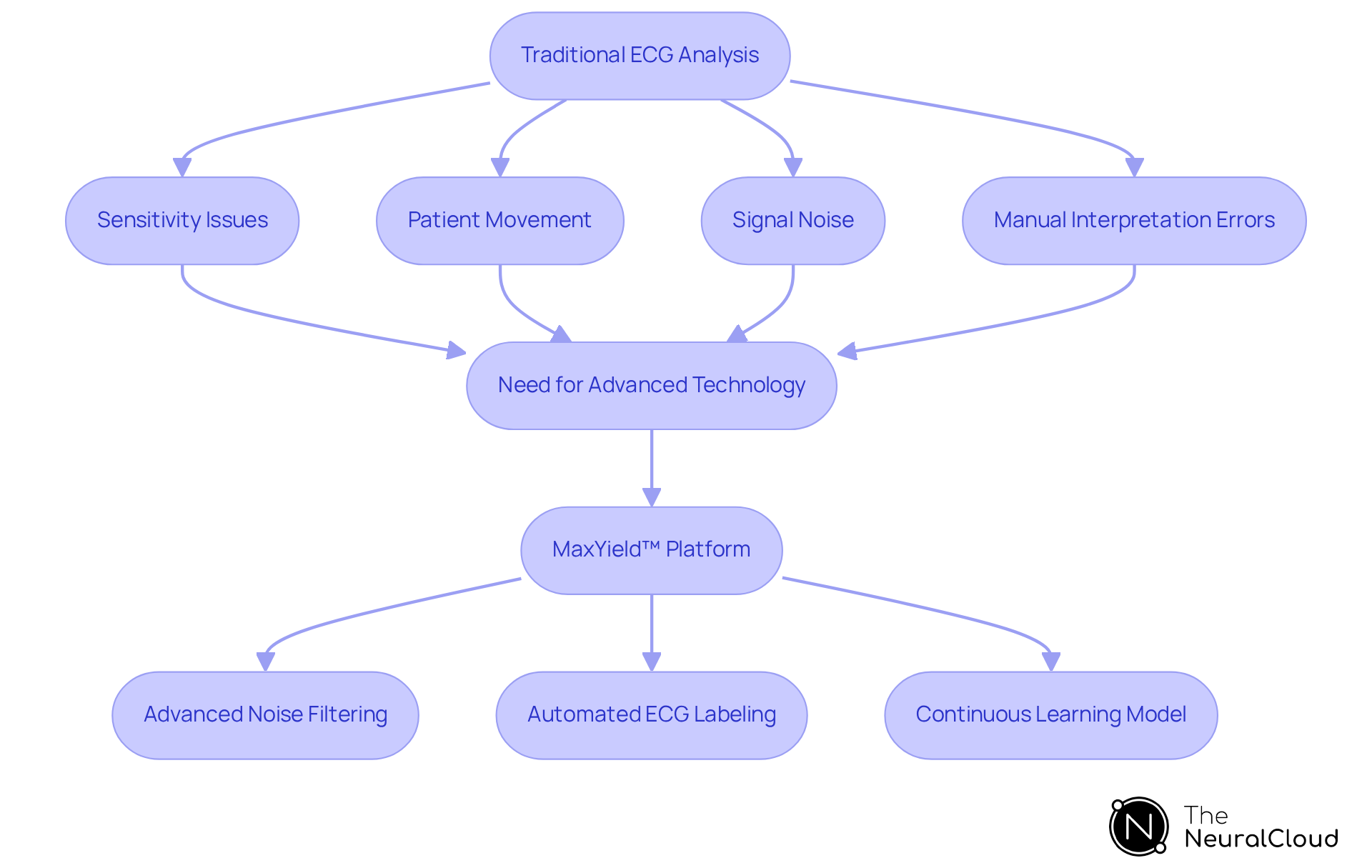
Conventional ECG analysis presents several challenges in accurately detecting AFib. While these methods can demonstrate high sensitivity and specificity, their effectiveness often diminishes in real-world scenarios. Factors such as patient movement, signal noise, and the necessity for continuous monitoring can hinder performance. For example, a systematic review indicated that traditional ECG methods have a sensitivity of around 80% for detecting AFib, but this figure can significantly decline in cases of paroxysmal AFib, where episodes are sporadic and may not be captured during monitoring. Furthermore, the reliance on manual interpretation introduces the risk of human error, complicating the diagnostic process.
These limitations underscore the urgent need for advancements in ECG technology. The MaxYield™ system, developed by Neural Cloud Solutions, addresses these challenges with innovative features. It employs advanced algorithms to enhance clarity and workflow efficiency. This system automates ECG labeling and data extraction, which significantly improves diagnostic accuracy while reducing operational costs.
The ongoing learning model of MaxYield™ ensures that the precision and effectiveness of the system improve over time. This continuous enhancement offers healthcare professionals a more reliable and prompt solution for AFib detection. By integrating such advanced technology, practitioners can expect not only improved diagnostic accuracy but also streamlined processes that ultimately benefit patient care.
MaxYield™: Advancements in ECG Analysis for AFib Detection
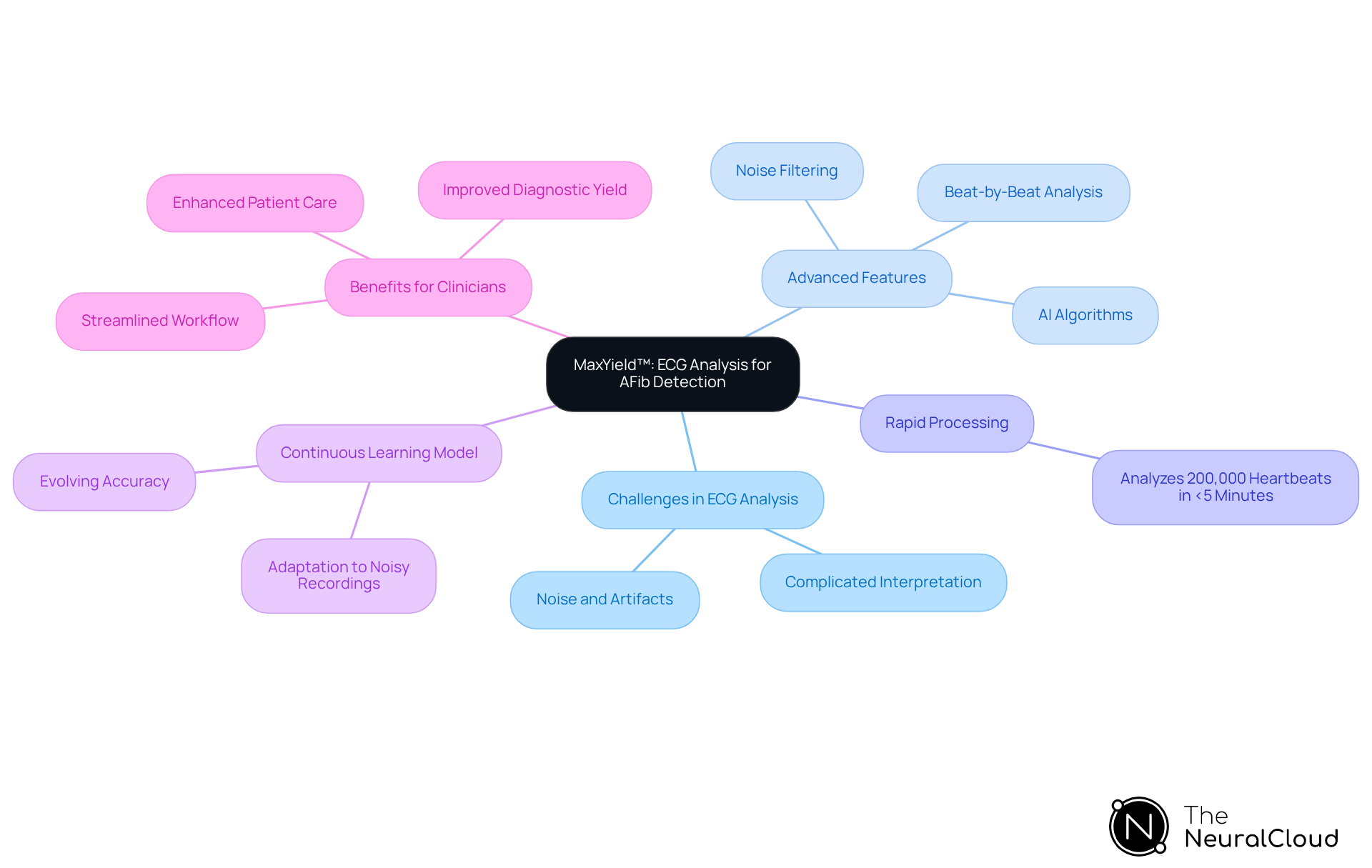
ECG analysis has long faced challenges, particularly in accurately detecting AFib. Traditional methods often struggle with noise, complicating the interpretation of results. The MaxYield™ technology addresses these issues head-on, offering a sophisticated solution that leverages advanced AI algorithms to enhance detection.
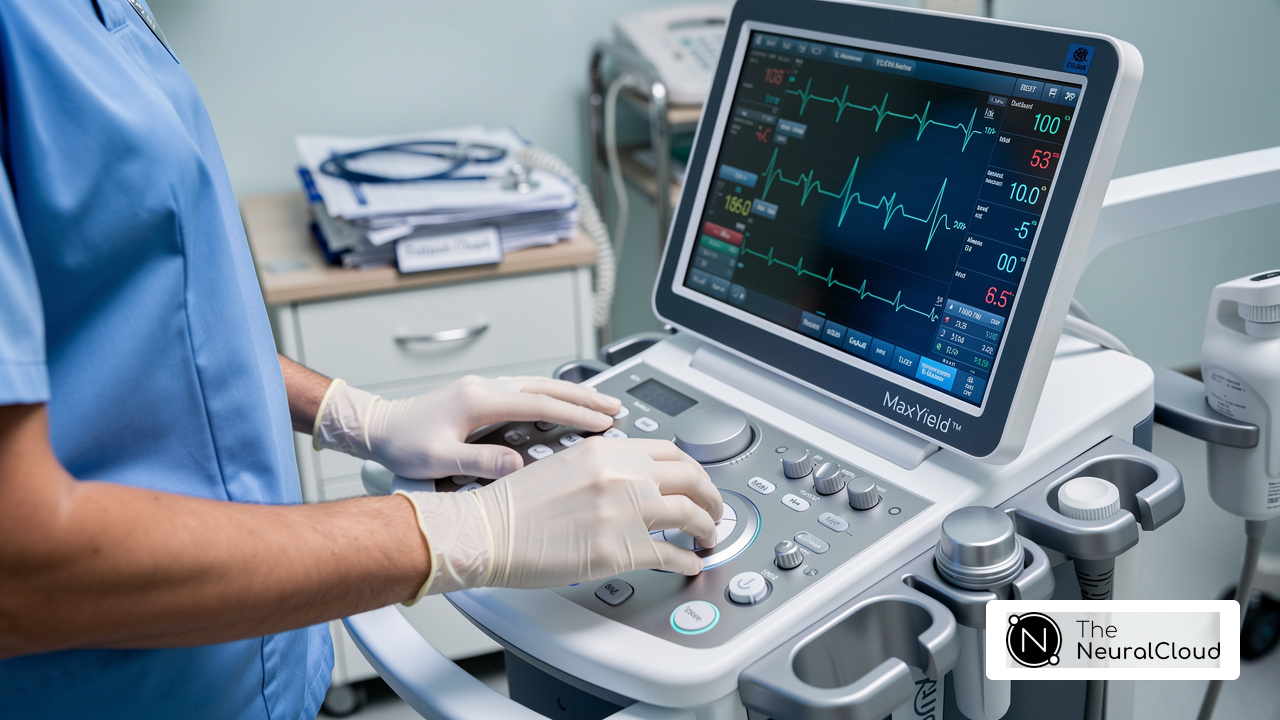
One of the standout features of MaxYield™ is its ability to analyze over 200,000 heartbeats in less than five minutes. This rapid processing capability allows for quick assessments, accurately isolating and labeling critical features such as P-waves, QRS complexes, and T-wave intervals. Additionally, the platform effectively filters out artifacts, streamlining the workflow for healthcare professionals.
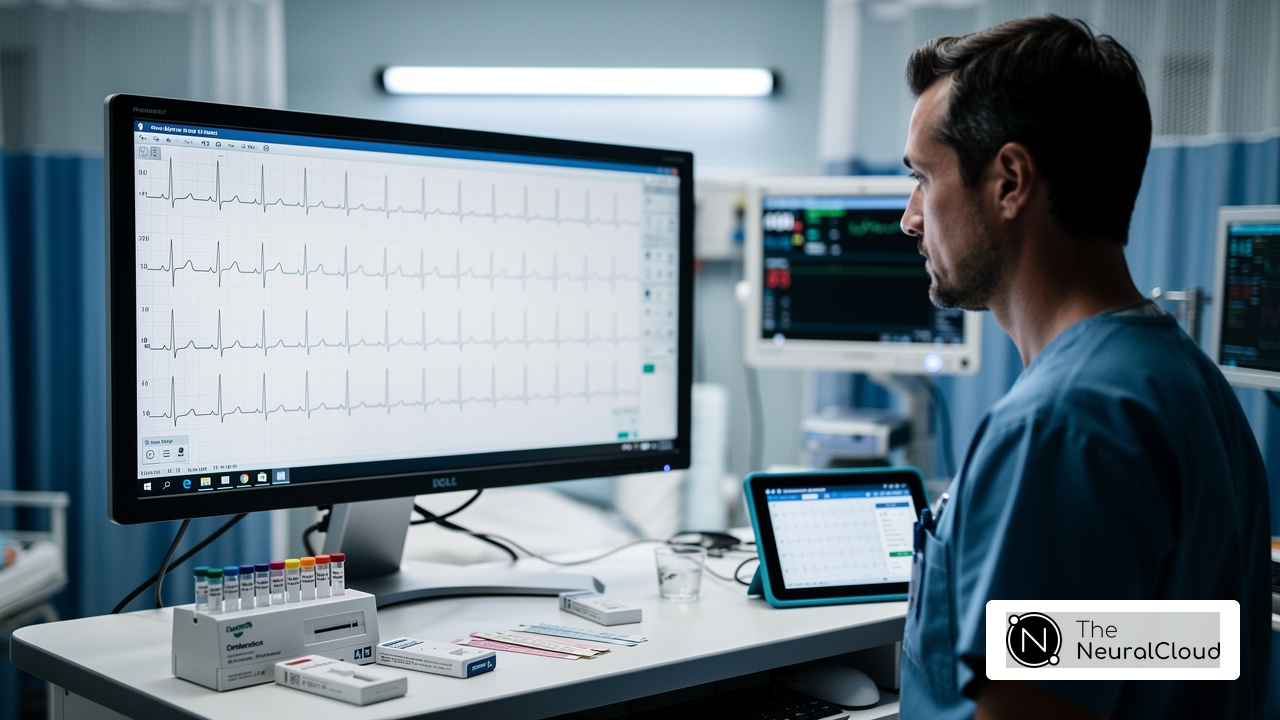
The continuous learning model employed by MaxYield™ ensures that the system evolves over time, enhancing its accuracy and efficiency. It can identify and label critical data even in recordings with high levels of noise, rapidly isolating ECG waves affected by baseline wander, movement, and muscle artifact. This capability transforms noisy recordings into clear data, significantly improving diagnostic outcomes, as shown in an afib picture.
In summary, MaxYield™ positions itself as a preferred solution for clinicians seeking reliable and efficient ECG analysis. With its advanced features and proven benefits, it embodies the future of cardiac care, ultimately enhancing patient outcomes and diagnostic accuracy.
Comparative Analysis: Pros and Cons of ECG Methods for AFib Detection
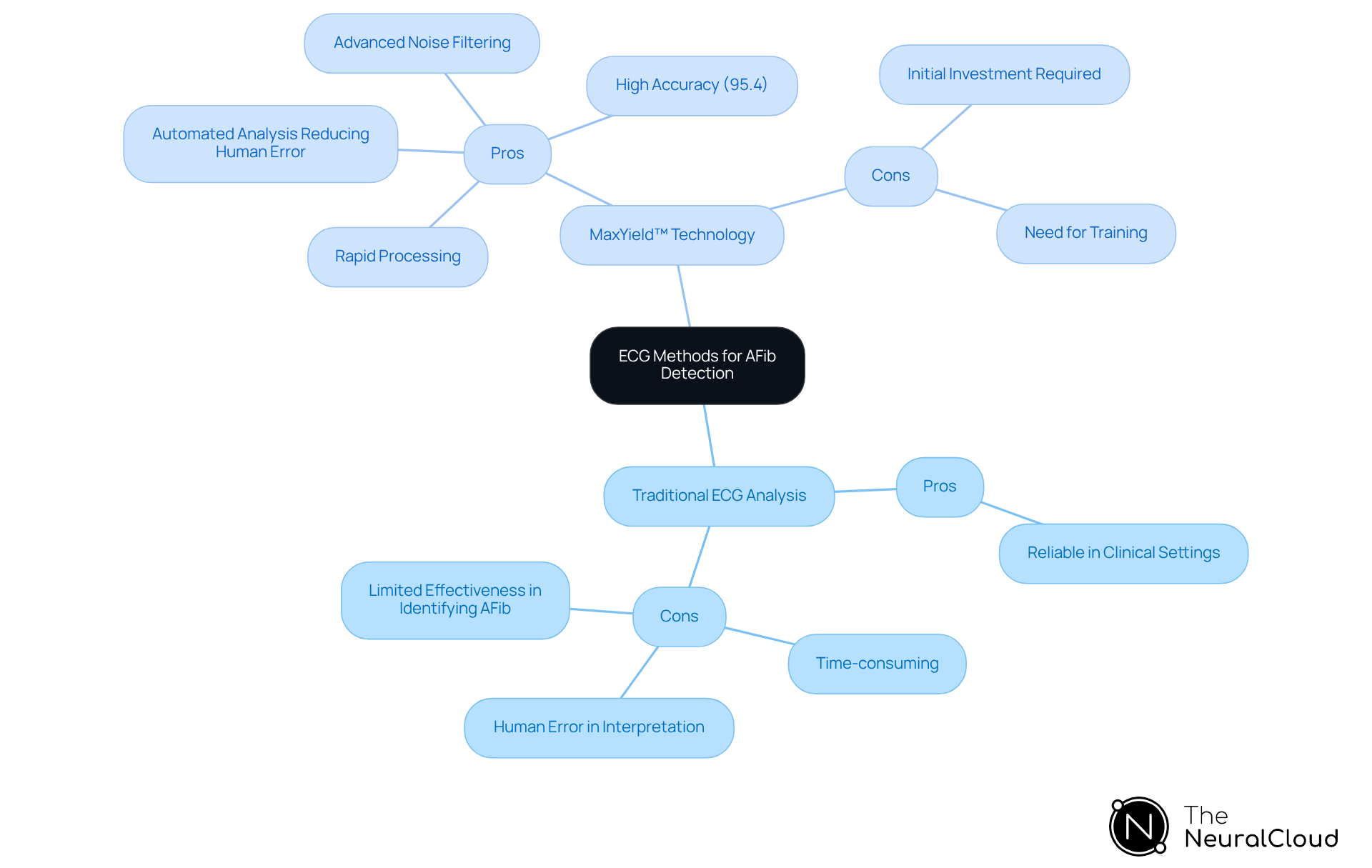
When comparing ECG methods for detecting atrial fibrillation (AFib), several advantages and disadvantages become apparent.
Traditional ECG
is widely recognized as the gold standard for AFib detection, ensuring reliability in clinical settings. However, it often presents challenges related to the process that can hinder timely diagnosis and treatment. For instance, the process can be time-consuming and labor-intensive, leading to delays. Additionally, human error during interpretation can compromise diagnostic accuracy, and its limited effectiveness in identifying the condition may result in missed critical episodes.
MaxYield™
addresses these challenges by processing ECG data rapidly, enabling timely diagnosis. It automates the analysis, reducing the risk of human error and enhancing overall diagnostic reliability. Furthermore, it employs advanced noise filtering techniques that enhance signal clarity, leading to improved detection. Notably, it validates its effectiveness from subcutaneous electrocardiogram recordings.
Advantages for Healthcare Professionals
The integration of MaxYield™ offers compelling benefits for healthcare professionals. By processing over 200,000 heartbeats in under five minutes, it allows for quicker decision-making in patient care. While there is an initial investment in new technology and training, the long-term benefits of MaxYield™ make it a valuable addition to clinical practice. Moreover, the practical application of MaxYield™ with devices such as Vivalink illustrates its real-world benefits, providing healthcare professionals with the tools they need to improve patient outcomes.
Conclusion
The exploration of atrial fibrillation detection highlights a notable transition from traditional ECG methods to innovative technologies like MaxYield™. Conventional 12-lead ECGs have long been the standard for diagnosing AFib, yet they face significant challenges. These include susceptibility to noise, the necessity for skilled interpretation, and the risk of missed diagnoses due to the sporadic nature of AFib episodes. As the prevalence of this condition continues to rise, the demand for more efficient and accurate diagnostic tools becomes increasingly critical.
MaxYield™ technology effectively addresses the limitations of traditional ECG analysis by utilizing advanced algorithms that enhance both diagnostic precision and speed. Key features include:
- Rapid processing of over 200,000 heartbeats in under five minutes.
- Automated data extraction that minimizes human error.
- A continuous learning model that adapts and evolves over time.
These capabilities significantly improve workflow efficiency, providing healthcare professionals with a reliable tool for timely AFib detection.
In light of these advancements, adopting the MaxYield™ platform is a crucial step toward enhancing patient care in cardiology. By prioritizing innovative solutions that improve diagnostic accuracy and efficiency, healthcare providers can better manage atrial fibrillation. This ultimately leads to improved patient outcomes. The shift from traditional methods to cutting-edge technology is not merely a matter of convenience; it represents a vital transformation in the landscape of cardiac care.
Frequently Asked Questions
What is Atrial Fibrillation?
Atrial Fibrillation is a common cardiac arrhythmia characterized by irregular and often rapid heart rates, which can lead to significant health risks such as stroke and heart failure.
How is Atrial Fibrillation traditionally diagnosed?
Atrial Fibrillation is traditionally diagnosed using a 12-lead ECG, which captures the heart's electrical activity.
What are the challenges associated with traditional ECG methods for diagnosing Atrial Fibrillation?
Traditional ECG methods can be labor-intensive, require skilled personnel for interpretation, and are prone to noise and artifacts that may obscure true cardiac signals. Additionally, the sporadic nature of Atrial Fibrillation episodes can lead to missed diagnoses.
How many adults in the U.S. are estimated to have Atrial Fibrillation?
Approximately 10.5 million adults in the U.S. have Atrial Fibrillation, with many cases remaining undiagnosed due to the limitations of traditional ECG methods.
What are the implications of not consistently identifying Atrial Fibrillation?
The inability to consistently identify Atrial Fibrillation can lead to significant health risks for patients, highlighting the need for improved detection methods.
What factors are contributing to the rising prevalence of Atrial Fibrillation?
The rising prevalence of Atrial Fibrillation is influenced by an aging population and increasing rates of hypertension and obesity.
What innovative solution is mentioned for improving ECG analysis?
The MaxYield™ platform is mentioned as an innovative solution that enhances ECG analysis through advanced technology, streamlining the diagnostic process and improving accuracy.
What benefits does the MaxYield™ platform provide to healthcare professionals?
The MaxYield™ platform offers quicker diagnoses, improved patient outcomes, and a more efficient workflow, empowering cardiologists to deliver better care.
List of Sources
- Understanding Atrial Fibrillation and Traditional ECG Analysis
- New AFib diagnosis? Here’s some help to clear any confusion (https://heart.org/en/news/2025/09/23/new-afib-diagnosis-heres-some-help-to-clear-any-confusion)
- dig.watch (https://dig.watch/updates/new-radar-technology-advances-heart-rhythm-detection)
- Memorable Cardiology Quotes | TheKnowHow Blog (https://theknowhow.ae/memorable-cardiology-quotes-heart)
- jnj.com (https://jnj.com/innovation/5-things-we-now-know-about-atrial-fibrillation)
- New Estimates Suggest Atrial Fibrillation 3 Times More Common Than Thought | AJMC (https://ajmc.com/view/new-estimates-suggest-atrial-fibrillation-3-times-more-common-than-thought)
- MaxYield™: Advancements in ECG Analysis for AFib Detection
- 10 Insights from Healthcare Innovators: The Best Quotes from the ‘Leader to Leader’ Podcast in 2024 - Healthcare IT Leaders (https://healthcareitleaders.com/blog/insights-from-healthcare-innovators)
- Investigating the Efficacy of AI-Powered Innovations in ECG Analysis and Continuous Heart Monitoring: A Comprehensive Narrative Review - PMC (https://pmc.ncbi.nlm.nih.gov/articles/PMC12419789)
- pmc.ncbi.nlm.nih.gov (https://pmc.ncbi.nlm.nih.gov/articles/PMC10145690)
- 37 Quotes on Health Care and Health Tech from 2016 (https://medium.com/@r_scott_munro/37-quotes-on-health-care-and-health-tech-from-2016-e34576edfc1f)
- Artificial Intelligence–Assisted ECG Interpretation versus Conventional Reporting in Predicting Arrhythmias in Acute Coronary Syndrome: A Diagnostic Accuracy Study (https://healthcare-bulletin.co.uk/article/artificial-intelligence-assisted-ecg-interpretation-versus-conventional-reporting-in-predicting-arrhythmias-in-acute-coronary-syndrome-a-diagnostic-accuracy-study-4252)
- Comparative Analysis: Pros and Cons of ECG Methods for AFib Detection
- pubmed.ncbi.nlm.nih.gov (https://pubmed.ncbi.nlm.nih.gov/18019521)
- 20 hospital execs' most thought-provoking quotes on health IT in 2021 - Becker's Hospital Review | Healthcare News & Analysis (https://beckershospitalreview.com/healthcare-information-technology/innovation/20-hospital-execs-most-thought-provoking-quotes-on-health-it-in-2021)
- theneuralcloud.com (https://theneuralcloud.com/post/10-must-know-features-of-the-ecg-monitor-patch-for-health-tech-developers)
- Artificial Intelligence–Assisted ECG Interpretation versus Conventional Reporting in Predicting Arrhythmias in Acute Coronary Syndrome: A Diagnostic Accuracy Study (https://healthcare-bulletin.co.uk/article/artificial-intelligence-assisted-ecg-interpretation-versus-conventional-reporting-in-predicting-arrhythmias-in-acute-coronary-syndrome-a-diagnostic-accuracy-study-4252)
- 10 Insights from Healthcare Innovators: The Best Quotes from the ‘Leader to Leader’ Podcast in 2024 - Healthcare IT Leaders (https://healthcareitleaders.com/blog/insights-from-healthcare-innovators)