Introduction
Understanding the intricacies of cardiac axis and its deviations is crucial for health tech developers aiming to enhance ECG analysis technologies. The heart's electrical activity is mapped in degrees, and deviations from the standard orientation can indicate serious underlying conditions. Therefore, accurate interpretation is vital for timely interventions.
However, developers face the challenge of ensuring their algorithms effectively identify these deviations amidst the noise of real-world ECG recordings. This article explores the significance of ECG axis deviation, the various types, determination methods, and the transformative potential of advanced platforms like MaxYield™ in revolutionizing cardiac diagnostics.
Define Cardiac Axis and Its Importance in ECG Interpretation
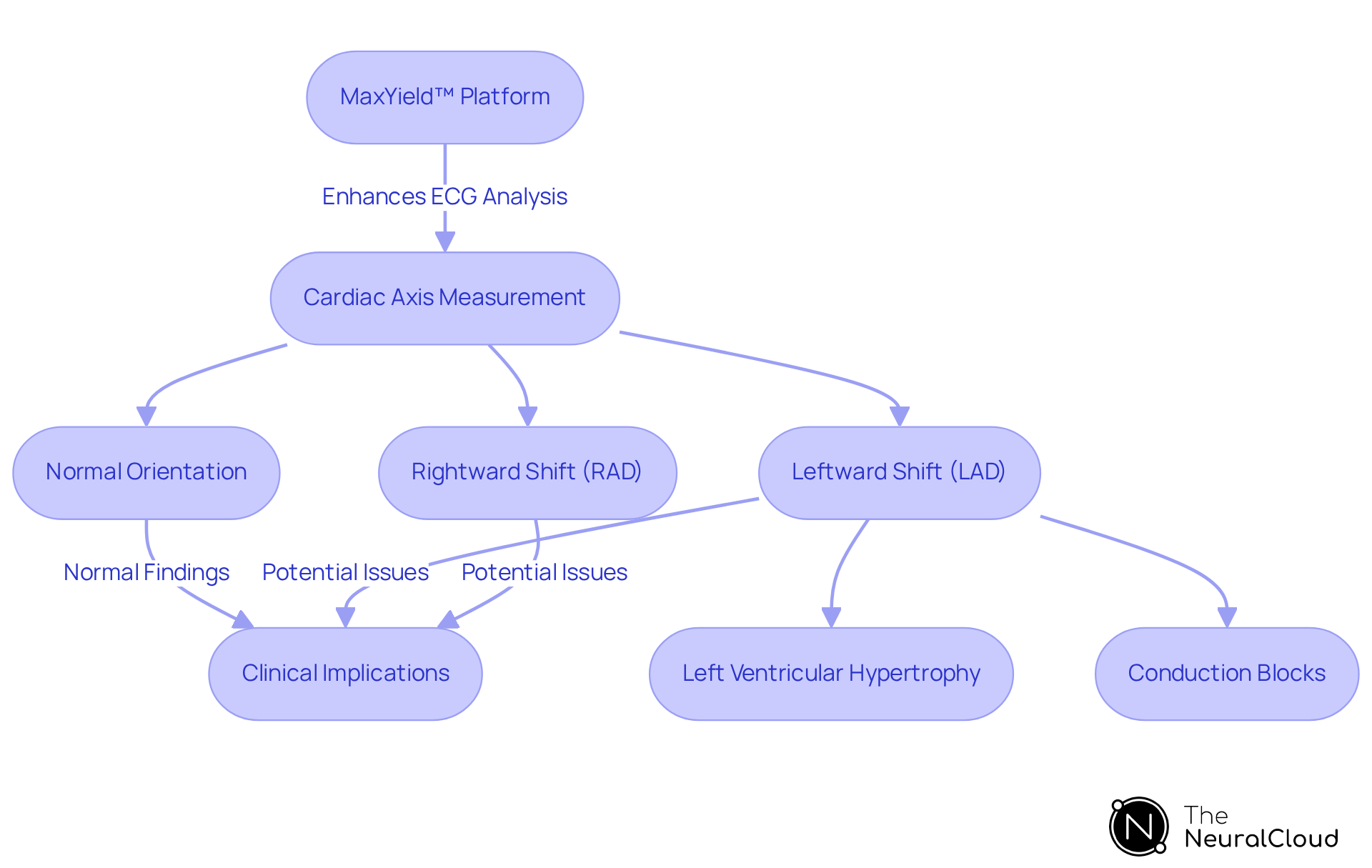
The cardiac axis signifies the overall direction of the heart's electrical activity during depolarization, typically measured in degrees on a circular scale. This measurement is vital in ECG interpretation, as it aids clinicians in identifying potential abnormalities in heart function. The typical axis spans from -30° to +90°, indicating proper heart positioning within the thoracic cavity. Most healthy adults have an ECG orientation between 0 and +75 degrees. Variations from this range can indicate axis deviation, such as leftward shift (LAD) or rightward shift (RAD), which may suggest conditions like left ventricular hypertrophy, conduction blocks, or ischemia. Significantly, the initial three reasons for left deviation account for nearly 90% of ECG tracings with axis deviation.
Recent studies have shown that understanding cardiac axis is essential for health tech developers, as it informs the design of algorithms that automate ECG analysis. The technology enhances this process by quickly isolating and labeling abnormalities, even in recordings with considerable noise and artifacts. Its advanced noise filtering capabilities allow for the transformation of noisy recordings into detailed insights, enabling interventions that enhance diagnostic capabilities and facilitate timely interventions. The system also offers beat-by-beat analysis, delivering an evaluation of 200,000 heartbeats in under 5 minutes, and can recover previously hidden segments of extensive Holter and patch monitor recordings.
Moreover, the importance of the cardiac axis, especially concerning patient outcomes, goes beyond academic understanding; practical instances, like those emphasized in the clinical case study, illustrate its essential function in clinical environments. Here, accurate orientation identification can direct additional diagnostic and therapeutic interventions, highlighting how MaxYield™ transforms ECG analysis with its automated features and adaptive algorithms. As such, a comprehensive understanding of the cardiac axis is indispensable for advancing technologies.
Explore Types of Axis Deviation: Left, Right, and Indeterminate
can be classified into three primary types: left deviation (LAD), right deviation (RAD), and indeterminate deviation.
Left deviation occurs when the orientation shifts to the left of -30°, known as left axis deviation. It is often associated with conditions such as left ventricular hypertrophy, inferior myocardial infarction, and aortic stenosis. The features of Neural Cloud Solutions' platform enhance the accuracy of LAD detection, even in recordings affected by physiological variability and signal artifacts. The platform evolves with each use, continuously improving its diagnostic yield.
Right deviation occurs when the orientation shifts to the right of +90°, indicating right axis deviation. It can indicate right ventricular hypertrophy, pulmonary conditions, or an acute pulmonary embolism. The platform's groundbreaking AI solutions enable enhanced identification of RAD by efficiently separating ECG waves from disruptive recordings, ensuring that essential data is preserved. As the platform learns from each application, its ability to filter noise and enhance signal integrity strengthens.
Indeterminate Axis: This is characterized by an axis that falls outside the normal range and cannot be classified as either LAD or RAD. It may suggest complex cardiac conditions or technical issues with the ECG recording, including lead misplacement. By utilizing this platform, developers can address these challenges, as it evolves with each use to improve diagnostic accuracy.
Understanding these variations, particularly axis deviation, is crucial for developers to ensure their algorithms can adapt to these situations. The capabilities allow for surpassing conventional constraints in ECG analysis. For instance, in a recent case analysis, the platform effectively recognized minor variations in a patient with a complex cardiac history, demonstrating its practical application in real-life scenarios.
Guide to Determining Axis Deviation from ECG Readings
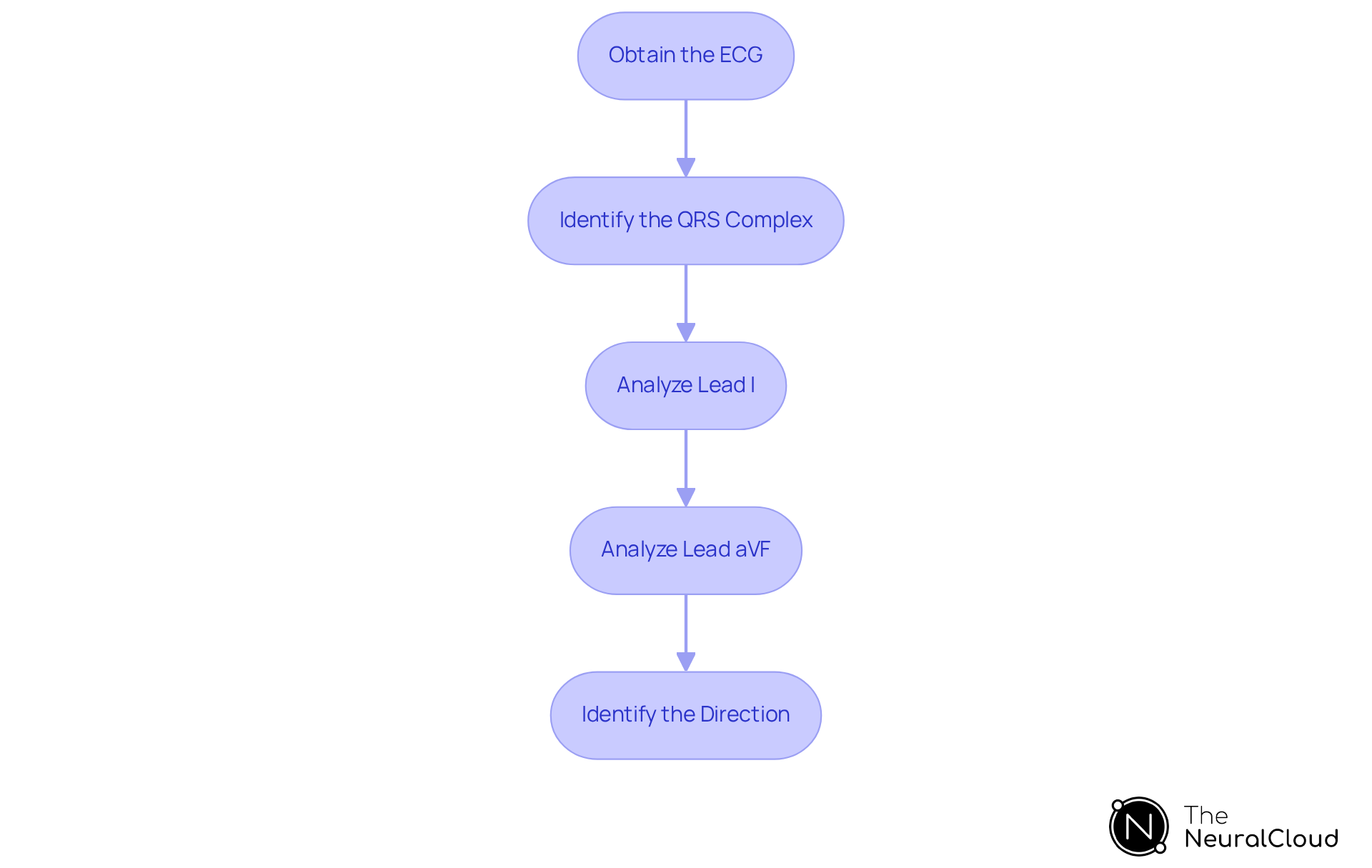
To determine axis deviation from ECG readings, follow these steps:
- Obtain the ECG: Ensure that the ECG is recorded correctly, with leads placed accurately. This system enhances the process by filtering out noise and artifacts, thus ensuring clearer recordings.
- Identify the P waves: Focus on the P waves in leads I and aVF, as these are essential for axis determination. The system can rapidly isolate these waves, even in challenging recordings.
- Analyze Lead I: If the QRS complex is predominantly positive in lead I, the direction is likely in the left half of the circle. If negative, it suggests a rightward direction. The adaptability of the system allows for continuous improvement in accuracy with each use, effectively addressing challenges like noise.
- Analyze Lead aVF: If the QRS complex is mainly positive in lead aVF, the orientation is in the lower half of the circle. If negative, it signifies an upper direction. The system's help in accurately identifying these patterns despite physiological variability ensures reliable results.
- Identify the Direction: Merge the results from leads I and aVF to specify the direction. For instance, a positive QRS in both leads suggests a normal orientation, while a positive QRS in lead I and negative in lead aVF indicates left axis deviation. By incorporating this advanced system, developers can ensure their algorithms account for noise and enhance diagnostic yield.
This systematic method is crucial for developers to include in their algorithms, ensuring accuracy while utilizing the transformative potential of technology.
Identify Causes and Clinical Associations of Axis Deviation
Axis deviations can arise from various causes, each with distinct clinical associations:
- Left Axis Deviation: Commonly associated with left ventricular hypertrophy, aortic stenosis, and inferior wall myocardial infarctions. Research, including results from the MADIT-CRT trial, suggests that left axis deviation may be linked to poorer clinical outcomes, especially in individuals with left bundle branch block (LBBB). In these cases, the cumulative 3-year incidence of all-cause mortality and major adverse cardiovascular events was significantly greater in patients with left axis deviation compared to those with right misalignment and normal alignment. This underscores the need for careful monitoring in these situations.
- Right Axis Deviation: This condition is often associated with right ventricular hypertrophy, chronic obstructive pulmonary disease (COPD), and pulmonary embolism, which may indicate an underlying pathology. Studies indicate that patients with COPD can experience right axis deviation (RAD), highlighting the necessity for targeted ECG analysis in this population to enhance patient management. Specific research suggests that individuals with RAD might experience varied clinical outcomes, which emphasizes the importance of recognizing the significance in this variation.
- Indeterminate Axis: This may indicate complex conditions such as pericardial effusion or technical issues with the ECG, necessitating further investigation to clarify underlying causes.
Recognizing these associations is crucial for health tech developers, as it informs the design of algorithms that detect axis deviations while providing context for clinical decision-making. By integrating clinical knowledge into products, such as ECG analysis offerings, which convert lengthy and noisy ECG recordings into clear waveforms through advanced algorithms, developers can enhance the utility and accuracy of their products. User testimonials highlight how these solutions have significantly improved their ECG analysis processes, ultimately leading to better patient outcomes by addressing inefficiencies and physiological variability in ECG analysis.

Conclusion
Understanding the significance of ECG axis deviation is crucial for enhancing the accuracy and effectiveness of cardiac health technology. This article explores how cardiac orientation, measured in degrees, plays a vital role in identifying potential heart abnormalities. By leveraging advanced platforms like MaxYield™, developers can automate the analysis of ECG data, ensuring timely interventions and improved diagnostic capabilities.
Key insights regarding the types of axis deviations—left, right, and indeterminate—along with their clinical implications have been presented. The systematic approach to determining axis deviation from ECG readings, including the analysis of the QRS complex in leads I and aVF, underscores the importance of precise algorithms. Furthermore, the article highlights the necessity for health tech developers to integrate clinical knowledge into their designs, enhancing the utility of their products in real-world scenarios.
Ultimately, advancements in ECG analysis technology, particularly through tools like MaxYield™, signify a transformative shift in cardiac care. Developers are encouraged to embrace these insights and innovations, as they not only improve diagnostic accuracy but also contribute to better patient outcomes. By prioritizing the understanding of ECG axis deviation, the health tech community can drive forward the evolution of cardiac diagnostics, ensuring that critical heart conditions are identified and addressed with precision.
Frequently Asked Questions
What is the cardiac axis?
The cardiac axis refers to the overall direction of the heart's electrical activity during depolarization, typically measured in degrees on a circular scale.
Why is the cardiac axis important in ECG interpretation?
The cardiac axis is vital in ECG interpretation as it helps clinicians identify potential abnormalities in heart function and indicates proper heart positioning within the thoracic cavity.
What is the typical range for cardiac orientation in healthy adults?
Most healthy adults have an ECG orientation between 0 and +75 degrees.
What does a deviation from the typical cardiac axis range indicate?
Variations from the typical range can indicate underlying cardiac issues, such as leftward shift (LAD) or rightward shift (RAD), potentially suggesting conditions like left ventricular hypertrophy, conduction blocks, or ECG axis deviation.
How significant is left deviation in ECG tracings?
The initial three reasons for left deviation account for nearly 90% of ECG tracings with ECG axis deviation.
How do recent studies impact health tech developers regarding cardiac axis understanding?
Recent studies emphasize that understanding the cardiac axis is essential for health tech developers as it informs the design of algorithms for automating ECG analysis.
What features does the MaxYield™ platform offer for ECG analysis?
The MaxYield™ platform enhances ECG analysis by quickly isolating and labeling essential ECG data, filtering noise, and allowing beat-by-beat analysis of 200,000 heartbeats in under 5 minutes.
What practical implications does accurate cardiac orientation identification have?
Accurate identification of cardiac orientation can guide additional diagnostic and therapeutic interventions in clinical settings, highlighting its importance in ECG analysis.
How does MaxYield™ transform ECG analysis?
MaxYield™ transforms ECG analysis through its automated features and adaptive algorithms, enabling accurate identification of deviations and enhancing diagnostic capabilities.
List of Sources
- Define Cardiac Axis and Its Importance in ECG Interpretation
- Researchers unlock hidden geometry of the heart to revolutionise ECG interpretation | King's College London (https://kcl.ac.uk/news/researchers-unlock-hidden-geometry-of-the-heart-to-revolutionise-ecg-interpretation)
- droracle.ai (https://droracle.ai/articles/125818/what-is-ecg-axis)
- Determining Axis (https://healio.com/cardiology/learn-the-heart/ecg-review/ecg-interpretation-tutorial/determining-axis)
- ECG Axis Interpretation (https://litfl.com/ecg-axis-interpretation)
- What is Cardiac Axis? | ECG Interpretation | Geeky Medics (https://geekymedics.com/what-is-cardiac-axis)
- Identify Causes and Clinical Associations of Axis Deviation
- pmc.ncbi.nlm.nih.gov (https://pmc.ncbi.nlm.nih.gov/articles/PMC6196151)
- Clinical impact of left and right axis deviations with narrow QRS complex on 3-year outcomes in a hospital-based population in Japan - Scientific Reports (https://nature.com/articles/s41598-021-88259-8)