Introduction
Elevated potassium levels can significantly impact cardiac health, often revealing concerning changes on an electrocardiogram (ECG). Understanding hyperkalemia, especially the widened QRS phenomenon, is essential for healthcare professionals who aim to prevent potentially life-threatening arrhythmias. As we deepen our understanding of the relationship between potassium levels and cardiac conduction, a critical question emerges: how can we utilize advancements in technology and clinical insights to improve hyperkalemia management and enhance patient outcomes?
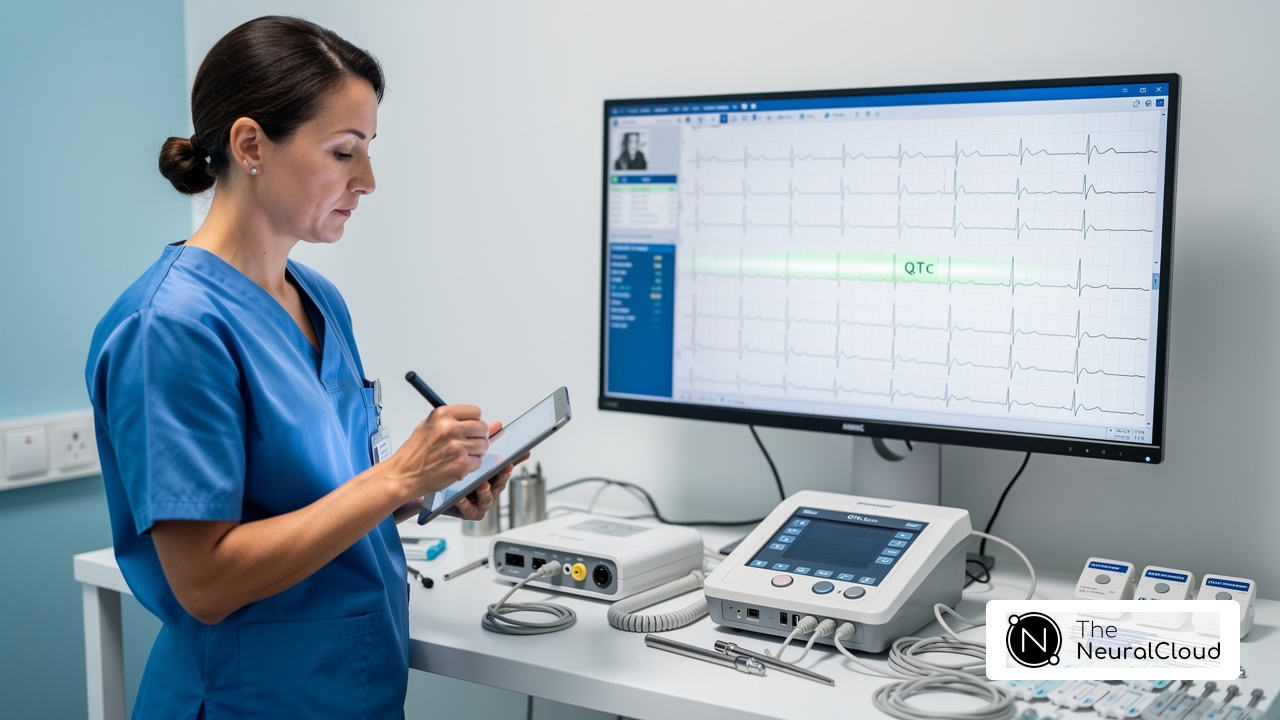
The challenges in ECG analysis are multifaceted, particularly when it comes to interpreting the effects of elevated potassium. The MaxYield™ platform addresses these challenges by providing advanced tools for ECG analysis. Its features include real-time monitoring of potassium levels and automated alerts for abnormal ECG changes, which can significantly enhance clinical decision-making.
By leveraging the MaxYield™ platform, healthcare professionals can benefit from improved accuracy in ECG interpretation. This not only aids in timely interventions but also reduces the risk of misdiagnosis. The platform's user-friendly interface ensures that both technical and non-technical users can navigate it effectively, making it a valuable resource in clinical settings.
In summary, the MaxYield™ platform offers a comprehensive solution for managing hyperkalemia. Its innovative features lead to better patient outcomes by facilitating prompt and accurate ECG analysis, ultimately supporting healthcare professionals in their critical roles.
Define Hyperkalemia and Its ECG Implications
Hyperkalemia is characterized by elevated serum potassium levels, typically exceeding 5.0 mEq/L. This electrolyte imbalance can significantly affect cardiac function, leading to various electrocardiographic (ECG) changes. Notable ECG alterations associated with high potassium levels, particularly hyperkalemia widened QRS, include peaked T waves, PR interval prolongation, and widening of the QRS complex. As potassium levels rise, the heart's electrical conduction system faces increased strain, raising the risk of serious arrhythmias. Recent studies reveal that over 61.5% of patients with elevated potassium levels show abnormal ECG findings, with peaked T waves being the most common, present in 36.2% of cases. Understanding these ECG implications, especially those related to hyperkalemia widened QRS, is crucial for healthcare professionals to enable timely identification and intervention in cases of elevated potassium to prevent severe complications.
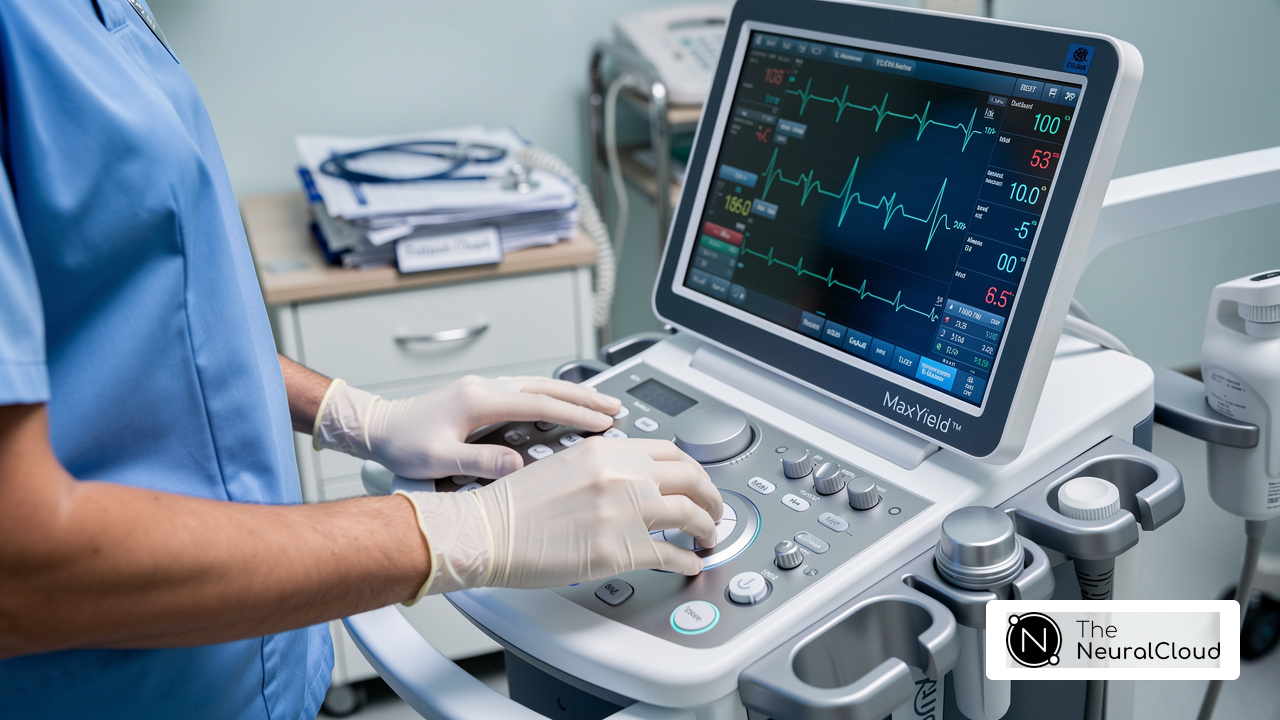
Cardiologists stress the importance of incorporating AI technologies, such as Neural Cloud Solutions' MaxYield™, into clinical workflows to improve the detection of these ECG changes. MaxYield™ offers advanced noise filtering and automated labeling capabilities, effectively addressing challenges like physiological variability and signal artifacts. This technology allows for rapid analysis of ECG signals, transforming noisy recordings into clear insights.
Features of MaxYield™:
- Advanced noise filtering
- Automated labeling capabilities
- Rapid ECG signal analysis
Advantages for Healthcare Professionals:
- Enhanced detection of ECG changes
- Improved clarity of ECG recordings
- Support for confident clinical decision-making
Ultimately, the integration of MaxYield™ enhances patient outcomes by facilitating effective management of elevated potassium levels.

Explore Pathophysiology of Widened QRS in Hyperkalemia
Elevated potassium levels can lead to hyperkalemia widened QRS, which significantly impacts the QRS complex due to increased extracellular ionic concentrations that alter the resting membrane potential of cardiac myocytes. When potassium levels exceed 6.5 mEq/L, hyperkalemia widened QRS occurs, leading to a decrease in conduction velocity and a prolonged QRS duration. This change indicates impaired depolarization, which can trigger serious arrhythmias, including:
- Ventricular tachycardia
- Fibrillation
Notably, a QRS duration of 120 ms or more is a key indicator of hyperkalemia widened QRS, especially in patients with end-stage renal disease (ESRD), underscoring the urgent need for timely intervention.
Moreover, the presence of wide-complex tachycardia without P waves should raise suspicion of severe potassium elevation, as highlighted by experts. Understanding this pathophysiology is essential for healthcare professionals to effectively manage and mitigate the risks associated with high potassium levels, especially since approximately 10% of hospitalized patients experience this condition. Clinical manifestations of elevated potassium can include:
- Muscle paralysis
- Cardiac arrhythmias
This further emphasizes the critical importance of monitoring electrolyte concentrations.

Assess Clinical Significance of Widened QRS in Hyperkalemia
Assess Clinical Significance of Widened QRS in Hyperkalemia
A critical indicator of severe cardiac distress is hyperkalemia widened QRS, which signals an increased risk of life-threatening arrhythmias. Specifically, when the QRS duration exceeds 120 milliseconds, it often correlates with potassium concentrations above 6.5 mEq/L. This situation necessitates immediate intervention to stabilize the myocardium and avert potential cardiac arrest. Current guidelines stress the urgency of treatment in these cases, emphasizing that the rapid administration of calcium and insulin/glucose is vital when ECG changes are observed.
Statistics reveal that severe hyperkalemia can lead to significant arrhythmias, including second or third-degree heart block and ventricular fibrillation, particularly when potassium levels reach critical thresholds. Real-world cases underscore the dangers associated with hyperkalemia widened QRS; for instance, patients exhibiting peaked T waves alongside hyperkalemia widened QRS have been documented with potassium concentrations hitting 7.1 mEq/L. This highlights the importance of timely and effective management strategies.
Ongoing monitoring of QRS duration and electrolyte levels is crucial for guiding treatment decisions and enhancing patient outcomes. By understanding these dynamics, healthcare professionals can better navigate the complexities of ECG analysis and implement appropriate interventions.

Interpret ECG Changes in Hyperkalemia
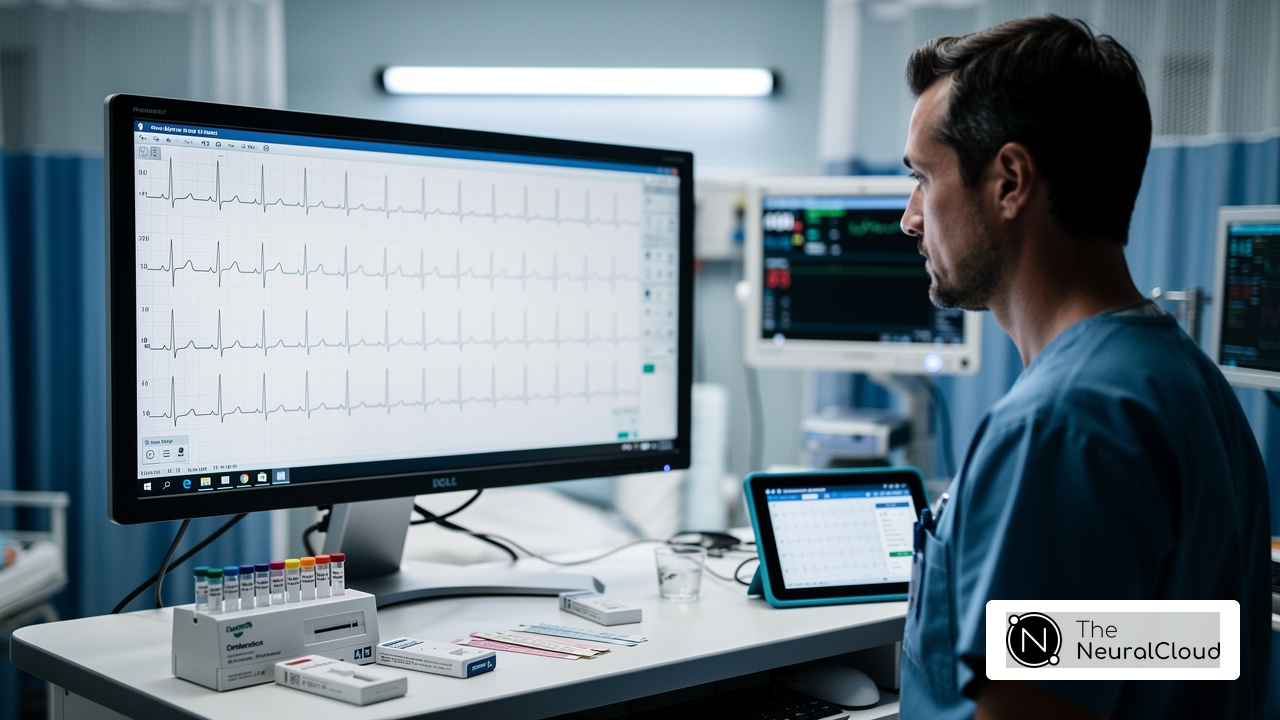
ECG alterations due to elevated potassium levels typically follow a distinct progression of identifiable patterns. Initially, clinicians observe peaked T waves, often the first sign of elevated potassium levels. This is followed by PR interval prolongation and, in more severe cases, the eventual loss of P waves. As potassium levels worsen, the condition known as widened QRS can occur significantly, often exceeding 120 milliseconds, indicating a critical situation. In individuals with significant potassium elevation, the absence of P waves and the presence of unusual QRS complexes are frequent observations.
Regular ECG monitoring is essential for patients with known elevated potassium levels. This practice enables timely evaluation of these changes and the necessity for possible interventions. Recent studies indicate that in cases of severe potassium elevation, all patients exhibit ECG abnormalities, underscoring the need for vigilant monitoring to prevent serious arrhythmias. For instance, a case study highlighted a patient with an electrolyte concentration of 9.3 mEq/L, demonstrating ECG changes that required urgent medical attention.
As we approach 2026, advancements in ECG monitoring technology continue to enhance our ability to detect these critical changes early. This progress significantly improves patient outcomes by allowing healthcare professionals to respond swiftly to potentially life-threatening situations.

Implement Management Strategies for Hyperkalemia
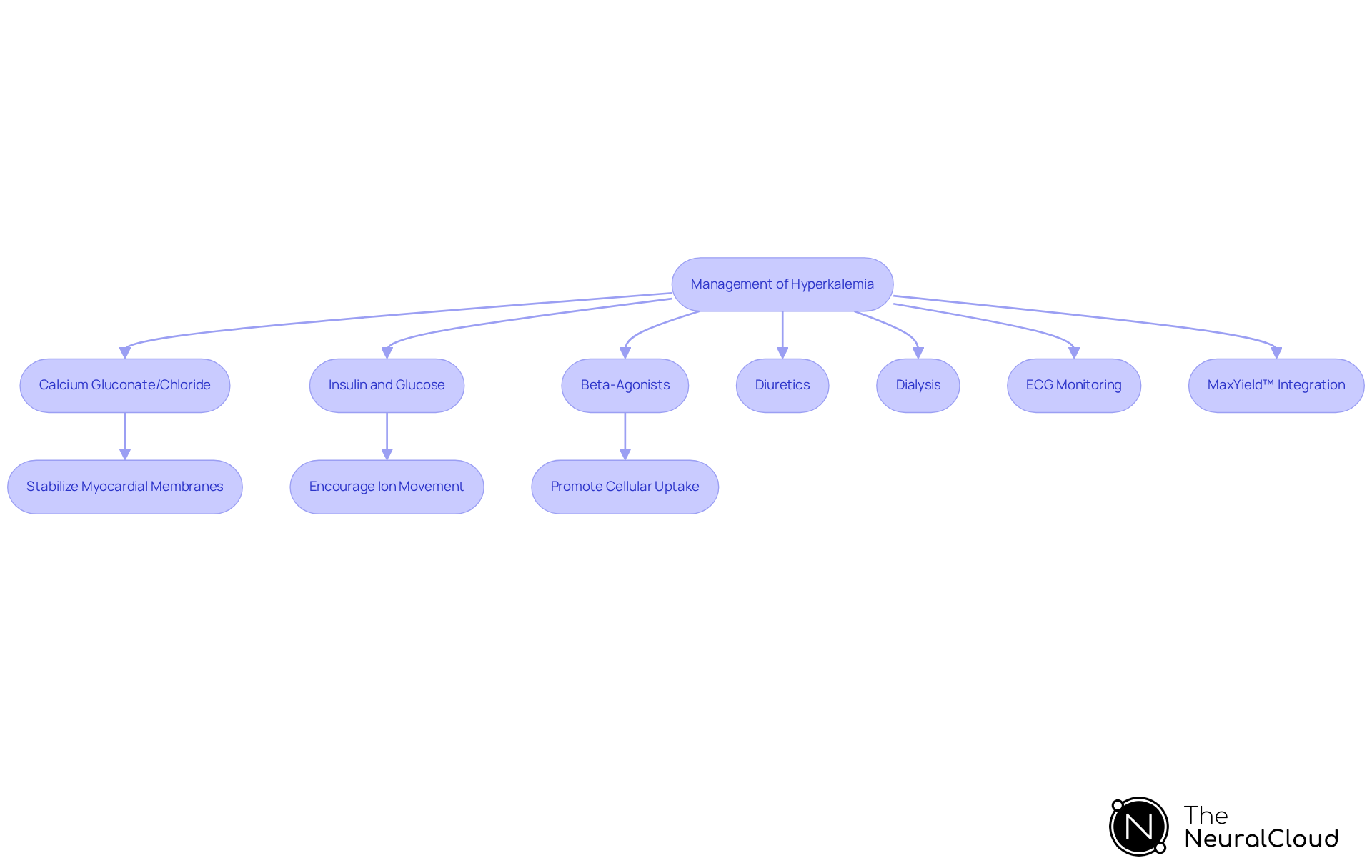
Efficient handling of hyperkalemia widened qrs is crucial for stabilizing cardiac function and reducing serum electrolyte concentrations. Initial treatment typically involves administering calcium gluconate or calcium chloride to stabilize myocardial membranes, which is essential in preventing life-threatening arrhythmias. At the same time, insulin and glucose are given to encourage the intracellular movement of ions, effectively lowering serum concentrations. Other treatment alternatives include beta-agonists, which can reduce mineral concentrations by promoting cellular uptake, and sodium bicarbonate, which may assist in cases of metabolic acidosis. Diuretics are also employed to improve renal excretion of certain electrolytes, while severe cases may require dialysis for swift removal of these substances. Continuous ECG monitoring and regular assessment of potassium levels are vital to guide treatment decisions and avert complications.
Integrating wearable technology with Neural Cloud Solutions' MaxYield™ platform addresses the challenges in ECG analysis. The platform enhances the efficiency of ECG analysis through automated labeling and data extraction, streamlining monitoring processes. Key features of MaxYield™ include:
- Automated ECG labeling for quicker analysis
- Data extraction that reduces manual input errors
- Integration with wearable technology for real-time monitoring
These features lead to significant advantages for healthcare providers. By reducing operational costs and boosting productivity, MaxYield™ ensures accurate and reliable readings during the management of hyperkalemia widened qrs. This integration not only tackles issues like physiological variability and signal artifacts but also enhances the overall quality of patient care.
Conclusion
Understanding hyperkalemia and its implications on the electrocardiogram (ECG) is crucial for healthcare professionals managing patients at risk of serious cardiac events. Elevated potassium levels can lead to significant changes in cardiac conduction, particularly manifested as a widened QRS complex. Recognizing these alterations, especially in the context of hyperkalemia, is essential for timely diagnosis and intervention to prevent life-threatening arrhythmias.
The article explores the pathophysiology of hyperkalemia and its ECG manifestations, emphasizing the importance of monitoring changes such as peaked T waves and PR interval prolongation. The MaxYield™ platform from Neural Cloud Solutions enhances the detection and analysis of these ECG changes, improving clinical decision-making and patient outcomes. Key features of MaxYield™ include:
- Advanced algorithms for accurate ECG interpretation.
- Real-time monitoring of potassium levels.
- User-friendly interface for healthcare professionals.
These features translate into significant advantages: healthcare providers can quickly identify critical changes in ECG readings, leading to faster interventions. Effective management strategies, including the administration of calcium, insulin, and glucose, are vital for stabilizing cardiac function and addressing elevated serum potassium levels.
Given the serious risks associated with hyperkalemia and widened QRS, ongoing education and vigilance in monitoring electrolyte levels are paramount. Healthcare professionals are encouraged to adopt innovative solutions like MaxYield™ that streamline ECG analysis and facilitate rapid responses to critical situations. By prioritizing these practices, the potential for adverse outcomes can be minimized, ultimately enhancing patient safety and care quality in clinical settings.
Frequently Asked Questions
What is hyperkalemia?
Hyperkalemia is characterized by elevated serum potassium levels, typically exceeding 5.0 mEq/L, which can significantly affect cardiac function.
What are the ECG implications of hyperkalemia?
Hyperkalemia can lead to various ECG changes, including peaked T waves, PR interval prolongation, and widening of the QRS complex. As potassium levels rise, the heart's electrical conduction system faces increased strain, raising the risk of serious arrhythmias.
What percentage of patients with elevated potassium levels show abnormal ECG findings?
Recent studies reveal that over 61.5% of patients with elevated potassium levels show abnormal ECG findings, with peaked T waves being the most common, present in 36.2% of cases.
What is the significance of widened QRS in hyperkalemia?
Widened QRS occurs when potassium levels exceed 6.5 mEq/L, leading to decreased conduction velocity and prolonged QRS duration, which can trigger serious arrhythmias such as ventricular tachycardia and fibrillation.
What is a key indicator of hyperkalemia widened QRS?
A QRS duration of 120 ms or more is a key indicator of hyperkalemia widened QRS, especially in patients with end-stage renal disease (ESRD).
What symptoms can manifest due to elevated potassium levels?
Clinical manifestations of elevated potassium can include muscle paralysis and cardiac arrhythmias.
How can AI technologies assist in detecting ECG changes related to hyperkalemia?
AI technologies like Neural Cloud Solutions' MaxYield™ can improve the detection of ECG changes through advanced noise filtering and automated labeling, allowing for rapid analysis of ECG signals and transforming noisy recordings into clear insights.
What are the advantages of using MaxYield™ for healthcare professionals?
The advantages include enhanced detection of ECG changes, improved clarity of ECG recordings, and support for confident clinical decision-making, ultimately enhancing patient outcomes by facilitating effective management of elevated potassium levels.
List of Sources
- Define Hyperkalemia and Its ECG Implications
- AccurKardia (https://accurkardia.com/news)
- Client Challenge (https://nature.com/articles/s41467-025-66394-4)
- Changes in ECG in Acute versus Chronic Hyperkalemia | Docwire News (https://docwirenews.com/post/changes-in-ecg-in-acute-versus-chronic-hyperkalemia)
- nysora.com (https://nysora.com/education-news/hyperkalemia-management-time-for-a-re-evaluation)
- Electrocardiographic Abnormalities in Patients with Hyperkalemia: A Retrospective Study in an Emergency Department in Colombia - PMC (https://pmc.ncbi.nlm.nih.gov/articles/PMC11215665)
- Explore Pathophysiology of Widened QRS in Hyperkalemia
- Increasing potassium levels improve outcomes in patients at high risk of ventricular arrhythmia (https://escardio.org/news/press/press-releases/Increasing-potassium-levels-improve-outcomes-in-patients-at-high-risk-of-ventricular-arrhythmia)
- pmc.ncbi.nlm.nih.gov (https://pmc.ncbi.nlm.nih.gov/articles/PMC10832922)
- pmc.ncbi.nlm.nih.gov (https://pmc.ncbi.nlm.nih.gov/articles/PMC9736513)
- Hyperkalemia: Background, Pathophysiology, Etiology (https://emedicine.medscape.com/article/240903-overview)
- ahajournals.org (https://ahajournals.org/doi/10.1161/JAHA.124.035256)
- Assess Clinical Significance of Widened QRS in Hyperkalemia
- nysora.com (https://nysora.com/education-news/hyperkalemia-management-time-for-a-re-evaluation)
- Hyperkalemia – Diagnosis and Treatment : Emergency Care BC (https://emergencycarebc.ca/clinical_resource/clinical-summary/hyperkalemia-diagnosis-and-treatment)
- droracle.ai (https://droracle.ai/articles/877363/what-is-the-urgent-management-of-hyperkalemia-especially-when)
- nyulangone.org (https://nyulangone.org/news/nyu-langone-heart-cardiologists-present-latest-clinical-findings-research-acc2026)
- Hyperkalemia | SAEM (https://saem.org/about-saem/academies-interest-groups-affiliates2/cdem/for-students/online-education/m4-curriculum/group-m4-endocrine-electrolytes/hyperkalemia)
- Interpret ECG Changes in Hyperkalemia
- Electrocardiographic Abnormalities in Patients with Hyperkalemia: A Retrospective Study in an Emergency Department in Colombia - PMC (https://pmc.ncbi.nlm.nih.gov/articles/PMC11215665)
- AI-ECG Momentum and Rising Competition Reshape Diagnostic Cardiology in 2026 (https://signifyresearch.net/insights/diagnostic-cardiology-market-bouncing-into-2026)
- Hyperkalaemia (https://litfl.com/hyperkalaemia-ecg-library)
- Data presented at ACC.26 further demonstrate the benefits of iRhythm’s Zio® ambulatory ECG portfolio across multiple patient populations as company launches new digital education platform (https://investors.irhythmtech.com/news/news-details/2026/Data-presented-at-ACC-26-further-demonstrate-the-benefits-of-iRhythms-Zio-ambulatory-ECG-portfolio-across-multiple-patient-populations-as-company-launches-new-digital-education-platform/default.aspx)
- ECG frequency changes in potassium disorders: a narrative review - PMC (https://pmc.ncbi.nlm.nih.gov/articles/PMC9301030)
- Implement Management Strategies for Hyperkalemia
- uspharmacist.com (https://uspharmacist.com/article/updated-treatment-options-in-the-management-of-hyperkalemia)
- Current and future treatment options for managing hyperkalemia - PMC (https://pmc.ncbi.nlm.nih.gov/articles/PMC6340903)
- Hyperkalemia Treatment & Management: Approach Considerations, Initial Emergency Management, Pharmacologic Therapy and Dialysis (https://emedicine.medscape.com/article/240903-treatment)
- New Treatment for Hyperkalemia Shows Promise (https://cardiometabolichealth.org/new-treatment-hyperkalemia-shows-promise)
- kidney.org (https://kidney.org/press-room/new-study-shows-hyperkalemia-drug-may-help-kidney-patients-stay-treatment-hypertension)