Introduction
Understanding the intricacies of ST-Elevation Myocardial Infarction (STEMI) is essential for healthcare professionals committed to delivering timely and effective patient care. As advanced diagnostic technologies continue to evolve, the ability to accurately interpret ECG criteria for STEMI has become increasingly critical. Despite the availability of these tools, many clinicians encounter difficulties in recognizing the signs of this life-threatening condition. Identifying the key factors that can enhance ECG interpretation is vital for improving outcomes for patients experiencing STEMI.
Define and Classify STEMI: Core Concepts and Terminology
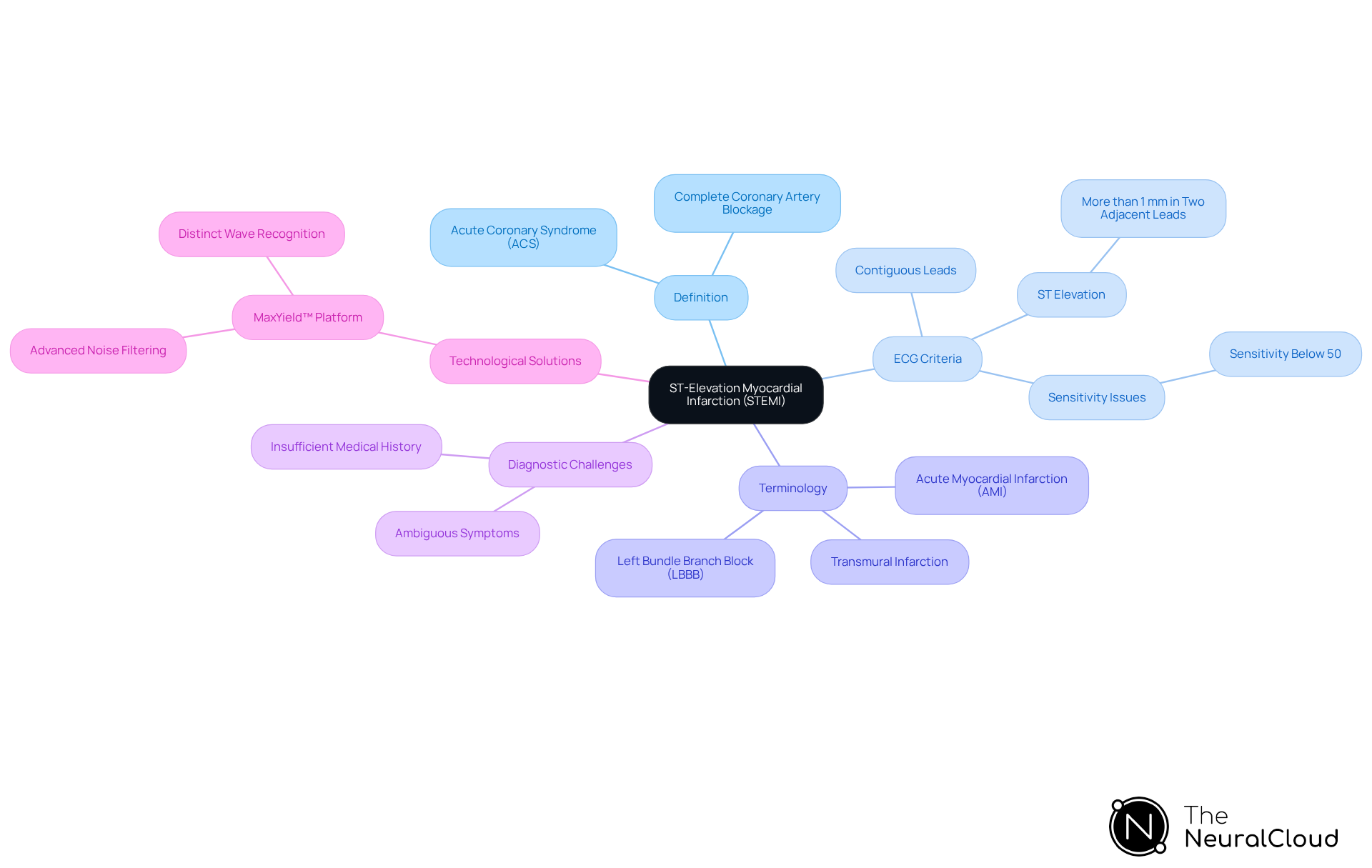
ST-Elevation Myocardial Infarction (STEMI) represents a critical type of acute coronary syndrome (ACS) marked by the complete blockage of a coronary artery, resulting in significant myocardial ischemia. A key feature of STEMI, according to the American College of Cardiology, is the elevation of the ST segment on a 12-lead ECG, indicating myocardial injury. The criteria indicate that a diagnosis is traditionally confirmed when there is more than 1 mm of ST elevation in two adjacent leads. Understanding essential terminology, such as 'transmural infarction' and 'contiguous leads,' is crucial for accurate diagnosis. Additionally, conditions like new left bundle branch block (LBBB) or posterior myocardial infarction, is vital for a thorough cardiac evaluation.
Recent studies indicate that the sensitivity for detecting acute coronary occlusion (ACO) is below 50%, implying that numerous ACO cases may not display this classic sign. This highlights the necessity for healthcare professionals to remain vigilant and consider alternative diagnostic indicators when assessing patients with suspected myocardial infarction. Case studies have underscored the significance of early recognition in diagnosing STEMI, reinforcing that effective management depends on a timely diagnosis for STEMI.
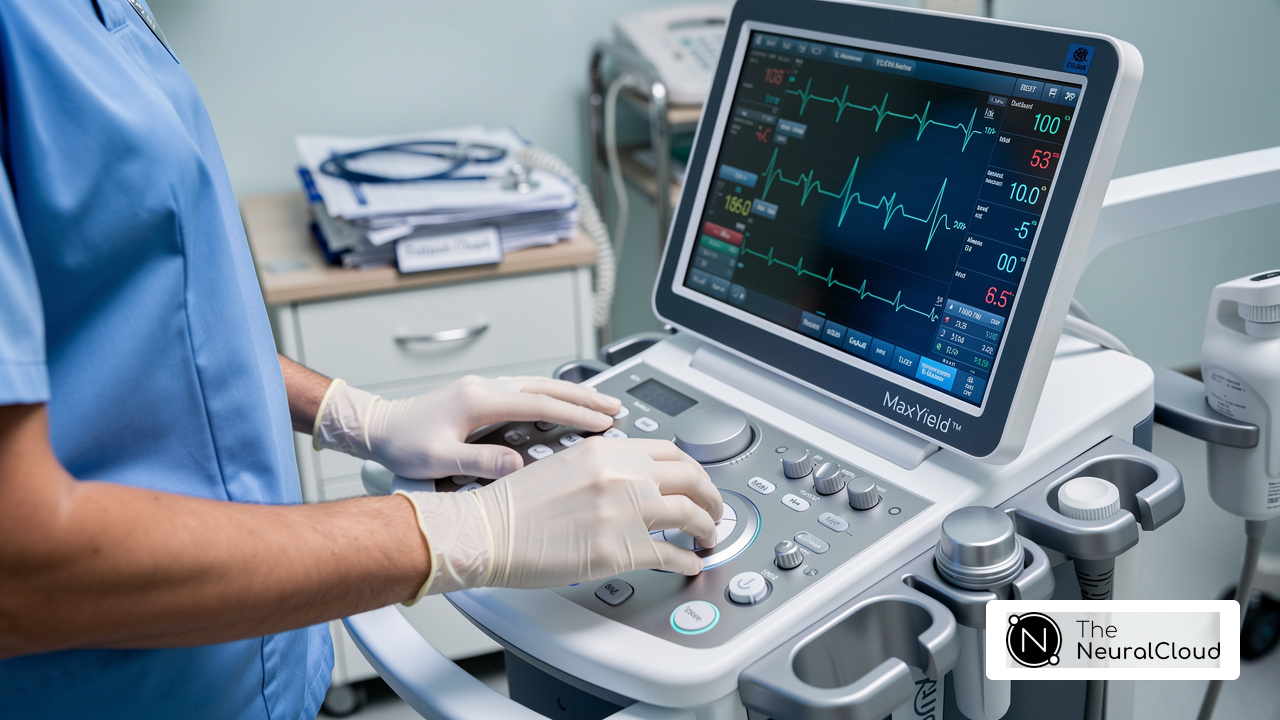
The MaxYield™ platform, part of Neural Cloud Solutions' offerings, enhances ECG analysis efficiency through advanced noise filtering and distinct wave recognition capabilities. This platform effectively isolates ECG waves from recordings impacted by baseline wander and muscle artifact, ensuring that critical data is accurately identified and labeled. By addressing challenges such as physiological variability and signal artifacts, MaxYield™ ultimately improves diagnostic outcomes.
Diagnostic delays in ACS can stem from insufficient medical history or ambiguous symptom descriptions, underscoring the complexities involved in diagnosing this condition. The integration of advanced technologies like MaxYield™ can significantly aid healthcare professionals in overcoming these challenges, thereby enhancing patient care.
Diagnose STEMI: Key ECG Criteria and Interpretation Techniques
To diagnose ST-Elevation Myocardial Infarction (STEMI), clinicians must identify the criteria that are essential for diagnosis. The primary criteria include:
- New ST-segment elevation at the J point in two contiguous leads is critical, with a threshold of greater than 1 mm in leads other than V2-V3, where the threshold is greater than 2 mm.
- Observing ST depression in leads opposite to those showing elevation can further support the diagnosis and is consistent with the findings, indicating underlying ischemia.
The shape of the ST elevation—whether concave, convex, or straight—reflects important morphological changes that are considered in the assessment, providing additional information that can influence treatment decisions. Correlating these ECG changes with the individual's clinical presentation, particularly the duration of chest pain, is vital for accurate diagnosis and management according to the guidelines.
Recent advancements, particularly the use of technology, significantly enhance the accuracy of identifying these criteria. By automating the identification of ST-segment elevation and depression, the platform enables clinicians to focus on urgent care, ultimately improving outcomes in patients.
Manage STEMI: Comprehensive Treatment Approaches and Protocols
Management of STEMI necessitates a multi-faceted approach:
- Immediate Assessment: Upon suspicion of STEMI, it is crucial to perform a diagnosis within 10 minutes of patient arrival to ensure timely diagnosis and intervention. The electrocardiogram swiftly identifies P, QRS, and T Wave onsets and offsets, improving the speed and precision of this evaluation. It delivers output in CSV format, facilitating seamless integration into current workflows.
- Reperfusion Therapy: Percutaneous coronary intervention is the preferred treatment, ideally performed within 90 minutes of first medical contact. If PCI cannot be executed within 120 minutes of STEMI diagnosis, fibrinolysis therapy should be administered to restore blood flow. The detection and wave recognition capabilities of the MaxYield system streamline this process, yielding accurate and clean signals that effectively address challenges such as physiological variability and signal artifacts.
- Medications: Initiate dual antiplatelet therapy with aspirin and either clopidogrel or ticagrelor. Additionally, beta-blockers, ACE inhibitors, and statins should be administered as indicated to optimize patient outcomes.
- Monitoring and Follow-Up: Continuous cardiac monitoring is essential, alongside regular assessments of vital signs and laboratory results to detect any complications early. Early advance notification of the receiving PCI-capable hospital and the transmission of prehospital ECGs are crucial to meet the time goals and expedite coronary reperfusion. The MaxYield system supports this by automating repetitive tasks and processing more data in less time.
Utilizing platforms like MaxYield™ can streamline the management process by providing real-time data analysis. This enables healthcare providers to make informed decisions quickly, which is particularly crucial given that timely intervention significantly improves survival rates and reduces the risk of complications in STEMI patients.

Conclusion
Mastering the ECG criteria for ST-Elevation Myocardial Infarction (STEMI) is essential for healthcare professionals involved in diagnosing and managing this life-threatening condition. A comprehensive understanding of key concepts, diagnostic criteria, and treatment protocols ensures timely and effective interventions, significantly impacting patient outcomes.
This article highlights critical insights into the definition and classification of STEMI, the specific ECG criteria required for diagnosis, and the multifaceted management strategies. The MaxYield™ platform is emphasized as an advanced technology that enhances ECG interpretation and streamlines management processes, ultimately leading to improved patient care. Moreover, the necessity for vigilance in recognizing atypical presentations of myocardial infarction is underscored, reminding practitioners of the complexities involved in accurate diagnosis.
Given these discussions, it is crucial for healthcare providers to remain informed about the latest advancements and guidelines in STEMI management. By embracing new technologies and refining their interpretation techniques, clinicians can enhance diagnostic accuracy and treatment efficacy. The ongoing commitment to mastering the ECG criteria for STEMI not only improves individual practice but also contributes to the overall quality of care provided to patients facing this critical condition.
Frequently Asked Questions
What is STEMI?
ST-Elevation Myocardial Infarction (STEMI) is a critical type of acute coronary syndrome (ACS) characterized by the complete blockage of a coronary artery, leading to significant myocardial ischemia.
How is STEMI diagnosed?
STEMI is diagnosed based on ECG criteria, specifically when there is more than 1 mm of ST segment elevation in two adjacent leads on a 12-lead ECG, indicating transmural myocardial damage.
What are some key terms related to STEMI?
Key terms include 'transmural infarction,' which refers to damage that extends through the entire thickness of the heart muscle, and 'contiguous leads,' which are adjacent ECG leads that can show similar changes.
What are ACS equivalents in the context of STEMI?
ACS equivalents are conditions that may indicate acute coronary syndrome, such as new left bundle branch block (LBBB) or posterior myocardial infarction, which are important for a comprehensive cardiac evaluation.
What does recent research suggest about the sensitivity of ST-segment elevation?
Recent studies indicate that the sensitivity of ST-segment elevation for detecting acute coronary occlusion (ACO) is below 50%, meaning many ACO cases may not show this classic sign.
Why is timely ECG interpretation important in diagnosing STEMI?
Timely and accurate ECG interpretation is crucial for diagnosing STEMI, as effective management relies on a comprehensive understanding of the ECG criteria.
What is the MaxYield™ platform?
The MaxYield™ platform, part of Neural Cloud Solutions, enhances ECG analysis by providing advanced noise filtering and distinct wave recognition capabilities, improving the accuracy of ECG data interpretation.
How does MaxYield™ improve diagnostic outcomes?
MaxYield™ improves diagnostic outcomes by isolating ECG waves from recordings affected by baseline wander and muscle artifact, allowing for better identification and labeling of critical data.
What challenges can lead to diagnostic delays in ACS?
Diagnostic delays in ACS can arise from insufficient medical history or ambiguous symptom descriptions, complicating the diagnosis of the condition.
How can advanced technologies like MaxYield™ aid healthcare professionals?
Advanced technologies like MaxYield™ can help healthcare professionals overcome diagnostic challenges, thereby enhancing patient care and improving outcomes in cases of suspected myocardial infarction.
List of Sources
- Define and Classify STEMI: Core Concepts and Terminology
- Should We Be Looking for ‘Occlusion MI’ Rather Than STEMI? (https://tctmd.com/news/should-we-be-looking-occlusion-mi-rather-stemi)
- medscape.com (https://medscape.com/viewarticle/it-time-rethink-stemi-and-nstemi-classification-2025a10002oj)
- Acute ST-Segment Elevation Myocardial Infarction (STEMI) - StatPearls - NCBI Bookshelf (https://ncbi.nlm.nih.gov/books/NBK532281)
- escardio.org (https://escardio.org/The-ESC/Press-Office/annex-prevalence-of-stemi)
- Diagnose STEMI: Key ECG Criteria and Interpretation Techniques
- New Guideline on Acute Coronary Syndromes: Key Takeaways (https://consultqd.clevelandclinic.org/new-guideline-on-acute-coronary-syndromes-key-takeaways-for-cardiologists)
- Should We Be Looking for ‘Occlusion MI’ Rather Than STEMI? (https://tctmd.com/news/should-we-be-looking-occlusion-mi-rather-stemi)
- STEMI ECG Criteria: ST-Elevation Thresholds (https://powerfulmedical.com/blog/stemi-ecg-criteria)
- Acute ST-Segment Elevation Myocardial Infarction (STEMI) - StatPearls - NCBI Bookshelf (https://ncbi.nlm.nih.gov/books/NBK532281)
- droracle.ai (https://droracle.ai/articles/294481/2025-stemi-guidelines-acc)
- Manage STEMI: Comprehensive Treatment Approaches and Protocols
- heartfoundation.org.au (https://heartfoundation.org.au/for-professionals/acs-guideline-overview)
- droracle.ai (https://droracle.ai/articles/294481/2025-stemi-guidelines-acc)
- New Guideline on Acute Coronary Syndromes: Key Takeaways (https://consultqd.clevelandclinic.org/new-guideline-on-acute-coronary-syndromes-key-takeaways-for-cardiologists)
- escardio.org (https://escardio.org/The-ESC/Press-Office/Press-releases/New-data-presented-to-guide-the-treatment-of-patients-with-multivessel-coronary-artery-disease)
- acc.org (https://acc.org/latest-in-cardiology/articles/2025/08/26/11/47/sun-327am-option-stemi-esc-2025)