Introduction
Despite the critical importance of accurately diagnosing heart block, many healthcare professionals struggle with traditional ECG analysis methods. In this article, we’ll explore essential charting techniques for ECG analysis, including insights into the different types of heart block and their clinical implications. Traditional diagnostic methods often fall short, leading to challenges in accurate interpretation. Exploring advanced technology could be the key to unlocking more accurate ECG interpretations and better patient care.
Define Heart Block: Understanding the Basics
Understanding cardiac obstruction is vital for accurate ECG interpretation, as it can lead to serious complications. Cardiac obstruction refers to a delay or complete interruption in the conduction of electrical impulses through the organ's conduction system. This can lead to irregular heartbeats, significantly affecting cardiac function. Comprehending cardiac obstruction is crucial for interpreting ECGs precisely, as it directly affects the rhythm and rate of the organ. The condition can appear in different forms, including:
- First-degree cardiac obstruction
- Second-degree cardiac obstruction (Type I and Type II)
- Third-degree cardiac obstruction
These are detailed in the heart block chart, each exhibiting distinct characteristics and clinical implications.
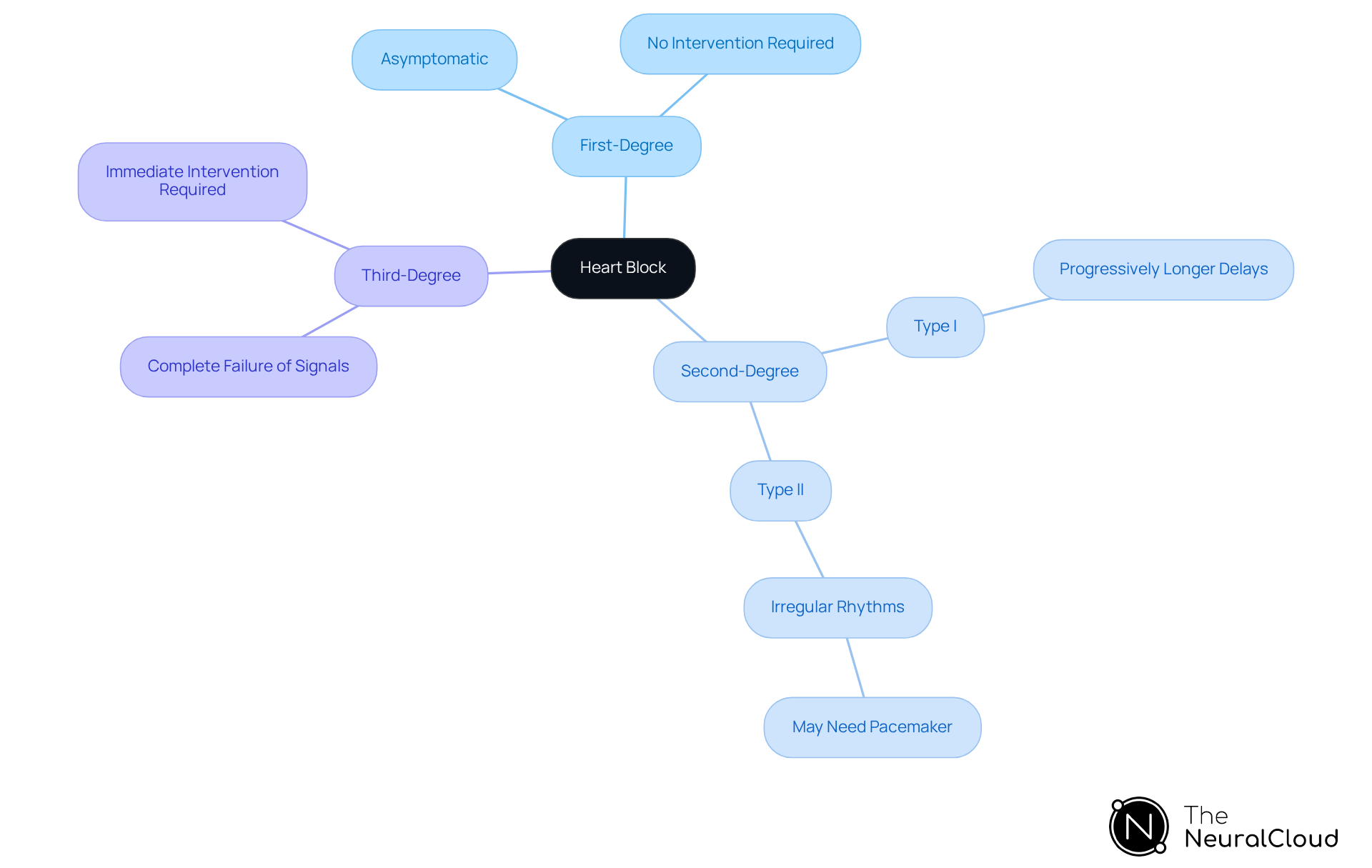
First-degree atrioventricular delay is the mildest type, where electrical signals are postponed but still arrive at the ventricles. This condition is often asymptomatic and requires no intervention. In contrast, second-degree atrioventricular dysfunction can be represented on a heart block chart, which shows that it can result in dropped beats. Type I is marked by progressively longer delays before a beat is missed, while Type II features irregular and slower rhythms, often requiring a pacemaker. The heart block chart illustrates that third-degree atrioventricular disruption, the most severe type, results in a complete failure of electrical signals to reach the ventricles, leading to a significantly slower pulse rate and necessitating immediate intervention to prevent life-threatening complications such as cardiac failure, arrhythmia, myocardial infarction, and sudden cardiac arrest.
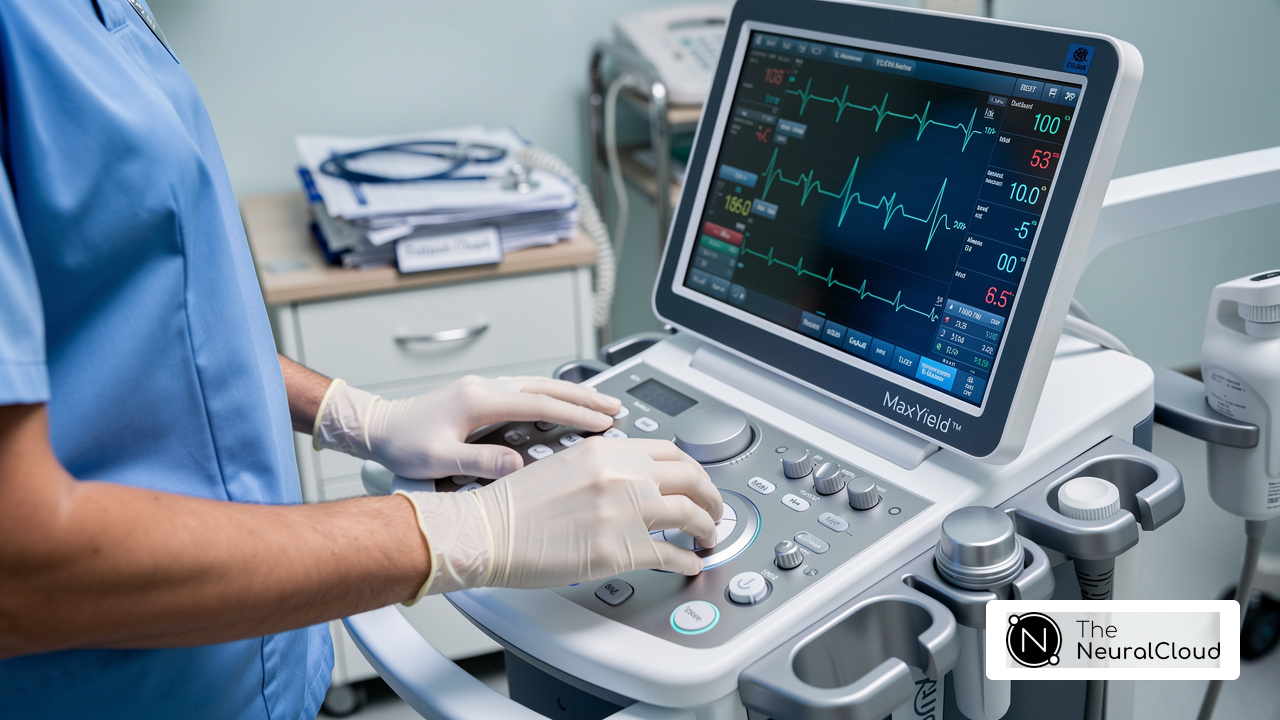
AV obstruction affects over 800,000 Americans and more than a million individuals globally, emphasizing the commonality of this condition. Understanding the nuances of cardiac obstruction is essential for healthcare providers, as prompt identification and treatment can avert serious consequences. Neural Cloud Solutions' MaxYield™ platform addresses these challenges by providing advanced noise filtering and automated signal processing, which enhances the clarity of ECG readings. Case studies highlight the significance of identifying cardiac obstruction, even in individuals lacking conventional risk factors. For example, a recent case involving a 79-year-old male with complete cardiac obstruction showed that the individual's symptoms improved after pacemaker implantation, highlighting the necessity for swift intervention.
In summary, understanding cardiac obstruction is key for effective ECG analysis and patient management. By utilizing MaxYield™, clinicians can optimize their workflow and enhance the precision of their ECG interpretations, ultimately improving care for individuals.
Explore Types of Heart Block: Classification and Characteristics
Heart obstruction presents significant challenges in clinical practice, categorized into three main types that each carry distinct implications for patient care.
-
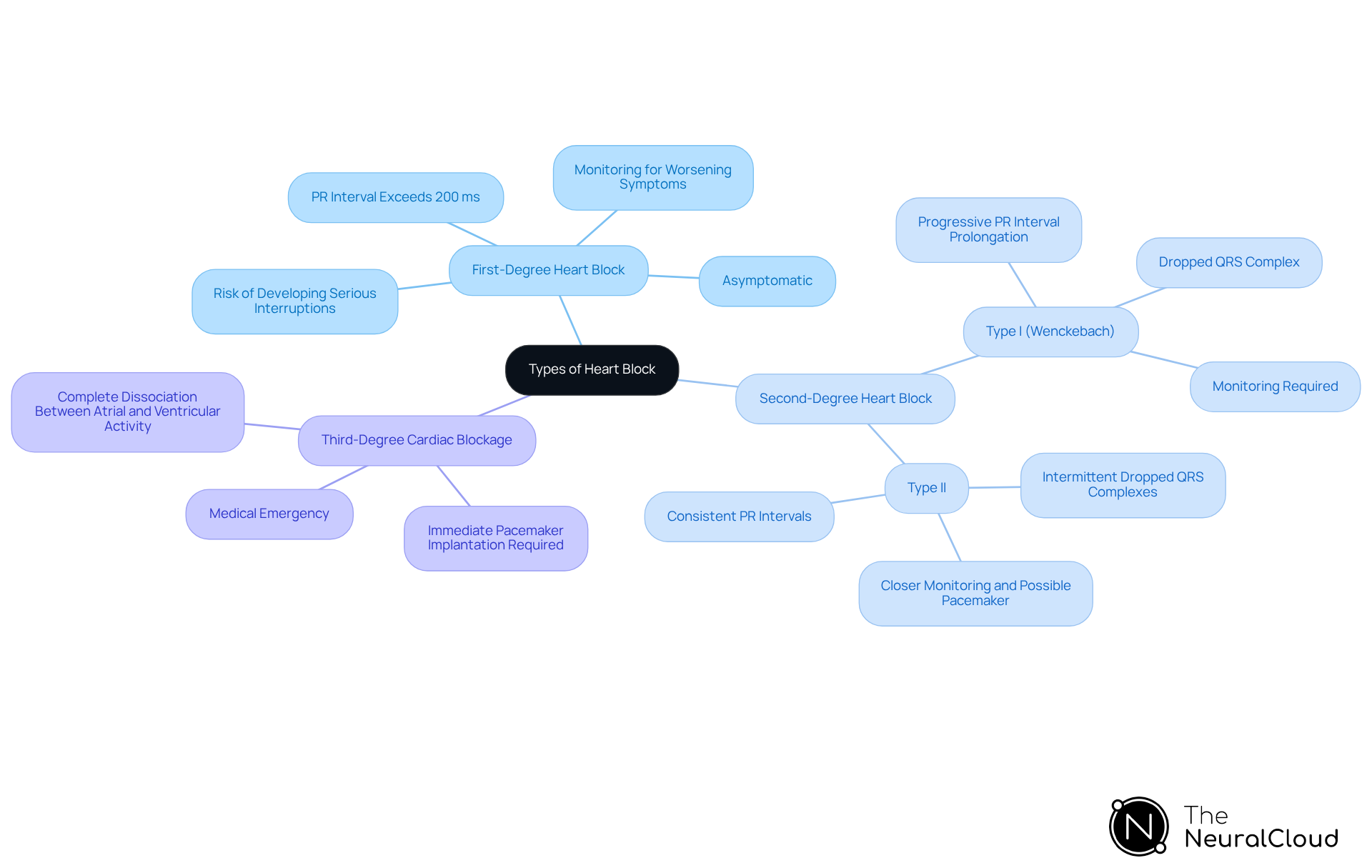
First-Degree Heart Block: First-degree heart block occurs when the PR interval on the ECG exceeds 200 ms, indicating a delay in electrical conduction. This type is often asymptomatic and typically does not require treatment. However, patients should be monitored for worsening symptoms or further prolongation of the PR interval, as this increases their risk of developing more serious interruptions or rhythm disorders.
-
Second-Degree Heart Block: This classification is divided into two subtypes:
- Type I (Wenckebach): Characterized by a progressive prolongation of the PR interval until a QRS complex is dropped. Patients with this type may not require treatment if asymptomatic, but monitoring is essential.
- Type II: In this subtype, the PR intervals remain consistent, but there are intermittent dropped QRS complexes. This subtype is more serious, often requiring closer monitoring and possible interventions, like the implantation of a permanent pacemaker, particularly for symptomatic patients.
-
Third-Degree Cardiac Blockage: Also known as complete cardiac obstruction, this condition shows a total dissociation between atrial and ventricular activity. It is a medical emergency that requires immediate intervention, often involving the implantation of a pacemaker to regulate cardiac rhythm.
Understanding these classifications is crucial for healthcare professionals to develop effective management strategies for patients as outlined in the heart block chart. Recent studies suggest that first-degree cardiac obstruction is common in about 1% of the population, with increased rates noted in older individuals, especially in Canada. Efficient administration and oversight can greatly enhance patient results and avert issues linked to more serious types of cardiac obstruction.
Diagnose Heart Block: Techniques and Tools for Accurate Assessment
Accurate diagnosis of heart block remains a challenge, as traditional methods often fall short in precision. Several techniques and tools leverage advanced technology to improve ECG analysis:
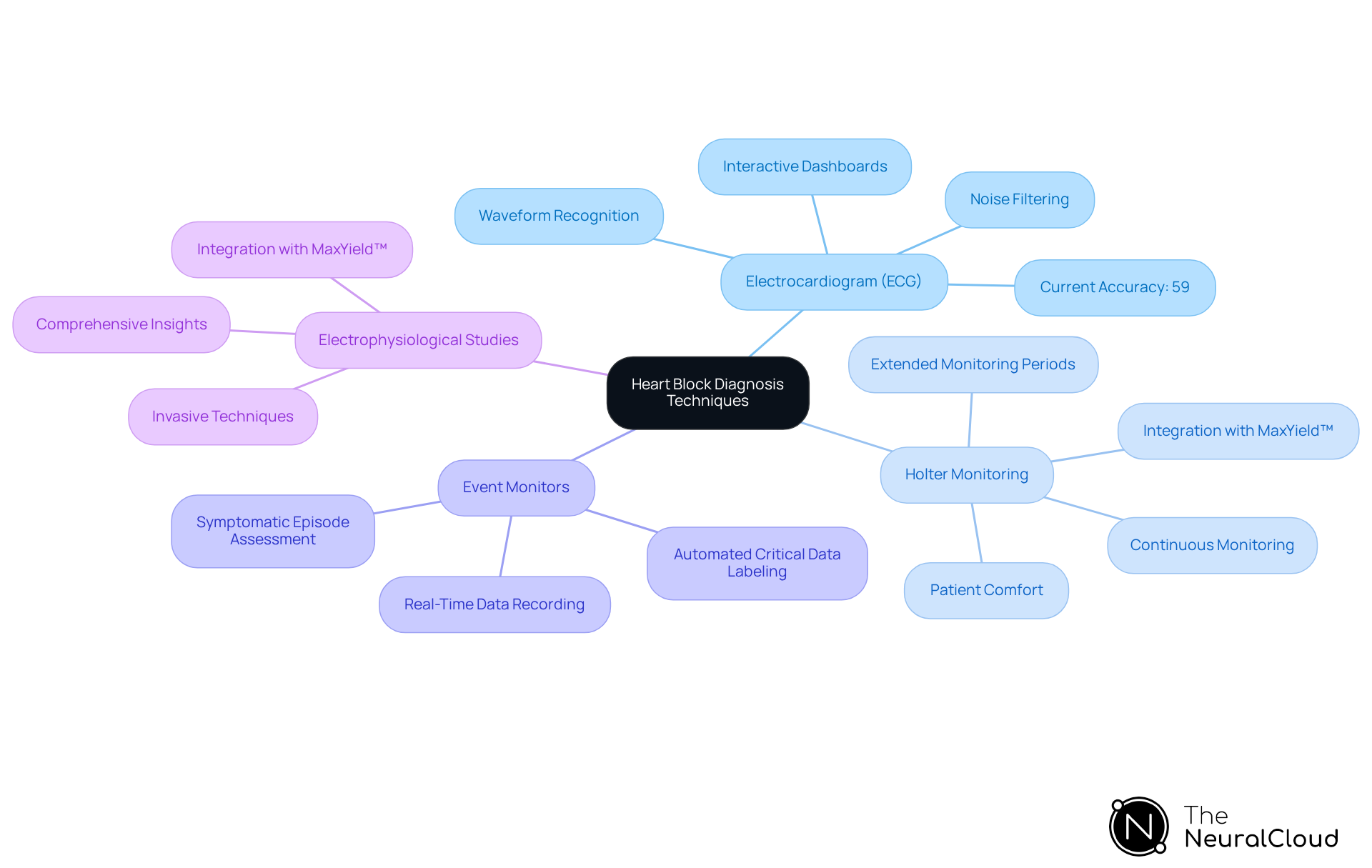
- Electrocardiogram (ECG): The primary diagnostic instrument, an ECG captures the heart's electrical activity, enabling the recognition of cardiac obstruction types based on distinctive waveforms. Current approaches for forecasting cardiac obstruction struggle with accuracy, achieving only 59%. This highlights the need for enhanced diagnostic methods. Neural Cloud Solutions' MaxYield™ platform addresses this gap by utilizing advanced noise filtering and distinct wave recognition, which enhances the clarity of ECG readings even in challenging conditions. Additionally, the Insight360 tool provides customizable visualization and reporting, transforming MaxYield’s clean ECG data into interactive dashboards and clinical-ready reports.
- Holter Monitoring: With the latest wireless Holter monitors, patients can enjoy greater comfort and longer monitoring times, capturing intermittent heart block episodes that may not be evident in a standard ECG. This continuous ECG monitoring over 24-48 hours increases the likelihood of detecting intermittent arrhythmias. The integration of MaxYield™ with Holter monitoring systems can further improve data quality and diagnostic yield, while ensuring compliance with FDA Class II SaMD clearance-pending status.
- Event Monitors: These devices are utilized for individuals who experience sporadic symptoms, allowing for ECG recording during symptomatic episodes. They are especially beneficial for assessing individuals with unexplained fainting episodes, as they can offer real-time data during critical moments. MaxYield™ enhances the effectiveness of event monitors by automating the labeling of critical data, ensuring that healthcare professionals can focus on the most relevant information.
- Electrophysiological Studies: Invasive techniques that evaluate the electrical conduction routes in the heart can offer comprehensive insights regarding the type and position of the obstruction. These studies are essential for understanding complex cases where non-invasive methods may fall short. The adaptability of MaxYield™ allows it to integrate seamlessly with various diagnostic tools, providing a comprehensive view of the individual's cardiac health.
When healthcare providers use these diagnostic tools effectively, they can confirm cardiac obstruction and establish the most suitable treatment strategy. The incorporation of AI-driven analytics in these processes can significantly enhance diagnostic precision, as shown by recent studies where AI tools reached up to 89% accuracy in identifying individuals at high risk for complete cardiac failure. This combination of traditional and innovative techniques is crucial for enhancing outcomes in cardiac care. Recognizing the impact of total cardiac obstruction on thousands each year underscores the urgent need for improved diagnostic techniques.
Leverage Technology: Enhancing ECG Analysis with Advanced Solutions
Traditional ECG analysis often struggles with noise and misinterpretation, leading to potential diagnostic errors. The integration of advanced technologies into ECG analysis significantly enhances diagnostic capabilities.
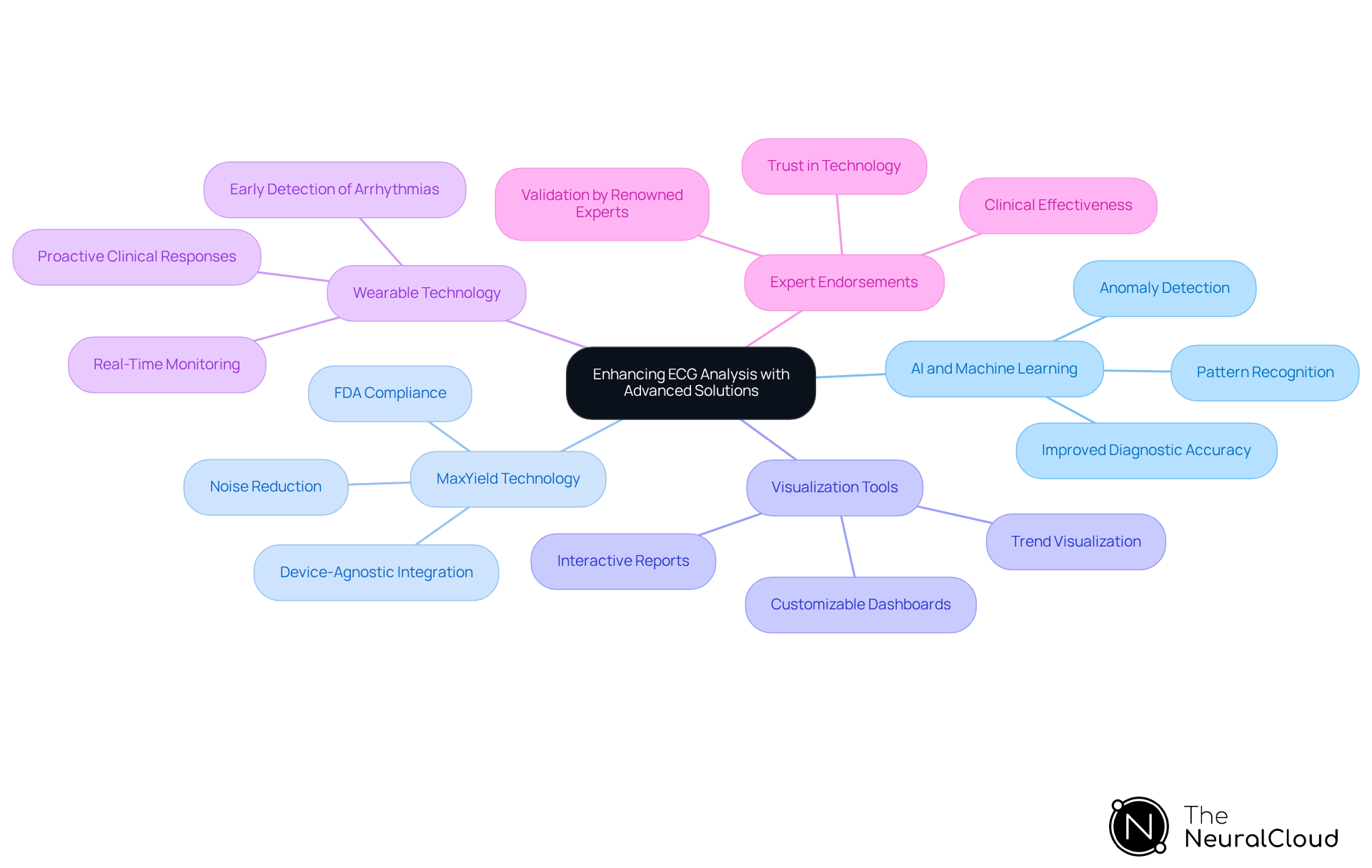
- AI and Machine Learning: These technologies analyze vast amounts of ECG data, identifying patterns and anomalies that may elude human interpretation. AI algorithms excel at spotting subtle variations in cardiac rhythms, which are essential for diagnosing cardiac obstruction.
- MaxYield Technology: Neural Cloud Solutions' MaxYield platform exemplifies the power of AI in improving ECG data processing. MaxYield cleans up noisy signals, giving you clearer, more accurate readings that boost the reliability of cardiac assessments. It is also pending FDA Class II SaMD clearance, ensuring compliance with regulatory standards.
- Visualization Tools: Tools like Insight360 provide customizable dashboards and reports, enabling healthcare professionals to visualize trends and make informed decisions swiftly. This feature is crucial for quick interventions in cardiac care, turning MaxYield’s clean ECG data into interactive, clinical-ready reports.
- Wearable Technology: Continuous monitoring devices provide real-time data, aiding in the early detection of heart block and other arrhythmias using a heart block chart. This proactive approach enables prompt clinical responses, enhancing outcomes for individuals.
- Expert Endorsements: Renowned experts such as Dr. Alan Rabinowitz, Dr. Brett Heilbron, and Dr. Marc W. Deyell endorse MaxYield for its precision and noise reduction benefits, further validating its effectiveness in clinical settings.
By leveraging these advanced solutions, healthcare providers can significantly enhance their ECG analysis, leading to improved patient outcomes and more efficient workflows. With MaxYield, healthcare providers can transform ECG analysis, ensuring better patient outcomes and streamlined workflows.
Conclusion
Healthcare professionals often struggle with accurately diagnosing heart block due to its varying degrees and subtle ECG changes. By mastering the intricacies of this condition, they can significantly improve diagnostic accuracy and treatment outcomes. This article emphasizes the importance of recognizing the different types of heart block - first-degree, second-degree, and third-degree - each with unique characteristics and clinical implications. With tools like Neural Cloud Solutions' MaxYield™, clinicians can clarify ECG readings and make the diagnostic process smoother and more efficient.
Key insights discussed include:
- The classification of heart block types
- The significance of accurate diagnosis
- The role of innovative technologies in improving ECG analysis
The integration of AI and machine learning, along with advanced visualization tools, empowers clinicians to make informed decisions swiftly, ultimately leading to better patient care. Additionally, the necessity of prompt intervention in cases of severe heart block is highlighted to prevent life-threatening complications.
In light of the challenges posed by heart block, it is crucial for healthcare providers to embrace advanced diagnostic techniques and technologies. By leveraging solutions like MaxYield™, clinicians can enhance their ECG analysis capabilities, ensuring timely and effective management of cardiac conditions. This proactive approach not only improves patient outcomes but also reinforces the importance of continuous learning and adaptation in the ever-evolving field of cardiology.
Frequently Asked Questions
What is heart block?
Heart block, or cardiac obstruction, refers to a delay or complete interruption in the conduction of electrical impulses through the heart's conduction system, which can lead to irregular heartbeats and affect cardiac function.
What are the different types of heart block?
The different types of heart block include: - First-degree cardiac obstruction - Second-degree cardiac obstruction (Type I and Type II) - Third-degree cardiac obstruction
What is first-degree cardiac obstruction?
First-degree cardiac obstruction is the mildest type, where electrical signals are delayed but still reach the ventricles. It is often asymptomatic and does not require intervention.
How does second-degree cardiac obstruction differ from first-degree?
Second-degree cardiac obstruction can result in dropped beats. Type I features progressively longer delays before a beat is missed, while Type II has irregular and slower rhythms, often requiring a pacemaker.
What is third-degree cardiac obstruction?
Third-degree cardiac obstruction is the most severe type, resulting in a complete failure of electrical signals to reach the ventricles, leading to a significantly slower pulse rate and necessitating immediate intervention to prevent life-threatening complications.
How common is heart block?
Atrioventricular (AV) obstruction affects over 800,000 Americans and more than a million individuals globally, highlighting the commonality of this condition.
Why is understanding cardiac obstruction important for healthcare providers?
Understanding cardiac obstruction is essential for healthcare providers because prompt identification and treatment can avert serious consequences, including cardiac failure, arrhythmia, myocardial infarction, and sudden cardiac arrest.
How does Neural Cloud Solutions' MaxYield™ platform assist in ECG interpretation?
Neural Cloud Solutions' MaxYield™ platform enhances ECG readings by providing advanced noise filtering and automated signal processing, which improves the clarity of ECG interpretations.
Can individuals without conventional risk factors experience cardiac obstruction?
Yes, case studies have shown that cardiac obstruction can occur in individuals lacking conventional risk factors, emphasizing the importance of identifying the condition regardless of typical risk profiles.
What was a notable case involving cardiac obstruction?
A notable case involved a 79-year-old male with complete cardiac obstruction, whose symptoms improved after pacemaker implantation, highlighting the necessity for swift intervention.
List of Sources
- Define Heart Block: Understanding the Basics
- Therapy benefits heart block patients (https://buffalo.edu/ubnow/stories/2012/heart_block_therapy.html)
- Heart Association highlights 2025’s major research findings (https://heart.org/en/around-the-aha/heart-association-highlights-2025s-major-research-findings)
- Heart block: Types, causes, symptoms, and risk factors (https://medicalnewstoday.com/articles/180986)
- Do You Know the Symptoms of Heart Block? (https://my.clevelandclinic.org/health/diseases/17056-heart-block)
- Out of Sync: A Report of Complete Heart Block - PMC (https://pmc.ncbi.nlm.nih.gov/articles/PMC12007959)
- Explore Types of Heart Block: Classification and Characteristics
- Do You Know the Symptoms of Heart Block? (https://my.clevelandclinic.org/health/diseases/17056-heart-block)
- Atrioventricular Block: Background, Etiology, Pathophysiology (https://emedicine.medscape.com/article/151597-overview)
- Atrioventricular (AV) Block - The Cardiology Advisor (https://thecardiologyadvisor.com/ddi/av-block-first-second-third-degree)
- Types of Heart Block | Mass General Brigham (https://massgeneralbrigham.org/en/about/newsroom/articles/heart-block-types)
- Atrioventricular Blocks – First, Second and Third Degree : Emergency Care BC (https://emergencycarebc.ca/clinical_resource/clinical-summary/atrioventricular-blocks-first-second-and-third-degree)
- Diagnose Heart Block: Techniques and Tools for Accurate Assessment
- This is the Future of Cardiac Holter Monitoring & Diagnostics | LifeSignals (https://lifesignals.com/this-is-the-future-of-cardiac-holter-monitoring-and-diagnostics)
- Technological Advancements in Cardiology: Improved Monitoring (https://bstquarterly.com/article/technological-advancements-in-cardiology-improved-monitoring)
- AI-powered ECG tool predicts risk of life-threatening heart blockage – NIHR Imperial Biomedical Research Centre (https://imperialbrc.nihr.ac.uk/2025/08/21/ai-powered-ecg-tool-predicts-risk-of-life-threatening-heart-blockage)
- AI-enhanced ECG can spot patients at risk of dangerous 'heart block' condition (https://medicalxpress.com/news/2025-08-ai-ecg-patients-dangerous-heart.html)
- With AI, researchers discover new way to detect sudden cardiac death risk - Berkeley News (https://news.berkeley.edu/2026/06/24/with-ai-researchers-discover-new-way-to-detect-sudden-cardiac-death-risk)
- Leverage Technology: Enhancing ECG Analysis with Advanced Solutions
- AIML Hits Key Regulatory Benchmark with 510(k) Filing for MaxYield(TM) Signal Enhancement Platform (https://biospace.com/press-releases/aiml-hits-key-regulatory-benchmark-with-510k-filing-for-maxyieldtm-signal-enhancement-platform)
- MaxYield-ECG (https://theneuralcloud.com/maxyield-ecg)
- AIML Subsidiary Neural Cloud Signs LOI with Circular Health to License MaxYield(TM) ECG Signal Processing (https://finance.yahoo.com/news/aiml-subsidiary-neural-cloud-signs-110000257.html)
- aimlhealth (https://aiml.health/press-release/agreement-with-european-digital-cardiac-monitoring-platform)
- Neural Cloud files for FDA clearance for MaxYield ECG | Anthony Legere posted on the topic | LinkedIn (https://linkedin.com/posts/anthonylegere_ceoca-chairmans-briefing-activity-7328794931878064129-oUAr)