Introduction
Navigating the complexities of ST-Elevation Myocardial Infarction (STEMI) can be daunting for healthcare professionals, especially given its life-threatening nature and the urgency it demands. With heart attacks becoming increasingly prevalent in Canada, particularly among diverse populations, recognizing symptoms and implementing timely treatment strategies is vital for improving patient outcomes.
Clinicians often wonder how to effectively navigate the complexities of STEMI diagnosis and management in today’s fast-paced medical landscape. In this article, we’ll explore essential steps for mastering STEMI, including:
- Current guidelines
- Diagnostic techniques
- Innovative technologies that can enhance cardiac care
Define STEMI: Understanding ST-Elevation Myocardial Infarction
STEMI ST elevation presents significant challenges in cardiac care, requiring immediate attention to prevent irreversible heart damage. This serious form of cardiac attack is marked by a total obstruction of a coronary artery, leading to considerable myocardial ischemia. Recognizable by specific alterations in the electrocardiogram (ECG), particularly stemi st elevation, this condition indicates that the heart muscle is not receiving adequate blood supply. The urgency of addressing this condition is underscored by recent Canadian studies, which reveal that prompt intervention is critical. For instance, the North American COVID-19 Myocardial Infarction (NACMI) registry reported an in-hospital mortality rate of 33% for COVID-positive heart attack patients, compared to just 4% for those without COVID. Additionally, various regions in Ontario recorded risk-adjusted 30-day mortality ratios between 7.4% and 17.2% during the fiscal years 2016/17 to 2018/19, emphasizing the importance of timely treatment. Understanding these statistics is essential for healthcare professionals to recognize the signs and symptoms that require immediate medical attention, ultimately enhancing patient care and survival rates.
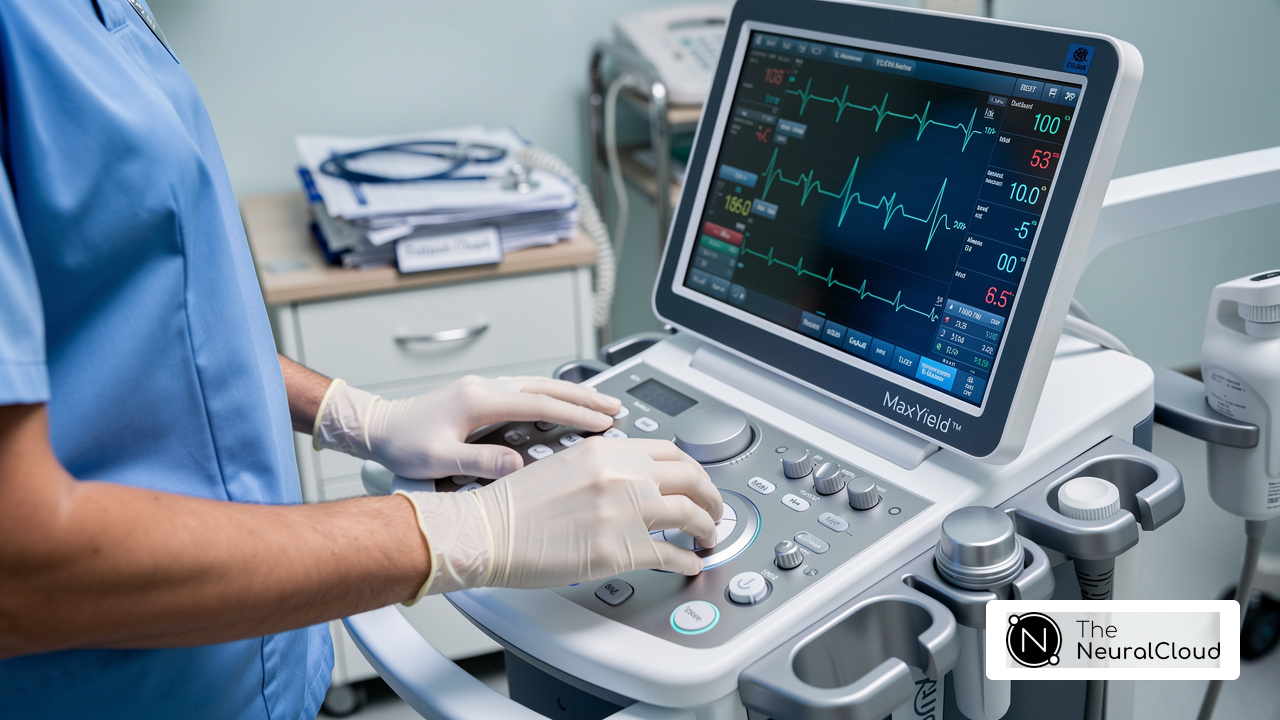
MaxYield™ from Neural Cloud Solutions Inc. enhances ECG analysis efficiency with advanced noise filtering and wave recognition. By automating the labeling and data extraction processes, MaxYield™ allows healthcare professionals to concentrate on critical decision-making rather than labor-intensive tasks. Dr. Alan Rabinowitz notes that MaxYield™ competes with human interpretation, significantly improving heart attack diagnosis accuracy. This capability is crucial, especially when physiological variability and signal artifacts obscure critical data. Moreover, the incorporation of wearable technology with MaxYield™ simplifies processes and reduces operational expenses, making it an essential tool in the fight against heart attacks. Dr. Brett Heilbron highlights that salvaging obscured ECG sections can transform timely interventions.
Dr. Santiago Garcia emphasizes that this research has provided vital insights into treating heart attack patients during the COVID-19 pandemic, revealing the importance of understanding demographic and clinical factors that differ from those traditionally observed. With MaxYield™, healthcare providers can optimize resources and improve patient outcomes, making every second count in heart attack treatment.

Identify Symptoms and Causes of STEMI
Recognizing the symptoms of a heart attack is crucial, yet many individuals struggle to identify them in time. Common symptoms include:
- Intense chest pain or discomfort, often described as pressure or squeezing.
- Discomfort that may radiate to the arms, neck, jaw, or back.
- Other symptoms can include shortness of breath, sweating, nausea, and lightheadedness.
Myocardial infarction is primarily caused by coronary artery disease. In this condition, plaque accumulates and can rupture, leading to a thrombus that blocks the artery. Key risk factors include:
- Hypertension
- Diabetes
- Smoking
- High cholesterol
- A family history of heart disease
In Canada, nearly 50% of individuals who experience heart attacks belong to minority ethnic groups, including 23% Hispanic and 24% Black.
Understanding these symptoms and causes is vital for prompt diagnosis and treatment. The in-hospital mortality rate for heart attacks ranges from 4% to 12%, increasing to about 38% if complications arise before hospital arrival. Ongoing research, such as findings from the NACMI registry, examines demographic and clinical factors that influence heart attack outcomes, underscoring the need for attentive patient care.

Diagnose STEMI: Key Tests and Evaluation Techniques
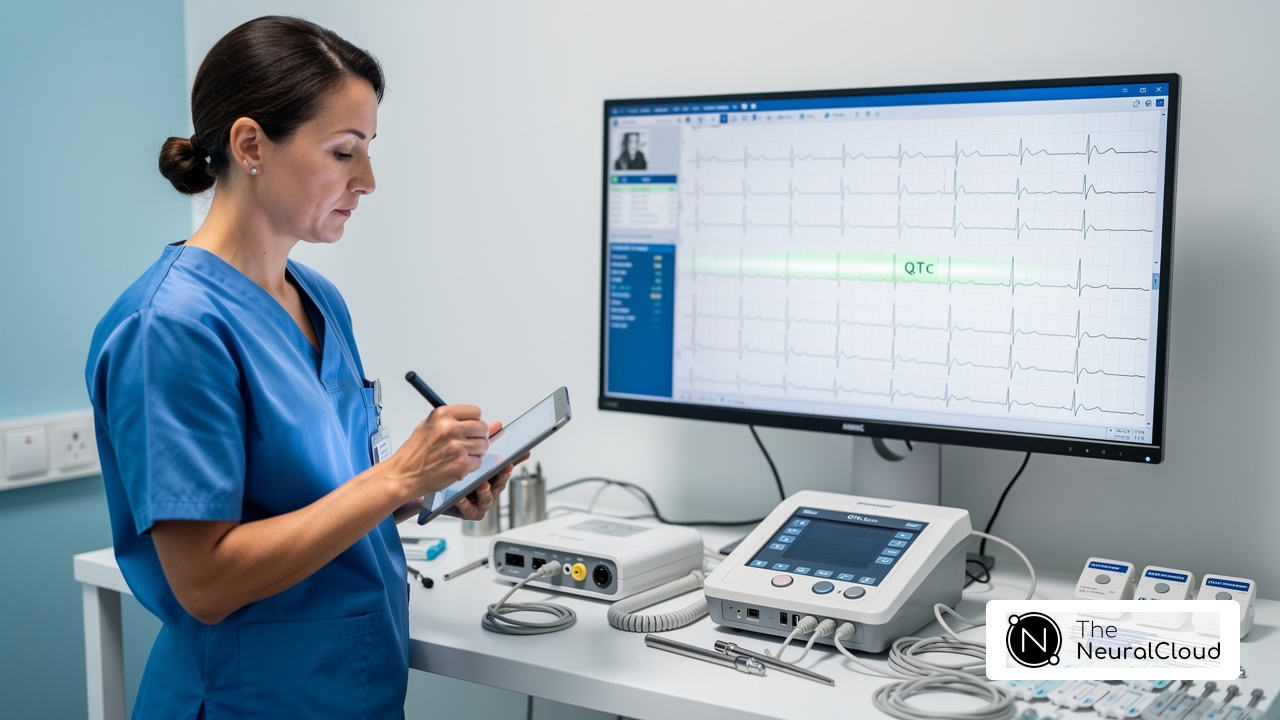
Timely diagnosis of STEMI (ST elevation myocardial infarction) is critical, yet challenges persist in accurately interpreting ECG results. The diagnosis primarily relies on the 12-lead electrocardiogram (ECG), which distinctly shows STEMI ST elevation, a hallmark of this critical condition. Alongside the ECG, blood tests assessing cardiac biomarkers, particularly troponin, are essential as they indicate muscle damage.
Coronary angiography is routinely performed to visualize the coronary arteries and assess the extent of any blockages. Additionally, imaging techniques such as echocardiography may be employed to evaluate heart function and identify potential complications. Delays in diagnosis can lead to increased myocardial damage and poorer patient outcomes. Swift and accurate diagnosis is essential to commence timely treatment strategies, thereby reducing myocardial damage and enhancing outcomes for individuals.
Recent Canadian research underscores the importance of integrating advanced technologies, including AI-driven ECG analysis like Neural Cloud Solutions Inc.'s MaxYield. This device-agnostic ECG intelligence layer integrates seamlessly via API, SDK, or CDK without requiring hardware changes. This integration enhances diagnostic precision and reduces false activations. As a result, it streamlines the management of heart attack cases.
As Dr. Timothy Henry notes, "Recognizing the condition swiftly and making an essential choice about sending individuals to the cath lab are crucial in minimizing the delays." Moreover, research has demonstrated that AI models, like MaxYield, can greatly enhance diagnostic performance, accurately recognizing 553 confirmed heart attack cases compared to 427 identified by conventional methods. MaxYield's advanced noise reduction capabilities and automated analysis transform noisy recordings into detailed insights, allowing healthcare professionals to make confident clinical decisions.
This shows how AI can change emergency cardiovascular care, making triage more accurate and ensuring timely help for those in urgent need. Expert endorsements from Dr. Alan Rabinowitz, Dr. Brett Heilbron, and Dr. Marc W. Deyell emphasize MaxYield’s precision rivaling human interpretation and its noise reduction benefits, further solidifying its role in enhancing cardiac insights. Additionally, MaxYield is currently pending FDA Class II SaMD clearance, ensuring compliance with regulatory standards and audit-ready documentation supporting GxP inspections.

Treat STEMI: Overview of Management Strategies
Timely reperfusion therapy is critical in managing STEMI ST elevation, as delays can lead to severe complications. Reperfusion therapy aims to restore blood flow to the affected areas of the heart. This can be accomplished through percutaneous coronary intervention (PCI), which uses a catheter to open blocked arteries. Often, this is followed by stent placement to keep the vessel open. Alternatively, thrombolytic therapy may be used to dissolve the blood clot obstructing blood flow.
In addition to these primary reperfusion strategies, patients typically receive antiplatelet medications such as aspirin and clopidogrel to reduce the risk of further clot formation. Supportive treatments, including beta-blockers, ACE inhibitors, and statins, are also crucial for managing cardiovascular risk factors and enhancing overall heart health.
Recent Canadian research underscores the significance of timely reperfusion. Studies indicate that up to 30% of STEMI ST elevation cases can be successfully aborted if fibrinolytics are administered within the first hour of symptom onset. Moreover, fibrinolytics receive a Class I recommendation for myocardial infarction reperfusion if provided within 12 hours of symptom onset and if angiography cannot be performed in 2 hours or less. The Ontario Bypass Protocol enables paramedics to transport individuals with heart conditions directly to specialized cardiac hospitals, bypassing local emergency departments to accelerate treatment. This protocol is part of a larger effort to standardize care and improve outcomes for heart attack patients across Canada.
Understanding these management strategies is crucial for optimizing care and improving survival rates in STEMI ST elevation cases, particularly as the demand for effective cardiovascular interventions rises. As Tyler Yan emphasizes, 'Fibrinolytic therapy has its greatest benefit the earlier it is administered; up to 30% of cases of STEMI ST elevation can be successfully aborted if fibrinolytics are given within the first hour of symptom onset.' Additionally, ensuring rapid transfer to a PCI-capable center following fibrinolytic therapy can maximize patient outcomes.

Conclusion
Timely recognition of ST-Elevation Myocardial Infarction (STEMI) is vital for improving patient outcomes. This article explored the definition and symptoms of STEMI, along with diagnostic techniques and management strategies. Recognizing common symptoms, such as intense chest pain and shortness of breath, is essential, as is identifying the causes and risk factors.
Advanced diagnostic tools, including the 12-lead ECG and AI technologies like MaxYield™, play a crucial role in improving diagnostic accuracy and managing heart attack cases. Furthermore, timely reperfusion therapy, whether through PCI or thrombolytic therapy, is essential for restoring blood flow and improving survival rates.
Given the significant challenges posed by STEMI, it is imperative for clinicians, researchers, and diagnostic facilities to stay informed about the latest treatment guidelines and technological advancements. By embracing the latest advancements in treatment and technology, healthcare professionals can significantly enhance patient care and outcomes in STEMI cases.
Frequently Asked Questions
What is STEMI?
STEMI stands for ST-Elevation Myocardial Infarction, a serious form of cardiac attack characterized by a total obstruction of a coronary artery, leading to significant myocardial ischemia and inadequate blood supply to the heart muscle.
How is STEMI identified?
STEMI is identifiable through specific alterations in the electrocardiogram (ECG), particularly the presence of ST elevation.
Why is prompt intervention critical for STEMI patients?
Prompt intervention is crucial to prevent irreversible heart damage. Canadian studies indicate that timely treatment significantly improves survival rates, with a stark difference in mortality rates between COVID-positive heart attack patients and those without COVID.
What are the mortality statistics related to STEMI in Canada?
The North American COVID-19 Myocardial Infarction (NACMI) registry reported a 33% in-hospital mortality rate for COVID-positive heart attack patients, compared to just 4% for those without COVID. Additionally, Ontario recorded risk-adjusted 30-day mortality ratios between 7.4% and 17.2% from 2016 to 2019.
How does MaxYield™ from Neural Cloud Solutions Inc. enhance ECG analysis?
MaxYield™ enhances ECG analysis efficiency through advanced noise filtering and wave recognition, automating labeling and data extraction processes. This allows healthcare professionals to focus on critical decision-making rather than labor-intensive tasks.
What advantages does MaxYield™ offer in heart attack diagnosis?
MaxYield™ competes with human interpretation, significantly improving the accuracy of heart attack diagnoses, especially in cases where physiological variability and signal artifacts obscure critical data.
How does wearable technology integrate with MaxYield™?
The incorporation of wearable technology with MaxYield™ simplifies processes and reduces operational expenses, making it an essential tool in the fight against heart attacks.
What insights have been gained regarding heart attack treatment during the COVID-19 pandemic?
Research has highlighted the importance of understanding demographic and clinical factors that differ from traditional observations, which is vital for treating heart attack patients during the pandemic.
How can healthcare providers optimize resources with MaxYield™?
By utilizing MaxYield™, healthcare providers can optimize resources and improve patient outcomes, making every second count in the treatment of heart attacks.
List of Sources
- Define STEMI: Understanding ST-Elevation Myocardial Infarction
- Mortality rates for STEMI and stroke (https://ontario.ca/page/mortality-rates-stemi-and-stroke)
- North American COVID-19 ST-Elevation Myocardial Infarction (STEMI) Research Reveals Impact on Minority Populations, High Mortality and Atypical Symptoms | Minneapolis Heart Institute Foundation (https://mplsheart.org/news/north-american-covid-19-st-elevation-myocardial-infarction-stemi-research-reveals-impact)
- COVID-19 and Severe Heart Attack Increase Mortality by 25% After One Year, More than Double Pre-Pandemic Rates | SCAI (https://scai.org/media-center/news-and-articles/covid-19-and-severe-heart-attack-increase-mortality-25-after-one)
- Identify Symptoms and Causes of STEMI
- What Is a STEMI? (https://my.clevelandclinic.org/health/diseases/22068-stemi-heart-attack)
- STEMI heart attack: Symptoms and more (https://medicalnewstoday.com/articles/stemi-heart-attack)
- COVID-19 and Severe Heart Attack Increase Mortality by 25% After One Year, More than Double Pre-Pandemic Rates | SCAI (https://scai.org/media-center/news-and-articles/covid-19-and-severe-heart-attack-increase-mortality-25-after-one)
- North American COVID-19 STEMI Research Reveals High Mortality and Atypical Symptoms (https://dicardiology.com/content/north-american-covid-19-stemi-research-reveals-high-mortality-and-atypical-symptoms)
- Research Data Reveal Trends in Cardiovascular Risk Factors and Preventive Medication Use Prior to Heart Attacks│American College of Cardiology's Scientific Session (ACC.24) | Minneapolis Heart Institute Foundation (https://mplsheart.org/news/research-data-reveal-trends-cardiovascular-risk-factors-prevention-medication)
- Diagnose STEMI: Key Tests and Evaluation Techniques
- STEMI ECG Criteria: ST-Elevation Thresholds (https://powerfulmedical.com/blog/stemi-ecg-criteria)
- New study finds AI model improves heart attack detection (https://health.ucdavis.edu/news/headlines/new-study-finds-ai-model-improves-heart-attack-detection/2025/11)
- In-Hospital STEMI Patients Face Reperfusion Delays and Worse Outcomes (https://tctmd.com/news/hospital-stemi-patients-face-reperfusion-delays-and-worse-outcomes)
- New Stemi-DTU Data Provides Deeper Insight Into Patient Outcomes | SCAI (https://scai.org/media-center/news-and-articles/new-stemi-dtu-data-provides-deeper-insight-patient-outcomes)
- AI-ECG Finds STEMI Faster, Cuts False-Positive Cath Lab Activations (https://tctmd.com/news/ai-ecg-finds-stemi-faster-cuts-false-positive-cath-lab-activations)
- Treat STEMI: Overview of Management Strategies
- New Coordinated Heart Attack Care System Aims to Decrease Treatment Delays, Save Lives (https://dicardiology.com/content/new-coordinated-heart-attack-care-system-aims-decrease-treatment-delays-save-lives)
- SCAI 2026: STEMI-DTU Data Provide Deeper Insight Into Patient Outcomes (https://dicardiology.com/content/scai-2026-stemi-dtu-data-provide-deeper-insight-patient-outcomes)
- Fibrinolytic Therapy for STEMI : Emergency Care BC (https://emergencycarebc.ca/clinical_resource/clinical-summary/fibrinolytic-therapy-for-stemi)
- Canadian Strategy of Transferring STEMI Patients to Non-PCI Hospitals Postprocedure Has Global Implications (https://tctmd.com/news/canadian-strategy-transferring-stemi-patients-non-pci-hospitals-postprocedure-has-global)
- In-Hospital STEMI Patients Face Reperfusion Delays and Worse Outcomes (https://tctmd.com/news/hospital-stemi-patients-face-reperfusion-delays-and-worse-outcomes)