Introduction
The urgent need for rapid recognition of ST-Elevation Myocardial Infarction (STEMI) poses significant challenges in cardiac care. Immediate recognition and intervention are crucial to prevent severe complications. For health tech developers, understanding the nuances of STEMI rhythms and their implications is essential for creating innovative diagnostic tools that can significantly enhance patient outcomes. As we consider these challenges, it’s crucial to explore how technology can evolve to meet the urgent demands of accurate diagnosis.
Define STEMI and Its Clinical Importance
ST-Elevation Myocardial Infarction poses significant challenges due to its critical nature and the need for immediate intervention. This heart attack results from a complete blockage in one or more coronary arteries, leading to prolonged myocardial ischemia. On an electrocardiogram (ECG), a stemi rhythm is indicated by ST-segment elevation, which shows inadequate blood supply to the heart muscle.
Acute myocardial infarction has serious clinical implications, including high morbidity and mortality rates. Timely recognition and intervention are crucial to restore blood flow and reduce heart damage. For health tech developers, the urgency surrounding acute coronary syndromes highlights the need for rapid diagnostic tools and effective treatment protocols that can seamlessly integrate into existing healthcare workflows.
Delays in recognizing stemi rhythm can lead to severe complications, highlighting the need for rapid diagnostic tools. Recent studies emphasize that immediate emergency care is vital, as delays can result in abnormal heart rhythms and cardiogenic shock. The STEMI-DTU trial reveals that timely intervention can positively influence outcomes for patients experiencing a stemi rhythm.
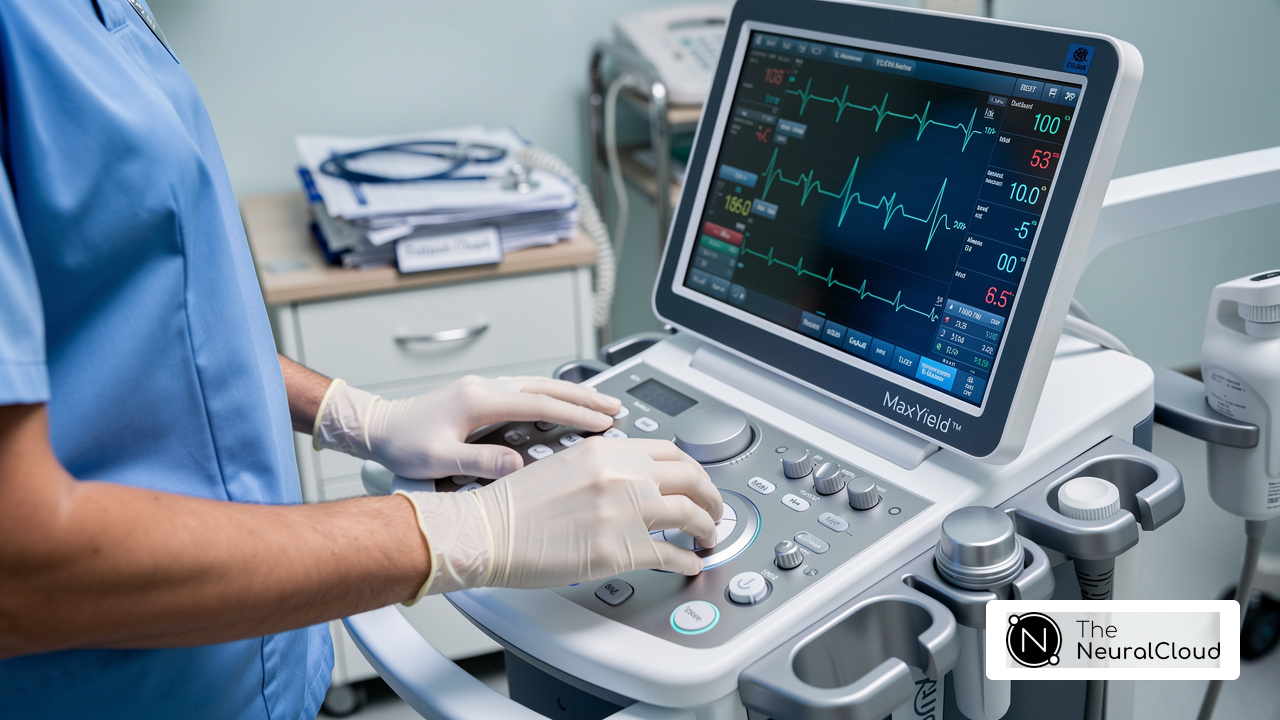
Implementing advanced technologies can significantly improve patient outcomes in cardiovascular health. Neural Cloud Solutions' MaxYield™ platform exemplifies this potential by ensuring consistent, clean data across all connected devices, enabling reliable detection of critical cardiac events. MaxYield™ enhances ECG analysis through advanced noise filtering and distinct wave recognition, allowing for the isolation of key features in noisy recordings. This capability is essential for improving patient care and outcomes in cardiovascular health.
Developing technologies for quick and accurate heart attack detection is crucial for improving patient care in cardiovascular health.

Identify Types of STEMI Rhythms
Myocardial infarction can present with the stemi rhythm among various other rhythms, each indicating unique underlying issues that require precise identification for effective treatment. The primary types include:
- Anterior Myocardial Infarction: Usually triggered by blockage of the left anterior descending vessel, this type shows ST-segment elevation in leads V1 to V4, indicating significant myocardial injury. With the MaxYield™ platform, analyzing these rhythms becomes automated, giving healthcare professionals quick insights that boost clinical decision-making. It can analyze 200,000 heartbeats in under 5 minutes, enhancing the speed and accuracy of assessments.
- Inferior Myocardial Infarction: Resulting from blockage in the right coronary vessel, it is characterized by ST-segment elevation in leads II, III, and aVF, often linked with complications like bradycardia. It's alarming that half of heart attacks are misdiagnosed at the first point of contact, highlighting the critical need for accurate identification. MaxYield™'s advanced noise filtering capabilities help isolate crucial data even in challenging recordings, improving diagnostic accuracy.
- Lateral Myocardial Infarction: This type occurs due to blockage of the left circumflex artery and presents with ST-segment elevation in leads I, aVL, V5, and V6. Timely intervention is essential to prevent further cardiac damage. Timothy D. Henry, MD, FACC, points out that AI-enhanced heart attack diagnosis can significantly cut down the time to treatment. The adaptive algorithms of MaxYield™ evolve with each use, continuously improving the assessment yield for such cases.
- Posterior Myocardial Infarction: Often overlooked, it can be identified by reciprocal changes in the anterior leads and is linked with blockage of the right coronary artery or left circumflex artery. Recognizing this type is crucial, as delayed diagnosis can lead to significant morbidity. Delaying stenting beyond 90 minutes can result in permanent damage to heart tissue, emphasizing the critical nature of rapid diagnosis and treatment. MaxYield™ helps healthcare professionals by delivering automated, scalable insights that streamline emergency response protocols.
Understanding these stemi rhythms is essential for health tech developers to ensure their diagnostic tools can accurately identify and differentiate between these critical conditions, ultimately improving patient outcomes. The AI ECG model, for example, reached an area under the curve of 0.94, showcasing its effectiveness in improving heart attack detection.

Explore Symptoms and Causes of STEMI
Understanding the symptoms and causes of STEMI is crucial for timely intervention in cardiac care. The symptoms of STEMI can manifest in various ways, typically including:
- Chest Pain: Often described as a sensation of pressure, squeezing, or fullness in the center of the chest.
- Radiating Pain: Discomfort may extend to the shoulders, neck, arms, back, jaw, or stomach.
- Shortness of Breath: This symptom may occur with or without accompanying chest discomfort.
- Other Symptoms: Additional signs can include cold sweat, nausea, or lightheadedness.
The primary causes of STEMI are critical to understand:
- Atherosclerosis: This condition involves the accumulation of plaque in the coronary arteries, which narrows them and increases the risk of blockage.
- Plaque Rupture: When a plaque bursts, it can result in the creation of a blood clot that entirely blocks the vessel, precipitating a heart attack.
- Coronary Artery Spasm: A temporary tightening of the muscles within the artery can also result in a blockage.
For health tech developers, recognizing these symptoms and causes is key to creating innovative tools that help detect issues early and improve patient outcomes. With heart disease being the leading cause of death in the United States, where approximately 1 in 3 deaths are attributed to cardiovascular conditions, the urgency for effective solutions is paramount. Emergency medical experts emphasize that accurate ECG analysis is crucial for identifying STEMI rhythm early, which can significantly impact treatment and outcomes for patients. Neural Cloud Solutions' MaxYield™ platform addresses these challenges by leveraging advanced AI technology to enhance ECG analysis. Its continuous learning model improves accuracy and efficiency in interpretation, allowing healthcare professionals to analyze ECGs with greater clarity and speed, even amidst noise and artifacts. Additionally, user manuals and specific use cases can provide practical insights for developers, further supporting the development of effective solutions.

Understand Diagnosis and Testing for STEMI
Diagnosing stemi rhythm presents significant challenges that require a multifaceted approach. The diagnosis combines clinical evaluation with advanced diagnostic testing to ensure accuracy in detecting stemi rhythm and timely intervention.
- Electrocardiogram (ECG): The ECG is crucial for diagnosing stemi rhythm, as it shows specific ST-segment elevations that signal myocardial injury. With Neural Cloud Solutions' MaxYield™ platform, ECG analysis is transformed through automated signal labeling and advanced noise reduction techniques. This ensures that even with noise, the ECG data remains clear, helping improve diagnostic accuracy. Additionally, the platform offers unique metrics and premium subscription opportunities that further support healthcare professionals in their diagnostic efforts.
- Cardiac Biomarkers: Blood tests measuring cardiac enzymes, particularly troponin, are critical for confirming myocardial necrosis. Successful applications of cardiac biomarkers in myocardial infarction testing have shown their effectiveness alongside ECG findings and stemi rhythm, offering a thorough evaluation of cardiac health.
- Coronary Angiography: This imaging technique is essential for visualizing coronary arteries and assessing the extent of blockages. It is often performed following initial ECG and biomarker evaluations to guide treatment decisions.
- Clinical Assessment: A comprehensive history and physical examination are crucial for assessing symptoms and risk factors related to a heart attack. Clinicians must consider patient history alongside assessment results to ensure timely intervention.
For health technology creators, understanding these assessment procedures is essential for creating tools that enable swift and precise recognition of the stemi rhythm. The combination of AI and advanced ECG technologies, such as those provided by MaxYield™, can greatly improve the speed and accuracy of heart attack diagnosis, ultimately resulting in better patient outcomes. By leveraging advanced technologies like MaxYield™, healthcare professionals can enhance their diagnostic capabilities, ultimately saving lives in critical situations.

Review Management and Treatment Strategies for STEMI
Timely intervention is crucial in managing heart attacks, as delays can lead to dire consequences for patients. Effective management centers on rapid reperfusion to restore blood flow to the heart muscle. Key strategies include:
- Percutaneous Coronary Intervention (PCI) is the preferred treatment for ST elevation myocardial infarction, which often occurs in a stemi rhythm, involving catheter insertion to open blocked arteries and frequently accompanied by stent placement. Studies indicate that timely PCI can significantly reduce mortality and improve outcomes, particularly when performed within 90 minutes of hospital arrival.
- Fibrinolytic Therapy: In scenarios where PCI is not immediately available, thrombolytic agents are administered to dissolve blood clots. The effectiveness of fibrinolytic therapy is notable, with studies showing that it can reduce mortality rates when initiated within 30 minutes of symptom onset.
- Medications: Patients typically receive antiplatelet agents such as aspirin and clopidogrel, along with anticoagulants and beta-blockers. These medications are essential for controlling symptoms and avoiding additional clotting, with aspirin advised as soon as possible after the onset of a heart attack.
- Post-acute Care: After initial treatment, patients often require cardiac rehabilitation and lifestyle modifications to mitigate the risk of future events. This includes education on recognizing acute cardiac symptoms and adherence to secondary prevention strategies.
Health tech developers must understand these management strategies. This knowledge is vital for creating innovative solutions that enhance treatment efficacy and streamline care processes. Leveraging advanced platforms like Neural Cloud Solutions' MaxYield™, which automates ECG analysis, reduces noise, and transforms noisy recordings into detailed insights, can significantly improve the accuracy of cardiac event identification. The continuous learning model of MaxYield™ ensures that the system evolves with each use, enhancing diagnostic yield and supporting clinical decisions. Embracing advanced technologies like MaxYield™ can transform the landscape of cardiac care, ultimately saving lives and improving recovery outcomes.

Conclusion
The complexities of ST-Elevation Myocardial Infarction (STEMI) present significant challenges for health tech developers focused on improving cardiovascular care. With STEMI, time is of the essence, making it crucial to have quick diagnostic tools and effective treatment plans that fit smoothly into healthcare systems. Understanding how critical STEMI is for patient outcomes is key to pushing innovation in health tech.
Throughout this article, we've explored various aspects of STEMI, including its:
- Clinical significance
- Types of STEMI rhythms
- Symptoms
- Causes
- Effective management strategies
The importance of timely diagnosis and intervention has been highlighted, showing how advanced technologies like Neural Cloud Solutions' MaxYield™ platform can revolutionize ECG analysis and improve diagnostic accuracy. By automating processes and utilizing AI-driven solutions, healthcare professionals can enhance their decision-making capabilities, ultimately leading to better patient outcomes.
Reflecting on the broader implications, the ongoing development of innovative solutions in STEMI detection and management is crucial. As heart disease remains a leading cause of mortality, there is an urgent need for health tech developers to prioritize creating tools that facilitate early detection and effective treatment of STEMI. By embracing advanced technologies and fostering collaboration within the healthcare ecosystem, the potential to save lives and improve recovery outcomes is significant. The future of cardiovascular care hinges on the commitment to innovate and integrate advanced technologies for better patient health outcomes.
Frequently Asked Questions
What is STEMI and why is it clinically important?
STEMI, or ST-Elevation Myocardial Infarction, is a type of heart attack caused by a complete blockage in one or more coronary arteries, leading to prolonged myocardial ischemia. It is clinically important because it has high morbidity and mortality rates, and timely recognition and intervention are crucial to restore blood flow and reduce heart damage.
How is STEMI indicated on an electrocardiogram (ECG)?
STEMI is indicated on an ECG by ST-segment elevation, which reflects inadequate blood supply to the heart muscle.
What are the potential complications of delays in recognizing STEMI?
Delays in recognizing STEMI can lead to severe complications, including abnormal heart rhythms and cardiogenic shock, which can significantly worsen patient outcomes.
What is the significance of the STEMI-DTU trial?
The STEMI-DTU trial highlights that timely intervention can positively influence outcomes for patients experiencing a STEMI rhythm, emphasizing the importance of immediate emergency care.
How can advanced technologies improve outcomes in cardiovascular health?
Advanced technologies, such as Neural Cloud Solutions' MaxYield™ platform, can improve outcomes by ensuring consistent and clean data across devices, enabling reliable detection of critical cardiac events and enhancing ECG analysis through noise filtering and wave recognition.
What are the primary types of STEMI rhythms?
The primary types of STEMI rhythms include: - Anterior Myocardial Infarction: ST-segment elevation in leads V1 to V4, usually due to blockage of the left anterior descending vessel. - Inferior Myocardial Infarction: ST-segment elevation in leads II, III, and aVF, resulting from blockage in the right coronary vessel. - Lateral Myocardial Infarction: ST-segment elevation in leads I, aVL, V5, and V6, caused by blockage of the left circumflex artery. - Posterior Myocardial Infarction: Identified by reciprocal changes in anterior leads and linked with blockage of the right coronary artery or left circumflex artery.
What role does the MaxYield™ platform play in analyzing STEMI rhythms?
The MaxYield™ platform automates the analysis of STEMI rhythms, providing quick insights to healthcare professionals and enhancing clinical decision-making. It can analyze 200,000 heartbeats in under 5 minutes, improving the speed and accuracy of assessments.
Why is accurate identification of myocardial infarction types critical?
Accurate identification of myocardial infarction types is critical because misdiagnosis can lead to inappropriate treatment and increased risk of complications. For instance, half of heart attacks are misdiagnosed at the first point of contact, highlighting the need for precise diagnostic tools.
How does AI enhance heart attack diagnosis?
AI enhances heart attack diagnosis by using adaptive algorithms that evolve with each use, continuously improving the assessment yield and significantly reducing the time to treatment for patients experiencing myocardial infarction.
What is the importance of rapid diagnosis and treatment in myocardial infarction?
Rapid diagnosis and treatment in myocardial infarction are crucial as delays can lead to significant morbidity and potentially permanent damage to heart tissue, especially if stenting is delayed beyond 90 minutes.
List of Sources
- Define STEMI and Its Clinical Importance
- What Is a STEMI? (https://my.clevelandclinic.org/health/diseases/22068-stemi-heart-attack)
- scai.org (https://scai.org/media-center/news-and-articles/new-stemi-dtu-data-provide-deeper-insight-patient-outcomes)
- abiomed.com (https://abiomed.com/en-us/about-us/news-and-media/press-releases/stemi-dtu-acc-2026)
- Identify Types of STEMI Rhythms
- PMcardio Reports Positive RCT Results and Late-Breaking Clinical Science for STEMI Detection (https://powerfulmedical.com/blog/pmcardio-reports-positive-rct-results-and-late-breaking-clinical-science-for-stemi-detection)
- STEMI: ST-segment Elevation Myocardial Infarction - The Cardiology Advisor (https://thecardiologyadvisor.com/ddi/stemi-st-elevation-myocardial-infarction)
- AI-Based ECG Analysis Significantly Improves STEMI Detection, Reduces False Activations - American College of Cardiology (https://acc.org/latest-in-cardiology/articles/2025/10/24/16/56/tues-554pm-ai-tct-2025)
- AI ECG Better Detects Severe Heart Attacks in Emergency Setting - American College of Cardiology (https://acc.org/about-acc/press-releases/2025/10/28/18/55/ai-ecg-better-detects-severe-heart-attacks-in-emergency-setting)
- AI-ECG Finds STEMI Faster, Cuts False-Positive Cath Lab Activations (https://tctmd.com/news/ai-ecg-finds-stemi-faster-cuts-false-positive-cath-lab-activations)
- Explore Symptoms and Causes of STEMI
- Heart Disease Facts (https://cdc.gov/heart-disease/data-research/facts-stats)
- STEMI: ST-segment Elevation Myocardial Infarction - The Cardiology Advisor (https://thecardiologyadvisor.com/ddi/stemi-st-elevation-myocardial-infarction)
- powerfulmedical.com (https://powerfulmedical.com/blog/case-study-how-pmcardio-helps-paramedics-diagnose-acute-patients-faster-and-more-accurately)
- Understand Diagnosis and Testing for STEMI
- AI-Based ECG Analysis Significantly Improves STEMI Detection, Reduces False Activations - American College of Cardiology (https://acc.org/latest-in-cardiology/articles/2025/10/24/16/56/tues-554pm-ai-tct-2025)
- AI outperforms conventional diagnosis for certain types of heart attacks (https://escardio.org/news/press/press-releases/acvc-press)
- New study finds AI model improves heart attack detection (https://health.ucdavis.edu/news/headlines/new-study-finds-ai-model-improves-heart-attack-detection/2025/11)
- AI-ECG Finds STEMI Faster, Cuts False-Positive Cath Lab Activations (https://tctmd.com/news/ai-ecg-finds-stemi-faster-cuts-false-positive-cath-lab-activations)
- jacc.org (https://jacc.org/doi/10.1016/j.jcin.2025.10.018)
- Review Management and Treatment Strategies for STEMI
- scai.org (https://scai.org/media-center/news-and-articles/new-stemi-dtu-data-provide-deeper-insight-patient-outcomes)
- ahajournals.org (https://ahajournals.org/doi/10.1161/01.cir.0000134791.68010.fa)