Introduction
Clinicians often face the daunting task of interpreting ECG artifacts, which can obscure true cardiac conditions. By understanding the causes and characteristics of these distortions, healthcare professionals can enhance their diagnostic capabilities and improve patient outcomes. The real question is: how can healthcare professionals accurately differentiate between misleading artifacts and genuine arrhythmias? Let’s dive into the complexities of ECG artifacts, their diagnostic implications, and effective management strategies to empower healthcare providers in overcoming these challenges.
Define ECG Artifacts: Key Characteristics and Examples
ECG irregularities pose significant challenges in accurately interpreting cardiac health, often leading to misdiagnoses. These distortions or anomalies in the electrocardiogram do not originate from the heart's electrical activity, and ECG artifacts may be caused by the individual's movement, equipment malfunction, or external electromagnetic interference. Common examples include:
- Loose Lead Artifact: Occurs when electrodes are not securely attached to the skin, leading to erratic signals and potential misinterpretation of cardiac health.
- Motion Artifact: Caused by patient movement, such as tremors or shivering, which can obscure the ECG waveform and complicate diagnosis.
- Electrical Interference: Results from nearby electronic devices, producing a consistent noise pattern on the ECG that can mimic serious heart conditions.
It is vital for ensuring accurate ECG analysis to recognize that ECG artifacts may be caused by various factors. Research shows that misinterpretations can lead to a misdiagnosis rate of 14.3% among medical trainees and 45% with automated ECG systems. Proper electrode positioning and skin preparation can reduce these disturbances by up to 70%, ensuring more reliable cardiac data for informed decision-making.
Furthermore, with Neural Cloud Solutions Inc.'s MaxYield™, these challenges can be effectively addressed. MaxYield™ identifies and labels critical data, even in recordings with high levels of noise and distortion, rapidly isolating ECG waves from recordings affected by baseline wander, movement, and muscle interference. This advanced noise filtering capability ensures that previously obscured sections of lengthy Holter, 1-Lead, and patch monitor recordings can be salvaged, significantly enhancing the efficiency of ECG analysis. Additionally, MaxYield™ is currently pending FDA Class II SaMD clearance, ensuring compliance with regulatory standards.
Understanding that ECG artifacts may be caused by disturbances is essential for accurate interpretation and management of individuals, as they can greatly influence clinical results. By leveraging MaxYield™, healthcare professionals can transform ECG analysis, ultimately leading to better patient care and outcomes.

Explore Clinical Significance: Why ECG Artifacts Matter
ECG disturbances, which pose significant challenges in clinical decision-making, indicate that ECG artifacts may be caused by the misinterpretations that can adversely affect patient care. Misinterpretations can lead to unnecessary treatments, complicating patient care. For instance, a loose lead may mimic atrial fibrillation, prompting unwarranted interventions. Additionally, these disturbances can obscure critical cardiac events, delaying appropriate treatment.
Statistics show that errors in lead placement occur in 0.4% to 4% of ECGs performed, underscoring the frequency of misinterpretation. Conditions like Parkinson's disease, anxiety, and hyperthyroidism can introduce motion disturbances, indicating that ECG artifacts may be caused by the complications in ECG interpretation. Getting the electrode positioning right can cut down interference by about 25%, highlighting the importance of accurate lead placement in minimizing misinterpretation and improving patient outcomes.
Understanding and recognizing these disturbances is crucial for ensuring safety and providing effective care. Clinicians must be trained to identify the signs of anomalies to prevent misdiagnosis and ensure precise management of patients.
Case studies, such as differentiating ventricular tachycardia anomalies, illustrate that recognizing these signs can prevent unnecessary treatments and lead to better patient outcomes, especially in high-pressure environments where clarity in ECG interpretation is vital.
As Tom Bouthillet, Editor-in-Chief of ACLSMedicalTraining.com, emphasizes, identifying irregularities is a vital skill for accurate rhythm interpretation. Neural Cloud Solutions Inc.'s MaxYield™ platform addresses these challenges with advanced noise filtering and distinct wave recognition capabilities. By evolving with each application, MaxYield™ enhances ECG analysis precision and effectiveness, ensuring that critical data is recognized and tagged even in recordings with high levels of noise and interference.
Expert endorsements from Dr. Alan Rabinowitz, Dr. Brett Heilbron, and Dr. Marc W. Deyell highlight MaxYield™'s accuracy, which rivals human interpretation, along with its significant noise reduction benefits, ultimately improving outcomes for patients.
Identify Types of ECG Artifacts: Common Examples and Their Causes
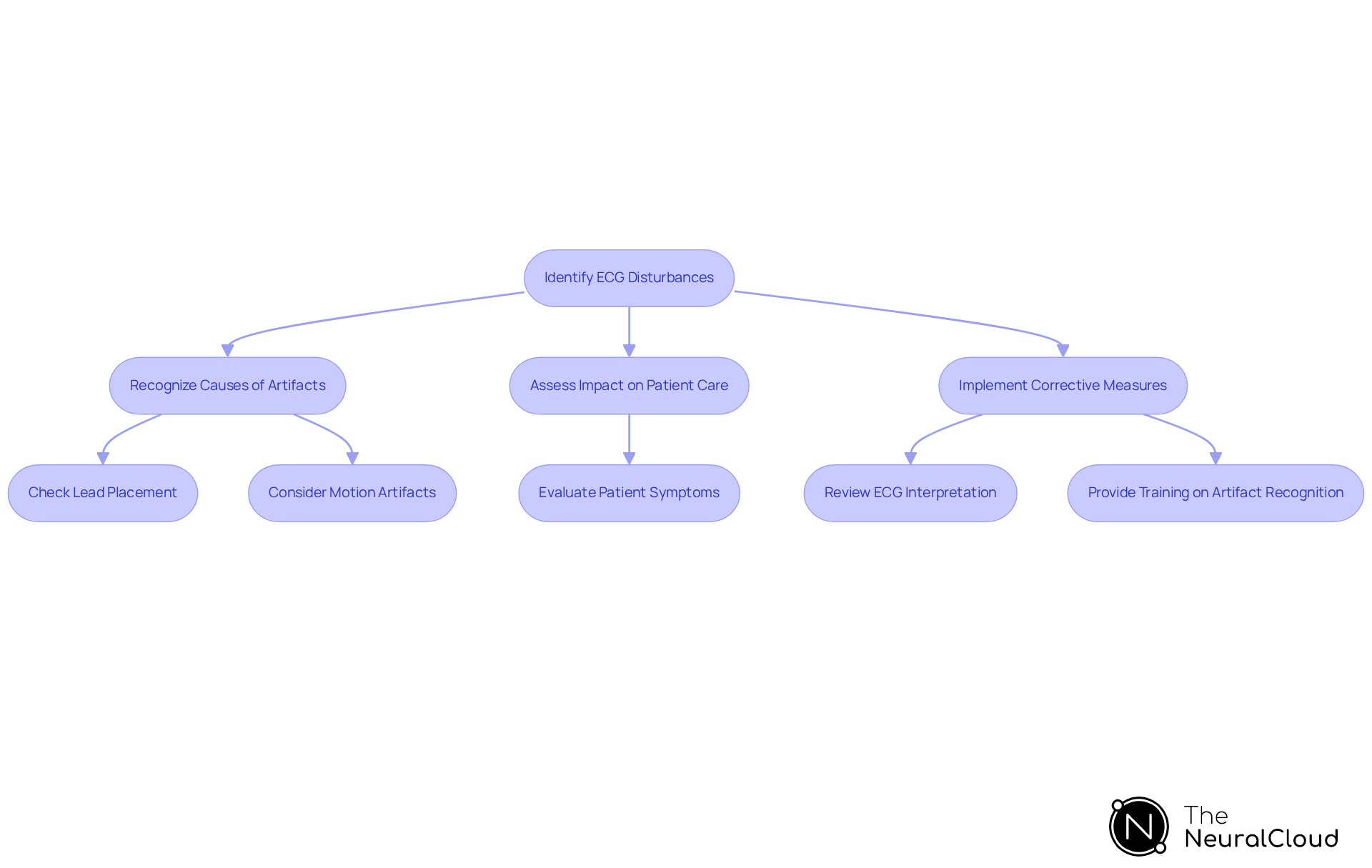
The significant challenges in accurately interpreting cardiac signals may be caused by the ECG artifacts, complicating clinical assessments. These artifacts can be categorized into several types based on their sources:
- Patient-Related Artifacts: These include motion artifacts resulting from tremors, shivering, or even breathing patterns. For example, individuals with neurological conditions, such as Parkinson's disease, may display significant motion artifacts due to involuntary movements, complicating the interpretation of their ECG readings.
- ECG artifacts may be caused by issues such as loose electrodes, broken cables, or malfunctioning ECG machines that introduce noise into the ECG signal. A typical example is a damaged lead wire, which may generate erratic spikes in the reading, resulting in misinterpretation of the individual's cardiac status.
- ECG artifacts may be caused by external electromagnetic interference from devices like cell phones or fluorescent lights, which can create consistent noise patterns. This interference complicates the interpretation of the ECG, as it may mimic or obscure true cardiac signals.
It's crucial for clinicians to understand these categories to quickly identify discrepancies and take corrective action. For example, if a clinician realizes a patient is brushing their teeth, they can avoid misdiagnosing motion distortions as ventricular tachycardia. Additionally, studies show that proper skin preparation and correct electrode placement can reduce equipment-related issues, resulting in clearer ECG readings and better patient outcomes.

Contrast ECG Artifacts with True Arrhythmias: Key Differences
Accurate diagnosis in ECG analysis hinges on distinguishing between genuine arrhythmias and misleading interferences. Key differences include:
- Waveform Characteristics: True arrhythmias typically exhibit consistent patterns in the ECG waveform, while artifacts may present as irregular, jagged lines or sudden spikes. Misreadings by postgraduate year 1 residents can lead to spurious diagnoses of atrial fibrillation, highlighting the importance of waveform analysis. With MaxYield’s advanced noise filtering capabilities, critical data can be identified and labeled even in recordings with high levels of noise, significantly enhancing the accuracy of waveform analysis.
- Clinical Context: Genuine arrhythmias frequently associate with symptoms in individuals, such as palpitations or syncope, while false signals may arise without any clinical signs. In individuals with parkinsonian resting tremors, baseline fluctuations in ECG irregularities can easily be confused with arrhythmias. MaxYield quickly isolates ECG waves from recordings affected by baseline wander and muscle interference. This capability is crucial for thorough assessments and reducing misdiagnosis risk.
- Response to Interventions: Genuine arrhythmias may necessitate prompt medical action, while disturbances often resolve with modifications to the ECG configuration, such as repositioning sensors. For example, ECG artifacts may be caused by the tremors in Parkinson's patients, leading to misdiagnosis. Proper electrode placement can rectify these issues, allowing for accurate interpretation. The evolving algorithm of MaxYield continuously enhances its accuracy and efficiency, ensuring that healthcare professionals can make more informed decisions regarding care.
By understanding these differences and leveraging MaxYield’s capabilities, such as its FDA Class II SaMD clearance-pending status and customizable visualization tool Insight360, healthcare professionals can avoid unnecessary interventions. This ultimately improves diagnostic accuracy and patient outcomes. As Dr. Alan Rabinowitz notes, "MaxYield’s precision rivals human interpretation, making it an invaluable tool in ECG analysis.

Implement Best Practices: Recognizing and Managing ECG Artifacts
To effectively manage ECG artifacts, clinicians must adopt best practices that enhance signal quality and diagnostic accuracy:
- Proper Skin Preparation: Ensure the skin is clean and dry before electrode placement to enhance adhesion and signal quality. Utilizing alcohol swabs can effectively remove oils and dirt, which is crucial for achieving optimal signal integrity. Studies indicate that proper skin preparation can enhance ECG accuracy by up to 70%, underscoring its importance in clinical settings.
- Regular Equipment Maintenance: Conduct routine checks and maintenance of ECG machines and leads to prevent equipment-related issues. This includes replacing worn-out electrodes and ensuring that cables are intact and functioning properly.
- Patient Education: Inform patients about the significance of staying still during the ECG recording to reduce motion distortions. Providing comfort and reassurance can significantly reduce anxiety-related movements, which are common sources of interference.
- Continuous Training: Clinicians should engage in ongoing education regarding the latest techniques for identifying and reducing ECG disturbances. This ensures they remain adept at recognizing potential issues and applying effective solutions.
Utilizing conductive gel with textile electrodes significantly improves data quality, making them a practical alternative to traditional Ag/AgCl electrodes. This practice enhances the overall effectiveness of ECG analysis. By following these best practices, healthcare professionals can significantly decrease the occurrence of disturbances, as ECG artifacts may be caused by the improper handling of equipment, leading to more precise diagnoses and enhanced patient outcomes.
Integrating Neural Cloud Solutions' MaxYield™ platform can enhance ECG analysis by providing advanced noise filtering and wave recognition. This device-agnostic ECG intelligence layer processes data efficiently, addressing challenges such as physiological variability and signal distortions. Identifying different kinds of items, such as Loose Lead Object and Wandering Baseline Disturbance, is crucial for effective management. Case studies have demonstrated that consistent attention to electrode placement and patient engagement can minimize the need for repeat tests, thereby streamlining workflows and enhancing overall diagnostic efficiency. As Dr. Alan Rabinowitz states, "MaxYield™ rivals human interpretation in precision, significantly reducing noise and improving data quality." As Wendy Pearson from the University of Guelph adds, 'ECG artifacts may be caused by the factors that are critical to address, as they can significantly influence the accuracy of the results.'
Additionally, it is important to note that Neural Cloud Solutions is currently pursuing FDA Class II SaMD clearance-pending status, ensuring compliance with regulatory standards. Furthermore, the Insight360 tool transforms MaxYield’s clean ECG data into interactive dashboards and clinical-ready reports, providing a comprehensive view of the technology's benefits. By integrating these practices with advanced technologies like MaxYield™, healthcare professionals can ensure more reliable ECG interpretations and better patient care.

Conclusion
Accurate cardiac assessments hinge on understanding ECG artifacts, which can distort clinical decision-making. Recognizing ECG artifacts can be challenging due to their varied causes, including patient movement and equipment malfunction. By integrating advanced technologies like Neural Cloud Solutions Inc.'s MaxYield™, clinicians can effectively manage these challenges, enhancing the reliability of ECG interpretations even in the presence of noise and distortion.
Throughout this article, we've highlighted key insights, such as:
- The importance of proper electrode placement
- The need for continuous training
- Implementing best practices to minimize artifacts
The distinction between true arrhythmias and misleading signals is crucial, as misinterpretations can lead to unnecessary interventions. Leveraging tools like MaxYield™, which offers advanced noise filtering and wave recognition capabilities, clinicians can significantly reduce the risk of misdiagnosis and enhance the quality of patient care.
Ultimately, addressing ECG artifacts is not just a technical challenge; it is a vital component of delivering effective healthcare. When healthcare professionals prioritize education, maintain equipment, and engage patients, they can achieve more reliable ECG interpretations. By embracing innovative solutions like MaxYield™, healthcare professionals can transform cardiac diagnostics, ultimately improving patient health outcomes across Canada.
Frequently Asked Questions
What are ECG artifacts?
ECG artifacts are distortions or anomalies in the electrocardiogram that do not originate from the heart's electrical activity. They can be caused by factors such as individual movement, equipment malfunction, or external electromagnetic interference.
What are some common examples of ECG artifacts?
Common examples of ECG artifacts include: - Loose Lead Artifact: Occurs when electrodes are not securely attached to the skin, leading to erratic signals. - Motion Artifact: Caused by patient movement, such as tremors or shivering, which can obscure the ECG waveform. - Electrical Interference: Results from nearby electronic devices, producing noise patterns that can mimic serious heart conditions.
How do ECG artifacts affect clinical decision-making?
ECG artifacts can lead to misinterpretations that adversely affect patient care, potentially resulting in unnecessary treatments and complicating patient management. For example, a loose lead may mimic atrial fibrillation, prompting unwarranted interventions.
What is the misdiagnosis rate associated with ECG artifacts?
Research indicates that misinterpretations can lead to a misdiagnosis rate of 14.3% among medical trainees and 45% with automated ECG systems.
How can proper electrode positioning impact ECG analysis?
Proper electrode positioning and skin preparation can reduce disturbances by up to 70%, ensuring more reliable cardiac data for informed decision-making.
What role does Neural Cloud Solutions Inc.'s MaxYield™ play in addressing ECG artifacts?
MaxYield™ identifies and labels critical data in ECG recordings, even in the presence of high levels of noise and distortion. It rapidly isolates ECG waves affected by baseline wander, movement, and muscle interference, significantly enhancing the efficiency of ECG analysis.
What is the significance of understanding ECG artifacts for clinicians?
Understanding and recognizing ECG artifacts is crucial for ensuring safety and providing effective care. Clinicians must be trained to identify these anomalies to prevent misdiagnosis and ensure precise management of patients.
What expert endorsements support the effectiveness of MaxYield™?
Experts such as Dr. Alan Rabinowitz, Dr. Brett Heilbron, and Dr. Marc W. Deyell endorse MaxYield™ for its accuracy, which rivals human interpretation, and its significant noise reduction benefits, ultimately improving patient outcomes.
List of Sources
- Define ECG Artifacts: Key Characteristics and Examples
- theneuralcloud.com (https://theneuralcloud.com/post/understanding-artefact-on-ecg-types-impact-and-reduction-strategies)
- Main artifacts in electrocardiography - PMC (https://pmc.ncbi.nlm.nih.gov/articles/PMC6931710)
- New Clinical Trial Finds Human Oversight ECG Monitors Outperform AI-Dependent Monitoring - HRS (https://hrsonline.org/news/human-oversight-ecg-monitors-outperform-ai-dependent-monitoring)
- Robust and Accurate Anomaly Detection in ECG Artifacts Using Time Series Motif Discovery - PMC (https://pmc.ncbi.nlm.nih.gov/articles/PMC4320938)
- Study Shows AI-Powered ECG Could Help Patients Requiring Lifelong Heart Monitoring (https://dicardiology.com/content/study-shows-ai-powered-ecg-could-help-patients-requiring-lifelong-heart-monitoring)
- Explore Clinical Significance: Why ECG Artifacts Matter
- Guide to Understanding ECG Artifact | ACLS Training Blog (https://aclsmedicaltraining.com/blog/guide-to-understanding-ecg-artifact)
- theneuralcloud.com (https://theneuralcloud.com/post/understanding-artefact-on-ecg-types-impact-and-reduction-strategies)
- Main artifacts in electrocardiography - PMC (https://pmc.ncbi.nlm.nih.gov/articles/PMC6931710)
- Identify Types of ECG Artifacts: Common Examples and Their Causes
- Main artifacts in electrocardiography - PMC (https://pmc.ncbi.nlm.nih.gov/articles/PMC6931710)
- Guide to Understanding ECG Artifact | ACLS Training Blog (https://aclsmedicaltraining.com/blog/guide-to-understanding-ecg-artifact)
- Contrast ECG Artifacts with True Arrhythmias: Key Differences
- Electrocardiographic artifact potentially misleading to the wrong management (https://atm.amegroups.org/article/view/17474/html)
- Electrocardiographic artefacts mimicking atrial tachycardia resulted in unnecessary diagnostic and therapeutic measures - PMC (https://pmc.ncbi.nlm.nih.gov/articles/PMC3604613)
- Main artifacts in electrocardiography - PMC (https://pmc.ncbi.nlm.nih.gov/articles/PMC6931710)
- Arrhythmias - StatPearls - NCBI Bookshelf (https://ncbi.nlm.nih.gov/books/NBK558923)
- Electrocardiography artifact: what you do not know, you do not recognize (https://amjmed.com/article/S0002-9343(01)00637-4/fulltext)
- Implement Best Practices: Recognizing and Managing ECG Artifacts
- The impact of skin preparation method on electrocardiogram quality in horses - PMC (https://pmc.ncbi.nlm.nih.gov/articles/PMC10880388)
- Best Practices for ECG Lead Placement and Patient Preparation (https://nasiff.com/best-practices-for-ecg-lead-placement-and-patient-preparation)
- theneuralcloud.com (https://theneuralcloud.com/post/master-ecg-artefacts-strategies-for-accurate-analysis-and-mitigation)