Introduction
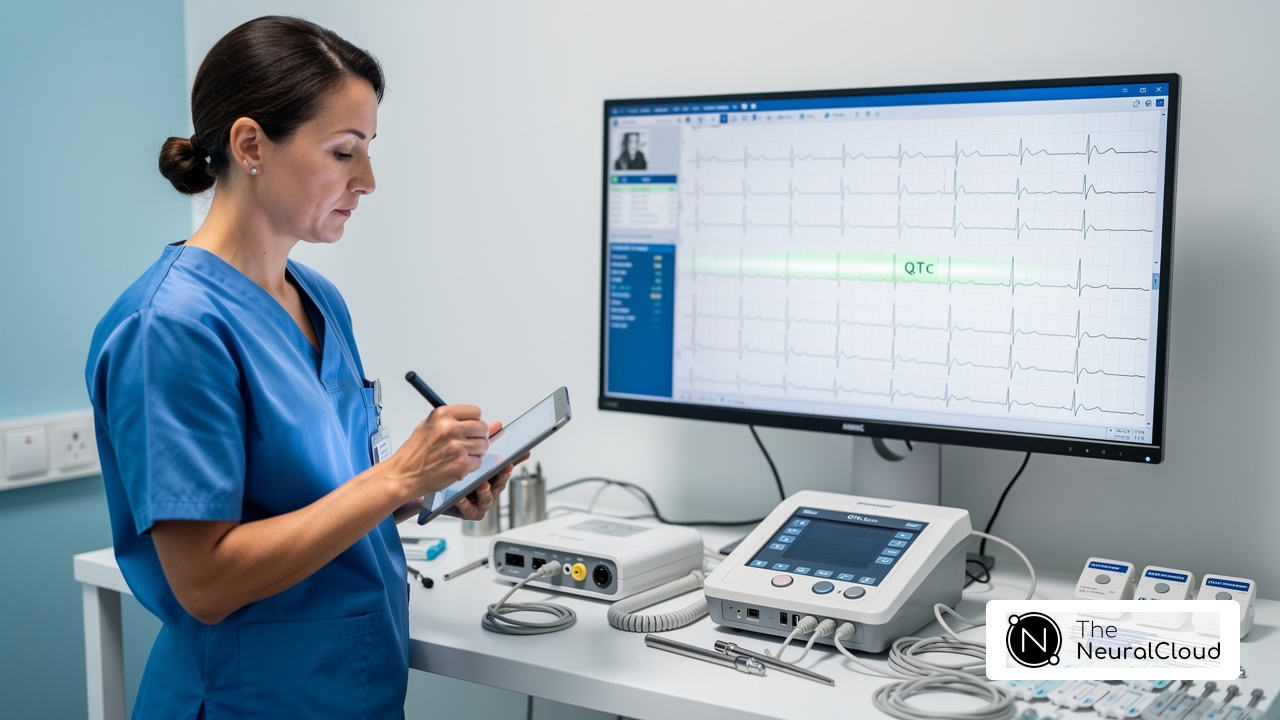
Understanding the nuances of tall T waves in hyperkalemia is crucial for healthcare professionals. These ECG changes serve as critical indicators of elevated potassium levels and potential cardiac dysfunction. The challenges in ECG analysis can complicate the timely detection of such life-threatening conditions. This article explores the physiological mechanisms behind these distinctive T wave alterations, providing insights that can enhance ECG analysis.
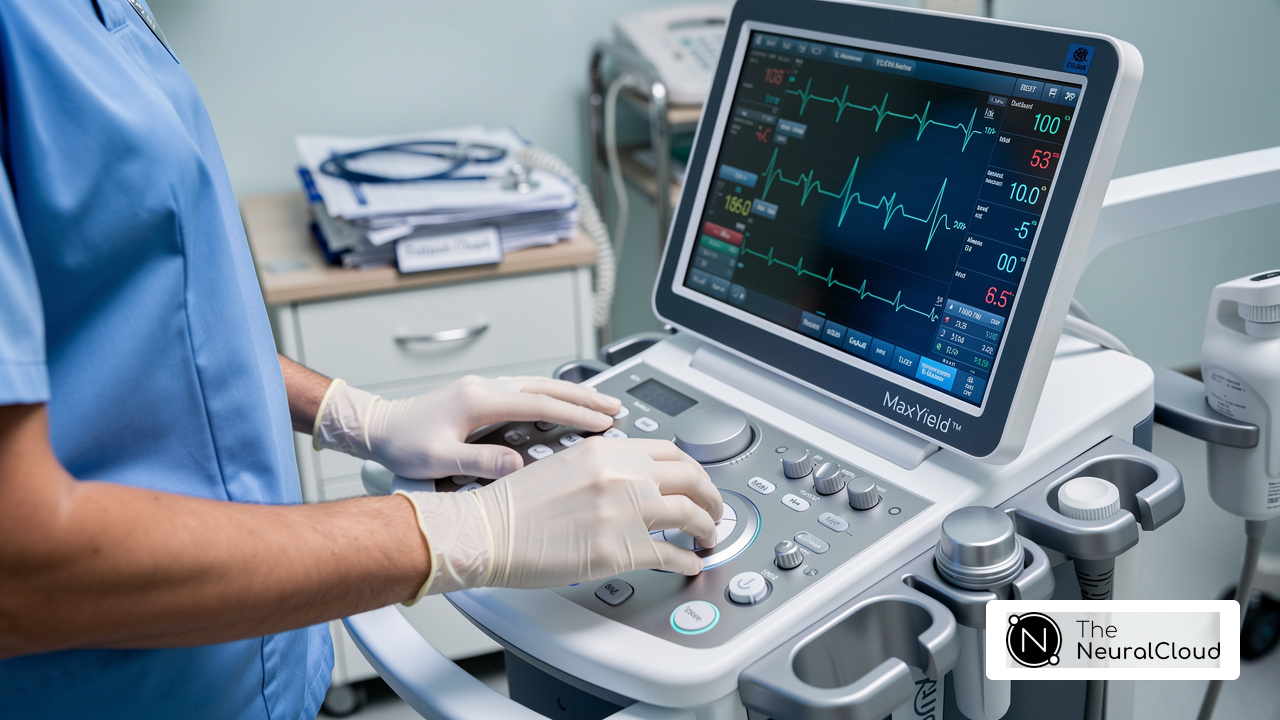
The MaxYield™ platform offers features designed to improve the accuracy of ECG readings. By leveraging advanced algorithms, it enhances the detection of tall T waves, allowing for quicker identification of hyperkalemia. This not only streamlines the analysis process but also empowers healthcare professionals to make informed decisions swiftly. The benefits of utilizing MaxYield™ extend beyond mere detection; they include improved patient outcomes and reduced risks associated with delayed diagnosis.
However, the question remains: how can technology be effectively leveraged to improve the detection and management of this condition? By integrating tools like MaxYield™, healthcare providers can enhance their diagnostic capabilities, ensuring that critical changes in ECG readings are not overlooked. This proactive approach to ECG analysis can significantly impact patient care, making it essential for professionals to stay informed about such advancements.
Define Tall T Waves in Hyperkalemia: Physiological Mechanisms
Tall T waves hyperkalemia are often described as peaked or tented and are critical indicators on an ECG. These distinctive changes arise from alterations in the cardiac action potential due to elevated serum potassium levels. As potassium levels increase, the resting membrane potential becomes less negative, enhancing the excitability of cardiac myocytes. This physiological change results in a more swift and distinct repolarization phase, which is reflected in the morphology of the T formations, typically appearing tall, narrow-based, and symmetric. Clinically, tall T waves hyperkalemia are most prominent when serum potassium exceeds 5.5 mEq/L.
Research indicates that quicker repolarization, prompted by increased extracellular potassium, results in tall T waves hyperkalemia, especially noticeable in precordial leads V2-V4. Identifying these ECG changes is crucial for early diagnosis and management of elevated potassium levels, as they signify one of the first indications of altered cardiac function. This understanding is vital for developers aiming to create algorithms that accurately identify and classify these ECG changes, ultimately enhancing clinical decision-making.
The MaxYield™ platform from Neural Cloud Solutions addresses the challenges in ECG analysis by automating ECG labeling and data extraction. Key features of MaxYield™ include:
- Automated ECG labeling: Streamlines the identification of critical changes in ECG signals.
- Beat-by-beat analysis: Provides detailed insights into each heartbeat, enhancing accuracy.
- Isolation of key features: Focuses on the most relevant data, allowing for efficient algorithm refinement.
These features translate into significant advantages for healthcare professionals. By leveraging MaxYield™, developers can focus on refining algorithms that detect critical changes while reducing operational costs associated with manual data processing. As noted by Dr. Christian Jons, "There is some evidence from observational studies to suggest that low plasma potassium levels are associated with increased risk of dangerous alterations in heart rhythms and that potassium levels in the upper normal level have protective effects."
Integrating wearable technology with MaxYield™ can further enhance the efficiency of ECG analysis. This combination improves the accuracy of clinical insights and ultimately supports better patient outcomes.

Identify ECG Changes: Recognizing Tall T Waves in Hyperkalemia
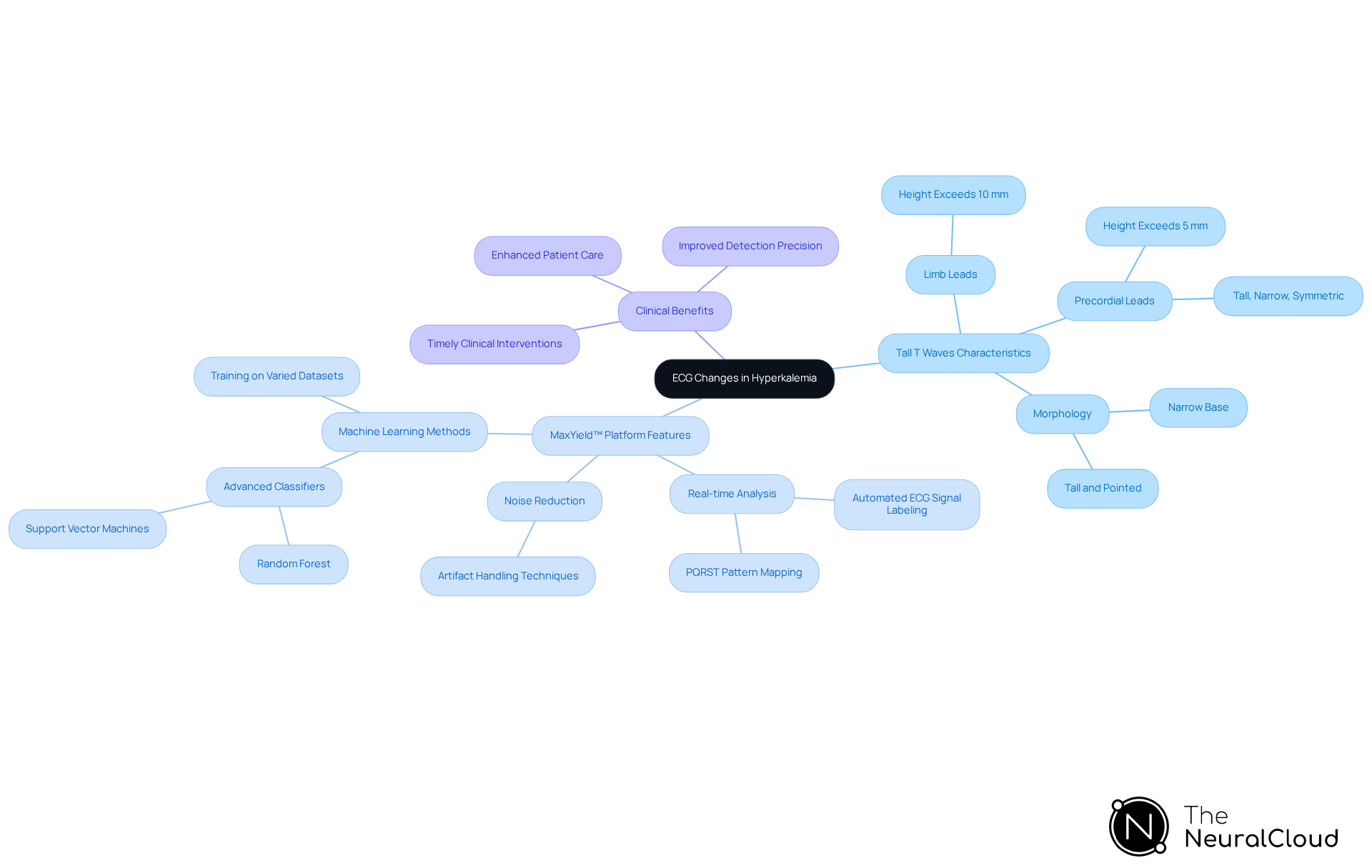
Identifying tall T waves hyperkalemia presents challenges in ECG analysis. Developers must focus on specific ECG features to enhance detection. T deflections typically manifest in the precordial leads (V2-V6) and are characterized by their tall, narrow, and pointed morphology. In limb leads, the height of the T deflection often exceeds 10 mm, while in precordial leads, it can surpass 5 mm. The narrow base of the T signal further distinguishes it from other abnormalities.
The MaxYield™ platform from Neural Cloud Solutions addresses these challenges by implementing algorithms that analyze these features in real-time. This capability is crucial for the swift recognition of elevated potassium levels. The platform automates ECG signal labeling, accurately mapping the PQRST patterns and providing durations and intervals. By leveraging advanced neural networks, it adapts to physiological variability, ensuring clear interpretation of diverse ECG patterns.
Additionally, the MaxYield™ platform incorporates advanced noise reduction and artifact handling techniques, essential for maintaining signal integrity. Machine learning methods enhance detection precision by training models on a varied dataset of ECGs that display different levels of elevated potassium. Current best practices involve utilizing advanced classifiers, such as random forests and support vector machines, to improve the accuracy of detecting tall T waves hyperkalemia.
In summary, the MaxYield™ platform not only streamlines ECG analysis but also ensures timely clinical interventions. By providing healthcare professionals with accurate and reliable tools, it enhances patient care and outcomes.
Explore Clinical Significance: Risks and Interventions for Tall T Waves
Tall T waves hyperkalemia in elevated potassium levels pose a significant clinical risk, as they are associated with life-threatening arrhythmias, including ventricular fibrillation and asystole. The incidence of arrhythmias in patients with tall T waves hyperkalemia is notably high; studies show that severe hyperkalemia can lead to fatal outcomes if not promptly addressed. Therefore, immediate intervention is crucial upon recognizing elevated T deflections on an ECG.
Standard treatment protocols typically involve:
- Administering calcium gluconate to stabilize cardiac myocyte membranes
- Following with insulin and glucose to facilitate the intracellular shift of potassium
To enhance clinical response, ECG analysis tool creators should focus on establishing alert systems that notify clinicians when elevated T signals are detected. This proactive approach enables timely interventions, which can be lifesaving.
Integrating treatment guidelines within the software can significantly improve clinical decision-making, ensuring healthcare providers have immediate access to essential information for swift action. The MaxYield™ platform by Neural Cloud Solutions exemplifies this integration. By pairing wearable technology with advanced ECG analysis, developers can enhance their tools, leveraging automated labeling and data extraction to streamline processes and reduce operational costs.
The advanced AI technology of MaxYield™ transforms lengthy and noisy ECG recordings into clean, crisp signals. This capability allows for more precise detection of critical conditions, such as tall T waves hyperkalemia due to elevated potassium levels. The benefits of using MaxYield™ include improved accuracy in diagnosis, faster response times for healthcare professionals, and ultimately, better patient outcomes.

Integrate Technology: Enhancing ECG Analysis with Advanced Tools
Enhancing ECG analysis presents several challenges, particularly in accurately detecting tall T waves. To address these issues, developers should prioritize integrating advanced technologies such as artificial intelligence (AI) and machine learning. These innovations significantly improve the accuracy of tall T wave detection by analyzing extensive datasets and identifying patterns that may elude human interpreters.
One of the standout features of these technologies is their ability to learn from historical ECG readings. For instance, deep learning algorithms can enhance their capacity to identify subtle changes suggestive of elevated potassium levels. Recent advancements in machine learning have shown that AI-enabled ECG systems can achieve impressive accuracy rates. Tools like AccurKardia's AK+ Guard, for example, demonstrated 89% accuracy in detecting moderate-to-severe hyperkalemia in clinical studies involving over 20,000 patients.
Moreover, incorporating real-time data processing capabilities allows for immediate feedback to clinicians. This feature facilitates quicker decision-making and timely interventions, ultimately benefiting patient care. Developers should also consider forming partnerships with healthcare institutions to validate their algorithms against clinical outcomes. This collaboration ensures that their tools not only detect tall T waves but also contribute to improved patient care and outcomes.

Conclusion
Recognizing the significance of tall T waves in hyperkalemia is crucial for enhancing clinical outcomes. These ECG changes act as vital indicators of elevated potassium levels, reflecting the physiological mechanisms that can lead to severe cardiac complications. By understanding how these alterations appear on an ECG, developers can create more effective diagnostic tools, ultimately improving patient care.
The article explores the physiological basis of tall T waves, emphasizing their correlation with increased serum potassium levels and the associated risks of life-threatening arrhythmias. The MaxYield™ platform emerges as a solution that automates ECG analysis, enabling the rapid identification of these critical changes. By integrating advanced technologies like AI and machine learning, developers can refine their algorithms to ensure accurate detection and timely interventions, which are essential in clinical settings.
Given the potential dangers posed by hyperkalemia, healthcare professionals must leverage innovative tools like MaxYield™. By adopting these advanced ECG analysis solutions, clinicians can enhance their diagnostic capabilities, leading to quicker and more effective treatment for patients at risk. The integration of technology in ECG interpretation not only streamlines processes but also significantly improves the overall quality of care, highlighting the importance of staying at the forefront of medical advancements.
Frequently Asked Questions
What are tall T waves in hyperkalemia?
Tall T waves in hyperkalemia are described as peaked or tented formations on an ECG, indicating alterations in the cardiac action potential due to elevated serum potassium levels.
How do tall T waves develop in hyperkalemia?
As potassium levels increase, the resting membrane potential becomes less negative, enhancing the excitability of cardiac myocytes. This leads to a quicker and more distinct repolarization phase, resulting in tall, narrow-based, and symmetric T wave formations.
At what serum potassium level are tall T waves most prominent?
Tall T waves are most prominent when serum potassium exceeds 5.5 mEq/L.
Why is identifying tall T waves on an ECG important?
Identifying tall T waves is crucial for early diagnosis and management of elevated potassium levels, as they signify one of the first indications of altered cardiac function.
What is the significance of precordial leads V2-V4 in relation to tall T waves?
Tall T waves are especially noticeable in precordial leads V2-V4, making these leads important for detecting changes associated with hyperkalemia.
How does the MaxYield™ platform assist in ECG analysis?
The MaxYield™ platform automates ECG labeling, provides beat-by-beat analysis, and isolates key features, streamlining the identification of critical changes in ECG signals.
What are the advantages of using MaxYield™ for healthcare professionals?
MaxYield™ allows developers to focus on refining algorithms that detect critical changes while reducing operational costs associated with manual data processing.
How can wearable technology enhance ECG analysis when integrated with MaxYield™?
Integrating wearable technology with MaxYield™ improves the accuracy of clinical insights and supports better patient outcomes by enhancing the efficiency of ECG analysis.
List of Sources
- Define Tall T Waves in Hyperkalemia: Physiological Mechanisms
- Why T Waves Peak in Hyperkalemia (https://ecglectures.com/blog/peaked-t-waves-in-hyperkalemia)
- Increasing potassium levels improve outcomes in patients at high risk of ventricular arrhythmia (https://escardio.org/news/press/press-releases/Increasing-potassium-levels-improve-outcomes-in-patients-at-high-risk-of-ventricular-arrhythmia)
- hcplive.com (https://hcplive.com/view/electrophysiologic_basis)
- Hyperkalemia ECG Review (https://healio.com/cardiology/learn-the-heart/ecg-review/ecg-topic-reviews-and-criteria/hyperkalemia-review)
- Identify ECG Changes: Recognizing Tall T Waves in Hyperkalemia
- Hyperkalemia-Peaked T waves and ECG Recognition - Medcram Blog (https://blog.medcram.com/cme-courses/hyperkalemia-peaked-t-waves-and-ecg-recognition)
- Why T Waves Peak in Hyperkalemia (https://ecglectures.com/blog/peaked-t-waves-in-hyperkalemia)
- Hyperkalemia ECG Review (https://healio.com/cardiology/learn-the-heart/ecg-review/ecg-topic-reviews-and-criteria/hyperkalemia-review)
- Machine learning for ECG diagnosis and risk stratification of occlusion myocardial infarction - Nature Medicine (https://nature.com/articles/s41591-023-02396-3)
- Hyperkalemia ECG Changes: Peaked T Waves (https://powerfulmedical.com/blog/hyperkalemia-ecg-critical-changes)
- Explore Clinical Significance: Risks and Interventions for Tall T Waves
- Increasing potassium levels improve outcomes in patients at high risk of ventricular arrhythmia (https://escardio.org/news/press/press-releases/Increasing-potassium-levels-improve-outcomes-in-patients-at-high-risk-of-ventricular-arrhythmia)
- Hyperkalemia ECG Changes: Peaked T Waves (https://powerfulmedical.com/blog/hyperkalemia-ecg-critical-changes)
- Client Challenge (https://nature.com/articles/s41467-025-66394-4)
- Severe Hyperkalemia With Cardiac Conduction Abnormalities in a 92-Year-Old Woman: First Reported Case in Illinois, United States - PMC (https://pmc.ncbi.nlm.nih.gov/articles/PMC12664752)
- Integrate Technology: Enhancing ECG Analysis with Advanced Tools
- businesswire.com (https://businesswire.com/news/home/20250508600716/en/AccurKardias-AccurECG-Named-Best-New-Technology-Solution-for-ECG-in-9th-Annual-MedTech-Breakthrough-Awards-Program)
- med-techinsights.com (https://med-techinsights.com/2025/05/13/accurkardia-accurecg-named-best-new-technology-solution-for-ecg)
- Client Challenge (https://nature.com/articles/s41467-025-66394-4)
- biospace.com (https://biospace.com/press-releases/accurkardia-announces-clinical-pilot-study-of-its-ak-guard-ecg-based-ai-powered-hyperkalemia-detection-software)