Introduction
The electrocardiogram (ECG) serves as a crucial tool in cardiac health, offering essential insights into the heart's electrical activity. For health tech developers, understanding the complexities of ECG technology is not just an academic exercise; it paves the way for innovative solutions that can revolutionize patient care and improve diagnostic accuracy. As the healthcare landscape evolves with advancements in AI and telemedicine, a pressing challenge arises: how can developers effectively leverage these technologies to enhance ECG analysis and improve patient outcomes amidst growing complexity?
Define ECG: The Basics of Electrocardiography
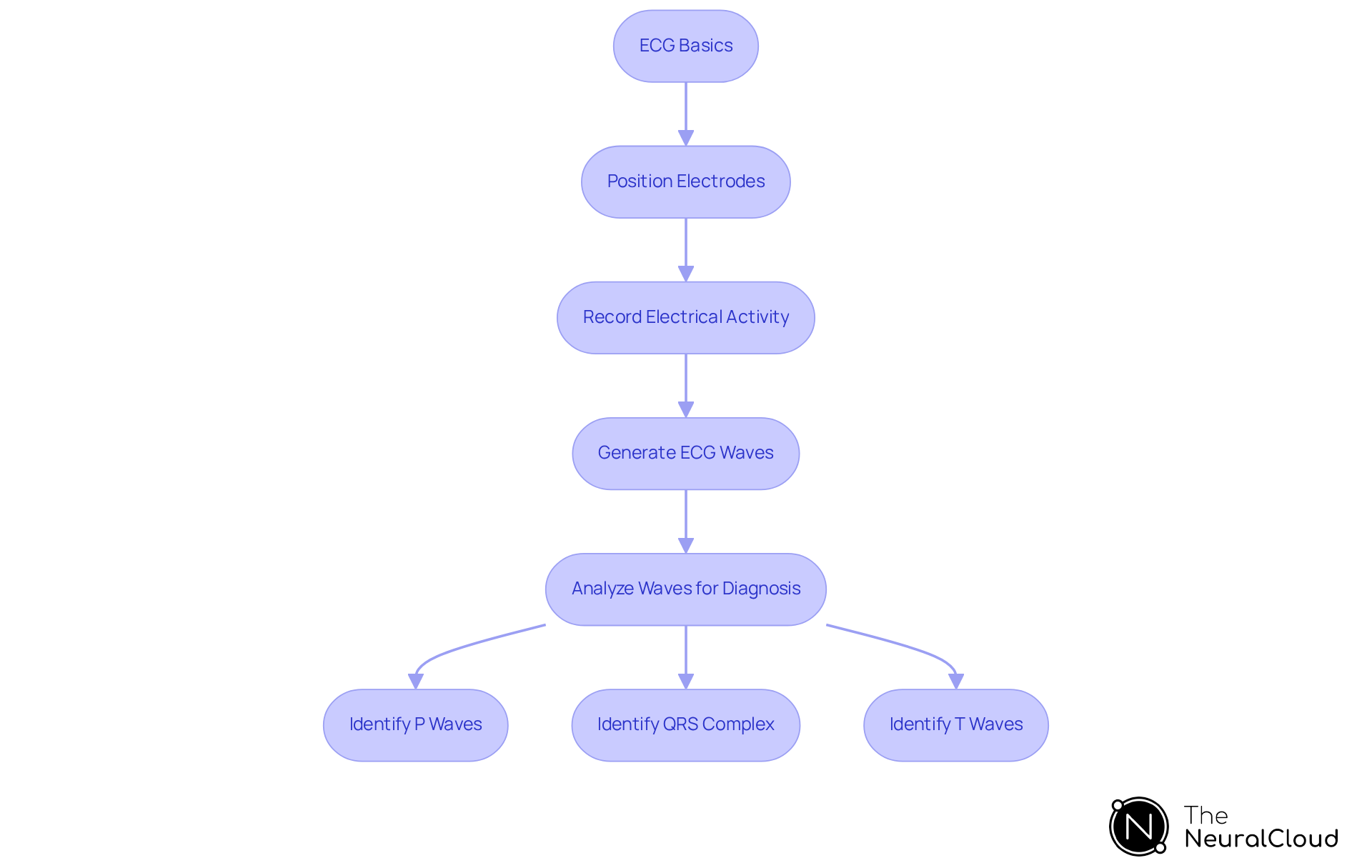
El ECG, que es una herramienta de diagnóstico médico crucial, registra la actividad eléctrica del corazón a lo largo del tiempo. El ECG implica posicionar electrodos en la piel para capturar las señales eléctricas del órgano, resultando en una representación gráfica conocida como electrocardiograma. Esta forma de onda proporciona información esencial sobre el ritmo, tamaño y posición del corazón, lo que lo hace indispensable para diagnosticar diversas condiciones. Típicamente, un ECG se muestra como una serie de ondas, incluyendo ondas P, complejos QRS y ondas T, cada una representando diferentes fases del ciclo eléctrico del corazón.
Globalmente, aproximadamente 400 millones de ECG se realizan cada año, destacando la aplicación generalizada del método y su papel crítico en los diagnósticos. La capacidad de analizar estas señales de manera eficiente es vital para los desarrolladores de tecnología de salud enfocados en innovar soluciones de diagnóstico. A medida que continúan surgiendo avances en la tecnología médica, la integración de IA y aprendizaje automático, como lo demuestra Neural Cloud Solutions, está lista para mejorar la precisión y eficiencia del análisis. Esta tecnología utiliza procesamiento y etiquetado automatizado para aclarar las señales del ECG, recuperando efectivamente secciones previamente oscurecidas de grabaciones largas de Holter, 1-Lead y monitores de parche. Esta innovación aborda desafíos como la variabilidad fisiológica y los artefactos, permitiendo a los profesionales de la salud tomar decisiones informadas basadas en información cardíaca confiable.
Los cardiólogos líderes enfatizan la importancia del ECG en los diagnósticos, destacando su capacidad para revelar anomalías estructurales que de otro modo podrían pasar desapercibidas. El Dr. Pierre Elias, Director Médico de Inteligencia Artificial en NewYork-Presbyterian, afirma: "Usando nuestras innovaciones, podríamos convertir los estimados 400 millones de ECG que se realizarán en todo el mundo este año en 400 millones de oportunidades para detectar enfermedades cardíacas estructurales y potencialmente ofrecer tratamientos que salvan vidas en el momento más oportuno." Esto resalta la necesidad de innovación continua en la tecnología de salud, como los algoritmos adaptativos de análisis, que evolucionan con cada uso para mejorar los resultados de los pacientes y optimizar los flujos de trabajo clínicos. Además, abordar desafíos como el ruido y los artefactos en el ECG es crucial para mejorar la fiabilidad de los diagnósticos.
Contextualize ECG: Importance in Cardiac Health Monitoring
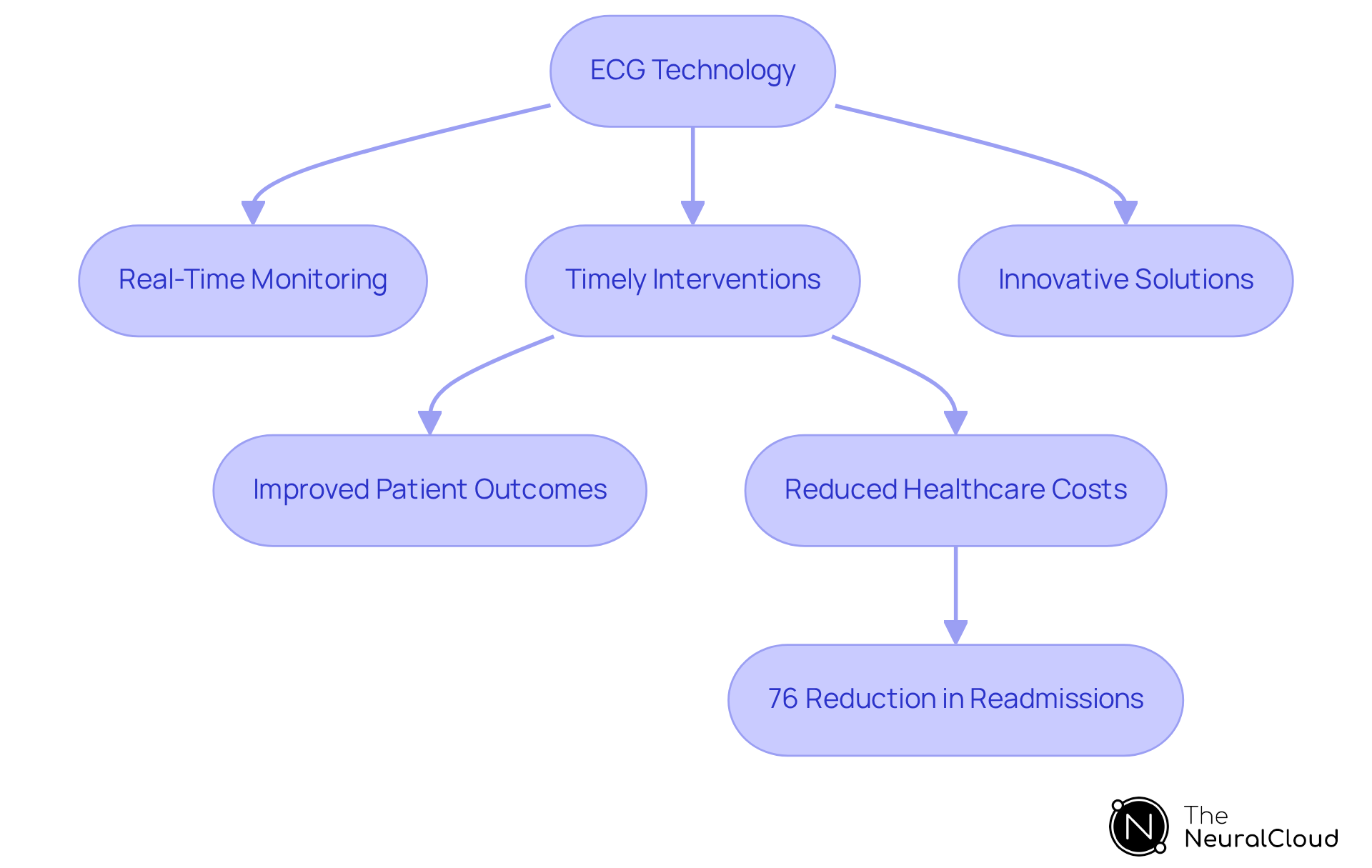
The electrocardiogram, or ECG, serves as a cornerstone in cardiac health monitoring by providing real-time insights into various conditions such as arrhythmias and myocardial infarctions. For health tech developers, understanding what ECG is and its pivotal role in patient care is essential. Accurate analysis of ECG data enables timely interventions, significantly improving patient outcomes and reducing healthcare costs.
With the increasing adoption of telemedicine and remote patient monitoring (RPM), there is a heightened demand for innovative solutions, specifically regarding ECG technology, that can seamlessly integrate into healthcare systems and mobile applications. Research indicates that RPM programs employing ECG methods can lead to a reduction in hospital readmissions, underscoring the effectiveness of remote monitoring in enhancing patient care.
Furthermore, the market is expected to reach USD 4.07 billion by 2030, propelled by the rising prevalence of chronic diseases and an aging population. Consequently, advancing sophisticated methods related to ECG technology is not only timely but crucial for improving healthcare delivery.
Trace the Origin: Historical Development of ECG Technology
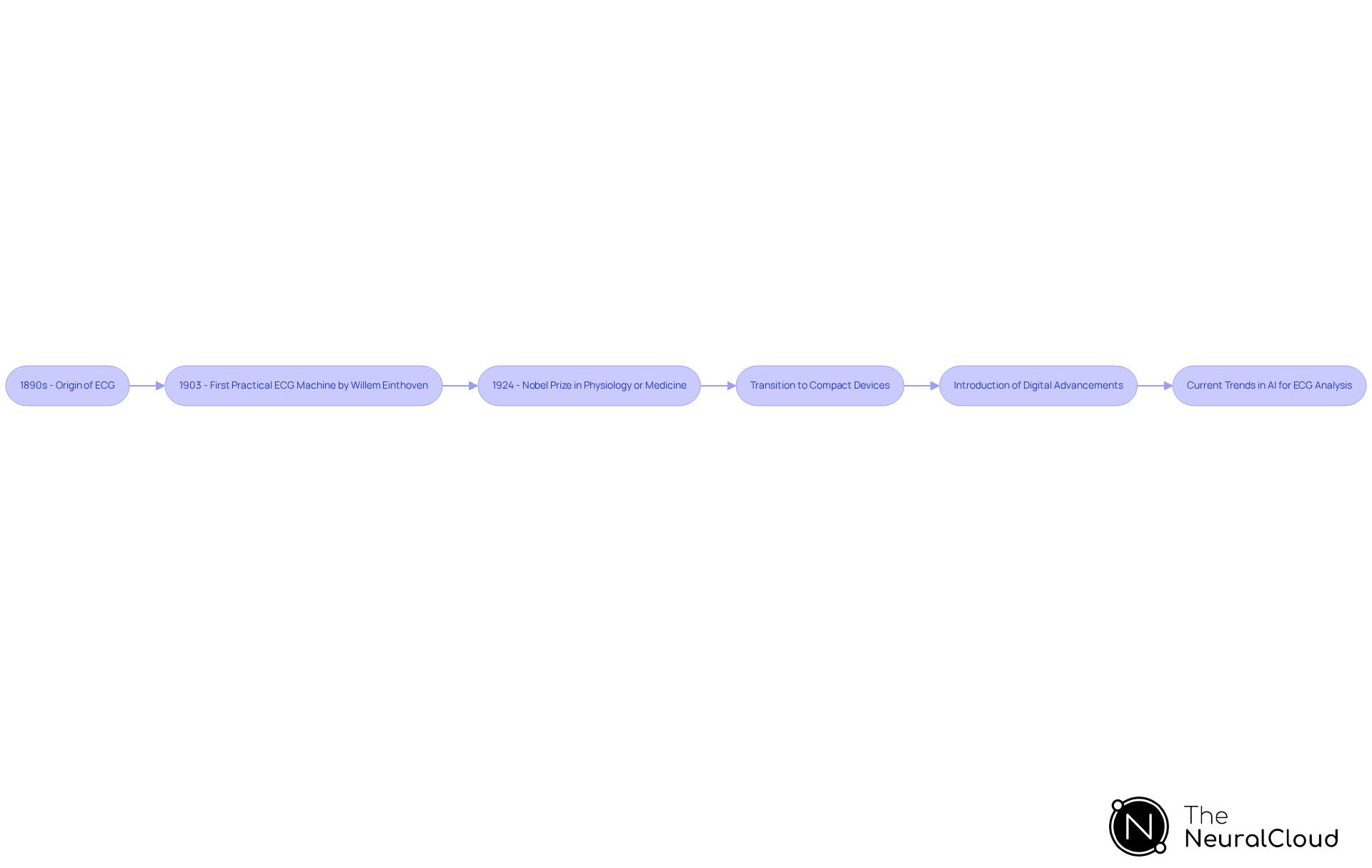
The origins of electrocardiography, which is also referred to as electrocardiogram, trace back to the late 19th century, marked by the pioneering work of Willem Einthoven, a Dutch physician who developed the first practical ECG machine in 1903. This significant advancement laid the foundation for contemporary cardiac monitoring, culminating in Einthoven receiving the Nobel Prize in Physiology or Medicine in 1924.
Over the decades, ECG technology has undergone remarkable evolution, transitioning from bulky machines to compact, portable devices. The introduction of digital advancements and innovations has further revolutionized cardiac diagnostics, allowing for quicker and more precise interpretations.
Understanding this historical context is essential for health tech developers, as it underscores the trajectory of innovation and the immense potential for future developments, particularly in patient care.
Identify Key Components: Understanding ECG Waveforms and Intervals
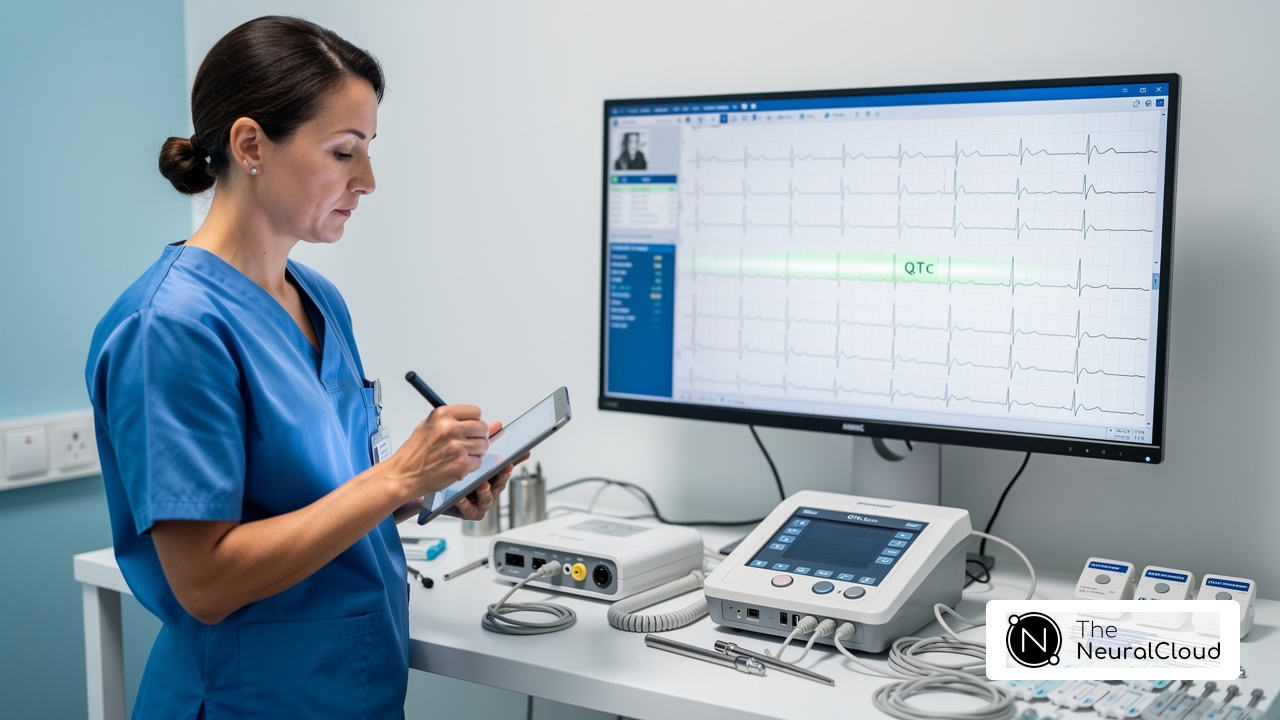
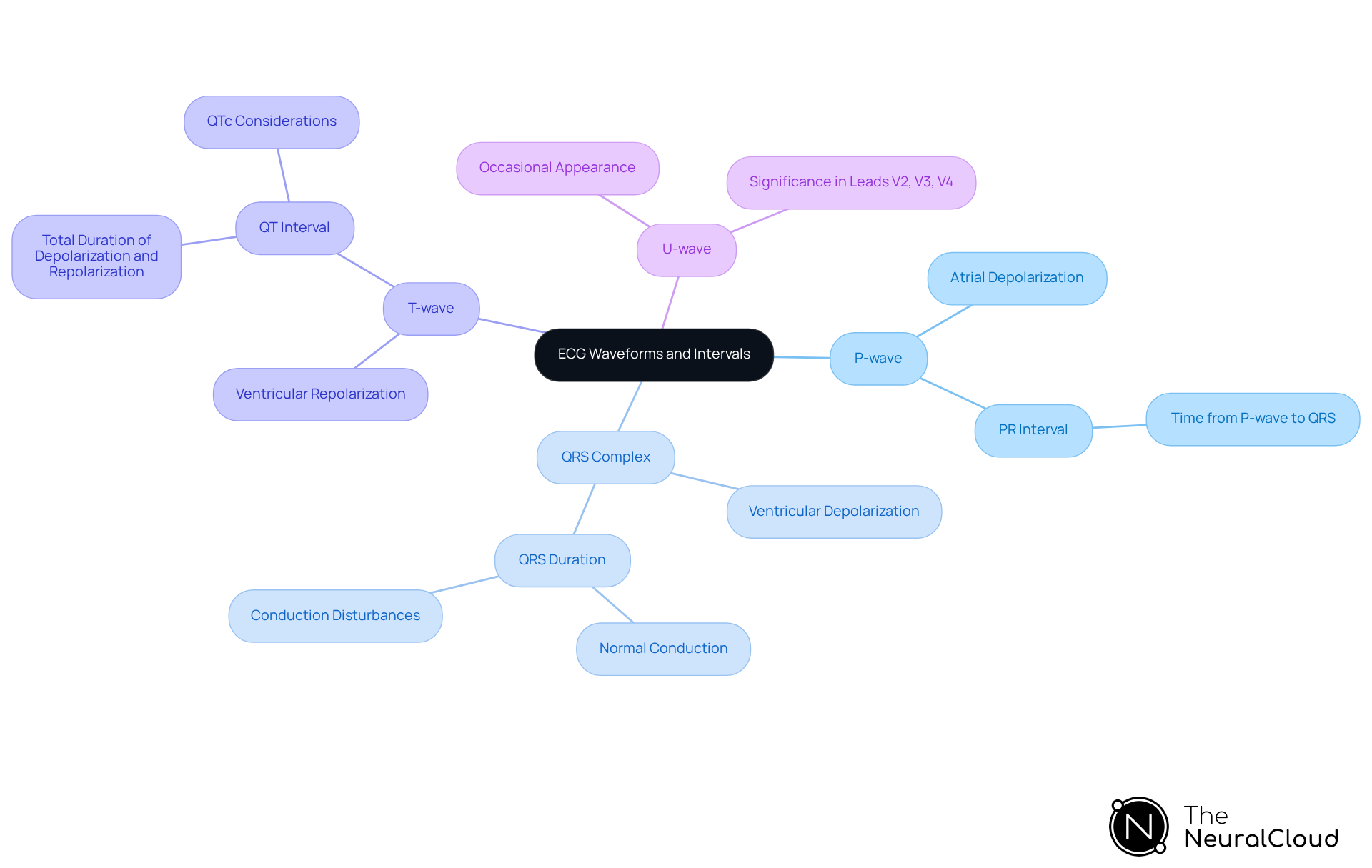
An ECG waveform comprises several components: the P-wave, QRS complex, and T-wave. The P-wave signifies atrial depolarization, the QRS complex indicates ventricular depolarization, and the T-wave represents ventricular repolarization. Each component offers critical insights into the heart's electrical activity and overall health. Additionally, intervals such as the PR interval and QT interval are vital for evaluating cardiac function. For instance, the QRS duration reflects the time taken for ventricular depolarization; shorter durations suggest normal conduction, while wider durations may indicate potential conduction disturbances. Understanding these intervals, which relates to what ECG data represents, is crucial for diagnosis, as a prolonged QT interval can lead to electrical instability, increasing the risk of lethal arrhythmias. Furthermore, the U-wave, which appears occasionally after the T-wave, is important for a complete understanding of cardiac health.
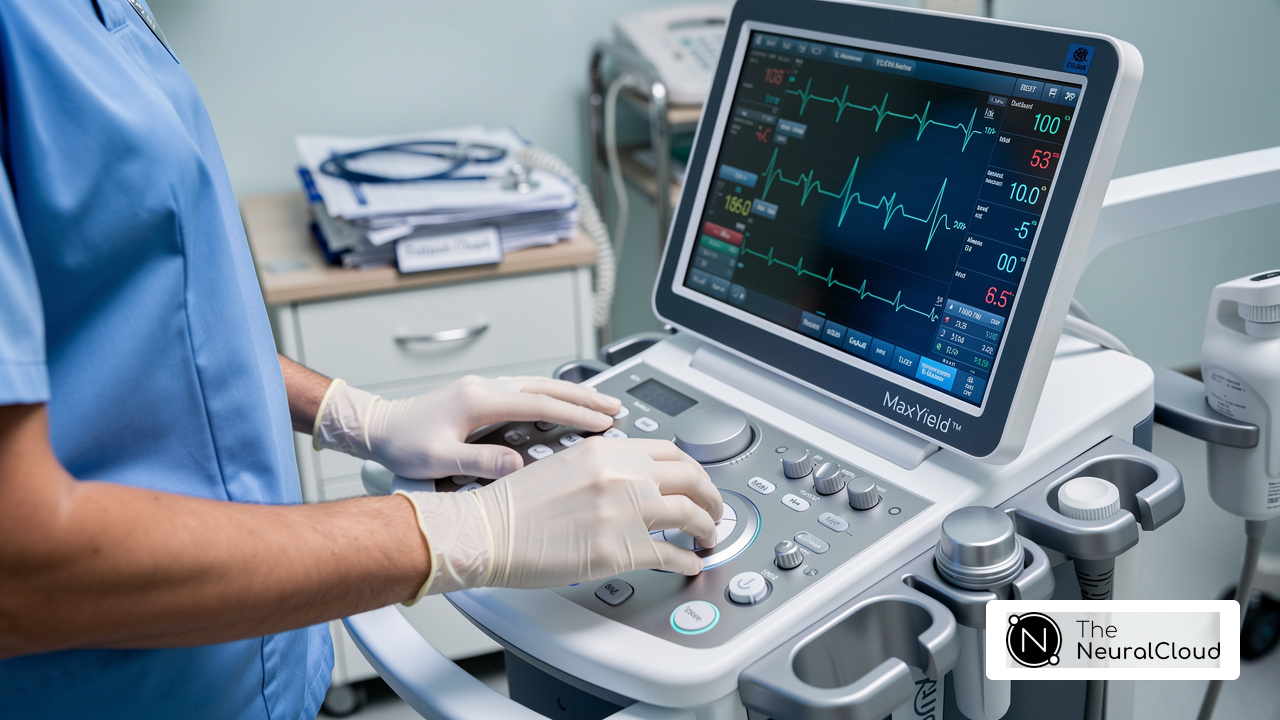
Neural Cloud Solutions' MaxYield™ platform revolutionizes ECG analysis by employing advanced and distinct wave recognition capabilities. This technology enables rapid isolation of ECG waves from recordings compromised by baseline wander, movement, and muscle artifacts. Health tech developers can utilize MaxYield™ to salvage previously obscured sections of lengthy Holter, 1-Lead, and patch monitor recordings, enhancing the clarity and efficiency of ECG interpretation. Mastering these components is essential for creating algorithms that accurately analyze and interpret ECG data, ultimately improving diagnostic tools and patient care. Recent studies underscore the importance of these intervals, demonstrating that knowledge of ECG waveforms is fundamental for effective interpretation and timely management of cardiac conditions. As one expert noted, 'Mastery of these elements underpins accurate diagnosis and timely management of everything from benign findings to rapidly fatal conditions.'
Conclusion
The electrocardiogram (ECG) serves as a crucial diagnostic instrument, integral to monitoring heart health and identifying cardiovascular conditions. Its capacity to record the heart's electrical activity offers essential insights for healthcare professionals and health tech developers alike. Leveraging advancements in technology, particularly innovations such as Neural Cloud Solutions' MaxYield™, the ECG is evolving to improve both accuracy and efficiency in cardiac diagnostics.
Understanding the fundamentals of ECG, including its waveforms and intervals, is paramount. The historical evolution of ECG technology illustrates a remarkable transition from cumbersome machines to advanced digital systems, demonstrating how these innovations have enhanced patient outcomes and healthcare delivery. Moreover, the incorporation of remote patient monitoring solutions is transforming cardiac care, underscoring the ECG's significance in modern health tech applications.
As the healthcare sector increasingly adopts technological advancements, the ECG continues to be a foundational element of cardiac health monitoring. Health tech developers are urged to utilize these innovations to create solutions that support the early detection and management of heart diseases. The ongoing progression of ECG technology not only aims to bolster diagnostic capabilities but also highlights the essential role that timely and accurate cardiac assessments play in saving lives.
Frequently Asked Questions
What is an ECG?
An ECG, or electrocardiogram, is a medical diagnostic tool that records the electrical activity of the heart over time by placing electrodes on the skin to capture the heart's electrical signals, resulting in a graphical representation known as an electrocardiogram.
What information does an ECG provide?
An ECG provides essential information about the heart's rhythm, size, and position, making it indispensable for diagnosing various cardiovascular conditions.
What are the main components of an ECG waveform?
The main components of an ECG waveform include P waves, QRS complexes, and T waves, each representing different phases of the heart's electrical cycle.
How common are ECGs performed globally?
Approximately 400 million ECGs are performed each year worldwide, highlighting the widespread application of this method in cardiac diagnostics.
What advancements are being made in ECG technology?
Advancements in ECG technology include the integration of artificial intelligence and machine learning, such as the MaxYield™ solution from Neural Cloud Solutions, which improves the accuracy and efficiency of ECG analysis through advanced noise filtering and automated labeling.
What challenges does the MaxYield™ technology address?
MaxYield™ addresses challenges like physiological variability and signal artifacts, allowing healthcare professionals to make informed decisions based on reliable cardiac information.
Why is the ECG important in diagnosing cardiovascular conditions?
The ECG is important because it can reveal structural cardiovascular conditions that might otherwise go unnoticed, allowing for timely treatment that can save lives.
How do innovations in ECG technology impact patient outcomes?
Innovations, such as adaptive algorithms in MaxYield™, evolve with each use to improve patient outcomes and optimize clinical workflows by enhancing the reliability of cardiac diagnostics.
List of Sources
- Define ECG: The Basics of Electrocardiography
- Advances in Cardiac ECG Monitoring Technologies (https://dicardiology.com/channel/advances-cardiac-ecg-monitoring-technologies)
- nyp.org (https://nyp.org/advances/article/cardiology/study-shows-ai-screening-tool-developed-at-newyork-presbyterian-and-columbia-can-detect-structural-heart-disease-using-electrocardiogram-data)
- Study Shows Promising Results for ECG Technology (https://dicardiology.com/content/study-shows-promising-results-ecg-technology)
- businesswire.com (https://businesswire.com/news/home/20250722113026/en/HeartBeam-Wins-Industry-Innovation-Award-for-Advancing-Remote-Cardiac-Care-With-Groundbreaking-ECG-Technology)
- Contextualize ECG: Importance in Cardiac Health Monitoring
- Spotlight on early detection of 3 heart diseases using ECG-AI - Mayo Clinic News Network (https://newsnetwork.mayoclinic.org/discussion/spotlight-on-early-detection-of-3-heart-diseases-using-ecg-ai)
- Global Remote Patient Monitoring Statistics 2023 - Facts & Figures (https://strategicmarketresearch.com/blogs/remote-patient-monitoring-statistics)
- At-home ECGs will detect early heart issues and save thousands, say doctors (https://theguardian.com/society/2025/jan/12/at-home-ecgs-will-detect-early-heart-issues-and-save-thousands-say-doctors)
- AI-powered ECG model outperforms doctors in detecting hidden heart disease (https://news-medical.net/news/20250721/AI-powered-ECG-model-outperforms-doctors-in-detecting-hidden-heart-disease.aspx)
- Identify Key Components: Understanding ECG Waveforms and Intervals
- ecgweekly.com (https://ecgweekly.com/ecgstat/ecg-basics-fundamentals)
- ecgwaves.com (https://ecgwaves.com/overview-of-the-ecg-waves-deflections-intervals-durations)