Introduction
Ventricular paced ECGs present significant challenges that can jeopardize patient safety, making accurate analysis essential for healthcare professionals. With advanced technologies like Neural Cloud Solutions' MaxYield™, clinicians have the opportunity to enhance their diagnostic accuracy and streamline the interpretation process. Noise and artifacts in ECG signals can lead to misdiagnoses, prompting the question:
- How can practitioners ensure accurate interpretations?
By addressing these challenges, healthcare professionals can improve diagnostic accuracy and patient outcomes.
Understand Ventricular Paced ECG: Key Concepts and Importance
Ventricular paced ECGs pose unique challenges that necessitate careful analysis to ensure accurate diagnosis. These ECGs, known as ventricular paced ECG, are characterized by stimulation spikes that precede the QRS complexes, indicating that ventricular depolarization is initiated by an artificial pacemaker rather than the heart's intrinsic conduction system. Grasping how rhythm spikes relate to QRS morphology is crucial for accurate analysis. This mimicry can lead to misdiagnosis, posing risks to patient safety. Mastery of these concepts is vital; without this mastery, clinicians may struggle to identify complications, potentially jeopardizing patient care. Precise understanding can facilitate timely interventions, significantly enhancing patient outcomes.
Interestingly, research indicates that doctors vary in their precision when analyzing ECGs, with practicing physicians reaching a combined accuracy of 68.5% in pretraining evaluations. This highlights the necessity for ongoing education and training in ECG analysis, especially regarding ventricular paced ECG rhythms, to enhance diagnostic precision and patient care.
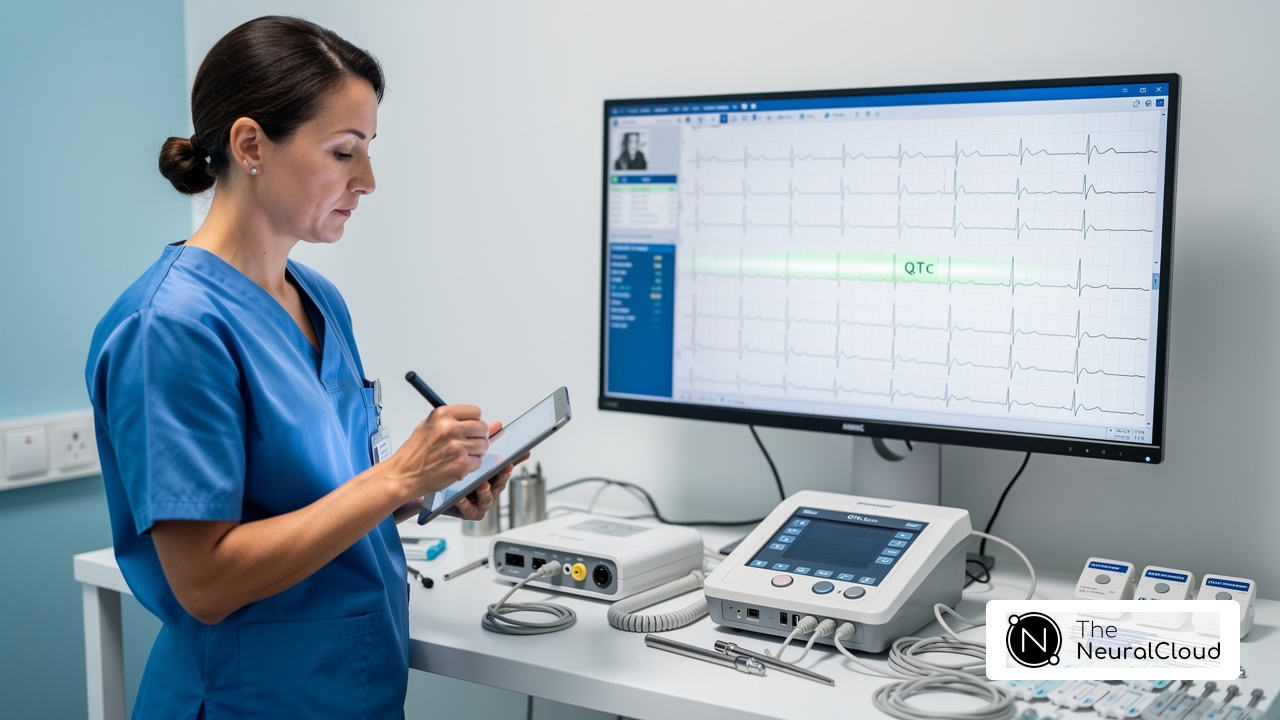
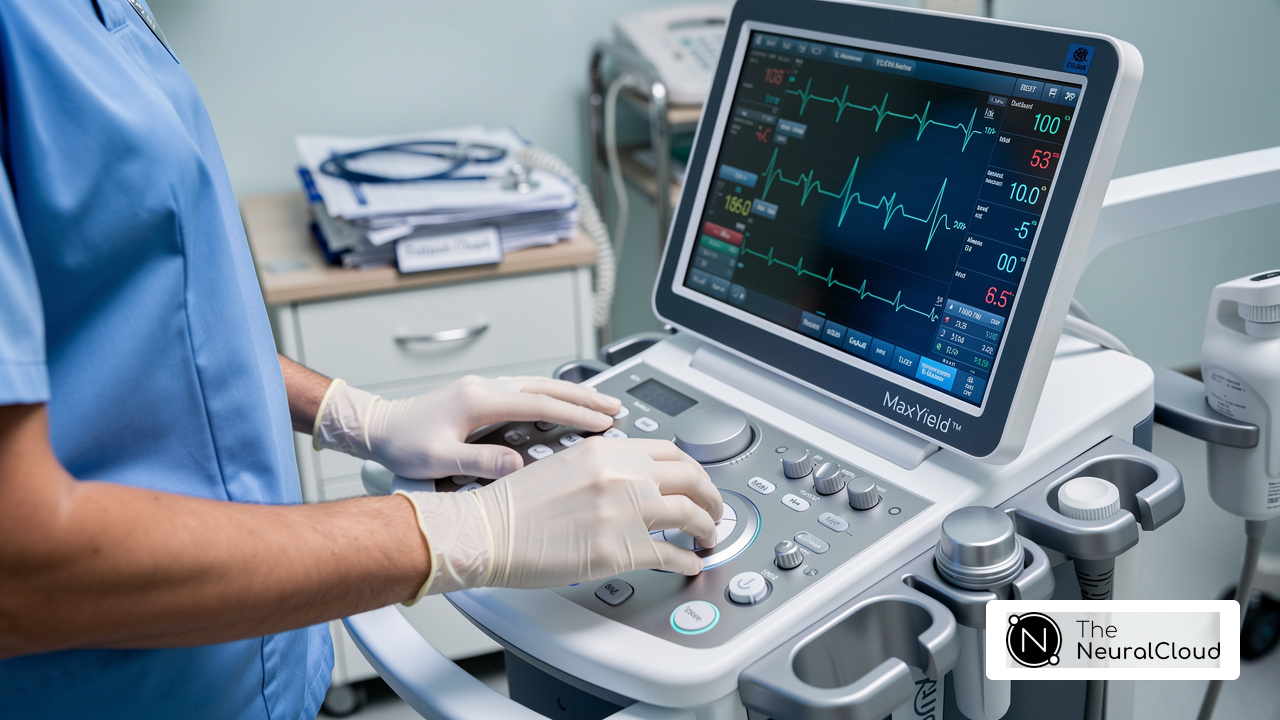
Neural Cloud Solutions' MaxYield™ technology enhances this process by automating ECG analysis, allowing for rapid beat-by-beat insights. With the ability to analyze 200,000 heartbeats in less than 5 minutes, MaxYield™ transforms noisy recordings into clear, actionable data, supporting clinicians in making confident decisions.
As one cardiologist noted, 'Careful analysis of the ventricular paced ECG, particularly with attention to lead concordance and ST-segment trends, remains a powerful diagnostic tool even in the setting of paced rhythms.' The integration of MaxYield™ technology can significantly elevate the standard of care in ECG analysis, ultimately benefiting patient outcomes.

Identify Challenges in Ventricular Paced ECG Analysis: Noise and Artifacts
Interpreting ventricular paced ECGs involves unique challenges, mainly because noise and artifacts can obscure critical cardiac information. These challenges complicate the accurate interpretation of ECGs, leading to potential misdiagnoses. Common sources of noise include:
- Muscle tremors
- Inadequate electrode contact
- Electrical interference from surrounding devices
For instance, pacing spikes may be misidentified as intrinsic beats if not accurately recognized. This can result in misdiagnoses, underscoring the need for precise filtering techniques. Research indicates that excessive filtering can alter critical features like QT and QRS intervals, which are essential for diagnosing arrhythmias.
To mitigate these issues, clinicians should implement advanced techniques such as:
- Intelligent preprocessing
- Filtering
- Signal averaging
These techniques enhance the clarity of ECG signals. Neural Cloud Solutions' MaxYield™ platform excels in this area by identifying and labeling critical data, even in recordings with high levels of noise and artifact. Its capability to quickly isolate ECG waves from recordings influenced by baseline wander, movement, and muscle artifact greatly enhances the precision of ECG evaluation. A knowledge-driven ECG noise filtering system has been created to identify noise presence and type prior to implementing targeted filtering, significantly enhancing the precision of ECG evaluation.
It's essential to understand pacing artifacts in a ventricular paced ECG, including their timing and shape, to distinguish them from other cardiac events. A recent study highlighted that noise-profile filtering achieved a mean QT interval difference of only 2.50 ms and reduced QRS interval differences to 4.28 ms, demonstrating its effectiveness in preserving clinically important features. By leveraging MaxYield™, healthcare professionals can enhance diagnostic accuracy, ultimately leading to better patient care.

Implement Best Practices for Accurate Ventricular Paced ECG Analysis
Clinicians often face difficulties in accurately interpreting paced rhythms due to the complexity of the signals involved in ventricular paced ECG. To navigate these challenges, they should adhere to several best practices:
- Consistent Methodology: Establish a systematic approach for interpreting paced rhythms, similar to non-paced ECGs. This includes identifying rhythm spikes, assessing QRS morphology, and evaluating the relationship between atrial events and the ventricular paced ECG.
- Utilize High-Quality Equipment: Employ high-quality electrodes and ECG machines that minimize noise and enhance signal clarity. Regular maintenance and calibration of equipment are essential to ensure optimal performance.
- Continuous Education: Engage in ongoing training and workshops focused on ECG interpretation, particularly for paced rhythms. This can include case studies and hands-on practice with real ECGs to reinforce learning.
- Collaboration with Technology: Consider leveraging advanced tools such as the MaxYield™ platform, which not only automates the identification of pacing artifacts but also enhances the precision of ECG evaluations. MaxYield™ rapidly labels P, QRS, and T Wave onsets, offsets, and time-series intervals, allowing for beat-by-beat tabulation in CSV format for easy ingestion into current workflows. Furthermore, Neural Cloud Solutions develops neural network models for intricate signal processing, which can further improve the examination of ECG data.
By integrating these best practices, clinicians can significantly improve their diagnostic accuracy and patient care outcomes. Integrating these best practices not only enhances diagnostic accuracy but also elevates the standard of patient care in clinical settings.

Leverage Technology: Enhancing ECG Analysis with Advanced Tools
While ECG analysis is crucial for accurate diagnostics, it often presents significant challenges that can hinder efficiency and accuracy. Incorporating advanced technology into ECG evaluation significantly enhances diagnostic accuracy and efficiency. MaxYield™ uses AI algorithms to automatically identify pacing spikes and other important features in the ECG waveform. This automation speeds up the evaluation process and reduces the likelihood of human error found in manual interpretations.
With its advanced noise reduction capabilities, MaxYield™ filters out artifacts, making sure ECG signals are clear and easy to interpret. It provides beat-by-beat evaluation, processing up to 200,000 heartbeats in less than 5 minutes, which significantly enhances workflow efficiency. Furthermore, the integration of cloud-based solutions facilitates real-time data sharing and collaboration among healthcare professionals, enabling more informed decision-making.
For optimal results, clinicians should utilize software equipped with advanced filtering techniques to eliminate noise and artifacts, ensuring that ECG signals are as clear as possible. Despite the advantages, healthcare providers face challenges in integrating MaxYield™ with existing systems and ensuring adequate user training. Addressing these challenges not only streamlines ECG analysis but also plays a vital role in enhancing patient care and outcomes.

Conclusion
Interpreting ventricular paced ECGs presents unique challenges that can significantly impact patient care. Mastering the analysis of these ECGs is essential for ensuring accurate diagnoses and improving patient outcomes. Understanding the complexities of these ECGs, with their pacing spikes and noise, requires a careful and systematic approach. By emphasizing the importance of accurate interpretation, clinicians can avoid misdiagnoses and enhance the quality of care provided to patients.
This article highlights key challenges in interpreting ventricular paced ECGs. Noise and artifacts can obscure critical cardiac information, complicating accurate diagnosis. Implementing best practices, such as consistent methodologies and leveraging advanced technologies like Neural Cloud Solutions' MaxYield™, can significantly improve diagnostic accuracy. Continuous education and collaboration with technological advancements are vital for clinicians aiming to refine their ECG analysis skills.
Integrating best practices and advanced tools in ECG analysis boosts diagnostic precision and elevates patient care standards. By prioritizing ongoing education and embracing innovative technologies, healthcare professionals can ensure that they are equipped to navigate the complexities of paced rhythms effectively, leading to better outcomes for their patients.
Frequently Asked Questions
What is a ventricular paced ECG?
A ventricular paced ECG is characterized by stimulation spikes that precede the QRS complexes, indicating that ventricular depolarization is initiated by an artificial pacemaker instead of the heart's intrinsic conduction system.
Why is understanding ventricular paced ECG important?
Understanding ventricular paced ECG is crucial for accurate diagnosis, as misinterpretation can lead to misdiagnosis and jeopardize patient safety. Mastery of these concepts helps clinicians identify complications and facilitate timely interventions.
What challenges do ventricular paced ECGs present?
Ventricular paced ECGs pose unique challenges due to the mimicry of rhythm spikes and QRS morphology, which can complicate accurate analysis and diagnosis.
How accurate are physicians in analyzing ECGs?
Research indicates that practicing physicians achieve a combined accuracy of 68.5% in pretraining evaluations when analyzing ECGs, highlighting the need for ongoing education and training in this area.
What technology can aid in the analysis of ECGs?
Neural Cloud Solutions' MaxYield™ technology enhances ECG analysis by automating the process, allowing for rapid beat-by-beat insights and analyzing up to 200,000 heartbeats in less than 5 minutes.
How does MaxYield™ technology improve ECG analysis?
MaxYield™ technology transforms noisy ECG recordings into clear, actionable data, supporting clinicians in making confident decisions and improving patient outcomes.
What specific aspects should clinicians focus on when analyzing ventricular paced ECGs?
Clinicians should pay attention to lead concordance and ST-segment trends when analyzing ventricular paced ECGs, as these remain powerful diagnostic tools even in paced rhythms.
List of Sources
- Understand Ventricular Paced ECG: Key Concepts and Importance
- Checking your browser - reCAPTCHA (https://pmc.ncbi.nlm.nih.gov/articles/PMC7522782)
- clarity-medical.com (https://clarity-medical.com/blogs/updates/understanding-ecg-for-patients-with-a-pacemaker-importance-challenges-and-technological-advancements)
- cureus.com (https://cureus.com/articles/426906-acute-st-elevation-myocardial-infarction-stemi-diagnoses-in-a-biventricular-paced-ecg)
- Identify Challenges in Ventricular Paced ECG Analysis: Noise and Artifacts
- ECG Noise Filtering Improves Clinical Accuracy (https://emjreviews.com/interventional-cardiology/news/ecg-noise-filtering-improves-clinical-accuracy)
- healio.com (https://healio.com/news/cardiology/20240906/fda-clears-algorithm-to-reduce-ecg-noise-on-ambulatory-monitoring)
- Reducing ECG artifact (https://numed.co.uk/news/reducing-ecg-artifact)
- mit.edu (https://mit.edu/~gari/chapter3.html)
- Implement Best Practices for Accurate Ventricular Paced ECG Analysis
- lifesync.com (https://lifesync.com/blogs/blog/the-importance-of-highquality-ecg-equipment-a-closer-look-at-radiolucent-technology?srsltid=AfmBOoq_7YtwIvTPNOaQTMP36OvyriRStdY36I57v7TkWpfEdZDKM4MD)
- Checking your browser - reCAPTCHA (https://pmc.ncbi.nlm.nih.gov/articles/PMC7522782)
- Accuracy of Physicians’ Electrocardiogram Interpretation (https://jamanetwork.com/journals/jamainternalmedicine/fullarticle/2771093)
- Leverage Technology: Enhancing ECG Analysis with Advanced Tools
- AI-Based ECG Analysis Significantly Improves STEMI Detection, Reduces False Activations - American College of Cardiology (https://acc.org/latest-in-cardiology/articles/2025/10/24/16/56/tues-554pm-ai-tct-2025)
- gehealthcare.com (https://gehealthcare.com/en-us/insights/article/ai-and-ecg-interpretation-insights-and-trends-for-todays-cardiologists?srsltid=AfmBOoq3KaGdVHBjn63Bz1S8Z6WSVHZYV4ids_nMrG1QUSHqEuqJgIzl)
- postdicom.com (https://postdicom.com/en/blog/optimizing-ecg-workflow-with-cloud-based-pacs)