Introduction
Understanding the heart's electrical signals is crucial for accurate diagnosis in cardiology. EKG contiguous leads are essential in this process, providing overlapping views that can uncover significant cardiac abnormalities. By mastering these leads, healthcare professionals can enhance their diagnostic accuracy and ultimately improve patient outcomes.
However, the increasing complexity of ECG data, along with challenges posed by noise and artifacts, raises an important question: how can clinicians effectively integrate best practices and advanced technologies to maximize the benefits of contiguous leads?
This article will explore these challenges and highlight the features of the MaxYield™ platform, which is designed to improve ECG analysis. By focusing on its advantages, we will demonstrate how this platform can directly benefit healthcare professionals in their diagnostic efforts.
Define Contiguous Leads and Their Role in ECG Interpretation
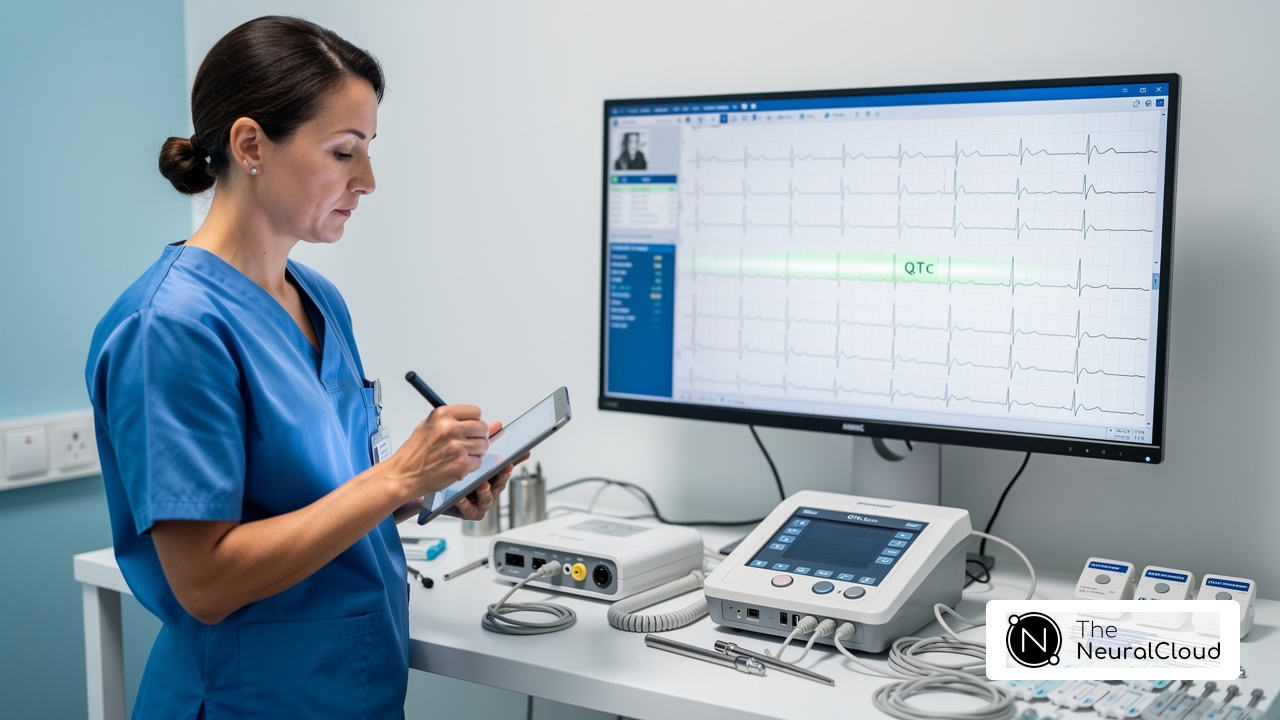
EKG contiguous leads refer to a set of ECG electrodes that are anatomically adjacent, providing overlapping views of the heart's electrical activity. In a standard 12-channel ECG, the electrodes typically consist of pairs like V1 and V2, V2 and V3, which are examples of EKG contiguous leads. The use of EKG contiguous leads is crucial for accurately identifying cardiac abnormalities, allowing clinicians to monitor variations in electrical signals from nearby areas of the heart. For instance, ST-segment elevation in positions V2 and V3 may indicate ischemia in the anterior wall of the heart. Guidelines define ST-segment elevation in chest positions (V1-V6) as ≥1 mm in two or more adjacent positions, highlighting their diagnostic significance in identifying myocardial infarction or ischemia. Understanding the organization and role of EKG contiguous leads is vital for effective ECG analysis, enhancing clinicians' ability to make informed decisions about patient care.
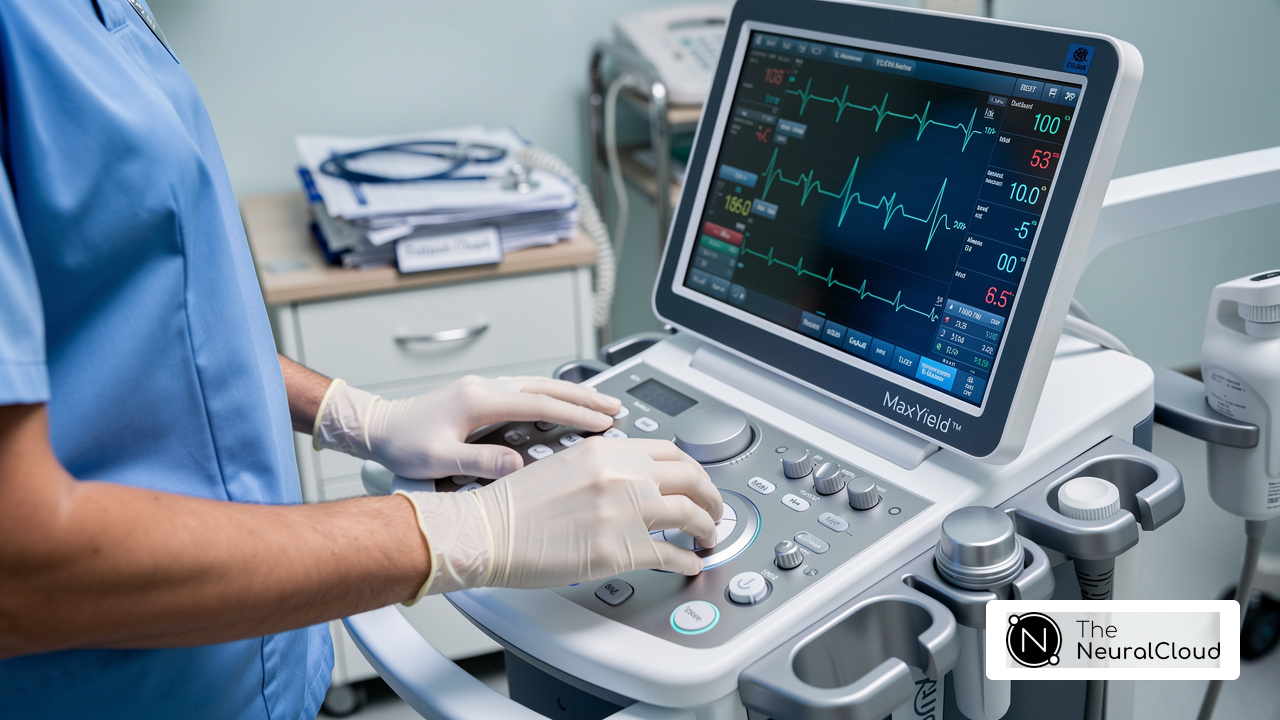
The integration of Neural Cloud Solutions' MaxYield™ platform significantly enhances the analysis of adjacent opportunities. MaxYield™ features advanced noise filtering and distinct wave recognition, transforming lengthy and noisy ECG recordings into clean, crisp signals. This capability addresses common challenges such as physiological variability and signal artifacts, maximizing diagnostic yield by recovering previously obscured sections of recordings.
Key Features of MaxYield™:
- Advanced noise filtering
- Distinct wave recognition
- Enhanced signal clarity
Case studies, such as the 'Application of Contiguous Wires in Diagnosing Cardiac Conditions,' illustrate how these wires improve the identification of abnormalities, leading to more precise diagnoses and timely interventions. Clinicians should also be aware of reciprocal ST-segment alterations that can occur with adjacent electrodes in EKG contiguous leads, as these changes are critical for diagnosing cardiac events. Quotes from cardiologists emphasize the importance of mastering continuous electrode analysis to avoid common pitfalls, such as misinterpreting isolated ST changes. Overall, incorporating adjacent pathways into clinical practice, especially with the support of MaxYield™, is essential for improving diagnostic precision and patient outcomes.

Utilize Contiguous Leads for Enhanced Clinical Decision-Making
To fully harness the benefits of adjacent connections, healthcare professionals need a systematic approach in clinical practice. This involves precise electrode placement using EKG contiguous leads, preparing the skin at electrode sites for optimal contact, and understanding the specific heart areas each electrode monitors. For instance, when assessing a patient with chest pain, healthcare providers should closely examine adjacent electrodes to identify patterns that may indicate myocardial infarction. Research indicates that recognizing ST-segment shifts across EKG contiguous leads significantly enhances diagnostic accuracy, especially in emergency situations where timely diagnosis is crucial.
The MaxYield™ platform from Neural Cloud Solutions revolutionizes ECG analysis by rapidly labeling P, QRS, and T wave onsets and offsets. This tool achieves sensitivity rates exceeding 97% in arrhythmia classification, making it a game-changer for healthcare professionals. MaxYield™ provides real-time insights and alerts about potential abnormalities, enabling timely interventions and enhancing decision-making processes. Cardiologists emphasize that mastering the interpretation of EKG contiguous leads is essential for effective cardiac care, as they provide a comprehensive view of the heart's electrical activity, critical for identifying serious conditions.
Key features of the MaxYield™ platform include:
- Rapid labeling of ECG waveforms
- High sensitivity in arrhythmia detection
- Real-time alerts for abnormalities
The advantages for healthcare professionals are clear: improved diagnostic precision, enhanced decision-making capabilities, and the ability to respond swiftly to critical situations. As Justin Richardson notes, "By analyzing the electrical activity across various connections, healthcare professionals can obtain valuable insights into the functioning and health of the heart." This comprehensive approach not only aids in accurate diagnosis but also supports better patient outcomes.

Recognize Contiguous Leads to Improve Diagnostic Accuracy
Identifying adjacent signals is crucial for improving interpretive precision in ECG analysis, especially with EKG contiguous leads. Clinicians must be trained to recognize and analyze changes across the EKG contiguous leads, as they often provide critical insights into the heart's condition. For instance, in ST-elevation myocardial infarction (STEMI), the presence of ST-segment elevation in two or more adjacent channels serves as a key assessment criterion. This emphasis on continuous connections using EKG contiguous leads allows healthcare professionals to precisely identify ischemic regions and differentiate between genuine cardiac occurrences and artifacts. Consistent practice in identifying these patterns has been shown to greatly enhance clinicians' assessment skills, leading to improved patient outcomes.
Studies indicate that effective training programs can enhance interpretation skills, resulting in a marked increase in the accuracy of STEMI diagnoses. Moreover, testimonials from cardiologists emphasize the significance of EKG contiguous leads in maintaining continuous connections for clinical decision-making, reinforcing their role in prompt and effective patient management.
Neural Cloud Solutions' MaxYield™ technology leverages cutting-edge AI to automate the analysis of ECG waveforms, enhancing clarity and efficiency. Key features of MaxYield™ include:
- Automated Analysis: Streamlines the interpretation of ECG data, reducing the potential for human error.
- Wearable Technology Integration: Facilitates real-time monitoring and data collection.
- Automated Labeling: Simplifies the analysis process, allowing clinicians to focus on patient care.
By combining these features, MaxYield™ significantly lessens workload and enhances testing yield. To effectively utilize MaxYield™, clinicians can follow a structured approach:
- Ensure proper placement of ECG electrodes.
- Utilize the automated labeling feature to streamline analysis.
- Regularly engage in training sessions to stay updated on best practices.
This combination of technology and training has been shown to significantly enhance diagnostic accuracy, as evidenced by numerous case studies demonstrating improved outcomes in STEMI diagnoses.

Integrate Advanced Technologies for Efficient ECG Analysis
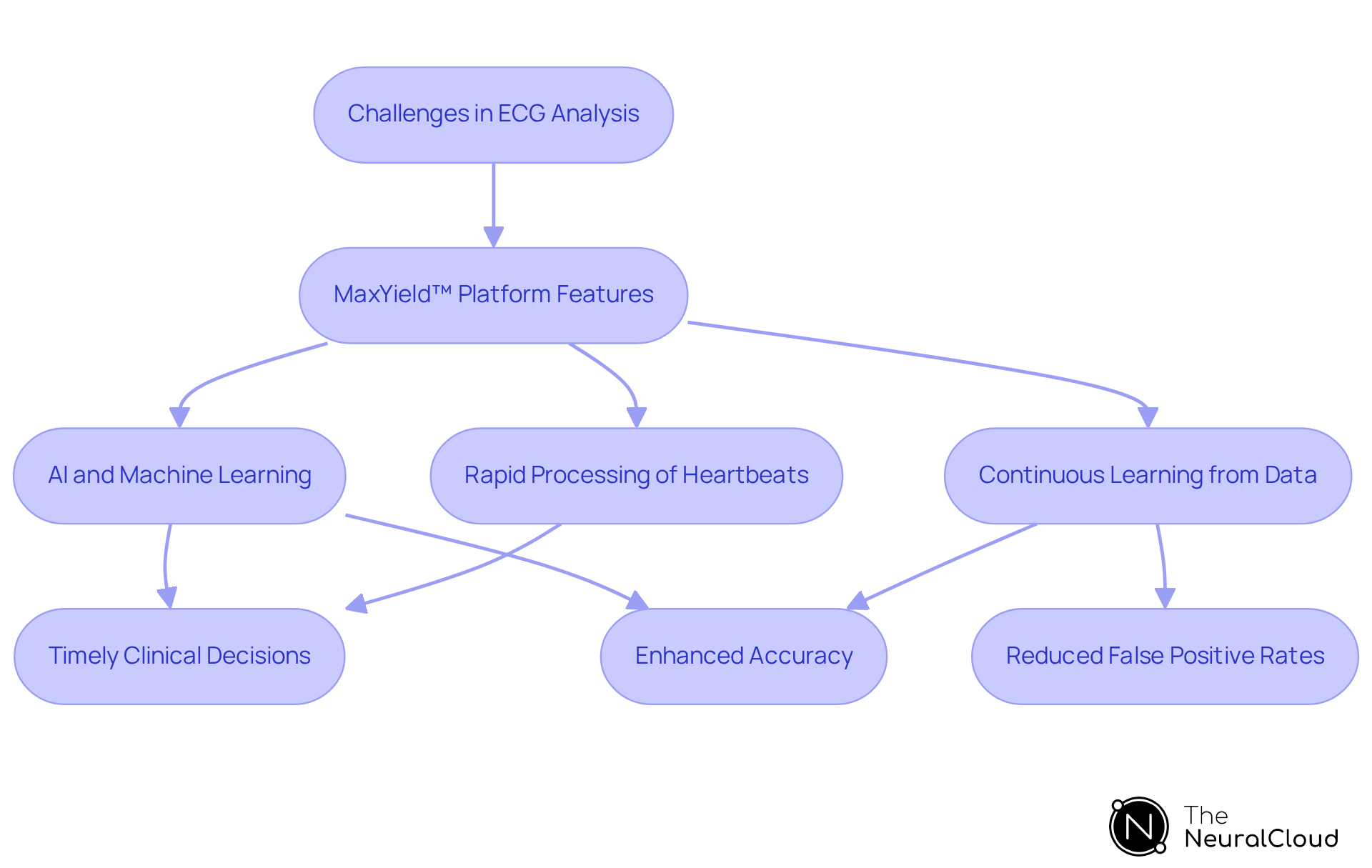
ECG analysis faces significant challenges, particularly in accurately interpreting data from adjacent electrodes. The MaxYield™ platform by Neural Cloud Solutions addresses these issues by incorporating advanced technologies like AI and machine learning. This platform utilizes sophisticated algorithms to automate ECG data analysis, enabling the rapid and precise identification of abnormalities across EKG contiguous leads.
One of the standout features of MaxYield™ is its ability to process over 200,000 heartbeats in under five minutes. This capability not only accelerates the analysis but also facilitates timely clinical decisions, which are crucial in patient care. Furthermore, AI-driven tools within the platform continuously learn from new data, enhancing their accuracy over time. This adaptability is vital for healthcare professionals who rely on precise insights for effective decision-making.
Despite these advancements, challenges remain, particularly regarding the need for high-quality training data and the generalizability of algorithms. Addressing these issues is critical for the widespread adoption of AI-ECG technologies. Nevertheless, the integration of such technologies allows healthcare professionals to focus on high-level decision-making, equipped with reliable and actionable cardiac insights.
Notably, AI-ECG models have shown a remarkable reduction in false positive activation rates, decreasing from 42% to 8%. This significant improvement underscores the effectiveness of the MaxYield™ platform in enhancing diagnostic accuracy. Ultimately, the incorporation of advanced technologies like MaxYield™ is essential for optimizing patient care and ensuring better health outcomes.
Conclusion
Maximizing diagnostic accuracy through the use of EKG contiguous leads is essential for effective cardiac care. Understanding the importance of these adjacent electrodes allows healthcare professionals to enhance their interpretation of ECG data, leading to timely and precise diagnoses. The integration of advanced technologies, such as Neural Cloud Solutions' MaxYield™ platform, further streamlines this process by providing tools that reduce the potential for errors and improve analysis efficiency.
Key insights emphasize the critical role of contiguous leads in identifying cardiac abnormalities, particularly in cases of myocardial infarction. A systematic approach to electrode placement, combined with the advanced features of the MaxYield™ platform, empowers clinicians to make informed decisions swiftly. Studies indicate that mastering the analysis of these leads significantly boosts diagnostic accuracy, especially in emergency situations where every second counts.
Incorporating best practices for utilizing EKG contiguous leads and leveraging technology like MaxYield™ is vital for optimizing patient outcomes. As the field of electrocardiography evolves, embracing these advancements enhances clinical decision-making and equips healthcare professionals with the necessary tools to provide the highest level of care. Taking action now to refine skills and integrate these technologies will pave the way for improved diagnostic precision and ultimately, better patient health.
Frequently Asked Questions
What are EKG contiguous leads?
EKG contiguous leads refer to a set of ECG electrodes that are anatomically adjacent, providing overlapping views of the heart's electrical activity. Examples include pairs like V1 and V2, V2 and V3.
Why are contiguous leads important in ECG interpretation?
Contiguous leads are crucial for accurately identifying cardiac abnormalities. They allow clinicians to monitor variations in electrical signals from nearby areas of the heart, which aids in diagnosing conditions such as ischemia and myocardial infarction.
How is ST-segment elevation defined in contiguous leads?
ST-segment elevation in chest positions (V1-V6) is defined as ≥1 mm in two or more adjacent positions, indicating its diagnostic significance for identifying myocardial infarction or ischemia.
What role does the MaxYield™ platform play in ECG analysis?
The MaxYield™ platform enhances ECG analysis by providing advanced noise filtering and distinct wave recognition, which transforms lengthy and noisy recordings into clear signals, maximizing diagnostic yield by recovering obscured sections.
What are the key features of the MaxYield™ platform?
Key features of MaxYield™ include advanced noise filtering, distinct wave recognition, and enhanced signal clarity.
How do contiguous leads improve the diagnosis of cardiac conditions?
Contiguous leads improve the identification of abnormalities by providing overlapping views of the heart's electrical activity, leading to more precise diagnoses and timely interventions.
What should clinicians be aware of regarding reciprocal ST-segment alterations?
Clinicians should be aware that reciprocal ST-segment alterations can occur with adjacent electrodes in EKG contiguous leads, which are critical for diagnosing cardiac events.
What do cardiologists emphasize about continuous electrode analysis?
Cardiologists emphasize the importance of mastering continuous electrode analysis to avoid common pitfalls, such as misinterpreting isolated ST changes, which can impact diagnosis and patient care.
List of Sources
- Define Contiguous Leads and Their Role in ECG Interpretation
- Contiguous Leads on ECG: A Comprehensive Guide (https://cme4life.com/contiguous-leads-on-ecg-a-comprehensive-guide)
- droracle.ai (https://droracle.ai/articles/614778/what-is-the-significance-of-contiguous-lead-involvement-on)
- STEMI ECG Criteria: ST-Elevation Thresholds (https://powerfulmedical.com/blog/stemi-ecg-criteria)
- rppeo.ca (https://rppeo.ca/paramedic-practice/medicask-about/medicask-answers-list/359-professionalism/291-paramedic-practice/1916-stemi-contiguous-leads)
- Utilize Contiguous Leads for Enhanced Clinical Decision-Making
- theneuralcloud.com (https://theneuralcloud.com/post/master-contiguous-leads-setup-and-interpretation-for-ecg-analysis)
- Contiguous Leads on ECG: A Comprehensive Guide (https://cme4life.com/contiguous-leads-on-ecg-a-comprehensive-guide)
- droracle.ai (https://droracle.ai/articles/614778/what-is-the-significance-of-contiguous-lead-involvement-on)
- Recognize Contiguous Leads to Improve Diagnostic Accuracy
- STEMI ECG Criteria: ST-Elevation Thresholds (https://powerfulmedical.com/blog/stemi-ecg-criteria)
- STEMI: ST-segment Elevation Myocardial Infarction - The Cardiology Advisor (https://thecardiologyadvisor.com/ddi/stemi-st-elevation-myocardial-infarction)
- STEMI - Electrocardiogram - M3 Curriculum | SAEM (https://saem.org/about-saem/academies-interest-groups-affiliates2/cdem/for-students/online-education/m3-curriculum/group-electrocardiogram-(ecg)-rhythm-recognition/stemi)
- droracle.ai (https://droracle.ai/articles/614778/what-is-the-significance-of-contiguous-lead-involvement-on)
- Integrate Advanced Technologies for Efficient ECG Analysis
- ejinme.com (https://ejinme.com/article/S0953-6205(25)00178-5/fulltext)
- AI-Based ECG Analysis Significantly Improves STEMI Detection, Reduces False Activations - American College of Cardiology (https://acc.org/latest-in-cardiology/articles/2025/10/24/16/56/tues-554pm-ai-tct-2025)
- AI-Powered ECG Analysis Offers Promising Path for Early Detection of Chronic Obstructive Pulmonary Disease, Say Mount Sinai Researchers (https://mountsinai.org/about/newsroom/2026/ai-powered-ecg-analysis-offers-promising-path-for-early-detection-of-chronic-obstructive-pulmonary-disease-say-mount-sinai-researchers)
- sciencedirect.com (https://sciencedirect.com/science/article/pii/S1936879825026007)
- cureus.com (https://cureus.com/articles/376607-investigating-the-efficacy-of-ai-powered-innovations-in-ecg-analysis-and-continuous-heart-monitoring-a-comprehensive-narrative-review)