Introduction
Atrial fibrillation (AF) presents significant challenges for healthcare professionals in both diagnosis and management. By understanding key features of AF, such as its irregularly irregular rhythm and absence of P waves, practitioners can enhance their diagnostic accuracy and ultimately improve patient outcomes. The presence of noise and artifacts can obscure the critical features of AF, complicating diagnosis. This article explores essential aspects of recognizing atrial fibrillation on ECGs and how innovative technologies can aid in overcoming these diagnostic hurdles.
Define Atrial Fibrillation and Its Importance in ECG Analysis
Understanding what does atrial fibrillation look like on ECG is essential, as it presents significant challenges in ECG analysis that impact patient management and treatment strategies. This common cardiac arrhythmia is characterized by disorganized electrical activity in the atria, leading to an irregular and often rapid heart rate. AF is particularly significant in ECG evaluation because it can elevate the risk of stroke and heart failure. The lack of coordinated atrial contractions results in ineffective blood pumping, which can lead to thrombus formation. It's crucial for healthcare professionals to grasp AF's implications, as it directly influences how they manage and treat patients.
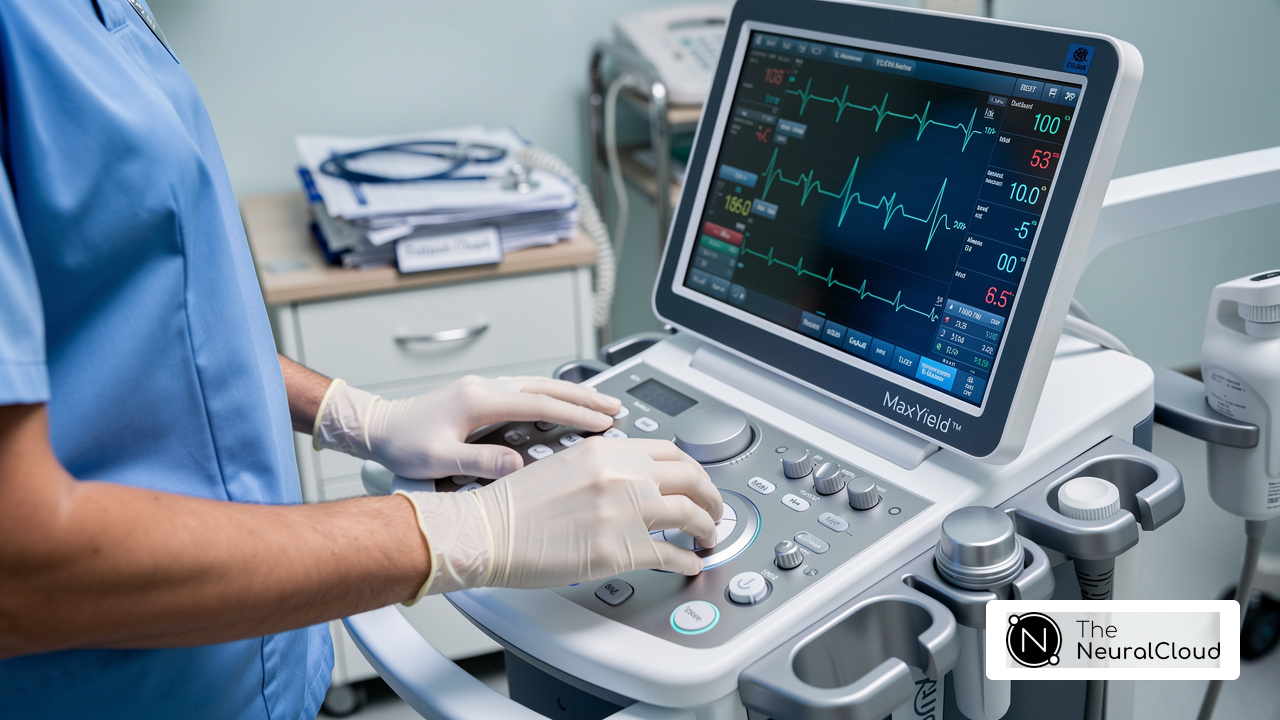
Accurately detecting and interpreting what does atrial fibrillation look like on ECG allows for timely interventions. This not only improves patient outcomes but also reduces the risk of complications associated with the arrhythmia. 'Neural Cloud Solutions' technology significantly enhances the efficiency of ECG evaluation by addressing common challenges such as noise interference and signal artifacts. MaxYield™ employs advanced noise filtering and automated labeling of critical waveforms, allowing for clearer identification of AF amidst these challenges. This innovative method streamlines the evaluation process, ensuring that healthcare professionals can depend on precise data for effective patient management. With MaxYield™, healthcare professionals can trust in the precision of their ECG evaluations, ultimately leading to improved patient outcomes.

Identify Key ECG Features of Atrial Fibrillation
In ECG analysis, understanding what does atrial fibrillation look like on ECG presents unique challenges that can complicate diagnosis and treatment. The key ECG features of AF include:
- Irregularly Irregular Rhythm: In AF, the ventricular response is marked by an unpredictable pattern, characterized by varying intervals between QRS complexes. This variability makes accurate diagnosis challenging for healthcare professionals.
The absence of P waves in atrial fibrillation raises the question of what does atrial fibrillation look like on ECG, as this occurs due to chaotic electrical activity within the atria. Instead, coarse fibrillatory waves may be observed, particularly in leads V1 and II, although these waves hold no clinical significance. The MaxYield™ platform enhances the detection of these features by effectively filtering out noise and artifacts that can obscure true ECG signals.
In atrial fibrillation, what does atrial fibrillation look like on ECG is characterized by a ventricular rate that varies widely, typically between 100 and 200 beats per minute. Atrial fibrillation can also have a heart rate of 400 to 600 beats per minute, influenced by the underlying conduction system and any medications that may affect AV node conduction. This adaptability leads to improved patient outcomes and more effective treatment strategies.
- Narrow QRS Complexes: QRS complexes are usually narrow unless accompanied by underlying conduction abnormalities, such as a bundle branch block. This characteristic helps differentiate AF from other arrhythmias, such as atrial flutter or supraventricular tachycardia, which may exhibit similar irregularities, especially when considering what does atrial fibrillation look like on ECG. By leveraging advanced algorithms, the MaxYield™ platform provides automated and accurate analysis, ensuring that these critical features are identified reliably.
Understanding what does atrial fibrillation look like on ECG is crucial for accurately distinguishing AF from other arrhythmias, ensuring effective diagnosis and management in clinical practice. By utilizing the MaxYield™ platform, healthcare professionals can enhance their diagnostic accuracy and improve patient care.

Trace the Historical Development of Atrial Fibrillation Detection on ECGs
The journey of fibrillation detection has evolved dramatically since the inception of the electrocardiogram (ECG) by Willem Einthoven in 1902. Initially, ECGs were primarily used for basic rhythm assessments. However, significant technological advancements have transformed the understanding of what does atrial fibrillation look like on ECG detection over the decades.
In the 1950s, the introduction of multi-lead ECGs enhanced visualization of cardiac electrical activity, making it easier to identify arrhythmias. By the late 20th century, computerized ECG interpretation emerged, significantly improving diagnostic accuracy by allowing doctors to understand what does atrial fibrillation look like on ECG through automated detection of AF features.
Recent innovations use artificial intelligence and machine learning in ECG evaluation. This integration provides real-time insights that improve the speed and precision of AF detection, allowing us to better answer what does atrial fibrillation look like on ECG.
Looking back, we see how crucial ongoing innovation is in cardiology technology, especially in enhancing diagnostic abilities for fibrillation. Case studies, such as the mAFA-II trial, demonstrate how mHealth-supported management models improve patient knowledge and adherence to treatment. This further emphasizes the importance of integrating advanced ECG technologies in clinical practice.
As the prevalence of AF continues to rise, driven by aging populations and improved detection methods, the need for effective screening and management strategies becomes increasingly vital. As AF detection improves, so too does the potential for better patient outcomes and management strategies.

Examine Examples of Atrial Fibrillation in ECG Recordings
Instances of heart rhythm irregularity in ECG recordings often present significant challenges for accurate diagnosis, particularly in noisy environments. However, with Neural Cloud Solutions' platform, these challenges can be effectively addressed. For instance:
- Example 1: An ECG recording from a 65-year-old patient shows an irregularly irregular rhythm with no discernible P waves and a ventricular rate of approximately 120 bpm. The narrow QRS complexes help illustrate what does atrial fibrillation look like on ecg. With this system, critical data can be accurately identified and labeled, even in noisy environments, ensuring reliable diagnosis.
- Example 2: A Holter monitor report reveals intermittent episodes of AF, characterized by fluctuating ventricular rates and the presence of fibrillatory waves in the baseline. This highlights the importance of continuous monitoring in patients with suspected AF, as it allows for the detection of transient episodes that may otherwise go unnoticed. The platform's advanced noise filtering capabilities enhance the diagnostic yield by salvaging previously obscured sections.
- Example 3: A 12-lead ECG taken during an emergency visit illustrates what does atrial fibrillation look like on ecg, displaying a rapid ventricular response with absent P waves, further emphasizing the chaotic nature of atrial fibrillation. By leveraging the advanced features of MaxYield™, healthcare professionals can enhance their diagnostic capabilities and improve patient outcomes in the management of atrial fibrillation.

Conclusion
Misunderstanding atrial fibrillation on an ECG can lead to significant challenges in patient management and treatment decisions. Healthcare professionals must grasp the characteristics of atrial fibrillation (AF) on an electrocardiogram (ECG) because it directly influences how they manage and treat patients. The irregular rhythm and absence of P waves in AF make it essential to understand its ECG presentation. Advanced technologies like the MaxYield™ platform can boost diagnostic accuracy and enhance patient outcomes in managing this common arrhythmia.
The article highlights several key features of AF on ECG, such as:
- The irregularly irregular rhythm
- Narrow QRS complexes
- The chaotic electrical activity that leads to the absence of P waves
It also traces the historical advancements in ECG technology, from basic rhythm assessments to the integration of artificial intelligence, which has revolutionized AF detection. Furthermore, real-world examples illustrate how these ECG characteristics manifest in clinical practice, emphasizing the importance of continuous monitoring and accurate interpretation.
As the prevalence of atrial fibrillation continues to rise, the urgency for effective detection and management strategies becomes increasingly critical. By adopting the MaxYield™ platform, healthcare professionals can enhance their diagnostic capabilities and improve patient management. Ultimately, mastering the ECG presentation of atrial fibrillation is crucial for enhancing patient care and minimizing risks associated with this arrhythmia.
Frequently Asked Questions
What is atrial fibrillation (AF)?
Atrial fibrillation is a common cardiac arrhythmia characterized by disorganized electrical activity in the atria, resulting in an irregular and often rapid heart rate.
Why is atrial fibrillation significant in ECG analysis?
Atrial fibrillation is significant in ECG analysis because it can elevate the risk of stroke and heart failure. The lack of coordinated atrial contractions leads to ineffective blood pumping and potential thrombus formation.
How does atrial fibrillation impact patient management and treatment strategies?
Understanding atrial fibrillation's implications is crucial for healthcare professionals, as it directly influences how they manage and treat patients, leading to timely interventions and improved patient outcomes.
What challenges are associated with ECG analysis of atrial fibrillation?
ECG analysis of atrial fibrillation presents challenges such as noise interference and signal artifacts, which can complicate the accurate detection and interpretation of AF.
How does MaxYield™ technology enhance ECG evaluation?
MaxYield™ technology enhances ECG evaluation by employing advanced noise filtering and automated labeling of critical waveforms, allowing for clearer identification of atrial fibrillation and streamlining the evaluation process.
What are the benefits of using MaxYield™ for ECG evaluations?
The benefits of using MaxYield™ include improved precision in ECG evaluations, which leads to better patient management and outcomes by ensuring healthcare professionals can rely on accurate data.
List of Sources
- Identify Key ECG Features of Atrial Fibrillation
- Atrial Fibrillation (https://litfl.com/atrial-fibrillation-ecg-library)
- healio.com (https://healio.com/cardiology/learn-the-heart/ecg-review/ecg-topic-reviews-and-criteria/atrial-fibrillation-review)
- Trace the Historical Development of Atrial Fibrillation Detection on ECGs
- pmc.ncbi.nlm.nih.gov (https://pmc.ncbi.nlm.nih.gov/articles/PMC10866942)
- Examine Examples of Atrial Fibrillation in ECG Recordings
- Atrial Fibrillation (https://litfl.com/atrial-fibrillation-ecg-library)
- ecgwaves.com (https://ecgwaves.com/topic/atrial-fibrillation-ecg-ekg-causes-classification-management)
- pmc.ncbi.nlm.nih.gov (https://pmc.ncbi.nlm.nih.gov/articles/PMC10866942)