Introduction
Severe hypokalemia, marked by dangerously low potassium levels in the blood, presents significant risks to cardiac health, often resulting in life-threatening arrhythmias. Healthcare professionals must understand the critical ECG changes associated with this condition, as these alterations can inform timely and effective interventions. However, accurately interpreting these ECG changes can be challenging amidst the complexities of patient care. This is where advanced tools, like the MaxYield™ platform, come into play, enhancing the ECG analysis process and ultimately improving patient outcomes.
The MaxYield™ platform offers several key features that address the challenges in ECG analysis:
- It provides real-time monitoring of potassium levels, allowing for immediate detection of hypokalemia.
- Additionally, the platform includes advanced algorithms that highlight critical ECG changes, making it easier for healthcare professionals to interpret results accurately.
- These features not only streamline the analysis process but also reduce the risk of misinterpretation, which can be crucial in emergency situations.
The advantages of utilizing the MaxYield™ platform are significant:
- By improving the accuracy of ECG interpretations, healthcare professionals can make informed decisions more quickly, leading to better patient management.
- Furthermore, the platform's user-friendly interface ensures that both technical and non-technical users can navigate it effectively, enhancing overall team collaboration in patient care.
- With these benefits, the MaxYield™ platform stands out as a vital tool in the fight against severe hypokalemia and its associated risks.
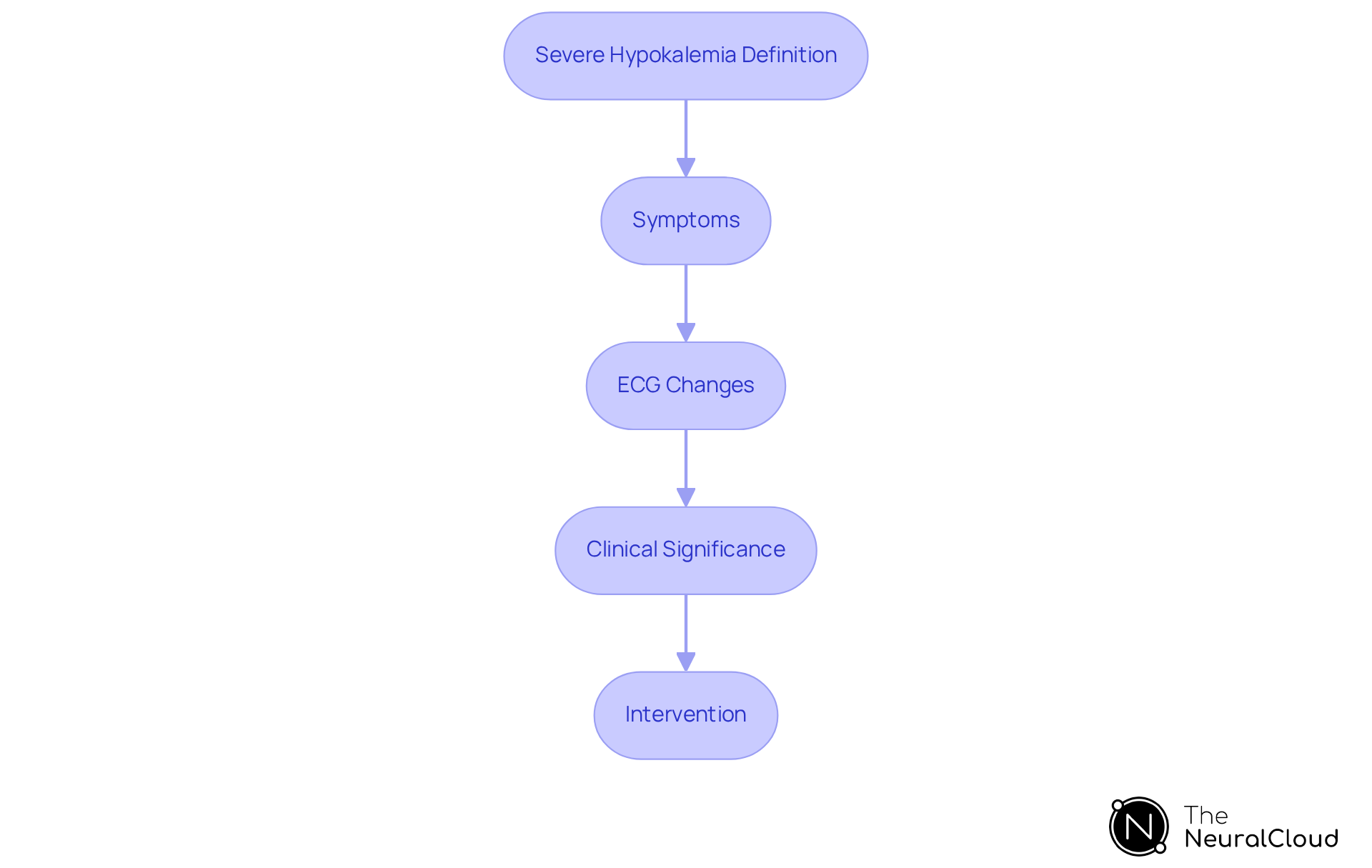
Define Severe Hypokalemia and Its Clinical Significance
Severe low levels of potassium in the blood, defined as a serum level dropping below 2.5 mEq/L (3.5 mmol/L), pose significant health risks. Clinically, this condition manifests through symptoms like muscle weakness, cramping, and potentially life-threatening cardiac issues. The disruption of normal cardiac function due to severe hypokalemia can lead to notable changes in the ECG, including:
- Bradycardia
Statistics show that low plasma levels of potassium significantly increase the risk of ventricular arrhythmias in individuals with cardiovascular disorders, making vigilant monitoring essential, especially for those displaying symptoms of hypokalemia.
A case study highlighted a 57-year-old woman who experienced cardiac arrest linked to significant hypokalemia, underscoring the critical need for recognizing and addressing this condition. Immediate potassium replacement and careful monitoring during treatment are vital for improving patient outcomes. The technology from Neural Cloud Solutions enhances this monitoring process by employing advanced noise filtering and unique wave recognition features. This technology enables healthcare providers influenced by significant ECG changes, facilitating timely intervention.
Prominent cardiologists emphasize that understanding the alterations in the ECG is crucial for prompt diagnosis and effective management. The advanced monitoring system not only improves patient safety but also provides healthcare professionals with the tools necessary to enhance patient care. By streamlining the monitoring process, it allows for better decision-making and ultimately leads to improved patient outcomes.
Identify ECG Changes in Severe Hypokalemia
ECG changes in severe hypokalemia typically include:
- T-wave flattening: This is often the earliest change observed, indicating hypokalemia. Research shows that T-wave flattening occurs in about 27% of hypokalemic patients, making it a crucial marker for clinicians.
- U waves: These waves appear after the T wave and can become more pronounced as potassium levels decrease. The presence of U waves on an ECG is a significant finding, with studies correlating them with potassium levels below 3.0 mEq/L.
- ST segment depression: This change reflects altered myocardial repolarization and can predispose individuals to arrhythmias. In clinical settings, ST segment depression has been recorded in 16% of individuals with hypokalemia, highlighting the need for monitoring.
- QT prolongation: This can increase the risk of torsades de pointes, a potentially fatal arrhythmia. Studies indicate that QT prolongation is common in 14% of individuals with hypokalemia, necessitating prompt intervention.
Recognizing these changes is critical for healthcare providers, as they guide further management. The integration of advanced tools, such as those offered by Neural Cloud Solutions, enhances the detection and interpretation of these vital changes, ultimately improving patient outcomes.

Utilize Advanced Tools for ECG Analysis in Hypokalemia
ECG analysis can be challenging, particularly in situations involving hypokalemia, where accurate interpretation is crucial. Tools like the platform from Neural Cloud Solutions address these challenges effectively. By leveraging sophisticated AI algorithms, MaxYield™ enhances ECG analysis in several key ways:
- Automation: The platform automates the analysis of P, QRS, and T waveforms, significantly reducing the time required for manual interpretation. This automation not only speeds up the process but also enhances accuracy.
- Noise reduction: MaxYield™ features advanced algorithms that improve signal clarity. This enhancement allows clinicians to focus on the abnormalities associated with low potassium levels, ensuring that no important details are overlooked.
- Real-time alerts: The automated systems within MaxYield™ provide notifications regarding significant ECG changes. This feature facilitates prompt interventions, which can be vital in managing patient care effectively.
For example, the system can process over 200,000 heartbeats in less than five minutes. This rapid analysis enables quick detection of changes, ultimately improving patient outcomes. Such efficiency is particularly important in emergency settings, where timely diagnosis can greatly influence treatment effectiveness.
Implement Management Strategies Based on ECG Findings
Effective management of severe hypokalemia ECG findings relies heavily on clinical presentation. Key strategies include:
- Immediate intervention: For patients showing severe symptoms or significant ECG changes, intravenous potassium chloride should be administered without delay. This timely intervention is crucial, as it can prevent complications like cardiac arrhythmias.
- Continuous monitoring: This is essential for detecting any deterioration in cardiac function or the emergence of new arrhythmias. Continuous monitoring significantly enhances outcomes for individuals. By utilizing advanced monitoring tools, healthcare providers can benefit from automated ECG labeling and data extraction, streamlining processes and reducing operational costs. Research indicates that patients receiving consistent ECG monitoring during electrolyte replacement therapy experience fewer adverse events, underscoring the importance of this practice.
- Identify and treat underlying causes: Addressing underlying conditions is vital to prevent the recurrence of hypokalemia. For instance, studies demonstrated that careful management of her mineral levels and thyroid function led to improved patient outcomes.
- Patient education: Informing patients about dietary sources of potassium and the importance of adhering to treatment plans is crucial. Education empowers individuals to recognize symptoms of low potassium levels and understand the significance of follow-up care, which is essential for long-term management.
By implementing these strategies, healthcare providers can effectively manage severe hypokalemia ECG, reducing associated risks and enhancing patient safety. The integration of technology and advanced AI-driven automation further supports this goal.

Conclusion
Severe hypokalemia is a critical medical condition that requires immediate attention due to its potential to disrupt cardiac function and lead to life-threatening arrhythmias. Healthcare professionals must understand the intricacies of ECG changes associated with low potassium levels, as this knowledge enables timely diagnosis and intervention. The MaxYield™ platform significantly enhances the accuracy of ECG analysis, allowing clinicians to effectively monitor and manage this condition.
Key insights include:
- The clinical significance of severe hypokalemia
- The specific ECG changes that occur
- The advanced technologies available for analysis
Notably, T-wave alterations and the prominence of U waves are crucial indicators. Recognizing these changes is vital for guiding treatment strategies. Immediate potassium replacement, continuous monitoring, and addressing underlying causes are essential for improving patient outcomes.
The management of severe hypokalemia requires a multifaceted approach that combines clinical vigilance with advanced technological support. By leveraging state-of-the-art ECG analysis tools like MaxYield™, healthcare providers can enhance their diagnostic capabilities and ensure prompt interventions. As the medical community advances in understanding and managing hypokalemia, emphasizing education and patient empowerment remains crucial for long-term health and safety. Embracing these strategies will mitigate risks associated with severe hypokalemia and pave the way for improved patient care and outcomes.
Frequently Asked Questions
What is severe hypokalemia?
Severe hypokalemia is defined as low levels of potassium in the blood, specifically a serum level dropping below 2.5 mEq/L (3.5 mmol/L).
What are the clinical symptoms of severe hypokalemia?
Symptoms of severe hypokalemia include muscle weakness, cramping, and potentially life-threatening cardiac arrhythmias.
How does severe hypokalemia affect cardiac function?
Severe potassium deficiency can disrupt normal cardiac function, leading to notable changes in the ECG, such as premature ventricular contractions, bradycardia, and ventricular tachycardia or fibrillation.
Why is monitoring potassium levels important in patients with cardiovascular disorders?
Low plasma levels of potassium significantly increase the risk of ventricular arrhythmias in individuals with cardiovascular disorders, making vigilant monitoring essential, especially for those showing symptoms of electrolyte imbalances.
Can you provide an example of a severe hypokalemia case?
A case study highlighted a 57-year-old woman who experienced cardiac arrest linked to significant potassium deficiency, illustrating the critical need for recognizing and addressing this condition.
What is the recommended treatment for severe hypokalemia?
Immediate potassium replacement and careful monitoring of cardiac status during treatment are vital for improving patient outcomes.
How does the MaxYield™ platform assist in monitoring severe hypokalemia?
The MaxYield™ platform enhances monitoring by employing advanced noise filtering and unique wave recognition features, allowing for quick isolation of ECG waves influenced by significant potassium deficiency.
Why is understanding ECG alterations important in severe hypokalemia?
Understanding the severe hypokalemia ECG alterations is crucial for prompt diagnosis and effective management, enabling healthcare professionals to make better decisions and improve patient care.
List of Sources
- Define Severe Hypokalemia and Its Clinical Significance
- emra.org (https://emra.org/emresident/article/shockingly-dangerous-hypokalemia)
- renalandurologynews.com (https://renalandurologynews.com/news/hypokalemia-endangers-ckd-patients-with-heart-failure)
- escardio.org (https://escardio.org/news/press/press-releases/Increasing-potassium-levels-improve-outcomes-in-patients-at-high-risk-of-ventricular-arrhythmia)
- pmc.ncbi.nlm.nih.gov (https://pmc.ncbi.nlm.nih.gov/articles/PMC10960066)
- Identify ECG Changes in Severe Hypokalemia
- onlinelibrary.wiley.com (https://onlinelibrary.wiley.com/doi/abs/10.1111/joim.13757)
- emra.org (https://emra.org/emresident/article/shockingly-dangerous-hypokalemia)
- scirp.org (https://scirp.org/journal/paperinformation?paperid=100186)
- pmc.ncbi.nlm.nih.gov (https://pmc.ncbi.nlm.nih.gov/articles/PMC12510615)
- Utilize Advanced Tools for ECG Analysis in Hypokalemia
- Current and Future Use of Artificial Intelligence in Electrocardiography - PMC (https://pmc.ncbi.nlm.nih.gov/articles/PMC10145690)
- AccurKardia wins FDA clearance for next-generation ECG analysis system | Medical Economics (https://medicaleconomics.com/view/accurkardia-wins-fda-clearance-for-next-generation-ecg-analysis-system)
- The diagnostic accuracy of artificial intelligence enhanced electrocardiography for the detection of cardiac dysfunction (https://explorationpub.com/Journals/ec/Article/101293)
- bioengineer.org (https://bioengineer.org/ai-ecg-alerts-improve-potassium-imbalance-treatment)
- Implement Management Strategies Based on ECG Findings
- pmc.ncbi.nlm.nih.gov (https://pmc.ncbi.nlm.nih.gov/articles/PMC12041658)