Introduction
Hypokalemia, characterized by dangerously low potassium levels, significantly threatens cardiac health and can lead to severe arrhythmias. Recognizing the ECG changes linked to hypokalemia, especially the distinctive peaked T waves, is crucial for healthcare professionals to provide timely interventions. Yet, pinpointing these changes can be challenging due to the complexities of ECG interpretation.
How can clinicians enhance their diagnostic skills to recognize these critical indicators and improve patient outcomes?
Explain Hypokalemia and Its Impact on Cardiac Function
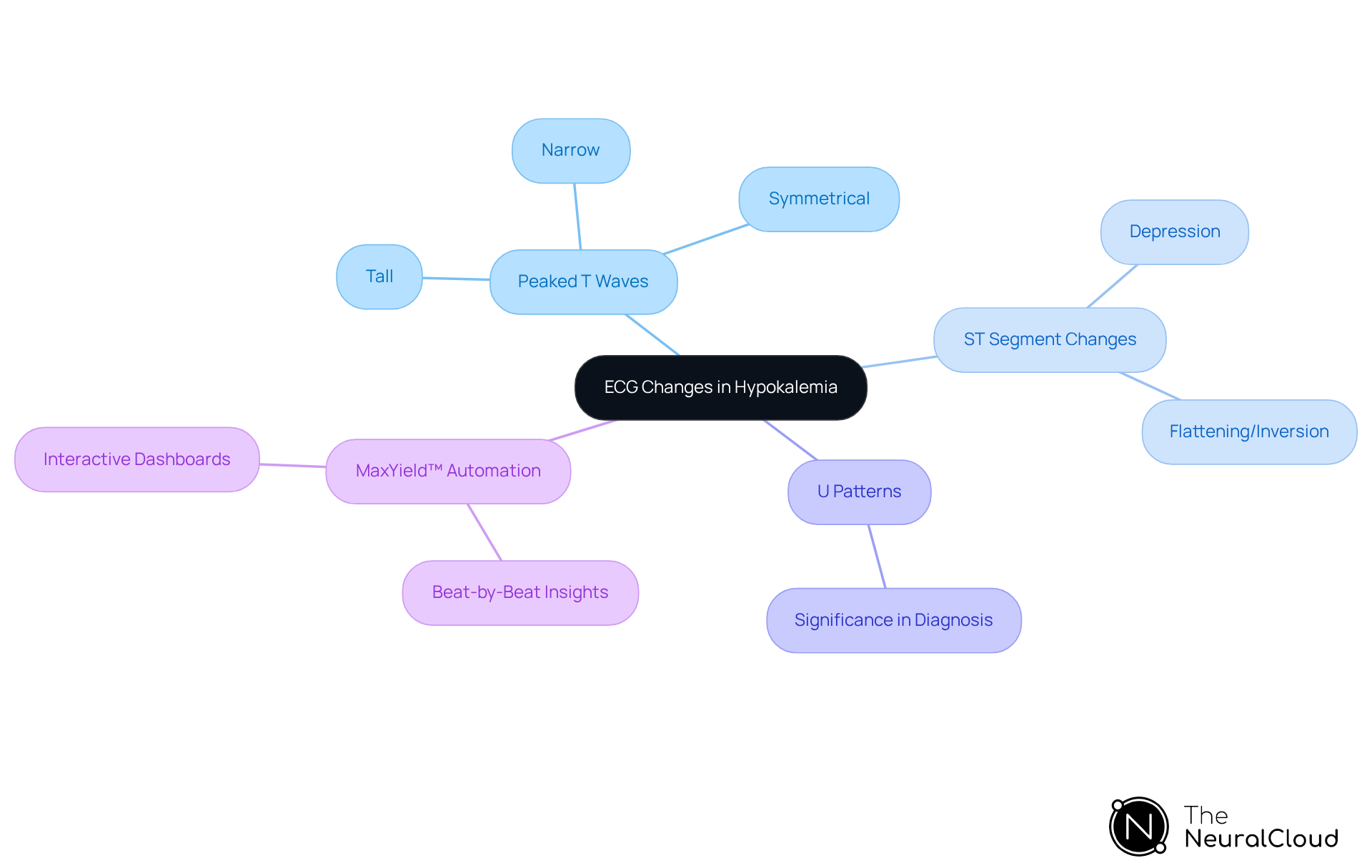
Hypokalemia, defined by a serum potassium level below 3.5 mEq/L, poses serious risks to cardiac health. Potassium plays a crucial role in maintaining normal cardiac electrical activity, and its deficiency disrupts the balance of electrical impulses in the heart. This disruption can lead to arrhythmias and muscle weakness. In severe cases, it may even cause paralysis. Physiologically, low potassium levels alter myocardial excitability and conduction, potentially leading to life-threatening conditions such as ventricular tachycardia or fibrillation.
Recent studies indicate that the prevalence of hypokalemia in the US has risen alarmingly, from 3.78% to 11.06% between 1999 and 2016, with higher rates observed among non-Hispanic black individuals compared to non-Hispanic white individuals. This trend highlights the importance of monitoring mineral levels in patients, especially those with cardiovascular issues. Expert opinions emphasize that maintaining electrolyte levels within the normal range is vital for preventing dangerous arrhythmias.
For example, a treatment-induced rise in plasma electrolyte levels has been demonstrated to significantly reduce the risk of suitable ICD therapy and unplanned hospital admissions for arrhythmia or heart failure. Case studies further demonstrate the effect of low potassium on cardiac function; for instance, patients presenting with atrial fibrillation or supraventricular tachycardia frequently show typical ECG alterations linked to reduced potassium levels, such as hypokalemia peaked T waves and prominent U features. Comprehending these effects is crucial for correctly interpreting ECG changes associated with low potassium levels and for executing prompt interventions.
Neural Cloud Solutions' MaxYield™ platform plays a crucial role in this context by identifying and labeling critical data even in recordings with high levels of noise and artifact. It quickly separates ECG signals from recordings influenced by baseline drift, motion, and muscle interference, which are frequent obstacles when examining ECGs of patients with low potassium levels. By salvaging previously obscured sections of lengthy Holter, 1-Lead, and patch monitor recordings, MaxYield™ enhances the accuracy of ECG interpretation, allowing for better clinical decision-making.
This advanced noise filtering and signal recognition capability ensures that health tech developers can rely on accurate data to understand the cardiac implications of low potassium levels effectively. Additionally, the Insight360 tool transforms MaxYield’s clean ECG data into interactive dashboards and clinical-ready reports, further supporting healthcare professionals in their analysis and decision-making processes.
Identify ECG Changes: Peaked T Waves in Hypokalemia
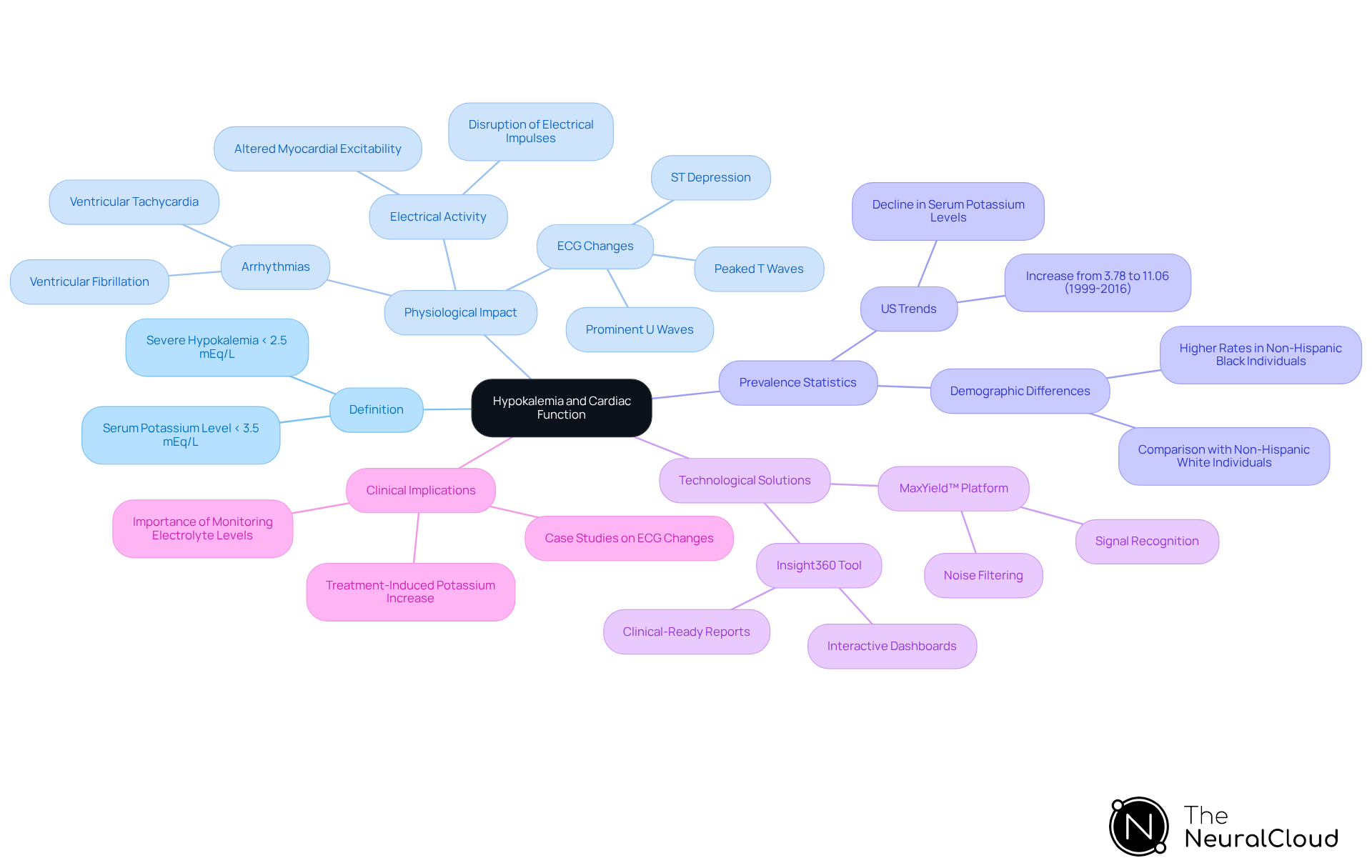
Clinicians face significant challenges in accurately interpreting ECG changes associated with low potassium levels, which can lead to serious health risks. In low potassium levels, the ECG may show distinct alterations, particularly hypokalemia peaked T waves, which are characterized by their tall, narrow, and symmetrical appearance, often referred to as 'tent-shaped.' As potassium levels drop below 2.7 mmol/L, the amplitude of the T signals tends to rise, serving as an early indicator of low potassium. Clinicians must distinguish these forms of hypokalemia peaked T waves from those observed in hyperkalemia. However, in low potassium levels, they are often accompanied by further changes such as ST segment depression and the presence of prominent U forms. Recognizing these patterns is vital for timely diagnosis and management, as U deflections and ST segment changes are statistically linked to the severity of potassium deficiency, with strong associations noted at p < 0.001.
Research indicates that extensive ST depression and T shape flattening or inversion are common in low potassium levels, with severe low potassium defined as potassium levels of 2.4 mmol/L or lower. It's essential for healthcare professionals to understand these ECG changes to act quickly and effectively. To address these challenges, MaxYield™ automates ECG signal analysis, providing beat-by-beat insights that enable precise identification of cardiac events. It delivers detailed insights for each heartbeat, including P-wave, QRS complex, and T-wave onsets, offsets, and time-series intervals. Additionally, MaxYield™ is pending FDA Class II SaMD clearance, ensuring regulatory compliance and reliability.
As noted by specialist Srinivasan Ramadurai, ECG alterations, particularly the presence of U patterns, ST depression, T-pattern flattening/inversion, and QT prolongation, are reliable indicators of potassium deficiency severity. This underscores the value of ECG as a swift bedside diagnostic tool. Integrating MaxYield™ into clinical workflows allows healthcare professionals to utilize advanced ECG analysis features. The customizable visualization tool, Insight360, transforms clean ECG data into interactive dashboards and clinical-ready reports, enhancing diagnostic accuracy and decision-making. Integrating MaxYield™ into clinical practice not only enhances diagnostic accuracy but also empowers healthcare professionals to make timely, informed decisions that can save lives.
Analyze ECGs: Step-by-Step Interpretation of Peaked T Waves
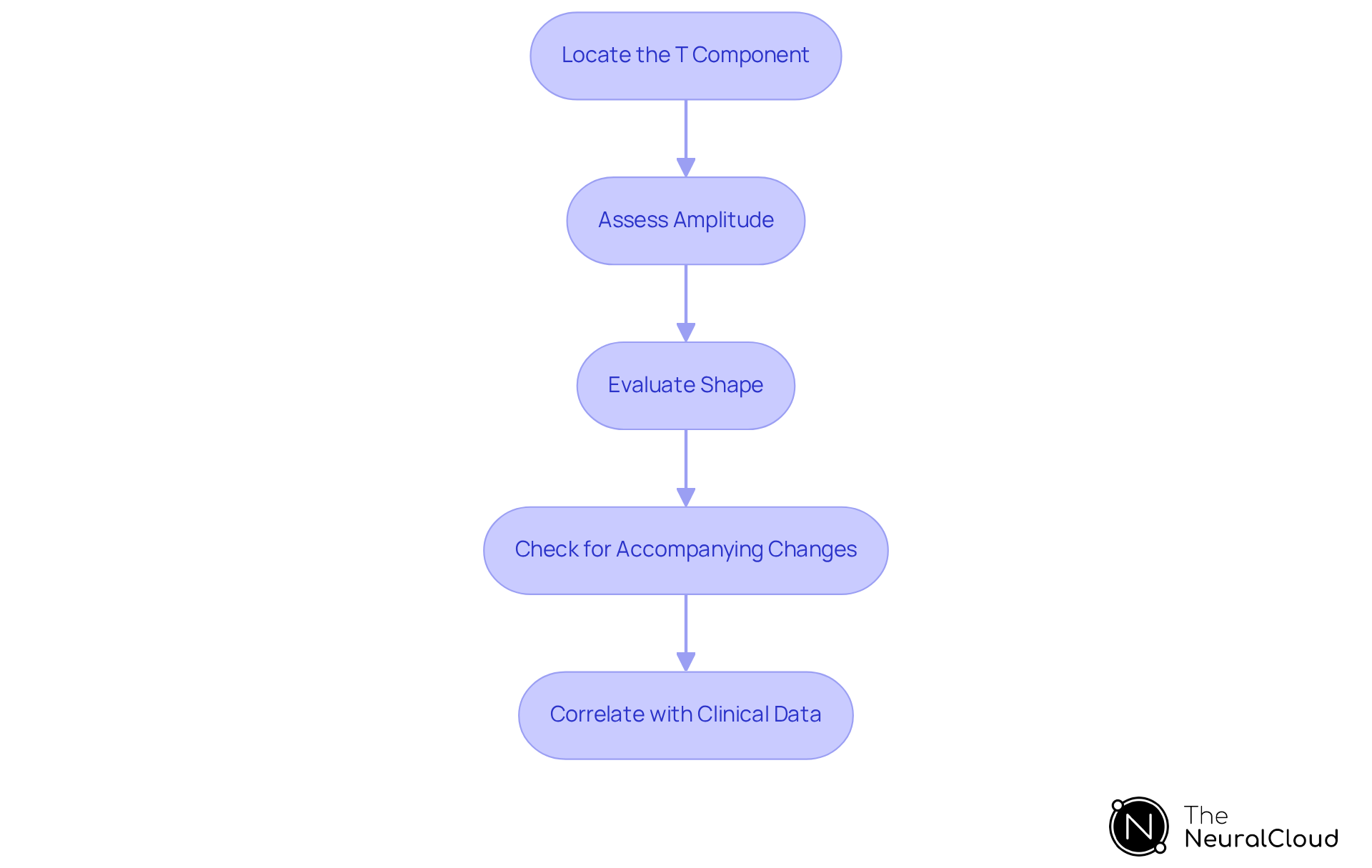
Diagnosing hypokalemia through ECG analysis presents unique challenges that healthcare professionals must navigate. To analyze ECGs for peaked T waves associated with hypokalemia, follow these steps:
- Locate the T Component: Identify the T component following the QRS complex in the ECG tracing.
- Assess Amplitude: Measure the height of the T signal. In low potassium levels, the T deflection may surpass 5 mm in limb leads and 10 mm in precordial leads.
- Evaluate Shape: Look for a narrow, symmetrical peak. Hypokalemia peaked T waves should appear tent-like, indicating possible deficiency of essential minerals.
- Check for Accompanying Changes: Note any ST segment depression or U waves, which are common in hypokalemia. Research shows that 71% of patients with levels above 6.5 mmol/L exhibit ECG changes, with 43% displaying multiple abnormalities. These changes are critical for timely diagnosis and management.
- Correlate with Clinical Data: Always correlate ECG findings with the patient's clinical history and potassium levels to confirm the diagnosis. It's important to note that hyperkalemia can occur without the usual ECG changes. In fact, more than half of hyperkalemic patients may not show these characteristic alterations. This highlights the significance of taking clinical context into account with ECG results, particularly as severe potassium deficiency can result in life-threatening arrhythmias.
The MaxYield™ platform from Neural Cloud Solutions can really improve this systematic approach. With its advanced noise filtering and automated signal processing capabilities, MaxYield™ ensures that ECG analysis is not only accurate but also efficient, allowing healthcare professionals to focus on critical diagnostic tasks. This integration of technology assists in the management of patients with low potassium levels, ensuring timely interventions that can prevent serious complications.
Discuss Clinical Implications and Management of Hypokalemia
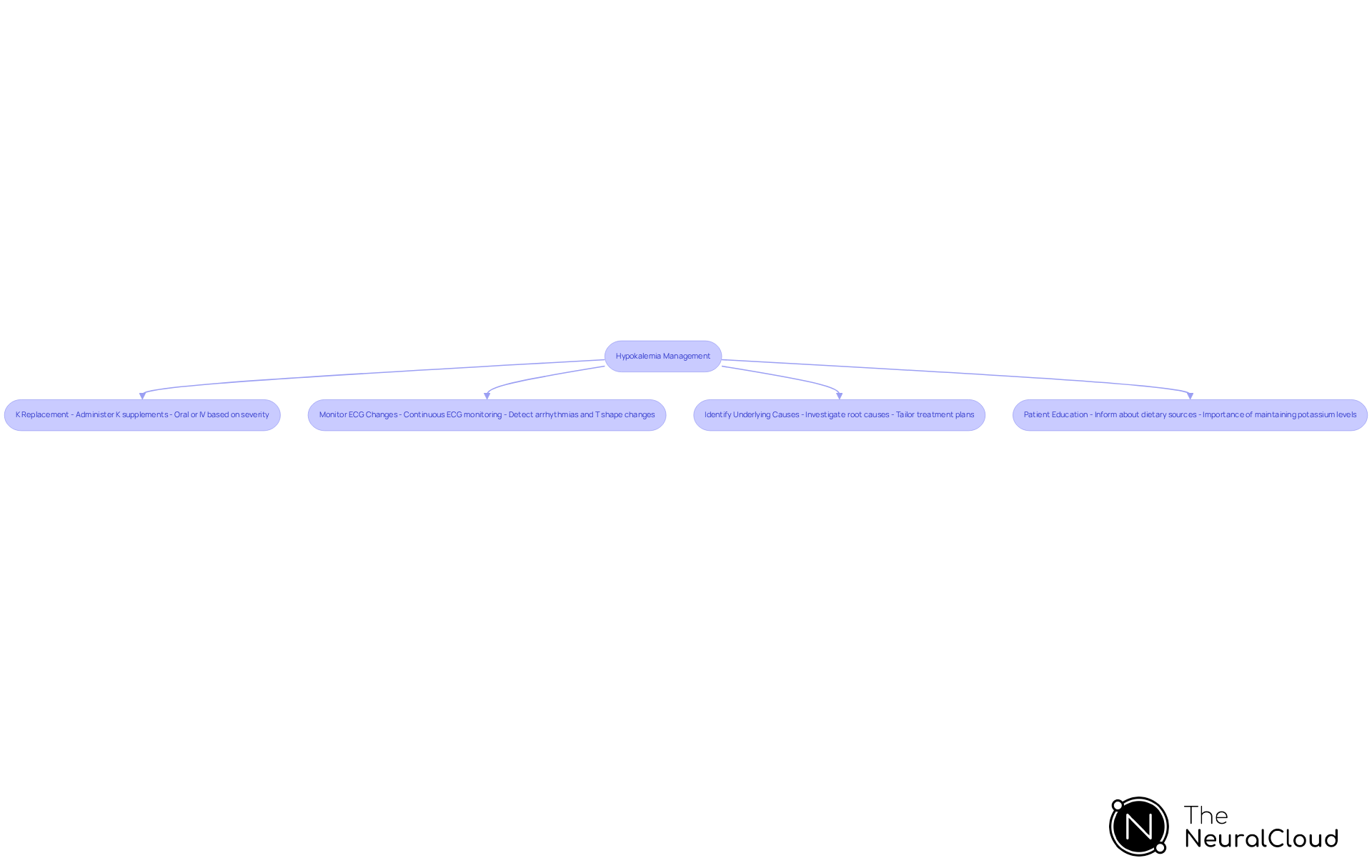
Low potassium levels pose serious challenges for cardiac health, particularly in patients with existing heart conditions. Patients with low potassium levels often struggle with managing their condition, leading to serious health risks, particularly life-threatening arrhythmias. Statistics indicate that 67.09% of patients with low potassium levels require hospitalization, underscoring the condition's seriousness. Effective management strategies include:
- K Replacement: Administer K supplements either orally or intravenously, depending on the severity of the hypokalemia. Severe cases may require immediate intravenous repletion to stabilize electrolyte levels.
- Monitor ECG Changes: Continuous ECG monitoring is crucial to detect any arrhythmias or alterations in T shape morphology as potassium levels are corrected. Notably, a 12-lead ECG may reveal significant changes such as prolonged QT intervals and hypokalemia peaked t waves in patients with hypokalemia. The MaxYield™ platform from Neural Cloud Solutions enhances monitoring by transforming noisy ECG recordings into clear signals, enabling more accurate detection of changes. The platform's automated signal processing capabilities ensure that clinicians can focus on critical ECG features without the distraction of noise.
- Identify Underlying Causes: It is essential to investigate and address the root causes of hypokalemia, which may include diuretic use, gastrointestinal losses, or adrenal disorders. Understanding these factors can help tailor treatment plans effectively.
- Patient Education: Informing patients about dietary sources of this mineral and the significance of maintaining sufficient levels is crucial to prevent recurrence. This includes guidance on incorporating potassium-rich foods into their diets.
Experts emphasize the importance of monitoring electrolyte levels, particularly in patients at high risk. As noted by Dr. Alan Rabinowitz, "Active serum potassium monitoring helps us detect high-risk patients promptly, especially when treatment plans include furosemide or hydrochlorothiazide." Failure to manage hypokalemia effectively can result in severe cardiac complications, making timely intervention crucial for improving patient outcomes. Leveraging the advanced noise filtering and automated signal processing capabilities of MaxYield™ can significantly enhance workflow efficiency in ECG analysis, ensuring that clinicians can focus on delivering precise care. Additionally, the Insight360 tool complements MaxYield™ by transforming clean ECG data into interactive dashboards and clinical-ready reports, further supporting effective patient management.
Conclusion
Hypokalemia poses significant challenges to cardiac function, particularly through its disruption of the heart's electrical activity. Understanding the relationship between low potassium levels and ECG changes, especially the presence of peaked T waves, is crucial for healthcare professionals. Without a clear understanding of ECG changes, healthcare professionals may struggle to diagnose hypokalemia effectively. This understanding can lead to timely interventions that prevent severe complications, including life-threatening arrhythmias.
This article has highlighted key insights into how hypokalemia affects the body, the specific ECG changes associated with low potassium levels, and the systematic approach to ECG analysis. The importance of utilizing advanced tools like Neural Cloud Solutions' MaxYield™ platform has been emphasized, showcasing how technology can enhance the accuracy and efficiency of ECG interpretation. Additionally, effective management strategies, including potassium replacement and continuous monitoring, have been discussed to ensure optimal patient outcomes.
Given the serious implications of hypokalemia on heart health, clinicians must remain vigilant in monitoring potassium levels and recognizing ECG changes. By integrating advanced analytical tools and adhering to best practices in patient management, healthcare professionals can significantly improve diagnostic accuracy and patient safety. Prioritizing potassium management and education will empower patients to take an active role in their health, ultimately leading to better cardiac health outcomes.
Frequently Asked Questions
What is hypokalemia and how is it defined?
Hypokalemia is defined as a serum potassium level below 3.5 mEq/L, which poses serious risks to cardiac health.
Why is potassium important for cardiac function?
Potassium is crucial for maintaining normal cardiac electrical activity. Its deficiency disrupts the balance of electrical impulses in the heart, which can lead to arrhythmias and muscle weakness.
What are the potential consequences of severe hypokalemia?
Severe hypokalemia can lead to life-threatening conditions such as paralysis, ventricular tachycardia, or ventricular fibrillation.
How has the prevalence of hypokalemia changed in recent years?
The prevalence of hypokalemia in the US has increased from 3.78% to 11.06% between 1999 and 2016, with higher rates observed among non-Hispanic black individuals compared to non-Hispanic white individuals.
What is the significance of monitoring potassium levels in patients?
Monitoring potassium levels is vital for preventing dangerous arrhythmias, especially in patients with cardiovascular issues.
How can treatment-induced rises in plasma electrolyte levels affect patient outcomes?
A treatment-induced rise in plasma electrolyte levels can significantly reduce the risk of unplanned hospital admissions for arrhythmia or heart failure.
What ECG changes are associated with low potassium levels?
Patients with low potassium levels may show typical ECG alterations such as hypokalemia peaked T waves and prominent U features, particularly in cases of atrial fibrillation or supraventricular tachycardia.
How does Neural Cloud Solutions' MaxYield™ platform assist in ECG interpretation?
MaxYield™ identifies and labels critical data in ECG recordings, even in the presence of noise and artifact, enhancing the accuracy of ECG interpretation for patients with low potassium levels.
What additional capabilities does the Insight360 tool provide?
The Insight360 tool transforms clean ECG data from MaxYield™ into interactive dashboards and clinical-ready reports, supporting healthcare professionals in their analysis and decision-making processes.
List of Sources
- Explain Hypokalemia and Its Impact on Cardiac Function
- Rising Trend of Hypokalemia Prevalence in the US Population and Possible Food Causes - PubMed (https://pubmed.ncbi.nlm.nih.gov/32401639)
- Hypokalemia-Induced Arrhythmia: A Case Series and Literature Review - PMC (https://pmc.ncbi.nlm.nih.gov/articles/PMC8989702)
- Increasing Potassium Levels Benefits Patients With Cardiovascular Disease | Docwire News (https://docwirenews.com/post/increasing-potassium-levels-benefits-patients-with-cardiovascular-disease)
- Increasing potassium levels improve outcomes in patients at high risk of ventricular arrhythmia (https://escardio.org/news/press/press-releases/Increasing-potassium-levels-improve-outcomes-in-patients-at-high-risk-of-ventricular-arrhythmia)
- Boosting Potassium Helps Patients at High Risk for Ventricular Arrhythmias (https://tctmd.com/news/boosting-potassium-helps-patients-high-risk-ventricular-arrhythmias)
- Identify ECG Changes: Peaked T Waves in Hypokalemia
- Hypokalaemia (https://litfl.com/hypokalaemia-ecg-library)
- Electrocardiographic Changes in Patients With Hypokalemia and Their Correlation With Serum Potassium Levels - PMC (https://pmc.ncbi.nlm.nih.gov/articles/PMC12510615)
- ECG Diagnosis: Hypokalemia | The Permanente Journal (https://thepermanentejournal.org/doi/10.7812/tpp/12-015)
- Analyze ECGs: Step-by-Step Interpretation of Peaked T Waves
- Hypokalaemia (https://litfl.com/hypokalaemia-ecg-library)
- Empowering Insights: ECG in Hyperkalemia Explained (https://tricog.com/how-to-interpret-ecg-in-hyperkalemia?srsltid=AfmBOor69ygjlC5OnhRwqXKtCRj0lGOkvM6fdXwdTlaNhjcWy8GkKBl-)
- Hyperkalemia ECG Changes: Peaked T Waves (https://powerfulmedical.com/blog/hyperkalemia-ecg-critical-changes)
- ECG frequency changes in potassium disorders: a narrative review - PMC (https://pmc.ncbi.nlm.nih.gov/articles/PMC9301030)
- Empowering Insights: ECG in Hyperkalemia Explained (https://tricog.com/how-to-interpret-ecg-in-hyperkalemia?srsltid=AfmBOoqNrFsDZsCcgt1nK7n4dDsSwuxeM3u9AfERFmrNs3C1-pa-IeQE)
- Discuss Clinical Implications and Management of Hypokalemia
- Hypokalemia - StatPearls - NCBI Bookshelf (https://ncbi.nlm.nih.gov/books/NBK482465)
- Drug-induced hypokalemia: an analytical study based on real-world drug monitoring data (https://tandfonline.com/doi/full/10.1080/14740338.2025.2468861)
- Correcting Serum Potassium in Hypokalemia to Improve Outcomes | Docwire News (https://docwirenews.com/post/correcting-serum-potassium-in-hypokalemia-to-improve-outcomes)